Acts 13:46-49; Luke 10:1-9
As a young musician and singer I had many opportunities to play and sing for wedding and funeral Masses. At first this was no problem, but eventually it became one. Parishes had begun to hire their own musicians who weren’t thrilled to see outsiders like me coming in. I remember at one wedding the local musician came up and told me that he was on the parish staff, this was his parish, and he would be playing. I don’t recall my reply but I know it infuriated him. He stormed off saying “I’m going to the pastor right now. One of us is leaving and it won’t be me!” Well, it was him. I stayed and did the wedding Mass, smugly condemning him for his attitude, never considering my own.
There’s an old saying that when the Church isn’t being persecuted from the outside she persecutes herself. Many of us have seen it; the place we expect to find the most unity too often seems the model of disunity. We want the Church to grow, we want to bring Christ to people, but when they challenge us with new ideas, expectations, or ways of doing things we find ourselves at odds with them.
This phenomenon is as old as the Church. In the first reading Paul and Barnabas turn their attention to the Gentiles, frustrated with their stalling mission to the Jews. And we hear how the Gentiles were delighted and the Church grew. What we have not heard (yet) is that with this growth came conflict. On one side the Gentiles resisted adopting Judaic ritual and dietary practices. What do circumcision and kosher law have to do with salvation? On the other side the Jewish Christians resisted the idea of abandoning them. After all, Jesus and his Apostles were Jews! Two groups, each with its own interests: More disputes, more hard feelings, more disunity.
Sts. Cyril and Methodius might well sympathize. In their time (the 9th century) the Church was struggling to grow in Eastern Europe. The two brothers were the perfect choice for missionaries; they were well-educated, devout, and had grown up speaking Slavic as a second language. Best of all they possessed keen pastoral sensibility; they knew that Christ is the Word who transcends language, whether Greek, Latin, or Slavic. Therefore, when they arrived in the missions they not only preached in Slavic but also translated and conducted liturgical services in it as well. The people responded and the Church grew.
As in the gospel they went out like lambs among wolves, only this time the wolves wore clericals. The missionaries of the region resented Cyril and Methodius. For one thing, they made the old guard look bad. Under them the Church withered; with the brothers here she blossomed. Second, they took issue with the way the Church grew. As they saw it, no one had the right to translate the liturgy into the native language and teach it to the people. Surely these upstart missionaries must be reprimanded.
Not surprisingly the embittered clerics appealed to Rome about the liturgical changes, demanding action. When summoned, Cyril and Methodius went to Rome and gave a spirited, eloquent defense. After listening carefully in person, Pope Adrian II blessed their mission and gave them permission to continue celebrating the liturgy in Slavic.
Cyril stayed in Rome and died not long afterward; Methodius returned to the missions. Sadly but not surprisingly, the pope’s decision settled nothing in many minds. For the rest of his life Methodius was hounded and frustrated by clerics who disagreed with him. Although he stayed the course and remained successful, the stress took its toll; he died April 6, 885.
 The pattern of disagreement, debate, and decision is how things get most productively settled in the Church provided it is done in the right spirit; that is, the Holy Spirit. Since the Council of Jerusalem was called to settle the dispute between the Gentile and Jewish Christians this has been the model, its justification found in the letter issued from that Council, specifically the sentence that begins, It seems good to the Holy Spirit and to us (Acts 15:28). The Holy Spirit promised by Christ continually works within us, finding ways to maintain unity despite our differences. In all our human affairs but especially between the members of the Church what matters is not that we disagree but that we dialog, not the heat of our words but the light of the Holy Spirit, not the distance we keep but the fellowship we extend, and not the hostility throughout the debate but the peace of Christ we give in the resolution. As with Cyril and Methodius, some will not accept us or the decisions reached but we cannot help that. All we can do is what Methodius did: Continue to act in union with Christ and his Church, remembering always that it is not about us but about the Holy Spirit and us.
Sts. Cyril and Methodius, pray for us.
 Angela Merici was a visionary; she saw what was invisible to everyone else. Where others saw the Italian countryside she saw the Kingdom of God; where they saw poor and middle class girls, Angela saw fertile ground waiting for seed. Christ asked her to sow and she obeyed. He asks no less of us. The Kingdom of God is here and now; the ground is fertile and plentiful. All our actions, for good and bad, fall like seeds into that ground. May we always remember what Saint Angela already knew, as given by the spiritual writer James Allen: “The law of the harvest is to reap more than you sow. Sow an act, and you reap a habit. Sow a habit and you reap a character. Sow a character and you reap a destiny.”
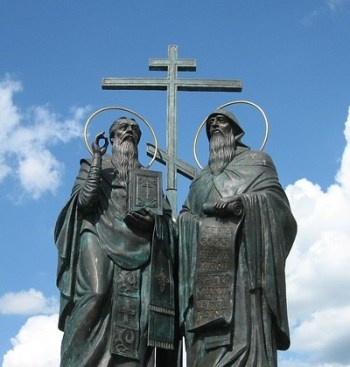 Saints Basil and Gregory can teach us many things, but today we focus on two. First, they teach us that faith in God requires true humility. Heresies are born from the pride that sees ourselves as the measure of all things; that interprets our failure to understand the truths of the faith to mean that the truths are wrong. True humility is as John admonished us, to remain in him; to see that God is the measure of all things and that our inability to understand means that we still have work to do. Second, in these days when the word “love” is so easily limited to physical expressions of self-gratification, the love of Basil and Gregory is a shining example of the most uplifting, life-giving love possible between people. This is the love that is modeled on God; that seeks only the good of the other; that finds its union with others in the heart and soul because that is where God dwells, and God is love. This is the love where heart speaks to heart and says, “I want for you what God wants for you.” My prayer is that all of us come to have that love for one another. What a world this would be.
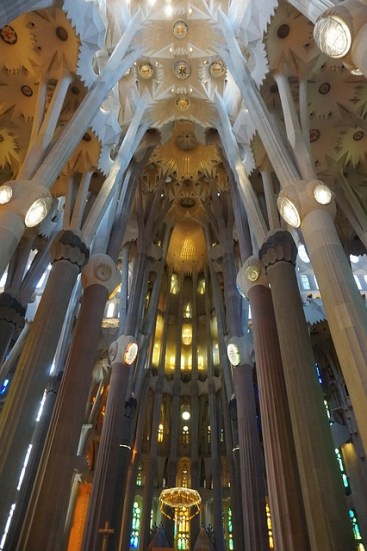 Finally, the basilica of the Holy Family teaches us that joy is not necessarily the destination but the journey. Every year, millions of people take the time to tour the basilica of the Holy Family in Barcelona. Whether they are watching as the builders add to its structure, marveling as artisans craft the artwork that adorns it, or attending the Masses offered there, the faithful are uplifted and sanctified even though the basilica is a work in progress. The same is true for our families, for they too are works in progress. Every day brings the happiness and sorrow, the cataclysms and quiet moments through which families progress either closer to God or further away from him. Let us pray that our families take every moment of life and find the joy in it; for each moment, whatever it holds, is an opportunity given to us by Almighty God to build up our own domestic Church in virtue, crafting ourselves more and more into what we are called to be – living stones built upon the cornerstone that is Christ.
 Like the mysterious sacrifice of the wren, this may leave us curious. Why does the Church take the first day after Christmas to remember the first martyr? The answer lies precisely in the similarity of Stephen’s passion and death to Christ’s. Christmas is the celebration of the birth of Jesus; the same Jesus who came not to be served
 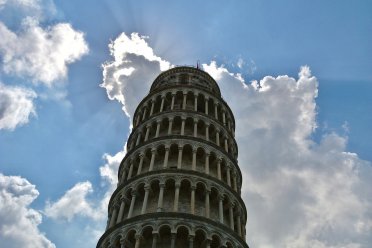 These and many more are like the soft, marshy soil below the tower of Pisa. Like that tower, a faith built on human weakness will lean and no amount of stopping and starting, tinkering and refining will fix it. It must be torn to the ground and rebuilt on the foundation of Christ and his Church, for we must take the faith as it is, not as we would like it to be.
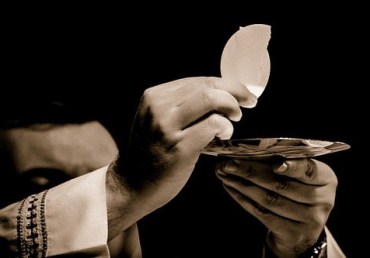 Still, a common problem is that we tend to take this fellowship for granted and forget gratitude. We fall into a routine of receiving Communion with little or no thought as to what – or rather Who – we are receiving. Like the nine lepers in today’s gospel passage, we are given what we ask for but then go back on our way with little regard either for the gift or what it cost the Giver. St. Paul goes on to warn about the grave danger of such ingratitude: That is why many among you are ill and infirm, and a considerable number are dying (1 Corinthians 11:30). The healthier, more grateful response is to first discern whether we are in the state of grace to receive Christ and, if not, to make ourselves a more worthy vessel. Like the leper who, once cleansed, remembered to be thankful, we thank God for what he has given us through the Church – the gifts of faith and the Sacraments through which he touches, heals, and sanctifies us.
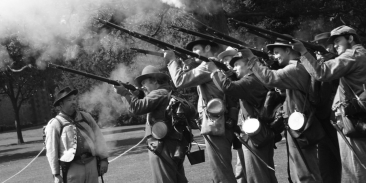 Eventually, Father was caught, imprisoned on a false charge and on the morning of November 23
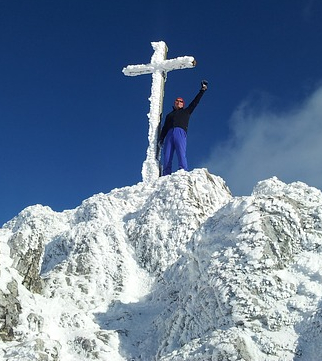 Persistence in prayer does not test God’s patience or change his mind; rather, it tests our faith and changes our attitude. Through his life and the Scriptures he has given the world, Jesus has told us that God loves each of us with a love beyond our understanding and knows our needs before we ask. That being so, God wants our prayer to consistently express the trust we have in him and his providence; that is the faith that Christ wants to find upon his return.
 No wonder. Internet scans, scrolls, and searches cannot bring the wisdom we need. As the first reading tells us, Wisdom is a spirit… Firm, secure, tranquil, all-powerful, all-seeing… the spotless mirror of the power of God, the image of his goodness (Wisdom 7:22, 23, 26). Wisdom is Christ, and his gift to us is wisdom as the fruit of the Spirit. A fruit born of the love of God, wisdom desires not only to be one with God but to see things as God sees them. Like any fruit, wisdom takes time to mature; its development a function of our life experience as seen through the lens of long-suffering that strengthens us to finish what we start, docility to listen as God speaks, and humility to remember that we are servants of God and each other.
 Mark 10:45