Tag: Gospel

  • A Whitewashed Tomb

    A Whitewashed Tomb

    Wednesday of the 21st Week in Ordinary Time

    2 Thessalonians 3:6-10, 16-18; Matthew 23:27-32

    A while ago, I visited a parish where I spent many years as a child. Sitting in a pew, I began reminiscing about my days as an altar boy there.

    I remembered some of the boys I went to school and served with. Good kids, pious in the best possible sense: quiet, attentive, prayerful. They seemed genuinely holy; not only at Mass, but outside it, too.

    Me? Not so much. Although we did the same things, for me it was more like “going through the motions” of holiness. Maybe I looked the part, but few would have called me quiet, attentive, or prayerful. To the contrary, too often I behaved as if I’d never gone to Mass at all.

    And it was then that this gospel hit home. I saw my face in our Lord’s dictionary, right there under the term, “whitewashed tomb.” Looks fine on the outside, but inside? “Dead men’s bones.”

    At first, my heart sank. I imagined Jesus disappointed in me. But then I realized that Jesus took the scribes and Pharisees to task, not out of hatred, but love. Yes, his words were sharp, but that was to awaken them, make them understand that the way to God’s heart wasn’t by acting holy, but by allowing God to make them holy.

    Acting holy. That’s what I’d been doing. I don’t know why. Maybe I thought the holiness of the other boys would rub off on me or that going through the motions would somehow change me inside.

    It won’t. External actions on their own won’t produce holiness. Why? Because holiness isn’t just what we do, it’s who we are becoming by the grace of God. It’s God’s grace that changes the heart, and it’s the changed heart that expresses itself in virtuous behavior like piety, patience, prayer, and love.

    That’s why St. Paul reminded the Thessalonians that faith must be visible in the way we live. Our relationship with Christ cannot be an appearance only; it must shape our responsibilities, our work, our relationships, and our daily choices.

    So the question isn’t simply, “Do I look religious,” but “Is Christ making me truthful within?” How do we know? We must look at our behavior: Do I pray only when others can see me, or because I desire communion with God? Do I serve because I want recognition, or because I love? Do I speak about holiness while remaining impatient, resentful, or unforgiving? Do my actions at Mass radiate to the rest of my life?

    Like me sitting in the pew that day, we may not like some of the answers. We may sense that, to some degree, we too are the scribe or Pharisee who Jesus is calling out.

    But that’s good. Christ loves us and never wants us hiding from him in shame. Far from it; he wants us to bring our true self to him, for that is who he created. His words may be strong, but they’re meant to call us home.

    So today and every day, let us ask God for the grace we need: one act of patience, one honest prayer, one admission of fault, and one hidden choice of love at a time.

    For Christ doesn’t want us to look holy. He wants to make us holy.

    —
  • I Saw You

    I Saw You

    Feast of St. Bartholomew (August 24)

    Revelation 21:9b-14; John 1:45-51

    There are many things to love about today’s Gospel, but let me mention three that caught my attention.

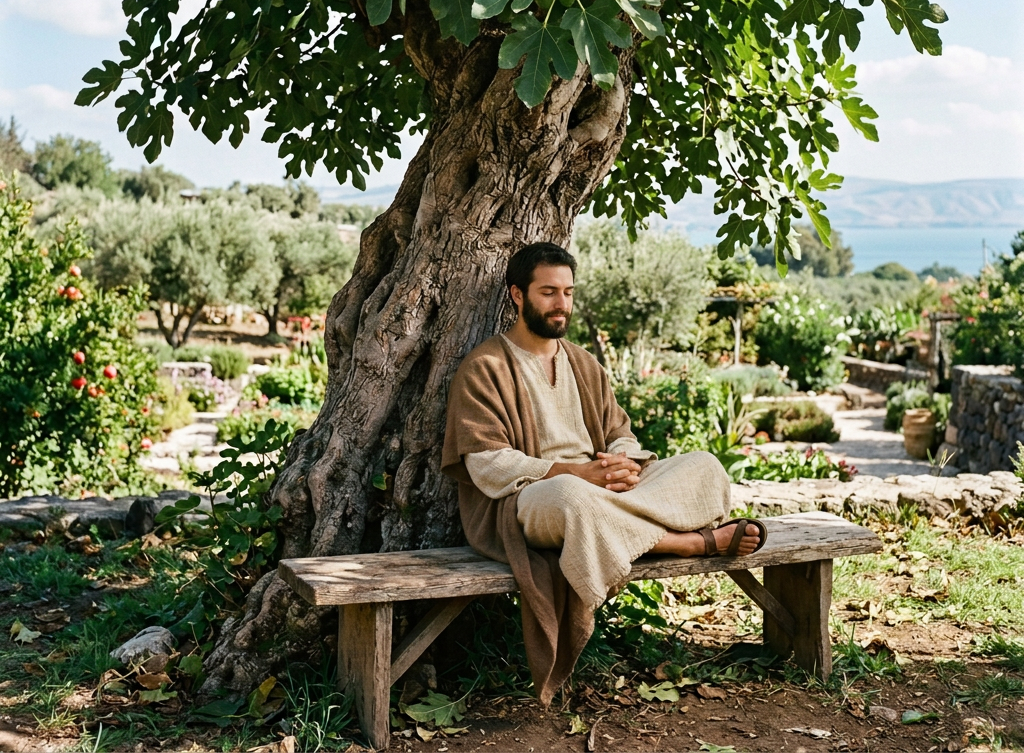
    First is the image of Nathanael under the fig tree. I can’t help but wonder what he was doing there. Guesses abound and we can’t know for sure, but as I see it, he was doing what I think we’ve all done and still do: sitting alone in a quiet place, thinking. And not just thinking, but asking questions, wrestling with God, and waiting for an answer – a clue, a light in the darkness, some revelation telling him that God is listening and will respond.

    Then come those great, consoling words of Jesus: “I saw you under the fig tree.” No wonder Nathanael was amazed! I wonder if we think about that enough. Even in our fig tree moments, we are never alone, never unseen. God is always there; watching, listening, and planning. We talk to Him, perhaps look at Him in the tabernacle or monstrance, but do we realize how close He is, and that as we are looking at Him, so He is looking at us? We may hear nothing, but silence doesn’t mean abandonment. “I saw you” is Christ’s great assurance that our waiting is never wasted if we remain grounded in faith.

    And that faith can be tested, for as the story shows, God’s answers can come in quite unexpected ways. I doubt that when Philip spoke of the one who Moses wrote about, Nathanael thought, “Ah, the answer to my prayers under the fig tree!” His reply shows it: “Can anything good come from Nazareth?”

    What makes this so intriguing is Nathanael’s response. When Philip said, “Come and see,” he could have easily replied, “No, thanks. I have other things to do.” He didn’t; instead, he opened himself to the possibility. He went and saw.

    This is a good time to stop and thank God for the “Philips” of the world. Ask yourself: Who has been Philip to me? Who ever invited me to “come and see” – maybe a parent, friend, priest, or teacher? And to whom am I Philip? Who do I invite? Do I live in such a way that people will want to know the source of my peace, joy, and hope?

    Finally, consider our Lord’s response to Nathanael’s amazement at being seen: “You will see greater things than these…”

    Of course, he did. And while he probably had many more “fig tree moments” in the days and years to come – times he wondered, was challenged, questioned, or suffered – these were nothing compared to what God had in store for him. Especially in the life to come, for as we heard in Revelation, “the holy city Jerusalem coming down out of heaven” has 12 foundation stones. One of them bears his name.

    St. Nathanael, or Bartholomew as today’s Feast calls him, is a wonderful model for us. He teaches us that our fig tree moments, and even our encounters with Jesus, aren’t the destination. They’re just the beginning of what God has ready for us, things far beyond our imagination. Like Nathanael, we may question, wonder, and not understand, but that’s not what ultimately matters. What matters is that we do what he did – keep asking, stay open to finding the answers, go where our Lord leads us, and keep faith that we, too, will see “greater things than these.”

    St. Bartholomew, pray for us.

    —

  • The One Fear

    The One Fear

    Sunday of the 12th Week in Ordinary Time

    Jeremiah 20:10-13; Romans 5:12-15; Matthew 10:26-33

    While we know that Jesus never lies to us, today’s gospel is one of those times when his words seem to contradict human experience. It happens when he says, “Do not be afraid.”

    But isn’t there good reason to be afraid sometimes? Consider Jeremiah; his enemies were watching, waiting, hoping to destroy him. That’s a real, legitimate concern. Or take our own experience; don’t we all naturally fear things like illness, financial loss, rejection, loneliness, or losing someone we love?

    Something deeper is going on. Jesus knows we have many fears, some very real and legitimate. He’s going beyond that, challenging us to not let fear have the final word.

    He is, I believe, urging us to look particularly at those fears that are hardest for us to face. What are those? In my experience, the fears that go right to our moral center; the ones we try to excuse away. “I can’t go to Confession. That priest knows me. What will he think?”… “I can’t say grace at the restaurant. People are watching.”… “I can’t go to the March for Life. What will my pro-choice friends say? They won’t like me anymore.”

    The fear of what people think of us is powerful. Jesus knows that. That’s why he says, “Do not be afraid of those who kill the body but cannot kill the soul.” People can damage our reputation, reject us, ridicule us, exclude us, even hurt us physically. But they can’t touch what matters most. In framing it this way, Jesus urges us to move our attention from lesser fears to the one fear that leads to wisdom: The fear of the Lord – what Scripture calls “the beginning of wisdom.”

    What is fear of the Lord? Let me explain it by example. Imagine you’re talking with a group of friends. Someone mentions a person you love deeply — your spouse, your child, your best friend. Trying to be funny, you make a cutting remark at their expense. Everyone laughs. But then, you turn around and discover that person you love so much standing right behind you. They heard every word.

    At that moment, what do you feel? Probably something much deeper than fear of physical punishment. No, it’s that feeling that says you’ve badly hurt someone you love, and you’d give anything to take those words back.

    In the same way, fear of the Lord isn’t cowering before an angry God. It’s loving God so much that the thought of offending Him breaks our heart. And it’s that feeling of deep regret or remorse for our sins that should drive us to seek forgiveness. Do we still fear the pain of hell, or eternal separation from Him? Sure, and that is the first stirrings of the virtue of fear of the Lord. But the mature understanding is the fear that by our sins we have rejected the love of God, who infinitely loves us.

    Getting to this stage of the virtue is a process; it doesn’t happen overnight, and it’s definitely made more difficult by our struggle against worldly fears. Still, remember what Jesus said just after he spoke about fear: “Are not two sparrows sold for a small coin? Yet not one of them falls to the ground without your Father’s knowledge.” In other words, the answer to our facing down our worldly fears isn’t courage alone; it is courage and trust. Jeremiah was no doubt brave, but he survived because he trusted. So with us; we confess our sins, pray publicly, and witness our faith not because we’re naturally brave, but because we love the Father and trust that He – who knows every sparrow – also knows and loves us, just as we are.

    In this world of instant and overflowing mass media, there are so many voices clamoring for our attention. Many are very good at stoking our fears and anxieties. Today in the gospel, Jesus challenges us: Which voice knows you best? Which loves you most? And above all, which will you listen to when fear arrives?

    —

  • Coming to the Well

    Coming to the Well

    3rd Sunday of Lent

    John 4:5-42

    During Lent, the Church quietly leads us through the great needs of the human heart. In the first three Sundays, we encounter three of them: Faith, hope, and love.

    On the first Sunday of Lent, we saw how faith is tested in hunger and isolation. Physically, Jesus was alone and weakened by a long fast; spiritually, though, he was as strong as ever and never alone. Why not? Because his union with the Father remained intact. The same is true for us; faith strengthens and sustains us. Without it, we are weak and alone.

    Then on the second Sunday of Lent, we saw how hope is strengthened despite the trials we face. At the Transfiguration, the disciples were given a glimpse of who Jesus really is. This was the sign that says, “Suffering is not the end. Glory is real.” Hope in Christ prevents discouragement; without it, suffering becomes meaningless.

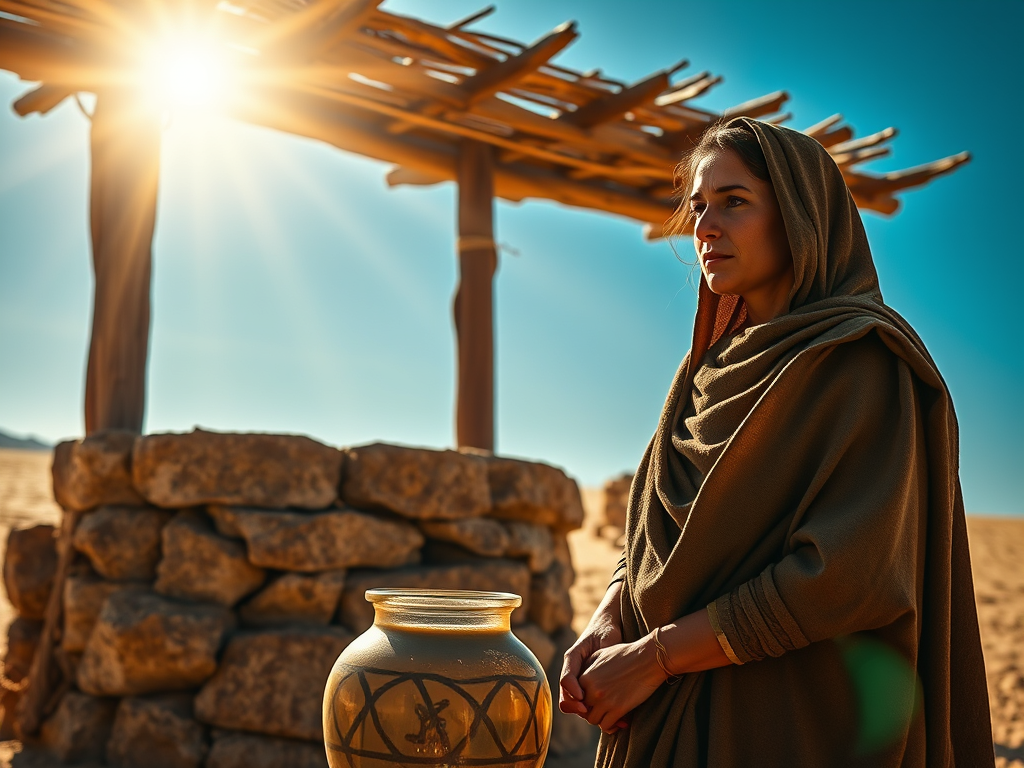
    Now, on this third Sunday of Lent, we come to the well, as does the Samaritan woman. No hunger, no glory, just thirst. But not for water. No, something much deeper. In her case, I think it’s for dignity and belonging. She comes to the well alone during the heat of the day, when it’s deserted. Why? It’s hard to believe it’s by her choice. Perhaps she has been shunned by the townspeople on account of her several marriages. If so, that would be worst of all. As someone once observed, the worst loneliness isn’t being alone; it’s being with people who make you feel alone.

    Although it’s hard to be fully in touch with her circumstances, I think we can all understand isolation and loneliness. A recent survey has found that, despite all the connections we make on our cellphones and computers, loneliness in our society is widespread, especially among young people.

    How can this be? There may be many reasons, but one thing is clear: when God is removed from the center of life, something essential is lost. As the Church reminds us these first three weeks of Lent, without faith in God, we mistrust; without hope in Him, we despair; and without the love of God, we remain alone, no matter how many people are around us. As a culture, we thirst like the Samaritan woman does: for communion, for belonging, and above all for grace – the only thing that can make us whole – for grace is participation in the life of God.

    Our Lord’s response is instructive for us. Aware of her circumstances, what does he do? Well, first look at what he doesn’t do: He doesn’t give her rules or command her to repent. No; he gives her himself. And that encounter restores what is lacking in her life – dignity, truth, and belonging.

    That is charity. That is the love of God.

    And look at the effect! In these brief few minutes under that hot Mediterranean sun, a woman who arrived at the well alone leaves her water jar behind and runs back to the town. A moment ago, it was as if she was hidden; now, she is not only making herself seen, but also heard – by bringing people to Christ.

    That kind of transformation is waiting for each of us, and shows us the importance of Baptism. The virtues of faith, hope, and love infused in us by God at our baptism aren’t simply things that are “nice to have.” Without them, we live surrounded by people, yet untouched at the center. With them, communion with God and each other is not only possible, but is ours for the asking.

    But that means we have to ask. How? Well, as with the Samaritan woman, Jesus waits at the well. Where’s that? Right here, in the tabernacle. As St. Josemaria Escriva once said, “When you approach the tabernacle, remember that Jesus has been waiting for you for centuries.”

    Knowing that, I invite you this week – today if you like – to come and make one deliberate visit to the Lord. Sit right here in the church. Stay five extra minutes after Mass today or during the week. Or, visit him in the Adoration Chapel. Whichever you do, tell him honestly where you thirst. If you don’t know, tell him that, too. Ask him to show you those places in your life, and help you with them.

    Then listen. He will speak.


  • What Heaven Notices

    What Heaven Notices

    Wednesday of the 2nd Week of Lent

    Matthew 20:17–28

    Someone once told the famous evangelist Billy Graham that God would surely reward him for his greatness as a preacher. Graham replied that he once dreamed about that.

    In his dream, he died and went to heaven. As he entered, Peter ushered him toward the heavenly throne. Once there, the Lord said, “Everyone, the great preacher, Billy Graham, is now here with us.”

    After a long, mystified silence, an angel asked, “Who, Lord?” Smiling, God said, “Oh, I’m sorry. You know him as Ruth Graham’s husband.”

    And when they heard that, all of Heaven cheered.

    While it’s a charming story, it makes a serious point. When we think of greatness, what do we think of? Being above others? Higher up? Recognized? Applauded?

    That seems to be what James and John had in mind in today’s Gospel. They wanted the seats of honor, one at our Lord’s right, one at His left, when He comes into His kingdom. But notice the timing; they ask this just after Jesus told them for a third time He’s going to Jerusalem to suffer and die. His emphasis is the cross; theirs is thrones.

    But notice, too, that Jesus doesn’t scold their desire for greatness. Instead, he redefines it: “… the rulers of the Gentiles lord it over them… it shall not be so among you.” In other words, greatness in the Kingdom of Heaven isn’t found in being above others, but in reaching toward them. Not in climbing higher, but in bending lower. Not in being served, but in serving.

    Then we hear the decisive words: “The Son of Man did not come to be served but to serve, and to give His life as a ransom for many.” Jesus hasn’t just redefined greatness, he has embodied it.

    This is what Jesus asked of James and John, all of his Apostles, and everyone who calls themselves Christian.

    Billy Graham understood that. He didn’t want to be remembered for eloquence or influence. He wanted to be remembered for love. Because in the end, titles fade. Recognition fades. Even the memory of accomplishments fades. Only love remains.

    Of course, the desire for greatness isn’t wrong. God placed it in us. As Holy Father Benedict XVI said, we weren’t made for comfort, we were made for greatness. But Lent teaches us that greatness is found in the narrow road of self-gift and service. We are asked to fast, pray, and give alms, not to be impressive but to be free – free to serve as Christ served.

    Actually, as he still serves. For Christ serves us today, as he has every day for centuries, in the holy Eucharist. The One who is truly seated at the right hand of God the Father comes to us again; not to be admired from a distance, but to serve us with His very Body and Blood.

    Then he sends us out to do the same.

    So today the question isn’t: “How can I be recognized,” but “whom can I serve in a way that no one will notice?”

    That is greatness in the Kingdom. And that’s what Heaven notices.


  • No Trumpets

    No Trumpets

    Monday of the 1st Week in Ordinary Time

    1 Samuel 1:1-8; Mark 1:14-20

    Dancer and author Agnes de Mille once said, “No trumpets sound when the important decisions of our life are made. Destiny is made known silently.”

    That line captures the quiet power of today’s Scriptures.

    In the first reading, there are no trumpets for Hannah—nothing dramatic at all. No angels, no voices from heaven, no sudden change in her circumstances. She must have wished there were! We can sense her anguish, her misunderstood suffering, and the frustration of a pain that returns year after year. The real question is whether she will remain faithful in her suffering, despite the seeming silence of God.

    The Gospel is just as understated. Jesus simply walks along the shore and says to four fishermen, “Come after me.” No fanfare. No crowds. No explanation of where this will lead or what it will cost. Like Hannah, their decision rests on whether they will trust God and act without understanding what lies ahead.

    Of course, we know how these stories unfold. Because of Hannah’s faithfulness, God blesses her with a son—Samuel—who becomes prophet, judge, and king-maker. The Apostles, despite their repeated confusion and fear, ultimately remain faithful to Christ and become the first pillars of the Church.

    But that’s hindsight. What about now? What about us?

    For most of us, God’s call sounds far more ordinary. It may be when someone asks us to serve in the parish in a way we don’t feel qualified for, when a neighbor needs help at an inconvenient time, or when prayer begins to feel dry but we know we should keep going anyway. Nothing dramatic happens. No one applauds. And we may wonder whether any of it makes a difference.

    The point of the readings is that the so-called “ordinariness” of life is precisely where faith is lived. And it’s actually far from ordinary.

    Like Hannah and the Apostles, there are no trumpets or clear signs. Even when we do sense God’s call, we can’t see clearly down the road. All we know is that God comes quietly into our lives, asking us to follow Him without recognition, without certainty, and without any guarantee that our suffering will be quickly resolved. But Scripture also teaches us that God is always with us, and if we remain faithful, He will work through us in extraordinary ways.

    Some years ago, Thomas Merton summarized this in a beautiful prayer which I ask you to pray with me:

    “My Lord God, I have no idea where I am going. I do not see the road ahead of me. I cannot know for certain where it will end. Nor do I really know myself, And the fact that I think I am following your will does not mean that I am actually doing so. But I believe that the desire to please you does in fact please you. And I hope I have that desire in all that I am doing. I hope that I will never do anything apart from that desire. And I know that if I do this, you will lead me by the right road though I may know nothing about it. Therefore I will trust you always though I may seem to be lost and in the shadow of death. I will not fear, for you are ever with me, And you will never leave me to face my perils alone.” 1

    1From Thoughts In Solitude by Thomas Merton, first published in 1956.

  • The Story of Us All

    The Story of Us All

    Solemnity of Christ the King (C)

    Luke 23:35-43

    The author and theologian Frederick Buechner once said that the story of one of us is in some measure the story of us all. As we’ve seen throughout this past year, if any storyteller shows the truth of this, it is the evangelist, St. Luke.

    Today is no exception. In fact, it may well be Luke’s master stroke. Only he gives us a story so compelling, so poignant, so reflective of the human condition that it has come to be called, “the Gospel within the Gospel.” It is, of course, the story of the “Good Thief.”

    But again, like so many great stories, it’s about much more than one thief. It’s also about the other thief, the soldiers, the rulers, and everyone gathered around or even passing by the cross. It is, as Buechner said, the story of us all.

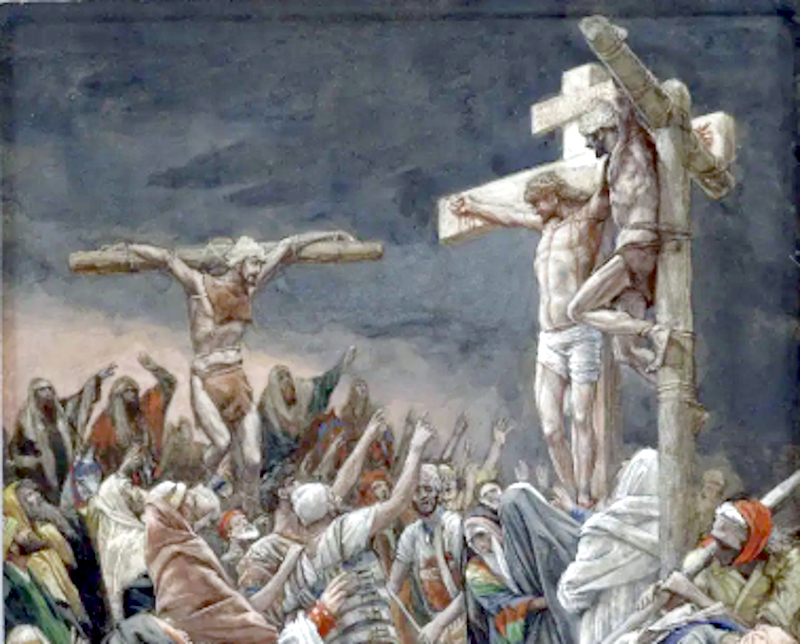
    Although the action involves each character in the story to some degree, and we can see ourselves in each of them, Luke focuses our attention on the two thieves. It’s easy to see why: like Jesus, they suffer on crosses of their own, and they, too, will die that day. Above all, and without their understanding it, both men will come face to face with their King.

    The difference between them lies not in their suffering, but in their hearts. The heart of the first man is intent on escape. While this is natural, people who want something so badly can end up bullying others – even God – desperate to get what they want.

    I might ask, ‘How is that like me?’ – but I already know. Many times, I have approached the Lord with a similar attitude. “What kind of God allows bad things to happen? You can do it, so get me out of this!” That isn’t a prayer, it’s a demand, and it betrays a heart looking for God to fix the outer situation, not the inner person.

    Note that Jesus does not reply to this man. It’s natural to want relief from our cross, and to ask for help with it, but it’s arrogant to make demands of God or measure His Kingship by how well He makes us content and comfortable.

    By contrast, the second thief accepts the truth about himself (we are getting what we deserve) and Jesus (he is innocent and is entering his kingdom). In that humility, all he asks is that Jesus remember him.

    This is our ideal. We are like the good thief every time we approach the Lord not in arrogance but in humility and truth. Our best, most effective prayers are said in trust — acknowledging our sin, our need for mercy, and our faith that even in the worst of our suffering, Christ the King is Lord of all and has our good in mind.

    Of course, our hope is that Jesus replies as mercifully to our prayer as he did to the good thief. Luke is clear that our Lord is not outdone in generosity! Where the thief said, Remember me, Christ replied, You will be with me, and where he said, when you come into your Kingdom, Christ said, Today.

    Today and every day, Christ the King stands between those who approach him with pride and resentment on the one side, or humility and repentance on the other.

    So the question is, which side of the King do I tend to stand on?

    —

  • Faith That Keeps Going

    Faith That Keeps Going

    The 29th Sunday in Ordinary Time (C)

    Exodus 17:8-13; 2 Timothy 3:14-4:2; Luke 18:1-8

    If you’ve been following the Gospels these past few weeks, you might have noticed that Jesus has talked a lot about what it means to live by faith.

    First, he told us that faith means trusting in God, not in our possessions or our comfort. Then, in the story of the rich man and Lazarus, he showed us that faith is lived with a merciful heart, not a selfish one. Next came the mustard seed: even a tiny bit of faith can do great things if we live it with humility. Finally, last week, in the story of the leper who came back to say thank you, Jesus showed us that faith, to be real, must be founded on deep, lasting gratitude.

    Today, Jesus adds one more piece: endurance. Through the parable of the persistent widow, he teaches that faith isn’t just a feeling or a moment of inspiration; rather, it’s “staying power.” It keeps going, even when life is hard, when prayers seem unanswered, or when it feels like God isn’t listening.

    Honestly, endurance might be the most difficult one of all, yet it’s vital. Why? Well, it’s not so hard to trust, forgive, or be grateful once in a while. But to keep doing it year after year, through disappointment, silence, or loss? Without endurance, where would our faith be?

    Today’s other readings make that point. Consider Moses: at first he could hold his arms up in prayer all by himself. But, eventually, he wore out and needed help. That’s us, too. None of us can “hold up” our faith alone forever. We need others beside us; people who pray with us, encourage us, and perhaps above all, pray for us.

    And St. Paul adds something more: endurance in faith comes from feeding on God’s Word. We can survive for a while without opening our Bibles, but not for long. As St. Jerome once said, “When we pray, we speak to God; when we read, God speaks to us.” To endure in faith, we must listen. In every passage of Scripture, Christ is there, speaking to our confusion, fear, and fatigue.

    So this week, let’s take this lesson to heart. Endurance builds our faith in at least two ways, through humility and resilience. First, like sticks in a bundle, faith is stronger when we don’t go it alone but keep at it together, allowing others to help us, and helping others in turn. Second, faith is more resilient as we put aside our temptations to be frustrated and allow the grace of God to fill us with the confidence that He is always faithful, hears us, and will answer – in His time, not ours.

    This is the faith Christ hopes to find when he returns: a faith that binds and holds us together; that keeps praying, keeps hoping, keeps believing that God is still who He has always said He is: The Love that never leaves.

    —

  • Holding On to What Matters

    Holding On to What Matters

    23rd Sunday in Ordinary Time

    Wisdom 9:13-18b; Philemon 9-10, 12-17; Luke 14:25-33

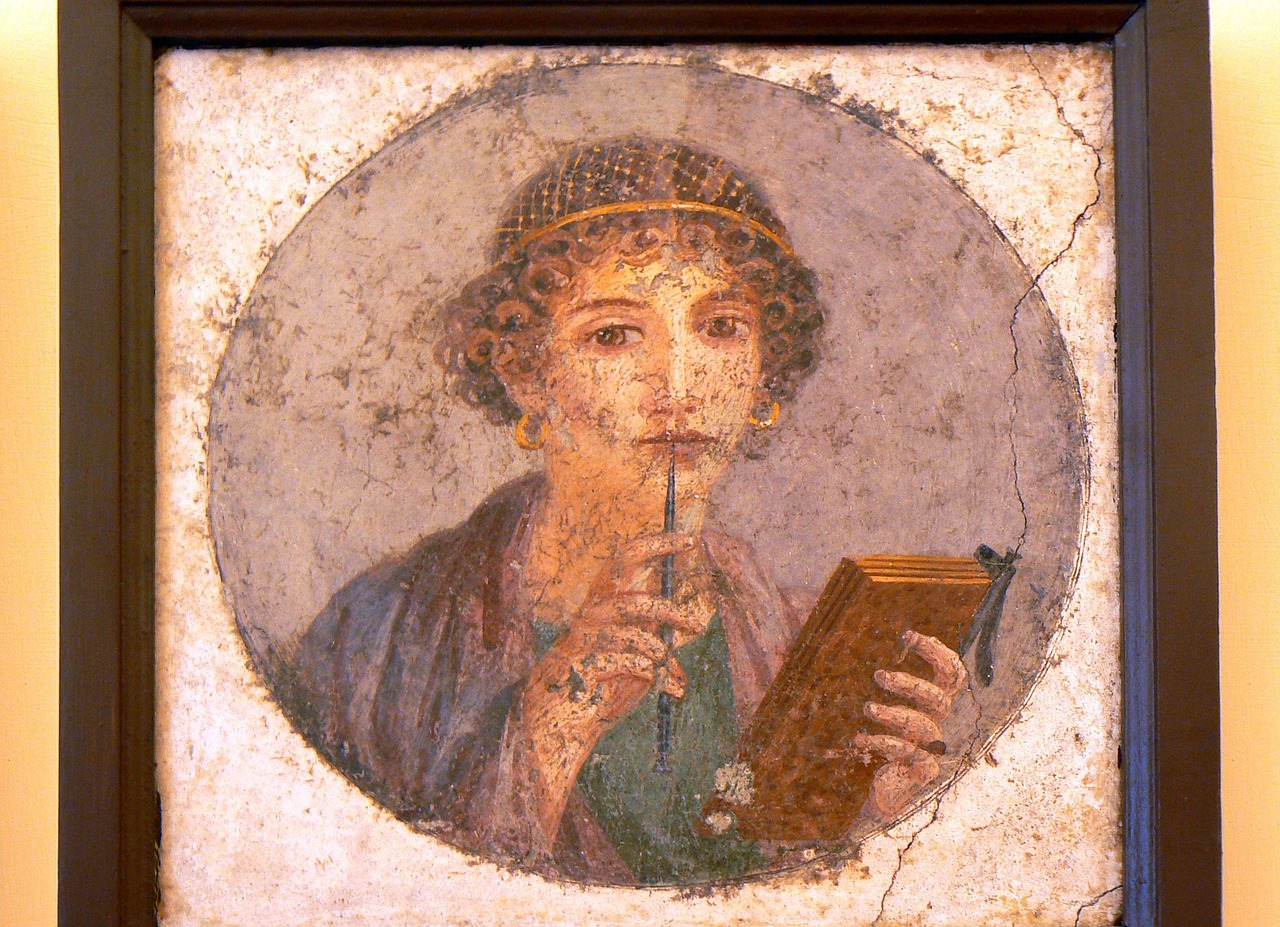
    Recently, archaeologists uncovered the remains of a woman in Pompeii, the ancient city buried by the eruption of Mt. Vesuvius in 79 AD. The scientists found two things: First, the woman was early middle age and well-to-do; second, having come back home, she was clutching several gold coins and some jewelry. Imagine the moment: With ash and pumice raining down, she had a choice to make about what was most important. She made it, and it cost her literally everything.

    As Jesus says in the gospel today, being his disciple also demands a choice and comes at a cost. On one side are all the things the world has to offer – wealth, comfort, convenience, relationships – and it hurts to let those go. On the other side stands the cross, and it hurts to take that up.

    Still, my guess is that we like to see ourselves as always choosing the cross. I know I do. But this is the time to take a good, hard look at our actual behavior. So let’s ask – What happened the last time I was invited to put aside my own comfort or convenience and do something for someone else that required my time, money, and/or effort?

    The plain, unvarnished truth is that too often I’ve resembled the woman in Pompeii, choosing what I want rather than what I should do. It’s true of all of us, and, as the book of Wisdom hints, we’ve had the problem for a long time. Since Adam, we’ve been tempted to decide what is good on our own. That hasn’t worked out well because we have no understanding of the eternal things of God. We need the Holy Spirit; without His gift of Wisdom, history shows that we’ll keep holding on to what cannot save us.

    What does that Wisdom look like? In his letter to Philemon, Paul tells us: True Christian wisdom looks like the love that transforms relationships. When Paul asks Philemon to receive Onesimus not as a slave but as a brother, he shows that the cost of discipleship is seeing one another not through the lens of status or usefulness, but with the eyes of Christ.

    There’s no evidence that Christ was known in Pompeii when Vesuvius erupted; in her ignorance, the wealthy woman held onto what she thought was important. But we have no such excuse. We know, as the Psalm says, that only the Lord is our refuge. His urging us to put him first isn’t a call to despise our families or abandon our lives, but to remember that only in him do we find the treasure worth holding on to. So today, let us ask ourselves: What am I holding on to like the woman in Pompeii, and what cross is Christ asking me to take up, so that I can follow him to where my true treasure lies – the life that never ends?

    —

  • Here in 10 Minutes

    Here in 10 Minutes

    Genesis 18:1-10a; Colossians 1:24-28; Luke 10:38-42

    Years ago, my wife and I heard the plea of a missionary to sponsor seminarians in his country, so we decided to pay for a young man to do so. One Sunday afternoon long after, that missionary called me. “You know,” he said, “I’m not far away. I’d love to stop by and see you.” “Where are you, Father?” “About 10 minutes away. See you soon!”

    I didn’t panic… until I looked around the house. Even by my standards, it needed help. When my wife heard, the scramble really began. My job was to straighten up myself and the house, while she put together snacks, coffee, and tea. Just as we finished, there he was. It turned into a nice visit, but in no way was I really prepared for it.

    That experience and today’s readings got me thinking: What if my guest hadn’t been the missionary priest, but Jesus Christ himself? “Hi, I’ll be there in 10 minutes!”

    Well, one clue as to what I should do is in the first reading. What did Abraham do? He rushed to show hospitality to his guests. His focus was on them; he was ready to serve them. In turn, that readiness became the opening for God’s promise that he and Sarah would have a son. The lesson? Welcoming our Lord opens the door to a miracle.

    But then there’s an example closer to my experience that afternoon – the gospel. My typical way of looking at it is that Mary was right and Martha wrong. Martha’s focus on the “outside” – getting the house ready for Christ – turned into resentment, while Mary’s focus on the “inside” – sitting at the feet of Jesus – showed that she was ready to receive his word.

    Actually, I think the challenge Jesus gives us is to do both: to do things for him and be with him. We know, because Jesus told us, that as often as we feed the hungry, shelter the homeless, visit the sick, comfort the sorrowful, and forgive injuries, we do them to him. But we also know that many people who don’t believe in God do those things, too.

    No, Christ calls us to more. We see clues to that when St. Paul says, in my flesh I am filling up what is lacking in the afflictions of Christ (Colossians 1:24). What could possibly be lacking in Christ’s suffering? Our participation in it. He has prepared a place for us, as he said in John 14:2, but we must do our part. How? By preparing a place for him in our hearts and showing him to the world by what we do. That can be uncomfortable, even painful, but that’s why St. Paul began, I rejoice in my sufferings for your sake. What causes anyone to rejoice in suffering? Love! What parent wouldn’t gladly suffer in place of their child? Yes, it’s painful, but we would much rather it be us than them. That is the love he is talking about – the love that finds joy even in suffering because it is done for the sake of the beloved. That is the love that proclaims Christ to the world (Colossians 1:28).

    So, that is our challenge, but we have to be ready for it. Very soon – at Holy Communion – Christ will be here. We are both Martha and Mary. Are we ready? Have we made space at the feet of Jesus in our everyday lives? Is our heart ready? Have our prayers, works, joys, and sufferings filled up what is lacking in the suffering of Christ? Are we ready to welcome Him like Abraham, and receive the miracle only He can give?

    —