Tag: New Testament

  • The Law of the Harvest: Memorial of St. Angela Merici

    Hebrews 10:32-39; Mark 4:26-34

    Jonathan Swift once said that vision is the art of seeing what is invisible to others. Saint Angela Merici exemplified that art.

    As a child, Angela might well have foreseen a bright future. Born into a middle class family during the Italian Renaissance, Angela and her sister were raised by devoutly Catholic parents who made sure their daughters were well-educated in the faith.

    Listening to their father as he read them stories from the lives of the saints, the girls learned that the road to sanctity was no different for them than it was for anyone else, even the earliest Christians who first heard those consoling words in the letter to the Hebrews. The lesson transcends time and space: Those who choose to love Christ and follow Him wherever He leads learn that the road to sanctity always includes the cross.

    Angela learned this lesson very well. By the time she was 10, both of her parents had died; by 15, her sister was also gone. Some people might have despaired over these great losses, seeing the absence of God, but Angela did not. The seeds of the faith planted by her parents in those early years and watered by the grace of God had taken root within her as surely as the mustard seed which our Lord spoke of in the gospel. Rather than turn away from Christ or the cross, Angela consecrated herself to him as a Third Order Franciscan.

    Just 20 years old, Angela did not wait to find a way to serve. Looking at the society around her, she saw the disorder in it and traced it to disorder in the family. One thing was especially problematic. In Italian society of the time, only the wealthiest girls received any kind of education; the vast majority received little or none. Angela wondered how these girls, the wives and mothers of the future, could ever grow up to be the first teachers of their children in the ways of the faith if the seeds of their own faith withered and died.

    Inspired to action, Angela immediately converted her family home into a school and devoted herself to providing religious education to the young girls of the area. She was gentle, focused on the dignity of each girl as a unique person, and used persuasion over force. This was so effective that she was invited to the larger nearby town of Brescia so that she might more broadly and formally institute the same program throughout the area. Ultimately, Angela would go on to found the Ursulines, an order of consecrated virgins devoted to St. Ursula, whose mission it became to bring religious education to young girls. Her order was so successful that the Pope himself asked Angela to relocate to Rome. She declined, saying that she was devoted to the children of the rural country she called home and wished to remain there. This she did until her death in 1540.

    wheat-field-640960_640Angela Merici was a visionary; she saw what was invisible to everyone else. Where others saw the Italian countryside she saw the Kingdom of God; where they saw poor and middle class girls, Angela saw fertile ground waiting for seed. Christ asked her to sow and she obeyed. He asks no less of us. The Kingdom of God is here and now; the ground is fertile and plentiful. All our actions, for good and bad, fall like seeds into that ground. May we always remember what Saint Angela already knew, as given by the spiritual writer James Allen: “The law of the harvest is to reap more than you sow. Sow an act, and you reap a habit. Sow a habit and you reap a character. Sow a character and you reap a destiny.”

    Saint Angela Merici, pray for us.
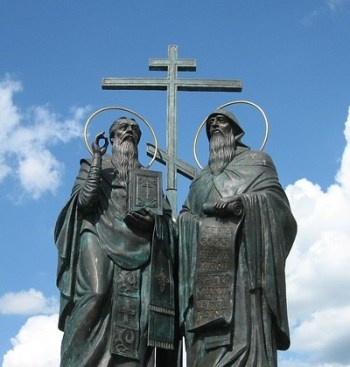
  • Heart Speaks to Heart: Sts. Basil the Great and Gregory Nazianzen

    1 John 2:22-28; John 1:19-28

    The first reading begins, Beloved: Who is the liar? Whoever denies that Jesus is the Christ. John seems to be thinking of someone in particular who had strayed from the truth about Christ. This was not uncommon; the early Church was plagued with heretics whose theories about Jesus ran the gamut, from the Ebionites who believed that Jesus was not divine at all, to the Docetists who believed that Jesus was only divine and merely pretended to be human for our sake.

    In the 4th century, one particular heresy took center stage. It was popularized by a priest named Arius, who used Scripture to teach that Jesus, although as close to divine as a human being could be, wasn’t actually divine; he was a creature and therefore less than God. The heresy was appealing; it made sense to people who couldn’t understand how God could die on a cross. Throughout the Christian world, Arianism spread like wildfire.

    At the same time, God was raising up a river to put that fire out. It came in the form of the two men we remember today, Basil and Gregory. Basil was born in what is now central Turkey in the year 330 AD; Gregory was born in the same area nine years later. Both left their native land to go to Athens where, as Gregory would later write,

    We had come, like streams of a river, from the same source in our native land… and were now united… as if by plan, for God so arranged it.

    Indeed, God arranged not just friendship; Basil and Gregory became soulmates. Blessed John Henry Newman used the phrase, cor ad cor loquitur – heart speaks to heart – and that describes these two men. Gregory further wrote

    When, in the course of time, we acknowledged our friendship and recognized that our ambition was a life of true wisdom, we became everything to each other: we shared the same lodging, the same table, the same desires, the same goal. Our love for each other grew daily warmer and deeper… We seemed to be two bodies with a single spirit.

    What united them was their common love of Christ. In the gospel the priests, Levites, and Pharisees also had ambitions; ironically, although Wisdom Himself had dawned upon the world and was so near them, they lived in the darkness of self-absorption and wished only to see that He satisfied their requirements. Unlike them, Basil and Gregory took to heart John’s words when he said, let what you heard from the beginning remain in you. From childhood they were taught the truth about Christ and sought to ensure that they satisfied His requirements. They asked questions of the faith only to see where their own understanding was darkened and prayed that Christ would shed His light upon them.

    United in this purpose, both men poured themselves into their studies and infused their knowledge with the grace of ordination. Gifted by God as powerful writers, orators, theologians, and shepherds, they fearlessly and eloquently defended the Church against Arius and all who opposed the truth that Father, Son, and Holy Spirit are a perfect Unity. As Patriarch of Constantinople, Gregory presided over the Council of Constantinople in 381, which completed the Nicene creed that we recite every Sunday. Not only that, both men wrote masterpieces of theology that are studied and used to this day.

    statue-2171097_640Saints Basil and Gregory can teach us many things, but today we focus on two. First, they teach us that faith in God requires true humility. Heresies are born from the pride that sees ourselves as the measure of all things; that interprets our failure to understand the truths of the faith to mean that the truths are wrong. True humility is as John admonished us, to remain in him; to see that God is the measure of all things and that our inability to understand means that we still have work to do. Second, in these days when the word “love” is so easily limited to physical expressions of self-gratification, the love of Basil and Gregory is a shining example of the most uplifting, life-giving love possible between people. This is the love that is modeled on God; that seeks only the good of the other; that finds its union with others in the heart and soul because that is where God dwells, and God is love. This is the love where heart speaks to heart and says, “I want for you what God wants for you.” My prayer is that all of us come to have that love for one another. What a world this would be.
    Saints Basil and Gregory, pray for us.

  • Living Stones: The Feast of the Holy Family

    Sirach 3:2-6, 12-14; Colossians 3:12-17; Matthew 2:13-15,19-23

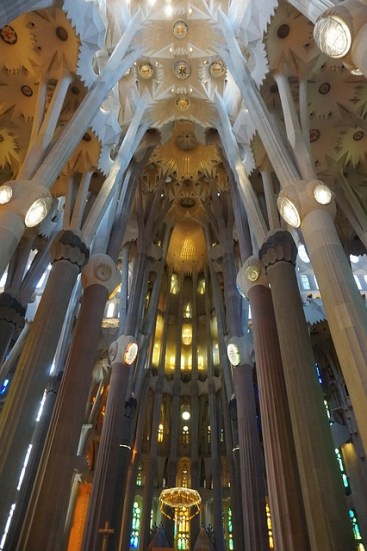
    Recently on Catholic radio I heard of a church called the basilica of the Holy Family. It stands in downtown Barcelona and, from the images I’ve seen, is as breathtaking as it is hard to describe. I urge you to look up the pictures and videos online and see this majestic, cavernous, awe-inspiring structure for yourself.

    There isn’t time to talk about the brilliant architects, artists, and builders who have contributed their time and energy to the project but a couple of events deserve mention. In 2010, Pope Benedict XVI consecrated the basilica and in 2015 it was proclaimed nearly complete. What makes these events noteworthy? Three things: First, the planned completion date is 2026; second, the permit to begin construction wasn’t granted until 2019; and third, the building permit was applied for in 1885.

    That’s right, 1885. Actually, ground was broken on the feast of St. Joseph, March 19 1882 and construction has continued – off and on – since then. No one planned for Holy Family to take that long. Various things have gotten in the way – like the Spanish Civil War. Needless to say, the basilica is a work in progress.

    This is important to remember because it says a few things that touch on the idea of family and its holiness.

    First, good things can be a long time in the making. Holy Family basilica has taken over 130 years already and its scheduled completion date may come and go. Clearly, hitting the date is not the priority; the priority is that things are done well. The same is true for the holiness of the family. Parents are charged with the responsibility of seeing that their children grow in holiness; to do that well they must be holy themselves. Pope St. John Paul II called his childhood home his first seminary. His father was not afraid to pray in front of his children or to live a life in service of God and his neighbor; he did so every day. Obviously this is a long, slow process, but like Holy Family basilica a holy family is built bit by bit, stone by stone, day after day.

    Second, things don’t always go according to plan. As the history of Holy Family basilica shows, we make plans but life happens. Few knew this better than St. Joseph. He had plans: Wed Mary of Nazareth, have a family, and work to provide for them. As he came to learn, God had another plan: Be father of the Holy Family. Think of the tremendous responsibility this laid on his shoulders: The very life of the Savior, the Son of the Most High, was in his hands. God was depending on him to keep that child safe from people like Herod. Although fathers and mothers of our own holy families do not have exactly this same responsibility, theirs is still an awesome task. God lays on their shoulders the task of properly raising their children, of keeping them safe from whatever life throws at them and teaching them as Joseph and Mary taught our Lord in his human nature how to get along in the world, what is important and what isn’t, what it means to be married, what happiness is and how and where it is found. As every parent knows, this makes building a basilica seem easy by comparison! But the blueprint for such holiness exists; St. Paul gives it when he urges us to put on heartfelt compassion, kindness, humility, gentleness, and patience, bearing with one another and forgiving one another (Colossians 3:12-13).

    gaudi-2419961_640Finally, the basilica of the Holy Family teaches us that joy is not necessarily the destination but the journey. Every year, millions of people take the time to tour the basilica of the Holy Family in Barcelona. Whether they are watching as the builders add to its structure, marveling as artisans craft the artwork that adorns it, or attending the Masses offered there, the faithful are uplifted and sanctified even though the basilica is a work in progress. The same is true for our families, for they too are works in progress. Every day brings the happiness and sorrow, the cataclysms and quiet moments through which families progress either closer to God or further away from him. Let us pray that our families take every moment of life and find the joy in it; for each moment, whatever it holds, is an opportunity given to us by Almighty God to build up our own domestic Church in virtue, crafting ourselves more and more into what we are called to be – living stones built upon the cornerstone that is Christ.

  • The Song of the Dove: Feast of Saint Stephen

    Acts 6:8-10; 7:54-59; Matthew 10:17-22

    Of all the customs that have ever arisen during the celebration of the Twelve Days of Christmas, perhaps the strangest occurred in the 18th and 19th centuries. Beginning on the Feast of Stephen, young boys in Southern France, Great Britain, and Ireland would hunt and kill a bird; specifically a wren, then display it and parade it around town asking for money.

    It’s hard to understand how this bizarre ritual started or why it was done, let alone how it could continue for two hundred years, but a good dose of superstition was probably involved. In certain places the wren was considered symbolic of priesthood or prophecy. An old Irish word for wren meant “bird of prophecy,” and some Irishmen associated it with a type of pagan priest who foretold the future. Although we have no idea what the poor little bird was supposedly prophesying, one thing is known: The wrens’ song is very loud; allegedly ten times louder than other birds their size. Who knows; perhaps the boys thought they were doing their town a favor.

    In the reading from Acts, the members of the local synagogue may have thought that they were doing their town a favor when they silenced Stephen. But his was the song of the Dove, not the wren. Luke says that Stephen was filled with the Holy Spirit; as Jesus made clear in the gospel, His wisdom cannot be overcome. Like Jesus, the only way to try and silence Stephen was to kill him; it is no coincidence that Luke patterns Stephen’s passion and death after that of Christ. For example, in Luke Jesus tells the Sanhedrin before he dies that from this time on the Son of Man will be seated at the right hand of the power of God (Luke 2:69); here, Luke has Stephen say Behold, I see the heavens opened and the Son of Man standing at the right hand of God (Acts 7:56).

    snow wrenLike the mysterious sacrifice of the wren, this may leave us curious. Why does the Church take the first day after Christmas to remember the first martyr? The answer lies precisely in the similarity of Stephen’s passion and death to Christ’s. Christmas is the celebration of the birth of Jesus; the same Jesus who came not to be served but to serve and to give his life as a ransom for many (Mark 10:45). It was in the giving of his life that Christ most profoundly served, for only by the perfect sacrifice of himself could his disciples have hope of being born into eternal life. Thus with Stephen; he could most greatly honor his Savior by imitating him in life even if that meant dying, that he might be born into eternal life with Christ.
    It might seem odd for the Church to see death as the way to honor life; after all, if Church members die, how can the Church survive? That brings up another fact about the wren. Although winter can devastate its population, the bird is extremely hardy; it always finds a way to survive. What is true for the wren is doubly true of the Dove; those who have been graced to speak with the power of the Holy Spirit have been hunted, killed, and displayed for over two thousand years; still, the Church continues to find ways not only to survive but to thrive. In fact, it is the irony of man and the glory of the Holy Spirit that the martyrdom of Stephen gave rise to the greatest come back in Church history. Notice near the end of the first reading, Luke tells us that the witnesses laid down their cloaks at the feet of a young man named Saul (Acts 7:58). Saul, the same man who stood silently by at the death of the first martyr, in time became Paul, the loudest and hardiest wren of all.

    St. Stephen, pray for us.

  • Our Mother, Clothed With the Sun: Feast of Our Lady of Guadalupe

    Revelation 11:19a; 12:1-6a, 10ab; Luke 1:39-47

    The book of Revelation is apocalyptic literature. This was a genre used in and around the time of Christ. It is overloaded with rich and mystical symbolism; a single image may represent multiple things. Further, the imagery can be violent and warlike, even though its ultimate message is one of hope and peace.

    In the passage of Revelation chosen for today’s feast lurks a huge red dragon. The Hebrew word translated as dragon can also mean “serpent” or “sea monster” and is thought to represent the devil and the forces of evil, ready to make war against the Christ and his Church.

    In late 15th century Mexico, the Spanish conquistador Cortez saw echoes of that dragon in the violent, warlike Aztec religion. Every year, thousands of people were sacrificed to appease its bloodthirsty gods. In 1487, the dedication of a new pagan temple saw 80,000 people sacrificed in just a few days. As if that weren’t bad enough, the dragon’s shadow also appeared in some of the immigrants to the new world, who spoke of peace but practiced avarice, treating the Mexicans and their land as things to be exploited for personal gain. Even some within the Church hindered the spread of the gospel by refusing vocations from the local community; Catholic Mexicans were not allowed to minister to their own people. It’s not hard to understand why many resisted converting to Catholicism.

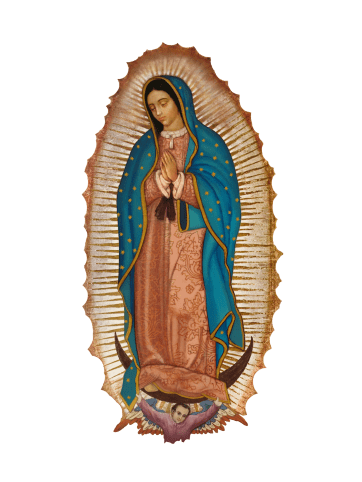
    If a reflection of the dragon could be found in the new world, so could a reflection of the woman. In 1531, a mystical apparition identified herself as “the ever Virgin, Holy Mary, the Mother of God” to a middle-aged Mexican man named Juan Diego. In Revelation, the woman was clothed with the sun, the moon under her feet, and wore a crown of stars. The apparition at Tepeyac is also rich in symbolism, but it is all Aztec. The woman stands in front of the sun, eclipsing the Aztec sun god; her foot rests on the moon, dominating their chief god, Quetzalcoatl; her mantle holds the stars, which they worshiped. Yet, the woman is not divine; her hands are in a posture of prayer and she looks down, which Aztec gods never do. She is a queen, for she wears the Aztec royal color of turquoise; a Christian, for there is a cross on her brooch, is pregnant, for she wears an Aztec maternity belt; yet she is a divine mother, for over her womb appears a four-petal flower, the Aztec symbol of a deity.

    As important as her image was, her words were far more so; for what she said, how she said it, and who she said it to. She spoke in the language of the Aztecs, not in Spanish; she spoke to a simple peasant, and through him to all people; her message was one of comfort and hope: She was there; she was their mother; she held them in her arms, heard their weeping, and knew of their hardships and sorrows. Above all, she wanted them to rest assured that through her intercession they would be healed.

    our-lady-of-guadalupe-4542831_1920She became known as Our Lady of Guadalupe, and as word of the miraculous appearance and image spread, she became the most effective tool of evangelization that Mexico or the world had ever known. In the gospel, Mary carried the Eternal Word into the Judean countryside where the babe within Elizabeth’s womb leaped for joy; 15 centuries later, Mary’s maternal word went out into the Mexican countryside where millions leaped for joy. Conversions increased so dramatically that for a couple of years the missionaries could almost not keep up with them. More than that, the peoples’ faith was strong; to this day, the faith of the Mexican people remains vibrant, with deep devotion to Our Lady of Guadalupe.
    In our own time the dragon still lurks. We do not have thousands dying in pagan temples, but we do have millions dying in abortion mills here and throughout the world. Still, the image of Our Lady of Guadalupe reminds us that the woman of Revelation is still present, still giving birth to the Church, still giving her ever victorious Son to the world. As she comforted the Mexican people, so she consoles us. She is our mother; she holds us in her arms; knows of our hardships and sorrows, and assures us that through her intercession, we too will be healed by Christ, her son.

    Our Lady of Guadalupe, pray for us.

  • An Attitude of Gratitude: Thanksgiving Day

    Sirach 50:22-24; 1 Corinthians 1:3-9; Luke 17:11-19

    I recently came across an article written by a psychologist who believes that developing an “attitude of gratitude” is important for our mental health. In her words, “Being able to appreciate what is important to us is a truly valuable way of stepping back from the stresses we are experiencing and re-framing our thoughts and attention, our feelings and behavior.”1

    With all due respect, she should have checked Scripture first. If she had gone even as far as today’s readings she would have found much more insight.

    The author of Sirach goes right to the heart of the matter when he reminds us to be grateful for the gift of life itself from conception onward. The grim realities of abortion and euthanasia are evidence of a culture where people do not understand the value of their own life let alone anyone else’s. The kind of social sickness that breeds such an attitude will be hard to heal but we have on call the Divine Physician who knows how to treat it. As we continue to pray for his intervention let us not forget our part; that is, showing thankfulness to God for the gift of all human life by doing whatever we can to support it, whether that means women in crisis pregnancies, people suffering from abuse or neglect, or those who are encouraged to end their lives. The world must come to see through Christ and his Church that every human life is infinitely valuable because it is made in God’s image and fashioned according to his will (Sirach 50:22).

    God’s will, that we have life and have it abundantly now and in eternity, comes to the fore as St. Paul reminds us of the grace bestowed on us in Christ Jesus (1 Corinthians 1:4). While human life is certainly enough to be thankful for in and of itself, God has given us the opportunity to share in so much more: Eternal life through the gift of his only Son, our Lord Jesus Christ, with whom we have fellowship and of whom we partake at every Eucharist just for this purpose.

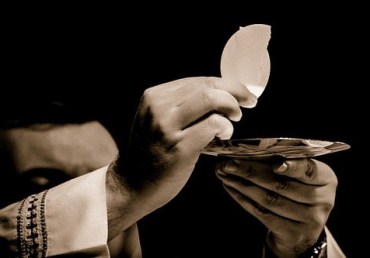
    eucharist-1591663_640Still, a common problem is that we tend to take this fellowship for granted and forget gratitude. We fall into a routine of receiving Communion with little or no thought as to what – or rather Who – we are receiving. Like the nine lepers in today’s gospel passage, we are given what we ask for but then go back on our way with little regard either for the gift or what it cost the Giver. St. Paul goes on to warn about the grave danger of such ingratitude: That is why many among you are ill and infirm, and a considerable number are dying (1 Corinthians 11:30). The healthier, more grateful response is to first discern whether we are in the state of grace to receive Christ and, if not, to make ourselves a more worthy vessel. Like the leper who, once cleansed, remembered to be thankful, we thank God for what he has given us through the Church – the gifts of faith and the Sacraments through which he touches, heals, and sanctifies us.
    Today is Thanksgiving Day here in the United States, a day set aside to show our gratitude. Wherever you are, I urge you to stop and think about all that God has given you. No matter who you are or how many problems you struggle with, there is reason to be grateful. First and foremost, be grateful for life; each breath is a gift from God given that we may live life to the full. Secondly let us be grateful for each other; each person is a gift from God, sent to make us holy. Finally, let us thank God for the gift of the Church, through which Christ comes to us in Word and Sacrament to be one with us and above all to make us one with him, now and in Eternity.

    A very blessed and happy Thanksgiving.

  • The Miracle of the Nuns: Saturday of the 32nd Week in Ordinary Time

    Wisdom 18:14-16; 19:6-9; Luke 18:1-8

    In November 1950, three nuns found themselves in the Arctic Circle, in a Russian gulag (or prison camp) named Vorkuta. Found guilty of proclaiming the gospel of Christ, they were assigned to work in a plant there that made bricks.

    The first verses of today’s reading from the book of Wisdom come from Chapter 18, which recalls another prison camp, where Hebrew slaves made bricks for their Egyptian masters. Yet, as the reading says, the Lord, a fierce warrior, bore into the doomed land the sharp sword of his inexorable decree, filling every place with death.

    No one saw Vorkuta as doomed, and death already filled it; more prisoners died there than in Auschwitz. Further, no one had mistaken the nuns for fierce warriors, but perhaps they knew a different art of war. All the camp’s commandant knew was that these nuns were troublesome. They refused to work, claiming that anything they did to support Communism was tantamount to working for the anti-Christ.

    Dead nuns make good martyrs but poor slaves, so the commandant did not want them killed; he wanted them to change their minds. After various ghastly tortures failed, he had an idea; if he couldn’t change their minds, then perhaps the Arctic winter would. He commanded that the nuns be brought outside every day for 8 hours and forced to watch the other women work.

    The first day, the guards led them to the top of the windy hill below which the women worked. In the bitter cold, the nuns knelt and prayed. The next day, their gloves and hats were taken away; again, the nuns knelt and prayed. The third day, their scarves were removed; just as before, the guards returned after 8 hours to find them once again kneeling in prayer. Not only were the nuns very much alive, they had no trace of frostbite at all. Word spread throughout the entire camp about the miracle of the nuns. The next day, the guards refused to take them out again and the commandant ordered them to be left alone; these nuns had some sort of power over which he had no control. They never worked a day of their sentence. Awhile later, in 1953, the entire camp followed suit. Their refusal to work led to the gulag of Vorkuta being declared a failure. The myth of Soviet invincibility suffered a blow from which it would never recover.

    No one reported that a cloud had overshadowed the gulag; then again, perhaps no one asked the nuns. Like the Hebrew slaves long before them, the nuns were preserved unharmed, sheltered by the hand of the One to whom they prayed. Like the Egyptians before them, the Soviets could only stand by helplessly and behold the stupendous wonders of God.

    In the gospel, Jesus exhorts us to pray always without becoming weary. Even as unjust a judge as the commandant of Vorkuta was powerless when confronted with the faith of the three little nuns who understood the power of persistent prayer.

    winter-1565442_640.jpgPersistence in prayer does not test God’s patience or change his mind; rather, it tests our faith and changes our attitude. Through his life and the Scriptures he has given the world, Jesus has told us that God loves each of us with a love beyond our understanding and knows our needs before we ask. That being so, God wants our prayer to consistently express the trust we have in him and his providence; that is the faith that Christ wants to find upon his return.

    We will have reached perfection in prayer when it expresses the same total abandonment to God as that of Jesus when he prayed: “Father, not my will, but Thy will be done.”

  • True Wisdom: Thursday of the 32nd Week in Ordinary Time

    Wisdom 7:22b-8:1; Luke 17:20-25

    In college one of my classmates was a man who it seemed was always a step ahead of me. While I was still learning one computer technology he was onto whatever was replacing it. I couldn’t keep up with him.

    One semester we took the same class and it became clear to me that he wasn’t far ahead at all; he was actually much further behind. The problem was that he didn’t stick with anything long enough to finish it. He’d start a book, paper, or project but move on when something else caught his attention. When it came time for our final class presentations he was totally unprepared; he had nothing to say. He ended up dropping out of school. I felt very sorry for him.

    Had I been wiser I would have stopped and contemplated the many ways I am that man. For one thing, my shelves are lined with books that got my attention for awhile but which I put down as soon as I found something else. For another, I catch myself tuning out a Scripture passage because I’ve heard it before and think I understand it. As if that isn’t bad enough, I sometimes pay the least attention to the people closest to me, assuming that they know I care so I don’t need to say it or act much like it.

    Maybe this describes all of us to some degree. We begin a spiritual article on the internet and abandon it as soon as a flashy image catches our eye; scroll past bible verses and quotes from saints without contemplating them; spend hours searching for God online but miss finding him in our own families.

    These are the modern-day equivalent of the behavior discussed by Jesus in today’s gospel. Expectations about the flash and bombast of the Messiah and his Kingdom, scant attention paid to the meaning of our Lord’s words, and eagerness to scan the spiritual horizon for something new combined to give the Pharisees and even some of our Lord’s disciples a kind of spiritual farsightedness; they looked at but couldn’t see either the King or his Kingdom there among them.

    They did these things for the same reason we do: To gain the wisdom that will bring us closer to God and other people. The irony is that instead of bringing us closer they overwhelm us and keep us away. Discouraged by lack of results, some of us even abandon the attempt, drop out, or fall away.

    directory-229117_640No wonder. Internet scans, scrolls, and searches cannot bring the wisdom we need. As the first reading tells us, Wisdom is a spirit… Firm, secure, tranquil, all-powerful, all-seeing… the spotless mirror of the power of God, the image of his goodness (Wisdom 7:22, 23, 26). Wisdom is Christ, and his gift to us is wisdom as the fruit of the Spirit. A fruit born of the love of God, wisdom desires not only to be one with God but to see things as God sees them. Like any fruit, wisdom takes time to mature; its development a function of our life experience as seen through the lens of long-suffering that strengthens us to finish what we start, docility to listen as God speaks, and humility to remember that we are servants of God and each other.

    Spurred on by these, spiritual wisdom helps us find the proper balance between searching for the Kingdom yet to come and living in the Kingdom here and now. We must do both, for the Christ who tells us today that the Kingdom of God is among us is the same Christ who teaches us to pray “Thy Kingdom come.” The balance can only be found through prudence, the virtuous midpoint between the extreme of finding too many paths to take and the other extreme of looking for none at all.

    So let us pray for prudence, and that whatever path to God we find ourselves on we do what prudence dictates: Prepare for the coming of the Kingdom by tending to the Kingdom among us, and anticipate the glorious return of Christ the King by seeing and serving him in everyone we meet.

  • The Light of a Single Candle: 32nd Sunday of Ordinary Time

    2 Maccabees 7:1-2, 9-14; 2 Thessalonians 2:16-3:5; Luke 20:27-38

    In 1968, Chicago mayor Richard J. Daley was questioned about allegations of police brutality during the riots. He famously responded that “the policeman isn’t there to create disorder; the policeman is there to preserve disorder.” Although we can laugh at the mayor’s confused language, we understand the thought behind it. The common good of every society demands order. In fact, order means so much to us that from capital punishment to the military draft, we allow the government even the right to take life to preserve and protect it.

    However, leaders can presume too much on this right, as the first reading shows. The story takes place about 170 years before the birth of Christ. The king is not named but is known to be Antiochus IV Epiphanes. Unlike other successors of Alexander the Great, the king took exception to the Jews’ refusal to adopt Greek culture. In his anger he desecrated the Temple by erecting a statue of Zeus in it and, as we heard, commanded that the Jews either learn to live with a pagan diet or die with their own.

    Although the king was certainly a tyrant, at least he was honest; he never pretended that what he was doing was good. More recent tyrants hide their brutality behind euphemisms. Less than a century ago when the National Socialist party came to power in Germany they arrogated to themselves the legal right to define the mentally and physically handicapped as “unworthy of life” and their extermination a “mercy.” They later redefined mercy as ridding society of Jews, to “purify the race.” They weren’t alone; think of the genocides in China and Cambodia and the “ethnic cleansing” in Bosnia and Rwanda.

    Even worse, the latest attacks on life target the weakest and most defenseless. Consider the elderly and infirm. When euthanasia was legalized in parts of Europe, it was hailed as a “mercy” and critics were reassured that strict safeguards defined who could be terminated. Once again though, mercy was redefined; now a physician can legally terminate anyone over 70 or those of any age who say that they are suffering mentally or physically and no longer want to live. Those declared mentally incompetent have someone else decide for them. In the United States, physician-assisted suicide is legal in two states and under consideration in others. At the other margin of life, abortion advocates defined person-hood beginning at birth but did not foresee the redefinition proposed by the bio-ethicist Dr. Peter Singer who wrote: ‘Human babies are not born self-aware, or capable of grasping that they exist over time. They are not persons…(T)he life of a newborn is of less value than the life of a pig, a dog, or a chimpanzee.’ Singer wrote that in 1979. To atheists such as he, humans are just another animal; nothing more. As atheism has continued to grow, Singer’s ideas have gained a foothold. The cause for redefining what it means to be a person has begun. Again. We may well live to see a society where it is perfectly legal to declare an infant as “unworthy of life.”

    The fatal flaw of every tyrant is that they see the worth of the human being as beginning and ending with the mortal body. Like the Sadducees’ misguided argument, this fantasy dissolves in the light of Christ who in the gospel defines the body not in terms of mortality but of eternity when he says that those who are deemed worthy to attain to the coming age and to the resurrection of the dead … can no longer die, for they are like angels.. they are the children of God because they are the ones who will rise. Society may arrogate to itself the right to manipulate, control, even destroy the human body but they are powerless to define its worth or control its destiny.

    The martyred brothers and their mother from the story in Maccabees knew this, and it is the power behind the hope given in the second reading when St. Paul speaks of the endurance of Christ. This is the power that drives the good to endure, to hold onto the promise of resurrection in the face of a tyrant who promises only death.

    hands-1926414_640We who have inherited this faith must never forget these two lessons from the readings: First, the worth of the human body was not, is not, and never will be ours to decide. God has given us freedom, so we can define and re-define who is and who is not worthy to live, but in the end these are just words; our laws  are meaningless when not based on divine law and their power stops at the same death long since conquered by Christ. Second, silence that allows such deadly evil to go unchallenged is complicity in it and as such is a breakdown of the moral conscience. Even if it seems too powerful, even if it seems that everybody else agrees, even if it hides behind euphemisms such as “mercy killing” or “reproductive rights,” Christ asks us to stand – alone if need be – call evil what it is despite the consequences, and do whatever we can to bring light into the darkness, for as St. Francis of Assisi once taught, all the darkness in the world cannot extinguish the light of a single candle.

  • Love Without Measure: Thursday of the 31st Week in Ordinary Time

    Luke 15:1-10

    A man with 99 sheep safe and sound leaves them all to recover a lost one and, finding it, rejoices as if it is all he owns. A woman with ten coins loses one of practically no value but like a miser turns the house upside down until she finds it, then throws a party when she does. If you find this behavior strange, surprising, or even mystifying, know that you’re not alone.

    Also know that our Lord is delighted to hear it.

    That’s because parables aren’t supposed to make sense on the surface. They’re meant to sound strange, to surprise, and even mystify us. Their unexpected behavior or surprising twists should give us pause, make us stop and reflect, prompt us to ask questions, and look beneath the surface for answers. The question for today’s parables is obvious: What is it that would make someone go so far out of their way to recover something it seems they could so easily do without?

    The answer is the infinite, overwhelming, passionate, mysterious, all-consuming love of God.

    This is a love that sees as we do not. We tend to value people not only for who they are but also for what they can do for us. On those terms what is one sheep compared to 99 or one nearly worthless coin compared to the other nine? In contrast, God’s infinite love values people not just for who they are but because they are. Thus, even one lost soul is of infinite importance. This overwhelming love assures us that even if we were the only person ever created God still would have suffered and died for us. Not only that, he wants his standard of love to be ours as well; to make the world a place without hatred, bitterness, resentment, or injustice, where we rejoice not when an enemy dies but when they repent, come to a knowledge and love of God, and live as he intends.

    That brings us to the second point of the parables, which is that God’s love brings the joy of conversion. Again in human terms, we tend to equate joy with an emotional high; a good feeling. But true joy is a fruit of the Holy Spirit, the happiness that comes as we pursue and come to possess our greatest good: Eternal union with God. This is what lies at the heart of the parables – the passionate joy that comes from finding what was lost but so priceless; the joy we too will know as we attain more and more perfect union with Almighty God.

    jesus-3499151_1280Finally, the parables teach us that the love of God works mysteriously through the process of conversion so that no matter how hard we search for Christ, it isn’t we who find him but he who finds us. Our life stories are a testament to the truth of the parables and Isaiah’s words that we have all gone astray like sheep (Isaiah 53:6). It’s who we are in the self-centered weakness of human love; left to ourselves we drift, fall into habits that may be comfortable but lead us further away from God. And it is who Christ is in the glorious strength of his all-consuming love that he comes to us like the shepherd and the woman in the parables, seeking out and saving what was lost (Luke 19:10) no matter the cost. This is the love that literally consumed him, leading him to the cross and beyond.

    It is always there that such infinite, overwhelming, passionate, mysterious, all-consuming love leads. None can possess real love without giving it away, know its deep joy without plumbing the depths of its sacrifice, or attain its life without letting our own life go. It’s very hard to comprehend that kind of love but that’s good because it gives us yet another question to contemplate. Ask yourself, what is the measure of my own love? Consider in your contemplation the answer given by the great saint Francis de Sales centuries ago, who perhaps had in mind these very parables.

    The measure of love is to love without measure.