James 1:12-18; Mark 8:14-21
We may as well answer the question Jesus asked the disciples at the end of the gospel passage: Do you still not understand (Mark 8:21)? No, they do not understand at all. The question is, why? So far in Mark’s gospel they have heard him teach, seen him heal, witness him expelling demons, raising a girl from the dead, and feeding thousands with a few loaves. Who or what kept them from seeing him as the Christ? And more to the point, who or what does the same thing to us?
It certainly isn’t God. As the first reading reminds us, God tempts no one (James 1:15). Here, James echoes the ancient truth revealed through the prophet Habakkuk that God cannot even look upon evil (Habakkuk 1:13). Rather, the reading goes on to say, evil comes from within each person who is lured and enticed by his desire (James 1:14). Let us briefly consider three different kinds of enticement.
First, we entice ourselves to sin by failing to guard against temptation. Just as a person struggling with alcoholism would be foolish to hang around liquor stores so anyone who struggles with a certain sin is foolish to put themselves in situations where they are tempted to it. This is called the near occasion of evil and is what we promise to avoid every time we say the Act of Contrition.
Second, we entice others to sin by becoming an occasion of evil ourselves. Some do this by dressing immodestly, others by gossiping. We rationalize such behavior in true Adam-and-Eve fashion by blaming the victims – “They shouldn’t look at me that way,” or “I only told the truth” – but deep down we know that we are far from innocent.
Finally, we are enticed to sin by the dark angels whose master goes by many names: the father of lies (John 8:44), the tempter (Matthew 4:3), the devil (Matthew 4:1). By whatever name he sows confusion, preys on our weakness, encourages selfishness. The wise listen to Christ who urges us to fear the demons for they can destroy us body and soul (Matthew 10:28); the prudent avoid them, and the persevering cling to God with the assurance of St. Paul that no one and nothing can ever separate us from the love of God that is in Christ Jesus (Romans 8:38-39).
Earlier in Mark, Jesus defined two kinds of people. The “insiders,” or those to whom the mysteries of the Kingdom had been revealed; and the “outsiders,” who did not. Of the outsiders he said, they may look and see but not perceive, and hear and listen but not understand, in order that they may not be converted and be forgiven (Mark 4:12). The irony is that the disciples, who should be the definitive insiders, act more like outsiders than the real outsiders! For example in today’s gospel the disciples, who just witnessed Jesus feeding four thousand people now have the chance to share a quiet boat ride with him. What a shame that this perfect opportunity to unpack all they have seen is wasted on worrying about how little bread they brought along!
 Still, Mark’s purpose is not to make us wonder at their behavior but to evaluate our own. Are we insiders or outsiders? Some of us witness Christ feeding a multitude every day, and every day share time with him in the Church, the barque of Peter. Are we focused on our own loaf of bread – be it the next place we have to go, the people we have to see, or things we have to do – or on the Living Bread that is Christ? We see the many wonderful people he gives us – our families, friends, each other; do perceive Christ living within them? We hear his word in the Scriptures; do we understand his voice speaking through all those crying for help? At the Mass he gives us himself Body, Blood, Soul, and Divinity in the Holy Eucharist; are our hearts hardened or are they being converted through the forgiveness of sins in Confession, that we may partake most fully in the infinite grace he offers?
We conclude where we began, in the letter of James. Consider how the passage begins: Blessed is he who perseveres in temptation, for when he has been proven he will receive the crown of life that he promised to those who love him (James 1:12). Let us pray for perseverance, that gift of the Holy Spirit that empowers us to remain in the state of grace until the end of our lives; may we like the Saints see and perceive, hear and understand, that our hearts be converted, our many sins forgiven, and our focus on the things above.
 Angela Merici was a visionary; she saw what was invisible to everyone else. Where others saw the Italian countryside she saw the Kingdom of God; where they saw poor and middle class girls, Angela saw fertile ground waiting for seed. Christ asked her to sow and she obeyed. He asks no less of us. The Kingdom of God is here and now; the ground is fertile and plentiful. All our actions, for good and bad, fall like seeds into that ground. May we always remember what Saint Angela already knew, as given by the spiritual writer James Allen: “The law of the harvest is to reap more than you sow. Sow an act, and you reap a habit. Sow a habit and you reap a character. Sow a character and you reap a destiny.”
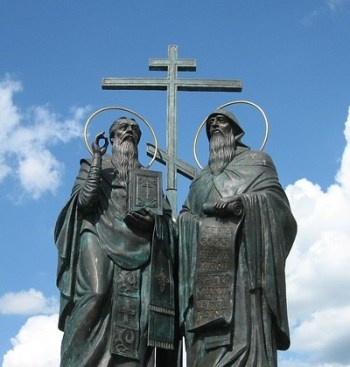 Saints Basil and Gregory can teach us many things, but today we focus on two. First, they teach us that faith in God requires true humility. Heresies are born from the pride that sees ourselves as the measure of all things; that interprets our failure to understand the truths of the faith to mean that the truths are wrong. True humility is as John admonished us, to remain in him; to see that God is the measure of all things and that our inability to understand means that we still have work to do. Second, in these days when the word “love” is so easily limited to physical expressions of self-gratification, the love of Basil and Gregory is a shining example of the most uplifting, life-giving love possible between people. This is the love that is modeled on God; that seeks only the good of the other; that finds its union with others in the heart and soul because that is where God dwells, and God is love. This is the love where heart speaks to heart and says, “I want for you what God wants for you.” My prayer is that all of us come to have that love for one another. What a world this would be.
 Finally, the basilica of the Holy Family teaches us that joy is not necessarily the destination but the journey. Every year, millions of people take the time to tour the basilica of the Holy Family in Barcelona. Whether they are watching as the builders add to its structure, marveling as artisans craft the artwork that adorns it, or attending the Masses offered there, the faithful are uplifted and sanctified even though the basilica is a work in progress. The same is true for our families, for they too are works in progress. Every day brings the happiness and sorrow, the cataclysms and quiet moments through which families progress either closer to God or further away from him. Let us pray that our families take every moment of life and find the joy in it; for each moment, whatever it holds, is an opportunity given to us by Almighty God to build up our own domestic Church in virtue, crafting ourselves more and more into what we are called to be – living stones built upon the cornerstone that is Christ.
 Like the mysterious sacrifice of the wren, this may leave us curious. Why does the Church take the first day after Christmas to remember the first martyr? The answer lies precisely in the similarity of Stephen’s passion and death to Christ’s. Christmas is the celebration of the birth of Jesus; the same Jesus who came not to be served
  The great gift of fertility given to Samson’s mother and to Elizabeth are confirmation that perseverance is rewarded. God sees all of us who endure desolation and, in his own time and manner, provides from the storehouse of his infinite mercy the life-giving consolation of his Spirit. When we find ourselves in times of desolation remember to ask the intercession of St. Elizabeth; she understands very well not only the pain of endless waiting but also the indescribable joy of the Holy Spirit’s three priceless consolations: The new life of St. John within her womb; the love and help of Mary, the Mother of Hope; and most of all the fulfillment of Hope itself: Our Lord and Savior, Jesus Christ.
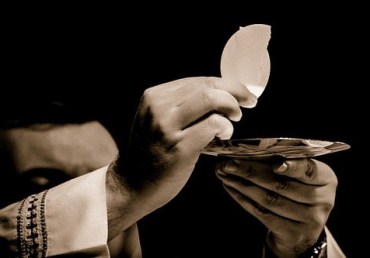 Still, a common problem is that we tend to take this fellowship for granted and forget gratitude. We fall into a routine of receiving Communion with little or no thought as to what – or rather Who – we are receiving. Like the nine lepers in today’s gospel passage, we are given what we ask for but then go back on our way with little regard either for the gift or what it cost the Giver. St. Paul goes on to warn about the grave danger of such ingratitude: That is why many among you are ill and infirm, and a considerable number are dying (1 Corinthians 11:30). The healthier, more grateful response is to first discern whether we are in the state of grace to receive Christ and, if not, to make ourselves a more worthy vessel. Like the leper who, once cleansed, remembered to be thankful, we thank God for what he has given us through the Church – the gifts of faith and the Sacraments through which he touches, heals, and sanctifies us.
 The two themes of fidelity and love are interwoven in the feast of the Presentation of the Blessed Virgin Mary. The presentation of oneself to God is an act of great faith and deep love. Whether Mary demonstrated her faith and love in a formal consecration to God in the Temple as described in the ancient non-biblical documents is irrelevant. Every day of Mary’s life was a presentation, a self-offering, an abandonment to the divine will made possible by the movement of grace within her. Long before he dwelled within her womb, indeed from the moment of her immaculate conception, our Lord dwelled within her soul and bestowed upon it the fullness of grace, his very life. By her response to that grace, Mary most truly defines what it means to be a Temple of the Holy Spirit.
 Finally, the parables teach us that the love of God works mysteriously through the process of conversion so that no matter how hard we search for Christ, it isn’t we who find him but he who finds us. Our life stories are a testament to the truth of the parables and Isaiah’s words that we have
  Mark 10:45