Every week I scour the internet and various hard- and soft-bound sources for quotes that I think might make a difference to somebody, somewhere. I know I’m not always successful but I also know for sure that at least once in a while a quote touches someone for the better.
Well, today’s quote touched me. Some might find it off-putting or unmoving but for whatever reason it’s been running through my head like a mantra. It comes from today’s saint, Cyril of Jerusalem, who knew a little something about the topic and who I think would approve of my selection for the times we now find ourselves in.
You know what I mean. These are times where people, feeling driven to desperation out of what I can only describe as panic, are depriving each other and themselves of their God-given dignity, fighting over or hoarding such things as bottled water, rolls of toilet paper, canned food, and hand sanitizers.
St. Cyril once said:
The dragon sits by the side of the road, watching those who pass. Beware lest he devour you. We go to the Father of Souls, but it is necessary to pass by the dragon.
The road is life and at every turn the dragon lurks – always hungry, always on the prowl, always ready to devour the unwitting, the arrogant, the unbelieving, the slothful. In one way or another, at one time or another, we are all of these; sometimes of our own free will, sometimes under the compulsion of habit, sometimes the result of forces we cannot name and do not understand, but cannot seem to resist.
 When we think of the dragon we think of the Devil and it is right to do so, for Scripture does refer to him that way (Revelation 12, for example). There is no doubt that the dragon is the Enemy but there is also no doubt that too often the dragon looks back from our own mirror. Worse yet, the victim does too; we allow sinfulness such a hold over us that in effect we devour ourselves, relent to the darker angels of our nature.
Most recently we have begun to treat the virus as though it were the dragon. That’s easy to understand; insidious, potentially lethal, virtually invisible, it waits not only by the side of the road but perhaps in the air we breathe or the people we touch. That inspires fear, and it should.
However, it also reminds me of St Teresa of Avila’s words, “I do not fear Satan half so much as I fear those who fear him.” While we are right to fear the virus, we should more rightly fear our own fear of it; fear is the true dragon lurking behind the unloving, self-centered actions we have heard and read about recently.
How to combat that kind of servile fear? With holy fear. Remember the next part of St. Cyril’s quote. We go to the Father of Souls. It is God whom we most love, God whom we most fear offending. What pleases God is not fear but faith; that we take advantage of the opportunities He has given us to draw closer to Him and each other.
Where do such opportunities lie in the trial we face today? Right in front of us. First, let us resolve to do the best we can with what we have been given. If the virus prevents us from going out, then we stay in and bring ourselves back to the kind of simpler time that many of us knew as children: Simple, modest home-cooked meals; conversation around the dinner table; recreation time; work time; quiet time. Nothing works to calm those around us like quiet assurance. Second, let us take advantage of the opportunities this sequestered time gives us to get back to the basics of our faith. If the churches are closed to holy Mass they are wide open for Confession. What better time to go than when we feel the dragon near? And what better time to fall on our knees and pray for those who have fallen ill or died and to thank Him that we and so many others have been spared? Finally, we can make this a time to worry less about our own needs and more on those most vulnerable – the elderly, those with small children, those with few resources.
Fear is not the time to turn away from God but toward Him, for God alone has the power to save. I quoted Cyril of Jerusalem and Teresa of Avila; let me close by quoting our Lord.
Do not fear: I am with you; do not be anxious: I am your God. I will strengthen you, I will help you, I will uphold you with my victorious right hand. (Isaiah 41:10)
The LORD is my light and my salvation; whom should I fear? The LORD is my life’s refuge; of whom should I be afraid? (Psalm 27:1)
It is necessary to pass by the dragon, but no dragon is fearsome in the face of such strength.
 It’s tempting to dismiss all this as foolishness but remember what St. Paul says: If any one among you considers himself wise in this age, let him become a fool so as to become wise (1 Corinthians 3:18). It may be wisdom in the eyes of the world to hate those who have hurt us and foolishness to forgive them but in Christ’s world it’s just the opposite; his is the world where hatred keeps us bound and love frees us, where judgment takes a back seat to mercy, and where God alone sees the heart, knows the pain, calms the fear, heals the wounds, and breaks the chains.
 Still, Mark’s purpose is not to make us wonder at their behavior but to evaluate our own. Are we insiders or outsiders? Some of us witness Christ feeding a multitude every day, and every day share time with him in the Church, the barque of Peter. Are we focused on our own loaf of bread – be it the next place we have to go, the people we have to see, or things we have to do – or on the Living Bread that is Christ? We see the many wonderful people he gives us – our families, friends, each other; do perceive Christ living within them? We hear his word in the Scriptures; do we understand his voice speaking through all those crying for help? At the Mass he gives us himself Body, Blood, Soul, and Divinity in the Holy Eucharist; are our hearts hardened or are they being converted through the forgiveness of sins in Confession, that we may partake most fully in the infinite grace he offers?
 Angela Merici was a visionary; she saw what was invisible to everyone else. Where others saw the Italian countryside she saw the Kingdom of God; where they saw poor and middle class girls, Angela saw fertile ground waiting for seed. Christ asked her to sow and she obeyed. He asks no less of us. The Kingdom of God is here and now; the ground is fertile and plentiful. All our actions, for good and bad, fall like seeds into that ground. May we always remember what Saint Angela already knew, as given by the spiritual writer James Allen: “The law of the harvest is to reap more than you sow. Sow an act, and you reap a habit. Sow a habit and you reap a character. Sow a character and you reap a destiny.”
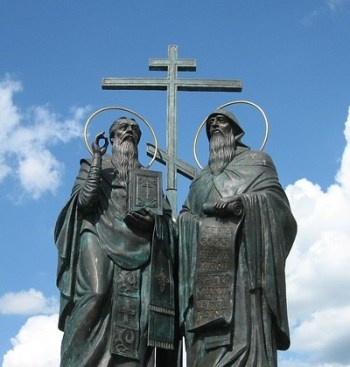 Saints Basil and Gregory can teach us many things, but today we focus on two. First, they teach us that faith in God requires true humility. Heresies are born from the pride that sees ourselves as the measure of all things; that interprets our failure to understand the truths of the faith to mean that the truths are wrong. True humility is as John admonished us, to remain in him; to see that God is the measure of all things and that our inability to understand means that we still have work to do. Second, in these days when the word “love” is so easily limited to physical expressions of self-gratification, the love of Basil and Gregory is a shining example of the most uplifting, life-giving love possible between people. This is the love that is modeled on God; that seeks only the good of the other; that finds its union with others in the heart and soul because that is where God dwells, and God is love. This is the love where heart speaks to heart and says, “I want for you what God wants for you.” My prayer is that all of us come to have that love for one another. What a world this would be.
 The great gift of fertility given to Samson’s mother and to Elizabeth are confirmation that perseverance is rewarded. God sees all of us who endure desolation and, in his own time and manner, provides from the storehouse of his infinite mercy the life-giving consolation of his Spirit. When we find ourselves in times of desolation remember to ask the intercession of St. Elizabeth; she understands very well not only the pain of endless waiting but also the indescribable joy of the Holy Spirit’s three priceless consolations: The new life of St. John within her womb; the love and help of Mary, the Mother of Hope; and most of all the fulfillment of Hope itself: Our Lord and Savior, Jesus Christ.
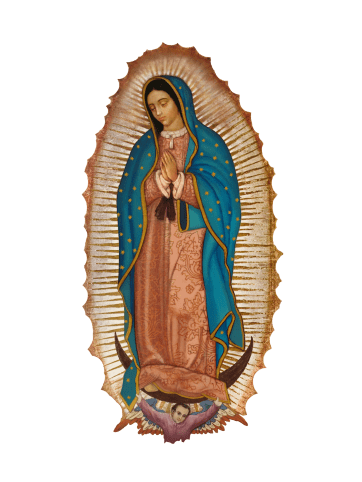 She became known as Our Lady of Guadalupe, and as word of the miraculous appearance and image spread, she became the most effective tool of evangelization that Mexico or the world had ever known. In the gospel, Mary carried the Eternal Word into the Judean countryside where the babe within Elizabeth’s womb leaped for joy; 15 centuries later, Mary’s maternal word went out into the Mexican countryside where millions leaped for joy. Conversions increased so dramatically that for a couple of years the missionaries could almost not keep up with them. More than that, the peoples’ faith was strong; to this day, the faith of the Mexican people remains vibrant, with deep devotion to Our Lady of Guadalupe.
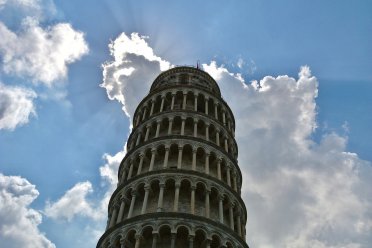 These and many more are like the soft, marshy soil below the tower of Pisa. Like that tower, a faith built on human weakness will lean and no amount of stopping and starting, tinkering and refining will fix it. It must be torn to the ground and rebuilt on the foundation of Christ and his Church, for we must take the faith as it is, not as we would like it to be.
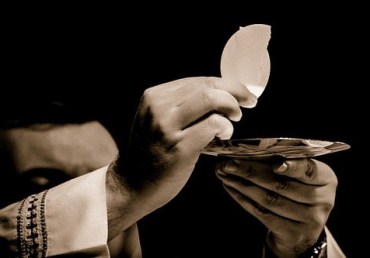 Still, a common problem is that we tend to take this fellowship for granted and forget gratitude. We fall into a routine of receiving Communion with little or no thought as to what – or rather Who – we are receiving. Like the nine lepers in today’s gospel passage, we are given what we ask for but then go back on our way with little regard either for the gift or what it cost the Giver. St. Paul goes on to warn about the grave danger of such ingratitude: That is why many among you are ill and infirm, and a considerable number are dying (1 Corinthians 11:30). The healthier, more grateful response is to first discern whether we are in the state of grace to receive Christ and, if not, to make ourselves a more worthy vessel. Like the leper who, once cleansed, remembered to be thankful, we thank God for what he has given us through the Church – the gifts of faith and the Sacraments through which he touches, heals, and sanctifies us.
 Eventually, Father was caught, imprisoned on a false charge and on the morning of November 23
 Mark 10:45