Although I am free in regard to all, I have made myself a slave to all so as to win over as many as possible.
1 Corinthians 9:19
Imagine being dragged aboard a ship, naked and chained in the darkness below deck, lying helpless for several weeks, through rough seas and stifling heat. There are over 500 of you; males here, females there. You are fed just enough to keep you alive. Starvation, disease, and death are rampant. No one knows where you’re going or what awaits you when the hatch finally opens. Over the centuries of the slave trade, millions of people saw that hatch open only to a lifetime of slavery in a strange New World.
Yet, like a drop of mercy from heaven, hundreds of thousands of these same people saw that hatch open to reveal the caring, concerned face of a gentle Spanish Jesuit. He would come below and find the newborns who were still alive, pour water over them, make the sign of the Cross and pray. He then ministered to the dying, and the dead he had respectfully removed. To the sick he brought medicine and bandaged their wounds. Those too sick to leave the ship on their own he helped carry above. When he got to you, he would clean you, give you food, clothing, and fresh water. He would speak warmly and gently through an interpreter, although no translation was needed for his touch. This was a man fluent in the language of love and by the time he had finished, he had restored a measure of the dignity so shamefully taken away. Every moment, this man acted as if he was your slave and happy to be nothing more.
That’s because he was.
The man was Peter Claver, a 17th century priest and Jesuit who devoted his life to ministering however he could to every slave shackled in the darkness aboard the hundreds of ships landing in the port city of Cartagena. Fr. Claver took to heart the words of St. Paul, who said, Although I am free in regard to all, I have made myself a slave to all so as to win over as many as possible (1 Corinthians 9:19).
Father’s devotion to the service of slaves sprang from his desire to imitate the service of his model, the Blessed Mother, to whom he was devoted. As a young novice he was so moved by a pilgrimage to one her shrines that he wrote, “I must dedicate myself to the service of God until death, on the understanding that I am like a slave, wholly occupied in the service of his master.” He traveled to the New World after hearing that millions of enslaved people died there knowing nothing of Christ. After his first few years serving them, Father signed the document of his final profession to the Society of Jesus with the words, “Peter Claver, slave of the slaves, forever.”
Before the slaves were sent on, Father took whatever time was given him to teach them about Christ. He used pictures, rosaries, crucifixes, anything he could find. He concluded every session by teaching them to say, “Lord Jesus Christ, Son of God, You are my Father. I am sorry for having offended You. I love You very much. I love You very much.” It is said that he personally baptized over 300,000 slaves.
Fr. Claver continued his ministry for 40 years. Finally, sick, frail and exhausted, he knelt and kissed the feet of his young Jesuit successor and on the day he predicted – the Feast of the Nativity of the Blessed Virgin Mary, September 8th, 1654 – he died at the age of 73.
 Although the slave trade of that era is thankfully no more, slavery still abounds. Who are the people in our own lives, chained in the darkness of sin, feeling helpless, uncertain and fearful of their destiny? Who are those with wounded or even dying spirits, on the brink of losing hope? Who are those starving for affection, for shelter, for safety, for dignity? Will you be the one to open the hatch to descend into their suffering and restore what dignity you can?
Let us pray that we, like St. Peter Claver, may be the slave of the slaves, forever.
St. Peter Claver, pray for us.

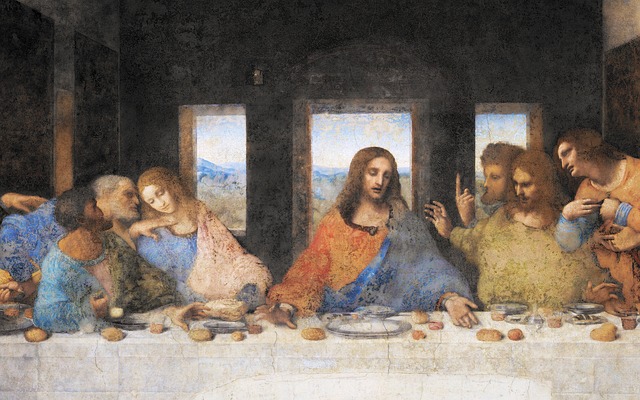 Let us keep this in mind as we prepare to receive the Sacred Morsel of our Lord in the most Holy Eucharist. For we are all like Judas; we have all betrayed our Lord’s innocent blood with every sin, no matter how small. And as He did with Judas, so does our Lord do to us; He continues to feed us, to respect our dignity, to love us unconditionally.
 At every apparition Mary is highly honored and rightly so for she is as she said, the Immaculate Conception. But the honor we give her goes far beyond her identity to the two-fold reality behind it. First, Mary points us to Christ. Through the grace bestowed on her by the will of God and her total abandonment to it, Mary has perfectly heeded her own advice:
  Angela Merici was a visionary; she saw what was invisible to everyone else. Where others saw the Italian countryside she saw the Kingdom of God; where they saw poor and middle class girls, Angela saw fertile ground waiting for seed. Christ asked her to sow and she obeyed. He asks no less of us. The Kingdom of God is here and now; the ground is fertile and plentiful. All our actions, for good and bad, fall like seeds into that ground. May we always remember what Saint Angela already knew, as given by the spiritual writer James Allen: “The law of the harvest is to reap more than you sow. Sow an act, and you reap a habit. Sow a habit and you reap a character. Sow a character and you reap a destiny.”
 Like the mysterious sacrifice of the wren, this may leave us curious. Why does the Church take the first day after Christmas to remember the first martyr? The answer lies precisely in the similarity of Stephen’s passion and death to Christ’s. Christmas is the celebration of the birth of Jesus; the same Jesus who came not to be served
  The great gift of fertility given to Samson’s mother and to Elizabeth are confirmation that perseverance is rewarded. God sees all of us who endure desolation and, in his own time and manner, provides from the storehouse of his infinite mercy the life-giving consolation of his Spirit. When we find ourselves in times of desolation remember to ask the intercession of St. Elizabeth; she understands very well not only the pain of endless waiting but also the indescribable joy of the Holy Spirit’s three priceless consolations: The new life of St. John within her womb; the love and help of Mary, the Mother of Hope; and most of all the fulfillment of Hope itself: Our Lord and Savior, Jesus Christ.
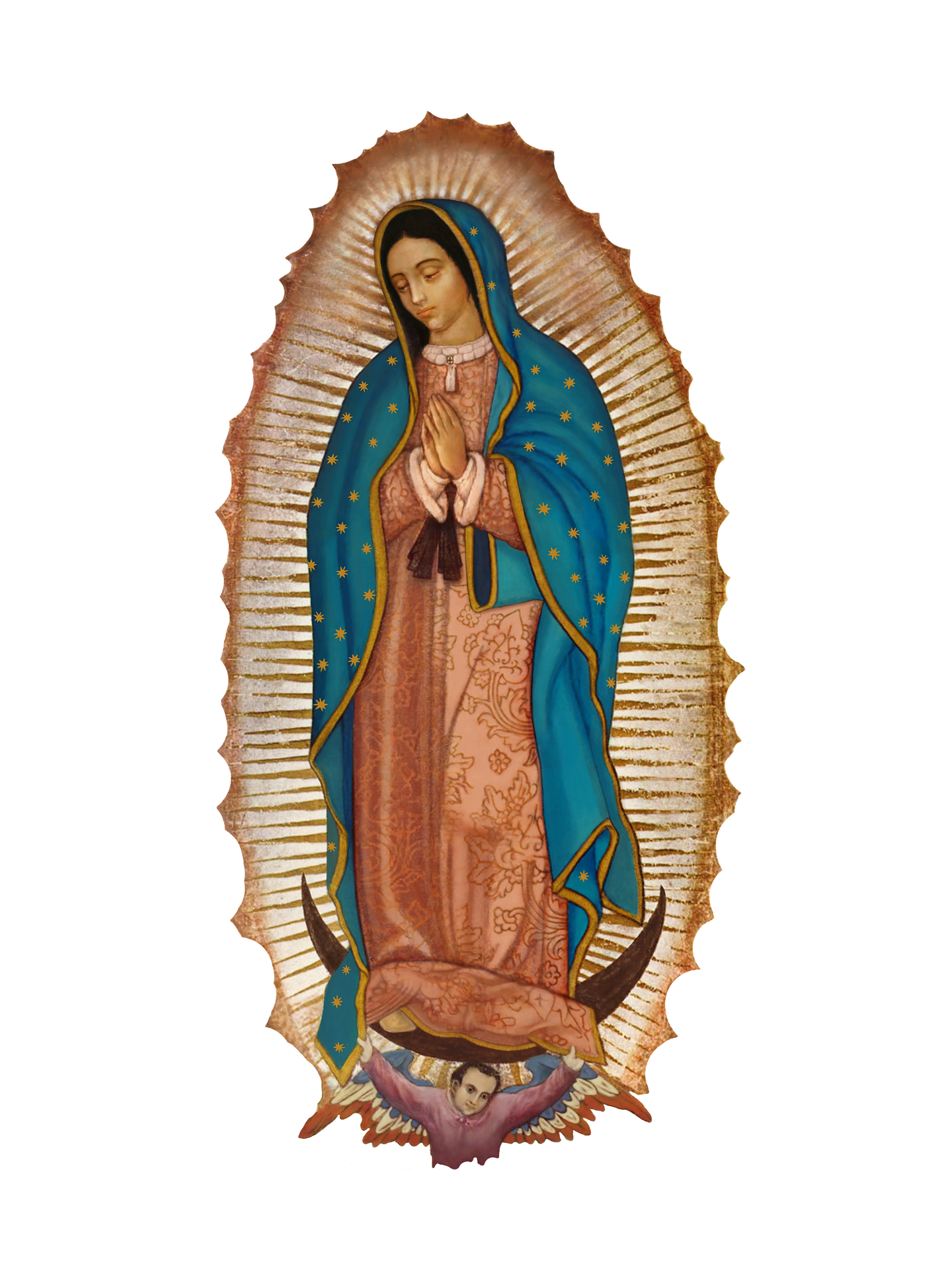 She became known as Our Lady of Guadalupe, and as word of the miraculous appearance and image spread, she became the most effective tool of evangelization that Mexico or the world had ever known. In the gospel, Mary carried the Eternal Word into the Judean countryside where the babe within Elizabeth’s womb leaped for joy; 15 centuries later, Mary’s maternal word went out into the Mexican countryside where millions leaped for joy. Conversions increased so dramatically that for a couple of years the missionaries could almost not keep up with them. More than that, the peoples’ faith was strong; to this day, the faith of the Mexican people remains vibrant, with deep devotion to Our Lady of Guadalupe.
 These and many more are like the soft, marshy soil below the tower of Pisa. Like that tower, a faith built on human weakness will lean and no amount of stopping and starting, tinkering and refining will fix it. It must be torn to the ground and rebuilt on the foundation of Christ and his Church, for we must take the faith as it is, not as we would like it to be.
 Still, a common problem is that we tend to take this fellowship for granted and forget gratitude. We fall into a routine of receiving Communion with little or no thought as to what – or rather Who – we are receiving. Like the nine lepers in today’s gospel passage, we are given what we ask for but then go back on our way with little regard either for the gift or what it cost the Giver. St. Paul goes on to warn about the grave danger of such ingratitude: That is why many among you are ill and infirm, and a considerable number are dying (1 Corinthians 11:30). The healthier, more grateful response is to first discern whether we are in the state of grace to receive Christ and, if not, to make ourselves a more worthy vessel. Like the leper who, once cleansed, remembered to be thankful, we thank God for what he has given us through the Church – the gifts of faith and the Sacraments through which he touches, heals, and sanctifies us.
 Mark 10:45