Tag: Sacrifice

  • Encountering God

    Encountering God

    Saturday of the 14th Week in Ordinary Time

    Isaiah 6:1-8; 1 Peter 4:14; Matthew 10:24-33

    My family and I had the good fortune of going on a pilgrimage to Italy. The churches we visited were, to say the least, breathtaking; each in its own way a masterpiece of art and architecture. It was easy to be overwhelmed by the splendor of it all.

    While exploring one of them, I happened to look toward the main altar. A small group of people were gathered in a roped-off space. I assumed it was a tour group waiting for a talk to begin. When I looked back later, I saw that in fact it was people attending Mass. I suddenly realized that, wandering through that majestic space, I got lost in the outward beauty but forgot the deeper one. I was encountering art; they were encountering God.

    As the first reading reminded us, the prophet Isaiah also encountered God, and its effect resounds to this day. Who can hear Holy, holy, holy is the LORD of hosts! All the earth is filled with his glory! and not think of the holy Mass? For the Mass, indeed every sacrament, is an encounter with the living God. Pope Francis made this clear when he wrote that Christ, the Incarnation, is Himself the “very method that the Holy Trinity has chosen to open to us the way of communion. Christian faith is either an encounter with Him alive, or it does not exist… We need to be present at that Supper, to be able to hear his voice, to eat his Body and to drink his Blood. We need Him. In the Eucharist and in all the sacraments we are guaranteed the possibility of encountering the Lord Jesus and of having the power of his Paschal Mystery reach us. The salvific power of the sacrifice of Jesus, his every word, his every gesture, glance, and feeling reaches us through the celebration of the sacraments.”1

    We heard in the Old Testament readings this week forebodings of this encounter. On the one hand, God said to Israel through Hosea, I will allure her; I will lead her into the desert and speak to her heart (2:16); it is time to seek the LORD (10:12); I drew them with human cords, with bands of love; I fostered them like one who raises an infant to his cheeks (11:4); and finally, Return, Israel, to the LORD, your God… Take with you words, and return to the LORD (14:2-3). But on the other hand, we also heard Him say that Israel made idols for themselves (8:4); their heart is false (10:2); and the more I called them, the farther they went from me (11:2).

    The pattern is clear: God seeks encounter, to share his love; we, to avoid. Why? Fear, mostly. It’s in our nature. God calls us to be holy – set apart – but we fear not fitting in. He calls us to speak truth in the open, but we are silent, fearing the challenge. He calls us to give ourselves completely to him, but we fear the loss of control. He calls us to the humility of service, but we fear giving up our pride. And where does this fear leave us?Empty, ashamed, hiding in the darkness of our sins, and afraid to open ourselves up to the all-seeing light of Christ.

    But his light is also the perfect love that drives out fear (1 John 4:18). That is why Jesus urges his disciples to become like their Master, that His love will transform us. Our encounter with the living God in every sacrament is meant to bear witness to the transformative power of His love. Why else would Jesus say, What I say to you in the darkness, speak in the light; what you hear whispered, proclaim on the housetops (Matthew 10:27)? Aren’t the most loving words the ones so often spoken in the darkness, or whispered in our ears? The perfect love that drives out fear is the heart of our encounter with God in the liturgy, the love that is meant to evoke in us the same sense of humble self-surrender that Isaiah felt when he cried out, I am a man of unclean lips (Isaiah 6:5).

    It was the loving and living word of God that cleansed him, the same one who comes to us and seeks to perfect in us the effect of that encounter: the Spirit of God who rests upon us (1 Peter 4:14), who moves us to speak in the light, to proclaim what God has whispered, and to say as Isaiah said, Here I am, send me!

    1https://www.vatican.va/content/francesco/en/apost_letters/documents/20220629-lettera-ap-desiderio-desideravi.html

  • Love Worthy of Suffering: Friday of the 18th Week of Ordinary Time

    Love Worthy of Suffering: Friday of the 18th Week of Ordinary Time

    Matthew 16:24-28

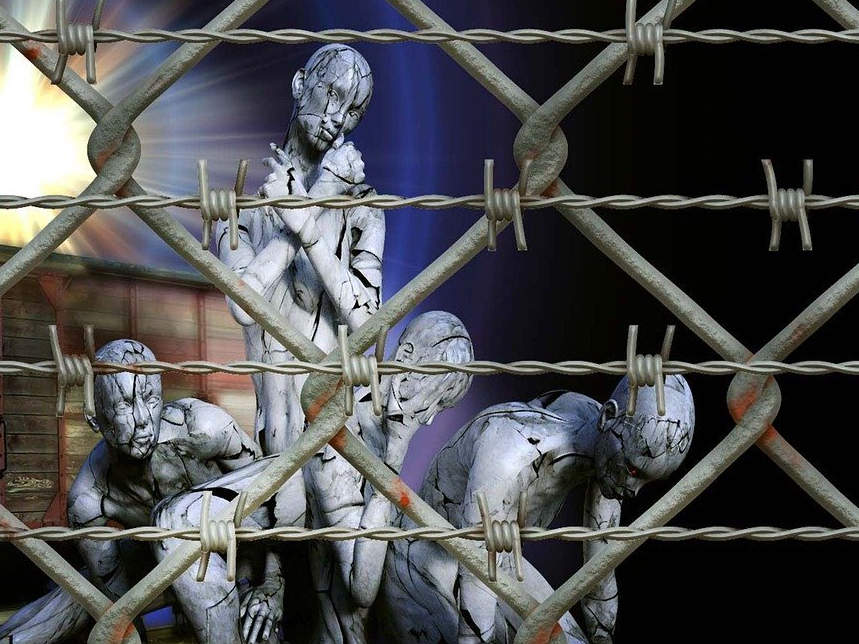
    I recently came across a profoundly moving book entitled Man’s Search for Meaning by the Austrian psychiatrist and Holocaust survivor Dr. Viktor Frankl. In it he recounts many of the horrors of his internment in the Nazi death camps. What sets this book apart from other such accounts is that his perspective as a physician and psychiatrist imbues that experience with some remarkable insights that everyone can profit from.

    His greatest insight, hinted at in the title of the book stems from his observation that the prison camps held two distinct types of prisoner. The first and by far the majority were those who competed and struggled against each other to gain even the smallest amount of power, control, or possessions. They did so regardless of the cost to others or to their own dignity because they saw it as the way alleviate as much of their own suffering as they could. The second group was different; these prisoners befriended and looked out for others, comforted or consoled them, gave them hope. These people, Frankl realized, did so because they were searching for meaning in their suffering; they recognized in themselves and in others a freedom and dignity that no Nazi could beat, starve, or gas out of them. He went on to write: “The way in which a man accepts his fate and all the suffering it entails, the way in which he takes up his cross, gives him ample opportunity – even under the most difficult circumstances – to add a deeper meaning to his life.”

    This is exactly why Christ so challenged his disciples with the difficult words in today’s gospel; why he said, Whoever wishes to come after me must deny himself, take up his cross, and follow me (Matthew 16:24). Denying ourselves, bearing the weight of suffering, and following Christ can hurt physically, emotionally, and spiritually. But it hurts more not to, for then we become like the first group of prisoners: Grasping and fighting to reserve power, control, and comfort to ourselves. So often Frankl found that their strategy backfired; prisoners worked hard to preserve their lives but lost them anyway.

    When Christ said whoever wishes to save his life will lose it, but whoever loses his life for my sake will find it (Matthew 16:25) we rightly wonder how we can lose our life by saving it or save our life by losing it. However, the translation of “save our life” in this context is “protect” or “keep safe.” Thus, Jesus is counseling us not to keep safe but to risk being hurt, for only when we do that can we enjoy eternal life with God in heaven.

    Although that might help us understand his words, it doesn’t make living it out any easier. It seems as if Jesus is teaching that the way to avoid suffering in the afterlife is to endure suffering in this life. That seems cruel! Does Jesus really want us to suffer? What does suffering gain us?

    If we take the attitude of the first group of prisoners, the answer is “nothing.” Suffering exists only to be eliminated; it is not something to endure – for its own sake or anyone else’s.

    That is the attitude of love turned inward and as Frankl saw, the result was little gain and much futility. Love turned outward is in the image of God who is Love itself, and no one modeled that image better than Jesus, who is the image of the invisible God (Colossians 1:15). By his Incarnation Jesus taught that true love seeks neither isolation nor safety but entanglement and risk. God could have chosen to save fallen humanity from the safety of pure divinity. He didn’t; he chose to dwell among us, to take on the nature he created and raise it from within; to bind himself to the human condition beyond any untying and restore it to its original capacity for the deepest love possible: Eternal union with him. Jesus spent his life and ministry showing us what it means to love as God loves: He made himself vulnerable in the sight of others, exposed his deepest longings, deepest fears, deepest joys, his deepest self. Of course, he risked rejection and it cost him his life, but that is what love does; it was in the nature of his perfect divinity that from the depths of his infinite love and mercy, he glorified what mankind so quickly crucified.

    This tells us that Jesus doesn’t want us to suffer, he wants us to love; by its very nature, love risks suffering and when perfected will endure any amount of suffering for the sake of the beloved. Like the prisoners in the death camp we are perfectly free to refuse, but refusing to love means that we give nothing, share nothing, resist the promptings of the Holy Spirit, and remain isolated even from God himself. Some may call that safety but Christ calls it loss, for he knows that the only thing we bring to heaven is the love that we have given away.

  • No Reluctant Prophet: Monday of the 16th Week in Ordinary Time

    No Reluctant Prophet: Monday of the 16th Week in Ordinary Time

    Micah 6:1-4, 6-8; Psalm 50:23; Matthew 12:38-42

    So far in this chapter of Matthew we have seen Jesus being treated by the Pharisees like a man on trial. They have twice accused him of violating the sabbath, once of being in league with demons, and now, joined by the scribes, they confront him with the demand for a sign from God (Matthew 12:38).

    Given their lack of faith in Jesus this may seem reasonable but it betrays at least two problems they have in their relationship with God. First, no scribe or Pharisee, no human being is ever in a position to put God on trial or make Him prove anything. If anyone is on trial it’s us, as the prophet Micah said in the first reading: the LORD has a plea against his people, and he enters into trial with Israel (6:2). What’s more, we don’t get to tell God who He works through or how He does things. As He also said through Micah, I brought you up from the land of Egypt… I released you… I sent before you Moses, Aaron, and Miriam (6:4). God calls the people, God determines the path. Second, notice how Christ responds to the demand of the scribes and Pharisees by speaking of an “unfaithful” – or “adulterous” – generation (Matthew 12:39). This nuptial language goes to the heart of the real problem, which is the failure of these men to understand that our relationship with God is not a contract, or something we negotiate. It is a covenant, a mutual giving of our entire selves one to the other; a commitment that is total and unto death.

    Jesus drives this point home with true irony by bringing up Jonah for as everyone knew, Jonah was a prophet who was “total” only in his defiance of God’s will and “unto death” only in his effort to avoid doing it. The so-called “reluctant” prophet, Jonah sailed the other way when God called him to preach to pagan Nineveh, tried to drown himself in the sea when he got caught, spoke as little prophecy as possible, angrily complained when Nineveh repented, and worried more about losing the shade from a plant than about the possibility of over a hundred thousand Ninevites dying. Jonah was the perfect example of how not to commit yourself to God.

    Yet Christ took that prophet and made a sign out of him: Just as Jonah was in the belly of the whale… so will the Son of Man be in the heart of the earth (Matthew 12:40). Out of that one point of deep darkness – the disobedient man’s descent into the belly of the beast – Christ brings one point of brilliant light – the obedient Son of Man’s descent into the heart of the earth, or, as we say in the Apostles’ Creed, his descent to the dead. There of course he would preach as Jonah could only wish to, and release those repentant souls who had been awaiting the redemption only He could bring.

    Had the scribes and Pharisees recognized the prophetic truth that Christ had just spoken, they would have known that all they had left was the question from Micah: With what shall I come before the LORD, and bow before God most high (6:6)? Since they did not, we turn to ourselves, for we too are on trial. In our own ways, we are all guilty of being a reluctant prophet: Avoiding various calls to serve, stubbornly resisting God’s will, doing the minimum possible, complaining to God about people whose repentance only He can know, and worrying more about our own comfort than about the suffering of many around us.

    So, with what shall we come? Scripture makes it clear: Prayer and sacrifice. As Micah urges us to do right, love goodness, and walk humbly with God (6:8), we pray for the virtues: Prudence, to know what is right; fortitude, to do it; wisdom, to see and love God’s goodness in all people; humility, to walk with God where He leads; and faith, to trust and praise Him at all times. This is a sacrifice, for like Jonah we are inclined to do what we want, love what we want, and walk where we please. But through the psalmist God reassures us: He that offers praise as a sacrifice glorifies me; and to him that goes the right way I will show the salvation of God (Psalm 50:23). The Salvation of God is Christ, who does only right, is love and goodness itself, and who walked in perfect humility all the way from the heart of his Father to the womb of his Mother, from the height of the cross to the heart of the earth, and from the Sacraments he has given the Church into the hearts of all believers.

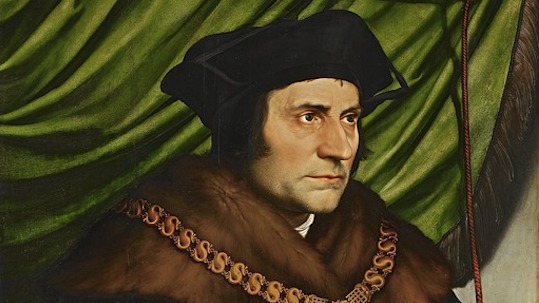
  • The Vision of True Faith: Sts. John Fisher and Thomas More

    The Vision of True Faith: Sts. John Fisher and Thomas More

    Genesis 12:1-9; Matthew 7:1-5

    In the story The Emperor’s New Clothes, author Hans Christian Anderson cleverly lays bare not only the emperor but also the human tendency to go along with the crowd. This becomes most obvious near the end of the story, when a child proclaims the truth that all can see but none are willing to admit: “He hasn’t got anything on!”

    In the England of the 16th century, King Henry VIII was emperor and his new clothes were the pretension that he alone held supreme authority over the Church in England. For reasons related to his marriage annulment from Catherine of Aragon it was convenient for him to believe this, and history is clear that those who surrounded the king were like the crowd in Anderson’s story; they knew it was fantasy but called it reality anyway.

    Jesus had a word for them, and he used it in the reading from Matthew: hypocrites. The meaning of the word hypocrite has changed over the centuries. Nowadays we think of a hypocrite as someone who says one thing and does another, but in those days a hypocrite was someone who pretended, like an actor; a person who got along by going along.

    In the reading from Genesis, Abraham went along with God, but there was no pretense. Although to the naked eye he held a promise as invisible as the emperor’s new clothes or King Henry’s pretensions, Abraham was in reality clothed by God in a seven-fold blessing that made him the father of one nation and a blessing for every other nation on earth. Abraham would never live in the Promised Land but he would build an altar there to worship the one, true, and living God.

    This is the vision of true faith; it is the eyes to see the truth and the courage to live out the destiny that beckons, come what may.

    Born of the same faith, this was the same vision given to St. John Fisher and St. Thomas More. When King Henry VIII demanded not a denial of the faith but a redefinition of it, they looked past their earthly king to their heavenly one. Christ was their help and their shield, and it was love for him and his Church that emboldened them to expose the naked ambition of a king who would arrogate to himself the keys of the Kingdom of God. Of course, that kind of courage comes at a cost, but the same courage that compelled them to remain with Christ did not abandon them when their own journey led them up the platform at Tower Hill in London to be executed.

    While we must remember the courage and faith with which these men died, we must never forget that this was same courage and the same faith by which they lived; it is the same faith and courage by which we too must live. In our own time we have heard politicians warn, “Religious beliefs must change.” Henry VIII might have said that. How little things have really changed.

    Like Bishop John Fisher, Sir Thomas More and all holy martyrs, our conscience must choose. Will we be the hypocrite who marvels at the emperor’s new clothes or the child who sees the truth and calls it what it is? The witness of the saints testifies now and for all time that there is only one Emperor; he who shed his vestments at the foot of the cross yet was clothed in the glory to which we all aspire and who comes to us cloaked in a host. Ask him and he will remove the wooden beam from your eye that you may better behold the wooden beam that saved the world.

    St. John Fisher and St. Thomas More, pray for us.

  • Holy Thursday: The Primacy of Service

    John 13:1-15

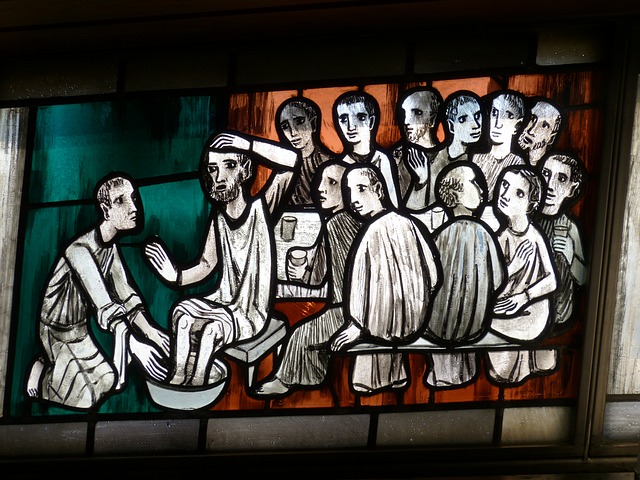
    Today we read from John’s account of the last evening that Jesus spent with his disciples before his Passion and death. The other evangelists take this opportunity to provide us with the Institution Narrative, or the words spoken by Christ that to this day are repeated by the priest during the Consecration at holy Mass.

    John does not do this; rather, he uses the occasion of the Last Supper to depict Jesus washing the feet of his disciples and commanding them to do likewise. We don’t know why, but it’s possible that by the time the evangelist composed this gospel account the Breaking of the Bread had become an occasion for people to segregate into groups and eat and drink their fill, rather than to unite and commemorate the Passion, Death, and Resurrection of our Lord as one body.

    passion-3807312_640By showing Jesus washing the feet of his disciples, the evangelist re-emphasizes the primacy of service. Those who would be greatest must become the least. This is the humility and love behind the gift of his life poured out for our sake, by which he becomes one with us and we become one with each other.

    As we approach the Eucharist this evening let us take his words and his actions to heart, for together they show that love leads naturally to service. Christ has shown us the greatest love through the gift of his Body and Blood broken and poured out for our sake and at the same time that this is the love that allows us to see others not as things to be used but as people to be served.

  • Holy and Immaculate: Memorial of Our Lady of Lourdes

    Isaiah 66:10-14c; John 2:1-11

    Between 1830 and 1858 the Blessed Mother made three separate visits to France. First in Paris to Sr. Catherine Laboure, whence came the Miraculous Medal and the prayer, “Mary, conceived without sin, pray for us who have recourse to thee.” Next she appeared to two shepherd children near La Salette in the French Alps, where she pleaded for a return to prayer and the Sacraments. Finally and most famously she appeared 18 times to the young teenager Marie-Bernarde Soubirous, also known as Bernadette, near Lourdes in the foothills of the Pyrenees.

    In all these we see that Mary appeared not to the powerful or influential but to the lowly – mostly, to children. Simple, honest, and unsophisticated, they were not interested in either notoriety or personal gain. Indeed Bernadette in her typical, straightforward fashion said, “When I’m dead they’ll come and touch holy pictures and rosaries to me, and all the while I’ll be getting boiled on a grill in purgatory.” Hardly the words of someone looking to sell the book and movie rights.

    Not that she couldn’t have used the money. Those such as Bernadette were not only innocents but familiar with suffering, people who understood poverty of spirit and body. In fact, she first met Our Lady while gathering sticks so that her family, mostly children who would not survive to adulthood, could have some heat in what they called home but everyone else called a musty, abandoned prison block.

    But as Mary knows, home is where the heart is and the heart of the Soubirous family was faith in Christ. Although the prosperity and wealth of nations spoken of in the first reading (Isaiah 66:12) eluded them, spiritual wealth was theirs in abundance. On hearing of the mystical vision in the grotto, Bernadette’s father said to his family, “Let us pray.” He knew that, whether a heavenly vision or one from the lower depths, their only recourse was to fall to their knees. Perhaps this is why Bernadette was chosen; she like Mary was raised from birth to understand that true wealth, true prosperity, comes only from the hand of God.

    This was the same God who said, As a mother comforts her child, so will I comfort you (Isaiah 66:13), who gave Bernadette visions of his mother, and who defined comfort in her words, “I do not promise to make you happy in this world but in the next.” It is true that Bernadette, who suffered terrible pain in her body in the later years of her short life, never sought the healing waters that Christ gave the world in that little grotto. She knew that Mary had given her the only promise of happiness that means anything: Eternal union with God. This is why Mary constantly urges meditation on the gospel of Christ through the rosary, why she begs the conversion of sinners, and especially why she asks that chapels be built, for there her Son dwells in the complete sacramental fullness of his Body, Blood, Soul, and Divinity.

    virgin-1615390_1920At every apparition Mary is highly honored and rightly so for she is as she said, the Immaculate Conception. But the honor we give her goes far beyond her identity to the two-fold reality behind it. First, Mary points us to Christ. Through the grace bestowed on her by the will of God and her total abandonment to it, Mary has perfectly heeded her own advice: Do whatever he tells you (John 2:5). In this, she is the first and best example of a Christian. Second, Mary points to our own destiny. Like her, we are asked to abandon our will to his, be perfect as the Father is perfect (Matthew 5:28), and so be presented to him holy and immaculate (Colossians 1:22). For this we need neither the water of Lourdes nor the water turned to wine, but that which wells up to eternal life (John 4:14), our Lord Jesus Christ, by whose love wine becomes the blood poured out for the forgiveness of sins (Matthew 26:28).

  • The Law of the Harvest: Memorial of St. Angela Merici

    Hebrews 10:32-39; Mark 4:26-34

    Jonathan Swift once said that vision is the art of seeing what is invisible to others. Saint Angela Merici exemplified that art.

    As a child, Angela might well have foreseen a bright future. Born into a middle class family during the Italian Renaissance, Angela and her sister were raised by devoutly Catholic parents who made sure their daughters were well-educated in the faith.

    Listening to their father as he read them stories from the lives of the saints, the girls learned that the road to sanctity was no different for them than it was for anyone else, even the earliest Christians who first heard those consoling words in the letter to the Hebrews. The lesson transcends time and space: Those who choose to love Christ and follow Him wherever He leads learn that the road to sanctity always includes the cross.

    Angela learned this lesson very well. By the time she was 10, both of her parents had died; by 15, her sister was also gone. Some people might have despaired over these great losses, seeing the absence of God, but Angela did not. The seeds of the faith planted by her parents in those early years and watered by the grace of God had taken root within her as surely as the mustard seed which our Lord spoke of in the gospel. Rather than turn away from Christ or the cross, Angela consecrated herself to him as a Third Order Franciscan.

    Just 20 years old, Angela did not wait to find a way to serve. Looking at the society around her, she saw the disorder in it and traced it to disorder in the family. One thing was especially problematic. In Italian society of the time, only the wealthiest girls received any kind of education; the vast majority received little or none. Angela wondered how these girls, the wives and mothers of the future, could ever grow up to be the first teachers of their children in the ways of the faith if the seeds of their own faith withered and died.

    Inspired to action, Angela immediately converted her family home into a school and devoted herself to providing religious education to the young girls of the area. She was gentle, focused on the dignity of each girl as a unique person, and used persuasion over force. This was so effective that she was invited to the larger nearby town of Brescia so that she might more broadly and formally institute the same program throughout the area. Ultimately, Angela would go on to found the Ursulines, an order of consecrated virgins devoted to St. Ursula, whose mission it became to bring religious education to young girls. Her order was so successful that the Pope himself asked Angela to relocate to Rome. She declined, saying that she was devoted to the children of the rural country she called home and wished to remain there. This she did until her death in 1540.

    wheat-field-640960_640Angela Merici was a visionary; she saw what was invisible to everyone else. Where others saw the Italian countryside she saw the Kingdom of God; where they saw poor and middle class girls, Angela saw fertile ground waiting for seed. Christ asked her to sow and she obeyed. He asks no less of us. The Kingdom of God is here and now; the ground is fertile and plentiful. All our actions, for good and bad, fall like seeds into that ground. May we always remember what Saint Angela already knew, as given by the spiritual writer James Allen: “The law of the harvest is to reap more than you sow. Sow an act, and you reap a habit. Sow a habit and you reap a character. Sow a character and you reap a destiny.”
    Saint Angela Merici, pray for us.

  • Our Mother, Clothed With the Sun: Feast of Our Lady of Guadalupe

    Revelation 11:19a; 12:1-6a, 10ab; Luke 1:39-47

    The book of Revelation is apocalyptic literature. This was a genre used in and around the time of Christ. It is overloaded with rich and mystical symbolism; a single image may represent multiple things. Further, the imagery can be violent and warlike, even though its ultimate message is one of hope and peace.

    In the passage of Revelation chosen for today’s feast lurks a huge red dragon. The Hebrew word translated as dragon can also mean “serpent” or “sea monster” and is thought to represent the devil and the forces of evil, ready to make war against the Christ and his Church.

    In late 15th century Mexico, the Spanish conquistador Cortez saw echoes of that dragon in the violent, warlike Aztec religion. Every year, thousands of people were sacrificed to appease its bloodthirsty gods. In 1487, the dedication of a new pagan temple saw 80,000 people sacrificed in just a few days. As if that weren’t bad enough, the dragon’s shadow also appeared in some of the immigrants to the new world, who spoke of peace but practiced avarice, treating the Mexicans and their land as things to be exploited for personal gain. Even some within the Church hindered the spread of the gospel by refusing vocations from the local community; Catholic Mexicans were not allowed to minister to their own people. It’s not hard to understand why many resisted converting to Catholicism.

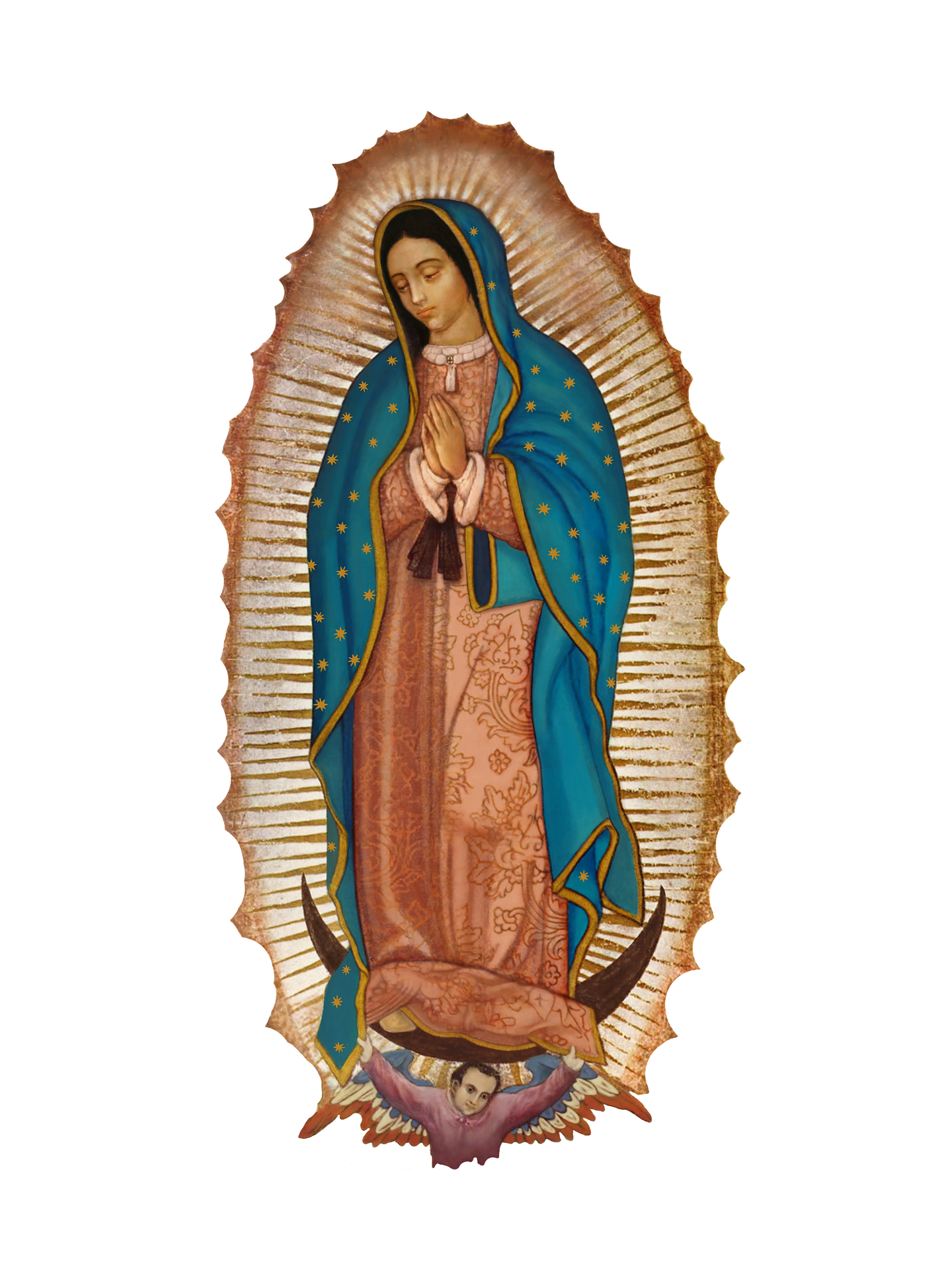
    If a reflection of the dragon could be found in the new world, so could a reflection of the woman. In 1531, a mystical apparition identified herself as “the ever Virgin, Holy Mary, the Mother of God” to a middle-aged Mexican man named Juan Diego. In Revelation, the woman was clothed with the sun, the moon under her feet, and wore a crown of stars. The apparition at Tepeyac is also rich in symbolism, but it is all Aztec. The woman stands in front of the sun, eclipsing the Aztec sun god; her foot rests on the moon, dominating their chief god, Quetzalcoatl; her mantle holds the stars, which they worshiped. Yet, the woman is not divine; her hands are in a posture of prayer and she looks down, which Aztec gods never do. She is a queen, for she wears the Aztec royal color of turquoise; a Christian, for there is a cross on her brooch, is pregnant, for she wears an Aztec maternity belt; yet she is a divine mother, for over her womb appears a four-petal flower, the Aztec symbol of a deity.

    As important as her image was, her words were far more so; for what she said, how she said it, and who she said it to. She spoke in the language of the Aztecs, not in Spanish; she spoke to a simple peasant, and through him to all people; her message was one of comfort and hope: She was there; she was their mother; she held them in her arms, heard their weeping, and knew of their hardships and sorrows. Above all, she wanted them to rest assured that through her intercession they would be healed.

    our-lady-of-guadalupe-4542831_1920She became known as Our Lady of Guadalupe, and as word of the miraculous appearance and image spread, she became the most effective tool of evangelization that Mexico or the world had ever known. In the gospel, Mary carried the Eternal Word into the Judean countryside where the babe within Elizabeth’s womb leaped for joy; 15 centuries later, Mary’s maternal word went out into the Mexican countryside where millions leaped for joy. Conversions increased so dramatically that for a couple of years the missionaries could almost not keep up with them. More than that, the peoples’ faith was strong; to this day, the faith of the Mexican people remains vibrant, with deep devotion to Our Lady of Guadalupe.

    In our own time the dragon still lurks. We do not have thousands dying in pagan temples, but we do have millions dying in abortion mills here and throughout the world. Still, the image of Our Lady of Guadalupe reminds us that the woman of Revelation is still present, still giving birth to the Church, still giving her ever victorious Son to the world. As she comforted the Mexican people, so she consoles us. She is our mother; she holds us in her arms; knows of our hardships and sorrows, and assures us that through her intercession, we too will be healed by Christ, her son.

    Our Lady of Guadalupe, pray for us.

  • Know Jesus, Know Peace: Thursday of the 29th Week in Ordinary Time

    Romans 6:19-23; Luke 12:49-53

    Shopping at a nearby grocery store recently I couldn’t help but notice all the Christmas merchandise on display. When I spotted an ornament that said Peace on Earth I was reminded of Jesus in the readings we will soon hear – the prophet Isaiah speaking of the coming Prince of Peace; angels singing of peace on Earth; Luke telling of the whole world being at peace.

    What a stark contrast to today’s gospel, where Jesus says that he has come not to establish peace but division. We might wonder what happened; isn’t this the same Jesus who blessed peacemakers (Matthew 5:9) and so lovingly bid his disciples peace (John 16:33; John 20:19, 21)?

    Yes, but a bit more depth is called for. It is true that Isaiah called the Messiah the Prince of Peace but he also called him a stumbling block (Isaiah 8:14). At his birth the angels did sing of peace but just days later Simeon called him a sign that would be contradicted (Luke 2:33-34). Jesus did bless the peacemakers but he also said that he came to give sight to the blind and to remove it from those who see (John 9:39). Paul said that Jesus is peace (Ephesians 2:14), but Jesus said he is the peace the world cannot give (John 14:27).

    The world cannot do so because the peace of Christ is not merely the lack of war, it is a fruit of the Spirit; the union of wills binding us to each other and to God. Like all fruit, peace takes time to develop and requires trust, patience, and humility. Still, the reward is worth the wait for this is the peace that brings life in abundance and is why Christ came; to reconcile us to the Father by putting the enmity between us to death on the cross, restoring us to right relationship with the Father.

    Our Lord’s words in the gospel must be understood in this context. When he speaks of fire we should think of his love. As from a single flame come light and heat, so from the heart of Christ come mercy and justice. On all who dwell in the darkness of sin and the shadow of death fall the two sides of true peace: the light of his mercy that shines like the dawn and the healing rays of his justice that purify us like silver in a refiner’s fire. And when he speaks of division we should think of pride, for this is what keeps us separated from God and each other. Pride breeds the shame that keeps us in darkness and away from the penetrating light of Christ, as well as the fear of admitting our faults that keeps us away from the healing grace of Confession.

    In calling out these things Christ identifies the battle that rages within each of us: Remain free of God and enslaved to sin, or be free of sin and enslaved to God. The first leads to discord, the second to peace. The choice of peace seems so obvious but as Paul implies in the first reading it is notoriously difficult. Of the many obstacles, the primary one is ourselves. We are our own worst enemy and daily die the death of a thousand cuts; little things that edge us into the darkness. For example, in our free time when we could say a prayer we choose to surf the internet. When we could pick up the phone and reconcile with a long lost brother, sister, parent, or child, we wait for them to call first. When we could volunteer at the food pantry, homeless shelter, or nursing home, we sit back and watch TV.

    knight-2565957_640To win this combat and know the peace of Christ we need the armor of the virtues; prudence, to discern where our good lies; temperance, to know when we should move on; justice, to understand that the love we give our neighbor and God is the love we owe them; and fortitude, to constantly yield our will to that of Christ, for only his is the love that casts out all fear, not only restoring us to right relationship with the Father, but reconciling us with each other.
    In the end, the choice to fight the battle is ours. Peace on Earth can remain a Christmas slogan or be a lived reality. The first costs nothing, requires nothing, and yields nothing; the second costs all we have, requires all we are, and yields eternal life.

    It comes down to this: No Jesus, no peace; know Jesus, know peace.

  • What Faith Demands: Memorial of St. Ignatius of Antioch, Bishop and Martyr

    Romans 3:21-30; Luke 11:47-54

    Although the Hebrew bible and Christian Old Testament are very similar with regard to the books they contain, they are structured quite differently. In the Old Testament the prophets come at the end, just before the New Testament. Placing them there emphasizes the prophets’ role as looking forward to the coming of Christ. In the Hebrew bible, however, the prophetic books come much closer to the Torah, or the first 5 books of the bible. This placement emphasizes the prophets’ role of looking back, reflecting on the Law and urging people to live it out in their daily lives.

    This role of reflection and exhortation made the prophets very much the conscience of Jewish society. The voice of the voiceless, the champion of the downtrodden, they spoke the word of God in words of men. While this made the prophets popular to some, the feeling was not universal; others, like the powerful and influential who were threatened by the cries for justice, found them irritating and troublesome. This is why in the gospel today Jesus refers to the blood of the prophets (Luke 11:50); at least a few tyrants thought the best way to deaden the social conscience was to kill those speaking it.

    But God is not so easily dismissed; for every voice silenced, another made itself heard. This was most perfectly the case for Christ, whose voice not only echoed through the prophets but rang through the hills and valleys of Israel in his earthly ministry and continues to ring in the words of the Scriptures he gave the world.

    In the first reading, St. Paul reflects on the foundation of equality preached by the prophets, as regards both sin and righteousness. As he reminds us, sin is no one’s private property; it is the shared condition of all humanity. But the remedy for it also equally applies; slave and king alike share in the righteousness bestowed as the gift of the Father, given through the blood of his Son, in the love that is the Holy Spirit. This is the love Christ most wants us to have for it is the life of God himself (1 John 4:16), given that we may have life in abundance (John 10:10).

    Of course, the abundant life requires listening to the prophetic voice within that urges a selfless life of God first, others next, and ourselves as servants of all. Like the scribes and Pharisees in today’s gospel it is tempting to want to silence that voice in favor of the comfort and complacence of the status quo. But in his merciful love Jesus assumed the role of prophet to forcefully remind them – and us – that every time we fail to be the voice of the voiceless, champion of the downtrodden, or justice for the oppressed, every time we hear his law of love in our hearts but refuse to live it out in our lives, we keep ourselves from God and worse, keep others away as well.

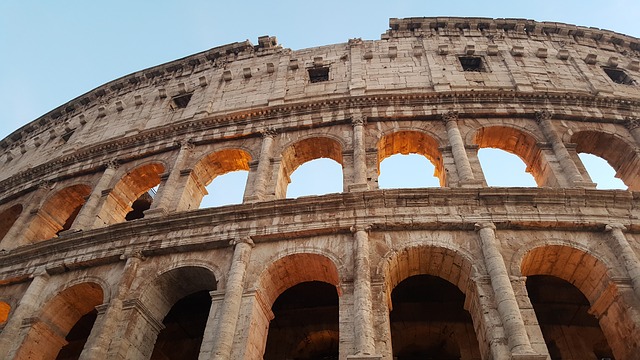
    colosseum-1234144_640St. Ignatius of Antioch understood this. The depths of divine love moved him to be one of those of whom Christ said, I will send to them prophets and apostles… (Luke 11:49a). Sent to oversee the Christian faithful as bishop of Antioch, Ignatius tirelessly preached the truth of the real presence of Christ in the Eucharist as well as the necessity of accepting the faith as it was handed down by the Apostles. Ignatius had such deep faith in Christ that he chose to remain with him despite the conclusion of that same verse: some of them they will kill and persecute (Luke 11:49b). Preferring to die rather than betray Christ, Ignatius was brought to Rome and martyred around the year 115.

    We as disciples must be ready for the acceptance and rejection that our role as prophet brings. This is what faith demands, for it is not faith in ourselves or our ability to move hearts but in the One who has justified, commissioned, and sent us, and in whose name we do all that we do. Let us pray that like St. Ignatius of Antioch we never lose heart in the face of persecution or rejection, but rather redouble our efforts at living out the gospel, that through us many are called to the repentance and salvation that only Christ can offer.

    St. Ignatius of Antioch, pray for us.