Ephesians 5:21-33; Luke 13:18-21
When people say, “it’s all Greek to me,” they mean that they don’t understand what they’re hearing or reading. We may not realize it but we could often say the same thing about the bible, not so much because it really was written in Greek (and Hebrew) but because things get lost in translation. Sometimes those things don’t matter much; other times they can make a great deal of difference.
Today’s first reading is a perfect case in point. What may come across as little more than a discourse on marriage is actually a beautiful meditation on various aspects of love that can benefit all people, married or not. The problem is that some of the subtleties lie hidden beneath the surface, lost in translation.
For example, he begins: Be subordinate to one another out of reverence for Christ. Although the meaning seems obvious, there are nuances. First, the word we translate as “subordinate” also implies obedience, like servant to master. Second, when he says “one another” he means everyone, not a select few. Third, the phrase “reverence for Christ” literally translates “in the fear of Christ.” So, what seems like a simple exhortation to treat each other well is actually a bold challenge to love like Christ: with the humility that seeks to serve and not to be served, and the fear of the Lord by which we reverence God above all things and others out of love for him.
When it comes to the married, St. Paul begins with what many today see as a put-down of women: Wives should be subordinate to their husbands…. And while he clearly does follow the custom of placing men at the head of the household, an important subtlety is missing from our text. The original Greek reads, wives should be subordinate to their own husbands…. Whatever the reason, St. Paul clearly feels the need to remind the Ephesians of two additional aspects of love: Chastity and faithfulness. Once again, this is a lesson for us; just as we love the Lord and have no false gods before him, so we are to be chaste – faithful to our state in life – whether lay or clergy, married or single.
Notice too that St. Paul quotes Genesis: a man shall leave his father and his mother and be joined to his wife, and the two shall become one flesh. This is the highest unity we can achieve – a bodily and spiritual communion ordained by God and indivisible by man. When I say “indivisible” I mean exactly that. In the original Hebrew and Greek the word is not joined, but glued. Imagine gluing two sheets of paper together and then, after it has set, trying to separate them. They will tear. We all know of the pain and sadness of the disunity that comes with divorce.
Not that unity is pain free. In any long-term relationship like marriage, unity requires self-sacrifice. This is especially true as relationships mature over time. Life tends to show us things we didn’t see in the early years; among them, the weaknesses and failings of others. Our natural tendency is to focus on our own pain and suffering, to place blame on others rather than see our own role in them, and to withhold forgiveness rather than make peace with them and ourselves.
But as St. Paul reminds us, we are to love as Christ loves the Church: Completely, despite and beyond its weaknesses, to the point of dying that she may live. This is the daily discipline of being servant of all, faithful to our state in life whatever it is, and bound to God and each other in a relationship that is life-giving, life-sustaining, and life-affirming, no matter the cost. This is painful but that is the pain of healing, the death that gives way to the new life of resurrection.
Our Lord points to this in parable form in the gospel, where we see another aspect of love: that it not only unites but multiplies. When the Christian dies to self like leaven, the Church rises like three measures of flour; when husband and wife die to self, their new family flourishes, rising like the branches of the mustard plant toward Heaven, a home for its children.
This is not possible apart from the grace of God, for God is Love and his grace the glue that binds us one to the other. The power of his grace works within us to form the mind of Christ, to imitate the love of Christ, and to hope more and more in the promise of Christ: that those who love as he loves will one day live as he lives, in the eternal life and infinite love of the Most Holy Trinity.




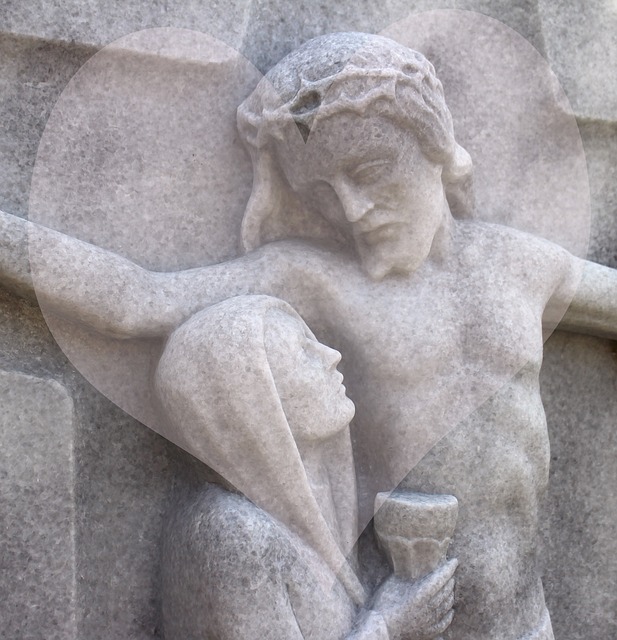 Mary understood this and, as in all things, obeyed her Lord. That is why i
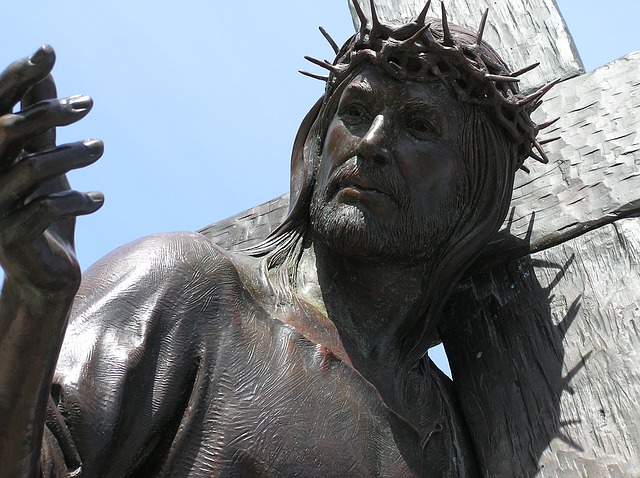 But Jesus also taught us through his obedience unto death that glory waits on the other side of suffering; that being made perfect is not a matter of doing all things on our own, but the opposite: Letting go of control and uniting ourselves more and more to the will of the One who is our true strength.
 By showing Jesus washing the feet of his disciples, the evangelist re-emphasizes the primacy of service. Those who would be greatest must become the least. This is the humility and love behind the gift of his life poured out for our sake, by which he becomes one with us and we become one with each other.
 There is an ancient rabbinic saying that “the fragrance of a good perfume spreads from the bedroom to the dining room; so does a good name spread from one end of the world to the other.”
 Mark 10:45