
Galatians 2:19-20; John 15:1-8
I once instructed a woman in the RCIA program who excelled in her studies of the faith. After receiving the sacraments she moved away and I lost track of her. Years later, I learned that she had stopped practicing the faith. She was now “spiritual but not religious.” I think that means she believes that while there is a spiritual dimension to the world, it isn’t what we understand as the faith most fully revealed to us in Christ.
The sticking point for her, as for many, may well have been the passion and death of our Lord. Indeed, the crucifixion was called by St. Paul a stumbling block to Jews and foolishness to Gentiles (1 Corinthians 1:23). But to one of the saints, St. Birgitta of Sweden, the crucifixion held a special place; it was the nexus of the physical and spiritual worlds.
Birgitta lived a life full of the joys and sorrows of family. Born in Sweden around the year 1303, the daughter of a governor, by age 42 she had already been a wife for 28 years and a widow for one. She had a wide and deep experience of motherhood; as mother of 4 boys and 4 girls, she saw one daughter run off to marry a troublemaker, one son die as a boy, one as a man, and another daughter grow up to become St. Catherine of Sweden.
She also knew the life of the working world. While raising her own children she served as lady-in-waiting to the queen of Sweden. Her kind, motherly way drew her into the confidence of the king and queen, both of whom tended to enjoy worldly life too much for their own good. Birgitta worked as hard as she could to keep their religious concerns before them; this became a frustrating and unfortunately futile struggle.
Finally, Birgitta knew the religious life as well. After becoming a widow and devoting herself to care of the poor, who greatly loved her, she dedicated buildings and land on family property to a new contemplative order. She wrote the rule for her order which became known as the Order of the Most Holy Savior.
At the same time, Birgitta lived a full life in the spiritual world. She was a mystic. At age seven, she had a vision of being crowned by the Blessed Mother. Three years later came her most profound mystical experience: The crucified Christ appeared to her and bid her gaze upon him. When she asked who had so cruelly treated him, he replied, “Those who despise me and spurn my love for them.” This was her own Damascus road moment; although she had many visions, dreams, and locutions afterwards, she devoted the rest of her life to the contemplation of Christ’s suffering.
After wisely consulting her spiritual advisor and obtaining his approval, Birgitta began to share her visions with the world. She met with Magnus, the king of Sweden, and advised him that Christ would visit a plague on the land if he and the queen did not change their ways. As usual, he laughed off her vision. The Black Death came two years later, wiping out half the population. Needless to say, the king stopped laughing.
Birgitta next focused her attention on the popes, who had long since deserted Rome in fear for their lives. Leaving Sweden with her daughter Catherine, she moved to Rome. In the midst of its crumbling churches and society, Birgitta ministered to the sick, fed the poor, housed pilgrims, and called on the pope to return. Her call took on a special intensity due to her dislike of pope Clement VI, who she called “a murderer of souls, more unjust than Pilate and more cruel than Judas.” During a thunderstorm on the night of December 3rd 1350, lightning struck the bells of St. Peter’s, melting them. Birgitta prophesied this as a sign that Clement’s life was coming to an end. He died a few days later. When the next pope fled to get away from her Birgitta literally chased him down, begged him to approve her order, which he did, and to return to Rome, which he did not do. After her death in 1373, her call for the popes to return was taken up by St. Catherine of Siena. Not long after, the papacy returned to Rome to stay. Birgitta was vindicated.
In the first reading, St. Paul wrote:
I have been crucified with Christ; yet I live, no longer I, but Christ lives in me; insofar as I now live in the flesh, I live by faith in the Son of God who has loved me and given himself up for me (Galatians 2:19-20).

Birgitta’s life is a testament to the triumph of St. Paul’s words. From the moment of that first overwhelming spiritual encounter with the suffering, crucified Christ when she was 10 years old, she began to internalize them; to sense as we all must, not only the pain of Christ’s passion but the passion behind his pain. The ultimate reality of the cross is love, a love so great it unites heaven and earth, the physical and spiritual. What else could it be but love that would cause God himself to take on our humanity, our sinfulness, and in the face of humanity’s rejection, nail it to the cross? Birgitta spent her life contemplating not the pain of futility but the pain which Oscar Wilde called the wounds of love. In her own way, St. Birgitta spent her life showing her family, her king, her people, and her pope that this is not only a love worth dying for; it is a love worth living for – eternally.
St. Birgitta, pray for us.

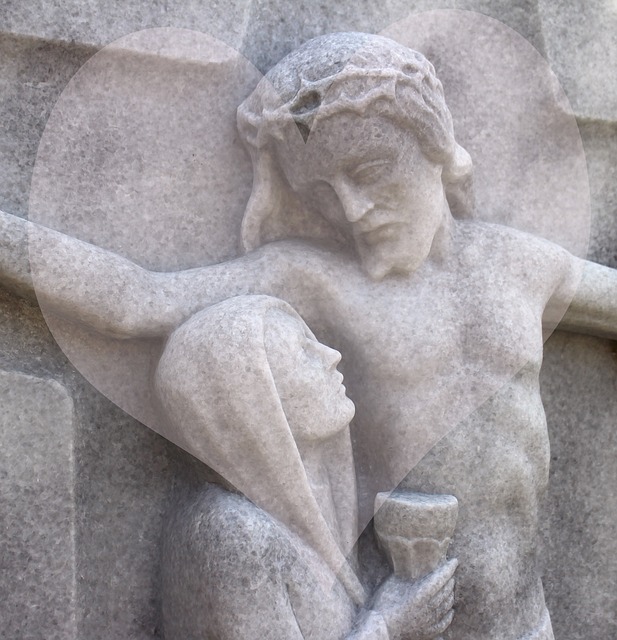 Mary understood this and, as in all things, obeyed her Lord. That is why i
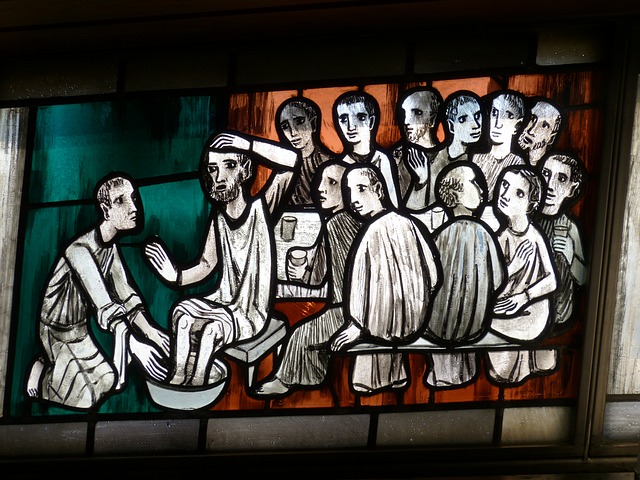 By showing Jesus washing the feet of his disciples, the evangelist re-emphasizes the primacy of service. Those who would be greatest must become the least. This is the humility and love behind the gift of his life poured out for our sake, by which he becomes one with us and we become one with each other.
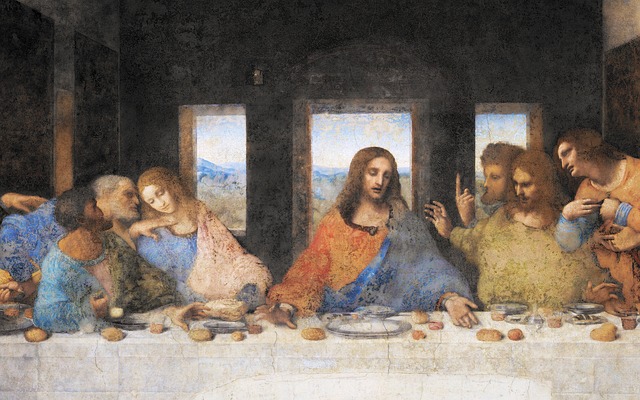 Let us keep this in mind as we prepare to receive the Sacred Morsel of our Lord in the most Holy Eucharist. For we are all like Judas; we have all betrayed our Lord’s innocent blood with every sin, no matter how small. And as He did with Judas, so does our Lord do to us; He continues to feed us, to respect our dignity, to love us unconditionally.
 There is an ancient rabbinic saying that “the fragrance of a good perfume spreads from the bedroom to the dining room; so does a good name spread from one end of the world to the other.”
 At every apparition Mary is highly honored and rightly so for she is as she said, the Immaculate Conception. But the honor we give her goes far beyond her identity to the two-fold reality behind it. First, Mary points us to Christ. Through the grace bestowed on her by the will of God and her total abandonment to it, Mary has perfectly heeded her own advice:
 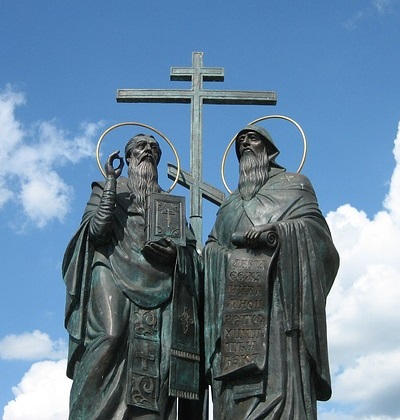 Saints Basil and Gregory can teach us many things, but today we focus on two. First, they teach us that faith in God requires true humility. Heresies are born from the pride that sees ourselves as the measure of all things; that interprets our failure to understand the truths of the faith to mean that the truths are wrong. True humility is as John admonished us, to remain in him; to see that God is the measure of all things and that our inability to understand means that we still have work to do. Second, in these days when the word “love” is so easily limited to physical expressions of self-gratification, the love of Basil and Gregory is a shining example of the most uplifting, life-giving love possible between people. This is the love that is modeled on God; that seeks only the good of the other; that finds its union with others in the heart and soul because that is where God dwells, and God is love. This is the love where heart speaks to heart and says, “I want for you what God wants for you.” My prayer is that all of us come to have that love for one another. What a world this would be.
 In the marvelous healing providence of God, it so happened that this same woman heard bishop Nonnus preach the homily the next day at Mass. Whatever he said moved her to repentance. She asked him to make her a Christian. Not long afterward, the same bishops who once looked away in disgust now watched in wonder as this woman threw herself upon the floor of the church, washed the bishop’s feet with her tears, and dried them with her hair. Once baptized, she traded her jewels for a robe and devoted the rest of her life to penance in the strict regimen of a cloistered monastery. The beautiful, bejeweled harlot once known in Antioch as Margarita (meaning “Pearl”) transformed herself into a beautiful model of penitence known to this day by her birth name, Pelagia.
 Finally, the cross is a sign of victory. It is the apparent irony seen throughout salvation history that God works for good by turning evil upon itself. It was Pharaoh who pronounced the curse by which his own people would most suffer: the death of every firstborn. In the desert it was the emblem of the serpent, reminiscent of the one whose envy brought death into the world, that would be lifted up on a tree as a sign of healing and life. It was Caiaphas, plotting to have Jesus executed, who unwittingly prophesied that it was better for one man to die than for the whole nation to perish. It was the Roman governor Pilate who first asked
  Mark 10:45