Tag: Gospel

  • Chosen

    Chosen

    Feast of St. Matthias, Apostle

    Acts 1:15-17, 20-26; John 15:9-17

    In the spring of my senior year, the high school play was a drama with a lead role that I really wanted. When tryouts came, I nailed it. I went home confident that I had that part in the bag.

    Only, I didn’t. Even worse, I got cast as what seemed to me like the play’s dullest character. At the first rehearsal my disappointment must have shown; the director took me aside and said, “I could have given you the lead, but it came too easy to you. The guy who got it needs the challenge. As for you, the part I gave you is going to make you work. Now, I want to see what you do with it. Show me you’re the actor you want to be.”

    It turned out that he was right about both of us. There was a depth to my part that I hadn’t seen, and it did make me work. Same for the guy in the lead role; he struggled but kept working. In the end, the director was happy with both of us, but honestly I think we were happier with ourselves. We got exactly what we needed, and the play was better because of it.

    I remembered that while meditating on the first reading. Two men were proposed to fill the role of the twelfth apostle; as we know, the lot fell upon Matthias (Acts 1:26). I asked myself how I would have reacted if I were Barsabbas. As with the play, I might have been disappointed. “I, too, was with the apostles from the beginning… why was I not chosen?”

    Of course, if I were Barsabbas, I would have known that Christ had already answered that when he said, It was not you who chose me, but I who chose you and appointed you to go and bear fruit that will remain (John 15:16).

    In that one sentence, our Lord said it all. It wasn’t that one man was chosen and the other was not; both were chosen, but each given different parts. Clearly, the office of twelfth apostle had been reserved for Matthias; to him and him alone went that honor, challenge, and responsibility, as well as every grace he would need. But that didn’t mean that God had nothing for Barsabbas to do. To the contrary, he too had been chosen, and given his own unique and important part to play. We have no idea what it was; like Matthias and so many others throughout history, his work remains a mystery. But also like them, the fruit of his labor remains to this day – we, the Church, now spread to every corner and people of the world.

    God’s plan for discipleship is no different today. We may think of evangelization, or preaching the gospel, as the proper work of professionals – people who are qualified by their training or education in the faith. But our Lord’s words in the gospel are a reminder that God doesn’t choose the qualified, He qualifies the chosen. And we are all chosen; whoever we are, whatever we do, whatever circumstances we find ourselves in, God has chosen us, called us by name, and qualified us with every gift and grace we need to bring the world to him and him to the world.

    Of course, we will all face challenges along the road. People may reject us, we may struggle with doubts or periods of discouragement, and we may even be jealous of those who have gifts and abilities that we do not. But I firmly believe that each challenge is God’s way of saying to us, “I could have made your way easier, but I want to see what you can do with what I gave you. Show me that you are the disciple I have called you from all eternity to be.” It means that we will work harder than ever before, but think how much better off we will be in the end, for then we will hear our Lord say, Well done, good and faithful servant… Come, share your Master’s joy (Matthew 25:21).

    Who wouldn’t want that part?

  • The Perfect Plan

    The Perfect Plan

    Saturday of the 5th Week of Lent

    Ezekiel 37:21-28; Jeremiah 31:10, 11-12abcd, 13; John 11:45-56

    When I was 7, I ran away from home. I figured I had to; Mom was forcing me to do all this horrible stuff: school, chores, Confession every other Saturday. So one day, after she said I was being particularly annoying, I decided now was the time: I’d go to St. Louis and live with my uncle. What a great idea; he lived close to where the Cardinals played baseball, was a lot of fun, and he’d love me hanging out with him every day. Best of all, no chores! So, I went upstairs and got some stuff. I packed light. We lived in Denver, Colorado, and on the map it looked like an easy trip; just walk across Kansas and you’re in St. Louis. So I left, pretty pleased with myself. My plan was perfect.

    Or so I thought. When I got to the highway a police car pulled up. They asked me who I was and where I was going, so I told them. I couldn’t believe it; rather than compliment me on a great plan, they made me get in the squad car. Next thing I knew, we pulled up at home. Mom and Dad were standing there and, judging by their faces, it didn’t look like they were going to be calling my plan perfect, either.

    All this is why I think I understand how Caiaphas felt when he prophesied, It is better for you that one man should die instead of the people, so that the whole nation may not perish (John 11:50). He was probably pretty pleased with himself, too. By the death of this one man, Jesus, he could broker peace among the people, placate Rome, keep a firm grasp on his power, and maybe go down in Jewish history as the high priest who saved Israel from destruction. His plan was perfect.

    Or so he thought. Jesus did die as Caiaphas planned, but everything else went exactly opposite of the way he expected: Jesus rose from the dead, the social unrest grew, the people rebelled against Rome, and in response the Roman army burned Jerusalem and the Temple to the ground. It was not a perfect plan at all.

    The truth is that there is only one perfect plan. We call it providence, or God’s loving plan to guide his creation toward perfection (Catechism of the Catholic Church, §302). We heard some of its key elements in the first reading and the psalm: Israel, gathered together in unity under one shepherd; her people cleansed from their sins, given a new heart and a new spirit; God dwelling with them in his sanctuary forever.

    Although the office of high priest did have the gift of prophesy, Caiaphas could not see beyond his own ambition. From the depths of his own desires, he prophesied the death of Christ as an end in itself, not for what it was: the prelude to the resurrection, through which Christ would fulfill the words of Ezekiel – a new Israel, the Church; a divine Shepherd who washed her clean by the blood of his cross and gave her authority to absolve sins in his Name; who with the Father gave her a new heart by sending the Holy Spirit; and who dwells among his people forever in Word and Sacrament. This was, is, and always will be the perfection of God’s plan.

    Given this, it is especially moving to hear those near the Temple asking, What do you think? That he will not come to the feast (John 11:56)? Of course he will. That is the plan; Jesus is the feast!

    So, as we stand on the threshold of Holy Week, let us take a moment now to thank God for his wonderful providence, most truly shown in the gift of his only Son, our Lord, Jesus Christ. He is our hope, our joy, and our confidence. May his steadfast love for us and his Father, so perfectly on display throughout his passion, remind us that God’s plan is the only plan that matters, and that we are the reason for it. And let us pray that the plans we make for our own lives, however imperfect, are always in union with, and built upon, God’s perfect plan. As God himself has told us so beautifully, For I know well the plans I have in mind for you… plans for your welfare and not for woe, so as to give you a future of hope. When you call me, and come and pray to me, I will listen to you (Jeremiah 29:11-12).

  • The Three Choices

    The Three Choices

    Saturday of the Fourth Week of Lent

    Jeremiah 11:18-20; Psalm 7:9; Luke 8:15; John 7:40-53

    Years ago, the leader of a religious cult said that God told him the world was going to end soon; he even gave the day. When that day came and went, a few members lost their faith and drifted away. However, many did not; their faith grew stronger. When asked why, they replied that God decided to spare the world because of the cult’s prayers.

    Although they went about it in opposite ways, both of these groups were looking for the same thing: Consistency. We like our words and actions to be consistent. When they aren’t, when we say one thing but do another, we have three choices: Change our beliefs, change our behavior, or rationalize our behavior away. It can be hard to change our behavior, especially when it’s a habit; it can be even harder to swallow our pride and admit that our beliefs were wrong. That makes rationalizing a very popular choice.

    We see shades of this in today’s gospel. The chief priests and Pharisees had firm beliefs about who God is, how He works in the world, and who He works through. In their eyes, that did not include Jesus. But the people had begun to see that the actions of Jesus were inconsistent with that; his miraculous signs along with the depth, truth, and beauty of his words were convincing evidence that God was indeed working in and through him. So, the chief priests and Pharisees had to choose: Either change their own beliefs, change the peoples’ behavior, or somehow find a way to rationalize it and save their own pride.

    As the gospel story shows, they weren’t going to change their own beliefs, and they weren’t going to talk the people out of their attraction to our Lord. That left one choice: Rationalize. So that’s exactly what they did; to them, anyone who believed in Jesus was either deceived, ignorant, or ‘from Galilee,’ which was apparently intended as an insult. Ironically, by the end they lost all rationality, ending with an outright untruth: Look and see that no prophet arises from Galilee (John 7:52). If they themselves had looked, they would’ve seen that in fact the prophets Jonah, Hosea, and Nahum were all from Galilee!

    But we can’t focus on these men without looking in the mirror, for we all share the great inconsistency of sin. Our faith tells us that something is sinful; we do it anyway; we feel guilty. To rid ourselves of the guilt, we too must choose one of the three options mentioned before. Let’s take the worst one first: Changing our beliefs to suit our sinful behavior. Sadly, many of us know people who have done just that – left the faith rather than give up a sinful life. Let us pray that their hearts may soften, and that we never give in to the temptation to abandon the faith. Second, we can rationalize, as the priests and Pharisees did. This is a great temptation because, to paraphrase St. Jean Vianney, it’s so much easier to excuse ourselves than to accuse ourselves. That is exactly what we do every time we say things like, “I shouldn’t have gotten angry, but you made me so mad,” or “It’s just a little white lie,” or “I know I shouldn’t have texted while driving but it was an emergency.” These may seem like no big deal, but they lead to bigger problems; we dull our sense of sin and open ourselves to another: The sin of presumption, which says, “Go on, do it! God will forgive you later.”

    How far these selfish choices are from the generous heart spoken of in the Gospel Acclamation, that keeps the word and yields a harvest through perseverance (Luke 8:15), the innocent heart that prays for justice (Psalm 7:9), the heart that is completely open to God, who Jeremiah called the searcher of mind and heart (11:20). Only such a heart can make that most difficult choice: To change our behavior, so that it is in keeping with our faith. This takes perseverance, for our sins can be habits that are hard to break; it takes love of justice, for we have wounded our neighbor and our innocent Lord and must make amends; and it takes total openness to God, who knows our mind and heart infinitely better than we do.

    Let us pray that our merciful Lord will grant us such a heart, that we may have the humility to see ourselves as we are, to admit when we have sinned, and to seek the absolution that He alone can give. Only by His grace can we be most truly consistent.

  • The Heart of the Matter

    The Heart of the Matter

    Saturday of the 3rd Week of Lent

    Hosea 6:1-6; Luke 18:9-14

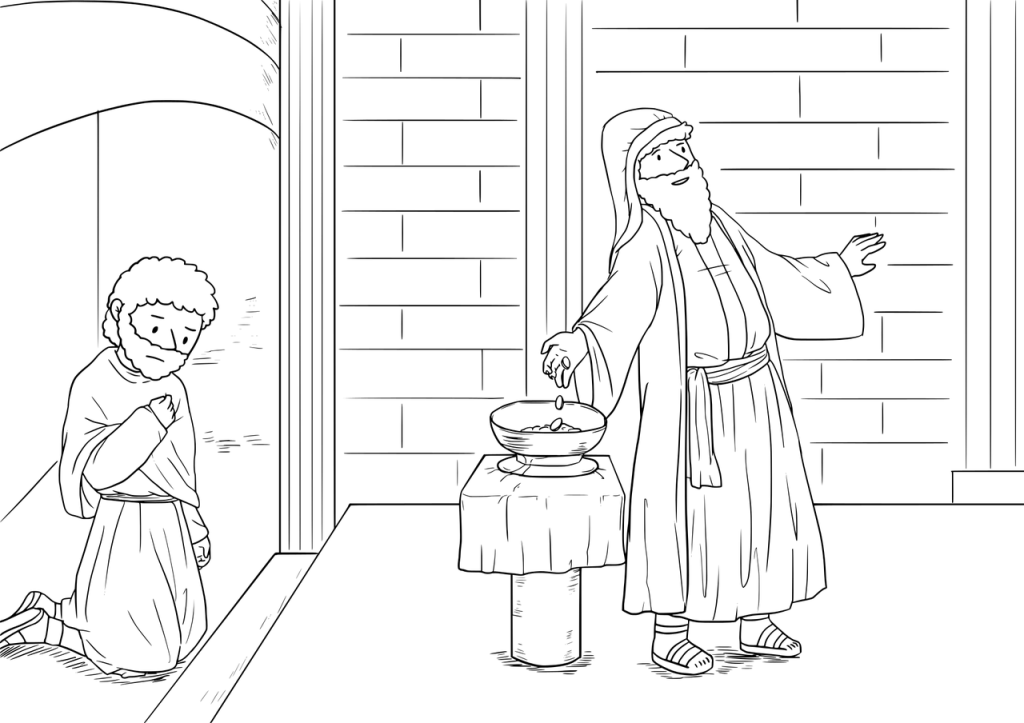
    When we hear the parable of the Pharisee and the tax collector, we are rightly drawn to the differences between them. However, I think time is well spent thinking not only about the differences but also the similarities, and what both have to teach us about ourselves and our prayer life, which is the reason Jesus taught this parable to begin with.

    The fact is, the two men have some important things in common. First, they’re both truthful. The Pharisee is telling the truth when he says he isn’t greedy, dishonest, or adulterous; so is the tax collector when he calls himself a sinner. Second, their actions are pious. The Pharisee tithes and fasts, while the tax collector stands at a distance, keeps his eyes lowered, and beats his breast as he prays. Third, both are men of deep conviction; they speak to God straight from the heart.

    Speaking to God from the heart is key, for Scripture teaches us that prayer is a work of the heart. The heart is where we live, our inner Temple, the place to which we withdraw (CCC 2563). At the same time, it is the place God knows best; he looks at the heart and knows its secrets (1 Samuel 16:7; Psalm 44:21). If we are righteous in God’s eyes, our prayers are fruitful (James 5:16); if not, our prayers are in vain (CCC 2562).

    This brings us back to the Pharisee. Although he seems to be speaking to God, his words betray a heart turned inward. Our Lord may be hinting as much when he says the man spoke this prayer to himself (18:11), but even if not, one thing is clear: God is the audience of his prayer, not the object. It’s tempting to think that we never do this, but my guess is that in the quiet of our own inner Temple, we can all recall times when we’ve focused a little too much on ourselves, have resisted what God is asking, acted as if the good things we’ve done we did on our own, or that in some way God likes us just a little bit more than he does some other people – especially people we don’t like.

    That’s the real problem. The Pharisee is right to say that he is not like the rest of humanity, but wrong because he’s comparing his behavior with what other people do, not with what God expects. The same is true for us; our standard is not other people, it is Christ. Given that, we can understand why God would say through Hosea, Your piety is like a morning cloud, like the dew that early passes away (6:5). Fasting, tithing, coming to the Temple: All are false piety if they don’t come from a truly humble heart.

    Humility, the foundation of all prayer, helps us to recognize our dependence on God and to appreciate our place in His plan. It is the virtuous balance between the extremes of pride on the one side and self-abjection on the other, which happens when we fail to recognize and use the gifts God has given us.

    As our Lord pointed out, humility was the great virtue of the tax collector. We know it from his posture and his words: Be merciful to me a sinner. What we do not know is what happened next. Did he live that humility out in his daily life by doing what the Baptist advised, Stop collecting more than what is prescribed (John 3:13)? While we must not push the parable beyond its limits, we must remember that humility not only orients us to God, but to each other as well. As with the Pharisee, it’s tempting think that we already live humbly in the world, but we must ask ourselves: Do we ever dwell on other peoples’ faults, gossip about them, seek their admiration, or return insult for insult?

    Like the Pharisee, this is the problem. True humility urges us to remember that God’s loving plan extends to all of humanity. We cannot live equitably with other people unless we treat them like equals, and we certainly cannot pray, no matter how humbly, “O God, be merciful to me a sinner,” if we refuse to be merciful to those who sin against us.

    Through the parable of the Pharisee and the tax collector, our Lord teaches us two lessons about prayer: First, the foundation of prayer is not our honesty, piety, or sincerity, but a contrite and humbled heart (Psalm 51:19). Second, the fruit of righteous prayer is a life of virtue most perfectly found in the life of Jesus, who took the form of a slave, humbled himself, becoming obedient to death, even death on a cross (Philippians 2:7-9). Indeed, no man so humbled was ever so greatly exalted.

  • To See and Understand

    To See and Understand

    Saturday of the 6th Week in Ordinary Time

    Mark 9:2-13

    As we read the gospel of Mark, we might catch ourselves wondering about the Apostles. They never seem to get it! No matter what they see Jesus do – healing after healing, miracle after miracle – they end up asking the same question: “Who is this?”

    Although Mark probably intended us to wonder, and for good reason, we shouldn’t take it too far. We have the benefit of hindsight, not to mention an evangelist who tells us everything we need to know in his first line: the gospel of Jesus Christ, the Son of God (Mark 1:1). The Apostles had to figure it out as it was happening. They did have some success; Mark tells us that Peter recognized Jesus as the Messiah (8:29). However, he also says that they didn’t understand the cross (8:32; 9:32; 10:35ff). That’s probably because they pictured the Messiah as the son of David, not the Son of God; a conquering king, not a suffering servant; someone who would free them from emperors and tyrants, not from sin and death.

    So, the question really isn’t why the Apostles never got it. They did, as Mark well knew, especially if his gospel came from Peter himself. The question is what moved a man like Peter to go from a terrified disciple asking if he should set up tents on a mountain to a faithful shepherd of the Church who, nearing his martyrdom, wrote with such conviction of that same unforgettable, mystical experience (2 Peter 1:16-18).

    I think the answer lies in the gifts given to him by the Holy Spirit, particularly the gift of understanding. It has been called a “penetrating” or “permanent” intuition of divine truth,1 and it certainly was for St. Peter; who could intuit any truth greater than Jesus, who is the way, the truth, and the life? Indeed, given his experience – seeing Moses, Elijah, and the glorified Christ, and hearing the voice of the Father – Peter must have devoted many hours to contemplating what the Transfiguration of our Lord meant for him and for the Church.

    So should we, for the gift of understanding is given to us, too. It works in many ways. First, it helps us find the hidden meanings of Scripture. Certainly it was used by the Apostles and Fathers of the Church as they read and discovered the many Old Testament references to Christ. The pages of our bibles have much of the fruits of their labor. I urge you to find the notes and footnotes for today’s gospel passage (two are Exodus and 1 Kings) and see how they inform and enrich your understanding of the Transfiguration. Second, the gift of understanding helps us see the relationships between symbols and what they point to. One example is the cloud that surrounded the Apostles on the mountain; that is a symbol of the Lord’s presence, just as it was in the time of Moses. Third, the gift of understanding shows us how God works in our own lives. Think of your own “mountaintop” experiences or consolations; the times during Mass or other prayer when you felt especially close to God, or moved by his presence and power. Finally, the gift of understanding strengthens our appreciation for the Sacraments. For example, when the bread and wine are consecrated, we are led to a deeper, more profound awareness of Jesus Christ, most truly present. It is as St. Thomas Aquinas once said: “When the eye of the spirit is purified by the gift of understanding, one can in a certain way see God.”

    Let us pray today and every day for an increase in the gift of understanding, that we may more and more clearly see the face of God in Scripture, the Church, the Sacraments, and perhaps most especially in our own lives.

    1 Aumann, Fr. Jordan, OP. The Gift of Understanding. Available online at http://www.domcentral.org/study/aumann/st/st10.htm#tgou.

    https://catholicstraightanswers.com/gifts-understanding-wisdom/

  • Don’t Mess with Perfection: Saturday of the 5th Week in Ordinary Time

    Don’t Mess with Perfection: Saturday of the 5th Week in Ordinary Time

    1 Kings 12:26-32; 13:33-34; Matthew 4:4; Mark 8:1-10

    In the first reading we hear of Jeroboam, the first in a series of problematic kings, and the huge changes he made in the way the people of Israel worshipped. We’ll get to the reason why but it’s important to note that this tendency to mess with perfection isn’t limited to him. We have only to go back to the time just after the Second Vatican Council to see something very similar. I’ll mention just a few things I myself witnessed.

    First, the music changed. That’s no big deal in and of itself; music always changes. But the words changed, and words matter. For example, now we sang about eating “bread” and drinking “wine” at Communion. This was followed in my parish by a nun wearing an alb, assisting the priest at Mass, and preaching what sounded like homilies. Next, the words of the readings began to change. I remember going up to the ambo and seeing that, throughout the lectionary, words were crossed out and others pencilled in. Awhile later, I moved to a new parish that had been remodeled so that the Tabernacle was moved to another room, the altar was where the pews used to be, and the pews were replaced by chairs. No kneeling. Finally came the Sacraments. Baptisms were “in the name of the Creator, the Redeemer, and the Sanctifier.” At Confession, the priest said to me, “Jesus absolves you of your sins.” The worst cut of all came on a road trip to the parish of an old personal friend, a priest. At Mass he changed the words of consecration. Even with what little education I had at the time, I knew you couldn’t just do that.

    Too often, religious changes are made for political reasons. The book of 1 Kings is clear: Jeroboam wasn’t concerned at all about the hearts of the people, only what losing them meant for him. Similarly, in the local Church, those making changes to the Mass and Sacraments saw an opportunity to express their ideologies or advance political agendas.

    Of course, that isn’t what religion is all about. As our faith teaches us, religion is an exercise of the virtue of justice; through it, we try to give God what we owe him, which is everything. If we make it about what we think is important rather than what God knows is important, then we risk reaping the rewards of Jeroboam’s pride and arrogance: Alienating God and losing the hearts of his people. That is why St. John Paul II and Benedict XVI went to such great lengths to speak about liturgical reform; they wanted us to remember that the Sacraments belong to Jesus Christ. Treating them as if they are our own personal property results only in confusion, disunity and spiritual hunger.

    This is the same kind of hunger so obviously felt by the people flocking around our Lord in the gospel reading. Mark tells us that they had chosen to be with him for three days (8:2), even at the expense of not eating. He rewards their bodily and spiritual hunger by giving them a foretaste of the Holy Mass; having already fed them with the word that comes forth from the mouth of God (Matthew 4:4), he then took the seven loaves, gave thanks, broke them, and gave them to his disciples to distribute (8:6). Mark concludes by telling us everything we need to know: They ate and were satisfied (8:8).

    The lesson is clear: Don’t mess with perfection. Every time we approach our Lord with a humble, contrite heart that asks him only to remember us, he answers by giving us perfectly, in word and Sacrament, everything we need to be with him for eternity.

    Who would want to change that?

  • Is the King Glad? Saturday of the 1st Week in Ordinary Time

    Is the King Glad? Saturday of the 1st Week in Ordinary Time

    1 Samuel 9:1-4; 17-19; 10:1; Psalm 21:2; Mark 2:13-17


    Guided and inspired by the Holy Spirit, the Church takes great care to choose readings for each day that highlight certain themes, most often represented by the psalm that comes between them. Today we hear a wonderful case in point, Psalm 21. On a purely human level, this is a joyful song of praise that God has endowed authority on an earthly king. On a divine level and as a messianic psalm it speaks of Christ, who indeed is glad and rejoices in the full authority given him by the Father. With good reason we repeat the second verse: Lord, in your strength the king is glad. But that doesn’t answer how the readings highlight that theme. As we will see, they do so in very different ways.


    As the story of Saul begins, it’s hard to know what he would have been glad about. It must have come as such a surprise! One minute he’s out looking for his father’s animals; the next, he is anointed as the first king of Israel. But although we can’t tell his mindset in the beginning, as the story unfolds it becomes clear: This king isn’t glad in the Lord at all. To the contrary, he has little regard for God’s authority; he has his own ideas and doesn’t want anyone, even God, to correct him. Worse, despite Samuel’s warnings, Saul never sees the problem; he remains blind to his own arrogance and self-exaltation until everything ends for him in complete disaster.


    By contrast, the story of Matthew doesn’t end with disaster but it does begin that way. Like Saul, Matthew is a man going about his business; unlike Saul, his business was what most Jews would have called a complete disaster: the customs post. Such men were among the worst of sinners; quislings who took money from their own people, gave it to their conquerors, and even kept some for themselves. Yet this is the kind of darkness where the light of Christ most brightly shines; passing by, the Divine Physician diagnoses Matthew, and in two words prescribes the remedy: Follow me.


    As with Saul, we have no idea what went through Matthew’s mind at that moment, but as always Mark invites us to put ourselves in the scene and contemplate. What would we do? Would we have doubts, fears, or misgivings? Did Matthew? Perhaps. All we know is what Matthew actually did, and here Mark couldn’t be clearer: He got up and followed Jesus. Again, this is only the beginning; the story unfolds in the fullness of time. Mark tells us that Jesus went to his house, ate with him and his friends, and told others that he came to call sinners. Though Mark then goes silent about it, that doesn’t mean we know nothing. We know that Matthew was glad in the strength of the Lord who called him out of his sinful life and offered him another, so glad that he followed Christ to the end and to the point that a gospel account would bear his name for all time.


    Two men, two calls, two responses, two completely different endings, yet the same theme: Lord, in your strength the king is glad. How does this apply to us? In two ways:


    First, we must understand that we, the baptized, are kings. At our baptism we were anointed kings and called as Christ was called – not to be served but to serve (Mark 10:45). And if we are kings, then we are glad in the strength of the Lord from the moment we decide to be a king less like Saul and more like Matthew; when we see every day as a call to live not on our own strength but on God’s, for it is he and he alone who points the way, who leads the way, who makes a way, and who is the way.


    Second, we must remember that good intentions aren’t enough; actions are required. How we act will depend on the gifts God has given us and the circumstances we find ourselves in. Whatever they are, the time is now and we will not be – we cannot be – glad in the Lord’s strength until we take what the Father has given us and, through the power and gifts of the Holy Spirit, put it at the service of the kingdom he gave us through his Son.

  • Of Prophets and Prophecy: The 6th Day of Christmas

    Of Prophets and Prophecy: The 6th Day of Christmas

    1 John 2:12-17; Luke 2:36-40

    When we hear the word “prophet,” we may think of men like Isaiah, Jeremiah, or Ezekiel, and “prophecy” as the word of God given to them concerning things that would happen in times to come. If so, Anna in today’s gospel is a good reminder that we have more thinking to do.

    First, she reminds us that prophets aren’t always men. Indeed, Anna is the first woman referred to in the New Testament as a prophet, but other women follow, namely Philip’s daughters (Acts 21:9) and the women of Acts 2:17-18 and 1 Corinthians 11:4-5. What’s more, she follows in the line of Old Testament prophetesses: Miriam, the sister of Moses and Aaron, Deborah, Huldah, and the mysterious woman in Isaiah (8:3), to name a few.

    These prophetesses, Anna included, also remind us that prophecy isn’t limited to oracles of future events. Miriam is noted for leading a beautiful song of thanksgiving for God’s deliverance of his people (Exodus 15:20), Deborah as one of the great Judges of Israel (Judges 4:4), and Huldah as the wise counselor who king Josiah relied on (2 Kings 22:14-20). Similarly, Anna speaks not of the future but of the here and now, giving thanks and proclaiming God’s long-awaited redemption.

    The Jewish scholar Abraham Heschel once said that the greatness of a prophet “lies not only in the ideas he expressed, but also in the moments he experienced. The prophet is a witness, and his words a testimony – to God’s power, to His justice and mercy.”1 What more sublime moment could any prophet experience than Anna’s encounter with the infant Christ? She, in whom the word of God remained (1 John 2:14) now gazed upon that Living Word; she who had long ago forsaken the world for love of the Father (1 John 2:15) now looked on Him who would offer the world His infinite love and mercy; and she who night and day devoted herself to the will of God (1 John 2:17) now adored Him who would see that same will done, to the Cross and far beyond.

    We don’t have Anna’s words; Luke says only that she gave thanks to God and spoke about the child to all who were awaiting the redemption of Jerusalem (2:38). But this is all we need to know, for as Heschel also said, “In speaking, the prophet reveals God. This is the marvel of the prophet’s work; in his words, the invisible God becomes audible. He does not prove or argue. The thought he has to convey is more than language can contain. Divine power bursts in the words.”2 Whatever Anna said on that glorious day in the Temple or any day thereafter, divine power burst from her words; nothing she said could contain the God-Man revealed to her. Still, her job was not to prove or argue; it was to reveal God to those who had not seen; to make Him audible and by so doing reach their hearts with His, in hopes of making them burn as hers surely must have.

    This is our task as well. By our baptism we too are anointed priest, prophet, and king and by His gift of the Holy Eucharist we have him here with us as surely as Anna did in the Temple. So, let us do as she did: Old or young, widowed or not, at every Mass let us come forward, receive him, give thanks to him, and then speak about him to all. Even after two thousand years, we have no better words than Anna did; nevertheless, we have all we need. We too have the testimony of our lives. We must make them speak.

    St. Anna the Prophetess, pray for us.

    1Abraham J. Heschel. The Prophets. New York: HarperCollins Publishers, p 27.

    2Ibid.

  • Minute Meditation: Thank God

    1 Thessalonians 1:1-5, 8b-10

    In the first reading today, St. Paul says,

    We give thanks to God always for all of you,
    remembering you in our prayers,
    unceasingly calling to mind your work of faith and labor of love
    and endurance in hope of our Lord Jesus Christ,
    before our God and Father,
    knowing, brothers and sisters loved by God, how you were chosen.
    For our Gospel did not come to you in word alone,
    but also in power and in the Holy Spirit and with much conviction.

    I don’t. Thank God, I mean. At least, not enough.

    I know the ACTS of prayer – Adoration, Contrition, Thanksgiving, and Supplication – but tend to get stuck on the letter “S,” asking God for things. Of course I need to ask, but if that’s all I do then I risk treating God as little more than a divine vending machine. I also want to show God that I adore him, am sincerely sorry for my sins, and am grateful for all he has given.

    Which is where you come in. For as St. Paul reminded me this morning, God has given me you: People practicing the faith in your daily life, working to love all you meet, and enduring in great hope of the promises of Jesus Christ. I do thank God for you.

    But I can’t properly do that unless I also thank God for how you were chosen. Being self-centered and self-conscious, I get in the habit of behaving as if it all depends on me, that I must be eloquent enough, loving enough, patient enough. Those things are important but your faith doesn’t depend on them. No; as St. Paul reminded us, the Gospel comes to us not in word alone, but also in power and in the Holy Spirit and with much conviction. There is a power to the process far beyond any of us, working in ways we cannot understand, reaching us in depths no human being can go, touching and moving us in ways that nothing and no one else can.

    If that’s not worthy of thanksgiving, then what is?

  • The Paradox of Love: Friday of the 19th Week in Ordinary Time

    Joshua 24:1-13; Psalm 136:1; Matthew 19:3-12

    Today’s readings remind me of that famous scene in the musical Fiddler on the Roof when Tevye asks Golde, his wife of 25 years, do you love me? She replies, “Do I love you? For 25 years I’ve washed your clothes, cooked your meals, cleaned your house, given you children, milked the cow, after 25 years, why talk about love right now?” He repeats, do you love me? “I’m your wife.” I know… But do you love me? She thinks out loud, “Do I love him? For 25 years I’ve lived with him, fought him, starved with him, 25 years my bed is his, if that’s not love, what is?” Then you love me? Finally, she replies, “I suppose I do…”

    Why does this scene remind me of the readings? Because today Scripture focuses on what love is in its essence, and that scene highlights three key aspects of it.

    First, love is a verb. We love not in what we say but in what we do. Through Joshua, God speaks to people who, from the time of Abraham, through the oppression in Egypt, the fleeing, struggling, and starving in the desert, might well have asked, “God, do you love us?” Today we hear God reply: “Do I love you? Remember all the things I’ve done for you, and look what lies before you: You’ve made it to the Promised Land!”

    That reply echoes through the ages to today, to every one of us. We each have our own struggles, physical and spiritual. Through all of them, God isn’t sitting silently in the background; he is in every moment, working in ways beyond our understanding. His work may be unknown to us this moment, this month, or this year, but like the Promised Land, its fruit lies waiting. We must never mistake silence for inaction or indifference; God is eternally vigilant, eternally loving, always acting for our good.

    This brings up the second point: Love is timeless. How fitting that we hear Psalm 136 today, especially the antiphon, His mercy endures forever. The Hebrew word translated as “mercy” is hesed, which includes mercy but implies action, things we do when we are motivated by love and loyalty to someone else. In the scene from Fiddler on the Roof, remember that Golde replied, “After 25 years, why talk about love right now?” To her, the amount of time was not the point; she had committed her life to her marriage.

    Jesus speaks of this kind of commitment in the gospel when he quotes the passage from Genesis that a man is joined to his wife, and the two shall become one flesh (Genesis 2:24). Again to go back to the ancient language, the word for “joined” literally means, “glued.” Imagine gluing two pieces of paper, allowing them to dry, then trying to tear them apart. We know what will happen; the kind of pain and suffering that only such tearing can bring.

    This leads us to a third aspect of love, which in the words of venerable Fulton Sheen is that love is the soul of sacrifice. Recall how Golde replied when Tevye asked if she loved him: all the sacrifices she had made, the things she had endured, for him. But not just for him, for herself as well. Only those willing to make the greatest sacrifice for love’s sake can know the deepest joys that love brings. When it comes to love, joy and sacrifice can never be separated; in married life, in ministry, in whatever kind of service we are called, only those who are most fully open, who risk the greatest vulnerability, can know the deepest, most fulfilling joy: to know and to be known, to accept and be accepted; to love and to be loved.

    As in all things, the best model for all these aspects of love is our Lord, Jesus Christ. Who performed greater works of love than he? Whose love is more timeless? Who is the soul of sacrifice more than he who was willing to empty himself into his own creation to show us that those who risk the ultimate sacrifice of themselves are given the ultimate joy of resurrection to eternal life? Only Christ could most perfectly show us all this, the great paradox of love: that giving is receiving; that most fully knowing means to be most fully known; and that only by dying to ourselves can we reach the promised land of eternal life.