Reading: Luke 22:14-23:56
Today we hear Luke’s version of the passion and death of our Lord Jesus Christ. Like all great dramas it is most effective when we place ourselves in it; see it through the eyes of those on the inside. As we do so we find such a rich array of characters that we cannot help but ask ourselves which ones we most resemble.
There are those who fall: the Apostles, who argue at the Last Supper about which of them is the greatest; Judas, the follower turned betrayer; Peter, the follower who denies even knowing Jesus; Herod, anxious only to see Him perform a sign; Pilate, whose resolve over Our Lord’s innocence weakens under pressure; the crowd, who stand by and watch silently as others abuse Him; the thief who reviles and bullies Him.
But there is also virtue: Simon the Cyrenian, who carries the cross on behalf of the struggling Christ; the women of Jerusalem who weep in mourning; the thief who recognizes that Jesus has done nothing wrong and begs to be with Him in eternity; the crowd who regret their actions; the centurion who proclaims His innocence; and Joseph of Arimathea, who provides for Him to the end and beyond.

What makes the Passion of Our Lord so powerful is not only that it is the story of our Redeemer, although it certainly is that; it is also the story of us, the redeemed. We don’t have to imagine ourselves as characters in the drama; we already are those people. As flesh and spirit, virtue and vice, it is we who in one breath swear to follow Christ, to bear the cross, to proclaim His innocence, and to beg Him for salvation, only in the next breath to deny even knowing Him, shout to crucify Him, and bully Him into doing things our way.
We might think that the struggle between virtue and vice is what makes us human; yet throughout the Passion, Jesus shows us what being fully human really means. As Pope St. John Paul said in his encyclical Redemptor Hominis, Jesus Christ the Redeemer “fully reveals man to himself.” Consider His words to the arguing Apostles, let the greatest among you be as the youngest, and the leader as the servant (Luke 22:26); to Peter, once you have turned back, you must strengthen your brothers (Luke 22:32); to the jeering crowd, Father, forgive them, they know not what they do (Luke 23:34); and to the repentant thief, today you will be with me in Paradise (Luke 23:43). In Christ do we find our proper point of reflection. Being most fully human is not measured by how much we are like the people around Jesus, but how much we are like Jesus to the people around us.
Today we leave the story unfinished, with Jesus buried in the tomb. This is fitting; it reminds us that if we are truly like Christ, we were indeed buried with him through baptism into death, so that, just as Christ was raised from the dead by the glory of the Father, we too might live in newness of life (Romans 6:4).
 Jesus Christ, not Sacred Scripture, is the highest and greatest revelation of God to the world. Next is the Church, because Jesus instituted her and gave her the authority to teach in his name. This teaching authority is called the Magisterium; it safeguards the teaching which we call Sacred Tradition and in communion with the Holy Spirit has given us the Bible, which is the third source of revelation. Thus s
 Of all men, Joseph was chosen to tell the Son of God the human story of the people he created; to teach him about the faith that he gave the world; to show him what it meant to fully engage his world as a man of his times; how to work, to worship, to provide for others, to give of himself, to weep, to laugh, to live. Only Joseph had the incredible privilege and the awesome responsibility of teaching the Son of our heavenly Father how to be the son of a human father as well.
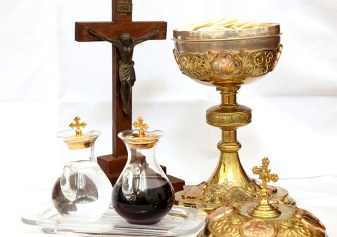 This is why our Lord counsels us through Isaiah to break from our routine, to find new ways to express our devotion and recover their original intent. That may mean learning new prayers; becoming active in a ministry that we haven’t done in awhile or ever; coming early to Mass for some quiet time with our Lord or staying after to make thanksgiving; paying greater attention at Mass especially at the Consecration; and taking special care to receive our Lord gratefully in Holy Communion. Whatever we do, God urges us to remember that these actions aren’t mere habits; they are tokens of the love and longing for God borne in our hearts, planted there by him and always drawn to him in whom alone we find rest and true union.
 Divine love is the key to happiness. Again, although religious and non-religious people kno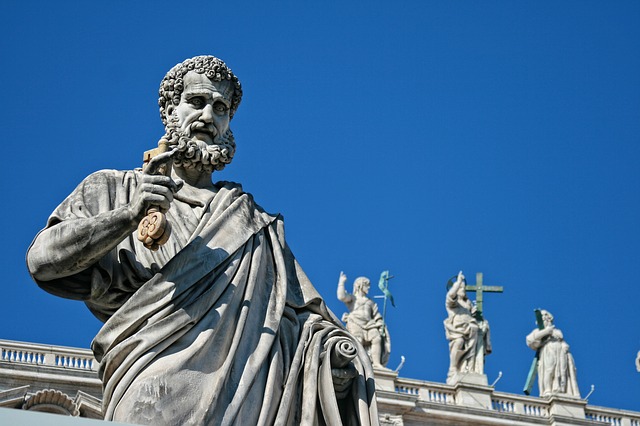
 In a sense, we are all Servites. Our mission is to witness the gospel, to be at the service of God and all people, inspired by Mary his Mother and most ideal Servant. We can only do this if we do as she did: Conform our wills to that of the Father and do whatever Christ tells us. Only He knows the cross that he has in mind for us. It may be to give up what we hold most dear, to separate from family or friends, and to devote ourselves totally to God. Whatever it is, let us pray for the grace to accept it, to bear it willingly, and to remember in the words of St. Rose of Lima that “apart from the cross there is no other ladder by which we may get to heaven.”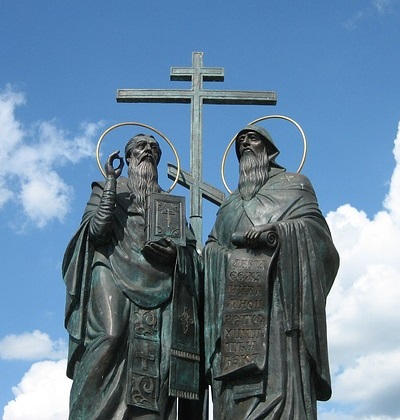
 Mark 10:45