Acts 6:8-10; 7:54-59; Matthew 10:17-22
Of all the customs that have ever arisen during the celebration of the Twelve Days of Christmas, perhaps the strangest occurred in the 18th and 19th centuries. Beginning on the Feast of Stephen, young boys in Southern France, Great Britain, and Ireland would hunt and kill a bird; specifically a wren, then display it and parade it around town asking for money.
It’s hard to understand how this bizarre ritual started or why it was done, let alone how it could continue for two hundred years, but a good dose of superstition was probably involved. In certain places the wren was considered symbolic of priesthood or prophecy. An old Irish word for wren meant “bird of prophecy,” and some Irishmen associated it with a type of pagan priest who foretold the future. Although we have no idea what the poor little bird was supposedly prophesying, one thing is known: The wrens’ song is very loud; allegedly ten times louder than other birds their size. Who knows; perhaps the boys thought they were doing their town a favor.
In the reading from Acts, the members of the local synagogue may have thought that they were doing their town a favor when they silenced Stephen. But his was the song of the Dove, not the wren. Luke says that Stephen was filled with the Holy Spirit; as Jesus made clear in the gospel, His wisdom cannot be overcome. Like Jesus, the only way to try and silence Stephen was to kill him; it is no coincidence that Luke patterns Stephen’s passion and death after that of Christ. For example, in Luke Jesus tells the Sanhedrin before he dies that from this time on the Son of Man will be seated at the right hand of the power of God (Luke 2:69); here, Luke has Stephen say Behold, I see the heavens opened and the Son of Man standing at the right hand of God (Acts 7:56).
 Like the mysterious sacrifice of the wren, this may leave us curious. Why does the Church take the first day after Christmas to remember the first martyr? The answer lies precisely in the similarity of Stephen’s passion and death to Christ’s. Christmas is the celebration of the birth of Jesus; the same Jesus who came not to be served but to serve and to give his life as a ransom for many (Mark 10:45). It was in the giving of his life that Christ most profoundly served, for only by the perfect sacrifice of himself could his disciples have hope of being born into eternal life. Thus with Stephen; he could most greatly honor his Savior by imitating him in life even if that meant dying, that he might be born into eternal life with Christ.
It might seem odd for the Church to see death as the way to honor life; after all, if Church members die, how can the Church survive? That brings up another fact about the wren. Although winter can devastate its population, the bird is extremely hardy; it always finds a way to survive. What is true for the wren is doubly true of the Dove; those who have been graced to speak with the power of the Holy Spirit have been hunted, killed, and displayed for over two thousand years; still, the Church continues to find ways not only to survive but to thrive. In fact, it is the irony of man and the glory of the Holy Spirit that the martyrdom of Stephen gave rise to the greatest come back in Church history. Notice near the end of the first reading, Luke tells us that the witnesses laid down their cloaks at the feet of a young man named Saul (Acts 7:58). Saul, the same man who stood silently by at the death of the first martyr, in time became Paul, the loudest and hardiest wren of all.
St. Stephen, pray for us.
 The great gift of fertility given to Samson’s mother and to Elizabeth are confirmation that perseverance is rewarded. God sees all of us who endure desolation and, in his own time and manner, provides from the storehouse of his infinite mercy the life-giving consolation of his Spirit. When we find ourselves in times of desolation remember to ask the intercession of St. Elizabeth; she understands very well not only the pain of endless waiting but also the indescribable joy of the Holy Spirit’s three priceless consolations: The new life of St. John within her womb; the love and help of Mary, the Mother of Hope; and most of all the fulfillment of Hope itself: Our Lord and Savior, Jesus Christ.
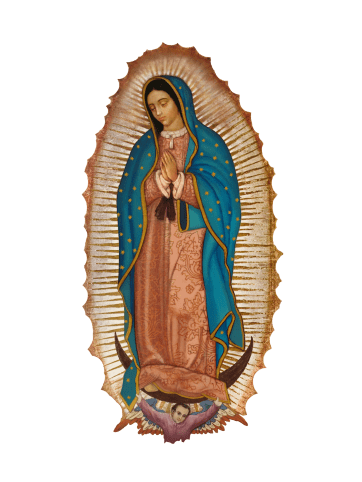 She became known as Our Lady of Guadalupe, and as word of the miraculous appearance and image spread, she became the most effective tool of evangelization that Mexico or the world had ever known. In the gospel, Mary carried the Eternal Word into the Judean countryside where the babe within Elizabeth’s womb leaped for joy; 15 centuries later, Mary’s maternal word went out into the Mexican countryside where millions leaped for joy. Conversions increased so dramatically that for a couple of years the missionaries could almost not keep up with them. More than that, the peoples’ faith was strong; to this day, the faith of the Mexican people remains vibrant, with deep devotion to Our Lady of Guadalupe.
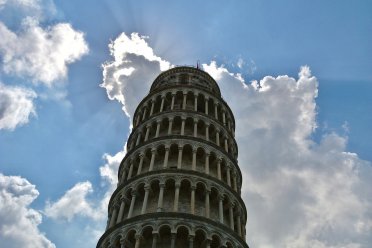 These and many more are like the soft, marshy soil below the tower of Pisa. Like that tower, a faith built on human weakness will lean and no amount of stopping and starting, tinkering and refining will fix it. It must be torn to the ground and rebuilt on the foundation of Christ and his Church, for we must take the faith as it is, not as we would like it to be.
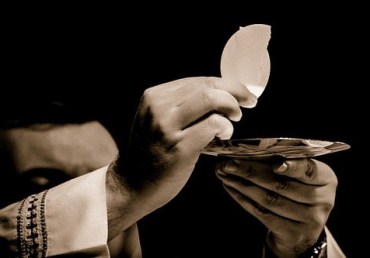 Still, a common problem is that we tend to take this fellowship for granted and forget gratitude. We fall into a routine of receiving Communion with little or no thought as to what – or rather Who – we are receiving. Like the nine lepers in today’s gospel passage, we are given what we ask for but then go back on our way with little regard either for the gift or what it cost the Giver. St. Paul goes on to warn about the grave danger of such ingratitude: That is why many among you are ill and infirm, and a considerable number are dying (1 Corinthians 11:30). The healthier, more grateful response is to first discern whether we are in the state of grace to receive Christ and, if not, to make ourselves a more worthy vessel. Like the leper who, once cleansed, remembered to be thankful, we thank God for what he has given us through the Church – the gifts of faith and the Sacraments through which he touches, heals, and sanctifies us.
 Eventually, Father was caught, imprisoned on a false charge and on the morning of November 23
 The two themes of fidelity and love are interwoven in the feast of the Presentation of the Blessed Virgin Mary. The presentation of oneself to God is an act of great faith and deep love. Whether Mary demonstrated her faith and love in a formal consecration to God in the Temple as described in the ancient non-biblical documents is irrelevant. Every day of Mary’s life was a presentation, a self-offering, an abandonment to the divine will made possible by the movement of grace within her. Long before he dwelled within her womb, indeed from the moment of her immaculate conception, our Lord dwelled within her soul and bestowed upon it the fullness of grace, his very life. By her response to that grace, Mary most truly defines what it means to be a Temple of the Holy Spirit.
 Persistence in prayer does not test God’s patience or change his mind; rather, it tests our faith and changes our attitude. Through his life and the Scriptures he has given the world, Jesus has told us that God loves each of us with a love beyond our understanding and knows our needs before we ask. That being so, God wants our prayer to consistently express the trust we have in him and his providence; that is the faith that Christ wants to find upon his return.
 No wonder. Internet scans, scrolls, and searches cannot bring the wisdom we need. As the first reading tells us, Wisdom is a spirit… Firm, secure, tranquil, all-powerful, all-seeing… the spotless mirror of the power of God, the image of his goodness (Wisdom 7:22, 23, 26). Wisdom is Christ, and his gift to us is wisdom as the fruit of the Spirit. A fruit born of the love of God, wisdom desires not only to be one with God but to see things as God sees them. Like any fruit, wisdom takes time to mature; its development a function of our life experience as seen through the lens of long-suffering that strengthens us to finish what we start, docility to listen as God speaks, and humility to remember that we are servants of God and each other.
 We who have inherited this faith must never forget these two lessons from the readings: First, the worth of the human body was not, is not, and never will be ours to decide. God has given us freedom, so we can define and re-define who is and who is not worthy to live, but in the end these are just words; our laws
 Mark 10:45