2 Samuel 7:4–17; Mark 4:1–20
When I’ve reflected on the Parable of the Sower, I’ve stuck with the explanation Jesus Himself gives: He is the sower, the seed is his word, and we are the soil. I’ve seen the truth of it in my own life, and I suspect you have, too. There have been times when my heart was like the hard-packed path, other times rocky or choked with thorns—and, by God’s grace, moments when it was good soil that bore fruit.
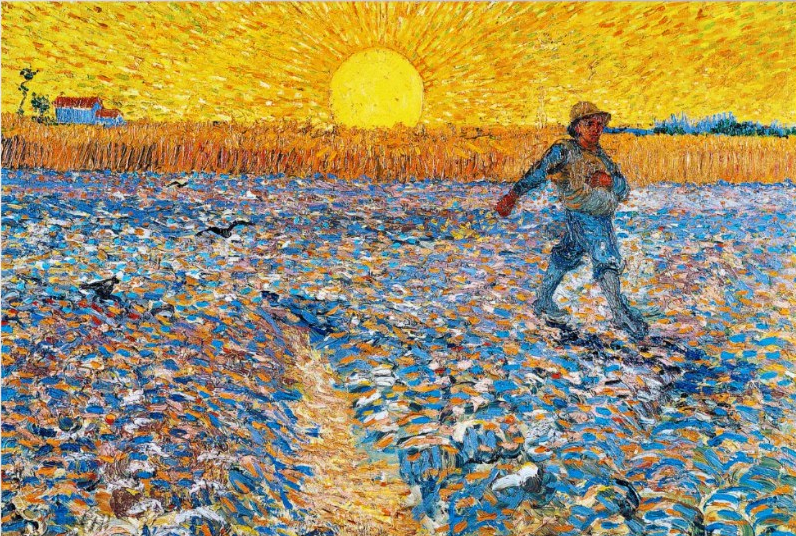
Recently, I learned that Vincent van Gogh also spent a lot of time thinking about this parable. He painted and sketched it repeatedly. But van Gogh saw it a little differently. For him, his art was the seed, and he was the sower.
We see something of both perspectives in the reading from 2Samuel. David has clearly been good soil: chosen, formed, and blessed by God. From that abundance, he now sees himself as a kind of sower, offering to do what he believes a faithful king should do: build a house for the Lord.
But God gently reminds him through the prophet Nathan exactly who has built whom. It was God who first chose David, God who established his kingdom, and God who built David’s “house” — not of stone, but a lineage that would lead to the Messiah.
The lesson is unmistakable. No one, no matter how great, gifted, or faithful, is the architect of God’s plan. We are its recipients. God first plants the seed. Only then does He invite us to share in the sowing. David becomes a sower of the Kingdom not by his own initiative, but because of what God has already done in him.
The same is true for us. Discipleship is never our initiative; it is always God’s. We are chosen first, claimed in baptism, and only then entrusted with a share in His work.
That’s how van Gogh understood his own vocation. Painting was his seed, his “holy task.” He cast it broadly, often into rocky, unreceptive soil, painting not with certainty of success, but with hope. In much the same way, our words, choices, and acts of love or mercy are the seeds we sow. We do not control where they land, what takes root, or how long they take to grow.
No, God has assigned us a task that is simpler — and harder — than that: to sow generously, love without counting the cost, give without guarantees, and trust that God always controls the growth.
In the end, the Kingdom of God grows not because we manage it well, but because God, who first planted His word in us, is faithful and always brings it to harvest.
 Mark 10:45
Leave a comment