Tag: Catholic Spirituality

  • The Invitation I Wasn’t Looking For

    The Invitation I Wasn’t Looking For

    Monday of the 28th Week in Ordinary Time

    Luke 11:29-32

    When I was in my thirties, my pastor asked me if I’d ever considered the permanent diaconate. I said no. In my forties, another priest asked me the same question. I looked into it a little but didn’t take it seriously. Then, in my fifties, I began to feel unsettled. I’d gotten a lot of education, including a degree in theology, but didn’t know how to use it to serve the Church. After a Mass at the Cathedral in downtown Chicago, I met with a priest and told him my struggle. He listened, then asked me if I’d ever considered the diaconate.

    I laughed and said, “You’re the third priest in my life who’s asked me that.”

    He looked at me and said, “Let me get this straight: You’re looking for a way to serve the Church, and I’m the third priest who’s asked you about the diaconate?”

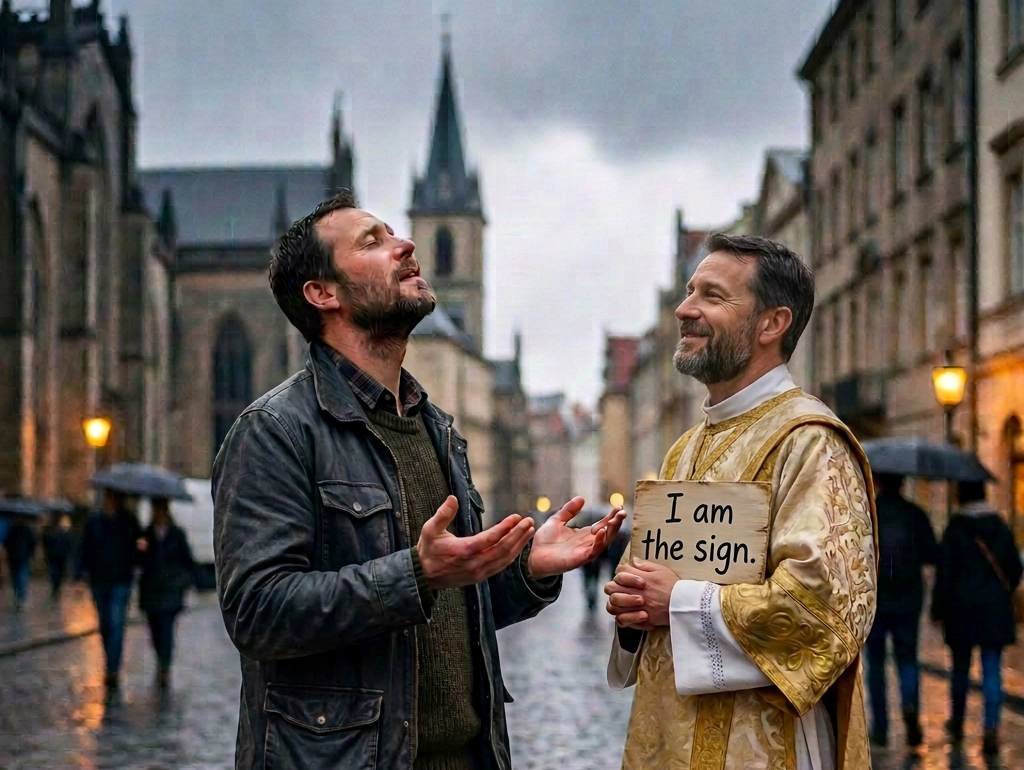
    At that moment, I thought of today’s Gospel. I was looking for a sign — imagining a moment, a feeling, something that fit my expectations. But God had already been speaking to me. Three times! I couldn’t hear it because I had decided in advance what His guidance should look like.

    Recognizing the sign didn’t mean I could skip discernment or assume that every coincidence was a command from God. I still had to pray, reflect, seek counsel, and examine whether this path would truly serve God and the Church. Nor did it mean I was wrong to hesitate or feel uncertain.

    What it meant was that signs aren’t a substitute for discernment. They’re an invitation to it.

    Of course, discernment requires a lot of prayer, but it must be done with the right frame of mind and a great deal of humility. There’s a huge difference between praying, “Lord, help me to recognize Your will,” and praying, “Lord, give me the sign I’m looking for.” Prayer is about openness to the will of Almighty God, not control over it.

    In the same way, faith includes trust and obedience, but not to the point that it’s blind or irrational. Faith involves reason, prayer, and a free response to God. He welcomes our honest questions, but asks us to remain open to His answers — even when they arrive differently than we expected.

    So that raises the question: Are we overlooking the signs God has already made present? What could those be? Where do we look? Remember that the Holy Spirit can guide us through prayer, conscience, and spiritual inspirations, but also through other people, Scripture, and the circumstances of our lives. Not every coincidence is a message, and not every desire is God’s will. But perhaps there are conversations we keep remembering, opportunities to use gifts we’ve neglected, invitations we keep dismissing, or people who see something in us that we don’t see in ourselves. These may be worth bringing to prayer. God may be inviting us to look more closely at what has been right in front of us.

    So then, let us continue to pray, ask questions, seek wise counsel, and discern with care. And let us never assume – as I once did – that God’s answer must look exactly as we’ve imagined.

    May our prayer be not only, “Lord, give me a sign,” but also, “Give me eyes to recognize the signs you have already given.”

    —

  • Finishing the Way We Started

    Finishing the Way We Started

    Thursday of the 27th Week in Ordinary Time

    Galatians 3:1-5; Luke 11:5-13

    It’s pretty easy to tell that St. Paul was angry when he wrote to the Galatians. My guess is that if he had any idea his letter would be read in the Church for thousands of years, he probably wouldn’t have lead this section with, “O stupid Galatians!”

    But what made him so angry to begin with?

    Apparently, some Jewish Christians went to Galatia after he left and informed them that Paul hadn’t told them everything. Yes, faith in Christ was necessary, but there were aspects of Jewish law – like circumcision – that still had to be observed.

    The point of Paul’s reply is simple: The Galatians became Christian because they heard the Gospel, believed it, received the Spirit, and encountered Christ. It was a work of grace. They didn’t need to include works of Mosaic Law.

    No one needs to add anything to the work of Christ. Not then, not now.

    St. Paul isn’t saying to them or us that works don’t matter. They do. Works are the fruit of grace. But they’re not a substitute for it. When we treat works as more or less than they are, we fall into the same trap the Galatians fell victim to.

    In the gospel, Jesus tells us what to do when we realize that’s happening – go to the Father in prayer. “Ask and you will receive; seek and you will find; knock and the door will be opened.” And, he says, we will be more than amply rewarded: “How much more will the Father in heaven give the Holy Spirit to those who ask him?”

    So, God isn’t merely waiting for us to become better people. He responds to our prayers by giving us Himself.

    That’s grace. And we depend on it. Our life as Catholics begins with grace, continues by grace, and reaches its fulfillment by grace. Our job isn’t to try and manufacture grace or earn holiness, but to remain open to God, who gives all the grace we need and more.

    For that reason, the prayer we need most isn’t, “Father, help me do better,” but “Father, give me Your Holy Spirit.”

    How can we do that today? Think about one place in your life where you’ve been trying to handle everything on your own – maybe your marriage, your parenting, forgiveness, an addiction, anxiety, faith, a difficult person – and begin there by praying, “Father, I can’t do this alone. Give me your Holy Spirit.”

    As the Responsorial Psalm reminded us, God has “remembered His holy covenant.”

    The initiative is His; the faithful response, ours.

    So let’s never try to take over what God has started. Remember what Paul called the Galatians when they did that.

    —

  • Getting Around To It

    Getting Around To It

    The 27th Sunday in Ordinary Time, Cycle A

    Isaiah 5:1-7; Philippians 4:6-9; Matthew 21:33-43

    A newspaper once asked married couples a question: “What is the one thing your spouse says that you never want to hear again?” Husbands replied that they never wanted to hear their wives say, “Look how much I saved!” For their part, the wives said that they never again wanted to hear their husbands say, “I’ll get around to it.”

    That answer – “I’ll get around to it” – got my attention. Not just because I, too, am guilty of saying it, but because it goes right to the heart of today’s readings.

    This is one of Satan’s most effective temptations – that inner voice that says, “You know, you really need to work on your spiritual life. So do it! Just not now; it’s not the right time. You’re busy. Do it later.” What makes that so deadly is that it doesn’t sound like a temptation at all. It sounds reasonable, moderate, and even religious.

    So I listen. And I tell myself, “Yes, I’ll definitely get around to it. Maybe tomorrow.”

    Only, there’s always something else. It’s never the right time. Tomorrow never comes.

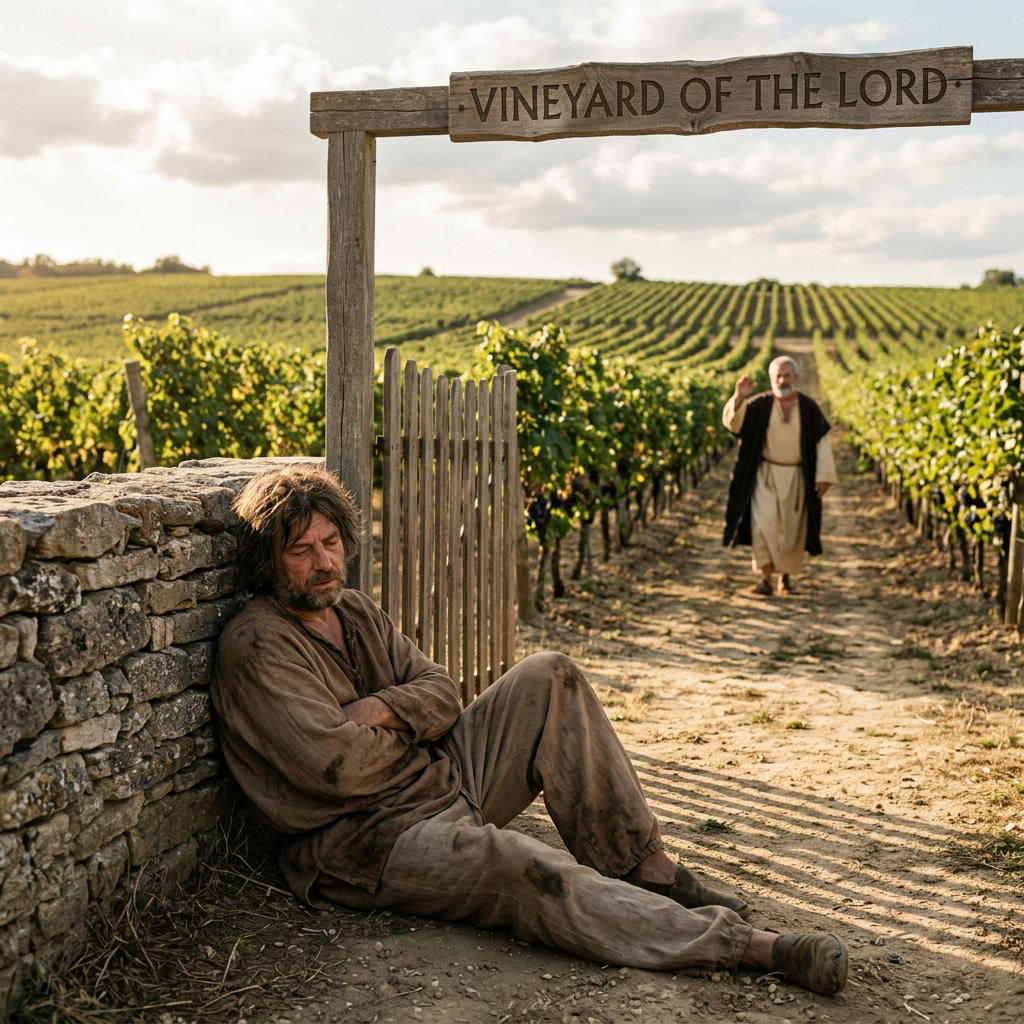
    And before long, that “vineyard of the Lord” – the spiritual life He gave me to cultivate – lies in ruins. I could have done the work; I had many opportunities. But I put it off.

    Why? What’s getting in the way?

    I think beneath the surface, it’s fear of losing control. Maybe without even realizing it, we think, “Wait. If I change, I’ll have to give something up. If I go to Confession, I have to admit I’ve been wrong. If I start praying seriously, God may ask something of me. If I forgive this person, I lose the satisfaction of holding it over them.”

    In other words, putting things off becomes a way of telling God that the vineyard is actually ours, not His, and we will decide if and when He gets access to it.

    But that attempt to keep God at a distance doesn’t end any better in real life than it did in the parable. That’s because deep inside, deeper than our pride or fear, is an emptiness; a restlessness that longs for what St. Paul called “the peace of God that surpasses all understanding.” And we’re not going to find that peace until we do something.

    The question is, what?

    Again, the answer comes from St. Paul: “Keep on doing what you have learned and received and heard and seen in me.”

    He’s urging us to practice the faith we’ve received; not just to admire it, talk about it, or hear it on Sundays. How? By doing what we’ve been taught to do: putting Christ first; repairing broken relationships; serving rather than waiting to be served; praying with gratitude, enduring suffering in hope, and letting our thoughts and actions be shaped by what is true and good.

    As always, that prompts us to look at our lives and ask questions: What are the good things I should be doing but have put off? Do I overlook or fail to forgive anyone? Do I imitate Christ by taking “the form of a servant” at home, here, or in our community?

    These things are all hard to do, which is why they’re tempting to put off, but the answer isn’t avoidance. The answer begins with St. Paul’s exhortation: “by prayer and petition, with thanksgiving, make your requests known to God.”

    Prayer I understand. Only God can supply the grace I need to do what must be done. But thanksgiving? What am I thankful for?

    At least two things. First, that God has made the grace available to me at all. Second, that He reminds me to take advantage of it before it’s too late. Remember in the parable, I’m not the owner, and He is coming back to see what I’ve done. 

    The readings are clear. We all have a vineyard – things in our spiritual life that need attention. And most of us know pretty well what some of those things are.

    So the question really isn’t, “What do I need to get around to someday,” but, “What is God asking me to do today?” Maybe it’s Confession. Maybe it’s five minutes of prayer. Maybe it’s making a phone call, asking forgiveness, forgiving someone else, opening the Bible, coming to Mass regularly, or simply taking the first step toward something or someone I’ve been avoiding.

    Whatever it is, don’t wait to get around to it. We don’t do that for something we really want, do we? We just do it, whatever it takes.

    The vineyard is ours to tend today.

    —

  • Not Larger than God’s Love

    Not Larger than God’s Love

    Wednesday of the 26th Week in Ordinary Time (Memorial of St. Jerome)

    Luke 9:57–62

    There are people we meet – or we may be a person – who others might describe as “larger than life,” or a “force to be reckoned with.” They have a presence, a way about them, that seems to always compel a response, good or bad.

    The saint we remember today, Jerome, strikes me as such a person. Like everyone, he had strengths and weaknesses. But like those who live larger than life, his good could seem very good, and his bad,very bad.

    On the good side, Jerome was brilliant; one of the greatest minds the Church has ever known. What’s more, he loved Scripture with all his heart, and spent his life studying and writing about it. Above all, Jerome loved God, and wanted more than anything to live a life pleasing to Him.

    But then there were weaknesses. First, pride. Like many intellectuals, Jerome didn’t like to be wrong and didn’t want anyone having the last word but him. Worse, he had such a fiery temper and was so hard to get along with that his most loyal supporter and patroness, Paula, and her daughter, became saints just dealing with him. On top of all that, Jerome was strongly attracted to women and was constantly tempted to impure thoughts.

    This last temptation was so bad that Jerome left Rome to live as a hermit in the Holy Land. Although that helped, the temptations persisted. In desperation, he vowed to study Hebrew – a language he found hard to learn – every time lewd thoughts came back. Thanks to that vow, Jerome became an expert in Hebrew.

    That was a stroke of the Holy Spirit. When Jerome’s friend, Pope St. Damasus I, assigned him the task of producing a new version of the Bible based on the ancient languages, he poured himself into it. Despite some disagreements with the Church in the process, Jerome sacrificed his pride, submitted himself to her authority, and gave the world the Bible we still know as Jerome’s Vulgate.

    St. Jerome’s victory in the struggle against himself gives us great insight on the gospel today. People want to follow Jesus, but they want to do so on their own terms. Can we set conditions on discipleship? The life of St. Jerome underscores our Lord’s point: Following Christ means submitting ourselves entirely – mind, body, passions, strengths, and weaknesses — to his authority and his alone.

    That doesn’t mean that we are to somehow become people without strong desires, without opinions, personalities, or weaknesses. No, God made us; He knows who we are. We may, in our own ways, be larger than life, but St. Jerome reminds us that we’re never larger than God’s love. And, like him, we may be a force to be reckoned with, but let us pray that we, too, can – by God’s grace – be a force for good, submitting ourselves to God’s authority, and praying, as all the saints have prayed, “Lord God, all of me is yours. Tell me what to do with it and help me do it. Your will be done.”

    St. Jerome, pray for us.

    —

  • Shining in the Darkness

    Shining in the Darkness

    Monday of the 26th Week in Ordinary Time

    Job 1:6-22; Luke 9:46-50

    We might look at today’s reading from the book of Job and think, “What a nice, pious story. Too bad people in the real world don’t react that way to total ruin.”

    But a while ago I spoke with a woman who might make us think twice. She told me she’d recently declared bankruptcy. And that was on top of losing her husband a few years before, and breast cancer that same year. In such a short time, everything she thought made for a stable life – her spouse, her health, her money – were gone.

    When I asked her how she was doing, she said, “You know, it was hard for a while and there were times I thought things would never get better. But the truth is, I’m at peace. And as far as the bankruptcy goes, it’s a relief. For the first time in a long time, I feel free.”

    What she discovered in that painful stripping away is exactly what Job found: Our character doesn’t shine when everything is sunshine and roses.

    It shines in the darkness.

    And it’s not just challenges from the outside that make life difficult. The inner life has challenges of its own. We hear the disciples bickering about who is greatest, and shake our heads at their pride, but what about our own? Are there times when we’ve been a bit too worried about ourselves or a little too self-righteous?

    That’s why Jesus focuses our attention on a child. In the ancient world, children had no legal status, no rights, and no wealth. They were totally dependent on others.

    That’s exactly the perspective he wants us to have about life. Greatness in the Kingdom of God isn’t about leverage, power, or influence; it’s about total dependency on the providence of God.

    The readings today are a great reminder that human worth cannot be measured by what we hold in our hands, only by Whose hands are holding us. So let’s resolve to live our lives more like Job, holding on loosely to the things that can be lost, and tightly to the One we would truly be lost without.

    —

  • Masterpiece

    Masterpiece

    Friday of the 25th Week in Ordinary Time

    Ecclesiastes 3:1-11; Luke 9:18-22

    What is it that makes a work of art, music, or literature a masterpiece?

    I’m sure there are many definitions, but let me choose one: a masterpiece isn’t just something old or popular. It’s something that continues to reveal a depth that time cannot exhaust.

    Think of Michelangelo’s Pietà in St. Peter’s. It’s over 500 years old; yet, to this day, people still stand before it, awed by something that goes beyond artistry. Something that touches the human heart.

    I’ll call that something timelessness.

    And that reminds me of those beautiful words from Ecclesiastes: “God has put the timeless into their hearts.”

    Maybe that’s why there’s something inside us that is never completely satisfied by the passing things of this world. St. Augustine described it well. Our hearts are restless; we long for beauty that doesn’t fade, love that never ends, unchanging truth, eternal life.

    But, as we’ve seen, what we long for can be right in front of us, and still we remain restless. Luke told us about Herod who was perplexed by Christ and “kept trying to see” him (Luke 9:9). Now we hear that the crowds have been looking at him, but don’t know what to make of him. Is he one of the prophets? They don’t know.

    Then comes the real question, the one he asked the disciples, that’s aimed at us, too: “Who do you say that I am?”

    Somehow, Peter sees what the others cannot. Jesus isn’t merely a sign pointing beyond himself to eternity. He is eternity’s personal presence among us.

    But Jesus doesn’t leave it there. He tells them that he “must suffer greatly, be rejected, and be killed, and on the third day be raised.”

    In other words, although Peter may have glimpsed the Eternal One, no one can properly see Jesus apart from the Paschal Mystery.

    Why not?

    Because the God who put the timeless into our hearts wants to make our hearts His dwelling place. The only way that can happen is to see Christ in light of the Paschal Mystery. The Cross isn’t an unfortunate interruption of his identity; it reveals the very manner of his divine love. It is the gateway to what our hearts want most: Eternity.

    Only when we see him in that light can we, as Augustine said, truly rest.

    So let us remember to thank God for a couple of things today: First, although we spend our lives searching for glimpses of eternity, in Christ, eternity himself has found us. Second, at every Mass, every time we come forward disposed to receive the Holy Eucharist, we receive Christ himself, the Eternal Word made flesh, into our heart and soul.

    That moment is the true masterpiece.

    —

  • Power and Paradox

    Power and Paradox

    Wednesday of the 25th Week in Ordinary Time (Memorial of St. Pio of Pietrelcina, Priest)

    Proverbs 30:5-9; Luke 9:1-6

    In the book of Proverbs, we read, “Give me neither poverty nor riches; provide me only with the food I need.”

    The man we remember today, St. Pio of Pietrelcina, tried his best to live that out. He owned practically nothing, slept on a straw mattress, wore habits until they fell apart, and turned over all gifts and donations he received to his Franciscan superiors.

    It wasn’t that Father Pio loved poverty for its own sake. Rather, it reminded him, and he wanted it to remind the world, that all we really need is God.

    It worked. It was clear to all who knew him that Father Pio lived in profound union with God. His life struck that balance the author of Proverbs spoke of: not to have so much that he might forget God, or so little that he might be consumed by anxiety. All he asked of God was to have everything he needed to serve Him.

    And that prayer was certainly answered. Like the disciples in the gospel story, Christ gave him all the power and authority he needed to proclaim the Kingdom of God. Unlike them, however, Father Pio was not sent out to the world; rather, the world was sent to him.

    As word of his ministry spread, people began to come from all over to the little Italian village where he lived. They came to confess to him, seek his counsel, attend his Masses, and ask his prayers. 

    And, as they came, Father saw so great a need for medical care that he became the driving force behind the “Home for the Relief of Suffering,” a Catholic treatment center dedicated to providing medical and spiritual care, particularly for people who could not afford it.

    And this is the paradox: That a man who possessed almost nothing became the man to whom people could bring everything, from their worst sins and sickness to their greatest hopes and fears.

    That is the paradox of the Christian life. Especially in our society, we are tempted to want more: more power, more control, more money, more of whatever makes us feel secure.

    But the example of Christ teaches us something different: The less we cling to what we have, the more freely we allow God to work within us.

    Christ is not asking us to found care centers, sleep on straw mats, or spend hours forgiving sins. But he does ask us to become free enough to receive the gifts he gives us, and generous enough to use them for the benefit of others.

    So, let’s remember that prayer from Proverbs: “Give me neither poverty nor riches; provide me only with the food I need…”

    And pray for the grace to want only what God is pleased to give us, the eyes to recognize what those gifts are, and the generosity to use them for the building up of His Kingdom.

    St. Pio of Pietrelcina, pray for us.

    —

  • Christ is Passing By

    Christ is Passing By

    Feast of St. Matthew, Apostle and Evangelist

    Ephesians 4:1-7, 11-13; Matthew 9:9-13

    The gospel story for the Feast of St. Matthew is a valuable lesson in discipleship.

    We know it well. Jesus passes by the customs post, looks at Matthew, and says: “Follow me.” Matthew gets up and follows him.

    The response is so sudden, so unreflective, it might look like he had no choice. What explains it? After working with many people coming to faith over the years, I think I know. Matthew was filled with that same restlessness Augustine spoke of later; he had everything the world could give, but not what his heart wanted most.

    That came when Christ passed by; the moment he realized he hadn’t been searching for something but someone, and that One was now standing right in front of him.

    In the joy of that discovery, what else would Matthew do but open himself to Christ? This he did: he opened his home, his table, his friends… his whole world.

    And that’s not all. Matthew also opened his mind to that creative energy of the Spirit – logging events of the ministry, ordering and arranging them as only someone used to keeping records could, ultimately painting such an eloquent, unforgettable portrait of Christ that it became the first book of the New Testament.

    In all this, we learn from Matthew that true discipleship doesn’t mean leaving our old life behind when Jesus calls, but bringing him into the life we already have.

    That may be difficult. Like Matthew, our corner of the world might be a place where others never read Scripture, step into a church, or even think about looking for God.

    So, how do we do it? Do we preach to people? Tell them about Christ?

    In a way, yes. We bring him, as St. Paul reminds us, according to the measure of Christ’s gifts to us. How is that? By the way we live our lives: with humility, gentleness, patience, forgiveness, striving to preserve the unity of the Spirit through the bond of peace.

    And we will have done well if people ask themselves, “What is it that makes that person different?”

    We know what it is. It’s Christ doing with us what he did with St. Matthew – walking with us, teaching us, transforming us, making our lives living examples of what it means to be the disciple he calls us to be. 

    Our life is our customs post. Every day Christ is passing by, asking us to follow.

    And every day the question is, where and to whom will we take him?

    St. Matthew, pray for us.

    —

  • The Green Lab

    The Green Lab

    Sunday of the 24th Week in Ordinary Time, Cycle A

    Sirach 27:30—28:7; Matthew 18:21-35

    Years ago, a teenage girl lived across the street. I don’t know why, but she really disliked us and found several ways to let us know. We tried to make peace. No luck. The final straw came when she began letting her yellow Labrador, Rocky, outside unleashed to “visit” the bushes and plants on the side and back of our house. He ruined them and their replacements, and kept coming back for more.

    We asked her to stop him. She wouldn’t, and we couldn’t prove it was Rocky. So, I hatched “Operation: Stop Rocky.” Just three things: A bucket of water, a generous helping of food coloring, and the element of surprise.

    I wasn’t home when the operation was launched; my wife was. But I can tell you that Rocky was on a leash from then on, and that young lady spent a few days walking around the block with her happy, green Labrador.

    I thought I’d feel better afterwards, but my anger at that kid lingered. It’s like Sirach said, “Wrath and anger are hateful things, yet the sinner hugs them tight.” That was me… vengeful, unwilling to forgive. Yet, at the same time, there I was at church every week, praying that my own sins would be forgiven.

    The more I thought about it, the more times I recalled when I had refused to let go of some injury or insult. Maybe you’ve been there; maybe you’re there now.

    If so, learn from me, who has had to implement another simple, 3 point program, this one inspired by today’s readings.

    First, we have been forgiven a debt we can never repay.

    The servant in our Lord’s parable owes ten thousand talents. Whether the talents were gold, silver, or copper, it’s such a huge sum that he could never repay it.

    Our Lord’s point is clear… that’s us. We have received a mercy from Him that we could never earn and can never repay.

    Second, every wrong done to us is an opportunity to forgive as we have been forgiven.

    That doesn’t mean the wrongs done to us aren’t real, or we’re supposed to pretend they never happened, or somehow they don’t matter.

    It means that the mercy we have received from Almighty God becomes the mercy that we’re called to show someone else. And, in so doing, mercy grows; we don’t lose what we have, and we’ve empowered others to show mercy, too.

    Then comes the third and hardest part: Forgiveness is a work of the heart.

    Let’s be clear… Forgiving people doesn’t mean forgetting what happened, acting as if everything is now OK, or going out of our way to hang around with them.

    What it means is letting go. Letting go of the anger, the resentment, or the desire to make the other person pay.

    Because until we do that, until we let go, we remain tied to the people who hurt us. And the longer we do that, the more we feel like it will always be this way – there’s nothing we can do.

    But there is. It comes in a wonderful piece of advice attributed to St. Philip Neri: “If you find it difficult to forgive, look at a crucifix.”

    Try that. If or when you find it hard to forgive someone for something, take a moment and look at a crucifix. Gaze on Christ hanging there. Imagine the pain, the desolation, the suffering. Then remember what he said from that place: “Father, forgive them.”

    If he can forgive us for that, how can we refuse to forgive one another for anything?

    That is our call from Christ today, as difficult as it is simple:

    Forgive.

    From the heart.

    Every time.

    —

  • I Saw You

    I Saw You

    Feast of St. Bartholomew (August 24)

    Revelation 21:9b-14; John 1:45-51

    There are many things to love about today’s Gospel, but let me mention three that caught my attention.

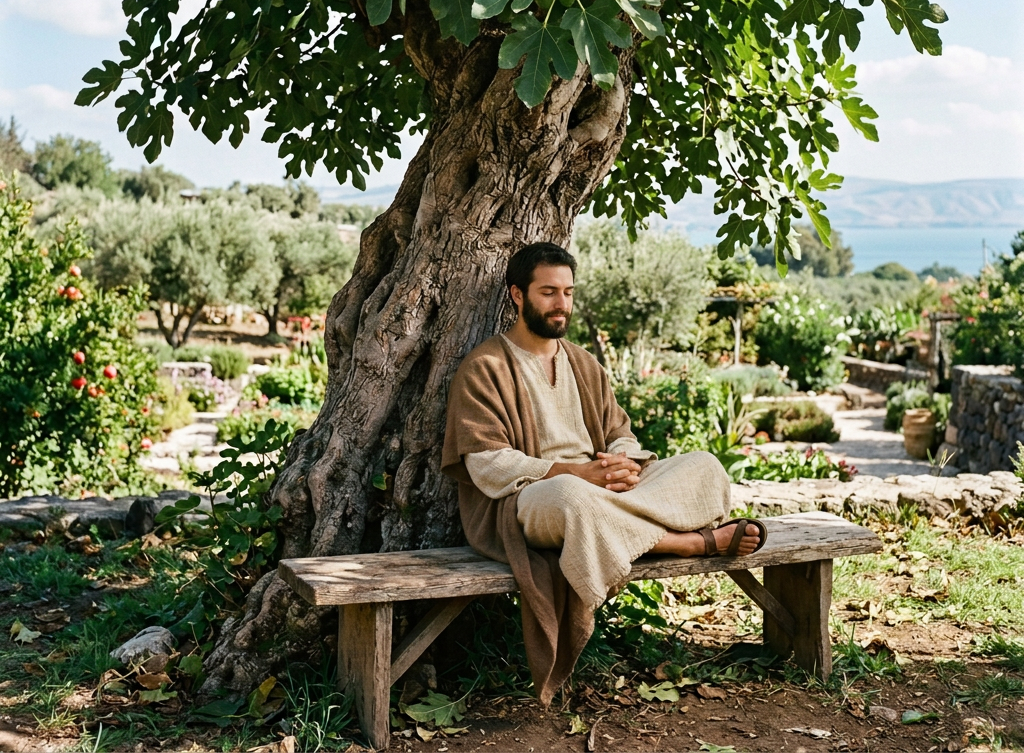
    First is the image of Nathanael under the fig tree. I can’t help but wonder what he was doing there. Guesses abound and we can’t know for sure, but as I see it, he was doing what I think we’ve all done and still do: sitting alone in a quiet place, thinking. And not just thinking, but asking questions, wrestling with God, and waiting for an answer – a clue, a light in the darkness, some revelation telling him that God is listening and will respond.

    Then come those great, consoling words of Jesus: “I saw you under the fig tree.” No wonder Nathanael was amazed! I wonder if we think about that enough. Even in our fig tree moments, we are never alone, never unseen. God is always there; watching, listening, and planning. We talk to Him, perhaps look at Him in the tabernacle or monstrance, but do we realize how close He is, and that as we are looking at Him, so He is looking at us? We may hear nothing, but silence doesn’t mean abandonment. “I saw you” is Christ’s great assurance that our waiting is never wasted if we remain grounded in faith.

    And that faith can be tested, for as the story shows, God’s answers can come in quite unexpected ways. I doubt that when Philip spoke of the one who Moses wrote about, Nathanael thought, “Ah, the answer to my prayers under the fig tree!” His reply shows it: “Can anything good come from Nazareth?”

    What makes this so intriguing is Nathanael’s response. When Philip said, “Come and see,” he could have easily replied, “No, thanks. I have other things to do.” He didn’t; instead, he opened himself to the possibility. He went and saw.

    This is a good time to stop and thank God for the “Philips” of the world. Ask yourself: Who has been Philip to me? Who ever invited me to “come and see” – maybe a parent, friend, priest, or teacher? And to whom am I Philip? Who do I invite? Do I live in such a way that people will want to know the source of my peace, joy, and hope?

    Finally, consider our Lord’s response to Nathanael’s amazement at being seen: “You will see greater things than these…”

    Of course, he did. And while he probably had many more “fig tree moments” in the days and years to come – times he wondered, was challenged, questioned, or suffered – these were nothing compared to what God had in store for him. Especially in the life to come, for as we heard in Revelation, “the holy city Jerusalem coming down out of heaven” has 12 foundation stones. One of them bears his name.

    St. Nathanael, or Bartholomew as today’s Feast calls him, is a wonderful model for us. He teaches us that our fig tree moments, and even our encounters with Jesus, aren’t the destination. They’re just the beginning of what God has ready for us, things far beyond our imagination. Like Nathanael, we may question, wonder, and not understand, but that’s not what ultimately matters. What matters is that we do what he did – keep asking, stay open to finding the answers, go where our Lord leads us, and keep faith that we, too, will see “greater things than these.”

    St. Bartholomew, pray for us.

    —