1 Peter 1:3-9; Mark 10:17-27
General Dwight D. Eisenhower was a great leader for many reasons, not least of which was the way he treated those under his command. During the Second World War he made it a habit to be around his soldiers, to walk and talk with them, get to know them, and to honestly answer their questions. He knew he owed them no less, for he was ordering them into a battle that would cost many their life.
He also knew that just like him they lived according to certain principles, one being that there are things are worth dying for. Ask any soldier what those are and they will say the same things: Love of country; of family; of freedom; of God. We should remember that military oaths of office in our country have historically ended with the words, “So help me God.”
In His infinite mercy, God does help; most of all by sending His only Son, our Lord, Jesus Christ who also made it a habit to be around people, to walk and talk with them, and to honestly answer their questions. Of course, the man in today’s gospel wasn’t a soldier but he did take part in that holy war we all fight – the inner battle between what we want and what is good. He too lived by certain principles. Jesus named several: He honored his parents, took no lives, told the truth, lived chastely, and respected others’ property. Many people would call that a good, honest life.
But Christ isn’t many people and He judges by His own standards. That is why when He looked at the man He asked him to let his wealth go. We know what happened next. This was a bridge too far; the soldier sounded retreat and went away sad. Only Jesus was sadder, he knew that for the sake of escaping a battle that man risked losing the war.
That man isn’t alone; this is our fight too and we could ask the same question of Christ. So then let us ask ourselves, “What does Christ want me to let go of? What do I most value?” It might be wealth but it might be a number of other things: Our time; our talent; our social standing; our pride; our privilege.
General-turned-President Eisenhower said at his inauguration: “A people that values its privileges above its principles soon loses both.” As we look at civil societies like ancient Greece or Rome, we find that at least some of the decay that led to their implosion started within; a weakening of the moral fiber that bound them one to another and enabled them to forget the principles that made them great to begin with.
As for Christian society, the “City of God”, what made it great and the only thing that can keep it great is the faith handed down to it. This is why St. Peter calls the faith more precious than gold (1 Peter 1:7). He is speaking about faith in Christ and the power of His resurrection, which is the ultimate principle of life. Through faith we love Him although we have not seen Him; by faith we walk toward Him as our ultimate goal; in faith we hope one day to be united with Him in heavenly glory.
 The men and women who we remember today may or may not have had faith in Christ, but in the end what matters is that somehow He spoke to them. In some way known only to Him, Jesus answered their life questions by asking them to be willing to configure themselves to Him; if need be to let go of everything, including their lives, that others may live. Of course, God is never outdone in generosity; we know by the same faith handed on from Peter that each of these fallen soldiers has gone to meet Him face to face and, if so willing, have come to understand the value of the great truth that has confounded mankind throughout the centuries: That only by dying to ourselves do we most truly live; only by letting go of what we want the most do we hold onto what is most truly important: Eternal union with God who is Love itself.
 What’s more, Father’s homilies worked like a match to dry kindling – almost literally. Their consciences convicted, the people built bonfires and threw into the blaze any vain or worldly things they owned that kept them away from God. These fires become known as the “bonfires of the vanities” in every town that welcomed the humble yet fiery preacher, Father Bernardine of Siena.
 With this in mind, we can say that Matthias freely chose to follow Christ who first chose him, called him from his mother’s womb, and gave him the name, “Apostle.” That Matthias was chosen for that office by lot was nothing more or less than confirmation that the journey begun from shore had now moved out into the deeper water that he had already been called to and prepared for.
 Recall Christ’s words: The hour is coming when everyone who kills you will think he is offering worship to God. It is a sad fact that we in the Church are often our own worst enemy. The Arian leadership resolved that what they could not win in Council, they would take by subterfuge. Athanasius, newly elected Patriarch of Alexandria and much loved by his people, was a primary target. The Arians boldly went after him, seeking nothing less than his disgrace and death. They fabricated scandals, perjured themselves and, aided by Arian-leaning or pagan emperors, forced Athanasius into five exiles spanning seventeen years.
 Of all men, Joseph was chosen to tell the Son of God the human story of the people he created; to teach him about the faith that he gave the world; to show him what it meant to fully engage his world as a man of his times; how to work, to worship, to provide for others, to give of himself, to weep, to laugh, to live. Only Joseph had the incredible privilege and the awesome responsibility of teaching the Son of our heavenly Father how to be the son of a human father as well.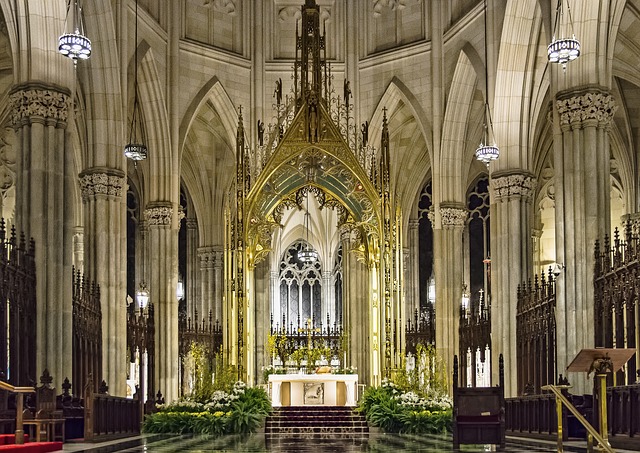
 This is why our Lord counsels us through Isaiah to break from our routine, to find new ways to express our devotion and recover their original intent. That may mean learning new prayers; becoming active in a ministry that we haven’t done in awhile or ever; coming early to Mass for some quiet time with our Lord or staying after to make thanksgiving; paying greater attention at Mass especially at the Consecration; and taking special care to receive our Lord gratefully in Holy Communion. Whatever we do, God urges us to remember that these actions aren’t mere habits; they are tokens of the love and longing for God borne in our hearts, planted there by him and always drawn to him in whom alone we find rest and true union.
 Divine love is the key to happiness. Again, although religious and non-religious people kno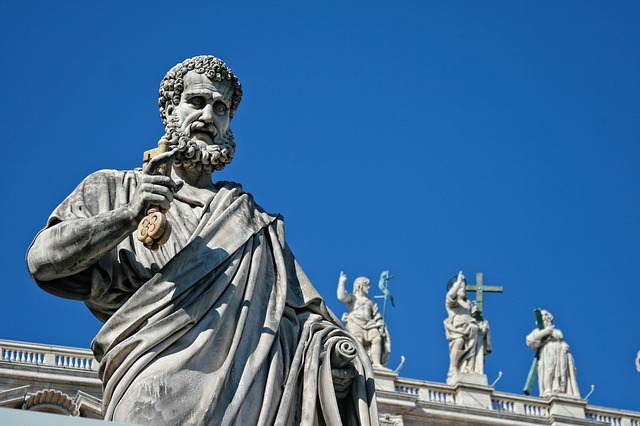
 In a sense, we are all Servites. Our mission is to witness the gospel, to be at the service of God and all people, inspired by Mary his Mother and most ideal Servant. We can only do this if we do as she did: Conform our wills to that of the Father and do whatever Christ tells us. Only He knows the cross that he has in mind for us. It may be to give up what we hold most dear, to separate from family or friends, and to devote ourselves totally to God. Whatever it is, let us pray for the grace to accept it, to bear it willingly, and to remember in the words of St. Rose of Lima that “apart from the cross there is no other ladder by which we may get to heaven.”