Deuteronomy 26:16-19; 2 Corinthians 6:2; Matthew 5:43-48
 One night, eight years into a 30-year sentence for the murder of a young girl who had refused his advances, Alessandro Serenelli fell asleep. Suddenly, where his prison cell had been he now saw a beautiful, sunny garden and a girl approaching. As she drew near, he recognized her as Marietta, the girl he had slain. Fearful and wanting to flee but unable to, he watched as she bent down, picked several lilies, and offered them to him. As he took them, they changed into flaming lights. He counted fourteen of them; one for each knife wound he had once inflicted on her. She then smiled at him and said, “Alessandro, as I have promised, your soul shall someday reach me in heaven.”
Those words alone would have convinced him that this was a dream. Now 28 years old, Serenelli was a bitterly unhappy man, completely unrepentant and without the least remorse for his horrendous crime. However, that dream changed everything; when he woke up, the hatred and bitterness that he had felt choking him all those years was completely gone. It was as if he was hearing the words of St. Paul for the first time: Behold, now is a very acceptable time; behold, now is the day of salvation. From then on, he dedicated himself to making reparation for what he had done.
Many years later and finally released from prison, Serenelli got up the courage to visit his victim’s mother. When he asked her forgiveness, the woman put her hands on his head and said, “Alessandro, Marietta forgave you, Christ has forgiven you, and why should I not also forgive. I forgive you of course, my son!” The next day, she and Alessandro walked hand in hand to Mass; together, they knelt at the altar rail and received the glorified Body of he who said, love your enemies, and pray for those who persecute you. Over time, he became known to their family as “Uncle Alessandro” and on June 24th 1950, he sat with them in the piazza of St. Peter’s Basilica at the canonization Mass of the girl he had murdered, Maria Goretti.
In the reading from Deuteronomy, Moses urged the people to observe the law of God with their entire heart and soul. This is what that little saint Maria Goretti strove so perfectly to do, even as she lay dying; something that people many years older have never been able to do. She and her family knew that hatred builds walls in which we imprison ourselves, not our enemies; they don’t feel our rage, bitterness, or pain; only we are choked by them. When we fail to forgive, we become our own worst enemy, suffering by our own hand and of our own free will.
Those who observe the law of God are those who strive to love as God loves. For them, there are no enemies; no sin too great; no wound too deep to forgive. Alessandro Serenelli would probably have died bitter, unrepentant, and alone were it not for the transforming power of forgiveness first extended by God through the love of one young girl who took Jesus seriously when he said be perfect, just as your heavenly Father is perfect.
St. Maria Goretti, pray for us.
 This is the freedom that changes not only our own life but the lives of others as well. Consider how Elisha’s freedom to follow Elijah affected the lives of others. What would have become of all the people Elisha touched in his ministry had he refused the call and simply kept on plowing? In our own time, think about how the choices we make affect the lives of others. Where would the moral development of our children be if we chose to ignore what God has taught us? What would our relationships look like if we ignored St. Paul’s exhortation to serve one another through love (Galatians 5:13)? God’s call changes all of us no matter how we choose. If we accept it we grow closer to Him and bring others closer to Him as well; if we refuse or ignore it we distance ourselves and may well keep others from Him. The choice is ours.
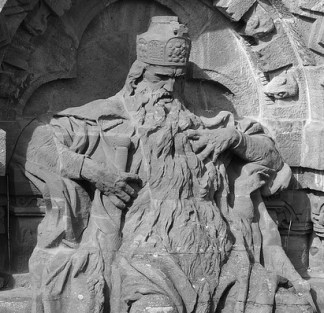 Although he was as willing to follow Jesus as the scribe in the gospel, Cyril did not lose his personality in the process. By all accounts, he was imposing, impetuous, impatient, perhaps even infuriating. He wasn’t always the perfect picture of sanctity or the epitome of virtue. Very few saints are. Sinners and saints fight the same battles, share the same temptations, and struggle with the same demons. They differ only in their response to them. The sinner looks to himself or to the world for strength; the saint looks to Christ alone. This is what Cyril knew and what St. Paul meant when he told the Corinthians:
 This may sound easy but we know it isn’t, for we too are twisted iron. Perhaps we can’t enter religious life to get twisted straight but we can enter into the silence of our thoughts and the privacy of the confessional to learn how to deal with the sins that are holding us back. Whatever they are, the example of St. Aloysius shows us that while change may be difficult or painful, it is possible.
 Although w
 No one can give what they do not possess. Father Anthony possessed great faith and great charity, but what transformed him from service in an Augustinian monastery to service as one of the greatest preachers and teachers of the faith was his love of Christ, shown in his constant willingness to discern and pursue the call of Christ in his life as well as his desire to keep Christ at the center of his life. As he once so eloquently said, “If you preach Jesus, he will melt hardened hearts; if you invoke him he will soften harsh temptations; if you think of him he will enlighten your mind; if you read of him he will satisfy your intellect.”
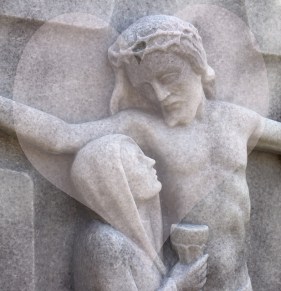 The life of Blessed Diana d’Andalo shows us that to those docile to His promptings the Holy Spirit will show both the greatness and the folly inside ourselves. Diana’s folly lay in the selfishness and will to dominate that has plagued mankind since it first heard the voice that whispers You can be like God (Genesis 3:5). Her greatness lay in her steadfast determination to conquer any enemy, especially herself; to cast aside all fear, remain in God’s love, keep faith in Christ, and abandon herself to the power and working of the Holy Spirit, that her love for God and her neighbor may be made as perfect as possible.
 Norbert did not become a saint because he fell off a horse and heard a Scripture verse; he became a saint because he took a hard look at himself and realized that he had no idea what happiness is. Happiness is beatitude, or eternal union with Christ. As a young man he once aspired to imitate Christ through Holy Orders, but when that life looked difficult and a worldly one much easier, he allowed himself to settle for less. We aren’t so different. In our own spiritual lives, we sometimes try to draw closer to Christ by setting some new and ambitious goal, only to find how hard it is to do in practice. Like Norbert, we end up settling for less and allowing other more worldly things to come between us and a closer union with God.
 The men and women who we remember today may or may not have had faith in Christ, but in the end what matters is that somehow He spoke to them. In some way known only to Him, Jesus answered their life questions by asking them to be willing to configure themselves to Him; if need be to let go of everything, including their lives, that others may live. Of course, God is never outdone in generosity; we know by the same faith handed on from Peter that each of these fallen soldiers has gone to meet Him face to face and, if so willing, have come to understand the value of the great truth that has confounded mankind throughout the centuries: That only by dying to ourselves do we most truly live; only by letting go of what we want the most do we hold onto what is most truly important: Eternal union with God who is Love itself.
 Mark 10:45