Tag: prayer

  • Journeying Home

    Journeying Home

    Wednesday in the Fourth Week of Lent

    Isaiah 49:8-15; John 5:17-30

    Every year around Thanksgiving, I used to travel down to the Dallas area to visit family. On the way, certain landmarks reminded me where I was: first, the Arch in St. Louis; next, the cotton fields of Arkansas; finally, the great plains of Texas.

    Lent has landmarks, too. First, Ash Wednesday; then, the 4th Sunday of Lent (“Laetare,” meaning “Rejoice,” Sunday); finally, Palm Sunday. While each features a special liturgical color, they also feature themes that will persist in the readings.

    In the first three weeks of Lent, the Old Testament readings reminded us of our human frailty and need to repent. But note the difference this week! First, Isaiah bid us rejoice at what God is making new; then, Ezekiel spoke of the life-giving water flowing from the right side of the Temple. Today, again through Isaiah, God speaks gently of a time of favor, refreshment, and restoration. The focus isn’t so much on what has gone wrong, but on how God is reaching out to renew and redeem His people. There is still suffering and darkness, but there is also light and hope.

    We see a change in the gospel readings, too. From Ash Wednesday until this week, Christ has challenged us to look at our lives, confront the reality of sin, and re-commit to following God’s will more closely. But this week, the call is more forward-looking and hopeful. On Monday, we listened as he raised a child to life; yesterday, he healed a crippled man at the pool of Bethesda. Today, he speaks of healing and life, telling us that he has the authority to heal, and while he holds the keys to judgment, he also holds the keys to eternal life.

    So, what are we to do with this new direction the Church has given us for the next several days? A couple of things. First, we should do what Laetare Sunday urged us to do – rejoice! We have good reason! No matter what struggles or feelings of abandonment we go through, God has assured us that we aren’t alone; He is always working for our good, even when we do not see it. Second, since Jesus has the authority to give life and to stand in judgment of us, we should continue asking ourselves if and how we are deepening our commitment to Him. Lent is a journey, after all. Have we moved from complacency to more active discipleship? Finally, just as Jesus said He could do nothing apart from the Father, so should we be examining our daily lives for unity with God’s will. Are the choices we make every day in line with our faith? Do we seek to serve rather than be served? Do we bear witness to Christ’s life-giving power in a world that so desperately needs His light?

    Just like the landmarks of our travels, each of the landmarks of Lent is there to remind us not only of where we’ve been, but also where we’re going. As an artist’s work gains richness and depth with each successive layer, so our experience of Lent deepens as we move from reflection to hopeful anticipation. The readings this week and next are an open invitation to re-examine our hearts, to seek God’s healing in times of darkness, to celebrate His infinite mercy, and to commit ourselves anew to living in unity with His will. Above all, let us rejoice in the joyful assurance that, no matter what challenges we face, God is with us, with the bright promise of hope and redemption. And, as we move closer to the events of Holy Week, let us open our hearts to His transformative love, confident that the road ahead is one of renewal and the promise of eternal life with Christ, our journey’s destination.

  • Becoming Who We Are

    Becoming Who We Are

    The Commemoration of All the Faithful Departed

    Wisdom 3:1-9; Romans 5:5-11; John 6:37-40

    Many years ago, on a train trip to Chicago from rural Michigan, I sat behind a family who had never been to a big city before. I tried not to listen, but their conversation was too interesting. The kids had no idea what skyscrapers were, so Dad tried to explain. It didn’t work; when we stopped in a small town, one kid said, “A skyscraper!” No, son, that’s a grain elevator. As we got to the city limits, Mom got tense. “Kids, when we stop, stay with me. Don’t wander off. They probably carry guns here. It doesn’t look like a very friendly place to me.” I wanted to say, “Ma’am, we’re going to Union Station, not Al Capone’s headquarters,” but kept my mouth shut. By the time we got downtown and they saw Chicago, it was clear that the actual reality was nothing like they imagined.

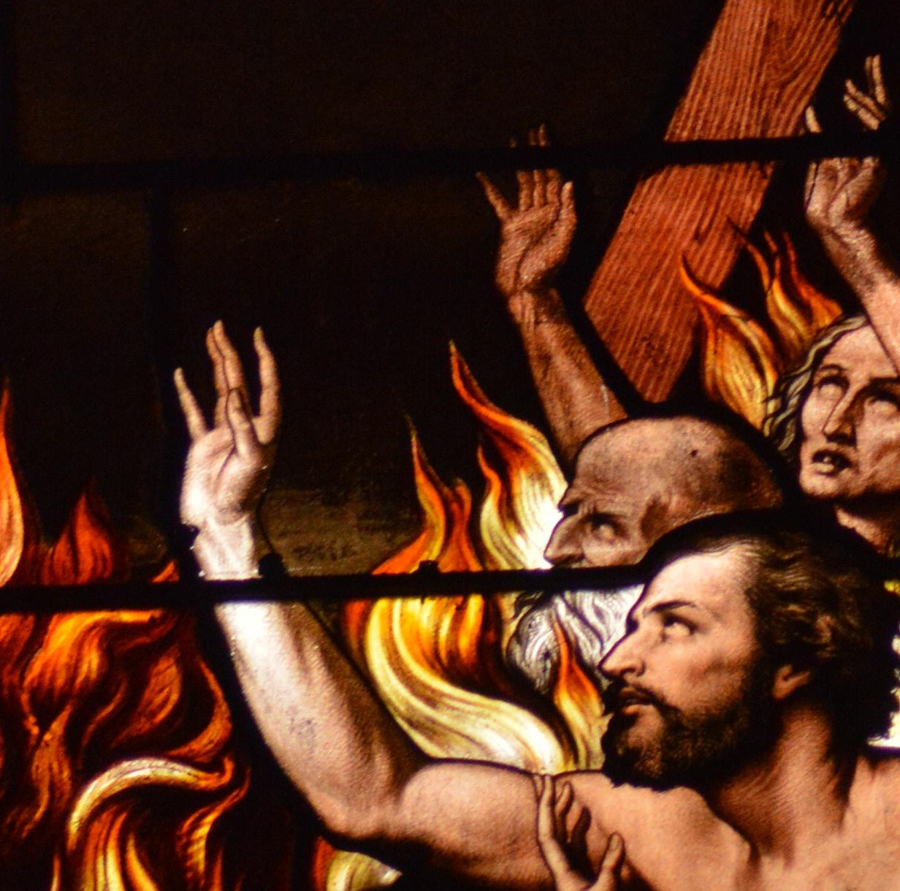
    This kind of thing happens in the Church, too. All Souls’ Day is a good time to see it, because purgatory takes center stage. Just hearing the word “purgatory” conjures up in many minds some of the imagery of the first reading: souls punished, chastised, tried, put in a furnace, burnt offerings (Wisdom 3:4-6). Not hard to see why in the popular imagination, purgatory is a fiery place where souls go to be purified – somehow – and for some length of time. (That’s all fuzzy. What isn’t fuzzy is the fire.)

    Let me do what my much younger self should have done for that young family on the way to Chicago: Clear up some misconceptions.

    1. Purgatory isn’t a place, it’s a process. For what? Well, although all of us would love to enter God’s presence immediately after we die, we have to deal with what John wrote in Revelation; namely, that nothing impure can enter heaven (21:27). So, if our soul has any venial sins or attachments to worldly things, all that must be eliminated first.
    2. There is, and there isn’t, a fire. There isn’t, in the sense that souls can’t “feel” the way bodies can, but there is, in the sense that souls can yearn (or burn, if you will) for a closer relationship with God, and know that growing closer to Him is only possible if we let go of our selfish desires.
    3. After we die, there is no time. The dead are beyond that. The better question is, how spiritually distant am I from God? Do I love God with an intense love that is willing to overcome any obstacle that keeps me from being with Him, or am I too attached to what I want? And how much do I really love others, especially those I’ve had the most difficulty with?

    With these misconceptions cleared up, we can better appreciate the balance of the imagery we heard in the book of Wisdom. Souls are punished, but also full of hope; chastised, but greatly blessed; tried, but found worthy of God; proven in a furnace, but like gold; sacrificed, but taken by God to Himself. So yes, there is suffering, but the battle is won, and they are not alone. This is why St. Paul said that hope does not disappoint (Romans 5:5); God is with us every step of the way, and the outcome is both known and glorious. Every soul being purified will be united with Him when all is said and done.

    What should we take away from this? Three things:

    1. The best way to deal with purgatory is by working to avoid it entirely! Our goal is sanctity; let us pray for the grace and strength to do what it takes to stay close to Christ, to remain in him, to do whatever he tells us.
    2. Pray for the souls in purgatory. This is a wonderful example of the love we are called to have – the love that seeks the good of others before the self. The witness of the saints testifies that souls undergoing purification are helped in the process by the prayers and sacrifices of others. Once in heaven, they can intercede for us.
    3. Remember that purgatory isn’t about who we were, or who we are, but who we are becoming, which is the most perfect version of ourselves. That is what Christ has called us from all eternity to be: perfect, as our heavenly Father is perfect (Matthew 5:48).

  • Beyond Words

    Beyond Words

    Memorial of Our Lady of the Rosary

    Acts 1:12-14; Luke 1:26-38

    There are moments in our lives, times of such emotional power, that, as we reflect on them, go beyond our ability to describe. They are the best times – weddings, births, special occasions with family and friends, spiritual consolations – and the worst – deaths, periods of emotional or physical suffering, of desolation. However good or bad, we can picture them, vividly remember them, but, no matter how hard we try, we cannot describe our feelings about them. They go beyond words.

    But they aren’t beyond God. It is an article of our faith that God is perfectly above all things and, at the same time, perfectly within them. That includes us; every moment of our lives, from the most precious to the most mundane, and all the feelings wrapped up in them, are perfectly known to God. Even if full understanding of the events of our lives eludes us, we can do what the Blessed Mother did: reflect on them in our hearts, that in our contemplation, God may more deeply reveal Himself to us, and help us see how He works through the mysteries of life.

    One way our faith gives us to do that is through repetitive prayer. There is something about its rhythm and regularity that, like breathing, comes naturally to us. Repetition is a prayer form as ancient as Judaism; the Lord Jesus himself repeated the Shema (Deuteronomy 6:4) every day, morning and evening. We see it in his Church, too. We may know them as “aspirations” – short prayers that have developed over the centuries. Some spring from inspiration, such as, “Let go and let God,” or “Lord Jesus, I trust in You,” others from Scripture, such as, My Lord and my God (John 20:28), or Lord, I believe. Help my unbelief (Mark 9:24). One of our most popular repetitive prayers, the Hail Mary, combines these. The first half is Scriptural, quoting the angelic salutation from Luke that we heard today, as well as part of Elizabeth’s greeting, while the second is an intercessory prayer, asking Mary, as Mother of God, to pray for us now and at the hour of our death.

    While it would take too long to trace its development, suffice it to say that, in the words of Pope St. John Paul II, the rosary is centered on Christ but distinctly Marian in character. We see this throughout its mysteries; there are the more familiar, such as The Annunciation and Visitation, but also the more obscure, such as The Appearance of Christ to Mary after the Resurrection and Mary Meets Jesus Carrying the Cross, both of which are prayed by some Franciscans to this day.1

    Regardless the mystery, the rosary does two things the Blessed Mother wants most. First, it points us to her Son. Every decade of every mystery, whether joyful, sorrowful, glorious, or luminous, is an invitation to contemplate more deeply the mystery of Christ; not only how he works in these events, but how he works in our own lives. Second, as a sacramental (a visible sign instituted by the Church to give grace), the rosary leads us, if we are ready to receive it, to sanctifying grace. In both ways, the rosary is the road that, with each passing bead, helps us to love Christ as his Mother has always loved him: Far, far beyond words.

    Our Lady of the Rosary, pray for us.

    1https://franciscanmissionaries.com/7-decade-rosary/


  • Minute Meditation: St. Martin de Porres

    Minute Meditation: St. Martin de Porres

    Philippians 2:5-11

    Among the most important things we ever say, our last words probably rank pretty high. That is certainly the time to say the one thing that is closest to our heart; the thing we want others to hear and perhaps even remember us by.

    The last words of the man we remember today, St. Martin de Porres, are a perfect case in point. Brief yet the height of eloquence, they capture him as no other words could. As he lay near death, Martin continued to do what he so often did in life – he prayed. As he and his Dominican community recited the Creed, St. Martin breathed his last at the words of the Incarnation: “et homo factus est” (“And became man”).

    It is fortuitous that the first reading today gives us those beautiful words of Philippians that sing of our Lord, Jesus Christ: though he was in the form of God, (he) did not regard equality with God something to be grasped. Rather, he emptied himself, taking the form of a slave… (Philippians 2:6-7). Since those words were first written, humanity has struggled to understand this depth of humility; how the all-powerful, indivisible, unseen God could so humble himself as to take up the fragile flesh of his own creation and, through the perfect oblation of his passion, death, and resurrection lift, redeem and exalt it to the glory of God the Father.

    Imagine the mercy; imagine the kind of love that would do this.

    This was the love that St. Martin de Porres poured himself out to imitate: To be himself that same model of charity; to plumb the depths of humility that would bring him closer and closer to Christ. Driven by this, Martin spent his life doing the things that Christ did – praying constantly, working incessantly, serving the servants, offering himself whenever and wherever he could. All this made his last words not only an affirmation of the Incarnation but the most eloquent and fitting summary of his life: Humility born of love, given completely to service, that others may live.

    St. Martin de Porres, pray for us.

  • The Ear of the Heart: Tuesday of the 22nd Week in Ordinary Time

    The Ear of the Heart: Tuesday of the 22nd Week in Ordinary Time

    1 Corinthians 2:10b-16; Luke 4:31-37

    In the early 1950’s a young girl dreaming of a glorious acting career packed her bags, left Chicago, and set out for Hollywood. She changed her name to Dolores Hart. A fine actress who reminded many people of Grace Kelly, she achieved almost instant success. By age 18 she landed the part of Elvis Presley’s love interest in the movie “Loving You,” and over the next few years appeared in 9 more films with such stars as Montgomery Clift, George Hamilton and Robert Wagner. After falling in love with a young architect, Dolores got engaged and set their wedding date for the following February, 1963.

    Then something happened. At the age of 24, after visiting a Benedictine abbey of Regina Laudis for a rest, Dolores left Hollywood to become a nun. Shocked, her fans and friends wrote angry letters, accusing her of throwing her life away. Her response was simple: “If you heard what I hear, you would come, too.”

    We might wonder how she heard anything but the fact is that she had been listening for a long time. Since the age of 10 when she converted from Protestantism, Dolores was a devout, practicing Catholic. Even at the height of her career she attended holy Mass every day. Such devotion our Lord surely repays; undoubtedly over the years the Holy Spirit moved within her, stirring her to a deeper relationship with Christ. What a splendid example of St. Paul’s words in the first reading: We have not received the spirit of the world but the Spirit who is from God, so that we may understand the things freely given us by God.

    Like her fans and friends, we may wonder what was so wrong with the path she was already on, but if so consider how St. Paul continued: And we speak about them not with words taught by human wisdom, but with words taught by the Spirit, describing spiritual realities in spiritual terms. Dolores may herself not have been able to put these realities into words; indeed, she was probably unaware of what was happening. By her own account she wasn’t unhappy with either her success or her plans for marriage and family life; the call for change within her came as much as a surprise to her as it did to everyone else. Ultimately however, what mattered was not her plans or awareness but her docility; she remained in conversation with our Lord and in close relationship with him. So it is with all of us; like Dolores, all of us are called to docility in our spiritual life; ideally, to dialog with God and discern his plans for us and our openness to them.

    I say “ideally” because in the gospel we are reminded that the spiritual realities spoken of by St. Paul include another voice, one that is not interested in honest dialog but in interjecting, demanding to know what there is between us and our Lord. This is the voice of the enemy and although we tend to think in terms of extraordinary manifestations such as demonic possession, its ordinary activity is much more pervasive and comes in four ways: deception, accusation, doubt, and enticement. First, deception: The voice that whispers, “Everyone does it! Everyone looks at their phone while driving; everyone watches violent or degrading movies,” etc. Second, accusation: “You’re hopeless; don’t even bother trying to be good; God will never forgive you; you aren’t good enough for religious life.” Third, doubt: “Is that really a sin? Aren’t you just being scrupulous?” Finally, he entices us: “Look, that food you gave up for Lent! Come on, just this one time, just a little bit. Indulge! You deserve it!”

    Yet, just as Jesus expelled the demon in the gospel, so His grace counters the enemy within us. Against deception he gives the truth that his power is made perfect in our weakness (2 Corinthians 12:9); against the accusation of our worthlessness he assures us of our dignity as sons and daughters of God (2 Corinthians 6:18); against doubt he gives the certainty of God’s infinite mercy and love (John 3:16); and against enticements to weaken and commit evil he gives the strength of the promise that those who endure to the end will be saved (Matthew 24:13).

    In his promise is our hope and we will only hear it if we like Mother Dolores take the advice of St. Benedict and listen with the ear of the heart.

  • Fed to the Dogs: Wednesday of the 18th Week in Ordinary Time

    Fed to the Dogs: Wednesday of the 18th Week in Ordinary Time

    Matthew 15:21-28

    There are times in the gospel when Jesus says something that makes us ask, “Did he really just say that?” For example, his mother came to see him and what does he do but turn to his disciples and say, Who is my mother? (Matthew 12:48). Then there is the time he said, If your right eye causes you to sin, tear it out and throw it away (Matthew 5:29). Today is yet another, as he says to a woman pleading for help, It is not right to take the food of the children and throw it to the dogs (Matthew 15:26).

    Did he really just say that?

    Well, yes. The question is, what did he mean? To answer that, we have to know more about the context.

    To begin with, Jesus withdrew to the region of Tyre and Sidon (Matthew 15:21), pagan lands. We might wonder why he went there but I think it was for two reasons: First, as the Catechism tells us, Christ comes to meet every human being (CCC 2560); he wants none lost but all brought to knowledge of him. Second, he has just sparred with the Pharisees about what truly defiles a person, teaching them that it is not what goes into the mouth that matters but what comes out of it (Matthew 15:1-20); that is, vice or virtue. Where better to demonstrate that than pagan territory for, by implication, the Gentiles are not defiled (as the Hebrews assumed) because of who they are; to the contrary, there may be great virtue among them. He has come to see.

    The Canaanite woman does not disappoint. She too has come to see – to see Him – and on finding him shows the faith to call him Lord and the love to pray on behalf of her child: Have pity on me, Lord, Son of David! My daughter is tormented by a demon (Matthew 15:22). She doesn’t know it but the Holy Spirit is moving within her, making her as St. Augustine once said, “a beggar before God” (CCC 2559).

    And a persistent beggar! Three times she is rebuffed. First when Jesus does not answer her (Matthew 15:23), again when he says, I was sent only to the lost sheep of the house of Israel (Matthew 15:24). Anyone less persevering might have gone away but the Holy Spirit prompts her to move closer, now to the piety of doing him homage and pleading, Lord, help me.(Matthew 15:25). If it is help that comes it is of a mysterious sort, coming in the third rebuff, the now brief but infamous parable, It is not right to take the food of the children and throw it to the dogs (Matthew 15:26).

    Before we get to the term “dogs,” consider the word “food.” Its literal translation is “bread.” In reality, Jesus is the Living Bread; in the parable, he is referring to himself. As for “dogs,” it is true that Hebrews compared people to dogs or called them dogs to imply they were either of very low status (e.g., 2 Kings 8:13; Exodus 22:31; Deuteronomy 23:18; 2 Samuel 3:8; Proverbs 26:11; Ecclesiastes 9:4; 2 Samuel 9:8; 1 Samuel 24:14) or evil (Philemon 3:2; Revelation 22:15). And although Christ softened the term by changing it to puppy or house dog, it was still in no way complimentary. However, taken as a whole, Christ is challenging her by way of parable to ask herself, “Jesus is the bread, Israel are the children; where do I belong? How am I fed?”

    Her answer is inspired: Please, Lord, for even the dogs eat the scraps that fall from the table of their masters (Matthew 15:27). Not only does she say nothing about the term ‘puppies,’ she humbly puts herself in the dog’s place yet proposes an ending to his parable that allows everyone to partake in Christ, Jew or Gentile, each in their own place. The Holy Spirit has enlightened her mind with the gift of understanding; she has begun to see that the answer to her prayer, to all prayer, means uniting her will with the will of Christ, which as we said above is that none be lost but all come to knowledge of God, who is love.

    Thus, through this faithful woman’s inspired reply to his challenge, Christ has vindicated his argument to the Pharisees that the things that come out of the mouth come from the heart (Matthew 15:18), in her case humility, perseverance, love, and understanding. These are as he said the key to “great faith” (Matthew 15:28) and they only happen when we allow the Holy Spirit to work within us, slowly but surely uniting our will to the perfect will of God.

  • Minute Meditation: Feast of Mary Magdalene

    Minute Meditation: Feast of Mary Magdalene

    Today we celebrate the Feast of St. Mary Magdalene. We know little about her and over the years the little we know has been tainted with confusion and misunderstanding.

    Let’s put all that aside and consider just two lines from Morning Prayer of the universal Church. They tell us everything we need to know:

    • When Jesus had risen from the dead on the morning after the sabbath, he appeared first to Mary Magdalene, from whom he had cast out seven devils.

    and

    • Father, your Son first entrusted to Mary Magdalene the joyful news of his resurrection.

    Those two lines give us more than enough to think about the entire day. Consider: Whoever she was, wherever she was from, whatever her tormented past, she was transformed into the person Christ first appeared to and entrusted with the news of his resurrection.

    Thanks be to God, that same kind of transformation is available to you and to me. Whoever we are, wherever we are, whatever our past, while we live we are never beyond the healing transformation of Christ’s redeeming love. It is as far away as our next breath if that’s what we want.

    In the words of St. Augustine, every saint has a past; every sinner has a future.

    St. Mary Magdalene, pray for us.

  • No Reluctant Prophet: Monday of the 16th Week in Ordinary Time

    No Reluctant Prophet: Monday of the 16th Week in Ordinary Time

    Micah 6:1-4, 6-8; Psalm 50:23; Matthew 12:38-42

    So far in this chapter of Matthew we have seen Jesus being treated by the Pharisees like a man on trial. They have twice accused him of violating the sabbath, once of being in league with demons, and now, joined by the scribes, they confront him with the demand for a sign from God (Matthew 12:38).

    Given their lack of faith in Jesus this may seem reasonable but it betrays at least two problems they have in their relationship with God. First, no scribe or Pharisee, no human being is ever in a position to put God on trial or make Him prove anything. If anyone is on trial it’s us, as the prophet Micah said in the first reading: the LORD has a plea against his people, and he enters into trial with Israel (6:2). What’s more, we don’t get to tell God who He works through or how He does things. As He also said through Micah, I brought you up from the land of Egypt… I released you… I sent before you Moses, Aaron, and Miriam (6:4). God calls the people, God determines the path. Second, notice how Christ responds to the demand of the scribes and Pharisees by speaking of an “unfaithful” – or “adulterous” – generation (Matthew 12:39). This nuptial language goes to the heart of the real problem, which is the failure of these men to understand that our relationship with God is not a contract, or something we negotiate. It is a covenant, a mutual giving of our entire selves one to the other; a commitment that is total and unto death.

    Jesus drives this point home with true irony by bringing up Jonah for as everyone knew, Jonah was a prophet who was “total” only in his defiance of God’s will and “unto death” only in his effort to avoid doing it. The so-called “reluctant” prophet, Jonah sailed the other way when God called him to preach to pagan Nineveh, tried to drown himself in the sea when he got caught, spoke as little prophecy as possible, angrily complained when Nineveh repented, and worried more about losing the shade from a plant than about the possibility of over a hundred thousand Ninevites dying. Jonah was the perfect example of how not to commit yourself to God.

    Yet Christ took that prophet and made a sign out of him: Just as Jonah was in the belly of the whale… so will the Son of Man be in the heart of the earth (Matthew 12:40). Out of that one point of deep darkness – the disobedient man’s descent into the belly of the beast – Christ brings one point of brilliant light – the obedient Son of Man’s descent into the heart of the earth, or, as we say in the Apostles’ Creed, his descent to the dead. There of course he would preach as Jonah could only wish to, and release those repentant souls who had been awaiting the redemption only He could bring.

    Had the scribes and Pharisees recognized the prophetic truth that Christ had just spoken, they would have known that all they had left was the question from Micah: With what shall I come before the LORD, and bow before God most high (6:6)? Since they did not, we turn to ourselves, for we too are on trial. In our own ways, we are all guilty of being a reluctant prophet: Avoiding various calls to serve, stubbornly resisting God’s will, doing the minimum possible, complaining to God about people whose repentance only He can know, and worrying more about our own comfort than about the suffering of many around us.

    So, with what shall we come? Scripture makes it clear: Prayer and sacrifice. As Micah urges us to do right, love goodness, and walk humbly with God (6:8), we pray for the virtues: Prudence, to know what is right; fortitude, to do it; wisdom, to see and love God’s goodness in all people; humility, to walk with God where He leads; and faith, to trust and praise Him at all times. This is a sacrifice, for like Jonah we are inclined to do what we want, love what we want, and walk where we please. But through the psalmist God reassures us: He that offers praise as a sacrifice glorifies me; and to him that goes the right way I will show the salvation of God (Psalm 50:23). The Salvation of God is Christ, who does only right, is love and goodness itself, and who walked in perfect humility all the way from the heart of his Father to the womb of his Mother, from the height of the cross to the heart of the earth, and from the Sacraments he has given the Church into the hearts of all believers.

  • The Other Side of Suffering

    Hebrews 5:7-9

    From the time we first became Christians, we have learned that the standard for our behavior is not those around us but Christ. Given that, it might be easy to give up and say that we can never reach that standard of perfection.

    That’s true. Left to ourselves, we can’t.

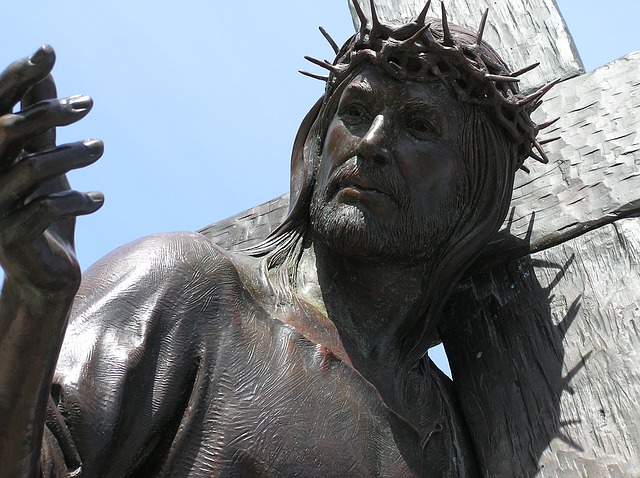
    But as the author of the letter to the Hebrews reminds us, we aren’t left to ourselves. In his infinite mercy, Jesus sympathizes with our weakness. Even though he himself never fell to the many temptations that weighed on him like a cross and surrounded him like a crown of thorns, he knows what it’s like to carry them, to bear their weight and feel their pain, but also to endure and overcome them.

    Fully man, Christ knows what it means to feel the kind of pain that leaves us without words; able only to offer prayers and supplications with loud cries and tears to the one who was able to save him (Hebrews 5:7). Enduring that kind of torment, he must also have felt the natural reaction of the human body to fight against and relieve the pain – on this day, to come down from the cross – yet Son though he was, he learned obedience from what he suffered (Hebrews 5:8).

    good-friday-2264164_640But Jesus also taught us through his obedience unto death that glory waits on the other side of suffering; that being made perfect is not a matter of doing all things on our own, but the opposite: Letting go of control and uniting ourselves more and more to the will of the One who is our true strength.

    This is the ultimate lesson of Good Friday. Christ’s triumph over self-will and self-reliance did not enable him to merely sympathize with our suffering or feel our pain but to be perfectly in himself the source of eternal salvation for all who obey him (Hebrews 5:9).

    We adore you O Christ and we praise you, because by your holy cross you have redeemed the world.

  • A Fragrant Aroma: Monday of Holy Week

    John 12:1-8

    Awhile after my father died, my mother asked if I would help her sort out his things. As I took some clothes out of his dresser it struck me; they still smelled like him. It was as if my father was right there. It took me several minutes to regain my composure.

    Scientists have known for years that the sense of smell is intimately tied to memory and emotion. In fact, smell is the only sense that works directly with the area of the brain that controls emotions. We’ve all experienced it; no matter how far away or far removed we are from a certain time, the aroma of something – perhaps a certain food, a perfume – can bring it all back again. It is if we are there.

    In the gospel we see how one of the sisters of Lazarus gave to their home a sense memory of our Lord: Mary took a liter of costly perfumed oil made from genuine aromatic nard and anointed the feet of Jesus and dried them with her hair; the house was filled with the fragrance of the oil (John 12:3).

    This is significant on many levels. First, it is the perfect counterbalance to the family’s recent experience at the tomb of Lazarus; the foul air of death is literally blown away by the fragrance of new life found in Christ. But second, this perfume is costly; the price of victory is high. As if she senses that his enemies are as near as Judas and plotting his demise, Mary anoints not the head of Christ the King but the feet of Christ the Servant which shall soon be pierced with nails and placed in a tomb. Finally, it may seem odd that Mary wipes away some of the perfume with her hair but I see in it a sign of her devotion; a way to identify herself with Christ and his sacrifice, personifying St. Paul’s meaning in 2 Corinthians when he said, we are a fragrance of Christ to God among those who are being saved and among those who are perishing (2 Corinthians 2:15).

    glass-4108085_640There is an ancient rabbinic saying that “the fragrance of a good perfume spreads from the bedroom to the dining room; so does a good name spread from one end of the world to the other.”1 As Mary filled her house and her hair with the fragrance of Christ, so may we fill the world and ourselves with his holy and glorious Name. And may be as untiring and devoted as she, willing to sacrifice whatever is costly to ourselves to do it. There is no greater identification with Christ than this, as St. Paul knew when he prayed that we may be imitators of God, as beloved children; and walk in love, just as Christ also loved you and gave Himself up for us, an offering and a sacrifice to God as a fragrant aroma (Ephesians 5:1-2).

    1Based on Ecclesiastes 7:1 and cited in Brown, R.E. (1966) The Anchor Bible: The Gospel According to John I-XII. New York: Doubleday & Company, Inc., p. 453.