Exodus 20:1-17; 1 Corinthians 1:22-25; John 2:13-25
At first, today’s readings might not present themselves as a unified whole: Moses receives the Ten Commandments; St. Paul speaks of the cross; our Lord cleanses the Temple. But if we look a little below the surface, a theme does emerge.
First, the Ten Commandments. As significant as they are on their own, these are only the first of a series of commands that God used to define the terms of his covenant with the Hebrews. The agreement was this: If the people obeyed God’s law, they would not only be his treasured possession but God would have a sanctuary built and dwell among them. This was truly momentous, for God hadn’t dwelled among people since the Garden of Eden (recall him walking in the Garden in Chapter 3 of Genesis).
This is why several chapters of Exodus then go into great detail about the sanctuary’s construction. Much of it symbolizes the Garden of Eden, that first sanctuary of God, including the tree in the center of the Garden – the tree of life. And that explains why, down to the time of Jesus and beyond, the Temple held such pride of place among the Jews: The Temple was an icon of the universe, including paradise, and its center, the holy of holies, the place where God Most High dwelled among his people. It was as if God was re-creating Eden and restoring his people to their place near the tree of life.
The only thing more incredible than all this was how little time it took the Hebrews to break the covenant. Just weeks after agreeing to have no other gods they melted jewelry to make a golden calf. But then we shouldn’t be too hard on them; it’s human nature to want our own way, to determine for ourselves what is good, and then, after we’ve sinned, to rationalize or minimize it.
We see that in the gospel story. Jewish law did stipulate a census tax and the securing of an animal for sacrifice, but neither of those things had to be done on Temple grounds and there is little doubt that at least some profiteering went on. But come on, what’s the harm? People paid the tax and sacrificed their animal. We see it in our own time as well. For example, the Catechism teaches that it’s a sin against the 2nd Commandment to say God’s name when we’re not praying. God’s name is holy, and we are to speak it only to bless, praise, and glorify him (CCC §2143). Still, we’re tempted to think, “No way. Everybody says, ‘OMG’ when they talk. I can’t believe God really cares about that!”
But we forget the ancient principle of law that says that the seriousness of an offense is determined not by the person who commits the crime, but by the dignity of the victim. For example, in civil law, if a man assaults someone he might be arrested or fined, but if he assaults the President of the United States he will definitely go to prison for a very long time. Why? Because of the dignity our society bestows on the office of President.
So with God’s law; when we sin God is offended, and because God’s dignity is infinite, every offense against him is infinite. From that perspective, think how arrogant it is for us to tell God when he should or should not be offended, or demanding that God explain himself to us. That’s exactly backward. Only God gets to say when he is offended and, as Christ implied in the Temple, only God is in a position to demand anything.
This at last brings us to the cross. For God does demand something – justice – but in his infinite mercy demands that it be satisfied once and for all through the sacrifice of his only Son. As much as the commandments mean, as much as the Temple ever meant, infinitely more was given to us by this gift. For as he implied in today’s gospel, Jesus is the Temple, and only in his cross do we find the true tree of life, the highest expression of what we are called to be, how we are are called to love.
In these remaining days of Lent, make time to contemplate the cross. If you do not pray the Stations of the Cross, consider doing that. Regardless, pray the words we begin with – the Act of Contrition: “O my God,” (said in prayer!) “I am heartily sorry for having offended Thee, and I detest all my sins because of Thy just punishments, but most of all because they offend Thee, my God, Who art all-good and deserving of all my love. I firmly resolve, with the help of Thy grace, to sin no more and to avoid the near occasions of sin.”
This prayer helps us remember what God wants most: That his law be written on our hearts; that from our heart we are sorry for offending his infinite dignity; and that we are committed to avoiding the situations or places that have helped lead us into sin. All this strengthens within us the Holy Spirit’s gift of fear of the Lord, through which we come to love God so much, to respect his dignity so deeply that we never want to do anything to offend him; to say as little St. Joan of Arc said at her trial, “I would rather die than do a thing which I know to be a sin or against the will of God.”
That is the heart of Christ, whose love is the heart of the law.


 The pattern of disagreement, debate, and decision is how things get most productively settled in the Church provided it is done in the right spirit; that is, the Holy Spirit. Since the Council of Jerusalem was called to settle the dispute between the Gentile and Jewish Christians this has been the model, its justification found in the letter issued from that Council, specifically the sentence that begins, It seems good to the Holy Spirit and to us (Acts 15:28). The Holy Spirit promised by Christ continually works within us, finding ways to maintain unity despite our differences. In all our human affairs but especially between the members of the Church what matters is not that we disagree but that we dialog, not the heat of our words but the light of the Holy Spirit, not the distance we keep but the fellowship we extend, and not the hostility throughout the debate but the peace of Christ we give in the resolution. As with Cyril and Methodius, some will not accept us or the decisions reached but we cannot help that. All we can do is what Methodius did: Continue to act in union with Christ and his Church, remembering always that it is not about us but about the Holy Spirit and us.
 Still, a common problem is that we tend to take this fellowship for granted and forget gratitude. We fall into a routine of receiving Communion with little or no thought as to what – or rather Who – we are receiving. Like the nine lepers in today’s gospel passage, we are given what we ask for but then go back on our way with little regard either for the gift or what it cost the Giver. St. Paul goes on to warn about the grave danger of such ingratitude: That is why many among you are ill and infirm, and a considerable number are dying (1 Corinthians 11:30). The healthier, more grateful response is to first discern whether we are in the state of grace to receive Christ and, if not, to make ourselves a more worthy vessel. Like the leper who, once cleansed, remembered to be thankful, we thank God for what he has given us through the Church – the gifts of faith and the Sacraments through which he touches, heals, and sanctifies us.
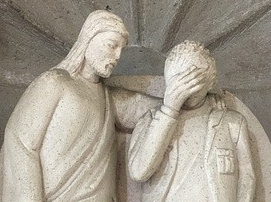 The psalmist today sings Save me O Lord in your mercy (Psalm 109:26). The readings are God’s answer to that prayer. In his infinite love and mercy he assures us that no matter how hypocritical we are, how much a Pharisee, or how much we deserve it, we are never alone. God is always true to his word and today his word is that there is nothing – neither death, nor life, nor angels, nor principalities, nor present things, nor future things, nor powers, nor height, nor depth, nor any other creature – that can separate us from the love of Jesus Christ our Lord (Romans 8:38-39).
 That is the image I think of now when I think of saints. Not images set in glass that glow with the sunlight, but people who now and forever glow with the radiance of the one true Light – Christ, the Morning Star who never sets.
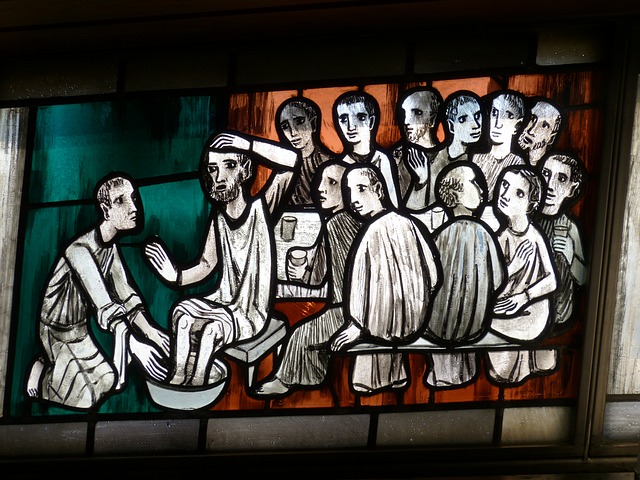 This is what the saints and the blessed have discovered. The greatest good in life is to see and serve Christ; that is what gives our life its ultimate meaning. However, we will never be able to do that until we see Christ in each other and become Christ for each other. St. Paul knew this; that is how he could write that the grace of apostleship is found in the obedience of faith. By faith we believe that God loves everyone and that we are to love as God loves, but it also teaches that the people who we think are least deserving of our love are the ones most worthy of it. Thus, obedience to the faith means that as apostles we are sent to be Christ and to find Christ in everyone, even those we find hardest to serve. Only grace can provide the humility and openness to vulnerability that can empower us to do the work for which we have been sent.
 Finally, the cross is a sign of victory. It is the apparent irony seen throughout salvation history that God works for good by turning evil upon itself. It was Pharaoh who pronounced the curse by which his own people would most suffer: the death of every firstborn. In the desert it was the emblem of the serpent, reminiscent of the one whose envy brought death into the world, that would be lifted up on a tree as a sign of healing and life. It was Caiaphas, plotting to have Jesus executed, who unwittingly prophesied that it was better for one man to die than for the whole nation to perish. It was the Roman governor Pilate who first asked
  Mark 10:45