Tag: mercy

  • The Eyes Have It

    The Eyes Have It

    The Passion of Our Lord, Jesus Christ, According to Luke.

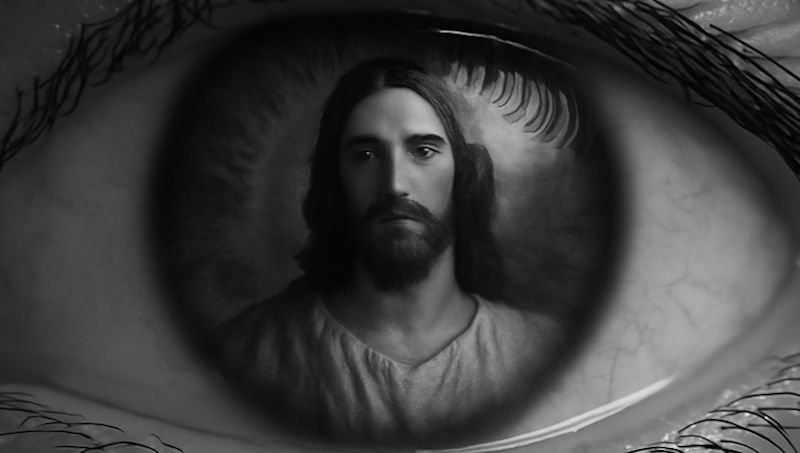
    Of all the scenes in Luke’s passion narrative, one in particular strikes very deep. After Peter denies Jesus for the final time, Luke says that the cock crowed, and the Lord turned and looked at Peter (Luke 22:61-62).

    No words. Just eye contact.

    Luke is counting on us knowing from our own experience that the most emotionally powerful times in life often render words unnecessary. But then, the eyes are most eloquent! As St. Jerome once said, “Eyes without speaking confess the secrets of the heart.” Think how often we use them to say, “I love you,” or “I’m sorry,” or “I’m so proud of you,” for example.

    We have no idea what our Lord’s eyes were saying to Peter in that moment, but we know what Peter took away: he went out and began to weep bitterly (Luke 22:62). Imagine being the Apostle in that moment! Or, imagine being ourselves, committing some sin, then realizing that Jesus has been there all along, looking at us.

    What would our eyes be saying then?

    Those are the eyes we bring to Confession, where sometimes we, too, weep. But then, those are also the eyes we bring to Holy Communion or to Adoration, where Christ is as present as He was in the high priest’s courtyard – Body, Blood, Soul, and Divinity. If we weep then, let it be in the joyful hope that Christ is saying to us what He said to the Apostles in John’s gospel before he died: As the Father loves me, so I also love you. Remain in my love  (John 15:9).

  • The Heart of the Law: The 3rd Sunday of Lent, Cycle B

    The Heart of the Law: The 3rd Sunday of Lent, Cycle B

    Exodus 20:1-17; 1 Corinthians 1:22-25; John 2:13-25

    At first, today’s readings might not present themselves as a unified whole: Moses receives the Ten Commandments; St. Paul speaks of the cross; our Lord cleanses the Temple. But if we look a little below the surface, a theme does emerge.

    First, the Ten Commandments. As significant as they are on their own, these are only the first of a series of commands that God used to define the terms of his covenant with the Hebrews. The agreement was this: If the people obeyed God’s law, they would not only be his treasured possession but God would have a sanctuary built and dwell among them. This was truly momentous, for God hadn’t dwelled among people since the Garden of Eden (recall him walking in the Garden in Chapter 3 of Genesis).

    This is why several chapters of Exodus then go into great detail about the sanctuary’s construction. Much of it symbolizes the Garden of Eden, that first sanctuary of God, including the tree in the center of the Garden – the tree of life. And that explains why, down to the time of Jesus and beyond, the Temple held such pride of place among the Jews: The Temple was an icon of the universe, including paradise, and its center, the holy of holies, the place where God Most High dwelled among his people. It was as if God was re-creating Eden and restoring his people to their place near the tree of life.

    The only thing more incredible than all this was how little time it took the Hebrews to break the covenant. Just weeks after agreeing to have no other gods they melted jewelry to make a golden calf. But then we shouldn’t be too hard on them; it’s human nature to want our own way, to determine for ourselves what is good, and then, after we’ve sinned, to rationalize or minimize it.

    We see that in the gospel story. Jewish law did stipulate a census tax and the securing of an animal for sacrifice, but neither of those things had to be done on Temple grounds and there is little doubt that at least some profiteering went on. But come on, what’s the harm? People paid the tax and sacrificed their animal. We see it in our own time as well. For example, the Catechism teaches that it’s a sin against the 2nd Commandment to say God’s name when we’re not praying. God’s name is holy, and we are to speak it only to bless, praise, and glorify him (CCC §2143). Still, we’re tempted to think, “No way. Everybody says, ‘OMG’ when they talk. I can’t believe God really cares about that!”

    But we forget the ancient principle of law that says that the seriousness of an offense is determined not by the person who commits the crime, but by the dignity of the victim. For example, in civil law, if a man assaults someone he might be arrested or fined, but if he assaults the President of the United States he will definitely go to prison for a very long time. Why? Because of the dignity our society bestows on the office of President.

    So with God’s law; when we sin God is offended, and because God’s dignity is infinite, every offense against him is infinite. From that perspective, think how arrogant it is for us to tell God when he should or should not be offended, or demanding that God explain himself to us. That’s exactly backward. Only God gets to say when he is offended and, as Christ implied in the Temple, only God is in a position to demand anything.

    This at last brings us to the cross. For God does demand something – justice – but in his infinite mercy demands that it be satisfied once and for all through the sacrifice of his only Son. As much as the commandments mean, as much as the Temple ever meant, infinitely more was given to us by this gift. For as he implied in today’s gospel, Jesus is the Temple, and only in his cross do we find the true tree of life, the highest expression of what we are called to be, how we are are called to love.

    In these remaining days of Lent, make time to contemplate the cross. If you do not pray the Stations of the Cross, consider doing that. Regardless, pray the words we begin with – the Act of Contrition: “O my God,” (said in prayer!) “I am heartily sorry for having offended Thee, and I detest all my sins because of Thy just punishments, but most of all because they offend Thee, my God, Who art all-good and deserving of all my love. I firmly resolve, with the help of Thy grace, to sin no more and to avoid the near occasions of sin.”

    This prayer helps us remember what God wants most: That his law be written on our hearts; that from our heart we are sorry for offending his infinite dignity; and that we are committed to avoiding the situations or places that have helped lead us into sin. All this strengthens within us the Holy Spirit’s gift of fear of the Lord, through which we come to love God so much, to respect his dignity so deeply that we never want to do anything to offend him; to say as little St. Joan of Arc said at her trial, “I would rather die than do a thing which I know to be a sin or against the will of God.”

    That is the heart of Christ, whose love is the heart of the law.
  • Mercy and Forgiveness: Monday of the 2nd Week of Lent

    Mercy and Forgiveness: Monday of the 2nd Week of Lent

    Daniel 9:4b-10; Luke 6:36-38

    The readings today evoke two images of Pope St. John Paul II in my mind.

    The first is of a trip the pope made on April 13th, 1986. Although very short – less than two miles from the Vatican – its impact was as great as any pastoral visit he would ever make. For on that day the Holy Father bridged a gap that was centuries wide, doing what no pope since St. Peter had ever done: entering a Jewish synagogue. In fact, he entered Rome’s Great Synagogue and, while 1000 Jews watched and wept, warmly embraced the Rabbi, then publicly and sincerely apologized to all Jews on behalf of the Church for whatever part she played in the centuries of discrimination and persecution the Jewish people had suffered.

    We naturally tend to focus guilt on ourselves as individuals but the pope reminded us that, as the reading from Daniel implies, sin is sometimes a matter of “we,” and not just “I.” In his Apostolic Exhortation “Reconciliation and Penance” John Paul II referred to this as social sin – sins committed by groups as small as a few people or as large as many nations. His point was that each member bears some share of responsibility for what the group does or fails to do. As he wrote, social sins are the “very personal sins of those who cause or support evil or who exploit it… who are in a position to avoid, eliminate or at least limit certain social evils but who fail to do so out of laziness, fear or the conspiracy of silence, through secret complicity or indifference… who take refuge in the supposed impossibility of changing the world and… sidestep the effort and sacrifice required….”1

    Therefore, it is our moral duty as Catholics to examine ourselves in light of the behavior of the groups in which we participate in our parish, Church, community, nation, and world, and to speak and act against these behaviors when necessary.

    The second image of St. John Paul is in the prison cell of his would-be assassin, the man who shot him several times on May 13th, 1981. Although the pope publicly forgave him four days later, in 1983 he visited the prison and personally did so again. Later, John Paul appealed to the Italian government to release him, which they did. Eventually the man converted to Catholicism, citing the pope’s influence.

    In the gospel, Luke does not put on our Lord’s lips the words Matthew used: Be perfect, just as your heavenly Father is perfect (Matthew 5:48). Instead, the Jesus of Luke says, Be merciful, just as your Father is merciful (Luke 6:36). Here, “merciful” could also be translated “compassionate,” and there are few examples of mercy or compassion better than the Holy Father’s actions. And look at the effect! The transformation of a man from one who would kill the Vicar of Christ into one who would rather die for love of Christ.

    The power to look within and see the personal and social sin as well as the capacity to show mercy comes as the free gift of our Lord to all who are willing to ask forgiveness of those we have wounded and offer it to those who have wounded us. This is the transformative power of the heart of Christ, as St. John Paul reminded us when he said, “I invite you all to join me in turning to Christ’s heart, the eloquent sign of the divine mercy, the “propitiation for our sins,” “our peace and reconciliation,” that we may draw from it an interior encouragement to hate sin and to be converted to God, and find in it the divine kindness which lovingly responds to human repentance.”

    Sacred Heart of Christ, have mercy on us.

    St. John Paul II, pray for us.

    1http://www.vatican.va/content/john-paul-ii/en/apost_exhortations/documents/hf_jp-ii_exh_02121984_reconciliatio-et-paenitentia.html

  • The Heart of the Matter: The 4th Sunday in Ordinary Time, Cycle B

    The Heart of the Matter: The 4th Sunday in Ordinary Time, Cycle B

    Deuteronomy 18:15-20; Psalm 95:8-9; Mark 1:21-28

    When you ask people about their favorite schoolteacher and what it was that made them so great, the answer often has less to do with what they taught than the kind of person they were. They cared about us, were compassionate to us, interested in us, challenged us, and so on. Whatever their qualities, the effect was the same – that teacher inspired us. They taught us much more than how to excel in a subject; through them we learned more about ourselves and how to make a difference in the world.

    Good teachers touch our heart, bad ones make us heartsick; they get reactions. So it was with Christ, the teacher. Last week, Mark told us of our Lord’s first class: He called people to repent, to turn their minds and hearts around. We then witnessed his mysterious, charismatic ability to draw people to himself, namely the first 4 disciples, just by asking them to follow him. It was a week full of dramatic moments and powerful, positive reactions.

    This week the drama continues but as we hear of Christ teaching in the synagogue, we see a totally different reaction. Twice Mark says that the people were astonished. While that might not seem much different, the original Greek word connotes fear; this is not a positive reaction as much as one full of anxiety and foreboding. We can feel the fear in the words of the demoniac: What have you to do with us, Jesus of Nazareth? Have you come to destroy us? I know who you are – the Holy One of God (Mark 1:24)!

    What do they fear? Is it what Moses spoke of in the first reading? Are they struck with fear at the presence of the Lord, like their ancient ancestors? Perhaps; Mark says they sensed his authority, and the demoniac certainly knew that Jesus was no ordinary rabbi. But I think a clue to another reason lies in today’s Psalm response: If today you hear his voice, harden not your hearts (Psalm 95:8f). The term “harden our hearts” essentially means “close our minds.” The person with the hardened heart hears God but does not listen, only wants certain things from God, says the right words but does little or nothing, and may even have stopped feeling the guilt of their own sin.

    Imagine the consternation inside such a person when confronted with Christ, the caring, compassionate teacher who challenges people, moves their hearts, draws them to himself, and inspires in them a longing for more. They can’t help but feel powerfully attracted to his message yet at the same time afraid of what that attraction will cost.

    So then, we come to the heart of the matter. Is the psalm talking about us? Are our hearts hardened? How do we know? Reflect again on a few of the symptoms:

    • Refusal to listen to God. Listening is not hearing; it comes from the Latin word meaning “to obey.” Do I hear but fail to obey what God tells me in Scripture and through the authority he has given his Church? Or, do I rely on my own authority?
    • Only want certain things from God. When I take an honest look at my prayer life, do I tend to talk to God more about what he can do for me than how I can conform my will to his?
    • Say the right words but do little or nothing. Have I said I would change, take full advantage of opportunities given me to do so, but then done little or nothing?
    • No longer bothered by sin. Have I persisted in sin so long now that it no longer bothers me at all?

    Every “yes” to these questions is as if we are saying to Christ, “What have you to do with me, Jesus of Nazareth?” We fear that he has come to destroy us, to condemn us to hell. He has that power; he is the Holy One of God! The longer we live this way, the more ingrained this fear becomes. We know things must change before the great reckoning, but we are so tempted to avoid it; that kind of change is going to hurt.

    We cannot allow fear to deafen us to the call of Christ, the infinitely compassionate teacher. Note his first word to the demoniac: Quiet. He knows that demons love noise and distraction, and we do, too. But he also knows that only in silence can we hear him and only in hearing resolve to obey his voice urging us to face ourselves as we are. It can be a painful moment but in it lies openness; that weakness that pleads for the strength of Christ. First, utter the simplest prayer – one word, the Name above all names: Jesus. As St. John of the Cross said, from all eternity the Father spoke only one word – the Eternal Word – Jesus, and he has no more to say. If that’s enough for God, it’s enough for us. Next, include a request: “Open my heart.” This is the gift of docility, a teachable spirit. No teacher, not even God, can move us if we resolve to keep our minds closed. With docility comes that inner clarity through which we see that Christ has come not to destroy us, but the sinfulness that has hardened our hearts. Finally, ask for mercy. This goes right to Sacred Heart of Christ.

    Do this often. It isn’t an overnight process; change of heart takes time. That’s OK; Jesus is a patient teacher and we have the rest of our lives to work on it. It is true that we know neither the day nor the hour of the “final exam” but we do know that unlike earthly teachers, Christ’s goal is not to touch our heart but to transform it; not to see that we excel in a subject but to see that we are the subject. Above all, he gives us his own Sacred Heart as the model of what a heart should be, one whose faith overcomes all fear, that can behold him and truly say, I know who you are – the Holy One of God!

  • The Three Consolations: Thursday of the 3rd Week of Advent

    Judges 13:2-7, 24-25a; Luke 1:5-25

    I remember once years ago sitting with my mother, watching TV. The shows were full of young people and I jokingly remarked, “I guess no one over 40 can be on TV.” Mom saw no humor in it; she replied, “Our society has no use for us older people, especially women. In their eyes, once we’re past childbearing age we’ve outlived our usefulness.”

    That got me thinking about the Hebrew world of today’s readings. Elizabeth and the mother of Sampson could probably identify with my mother’s feelings. They lived in a culture where barrenness was seen by many as a punishment from God (Genesis 16:2, 20:18). For such women the future was bleak; nothing but loneliness and insecurity to look forward to. No wonder some of them were prompted to despair (Genesis 30:1).

    Especially during seasons such as Advent and Christmas when we exalt the virtue of hope, people still fall prey to the loneliness, depression, and anxiety that lead to despair. Rather than consolation they are in desolation, the sense that God sees our hopelessness yet has abandoned us, left us in the dark, and is never coming back. We cannot see that it is only an inner sense and not the outward reality; the voice of the Prince of Lies telling us we are worthless, that God doesn’t love us and is far, far away. The truth is that God is as near as our next breath and loves us so much that we are worth dying for.

    It is the wait that fools us. If God loves us so much, why do we seem to wait forever for him to answer? The women in the readings must have wondered the same thing. Day after day, week after week, year after year they waited; still no answer. It would have been easy to give up. Yet what does Scripture say? Elizabeth, like her husband, was “righteous in the eyes of God, observing all the commandments and ordinances of the Lord blamelessly” (Luke 1:6).

    In other words Elizabeth persevered, and it was this that kept her from falling into despair. This is a lesson for us. We too must not only endure times of desolation but use them to strengthen our spiritual gifts. We cannot learn prudence when the way is always clear, justice when all is fair, fortitude when times are easy, or temperance when we get everything in just the right amount. We cannot strengthen our faith when all is seen, or charity when all is given. In the same way, the virtue of hope grows stronger as we persevere in waiting and through that perseverance appreciate ever more deeply the coming of that which we most long for: Unity with God, the object of our hope. Desolation is not the time to turn away from God but toward him; to reinvigorate our hope in the everlasting joy of heaven. The time is now, for Advent is the definitive season of waiting, when hope longs to be rekindled.

    stained-glass-4522405_640The great gift of fertility given to Samson’s mother and to Elizabeth are confirmation that perseverance is rewarded. God sees all of us who endure desolation and, in his own time and manner, provides from the storehouse of his infinite mercy the life-giving consolation of his Spirit. When we find ourselves in times of desolation remember to ask the intercession of St. Elizabeth; she understands very well not only the pain of endless waiting but also the indescribable joy of the Holy Spirit’s three priceless consolations: The new life of St. John within her womb; the love and help of Mary, the Mother of Hope; and most of all the fulfillment of Hope itself: Our Lord and Savior, Jesus Christ.
    St. Elizabeth, pray for us.

  • Our Mother, Clothed With the Sun: Feast of Our Lady of Guadalupe

    Revelation 11:19a; 12:1-6a, 10ab; Luke 1:39-47

    The book of Revelation is apocalyptic literature. This was a genre used in and around the time of Christ. It is overloaded with rich and mystical symbolism; a single image may represent multiple things. Further, the imagery can be violent and warlike, even though its ultimate message is one of hope and peace.

    In the passage of Revelation chosen for today’s feast lurks a huge red dragon. The Hebrew word translated as dragon can also mean “serpent” or “sea monster” and is thought to represent the devil and the forces of evil, ready to make war against the Christ and his Church.

    In late 15th century Mexico, the Spanish conquistador Cortez saw echoes of that dragon in the violent, warlike Aztec religion. Every year, thousands of people were sacrificed to appease its bloodthirsty gods. In 1487, the dedication of a new pagan temple saw 80,000 people sacrificed in just a few days. As if that weren’t bad enough, the dragon’s shadow also appeared in some of the immigrants to the new world, who spoke of peace but practiced avarice, treating the Mexicans and their land as things to be exploited for personal gain. Even some within the Church hindered the spread of the gospel by refusing vocations from the local community; Catholic Mexicans were not allowed to minister to their own people. It’s not hard to understand why many resisted converting to Catholicism.

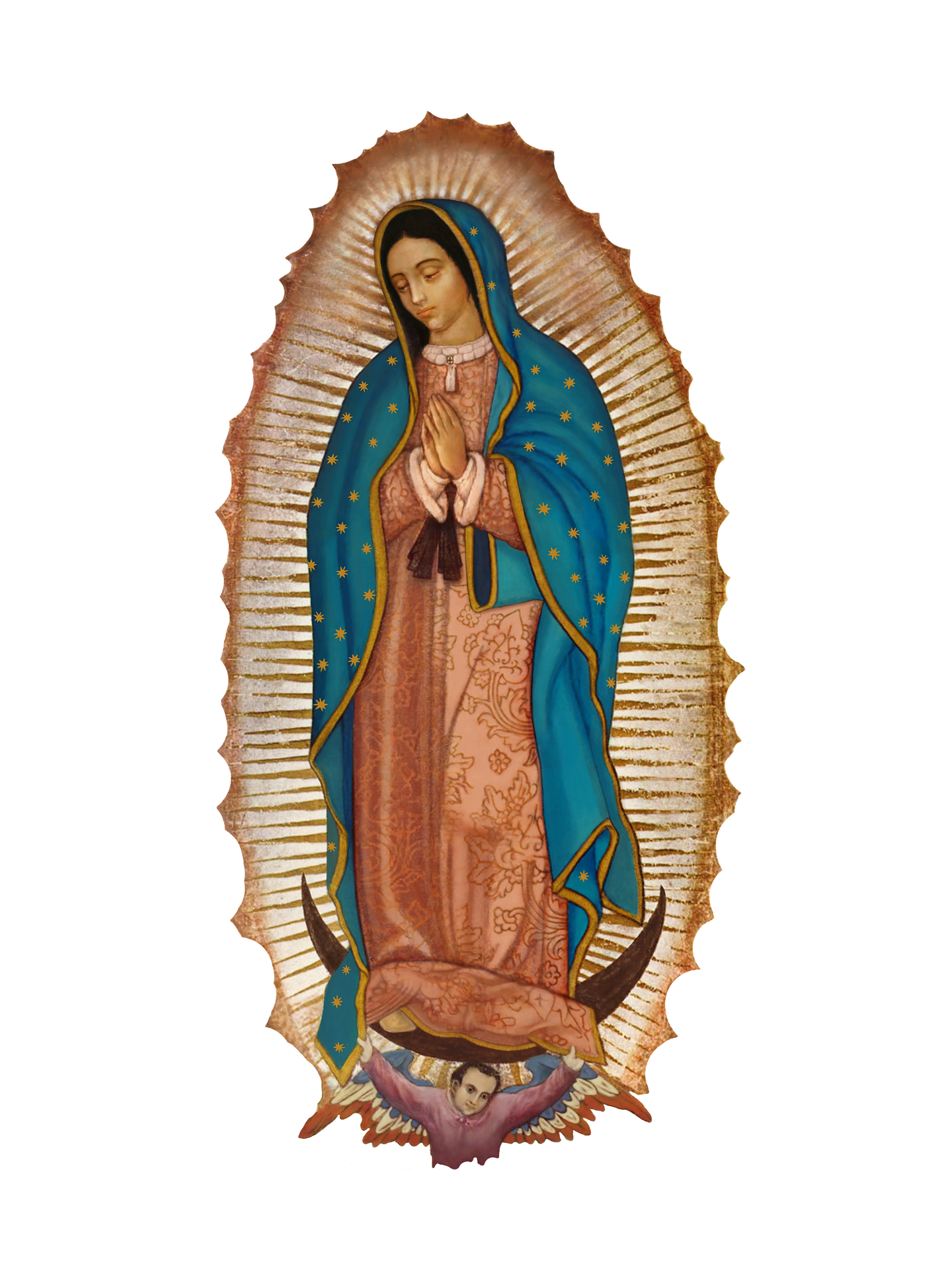
    If a reflection of the dragon could be found in the new world, so could a reflection of the woman. In 1531, a mystical apparition identified herself as “the ever Virgin, Holy Mary, the Mother of God” to a middle-aged Mexican man named Juan Diego. In Revelation, the woman was clothed with the sun, the moon under her feet, and wore a crown of stars. The apparition at Tepeyac is also rich in symbolism, but it is all Aztec. The woman stands in front of the sun, eclipsing the Aztec sun god; her foot rests on the moon, dominating their chief god, Quetzalcoatl; her mantle holds the stars, which they worshiped. Yet, the woman is not divine; her hands are in a posture of prayer and she looks down, which Aztec gods never do. She is a queen, for she wears the Aztec royal color of turquoise; a Christian, for there is a cross on her brooch, is pregnant, for she wears an Aztec maternity belt; yet she is a divine mother, for over her womb appears a four-petal flower, the Aztec symbol of a deity.

    As important as her image was, her words were far more so; for what she said, how she said it, and who she said it to. She spoke in the language of the Aztecs, not in Spanish; she spoke to a simple peasant, and through him to all people; her message was one of comfort and hope: She was there; she was their mother; she held them in her arms, heard their weeping, and knew of their hardships and sorrows. Above all, she wanted them to rest assured that through her intercession they would be healed.

    our-lady-of-guadalupe-4542831_1920She became known as Our Lady of Guadalupe, and as word of the miraculous appearance and image spread, she became the most effective tool of evangelization that Mexico or the world had ever known. In the gospel, Mary carried the Eternal Word into the Judean countryside where the babe within Elizabeth’s womb leaped for joy; 15 centuries later, Mary’s maternal word went out into the Mexican countryside where millions leaped for joy. Conversions increased so dramatically that for a couple of years the missionaries could almost not keep up with them. More than that, the peoples’ faith was strong; to this day, the faith of the Mexican people remains vibrant, with deep devotion to Our Lady of Guadalupe.

    In our own time the dragon still lurks. We do not have thousands dying in pagan temples, but we do have millions dying in abortion mills here and throughout the world. Still, the image of Our Lady of Guadalupe reminds us that the woman of Revelation is still present, still giving birth to the Church, still giving her ever victorious Son to the world. As she comforted the Mexican people, so she consoles us. She is our mother; she holds us in her arms; knows of our hardships and sorrows, and assures us that through her intercession, we too will be healed by Christ, her son.

    Our Lady of Guadalupe, pray for us.

  • Love Without Measure: Thursday of the 31st Week in Ordinary Time

    Luke 15:1-10

    A man with 99 sheep safe and sound leaves them all to recover a lost one and, finding it, rejoices as if it is all he owns. A woman with ten coins loses one of practically no value but like a miser turns the house upside down until she finds it, then throws a party when she does. If you find this behavior strange, surprising, or even mystifying, know that you’re not alone.

    Also know that our Lord is delighted to hear it.

    That’s because parables aren’t supposed to make sense on the surface. They’re meant to sound strange, to surprise, and even mystify us. Their unexpected behavior or surprising twists should give us pause, make us stop and reflect, prompt us to ask questions, and look beneath the surface for answers. The question for today’s parables is obvious: What is it that would make someone go so far out of their way to recover something it seems they could so easily do without?

    The answer is the infinite, overwhelming, passionate, mysterious, all-consuming love of God.

    This is a love that sees as we do not. We tend to value people not only for who they are but also for what they can do for us. On those terms what is one sheep compared to 99 or one nearly worthless coin compared to the other nine? In contrast, God’s infinite love values people not just for who they are but because they are. Thus, even one lost soul is of infinite importance. This overwhelming love assures us that even if we were the only person ever created God still would have suffered and died for us. Not only that, he wants his standard of love to be ours as well; to make the world a place without hatred, bitterness, resentment, or injustice, where we rejoice not when an enemy dies but when they repent, come to a knowledge and love of God, and live as he intends.

    That brings us to the second point of the parables, which is that God’s love brings the joy of conversion. Again in human terms, we tend to equate joy with an emotional high; a good feeling. But true joy is a fruit of the Holy Spirit, the happiness that comes as we pursue and come to possess our greatest good: Eternal union with God. This is what lies at the heart of the parables – the passionate joy that comes from finding what was lost but so priceless; the joy we too will know as we attain more and more perfect union with Almighty God.

    jesus-3499151_1280Finally, the parables teach us that the love of God works mysteriously through the process of conversion so that no matter how hard we search for Christ, it isn’t we who find him but he who finds us. Our life stories are a testament to the truth of the parables and Isaiah’s words that we have all gone astray like sheep (Isaiah 53:6). It’s who we are in the self-centered weakness of human love; left to ourselves we drift, fall into habits that may be comfortable but lead us further away from God. And it is who Christ is in the glorious strength of his all-consuming love that he comes to us like the shepherd and the woman in the parables, seeking out and saving what was lost (Luke 19:10) no matter the cost. This is the love that literally consumed him, leading him to the cross and beyond.
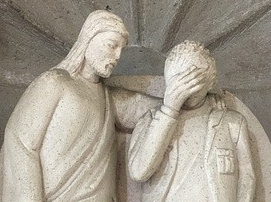
    It is always there that such infinite, overwhelming, passionate, mysterious, all-consuming love leads. None can possess real love without giving it away, know its deep joy without plumbing the depths of its sacrifice, or attain its life without letting our own life go. It’s very hard to comprehend that kind of love but that’s good because it gives us yet another question to contemplate. Ask yourself, what is the measure of my own love? Consider in your contemplation the answer given by the great saint Francis de Sales centuries ago, who perhaps had in mind these very parables.

    The measure of love is to love without measure.

  • The Pharisee Within: Thursday of the 30th Week in Ordinary Time

    Romans 8:31b-39; Luke 13:31-35

    In the gospel we heard the Pharisees warn Jesus to leave town because Herod wanted to kill him. That was very nice of them! It leads us to believe that, even though they didn’t think Jesus was the Christ, he was still a fellow Jew; it was only right to see that he came to no harm. It was the brotherly thing to do.

    Unless of course it wasn’t true.

    Call me cynical but I think the Pharisees were fibbing. Why? I have three reasons. First, Luke has nothing good to say about them anywhere else; to them, Jesus was a nuisance to be disposed of. Second, Jesus had just publicly scolded them (Luke 11:37-54); they were very unlikely to be feeling all warm and brotherly toward him. Third, while it’s true that Luke doesn’t have anything good to say about Herod either, he does say that Herod wanted to meet Jesus for a long time, for he had heard about him and had been hoping to see him perform some sign (Luke 23:8).

    But then why would the Pharisees deceive Jesus? Perhaps it was to test his resolve or try and break it. Knowing from their previous interactions that they were no match for him (Luke 6:1-11; 11:37-54), using Herod’s name was a way to threaten Jesus, to frighten him into going away and possibly even abandoning his mission.

    We would naturally condemn the Pharisees for that but before we do, we should look inside ourselves. Ask yourself: Have I ever wanted to do something I knew Jesus would condemn yet made the deliberate choice to do it anyway? Have I ever promised him that I would never do it again only to repeatedly break my word? Do I pray “Thy will be done” but try my best to see that my will is done?

    The truth is, we all have a Pharisee within. At one time or another, in one way or another, we are less than fully honest with our Lord. We say things we don’t mean, make promises we can’t keep, and twist the truth about ourselves, all in a vain attempt to hide what he already knows we are: sinners in dire need of his mercy and healing grace.

    The true wonder is that our Lord knows all this and loves us anyway, even unto death. After all, the gospel concludes with Jesus naming his executioners and it wasn’t Herod, it wasn’t Pilate, it wasn’t any one person. It was Jerusalem. Specifically, it was people who prayed for him, waited for his coming, followed his ministry, and greeted him at the city gates with shouts of Hosanna. These were the same people who shouted, “Crucify him!” Not just people like us. It was us. We have all crucified our Lord with our sins.

    So we are not only the Pharisee; we are Jerusalem.

    prodigal-son-3388599_640The psalmist today sings Save me O Lord in your mercy (Psalm 109:26). The readings are God’s answer to that prayer. In his infinite love and mercy he assures us that no matter how hypocritical we are, how much a Pharisee, or how much we deserve it, we are never alone. God is always true to his word and today his word is that there is nothing – neither death, nor life, nor angels, nor principalities, nor present things, nor future things, nor powers, nor height, nor depth, nor any other creature – that can separate us from the love of Jesus Christ our Lord (Romans 8:38-39).

    Praise be to God!