Tag: Mary

  • Designing the Perfect Mother

    Designing the Perfect Mother

    Memorial of the Immaculate Heart of Mary

    Isaiah 61:9-11; Luke 2:41-51

    Think for a moment: If you could design the perfect mother, what would she be like?

    If you asked me, she’d be tender; a safe haven in the storms of life. Someone who comforts us when we’re hurt, consoles us in our suffering, who nurtures and teaches – not just with words, but by her quiet, steady presence. Maybe above all, she’d be someone who not just remembers us, but treasures us.

    Isn’t that what every heart really longs for?

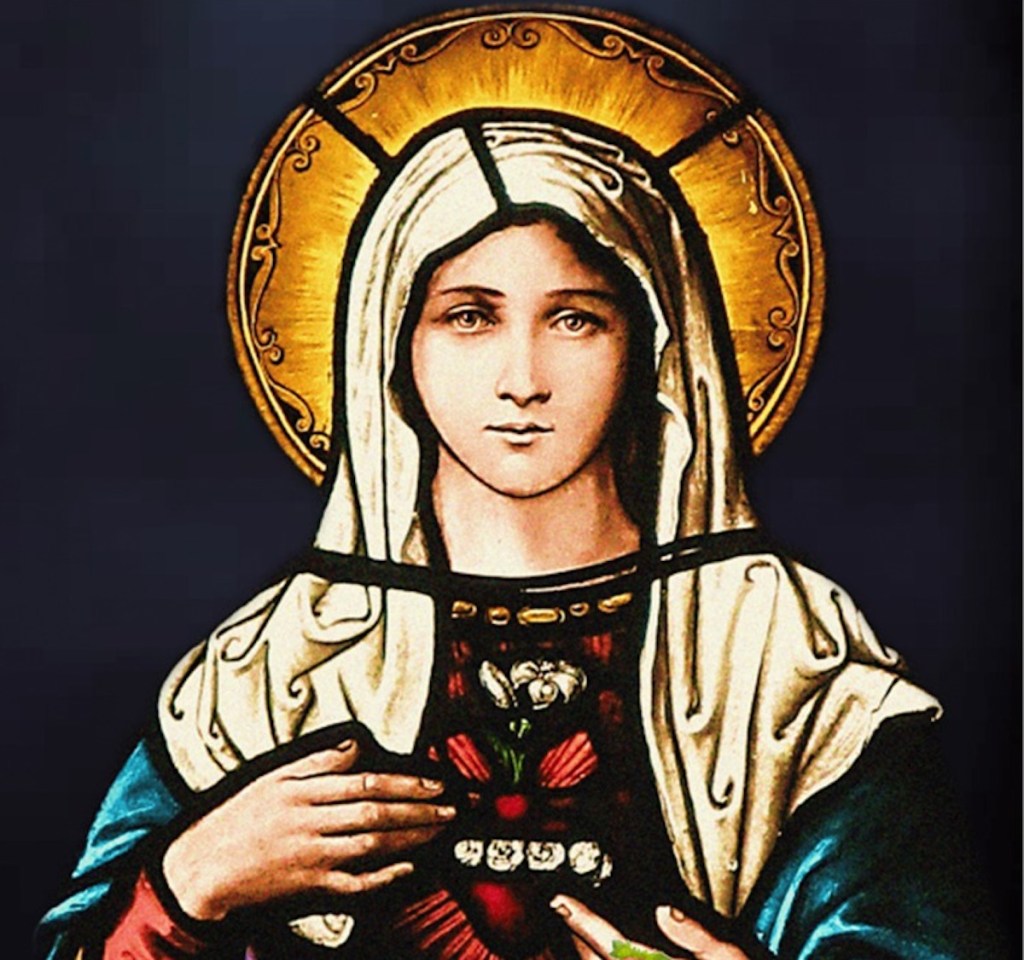
    The Gospel today gives us just such a mother: Mary. Yes, she is the mother of Jesus, but remember – Jesus gave her to us from the Cross. Mary is our mother, too.

    I think St. Luke understood that. While he doesn’t focus much on Mary (for good reason; the gospel is about Christ), twice he presents us with the lovely image of Mary doing something we all recognize: treasuring things in her heart.

    What’s more, Luke allows his word choice to deepen the image. First, he says that when Mary looked back on the events of our Lord’s birth, she kept all these things, reflecting on them in her heart (Luke 2:19). Here, the word for kept means gathering things up carefully, like the pieces of a puzzle, and holding onto them even though they don’t fit together yet. Then today, when finding Jesus in the Temple, Luke says that Mary kept all these things in her heart (Luke 2:51). But here, his second word for kept means to treasure, to guard lovingly because it’s something you never want to lose.

    That’s Mary. She takes every word, every gesture, every event in the mystery of her Son, and holds them in the quiet, contemplative shelter of her heart. Not because she understands it all, but because she loves him.

    This, I think, goes right to the heart of Mary. When someone in a crowd once spoke of his mother being blessed, Jesus didn’t respond, blessed are those who understand; he said, blessed are those who hear the word of God and keep it (Luke 11:28). That’s what Mary does; she is her Son’s first and most perfect disciple. In her great love of God, Mary listens, gathers up, treasures, and obeys. Even though she doesn’t grasp it all, she remains faithful.

    Let’s allow that to give us peace. How often in our own lives do we carry things we don’t understand? We have questions that go unanswered, suffering that seems senseless. We want clarity, we want answers. Instead, God offers us His presence.

    Every time we wonder what to make of all this is a time to turn to the heart of Mary. Given to us by Christ, Mary is always near to comfort us, console us, and hold us close; a mother born of our heart’s deepest longing – to be remembered and treasured when we feel forgotten and useless. Above all, Mary remembers us to her Son and her Lord. No one brings us to Jesus more gently than Mary, and no one knows him better than she. So, when your heart is heavy, give it to her. If your path is unclear, ask her to walk it with you. And if you ever feel alone, remember that you don’t need to wish for a perfect mother. You already have one, and her heart is always open, always listening, and always holding you in love.

  • Beyond Words

    Beyond Words

    Memorial of Our Lady of the Rosary

    Acts 1:12-14; Luke 1:26-38

    There are moments in our lives, times of such emotional power, that, as we reflect on them, go beyond our ability to describe. They are the best times – weddings, births, special occasions with family and friends, spiritual consolations – and the worst – deaths, periods of emotional or physical suffering, of desolation. However good or bad, we can picture them, vividly remember them, but, no matter how hard we try, we cannot describe our feelings about them. They go beyond words.

    But they aren’t beyond God. It is an article of our faith that God is perfectly above all things and, at the same time, perfectly within them. That includes us; every moment of our lives, from the most precious to the most mundane, and all the feelings wrapped up in them, are perfectly known to God. Even if full understanding of the events of our lives eludes us, we can do what the Blessed Mother did: reflect on them in our hearts, that in our contemplation, God may more deeply reveal Himself to us, and help us see how He works through the mysteries of life.

    One way our faith gives us to do that is through repetitive prayer. There is something about its rhythm and regularity that, like breathing, comes naturally to us. Repetition is a prayer form as ancient as Judaism; the Lord Jesus himself repeated the Shema (Deuteronomy 6:4) every day, morning and evening. We see it in his Church, too. We may know them as “aspirations” – short prayers that have developed over the centuries. Some spring from inspiration, such as, “Let go and let God,” or “Lord Jesus, I trust in You,” others from Scripture, such as, My Lord and my God (John 20:28), or Lord, I believe. Help my unbelief (Mark 9:24). One of our most popular repetitive prayers, the Hail Mary, combines these. The first half is Scriptural, quoting the angelic salutation from Luke that we heard today, as well as part of Elizabeth’s greeting, while the second is an intercessory prayer, asking Mary, as Mother of God, to pray for us now and at the hour of our death.

    While it would take too long to trace its development, suffice it to say that, in the words of Pope St. John Paul II, the rosary is centered on Christ but distinctly Marian in character. We see this throughout its mysteries; there are the more familiar, such as The Annunciation and Visitation, but also the more obscure, such as The Appearance of Christ to Mary after the Resurrection and Mary Meets Jesus Carrying the Cross, both of which are prayed by some Franciscans to this day.1

    Regardless the mystery, the rosary does two things the Blessed Mother wants most. First, it points us to her Son. Every decade of every mystery, whether joyful, sorrowful, glorious, or luminous, is an invitation to contemplate more deeply the mystery of Christ; not only how he works in these events, but how he works in our own lives. Second, as a sacramental (a visible sign instituted by the Church to give grace), the rosary leads us, if we are ready to receive it, to sanctifying grace. In both ways, the rosary is the road that, with each passing bead, helps us to love Christ as his Mother has always loved him: Far, far beyond words.

    Our Lady of the Rosary, pray for us.

    1https://franciscanmissionaries.com/7-decade-rosary/


  • The Center of Attention

    The Center of Attention

    Memorial of Sts. Martha, Mary, and Lazarus (July 29)

    1 John 4:7-16; Luke 10:38-42

    In this section of the gospel according to Luke, Jesus teaches two important lessons. The first came in the form of the parable we know as “the Good Samaritan,” in which he showed us how God wants us to serve other people. Today we hear the second, where Jesus tells us how God wants us to serve Him.

    The setting of course is not a parable, but the home of Martha and Mary. Put yourself in their place: Jesus is coming to your home. How do you prepare for that? I’m sure there are many things you would do, all with the best intention: To make your house the warmest and most welcoming place you can. And as for yourself, what will you do when he is your guest? Without doubt, you intend to serve him as well as possible.

    How the two sisters prepared we cannot know, but we do know they served in very different ways. As for Mary, she chose to sit beside the Lord at his feet listening to him speak (Luke 10:39). Of all the disciples, only Mary is consistently found at the feet of Jesus: listening to him, weeping for him (John 11:32), and anointing him (John 12:3). This is why for centuries the Church has pointed to Mary of Bethany as a model of the contemplative life. It certainly nourished her faith; to this day, she is known as an evangelizer. John tells us that many people came to Mary after Jesus raised Lazarus from the dead (John 11:45).

    Martha took a more active role, but her faith was certainly no less. To the contrary; John puts on her lips alone the greatest affirmation of faith found in his gospel: I have come to believe that you are the Messiah, the Son of God, the one who is coming into the world (John 11:27). Nevertheless, here in Luke, Martha is distracted, burdened with much serving (Luke 10:40). Should she have chosen not to serve? That’s not what our Lord implied in the parable of the Good Samaritan; there, he commended people who actively serve their neighbor for their faithfulness. Then why did Jesus rebuke her, who was serving him? Not for her actions, but for her state of mind; Martha allowed her focus to shift away from him and onto her sister.

    It happens that, as people engage in some activity, they grow accustomed to it, and their minds begin to wander. Think about your prayer life; particularly, the prayers you say most often. Have you ever suddenly realized that your mind is a million miles away from the words your mouth is saying, even at Mass? As I said, it’s only natural, but that doesn’t mean unavoidable; it’s also natural to be vigilant. You know very well that when something is of vital importance to you, you’ll shake off any distraction to stay focused. What made Mary so noteworthy wasn’t where she sat herself, but where she put her mind: Fully on Christ, and everything he had to say. Had her thoughts been drifting somewhere else, she too would have been gently brought back to reality by Christ.

    It also happens sometimes that we serve others with mixed motives. Ask yourself if, while working in a parish ministry, you ever found yourself a little too concerned about whether people noticed or praised you, or got a little jealous when someone else was recognized and you weren’t. Again, it’s natural to want to be the center of attention now and then, to be recognized by others for what we’ve done. But, again, the issue is focus; the center of attention is God, not ourselves, and the standard of comparison is not other people, it is Jesus Christ. Who was ever more servant than he, yet when did he ever seek the limelight or care what anyone else thought? The gospels are clear that he had one goal: Doing his Father’s will. The same for Martha, the same for us; regardless what other people think or do, our goal first, last, and always, is to see and serve Christ, and thus show our love for God and our determination to do his will.

    So, today, let us take these lessons to heart. In a few moments, the Lord will be our guest in Holy Communion. The whole point of our time here is to prepare ourselves for that, to make our souls His most welcome home. We can only do that to the degree that we keep our eyes fixed on Christ, so to do what John urged us in the first reading when he said: Whoever acknowledges that Jesus is the Son of God, God remains in him and he in God (1 John 4:15).

    Sts. Lazarus, Martha, and Mary, pray for us.


  • Looking into the Eyes of Love

    Looking into the Eyes of Love

    Memorial of Our Lady of Lourdes

    Isaiah 66:10-14c; John 2:1-11

    In the first reading Isaiah called to mind the tender image of a mother comforting a baby carried in her arms… fondled in her lap (Isaiah 66:12-13). At such times, mothers might speak, but they know that words are unnecessary. They prefer the other senses: Touch, smell, and especially, sight. Many of us know this from experience; while we like to hold babies and smell them (there’s nothing like that “new baby” smell), we especially love to look into their eyes.

    In fact, scientists have recently discovered that when infants and parents lock eyes, their brain waves synchronize; that is, the child’s brain activity mirrors their parent’s. That’s not all; this phenomenon seems to continue throughout life. No wonder my mother was so good at reading my mind every time she asked me to look her in the eyes!

    I believe the same is true of the Blessed Mother and Jesus, and I think today’s gospel story is a good case in point. After Mary tells Jesus that the wine has run short, he’s not disrespectful but he does make it clear that he’s not particularly interested. Nevertheless, just a moment later, he miraculously creates about 120 gallons of fine wine. What could possibly have so moved him?

    I think only one thing could do that: Looking his Mother in the eyes.

    She had gazed into those eyes from the time she first carried him in her arms, and many times since over those thirty hidden years in Nazareth. In a very real way and beyond anything either science or St. Paul could have imagined, Mary had the mind of Christ. So, whatever was behind her eyes at that moment in Cana, he knew that it could only be motivated by the purest love of him, her Son, her Savior, and her Lord.

    And, in ways known only to Christ, Mary’s eyes were much more than a window to her immaculate soul. Hers were the eyes that beheld the angelic revelation in Nazareth; that searched for a place to give him birth; that watched and guarded him as he grew; that wept as he walked out the door for the last time. Hers were the eyes that constantly looked for ways to be the disciple she had been called from all eternity to be; the eyes now gazing at him, pleading in their own quiet way for him to save the honor of this bride and bridegroom; to show them and the world the merciful and loving Savior she had gazed upon for ten thousand wondrous days in Nazareth.

    I came across a book by Fr. Raneiro Cantalamessa, Preacher to the Papal Household, entitled, Mary, Mirror of the Church. I look forward to reading it! By that title he surely must be thinking of the Blessed Mother as we now know her and as she once described herself to Bernadette Soubirous at Lourdes: “I am the Immaculate Conception.” The titles work wonderfully together, for as St. Paul once wrote, Christ has sanctified the Church that he might present to himself the church in splendor, without spot or wrinkle or any such thing, that she might be holy and without blemish (Ephesians 5:27). It may have been the love of a young man for his mom that first moved Jesus to change water into wine at Cana, but it was the infinite love of the Son of Man for his holy and immaculate bride, the Church, that moved him to change bread and wine into his own Body and Blood at the Last Supper.

    Today we remember the one he called Woman, who we call Mary Immaculate, Mother and mirror of the Church. Let us take a moment today to thank God for giving us so loving a mother. May she continue to look tenderly upon all of us, her spiritual children, and plead that we too be made into the finest wine. She, who has for so long looked into the eyes of Infinite Love and perfectly conformed her mind to His.

    Mary Immaculate, pray for us.

  • The Heart to Have

    The Heart to Have

    Memorial of the Immaculate Heart of the Blessed Virgin Mary

    Isaiah 61:9-11; 1 Samuel 2:1; Luke 2:41-51

    When we speak of someone in terms of their heart, we mean more than just describing what they’re like. We want to understand what it is that makes them who they are; their essence, if you will. That’s hard to do with anyone, let alone a person who walked among us so long ago, let alone a woman so devoted to remaining in the background and exalting her son and Lord, Jesus Christ. Yet that is exactly what we want to do on this, the Memorial of the Immaculate Heart of the Blessed Virgin Mary.

    The gospels give us only a glimpse into Mary’s heart. The best comes from Luke, who actually mentions her heart two times. The first came the evening of our Lord’s birth; he notes that Mary kept all these things, reflecting on them in her heart (2:19). Today we hear the second; Luke tells us that, while returning to Nazareth after finding Jesus in the Temple, his mother kept all these things in her heart (2:51).

    If the words “kept” and “reflect” meant to Luke what they mean to us, he probably wouldn’t have bothered to say this. Most parents have memories of their children and events in their lives. Rather, in the original language, his words imply that in her heart, Mary is doing much more; she is actively pondering the events, searching out their meaning, struggling to interpret them. Of course, the mysteries she struggled with are supernatural; no one but God can understand them. But that isn’t the point; the point is that in her heart Mary possessed the humility, docility, and wisdom to surrender herself to them, and allow their meaning to work itself out over time in her own discipleship.

    That is what happened. As time passed, the fruit of Mary’s contemplation showed itself in her words and her actions. For example, at the wedding feast of Cana she offered that resolutely faithful advice: Do whatever he tells you (John 2:5). In the same gospel, she displayed the strength that many disciples lacked: Standing by the cross of Jesus (John 19:25). Finally, while awaiting the coming of the Holy Spirit, she was one in prayer with those to whom Christ made her mother (John 19:26; Acts 1:14). Open to discipleship from the very beginning, Mary made clear to everyone what her son said in his ministry: that hearing the word is only the first step; what is required is to embrace it with a generous and good heart, and bear fruit through perseverance (Luke 8:15).

    On a spiritual level, we may not think about the Blessed Mother as someone in need of growth. What could she who has already been perfected in grace need to learn? Didn’t she have all the faith she would ever need? Certainly, but as the Catechism reminds us, the relationship between faith and understanding is not a straight line but a circle; the stronger our faith, the greater our desire to know God and understand what He has revealed. In turn, the better we understand, the deeper our faith, which “‘opens the eyes of our hearts’ to a lively understanding of Revelation” (CCC §158). Again, Mary is a perfect model of this; whose faith was greater than hers, yet who demonstrated more than she a desire to know God and better understand what He has revealed? Or, rather, who He has revealed – for there is no greater revelation of God than His only Son, Jesus, and who understands a son better than his mother?

    This is the heart of Mary Immaculate, the heart she encourages us to have; not one who hears the word of God and understands it, but who hears the word of God and does it – surrendering to it, and allowing it to work through us for the good of ourselves and the world. Our Blessed Mother wasn’t spared from difficulties and suffering; we should expect no less. But, if we persevere, we should also expect no less than the same glorious triumph she now enjoys. Mary is the ultimate example of what all faithful hearts can expect. So, here and now, let us recommit ourselves to taking her advice by doing whatever He says, enduring whatever crosses we are given, and praying and working for unity with each other. This is the heart that, like Mary Immaculate, always and everywhere exults in the Lord, our Savior.

  • A Mother’s Love: Memorial of the Blessed Virgin Mary, Mother of the Church

    Acts 1:12-14; John 19:25-34

    If my mother said one thing to me consistently from the time I can remember, it was that she loved me. She said it all the time. When she felt the need to go beyond that, she’d say, “You will never know how much I love you until you have children of your own.”

    To me, that’s a way of saying that the deepest love cannot be described, it can only be experienced. That may be true, but perhaps science has begun to come close. I came across a recent study that tried to capture the bond between a mother and her children neurologically. In one part, a group of mothers were shown images of people under stress and asked to imagine themselves in that situation. Various brain responses were recorded. Next, they were asked to imagine their children in those same situations and were again measured. The responses of many of these women were nearly identical in both cases; in other words, mothers tended to feel what their child was going through as if they themselves were going through it. As far as they were concerned, they and their child were one.

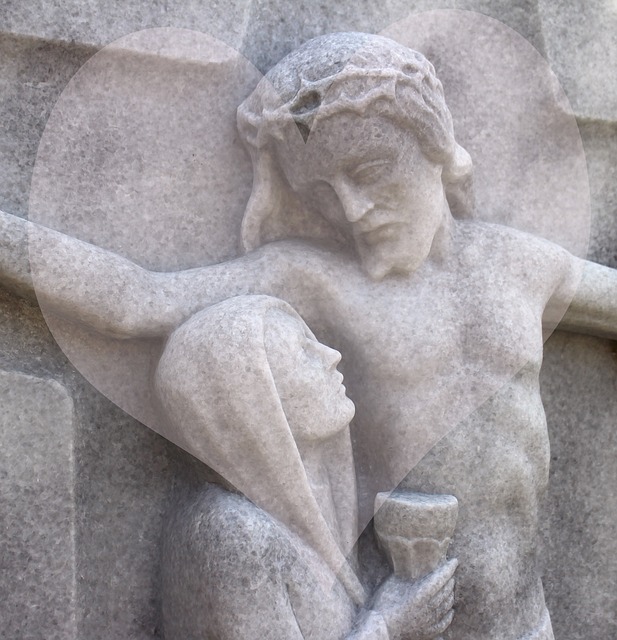
    In light of this, let us pause and reflect on the scene in our gospel reading today. Notice that John, unlike the other evangelists, places Mary right at the cross, not at a distance from it. Our instinctive reaction is to imagine what she felt watching her child suffer so. What mother would not suffer at such a moment, let alone the Blessed Mother? Despite the pain, despite the abandonment of nearly everyone else, Mary remained at his side. Over and above this consider her lifelong, steadfast faithfulness. The gospels make it clear: Mary is the only person to be with Jesus at every pivotal moment of his life from conception to death. She is his mother, but she is his disciple first. Her life is a testament to the advice she herself gave to the wedding stewards at Cana: Do whatever he tells you (John 2:5).

    Knowing that, her Son gives his mother more to do. When Jesus saw his mother and the disciple there whom he loved, he said to his mother, “Woman, behold, your son” Then he said to the disciple, “Behold, your mother.” (John 19:26). Note the high regard Jesus has for Mary. He speaks when he sees her; he speaks first to her; most importantly, he expands her role as mother to now include the ideal or Beloved Disciple. In the words of theologian Fr. Raymond Brown, this is Christ’s last-willed … act of empowerment that both reveals and makes come about a new relationship.”1

    That new relationship is Mary as mother of the Church, for Christ has raised her from being mother of the head to mother also of his Mystical Body. Under the inspiration of the Holy Spirit, the Church proclaims from ancient times that she was born from the wounded side of Christ as he slept the sleep of death upon the cross.2

    jesus-284515_640Mary understood this and, as in all things, obeyed her Lord. That is why in the first reading we find her with the Church – the disciples in the upper room – in prayer. Mary has the most marvelous intercessory role; obedient daughter of the Father, mother of his only Son, and spouse of the Holy Spirit. She is in the perfect position to intercede for the Church.

    Someone once said that the word ‘mother’ isn’t a noun as much as it’s a verb. So today, on the Memorial of the Blessed Virgin Mary, Mother of the Church, consider how Mary’s role from the beginning has been tomother’ people to God by being a model of prayer, discipleship, and unconditional love. And operating on the principle that we will never know how much our Mother loves us until we have children of our own, we must remember that Mary’s model of motherhood is meant to be imitated; we too are called to ‘mother’ people into the Church.

    If we don’t know where to start learning from her, begin with the rosary. From the joyful mysteries alone we learn humility, love of neighbor, poverty of spirit, obedience, and piety. Every major event in her life a mystery, every mystery with its own fruit, every fruit centered on Christ. That is the key; Mary teaches us through the rosary what she teaches through her life; that bringing people to the Church is nothing more or less than bringing them to her Son and allowing him to stir within them the flame of divine love which truly cannot be described but only experienced, and in which we are truly one.

    Mary, Mother of the Church, pray for us.

    Mass, June 1 2020

    1Brown, Fr. R.E., SS (1994). The Death of the Messiah: From Gethsemane to the Grave. New York: Bantam Doubleday Dell Publishing Group, Inc.. p 1021.

  • A Fragrant Aroma: Monday of Holy Week

    John 12:1-8

    Awhile after my father died, my mother asked if I would help her sort out his things. As I took some clothes out of his dresser it struck me; they still smelled like him. It was as if my father was right there. It took me several minutes to regain my composure.

    Scientists have known for years that the sense of smell is intimately tied to memory and emotion. In fact, smell is the only sense that works directly with the area of the brain that controls emotions. We’ve all experienced it; no matter how far away or far removed we are from a certain time, the aroma of something – perhaps a certain food, a perfume – can bring it all back again. It is if we are there.

    In the gospel we see how one of the sisters of Lazarus gave to their home a sense memory of our Lord: Mary took a liter of costly perfumed oil made from genuine aromatic nard and anointed the feet of Jesus and dried them with her hair; the house was filled with the fragrance of the oil (John 12:3).

    This is significant on many levels. First, it is the perfect counterbalance to the family’s recent experience at the tomb of Lazarus; the foul air of death is literally blown away by the fragrance of new life found in Christ. But second, this perfume is costly; the price of victory is high. As if she senses that his enemies are as near as Judas and plotting his demise, Mary anoints not the head of Christ the King but the feet of Christ the Servant which shall soon be pierced with nails and placed in a tomb. Finally, it may seem odd that Mary wipes away some of the perfume with her hair but I see in it a sign of her devotion; a way to identify herself with Christ and his sacrifice, personifying St. Paul’s meaning in 2 Corinthians when he said, we are a fragrance of Christ to God among those who are being saved and among those who are perishing (2 Corinthians 2:15).

    glass-4108085_640There is an ancient rabbinic saying that “the fragrance of a good perfume spreads from the bedroom to the dining room; so does a good name spread from one end of the world to the other.”1 As Mary filled her house and her hair with the fragrance of Christ, so may we fill the world and ourselves with his holy and glorious Name. And may be as untiring and devoted as she, willing to sacrifice whatever is costly to ourselves to do it. There is no greater identification with Christ than this, as St. Paul knew when he prayed that we may be imitators of God, as beloved children; and walk in love, just as Christ also loved you and gave Himself up for us, an offering and a sacrifice to God as a fragrant aroma (Ephesians 5:1-2).
    1Based on Ecclesiastes 7:1 and cited in Brown, R.E. (1966) The Anchor Bible: The Gospel According to John I-XII. New York: Doubleday & Company, Inc., p. 453.

  • Mother and Baby: The Solemnity of the Annunciation of the Lord

    Isaiah 7:10-14; 8:10; Psalm 40:7-11; Hebrews 10:4-10; Luke 1:26-38

    Everyone knows the bond between a mother and her baby is special and that there is nothing in the world quite like it. But recently I came across some research that taught me things about it I didn’t know and that gave me new perspectives on the Blessed Mother.

    First, there is a physical basis to the phenomenon scientists call the “maternal instinct,” or others know as “Mommy brain.” Others like my older son who as a young child once inspected the back of his mother’s head, searching for the eyes hidden there. He wasn’t far wrong. During pregnancy a woman’s brain actually changes; areas related to the protection and nurturing of her baby develop as never before. This is nature’s way of attuning a mother to the needs and well-being of her children.

    It was no different for the Blessed Mother. From the moment the Holy Spirit came upon her and the power of the Most High overshadowed her (Luke 1:35), Mary began to develop the maternal instinct toward God himself. She alone among all women was to know the singular joy and tremendous responsibility of nurturing the Son of God; of protecting him from and preparing him for the world he came to save; of feeding him who thirsted for souls; and of providing a home for him who sought nowhere to lay his head except upon her breast, first as a helpless babe and then as a lifeless son taken down from the cross.

    It was from the cross that Christ raised Mary’s maternal instinct from the natural to the spiritual. With his words, Woman, behold your son (John 19:26) he gave her motherhood of his disciples, of all those like her who hear the word of God and do it (Luke 11:28). He made the bond complete when he told the Beloved Disciple, Behold, your mother (John 19:27), for in imitation of her Son we too have nowhere else to lay our heads. As her spiritual children we trust her, as he did, to see to our well-being and protection.

    The second thing I learned about the bond between mothers and babies is that children learn to recognize their mother’s voice in the womb and even prefer the language she speaks to any other they hear. By the time he was born, Mary’s voice was already very familiar to Jesus. And of course he prefers her language, for she speaks the language of total and selfless love. This is why we ask the Blessed Mother to speak to Jesus on our behalf; hers is the voice he heard from the time he was old enough to hear anything at all, the voice he could not refuse at Cana. Once again in imitation of him, Mary’s is the voice we too must not refuse, that says to us what it said to the servers at the wedding feast at Cana: Do whatever he tells you (John 2:5).

    Finally, I learned that perhaps the most important aspect of the bond between mother and baby is responsiveness. From the womb, mothers instinctively respond to the needs of their babies, giving from their own bodies whatever they have to give. This continues into childhood. Studies have shown that children thrive when their mothers respond to them in ways that foster growth and security; these especially include support and encouragement in difficult or stressful times. As Scripture makes clear, our Lord was no stranger to difficulty or stress, from his birth in a stable and flight into Egypt to his suffering and death on the cross. But Scripture also makes clear that Mary was with him at each of those times; in fact, she is the only one in all of Scripture to be present from his conception to his ascension. As such, Mary is the epitome of the supporting and encouraging mother.

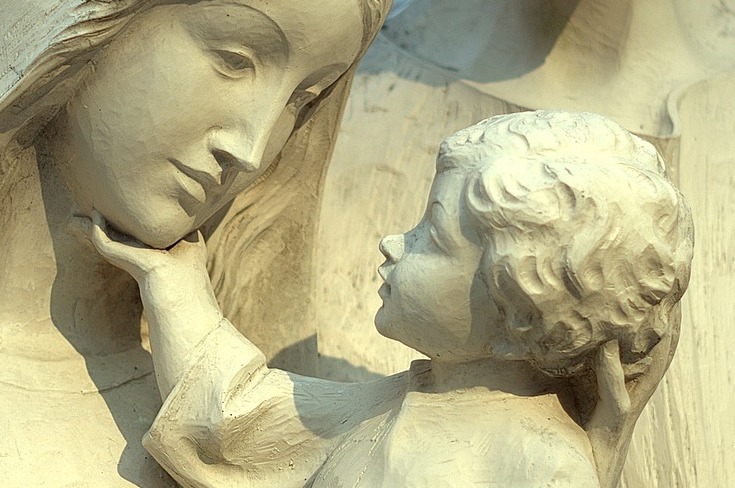
    mother and baby

    One phrase in the readings perfectly summarizes the bond between Mary and her Son: I come to do your will (Psalm 40:8-9; Hebrews 10:7). For Mary this meant motherhood born of a love for God so deep that she, as Augustine once said, would conceive Christ in her heart before her womb. For Jesus it meant the Incarnation; a love so deep that he would take his own creation’s flesh and offer it back to his Father for the redemption of all who would accept him. Their obedience sets the pattern for us for we too are called to the same kind of obedience; to conceive Christ in our hearts; to offer to the Father the gift of ourselves in total dedication to Him; to love as Jesus and Mary loved. Without grace this is not possible, but this is the great hope of the Solemnity of the Annunciation, when the angel reminds us as he told the Fullness of Grace: nothing will be impossible for God (Luke 1:37).

  • Holy and Immaculate: Memorial of Our Lady of Lourdes

    Isaiah 66:10-14c; John 2:1-11

    Between 1830 and 1858 the Blessed Mother made three separate visits to France. First in Paris to Sr. Catherine Laboure, whence came the Miraculous Medal and the prayer, “Mary, conceived without sin, pray for us who have recourse to thee.” Next she appeared to two shepherd children near La Salette in the French Alps, where she pleaded for a return to prayer and the Sacraments. Finally and most famously she appeared 18 times to the young teenager Marie-Bernarde Soubirous, also known as Bernadette, near Lourdes in the foothills of the Pyrenees.

    In all these we see that Mary appeared not to the powerful or influential but to the lowly – mostly, to children. Simple, honest, and unsophisticated, they were not interested in either notoriety or personal gain. Indeed Bernadette in her typical, straightforward fashion said, “When I’m dead they’ll come and touch holy pictures and rosaries to me, and all the while I’ll be getting boiled on a grill in purgatory.” Hardly the words of someone looking to sell the book and movie rights.

    Not that she couldn’t have used the money. Those such as Bernadette were not only innocents but familiar with suffering, people who understood poverty of spirit and body. In fact, she first met Our Lady while gathering sticks so that her family, mostly children who would not survive to adulthood, could have some heat in what they called home but everyone else called a musty, abandoned prison block.

    But as Mary knows, home is where the heart is and the heart of the Soubirous family was faith in Christ. Although the prosperity and wealth of nations spoken of in the first reading (Isaiah 66:12) eluded them, spiritual wealth was theirs in abundance. On hearing of the mystical vision in the grotto, Bernadette’s father said to his family, “Let us pray.” He knew that, whether a heavenly vision or one from the lower depths, their only recourse was to fall to their knees. Perhaps this is why Bernadette was chosen; she like Mary was raised from birth to understand that true wealth, true prosperity, comes only from the hand of God.

    This was the same God who said, As a mother comforts her child, so will I comfort you (Isaiah 66:13), who gave Bernadette visions of his mother, and who defined comfort in her words, “I do not promise to make you happy in this world but in the next.” It is true that Bernadette, who suffered terrible pain in her body in the later years of her short life, never sought the healing waters that Christ gave the world in that little grotto. She knew that Mary had given her the only promise of happiness that means anything: Eternal union with God. This is why Mary constantly urges meditation on the gospel of Christ through the rosary, why she begs the conversion of sinners, and especially why she asks that chapels be built, for there her Son dwells in the complete sacramental fullness of his Body, Blood, Soul, and Divinity.

    virgin-1615390_1920At every apparition Mary is highly honored and rightly so for she is as she said, the Immaculate Conception. But the honor we give her goes far beyond her identity to the two-fold reality behind it. First, Mary points us to Christ. Through the grace bestowed on her by the will of God and her total abandonment to it, Mary has perfectly heeded her own advice: Do whatever he tells you (John 2:5). In this, she is the first and best example of a Christian. Second, Mary points to our own destiny. Like her, we are asked to abandon our will to his, be perfect as the Father is perfect (Matthew 5:28), and so be presented to him holy and immaculate (Colossians 1:22). For this we need neither the water of Lourdes nor the water turned to wine, but that which wells up to eternal life (John 4:14), our Lord Jesus Christ, by whose love wine becomes the blood poured out for the forgiveness of sins (Matthew 26:28).

  • Living Stones: The Feast of the Holy Family

    Sirach 3:2-6, 12-14; Colossians 3:12-17; Matthew 2:13-15,19-23

    Recently on Catholic radio I heard of a church called the basilica of the Holy Family. It stands in downtown Barcelona and, from the images I’ve seen, is as breathtaking as it is hard to describe. I urge you to look up the pictures and videos online and see this majestic, cavernous, awe-inspiring structure for yourself.

    There isn’t time to talk about the brilliant architects, artists, and builders who have contributed their time and energy to the project but a couple of events deserve mention. In 2010, Pope Benedict XVI consecrated the basilica and in 2015 it was proclaimed nearly complete. What makes these events noteworthy? Three things: First, the planned completion date is 2026; second, the permit to begin construction wasn’t granted until 2019; and third, the building permit was applied for in 1885.

    That’s right, 1885. Actually, ground was broken on the feast of St. Joseph, March 19 1882 and construction has continued – off and on – since then. No one planned for Holy Family to take that long. Various things have gotten in the way – like the Spanish Civil War. Needless to say, the basilica is a work in progress.

    This is important to remember because it says a few things that touch on the idea of family and its holiness.

    First, good things can be a long time in the making. Holy Family basilica has taken over 130 years already and its scheduled completion date may come and go. Clearly, hitting the date is not the priority; the priority is that things are done well. The same is true for the holiness of the family. Parents are charged with the responsibility of seeing that their children grow in holiness; to do that well they must be holy themselves. Pope St. John Paul II called his childhood home his first seminary. His father was not afraid to pray in front of his children or to live a life in service of God and his neighbor; he did so every day. Obviously this is a long, slow process, but like Holy Family basilica a holy family is built bit by bit, stone by stone, day after day.

    Second, things don’t always go according to plan. As the history of Holy Family basilica shows, we make plans but life happens. Few knew this better than St. Joseph. He had plans: Wed Mary of Nazareth, have a family, and work to provide for them. As he came to learn, God had another plan: Be father of the Holy Family. Think of the tremendous responsibility this laid on his shoulders: The very life of the Savior, the Son of the Most High, was in his hands. God was depending on him to keep that child safe from people like Herod. Although fathers and mothers of our own holy families do not have exactly this same responsibility, theirs is still an awesome task. God lays on their shoulders the task of properly raising their children, of keeping them safe from whatever life throws at them and teaching them as Joseph and Mary taught our Lord in his human nature how to get along in the world, what is important and what isn’t, what it means to be married, what happiness is and how and where it is found. As every parent knows, this makes building a basilica seem easy by comparison! But the blueprint for such holiness exists; St. Paul gives it when he urges us to put on heartfelt compassion, kindness, humility, gentleness, and patience, bearing with one another and forgiving one another (Colossians 3:12-13).

    gaudi-2419961_640Finally, the basilica of the Holy Family teaches us that joy is not necessarily the destination but the journey. Every year, millions of people take the time to tour the basilica of the Holy Family in Barcelona. Whether they are watching as the builders add to its structure, marveling as artisans craft the artwork that adorns it, or attending the Masses offered there, the faithful are uplifted and sanctified even though the basilica is a work in progress. The same is true for our families, for they too are works in progress. Every day brings the happiness and sorrow, the cataclysms and quiet moments through which families progress either closer to God or further away from him. Let us pray that our families take every moment of life and find the joy in it; for each moment, whatever it holds, is an opportunity given to us by Almighty God to build up our own domestic Church in virtue, crafting ourselves more and more into what we are called to be – living stones built upon the cornerstone that is Christ.