Tag: Martyrs

  • The Right Barns, Full

    The Right Barns, Full

    Memorial of Sts. John de Brébeuf and Isaac Jogues, Priests, and Companions, Martyrs

    Ephesians 2:1-10; Luke 12:13-21

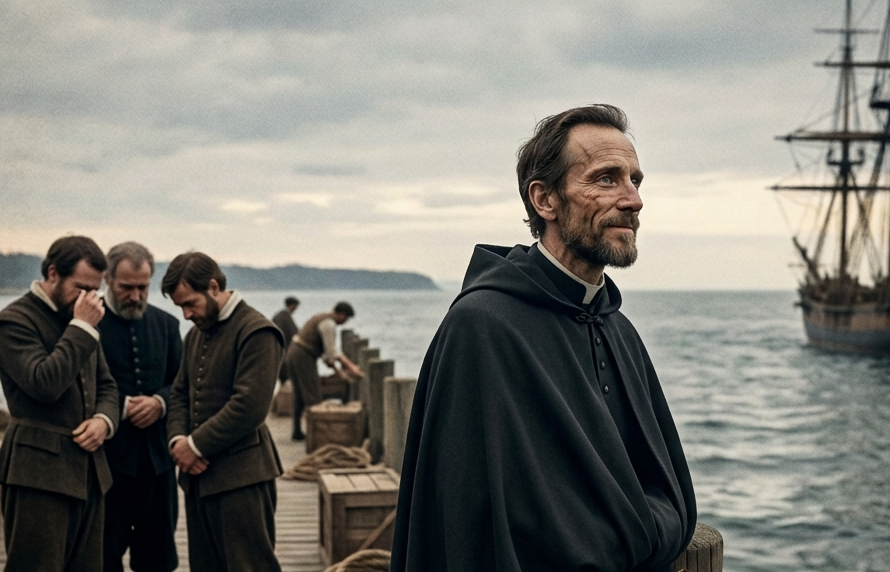
    Suppose for a moment that we were in 17th century France, meeting with Fr. Isaac Jogues. He stands before us, emaciated and worn out, with the fingers he used to consecrate the Eucharist mutilated. He tells us of his mission among the Mohawk people of North America – how they misunderstood, abused, and tortured him and his companions – and then of his escape and safe return to France.

    How would we react to hear him say next that he couldn’t wait to get back to America and be with the Mohawks once again?

    My guess is, at the very least, we’d be sad and a little surprised.

    Those close to him certainly were. His family begged him to stay. His superiors offered him a comfortable teaching position. The French people saw him as a hero, a living martyr, and wanted to honor him. The queen of Austria even came to see him, and wept as she kissed his mutilated hands.

    In terms of today’s Gospel, we might think that Fr. Jogues had every reason to consider his barn “full.” He had served God faithfully and suffered terribly. Now he had safety, respect, and a measure of physical comfort. Naturally, those who loved him wanted him to stay in France, safe and sound. Why risk everything by returning to the very people who had tortured him?

    But there are barns and there are barns. Father knew that the earthly treasures his friends and family wanted him to enjoy — health, respect, and safety — were temporary and easily lost. He had discovered something far more valuable: the riches of Christ, which he longed to share with others.

    St. Paul reminds us today that we are saved by grace, created in Christ Jesus for good works. Father Jogues wasn’t trying to earn God’s love through suffering. He had received that love, and he was willing to spend his life sharing it with others.

    In fact, he was eager to. People noted that Father was restless to continue evangelizing the people who tortured him. Once Pope Urban VIII gave him a special dispensation to use the other fingers of his hands for consecrations, his joy was complete and he set sail for America.

    Although suffering and death did lay ahead, Father remained joyful and resolute. As he knew, true joy isn’t the absence of suffering but the presence of a transcendent purpose. His life shows us clearly that only when we stop living for self-preservation and begin living for what matters to God can we most truly be at peace.

    So, on this memorial of the martyrs St. Isaac Jogues and his companions, let us ask ourselves: What is my barn filled with? Is it concern about financial security, fitting in with others, control, or comfort? Do I let those concerns determine whether I am at peace or joyful?

    And let us ask Almighty God for the wisdom to recognize that our lives, too, belong to him, and that none of us knows how much time we have. May we learn to see the daily trials of our own lives – from the frustration of traffic tie-ups to the profound suffering that can accompany serious illness – not merely as obstacles to our peace, but as opportunities to surrender our pride, practice patience, and draw nearer to the heart of Christ.

    St. Isaac Jogues, pray for us.

    —
  • Trapped Between Two Worlds

    Trapped Between Two Worlds

    The Passion of John the Baptist

    Jeremiah 1:17-19; Mark 6:17-29

    There’s something about someone like John the Baptist who speaks the truth to your heart. It’s as if their words grab you and won’t let you go. If you’ve been living the truth, their words are affirming. But if not, they leave you, like Herod, perplexed.

    And the original Greek word is even stronger. Herod wasn’t simply confused; he was trapped, at a loss, caught in a kind of gridlock – mental and emotional.

    Herod knew John was telling the truth. And he liked listening to him. He liked it so much that he protected John.

    But still, he didn’t change.

    It can happen to any of us. People can hear the truth, admire it, even be deeply moved by it — and still not surrender to it.

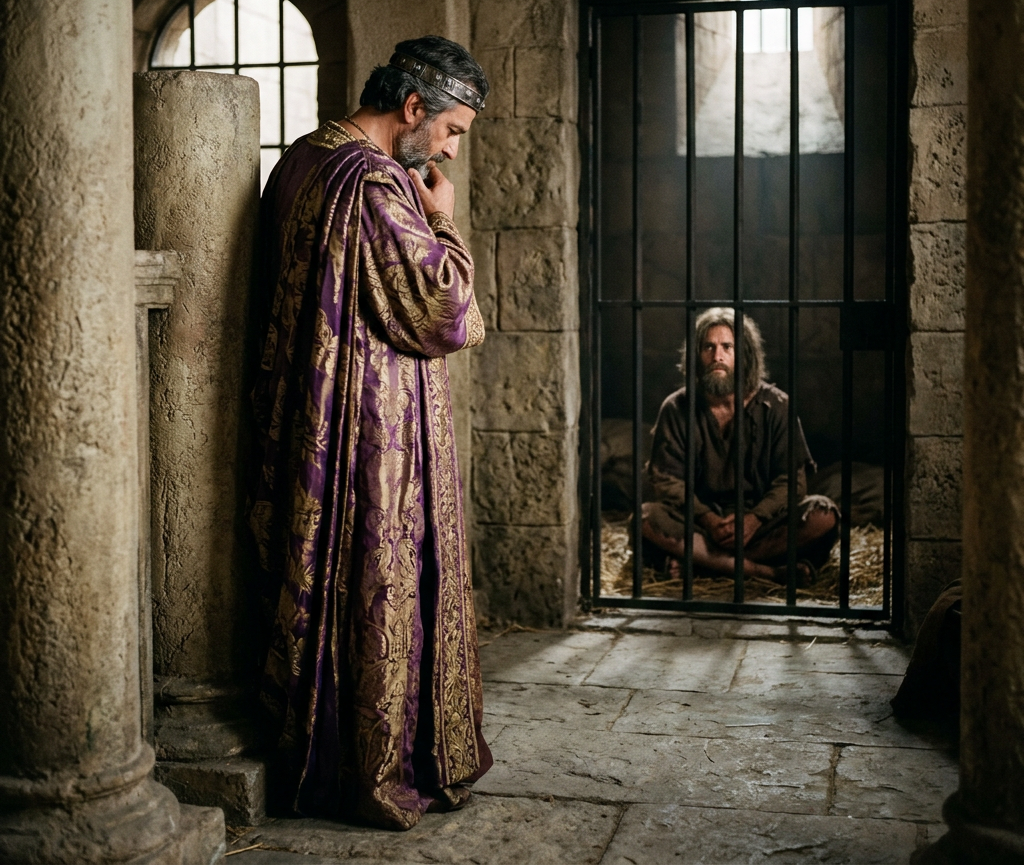
    Herod knew what he was doing was wrong and needed to change. But still, he put John in prison. In that mental gridlock of his, he was trapped between two worlds; wanting the truth close enough to hear, but far enough away to keep it from changing him.

    Then came the tipping point. The party. The dance of the daughter. Pride, social pressure, fear of what others might think. And all of a sudden, it was time to decide: Keep the truth close, or kill it?

    We don’t have to ask; we know the answer. 

    The question is, are we ever like that?

    Every day, God’s truth speaks to us: there are relationships that need healing, resentments to let go of, habits in need of changing. We may or may not want to listen, but God keeps speaking.

    So, what am I going to do about it?

    We know God doesn’t speak the truth to make us feel guilty. He does it to set us free.

    And we know that God is near and will do the heavy lifting. He said it through Jeremiah: “Do not be crushed… I am with you to deliver you.” Not, “You’re strong enough to do this by yourself,” but “I am with you to deliver you.”

    Even so, we have to do more than just like to listen; we must want to be delivered. We must tip the scale before temptations tip it for us.

    So perhaps today, instead of simply asking, “What am I doing wrong,” we might ask, “Where has God’s truth already grabbed hold of me? What has He been saying to me again and again? And am I merely listening to Him, or am I finally ready to let Him change me?”

    —

  • Labors of Love

    Labors of Love

    Feast of St. Lawrence, Deacon and Martyr

    2 Corinthians 9:6-10; John 12:24-26

    Recently, I was looking back on all the things I did as a young man — raising three kids, working two jobs, studying, going to school — and I wondered where I found the energy. Sure I was young, and that matters, but what also matters is that these things were a labor of love. I wasn’t doing them for myself; I was doing them to provide for my family.

    They weren’t small things, and they required sacrifice. But love made them seem small, and if they were a sacrifice, they were joyfully done. Looking at what came from them— especially my kids, and seeing how they have grown and are making their way in life — I can say that those labors of love were very much worth it.

    I couldn’t help but think of that as I read today’s passage from St. Paul. If our self-giving becomes a labor of love for Christ, then his grace becomes our strength. And as St. Paul says, the fruits of our labor will be multiplied.

    And that multiplication isn’t simply a reward. It’s a participation in divine generosity. God doesn’t merely return to us what we give; He multiplies it.

    Think about a parent raising their children. We pour love into them, and then, if all goes well, they learn to love others in the same way. We benefit, they benefit, and everyone they love benefits. The harvest of love expands.

    That’s the mystery Jesus describes in the Gospel: “Unless a grain of wheat falls to the ground and dies, it remains just a grain of wheat. But if it dies, it produces much fruit.”

    Certainly, love requires dying to self. But when all is said and done, is that what we remember most? Probably not. Why? Because the love we imitate — the love of God — gives by its very nature without counting the cost. The grain of wheat doesn’t stop to calculate what it is giving up. It does what is in its nature to do: it falls, it dies, and eventually it bears fruit.

    Often, we don’t see the fruit in that moment; we don’t see what our sacrifices are accomplishing. We can’t “see” the child being formed, the marriage being made stronger, the family being held together, or the faith being passed on. It might be years until we see the fruit, but when we do we realize that God’s grace multiplied what our love made possible. And we rejoice.

    The example of St. Lawrence shows us that this is true even when the giving is literally unto death. Most of us know the famous tradition about his martyrdom: that as he was being burned on the gridiron, he joked about being done on that side. That image endures for a reason; Lawrence wasn’t just a man enduring suffering, he was a man facing death with joy.

    That’s not stoicism. That’s love.

    St. Lawrence had already poured himself out for Christ and for the poor. The fire was simply the final act of a life that had already become a gift.

    While none of us are facing Lawrence’s gridiron, we all know what it means to feel exhausted or overwhelmed, to wonder where we’re going to find the energy to keep giving.

    Christ gives us the answer today. It isn’t simply more discipline or willpower. It’s love; love oriented toward Christ, animated by his grace, and willing to trust him to bear fruit in ways we may not see for a long time.

    St. Lawrence didn’t count the cost before he walked into the fire. He simply loved. More importantly, he knew that long before he ever loved Christ, Christ loved him. Long before he gave himself to Christ, Christ gave himself for him. And he knew his own labors of love were a response to the love Christ had already poured into his life.

    So today, let’s remember that the same is true for us. Each of us is Christ’s unique and precious labor of love. In every moment of our own labors – in the sacrifice, in the exhaustion, in those moments we wonder if what we’re doing will bear any fruit – Jesus is there; loving, consoling, and rejoicing in the harvest. Just as he did with St. Lawrence.

    St. Lawrence, pray for us.

  • How Lows Become Highs: Memorial of Pope St. Martin I, Martyr

    How Lows Become Highs: Memorial of Pope St. Martin I, Martyr

    2 Timothy 2:8-13; 3:10-12

    In C.S. Lewis’s brilliant work The Screwtape Letters, the senior devil (Screwtape) teaches his apprentice what he calls the “Law of Undulation.” In a nutshell, this is the idea that people experience highs and lows in their relationship with God. The “highs” are those peak times when we feel especially close to God, while the “lows,” are the times when we feel dry, uninspired, and God seems far away. The “wise” demon waits out the highs and strikes during the lows.

    Of course, the genius of this is that we can all relate to it. Think back on times, perhaps a Mass or contemplative moment, when you felt a spiritual high. It felt as if God was all around you; a time of almost indescribable joy. Then think of those other times, the lows; you felt alone, your prayers dry, your faith stagnant.

    In a sense, this is part of what it means to be human. In friendship, marriage, and work, there are times we feel close to people or the job and times we don’t. It’s only natural that in our relationship with God we would experience the same thing. But as Lewis notes, sometimes those with evil intent manipulate this law to drive us away from God.

    Such was the case with Pope Martin I. His reign came at a tumultuous time; it was the 7th century, and for over 600 years people had struggled to understand the persons and natures of Christ. Was he only human? Only divine? A mixture? Did he have a human will, a divine will, or both? There were as many opinions as there were people.

    Then as now, some opinions mattered more than others, especially when it was the opinion of the highest civil power – the Emperor. Unfortunately, his opinion was heretical. Like many inside the Church, he believed that Jesus did not have a human will, or that if he did it was completely absorbed into his divine will like a drop of water in the ocean. Pope Martin disagreed, publicly and in council, holding the Church to the truth we profess to this day, that Christ had both a human and a divine will.

    Angered, the Emperor had the pope hauled to Constantinople and ordered to endorse the “official” position or face a charge of treason. When Martin refused to obey, he was imprisoned and starved for several weeks. Again he was ordered to obey, and again he refused. When it became clear that the pope would never agree, he was sentenced to death for treason. Stripped of most of his clothing, he was mercilessly whipped, then dragged in chains through the streets. The abuse he suffered was so horrific that even the residents of Constantinople, accustomed to violence, were disgusted. Eventually the sentence was commuted and Martin was exiled, where he was neglected and starved.

    When we think of the Holy Father’s situation, it seems ripe for the kind of spiritual low that demons would relish: Cut off from his flock; in prison; in chains; beaten; humiliated; vilified; starved; exiled; neglected. Who would blame him for turning inward, giving up, and spiraling down? Yet his letters written from prison and exile read like someone moving toward a spiritual high. The pope prayed not for himself but for his flock, especially the heretics, that they would repent and return to the one true faith. When he did write of himself, it wasn’t to bemoan his own suffering but to glorify God in it; he spoke of his abandonment to the will and mercy of God, and his hope that Christ would come soon to bring him home. Finally, after two years, Martin was delivered from the starvation and neglect of exile. He is the last pope (to date) to die a martyr.

    In the first reading St. Paul wrote to Timothy, If we have died with him we shall also live with him; if we persevere we shall also reign with him (2 Timothy 11-12). This reminds us not only of the glorious destiny of Pope St. Martin I, but of the need for us to pray for and practice the virtues of fortitude and perseverance. Both the spiritual highs and lows are gifts from God that are meant to be used. Although we want to hold onto the highs and treasure them, they provide the grace we need to look beyond ourselves and see how we might strengthen others, and to look within ourselves to see where we need strength, where God is working in our lives, and where he may be calling us. And if God feeds our virtues in the highs, he tests them in our lows. But again, as St. Martin shows, we don’t run from those times; rather, we persevere through them by focusing not on ourselves but on others and not by complaining about our suffering but by uniting it to the suffering of Christ for the sake of his body, the Church. To paraphrase St. Martin, throughout the highs and lows, remember that Christ is at hand, and hope in His mercy.

    Pope St. Martin I, pray for us.

  • Out of Blindness: Feast of St. Maria Goretti

    Out of Blindness: Feast of St. Maria Goretti

    1 Corinthians 6:13c-15a, 17-20; John 12:24-26

    The priest, psychologist, and spiritual writer Henri Nouwen once said that there are two types of spiritual loneliness, each a kind of blindness. The first comes from being out of touch with God; this is the blindness of too little light. The second is just the opposite; it is the blindness of too much light, or an intimacy with God that exceeds our thoughts and feelings. Both kinds of loneliness, and their cures, are hinted at in our readings and in the lives of St. Maria Goretti and her neighbor, Alessandro Serenelli.

    Luigi Goretti and Giovanni Serenelli partnered as sharecroppers on an estate just south of Rome in the early 20th century. Their families occupied separate flats but shared a kitchen. They had little else in common. The Gorettis were pious and hard-working, their daughter Maria charming and of unwavering faith. The Serenellis were religiously indifferent and struggled with alcoholism, mental illness, and physical abuse. Their son Alessandro, 8 years Maria’s senior, was sullen, withdrawn, and mired in the pornography of the time.

    Fr. Nouwen wrote that the loneliness of being out of touch with God leaves us anxiously searching for something or someone to give us a sense of belonging and home. In his loneliness, Alessandro could have reached out in friendship to Maria but he preferred the darkness, blind to the truth spoken by St. Paul that as members of Christ and temples of the Holy Spirit, the body is not for immorality (1 Corinthians 6:13). To him, Maria was not a person to relate to but a thing to use. On a hot July afternoon in 1902 the 20 year-old finally cornered the girl and tried to force himself upon her. Repeatedly Maria cried, “No! It is a sin! It is not God’s will! You will go to hell!” Angered and frustrated by her resistance, Alessandro stabbed her 14 times with a metal file, then fled. For 20 hours Maria suffered from those wounds until she died, just three months before her 12th birthday.

    The second loneliness mentioned by Fr. Nouwen is the blindness of too much light; not a poverty of God’s presence but of our ability to relate to it. This requires love; as we fail to love we feel without God, though he is all around. In the gospel Jesus says, unless a grain of wheat falls to the ground and dies, it remains just a grain – or more literally – it remains alone (John 12:24). Christ doesn’t want us to remain alone; he wants us to remain in him (John 15:4) by loving one another as he has loved us (John 15:12), even to the death.

    Maria Goretti knew this. While she did not care for Alessandro the way he wanted, there is no greater love than to lay down your life for a friend (John 15:13) and she was his friend to the end. She resisted his advances not only for her own sake but also for his, keeping him from sinning against his own body as well as hers. She reminded him of the primacy of God’s will and warned him of the eternal consequences of his actions. Ultimately she showed him the importance of the virtue of chastity by martyring herself for it and, most Christ-like of all, she died forgiving him to the point of praying that one day he would be with her in Paradise. We should all have such a friend.

    This is the love that bears fruit and eventually did in the life of Alessandro Serenelli. Years into his incarceration, little Maria came to him in a dream and once again made clear that she forgave him and was his intercessor before our Heavenly Father. From that moment, the grace of conversion worked within him; he became a model prisoner, was released early, begged forgiveness of Maria’s mother (which was granted), and worked in a monastery for the rest of his life, devoted to the little-girl-now-Saint who he knew was waiting and praying for him.

    You and I know both kinds of blindness from our own experience. Perhaps we have at times allowed ourselves to drift away from God, to remain comfortable in the darkness of a particular sin or sinful way of life; to seek gratification in places and things that can never satisfy us. It is a true friend who has the courage and love to tell us, “No. It is a sin. It is against God’s will.” And what a great blessing to be that person for someone else; to help strengthen the graces of faith and hope within them, as Maria Goretti did. And maybe we have also suffered the blindness of too much light; times when we knew God was calling us deeper but we had grown comfortable where we were; times when when we took him and his merciful love for granted; times when we spoke of our great love for Christ but then ignored him, needy on the street. Again, it is a true friend like Maria Goretti who is willing to model for us the virtuous love that leads us out of that blindness, the love to which Christ calls us all – the love that glorifies God in our body (1 Corinthians 6:20) and preserves our life for all eternity.

    St. Maria Goretti, pray for us.

  • Truth Beyond the World: The Feast of St. George

    Revelation 21:5-7; Luke 9:23-26

    When I was a boy my favorite comic book was The Amazing Spiderman. Every month I haunted the drugstore waiting for the next issue. When it finally arrived I’d read it over and over again. It was great fun imagining myself as the quirky yet powerful superhero.

    Although comic books date back only to the 1930’s and 40’s, the kids of bygone eras had something every bit as exciting: The Golden Legend, a classic of the faith from the 13th century, which contained in great and often colorful detail the dashing exploits of the heroes of ancient Christianity.

    Among the most dashing was St. George. Like most saints of the early Church, little is known. He appears to have been a young soldier martyred in Palestine around the year 304. What we do know is that there must have been something especially appealing about him, for he quickly became legendary. The Golden Legend includes a few stories about him, the most familiar being the dragon. Passing through a foreign kingdom and coming upon a princess about to be devoured by a dragon, George slayed the dragon and converted the kingdom to Christ. There is also the amazing story of his martyrdom. Arrested during a persecution of Christians, George was handed over to the torturers. Despite their best attempts, which included beating him literally to pieces, crushing him beneath heavy spiked wheels, and submerging him in molten lead, George miraculously reassembled unharmed. Amazed and inspired by this, the governor’s own wife converted to the faith. Infuriated, he had her executed and George finally martyred by beheading.

    But that’s not the end of the story. If he was powerful in life, St. George was even more so in death. The Legend tells of victories won by soldiers carrying his relics into battle, of healings at his tomb by those placing their hand in it, and of healings of those who touched the chains he wore in prison. His tomb became a place of pilgrimage and churches bearing his name were built as far away as Italy. Little wonder that England, whose Crusaders brought home his story, chose him as its national patron, that a kingdom in the Caucasus mountains was named Georgia in his honor, or that to this day Palestinian Muslims, Jews, and Christians would all honor him and ask his intercession for those suffering from various illnesses. Clearly, St. George became a man of mythic proportions.

    Unfortunately many stumble on the word “myth.” As early as the 5th century, the stories of St. George were dismissed as fantasy. Like some ancient, amazing Spiderman, he was too large for life; his adventures unreal and unrealistic; the product of uneducated, unsophisticated people. A fairy tale.

    They completely miss the point, as Chesterton knew when he said, “Fairy tales do not tell children the dragons exist. Children already know that dragons exist. Fairy tales tell children the dragons can be killed.” Or, to paraphrase the French philosopher Jean-Paul Ricœur, the purpose of myths is not to tell the truth about the world but the truth beyond it. The deeper truth about St. George is written between the lines of the stories, not within them. What matters is not that St. George slayed a dragon but that, in committing to follow Christ, he received the grace to slay the dragons in his own life. Similarly, it doesn’t matter whether he was actually beaten to pieces, crushed by wheels, submerged in molten lead, and miraculously reassembled; the truth is that St. George loved Christ and did what he asked in the gospel; he took up his cross daily and followed him (Luke 9:23), saving his life by quite literally losing it.

    statue-1394654_1920Of course these truths are not reserved to St. George, they are for all of us. In Revelation Christ says, Behold, I make all things new (Revelation 21:5); for that to mean anything, we must ask for the grace to find and slay our own dragons. We all have them; they are the sins we allow to linger, the attachments we find hardest to put aside, and the fear, self-doubt, and self-condemnation that keep us from drawing nearer to God. The fear is real because the pain is real; it is the pain of having our pride beaten to pieces, allowing our bodies to be crushed by illness or infirmity, and submerging ourselves in the depths of humility. Nevertheless, the truth is that if we allow the power of God to work within us, we will experience what even the legend of St. George could never imagine: The joy of being reassembled into the person that Christ has called us from all eternity to be.

    St. George, pray for us.

  • The Song of the Dove: Feast of Saint Stephen

    Acts 6:8-10; 7:54-59; Matthew 10:17-22

    Of all the customs that have ever arisen during the celebration of the Twelve Days of Christmas, perhaps the strangest occurred in the 18th and 19th centuries. Beginning on the Feast of Stephen, young boys in Southern France, Great Britain, and Ireland would hunt and kill a bird; specifically a wren, then display it and parade it around town asking for money.

    It’s hard to understand how this bizarre ritual started or why it was done, let alone how it could continue for two hundred years, but a good dose of superstition was probably involved. In certain places the wren was considered symbolic of priesthood or prophecy. An old Irish word for wren meant “bird of prophecy,” and some Irishmen associated it with a type of pagan priest who foretold the future. Although we have no idea what the poor little bird was supposedly prophesying, one thing is known: The wrens’ song is very loud; allegedly ten times louder than other birds their size. Who knows; perhaps the boys thought they were doing their town a favor.

    In the reading from Acts, the members of the local synagogue may have thought that they were doing their town a favor when they silenced Stephen. But his was the song of the Dove, not the wren. Luke says that Stephen was filled with the Holy Spirit; as Jesus made clear in the gospel, His wisdom cannot be overcome. Like Jesus, the only way to try and silence Stephen was to kill him; it is no coincidence that Luke patterns Stephen’s passion and death after that of Christ. For example, in Luke Jesus tells the Sanhedrin before he dies that from this time on the Son of Man will be seated at the right hand of the power of God (Luke 2:69); here, Luke has Stephen say Behold, I see the heavens opened and the Son of Man standing at the right hand of God (Acts 7:56).

    snow wrenLike the mysterious sacrifice of the wren, this may leave us curious. Why does the Church take the first day after Christmas to remember the first martyr? The answer lies precisely in the similarity of Stephen’s passion and death to Christ’s. Christmas is the celebration of the birth of Jesus; the same Jesus who came not to be served but to serve and to give his life as a ransom for many (Mark 10:45). It was in the giving of his life that Christ most profoundly served, for only by the perfect sacrifice of himself could his disciples have hope of being born into eternal life. Thus with Stephen; he could most greatly honor his Savior by imitating him in life even if that meant dying, that he might be born into eternal life with Christ.

    It might seem odd for the Church to see death as the way to honor life; after all, if Church members die, how can the Church survive? That brings up another fact about the wren. Although winter can devastate its population, the bird is extremely hardy; it always finds a way to survive. What is true for the wren is doubly true of the Dove; those who have been graced to speak with the power of the Holy Spirit have been hunted, killed, and displayed for over two thousand years; still, the Church continues to find ways not only to survive but to thrive. In fact, it is the irony of man and the glory of the Holy Spirit that the martyrdom of Stephen gave rise to the greatest come back in Church history. Notice near the end of the first reading, Luke tells us that the witnesses laid down their cloaks at the feet of a young man named Saul (Acts 7:58). Saul, the same man who stood silently by at the death of the first martyr, in time became Paul, the loudest and hardiest wren of all.

    St. Stephen, pray for us.

  • Viva, Cristo Rey: Blessed Miguel Pro

    Daniel 1:1-6, 8-20; Luke 21:1-4

    In biblical studies, as in life, things aren’t always what they seem. For example, some books of the bible seem like history; they mention real historical people and places and the situations they describe seem real enough. However, clues such as language and historical inaccuracies show that the author had another purpose in mind; he is speaking symbolically.

    Thus it is with the book of Daniel. Scholars tell us that the symbolism running through its stories points to two particularly strong themes: The ability of the Jews to thrive in a Gentile world and the importance of remaining true to the traditions of the faith.

    Both themes appear in Daniel and the gospel according to Luke. By successfully bargaining with the Gentile authorities about their diet, four young Hebrew men were able to remain true to their religious identity. Not only that, when the king discovered that their wisdom and understanding far surpassed that of his own people, these men, who it seemed were the conquered, were in fact conquerors.

    These themes also run through the ministry of Blessed Miguel Pro. Born in Mexico, Pro was sent abroad as a seminarian and ordained a Jesuit priest in Belgium in 1925. Finding that he could not thrive abroad due to stomach ailments that nearly killed him, Father was returned to Mexico, despite the great persecution of Catholics currently underway.

    This might seem like the worst thing for an ailing priest, but things aren’t always what they seem. In fact, his ministry to the people of Mexico restored Father’s health. Like Christ and the saints, his food was to do the will of the One who sent him, and he greatly delighted in doing God’s will right under the authorities’ noses. A master of disguise, Father was never what he seemed. He ministered in prisons posing as a policeman; in posh neighborhoods dressed as a rich man; in slums dressed as a beggar. Hiding in plain sight, he taught, gave Communion, said Mass, absolved sins, confirmed the faithful, and prayed over the dead. Father Miguel Pro, like the widow in the gospel, seemed to have almost nothing, but in reality had everything, and freely gave it. He who seemed to be conquered was the conqueror.

    miguel proEventually, Father was caught, imprisoned on a false charge and on the morning of November 23rd 1927 faced a firing squad. Even here, he was a conqueror. Before the cameras and all assembled, he forgave and blessed his persecutors, held out his arms in the shape of the cross and shouted “Viva, Cristo Rey (Long live Christ, the King)!” With that, Father Miguel Pro died.

    The government published a photograph of his execution, believing that it would frighten Catholics into submission. Once again, things were not what they seemed. Father Pro, arms outstretched like a cross, displayed such Christ-like strength, such fearlessness in the face of unjust persecution, that the photograph and Father’s last words became the symbols around which Catholics rallied to resist the repression even more strongly. This was not a photograph of the conquered but of the conqueror. Ironically, the government quickly banned their own photograph.

    Like the young men in the first chapter of Daniel, Blessed Miguel Pro thrived in a hostile environment because he remained faithful to his calling and his religious heritage. While our culture and our authorities are not as openly hostile as was Mexico in the early 20th century, there is constant and perhaps growing pressure to minimize the voice of Christ and his Church in the public arena. While the times may seem bleak, remember: Things are not always what they seem. Let us imitate Blessed Miguel Pro by being in the culture but not of it; by ministering in whatever way we can to preserve and build on the good that has come before. Finally, let us remember that, in the end, we bow to only one authority – that of the Triune God.

    Viva Cristo Rey. Long live Christ the King.

    Blessed Miguel Pro, pray for us.

  • Rich in What Matters to God: St. Isaac Jogues and Companions, Martyrs

    Luke 12:13-21

    In the 17th century, Fr. Isaac Jogues and his companions were among the French Jesuit missionaries who ministered to the Huron, Iroquois, and Mohawk tribes in Canada and New York. To the natives they were “the Black Robes” and were seen at first as curiosities and perhaps nuisances; however, over time their gentle, loving, and helpful demeanor won over many Hurons.

    The Hurons’ enemies, the Iroquois and Mohawks, were not as open-minded. Eventually, Fr. Jogues was taken captive by the Mohawks in upstate New York. Despite mutilating and breaking his body, his captors could not break his spirit. He was the prisoner who acted as though he was free; so implacably kind, so resolutely loving in the face of abuse that he became known as “the Indomitable One.” Slowly, he began to win them over. An elderly Mohawk even adopted him as her nephew.

    When afforded an opportunity to escape, Father regained his freedom but did not enjoy it. In France he seemed to have achieved celebrity status, which he found distasteful. He quickly requested and received permission to return to Canada and New York, where he was soon assigned as ambassador to the Mohawks.

    Although Father was anxious about this assignment, he left his fate in Christ’s hands. For a time the Mohawks were cordial and Father ministered to them. Sadly though, when the crops failed and illnesses set in among the tribe, he was blamed and again made a prisoner. While most of the Mohawks wanted him treated humanely, a small and hostile minority did not. Fr. Jogues suffered martyrdom at their hands at the age of 39 on October 18, 1646.

    antique-233285_640In Luke’s gospel, Jesus said this night your life will be demanded of you; and the things you have prepared, to whom will they belong? Thus will it be for the one who stores up treasure for himself but is not rich in what matters to God.

    Father’s life of missionary service stands as a great testament to these words. In terms of possessions, he died with nothing; in what matters to God, he was the richest of men. Slowly, kindly, patiently, and lovingly he had amassed a fortune by preparing the hearts of these native people, for he knew that they all belonged to God, even the one who would demand and take his life.

    Of this last point we have proof. Sometime after his death, a captured Mohawk warrior was identified by witnesses as Father’s killer. There was not enough hard evidence to convict him, so the missionaries had to set him free. However, the man told them that he had heard Father Jogues preach around the campfire and now wanted to be baptized. When asked what his Christian name would be, he said that he wanted to take the name of the “Indomitable One.” The warrior died not long after being baptized “Isaac Jogues.”

    We will have the mind of St. Isaac Jogues, so totally patterned after the mind of Christ, when we can picture the two men named Isaac Jogues meeting in heaven, and can imagine the joy.

    St. Isaac Jogues, pray for us.

  • What Faith Demands: Memorial of St. Ignatius of Antioch, Bishop and Martyr

    Romans 3:21-30; Luke 11:47-54

    Although the Hebrew bible and Christian Old Testament are very similar with regard to the books they contain, they are structured quite differently. In the Old Testament the prophets come at the end, just before the New Testament. Placing them there emphasizes the prophets’ role as looking forward to the coming of Christ. In the Hebrew bible, however, the prophetic books come much closer to the Torah, or the first 5 books of the bible. This placement emphasizes the prophets’ role of looking back, reflecting on the Law and urging people to live it out in their daily lives.

    This role of reflection and exhortation made the prophets very much the conscience of Jewish society. The voice of the voiceless, the champion of the downtrodden, they spoke the word of God in words of men. While this made the prophets popular to some, the feeling was not universal; others, like the powerful and influential who were threatened by the cries for justice, found them irritating and troublesome. This is why in the gospel today Jesus refers to the blood of the prophets (Luke 11:50); at least a few tyrants thought the best way to deaden the social conscience was to kill those speaking it.

    But God is not so easily dismissed; for every voice silenced, another made itself heard. This was most perfectly the case for Christ, whose voice not only echoed through the prophets but rang through the hills and valleys of Israel in his earthly ministry and continues to ring in the words of the Scriptures he gave the world.

    In the first reading, St. Paul reflects on the foundation of equality preached by the prophets, as regards both sin and righteousness. As he reminds us, sin is no one’s private property; it is the shared condition of all humanity. But the remedy for it also equally applies; slave and king alike share in the righteousness bestowed as the gift of the Father, given through the blood of his Son, in the love that is the Holy Spirit. This is the love Christ most wants us to have for it is the life of God himself (1 John 4:16), given that we may have life in abundance (John 10:10).

    Of course, the abundant life requires listening to the prophetic voice within that urges a selfless life of God first, others next, and ourselves as servants of all. Like the scribes and Pharisees in today’s gospel it is tempting to want to silence that voice in favor of the comfort and complacence of the status quo. But in his merciful love Jesus assumed the role of prophet to forcefully remind them – and us – that every time we fail to be the voice of the voiceless, champion of the downtrodden, or justice for the oppressed, every time we hear his law of love in our hearts but refuse to live it out in our lives, we keep ourselves from God and worse, keep others away as well.

    colosseum-1234144_640St. Ignatius of Antioch understood this. The depths of divine love moved him to be one of those of whom Christ said, I will send to them prophets and apostles… (Luke 11:49a). Sent to oversee the Christian faithful as bishop of Antioch, Ignatius tirelessly preached the truth of the real presence of Christ in the Eucharist as well as the necessity of accepting the faith as it was handed down by the Apostles. Ignatius had such deep faith in Christ that he chose to remain with him despite the conclusion of that same verse: … some of them they will kill and persecute (Luke 11:49b). Preferring to die rather than betray Christ, Ignatius was brought to Rome and martyred around the year 115.

    We as disciples must be ready for the acceptance and rejection that our role as prophet brings. This is what faith demands, for it is not faith in ourselves or our ability to move hearts but in the One who has justified, commissioned, and sent us, and in whose name we do all that we do. Let us pray that like St. Ignatius of Antioch we never lose heart in the face of persecution or rejection, but rather redouble our efforts at living out the gospel, that through us many are called to the repentance and salvation that only Christ can offer.

    St. Ignatius of Antioch, pray for us.