Tag: inspiration

  • The Slave of the Slaves: Memorial of St. Peter Claver

    Although I am free in regard to all, I have made myself a slave to all so as to win over as many as possible.

    1 Corinthians 9:19

    Imagine being dragged aboard a ship, naked and chained in the darkness below deck, lying helpless for several weeks, through rough seas and stifling heat. There are over 500 of you; males here, females there. You are fed just enough to keep you alive. Starvation, disease, and death are rampant. No one knows where you’re going or what awaits you when the hatch finally opens. Over the centuries of the slave trade, millions of people saw that hatch open only to a lifetime of slavery in a strange New World.

    Yet, like a drop of mercy from heaven, hundreds of thousands of these same people saw that hatch open to reveal the caring, concerned face of a gentle Spanish Jesuit. He would come below and find the newborns who were still alive, pour water over them, make the sign of the Cross and pray. He then ministered to the dying, and the dead he had respectfully removed. To the sick he brought medicine and bandaged their wounds. Those too sick to leave the ship on their own he helped carry above. When he got to you, he would clean you, give you food, clothing, and fresh water. He would speak warmly and gently through an interpreter, although no translation was needed for his touch. This was a man fluent in the language of love and by the time he had finished, he had restored a measure of the dignity so shamefully taken away. Every moment, this man acted as if he was your slave and happy to be nothing more.

    That’s because he was.

    The man was Peter Claver, a 17th century priest and Jesuit who devoted his life to ministering however he could to every slave shackled in the darkness aboard the hundreds of ships landing in the port city of Cartagena. Fr. Claver took to heart the words of St. Paul, who said, Although I am free in regard to all, I have made myself a slave to all so as to win over as many as possible (1 Corinthians 9:19).

    Father’s devotion to the service of slaves sprang from his desire to imitate the service of his model, the Blessed Mother, to whom he was devoted. As a young novice he was so moved by a pilgrimage to one her shrines that he wrote, “I must dedicate myself to the service of God until death, on the understanding that I am like a slave, wholly occupied in the service of his master.” He traveled to the New World after hearing that millions of enslaved people died there knowing nothing of Christ. After his first few years serving them, Father signed the document of his final profession to the Society of Jesus with the words, “Peter Claver, slave of the slaves, forever.”

    Before the slaves were sent on, Father took whatever time was given him to teach them about Christ. He used pictures, rosaries, crucifixes, anything he could find. He concluded every session by teaching them to say, “Lord Jesus Christ, Son of God, You are my Father. I am sorry for having offended You. I love You very much. I love You very much.” It is said that he personally baptized over 300,000 slaves.

    Fr. Claver continued his ministry for 40 years. Finally, sick, frail and exhausted, he knelt and kissed the feet of his young Jesuit successor and on the day he predicted – the Feast of the Nativity of the Blessed Virgin Mary, September 8th, 1654 – he died at the age of 73.

    portsoy-1244572_640Although the slave trade of that era is thankfully no more, slavery still abounds. Who are the people in our own lives, chained in the darkness of sin, feeling helpless, uncertain and fearful of their destiny? Who are those with wounded or even dying spirits, on the brink of losing hope? Who are those starving for affection, for shelter, for safety, for dignity? Will you be the one to open the hatch to descend into their suffering and restore what dignity you can?

    Let us pray that we, like St. Peter Claver, may be the slave of the slaves, forever.

    St. Peter Claver, pray for us.

  • The Wounds of Love: St. Birgitta of Sweden

    The Wounds of Love: St. Birgitta of Sweden

    Galatians 2:19-20; John 15:1-8

    I once instructed a woman in the RCIA program who excelled in her studies of the faith. After receiving the sacraments she moved away and I lost track of her. Years later, I learned that she had stopped practicing the faith. She was now “spiritual but not religious.” I think that means she believes that while there is a spiritual dimension to the world, it isn’t what we understand as the faith most fully revealed to us in Christ.

    The sticking point for her, as for many, may well have been the passion and death of our Lord. Indeed, the crucifixion was called by St. Paul a stumbling block to Jews and foolishness to Gentiles (1 Corinthians 1:23). But to one of the saints, St. Birgitta of Sweden, the crucifixion held a special place; it was the nexus of the physical and spiritual worlds.

    Birgitta lived a life full of the joys and sorrows of family. Born in Sweden around the year 1303, the daughter of a governor, by age 42 she had already been a wife for 28 years and a widow for one. She had a wide and deep experience of motherhood; as mother of 4 boys and 4 girls, she saw one daughter run off to marry a troublemaker, one son die as a boy, one as a man, and another daughter grow up to become St. Catherine of Sweden.

    She also knew the life of the working world. While raising her own children she served as lady-in-waiting to the queen of Sweden. Her kind, motherly way drew her into the confidence of the king and queen, both of whom tended to enjoy worldly life too much for their own good. Birgitta worked as hard as she could to keep their religious concerns before them; this became a frustrating and unfortunately futile struggle.

    Finally, Birgitta knew the religious life as well. After becoming a widow and devoting herself to care of the poor, who greatly loved her, she dedicated buildings and land on family property to a new contemplative order. She wrote the rule for her order which became known as the Order of the Most Holy Savior.

    At the same time, Birgitta lived a full life in the spiritual world. She was a mystic. At age seven, she had a vision of being crowned by the Blessed Mother. Three years later came her most profound mystical experience: The crucified Christ appeared to her and bid her gaze upon him. When she asked who had so cruelly treated him, he replied, “Those who despise me and spurn my love for them.” This was her own Damascus road moment; although she had many visions, dreams, and locutions afterwards, she devoted the rest of her life to the contemplation of Christ’s suffering.

    After wisely consulting her spiritual advisor and obtaining his approval, Birgitta began to share her visions with the world. She met with Magnus, the king of Sweden, and advised him that Christ would visit a plague on the land if he and the queen did not change their ways. As usual, he laughed off her vision. The Black Death came two years later, wiping out half the population. Needless to say, the king stopped laughing.

    Birgitta next focused her attention on the popes, who had long since deserted Rome in fear for their lives. Leaving Sweden with her daughter Catherine, she moved to Rome. In the midst of its crumbling churches and society, Birgitta ministered to the sick, fed the poor, housed pilgrims, and called on the pope to return. Her call took on a special intensity due to her dislike of pope Clement VI, who she called “a murderer of souls, more unjust than Pilate and more cruel than Judas.” During a thunderstorm on the night of December 3rd 1350, lightning struck the bells of St. Peter’s, melting them. Birgitta prophesied this as a sign that Clement’s life was coming to an end. He died a few days later. When the next pope fled to get away from her Birgitta literally chased him down, begged him to approve her order, which he did, and to return to Rome, which he did not do. After her death in 1373, her call for the popes to return was taken up by St. Catherine of Siena. Not long after, the papacy returned to Rome to stay. Birgitta was vindicated.

    In the first reading, St. Paul wrote:

    I have been crucified with Christ; yet I live, no longer I, but Christ lives in me; insofar as I now live in the flesh, I live by faith in the Son of God who has loved me and given himself up for me (Galatians 2:19-20).

    jesus-753063_640

    Birgitta’s life is a testament to the triumph of St. Paul’s words. From the moment of that first overwhelming spiritual encounter with the suffering, crucified Christ when she was 10 years old, she began to internalize them; to sense as we all must, not only the pain of Christ’s passion but the passion behind his pain. The ultimate reality of the cross is love, a love so great it unites heaven and earth, the physical and spiritual. What else could it be but love that would cause God himself to take on our humanity, our sinfulness, and in the face of humanity’s rejection, nail it to the cross? Birgitta spent her life contemplating not the pain of futility but the pain which Oscar Wilde called the wounds of love. In her own way, St. Birgitta spent her life showing her family, her king, her people, and her pope that this is not only a love worth dying for; it is a love worth living for – eternally.

    St. Birgitta, pray for us.

  • Truth Beyond the World: The Feast of St. George

    Revelation 21:5-7; Luke 9:23-26

    When I was a boy my favorite comic book was The Amazing Spiderman. Every month I haunted the drugstore waiting for the next issue. When it finally arrived I’d read it over and over again. It was great fun imagining myself as the quirky yet powerful superhero.

    Although comic books date back only to the 1930’s and 40’s, the kids of bygone eras had something every bit as exciting: The Golden Legend, a classic of the faith from the 13th century, which contained in great and often colorful detail the dashing exploits of the heroes of ancient Christianity.

    Among the most dashing was St. George. Like most saints of the early Church, little is known. He appears to have been a young soldier martyred in Palestine around the year 304. What we do know is that there must have been something especially appealing about him, for he quickly became legendary. The Golden Legend includes a few stories about him, the most familiar being the dragon. Passing through a foreign kingdom and coming upon a princess about to be devoured by a dragon, George slayed the dragon and converted the kingdom to Christ. There is also the amazing story of his martyrdom. Arrested during a persecution of Christians, George was handed over to the torturers. Despite their best attempts, which included beating him literally to pieces, crushing him beneath heavy spiked wheels, and submerging him in molten lead, George miraculously reassembled unharmed. Amazed and inspired by this, the governor’s own wife converted to the faith. Infuriated, he had her executed and George finally martyred by beheading.

    But that’s not the end of the story. If he was powerful in life, St. George was even more so in death. The Legend tells of victories won by soldiers carrying his relics into battle, of healings at his tomb by those placing their hand in it, and of healings of those who touched the chains he wore in prison. His tomb became a place of pilgrimage and churches bearing his name were built as far away as Italy. Little wonder that England, whose Crusaders brought home his story, chose him as its national patron, that a kingdom in the Caucasus mountains was named Georgia in his honor, or that to this day Palestinian Muslims, Jews, and Christians would all honor him and ask his intercession for those suffering from various illnesses. Clearly, St. George became a man of mythic proportions.

    Unfortunately many stumble on the word “myth.” As early as the 5th century, the stories of St. George were dismissed as fantasy. Like some ancient, amazing Spiderman, he was too large for life; his adventures unreal and unrealistic; the product of uneducated, unsophisticated people. A fairy tale.

    They completely miss the point, as Chesterton knew when he said, “Fairy tales do not tell children the dragons exist. Children already know that dragons exist. Fairy tales tell children the dragons can be killed.” Or, to paraphrase the French philosopher Jean-Paul Ricœur, the purpose of myths is not to tell the truth about the world but the truth beyond it. The deeper truth about St. George is written between the lines of the stories, not within them. What matters is not that St. George slayed a dragon but that, in committing to follow Christ, he received the grace to slay the dragons in his own life. Similarly, it doesn’t matter whether he was actually beaten to pieces, crushed by wheels, submerged in molten lead, and miraculously reassembled; the truth is that St. George loved Christ and did what he asked in the gospel; he took up his cross daily and followed him (Luke 9:23), saving his life by quite literally losing it.

    statue-1394654_1920Of course these truths are not reserved to St. George, they are for all of us. In Revelation Christ says, Behold, I make all things new (Revelation 21:5); for that to mean anything, we must ask for the grace to find and slay our own dragons. We all have them; they are the sins we allow to linger, the attachments we find hardest to put aside, and the fear, self-doubt, and self-condemnation that keep us from drawing nearer to God. The fear is real because the pain is real; it is the pain of having our pride beaten to pieces, allowing our bodies to be crushed by illness or infirmity, and submerging ourselves in the depths of humility. Nevertheless, the truth is that if we allow the power of God to work within us, we will experience what even the legend of St. George could never imagine: The joy of being reassembled into the person that Christ has called us from all eternity to be.

    St. George, pray for us.

  • The Other Side of Suffering

    Hebrews 5:7-9

    From the time we first became Christians, we have learned that the standard for our behavior is not those around us but Christ. Given that, it might be easy to give up and say that we can never reach that standard of perfection.

    That’s true. Left to ourselves, we can’t.

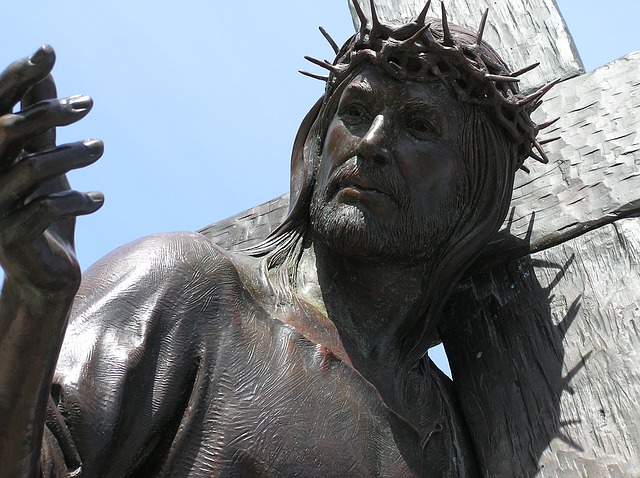
    But as the author of the letter to the Hebrews reminds us, we aren’t left to ourselves. In his infinite mercy, Jesus sympathizes with our weakness. Even though he himself never fell to the many temptations that weighed on him like a cross and surrounded him like a crown of thorns, he knows what it’s like to carry them, to bear their weight and feel their pain, but also to endure and overcome them.

    Fully man, Christ knows what it means to feel the kind of pain that leaves us without words; able only to offer prayers and supplications with loud cries and tears to the one who was able to save him (Hebrews 5:7). Enduring that kind of torment, he must also have felt the natural reaction of the human body to fight against and relieve the pain – on this day, to come down from the cross – yet Son though he was, he learned obedience from what he suffered (Hebrews 5:8).

    good-friday-2264164_640But Jesus also taught us through his obedience unto death that glory waits on the other side of suffering; that being made perfect is not a matter of doing all things on our own, but the opposite: Letting go of control and uniting ourselves more and more to the will of the One who is our true strength.
    This is the ultimate lesson of Good Friday. Christ’s triumph over self-will and self-reliance did not enable him to merely sympathize with our suffering or feel our pain but to be perfectly in himself the source of eternal salvation for all who obey him (Hebrews 5:9).

    We adore you O Christ and we praise you, because by your holy cross you have redeemed the world.

  • The Standard of Love: Tuesday of Holy Week

    So he dipped the morsel and took it and handed it to Judas (John 13:26).

    Judas was chosen by Christ; he accompanied Him throughout his ministry. Like every disciple, he was fed spiritually and physically. Empowered by our Lord, Judas healed, expelled demons, preached the coming of the kingdom, and shook the dust of unbelieving towns off of his feet. On top of that, he witnessed countless signs and miracles.

    Yet still Judas betrayed Jesus.

    Nevertheless, even to the end Jesus fed him; He never shook the dust of his betrayer off of his own feet. To the contrary, Jesus extended hospitality toward him; He put him first.

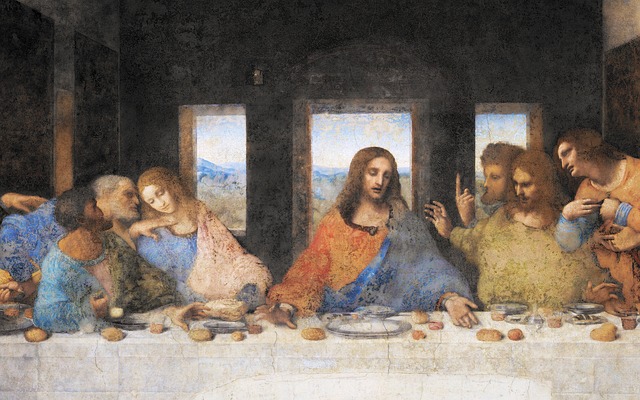
    last-supper-1921277_640Let us keep this in mind as we prepare to receive the Sacred Morsel of our Lord in the most Holy Eucharist. For we are all like Judas; we have all betrayed our Lord’s innocent blood with every sin, no matter how small. And as He did with Judas, so does our Lord do to us; He continues to feed us, to respect our dignity, to love us unconditionally.

    This is the standard of a love that is bigger than any sin; this is the love that we are called every day to imitate. This is the love of Christ.

  • A Fragrant Aroma: Monday of Holy Week

    John 12:1-8

    Awhile after my father died, my mother asked if I would help her sort out his things. As I took some clothes out of his dresser it struck me; they still smelled like him. It was as if my father was right there. It took me several minutes to regain my composure.

    Scientists have known for years that the sense of smell is intimately tied to memory and emotion. In fact, smell is the only sense that works directly with the area of the brain that controls emotions. We’ve all experienced it; no matter how far away or far removed we are from a certain time, the aroma of something – perhaps a certain food, a perfume – can bring it all back again. It is if we are there.

    In the gospel we see how one of the sisters of Lazarus gave to their home a sense memory of our Lord: Mary took a liter of costly perfumed oil made from genuine aromatic nard and anointed the feet of Jesus and dried them with her hair; the house was filled with the fragrance of the oil (John 12:3).

    This is significant on many levels. First, it is the perfect counterbalance to the family’s recent experience at the tomb of Lazarus; the foul air of death is literally blown away by the fragrance of new life found in Christ. But second, this perfume is costly; the price of victory is high. As if she senses that his enemies are as near as Judas and plotting his demise, Mary anoints not the head of Christ the King but the feet of Christ the Servant which shall soon be pierced with nails and placed in a tomb. Finally, it may seem odd that Mary wipes away some of the perfume with her hair but I see in it a sign of her devotion; a way to identify herself with Christ and his sacrifice, personifying St. Paul’s meaning in 2 Corinthians when he said, we are a fragrance of Christ to God among those who are being saved and among those who are perishing (2 Corinthians 2:15).

    glass-4108085_640There is an ancient rabbinic saying that “the fragrance of a good perfume spreads from the bedroom to the dining room; so does a good name spread from one end of the world to the other.”1 As Mary filled her house and her hair with the fragrance of Christ, so may we fill the world and ourselves with his holy and glorious Name. And may be as untiring and devoted as she, willing to sacrifice whatever is costly to ourselves to do it. There is no greater identification with Christ than this, as St. Paul knew when he prayed that we may be imitators of God, as beloved children; and walk in love, just as Christ also loved you and gave Himself up for us, an offering and a sacrifice to God as a fragrant aroma (Ephesians 5:1-2).

    1Based on Ecclesiastes 7:1 and cited in Brown, R.E. (1966) The Anchor Bible: The Gospel According to John I-XII. New York: Doubleday & Company, Inc., p. 453.

  • The True Cornerstone: Memorial of St. Patrick, Bishop

    August 15th, the Feast of the Assumption, fell on a Sunday in the year 1858; that afternoon, a 22 year-old Irish immigrant named Cormack McCall1 may well have watched as a stone that he had cut with his own hands was blessed as the cornerstone of the new St. Patrick’s Cathedral by New York City’s Archbishop John Hughes. Around Hughes stood seven bishops, 130 priests, and 100 choirboys. The crowd was estimated at 100,000 people or more; New York’s entire fleet of streetcars had been diverted to the area just to accommodate them.

    It is an oddity in keeping with St. Patrick that to this day no one knows exactly where the cathedral’s cornerstone is or when it went missing.2 It has sunk into obscurity like the details of the life of the great saint himself. Nevertheless, St. Patrick’s impact on the faith is every bit as real and foundational as the cathedral’s mysterious cornerstone.

    Patrick was similar in a few ways to Israel’s son Joseph, whose life story closes the book of Genesis. Both became slaves in their youth, both were bright and resourceful men of dreams, and both used their gifts not just to endure their captivity but to be victorious over it.

    Of course, there were differences. Unlike Joseph, Patrick was not raised by parents with a strong and vibrant faith; nevertheless, during his captivity he found that his faith was strengthened. Moreover, although both were men of dreams, Patrick focused on one particular vision from his youth and was determined to see it come to fruition. While a slave he had a vision of Irish children reaching out for him and resolved that should he escape he would return and convert the pagan Irish to Christianity. In fact, he did escape and reunite with his family in Britain for awhile; however, Patrick never lost sight of that vision from his youth. Around the year 431, after being ordained in France, Patrick was sent to Ireland as its bishop by Pope Celestine I.

    At first, Bishop Patrick began by supporting the small band of Christians already on the island but was soon evangelizing far and wide, preaching, writing and baptizing countless people. It is ironic that Patrick was so self-conscious of his lack of formal education for as an evangelizer he was brilliant. He understood that the truth of Christ transcends culture, that certain symbols or practices of the pagan people could be imbued with Christian meaning. For example, an ancient pagan image of two crossed lines and a circle was reinterpreted by Patrick as the Cross of Christ with the circle symbolizing the eternity of God. We know it as the Celtic Cross to this day.

    Over the course his years a missionary bishop to Ireland, Patrick truly was a cornerstone of the Irish Church. He installed and supported church officials, created councils, founded monasteries and organized Ireland into dioceses. He died around the year 461 and was buried in the land that he first came to as a slave and to which he returned, faithful to his promise to the end.

    ireland-2184916_640The psalmist must have had Joseph in mind as he sang, they had weighed him down with fetters, and he was bound with chains till his prediction came to pass and the word of the LORD proved him true (Psalm 105:18-19) but it applies to St. Patrick as well. In a larger sense it applies to all of us, for to one degree or another we are all weighed down with the fetters of sin. Many are bound with the additional chains of addiction or illness, either our own or someone we love. Perhaps we have not been given visions or dreams like Joseph or Patrick, but we have been given the vision of Christ, the Eternal Word who proved himself true to the greatest promise ever given mankind: That every fetter would be lifted, every chain broken, every tear wiped away for all those who cling to him as their salvation. As much as they did, as faithful as they were, both Joseph and Patrick humbly bend their knee and fade into the background like an old cathedral cornerstone before the Stone rejected by the builders, the one true Cornerstone who is Christ.

    St. Patrick, pray for us.

  • The Outsiders: Tuesday of the Sixth Week in Ordinary Time

    James 1:12-18; Mark 8:14-21

    We may as well answer the question Jesus asked the disciples at the end of the gospel passage: Do you still not understand (Mark 8:21)? No, they do not understand at all. The question is, why? So far in Mark’s gospel they have heard him teach, seen him heal, witness him expelling demons, raising a girl from the dead, and feeding thousands with a few loaves. Who or what kept them from seeing him as the Christ? And more to the point, who or what does the same thing to us?

    It certainly isn’t God. As the first reading reminds us, God tempts no one (James 1:15). Here, James echoes the ancient truth revealed through the prophet Habakkuk that God cannot even look upon evil (Habakkuk 1:13). Rather, the reading goes on to say, evil comes from within each person who is lured and enticed by his desire (James 1:14). Let us briefly consider three different kinds of enticement.

    First, we entice ourselves to sin by failing to guard against temptation. Just as a person struggling with alcoholism would be foolish to hang around liquor stores so anyone who struggles with a certain sin is foolish to put themselves in situations where they are tempted to it. This is called the near occasion of evil and is what we promise to avoid every time we say the Act of Contrition.

    Second, we entice others to sin by becoming an occasion of evil ourselves. Some do this by dressing immodestly, others by gossiping. We rationalize such behavior in true Adam-and-Eve fashion by blaming the victims – “They shouldn’t look at me that way,” or “I only told the truth” – but deep down we know that we are far from innocent.

    Finally, we are enticed to sin by the dark angels whose master goes by many names: the father of lies (John 8:44), the tempter (Matthew 4:3), the devil (Matthew 4:1). By whatever name he sows confusion, preys on our weakness, encourages selfishness. The wise listen to Christ who urges us to fear the demons for they can destroy us body and soul (Matthew 10:28); the prudent avoid them, and the persevering cling to God with the assurance of St. Paul that no one and nothing can ever separate us from the love of God that is in Christ Jesus (Romans 8:38-39).

    Earlier in Mark, Jesus defined two kinds of people. The “insiders,” or those to whom the mysteries of the Kingdom had been revealed; and the “outsiders,” who did not. Of the outsiders he said, they may look and see but not perceive, and hear and listen but not understand, in order that they may not be converted and be forgiven (Mark 4:12). The irony is that the disciples, who should be the definitive insiders, act more like outsiders than the real outsiders! For example in today’s gospel the disciples, who just witnessed Jesus feeding four thousand people now have the chance to share a quiet boat ride with him. What a shame that this perfect opportunity to unpack all they have seen is wasted on worrying about how little bread they brought along!

    fishing boat and feetStill, Mark’s purpose is not to make us wonder at their behavior but to evaluate our own. Are we insiders or outsiders? Some of us witness Christ feeding a multitude every day, and every day share time with him in the Church, the barque of Peter. Are we focused on our own loaf of bread – be it the next place we have to go, the people we have to see, or things we have to do – or on the Living Bread that is Christ? We see the many wonderful people he gives us – our families, friends, each other; do perceive Christ living within them? We hear his word in the Scriptures; do we understand his voice speaking through all those crying for help? At the Mass he gives us himself Body, Blood, Soul, and Divinity in the Holy Eucharist; are our hearts hardened or are they being converted through the forgiveness of sins in Confession, that we may partake most fully in the infinite grace he offers?

    We conclude where we began, in the letter of James. Consider how the passage begins: Blessed is he who perseveres in temptation, for when he has been proven he will receive the crown of life that he promised to those who love him (James 1:12). Let us pray for perseverance, that gift of the Holy Spirit that empowers us to remain in the state of grace until the end of our lives; may we like the Saints see and perceive, hear and understand, that our hearts be converted, our many sins forgiven, and our focus on the things above.

  • The Holy Spirit and Us: Memorial of Sts. Cyril and Methodius, bishops

    Acts 13:46-49; Luke 10:1-9

    As a young musician and singer I had many opportunities to play and sing for wedding and funeral Masses. At first this was no problem, but eventually it became one. Parishes had begun to hire their own musicians who weren’t thrilled to see outsiders like me coming in. I remember at one wedding the local musician came up and told me that he was on the parish staff, this was his parish, and he would be playing. I don’t recall my reply but I know it infuriated him. He stormed off saying “I’m going to the pastor right now. One of us is leaving and it won’t be me!” Well, it was him. I stayed and did the wedding Mass, smugly condemning him for his attitude, never considering my own.

    There’s an old saying that when the Church isn’t being persecuted from the outside she persecutes herself. Many of us have seen it; the place we expect to find the most unity too often seems the model of disunity. We want the Church to grow, we want to bring Christ to people, but when they challenge us with new ideas, expectations, or ways of doing things we find ourselves at odds with them.

    This phenomenon is as old as the Church. In the first reading Paul and Barnabas turn their attention to the Gentiles, frustrated with their stalling mission to the Jews. And we hear how the Gentiles were delighted and the Church grew. What we have not heard (yet) is that with this growth came conflict. On one side the Gentiles resisted adopting Judaic ritual and dietary practices. What do circumcision and kosher law have to do with salvation? On the other side the Jewish Christians resisted the idea of abandoning them. After all, Jesus and his Apostles were Jews! Two groups, each with its own interests: More disputes, more hard feelings, more disunity.

    Sts. Cyril and Methodius might well sympathize. In their time (the 9th century) the Church was struggling to grow in Eastern Europe. The two brothers were the perfect choice for missionaries; they were well-educated, devout, and had grown up speaking Slavic as a second language. Best of all they possessed keen pastoral sensibility; they knew that Christ is the Word who transcends language, whether Greek, Latin, or Slavic. Therefore, when they arrived in the missions they not only preached in Slavic but also translated and conducted liturgical services in it as well. The people responded and the Church grew.

    As in the gospel they went out like lambs among wolves, only this time the wolves wore clericals. The missionaries of the region resented Cyril and Methodius. For one thing, they made the old guard look bad. Under them the Church withered; with the brothers here she blossomed. Second, they took issue with the way the Church grew. As they saw it, no one had the right to translate the liturgy into the native language and teach it to the people. Surely these upstart missionaries must be reprimanded.

    Not surprisingly the embittered clerics appealed to Rome about the liturgical changes, demanding action. When summoned, Cyril and Methodius went to Rome and gave a spirited, eloquent defense. After listening carefully in person, Pope Adrian II blessed their mission and gave them permission to continue celebrating the liturgy in Slavic.

    Cyril stayed in Rome and died not long afterward; Methodius returned to the missions. Sadly but not surprisingly, the pope’s decision settled nothing in many minds. For the rest of his life Methodius was hounded and frustrated by clerics who disagreed with him. Although he stayed the course and remained successful, the stress took its toll; he died April 6, 885.

    cropped-dove-3951312_1920.jpgThe pattern of disagreement, debate, and decision is how things get most productively settled in the Church provided it is done in the right spirit; that is, the Holy Spirit. Since the Council of Jerusalem was called to settle the dispute between the Gentile and Jewish Christians this has been the model, its justification found in the letter issued from that Council, specifically the sentence that begins, It seems good to the Holy Spirit and to us (Acts 15:28). The Holy Spirit promised by Christ continually works within us, finding ways to maintain unity despite our differences. In all our human affairs but especially between the members of the Church what matters is not that we disagree but that we dialog, not the heat of our words but the light of the Holy Spirit, not the distance we keep but the fellowship we extend, and not the hostility throughout the debate but the peace of Christ we give in the resolution. As with Cyril and Methodius, some will not accept us or the decisions reached but we cannot help that. All we can do is what Methodius did: Continue to act in union with Christ and his Church, remembering always that it is not about us but about the Holy Spirit and us.

    Sts. Cyril and Methodius, pray for us.

  • Holy and Immaculate: Memorial of Our Lady of Lourdes

    Isaiah 66:10-14c; John 2:1-11

    Between 1830 and 1858 the Blessed Mother made three separate visits to France. First in Paris to Sr. Catherine Laboure, whence came the Miraculous Medal and the prayer, “Mary, conceived without sin, pray for us who have recourse to thee.” Next she appeared to two shepherd children near La Salette in the French Alps, where she pleaded for a return to prayer and the Sacraments. Finally and most famously she appeared 18 times to the young teenager Marie-Bernarde Soubirous, also known as Bernadette, near Lourdes in the foothills of the Pyrenees.

    In all these we see that Mary appeared not to the powerful or influential but to the lowly – mostly, to children. Simple, honest, and unsophisticated, they were not interested in either notoriety or personal gain. Indeed Bernadette in her typical, straightforward fashion said, “When I’m dead they’ll come and touch holy pictures and rosaries to me, and all the while I’ll be getting boiled on a grill in purgatory.” Hardly the words of someone looking to sell the book and movie rights.

    Not that she couldn’t have used the money. Those such as Bernadette were not only innocents but familiar with suffering, people who understood poverty of spirit and body. In fact, she first met Our Lady while gathering sticks so that her family, mostly children who would not survive to adulthood, could have some heat in what they called home but everyone else called a musty, abandoned prison block.

    But as Mary knows, home is where the heart is and the heart of the Soubirous family was faith in Christ. Although the prosperity and wealth of nations spoken of in the first reading (Isaiah 66:12) eluded them, spiritual wealth was theirs in abundance. On hearing of the mystical vision in the grotto, Bernadette’s father said to his family, “Let us pray.” He knew that, whether a heavenly vision or one from the lower depths, their only recourse was to fall to their knees. Perhaps this is why Bernadette was chosen; she like Mary was raised from birth to understand that true wealth, true prosperity, comes only from the hand of God.

    This was the same God who said, As a mother comforts her child, so will I comfort you (Isaiah 66:13), who gave Bernadette visions of his mother, and who defined comfort in her words, “I do not promise to make you happy in this world but in the next.” It is true that Bernadette, who suffered terrible pain in her body in the later years of her short life, never sought the healing waters that Christ gave the world in that little grotto. She knew that Mary had given her the only promise of happiness that means anything: Eternal union with God. This is why Mary constantly urges meditation on the gospel of Christ through the rosary, why she begs the conversion of sinners, and especially why she asks that chapels be built, for there her Son dwells in the complete sacramental fullness of his Body, Blood, Soul, and Divinity.

    virgin-1615390_1920At every apparition Mary is highly honored and rightly so for she is as she said, the Immaculate Conception. But the honor we give her goes far beyond her identity to the two-fold reality behind it. First, Mary points us to Christ. Through the grace bestowed on her by the will of God and her total abandonment to it, Mary has perfectly heeded her own advice: Do whatever he tells you (John 2:5). In this, she is the first and best example of a Christian. Second, Mary points to our own destiny. Like her, we are asked to abandon our will to his, be perfect as the Father is perfect (Matthew 5:28), and so be presented to him holy and immaculate (Colossians 1:22). For this we need neither the water of Lourdes nor the water turned to wine, but that which wells up to eternal life (John 4:14), our Lord Jesus Christ, by whose love wine becomes the blood poured out for the forgiveness of sins (Matthew 26:28).