Joel 4:12-21; Luke 11:27-28
In the reading from the prophet Joel, God vanquishes the enemies of Judah and the land produces in overflowing abundance. As the earlier chapters of this book make clear, a famine brought on by a plague of locusts had ravaged the land, both city and countryside. The images offered by Joel of a conquering, provident God were a hope-filled reflection of this suffering people’s desire to know that God was dwelling among them; in other words, this is how they wanted their prayers answered, in security and abundance.
We are not so different from them. In our own prayers we ask God to do things like conquer our foes, provide abundant harvests, heal us or those we love. We speak of our prayers being answered and we give thanks to God when the enemy is gone, the harvest is good, and we or someone for whom we have prayed does in fact recover.
On one level, there is nothing wrong with that. God does keep us secure; does provide for us; does heal. For this, we can and must give thanks.
There is a deeper level though, and Jesus points us toward it in today’s gospel. When a woman blessed the womb that bore him and the breasts that nursed him, Jesus replied that Mary was blessed because, as his first disciple, she heard the word of God and did it. As St. Augustine said, Mary conceived in her heart before she conceived in her womb.
This is the deeper level on which Jesus focuses our attention. Although we can pray that things go the way we want them to, the most fruitful prayer is that our will be aligned to the will of God. This was Mary’s prayer when she said, May it be done to me according to your word (Luke 1:38); it was Christ’s prayer when he said not my will but yours be done (Luke 22:42b). This doesn’t mean that we are happy if and when catastrophe strikes, but it does mean that we hear the word of God and do it, keeping in mind that he has also said, I know well the plans I have in mind for you … plans for your welfare and not for woe, so as to give you a future of hope (Jeremiah 29:11).
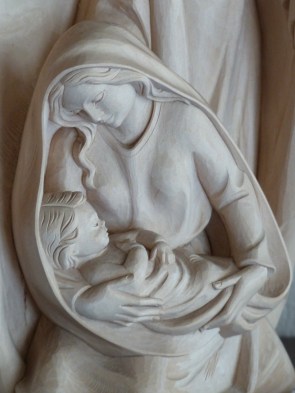 As the Catechism teaches, hope is “the theological virtue by which we desire the kingdom of heaven and eternal life as our happiness, placing our trust in Christ’s promises and relying not on our own strength” (CCC 1817). Joel pointed toward Christ our hope when he spoke of the spring that will rise from the house of the LORD (Joel 4:18b). This is the hope of life that springs eternal; the happiness to which Mary was united at the end of her earthly life; the hope of happiness that we desire. May we unite our wills to the will of God as she did, and may it be done to us according to his Word.
 We asked for other things; why should we be happy to receive the Holy Spirit instead? Consider everything he brings: Wisdom, the ability to see what is most important; understanding, to get to the heart of the matter; counsel, to submit to the providence of God; fortitude, the strength to pursue the good; knowledge, the ability to judge rightly; piety, reverence for God; and fear of the Lord, a love of God so deep that we would do nothing to hurt him. Poured lavishly upon us, these gifts bring us closer and closer to the mind and heart of Christ, who prayed as he lived – perfectly – that the Father’s will be done, who lived his prayer to the death, and who showed us that death is not the end but the pathway to resurrection and perfect unity with the Father.
 In the marvelous healing providence of God, it so happened that this same woman heard bishop Nonnus preach the homily the next day at Mass. Whatever he said moved her to repentance. She asked him to make her a Christian. Not long afterward, the same bishops who once looked away in disgust now watched in wonder as this woman threw herself upon the floor of the church, washed the bishop’s feet with her tears, and dried them with her hair. Once baptized, she traded her jewels for a robe and devoted the rest of her life to penance in the strict regimen of a cloistered monastery. The beautiful, bejeweled harlot once known in Antioch as Margarita (meaning “Pearl”) transformed herself into a beautiful model of penitence known to this day by her birth name, Pelagia.
 This is the strength that has inspired the saints throughout the centuries. Every saint knows what it means to wonder as Habakkuk wondered how and when God will fulfill his promises, but they also know what it means to offer themselves as the instruments through which that promise is fulfilled. Every saint knows what it means to face hardship or to be with others as they face them, but like Timothy and Paul they also know what it means to possess the grace to endure and to support others who need to endure. Finally, every saint knows what it means to feel as if their own faith is inadequate to uproot their mulberry tree full of weaknesses. But they also know what it means to surrender themselves totally to the power of the One who nailed those weaknesses to his own tree and cast them once and for all into the ocean of his infinite mercy.
 Of all the things he might have chosen to begin with, Francis wanted to teach that the best and most mystical encounter we can have with Christ comes not from a voice on a sickbed or even a leper on the road but from the encounter with our own sinfulness. Only when we allow the Lord to lead us from the pain of penance through the conquest of our fears can we too rise and leave the world; not to abandon it, but that we may be Christ to it.
 As Christ commissioned San Lorenzo and his companions, so he commissions us. We are the light of the world; not the light of the rising sun but the light of the risen Son.
 St. Vincent de Paul didn’t begin any better than we, but he ended as well as we can ever hope to. What led him to a healthy, happy life? His relationships to God, his peers, and his flock. How does that help us? At least three ways. First, our relationship with God is at its best when we remember that He dwells not only above but also within each one of us; second, that when we reach out in love to others God is reaching them through us; and third, that we are both sheep and shepherd; the call to holiness is not only a call to take up our cross and follow Christ but to take up our staff and bring others to Him by the example of our lives.
 St. Paul reminds us of this when he says that grace is given to each according to the measure of Christ’s gift (Ephesians 4:11). His measure to Matthew was enough to transform him from a mere money-counter into an artist; indeed the artist who gave us the first portrait of Jesus in our New Testament. His medium wasn’t oil on canvas but words on paper, his subject not simply the man named Jesus but the Son of God and Son of Mary, the prophesied Emmanuel, “God is with us.” His palette held the many colors of Christ: teacher, healer, wonder-worker, Shepherd, Savior. He boldly painted all these images against a dark background for Jesus had come not into a roomful of Roman gamblers but into a land whose people were overshadowed by the darkness of sin and death. Where Caravaggio showed the light coming from behind Christ, Matthew knew that for all times and places Christ is the light – not the light who shines but the light who has arisen (Matthew 4:16). The long night of waiting, hoping, and wondering was over; the bright promise of salvation had dawned in Jesus, the Morning Star who never sets. This is why the great artist put the final brushstroke to his masterpiece in the words of our risen, ascending Master: And behold, I am with you always, until the end of the age (Matthew 28:20).
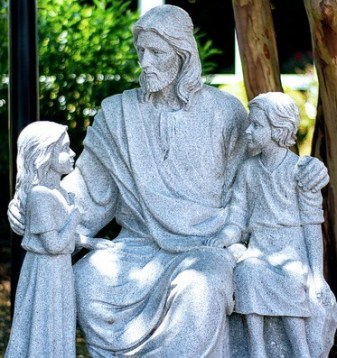 The example of the Korean Church and her martyrs teaches us that every heart open to God and acting on his word becomes a mother, sister, and brother to Christ. Even though we may not have the power of Orders, we do have Christ in the Scriptures and the power of the Holy Spirit through our baptism. We too can evangelize. If you don’t know where to begin, consider: Religious education programs can always use help teaching children the faith; there is a bible study nearby that would teach you more about Christ; there are many ministries that reach out to the hungry, the poor, and the mourning. Be docile to the promptings of the Holy Spirit; He will show you ways to bring Christ to someone in need.
 Finally, the cross is a sign of victory. It is the apparent irony seen throughout salvation history that God works for good by turning evil upon itself. It was Pharaoh who pronounced the curse by which his own people would most suffer: the death of every firstborn. In the desert it was the emblem of the serpent, reminiscent of the one whose envy brought death into the world, that would be lifted up on a tree as a sign of healing and life. It was Caiaphas, plotting to have Jesus executed, who unwittingly prophesied that it was better for one man to die than for the whole nation to perish. It was the Roman governor Pilate who first asked
  Mark 10:45