Tag: Christ

  • The Green Lab

    The Green Lab

    Sunday of the 24th Week in Ordinary Time, Cycle A

    Sirach 27:30—28:7; Matthew 18:21-35

    Years ago, a teenage girl lived across the street. I don’t know why, but she really disliked us and found several ways to let us know. We tried to make peace. No luck. The final straw came when she began letting her yellow Labrador, Rocky, outside unleashed to “visit” the bushes and plants on the side and back of our house. He ruined them and their replacements, and kept coming back for more.

    We asked her to stop him. She wouldn’t, and we couldn’t prove it was Rocky. So, I hatched “Operation: Stop Rocky.” Just three things: A bucket of water, a generous helping of food coloring, and the element of surprise.

    I wasn’t home when the operation was launched; my wife was. But I can tell you that Rocky was on a leash from then on, and that young lady spent a few days walking around the block with her happy, green Labrador.

    I thought I’d feel better afterwards, but my anger at that kid lingered. It’s like Sirach said, “Wrath and anger are hateful things, yet the sinner hugs them tight.” That was me… vengeful, unwilling to forgive. Yet, at the same time, there I was at church every week, praying that my own sins would be forgiven.

    The more I thought about it, the more times I recalled when I had refused to let go of some injury or insult. Maybe you’ve been there; maybe you’re there now.

    If so, learn from me, who has had to implement another simple, 3 point program, this one inspired by today’s readings.

    First, we have been forgiven a debt we can never repay.

    The servant in our Lord’s parable owes ten thousand talents. Whether the talents were gold, silver, or copper, it’s such a huge sum that he could never repay it.

    Our Lord’s point is clear… that’s us. We have received a mercy from Him that we could never earn and can never repay.

    Second, every wrong done to us is an opportunity to forgive as we have been forgiven.

    That doesn’t mean the wrongs done to us aren’t real, or we’re supposed to pretend they never happened, or somehow they don’t matter.

    It means that the mercy we have received from Almighty God becomes the mercy that we’re called to show someone else. And, in so doing, mercy grows; we don’t lose what we have, and we’ve empowered others to show mercy, too.

    Then comes the third and hardest part: Forgiveness is a work of the heart.

    Let’s be clear… Forgiving people doesn’t mean forgetting what happened, acting as if everything is now OK, or going out of our way to hang around with them.

    What it means is letting go. Letting go of the anger, the resentment, or the desire to make the other person pay.

    Because until we do that, until we let go, we remain tied to the people who hurt us. And the longer we do that, the more we feel like it will always be this way – there’s nothing we can do.

    But there is. It comes in a wonderful piece of advice attributed to St. Philip Neri: “If you find it difficult to forgive, look at a crucifix.”

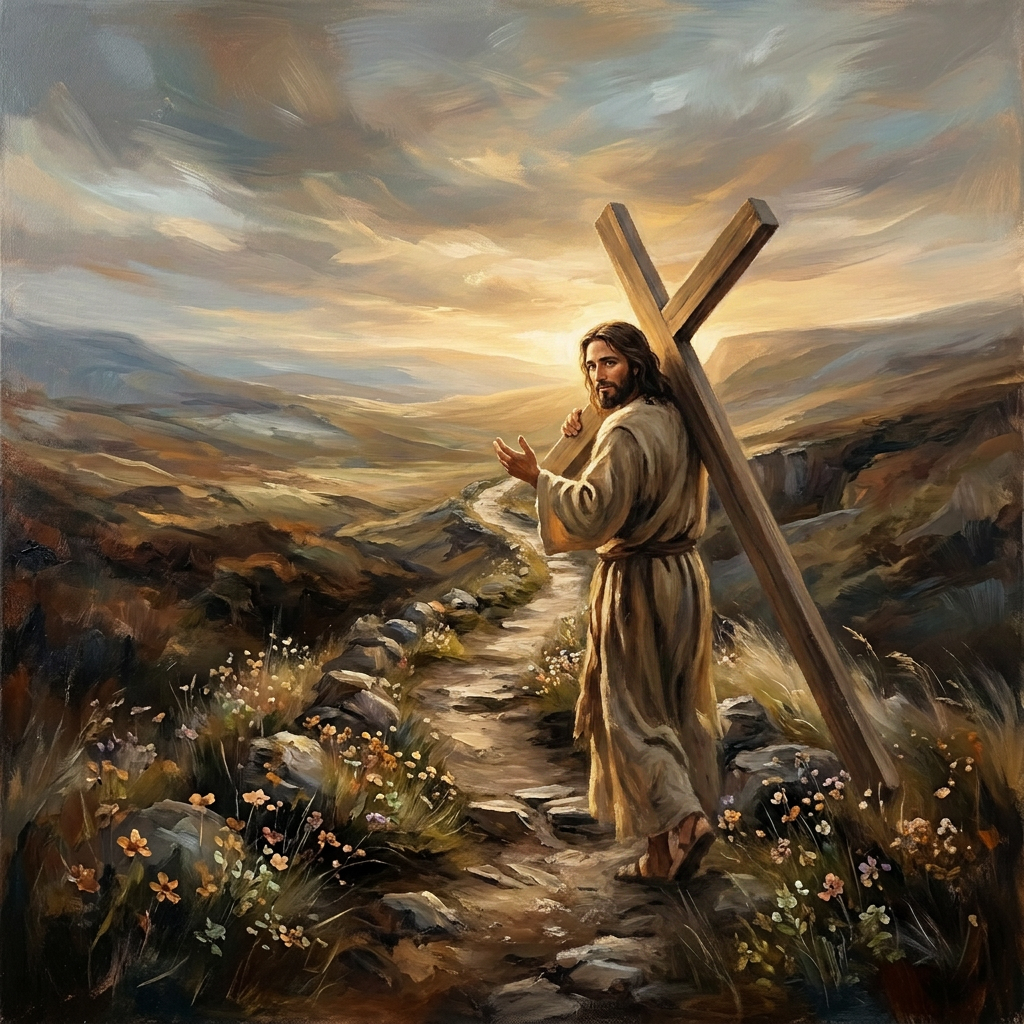
    Try that. If or when you find it hard to forgive someone for something, take a moment and look at a crucifix. Gaze on Christ hanging there. Imagine the pain, the desolation, the suffering. Then remember what he said from that place: “Father, forgive them.”

    If he can forgive us for that, how can we refuse to forgive one another for anything?

    That is our call from Christ today, as difficult as it is simple:

    Forgive.

    From the heart.

    Every time.

    —

  • Stretch Out Your Hand

    Stretch Out Your Hand

    Monday of the 23rd Week in Ordinary Time

    Labor Day (United States)

    Luke 6:6-11

    I remember when I started my first job, finding myself sitting in an office called ‘Personnel.’ A few years later, on my last day at that job, I sat in that same office. Only now it was called ‘Human Resources.’

    Later, a friend cynically remarked, “Yeah, we stopped being personnel a while ago. Now we’re ‘resources.’ At least they still call us human.”

    I thought of that when I pictured the scene in today’s Gospel.

    Every person in that synagogue could look at the man with the withered hand and see a person. But some chose to see a “resource” — someone who could be used to accomplish their own purposes.

    Of course, those who made that choice didn’t realize that Jesus saw them, too. He knew their motives. And he wouldn’t allow it or overlook it.

    Standing before them was not a hand to be examined or a man to be used. He was a person to be loved. And so Jesus said to him, “Stretch out your hand.”

    It seems especially appropriate on Labor Day to remember that phrase, and all the ways Christ says it to us.

    “Stretch out your hands to work.” Whatever work we do, at a job or at home, let us pray that we begin with God’s inspiration and, through Him, reach happy completion. As the psalmist says, “Give success to the work of our hands; give success to the work of our hands” (Psalm 90:17).

    “Stretch out your hands to serve.” May we remember that every person we serve is someone loved by God; and, in a very real sense, is Christ himself.

    “Stretch out your hands to heal.” Sometimes that means reaching out to make peace, forgive, comfort, mend a broken relationship, or simply set aside time for someone who needs us.

    “Stretch out your hands to pray.” May Almighty God give us the humility to receive, perhaps not what we want, but what we truly need.

    “Stretch out your hands and be healed.” Let us have the humility to approach our Lord in Confession. He waits for us with open arms.

    And above all, here at holy Mass, let us remember Christ, who stretched out his hands in the greatest and most loving work of all.

    And, in return, let us stretch out our hands — and our hearts — to receive Jesus as he is most pleased to give himself to us:

    in the most holy Eucharist.

    —

  • The Truly Wise

    The Truly Wise

    Memorial of St. Gregory the Great, Pope and Doctor of the Church

    1 Corinthians 3:18-23; Luke 5:1-11

    In the first reading, St. Paul said, “Let no one deceive himself. If anyone among you considers himself wise in this age, let him become a fool, so as to become wise.”

    Imagine a wealthy, well-educated young Roman from a prominent family, living quietly in an expensive mansion in an exclusive part of town.

    Now imagine this young man sees the world around him falling apart. What should he do?

    He could sell his property and leave town with a huge fortune.

    That makes good financial sense.

    Or… he could give away his property, use his fortune to feed the hungry and protect Rome, serve as mayor, become pope, and dedicate the rest of his life to bringing as many people as possible to Christ.

    That makes a saint. 

    In fact, it makes Pope St. Gregory I, otherwise known as Gregory the Great.

    Gregory could have played it safe; in the gospel’s terms, stayed in shallow water. That’s what the world would call, “wise.” He was a good, holy man and could have done many good things. But Gregory knew that true wisdom was putting out into the deep water; letting go of what he wanted and allowing Christ to lead. In choosing that, he became a great man who did many great things.

    That’s the difference between the wisdom of the world and the wisdom of God.

    The wisdom of the world says, “Be careful. Protect what you have. Don’t take unnecessary risks. Look out for yourself.”

    The wisdom of God says, “Put out into the deep.”

    Gregory put out into the deep as Peter did long before him. Sooner or later, Christ asks each of us to do the same.

    And it’s not always a big conversion moment or a drastic change in our lives. Those happen, but more often come those smaller, still difficult, challenges: Forgive someone I’d rather forget, give up something I’d rather keep, or serve when I’d rather be served. Whatever it is, the challenge remains the same: “Christ is calling me to put out into the deep. Will I do it?”

    Of course it’s easier not to, but life in Christ is never about what’s easy. It’s about trusting him even when things look uncertain and difficult. His grace is always more than enough to see us through.

    The readings and life of Pope St. Gregory the Great remind us that when we do as he did – place our lives in Christ’s hands – we find that what the world calls foolishness is actually true wisdom.

    Pope St. Gregory the Great, pray for us.

    —

  • Christ and His Cross

    Christ and His Cross

    Monday of the 22nd Week in Ordinary Time

    1 Corinthians 2:1-5

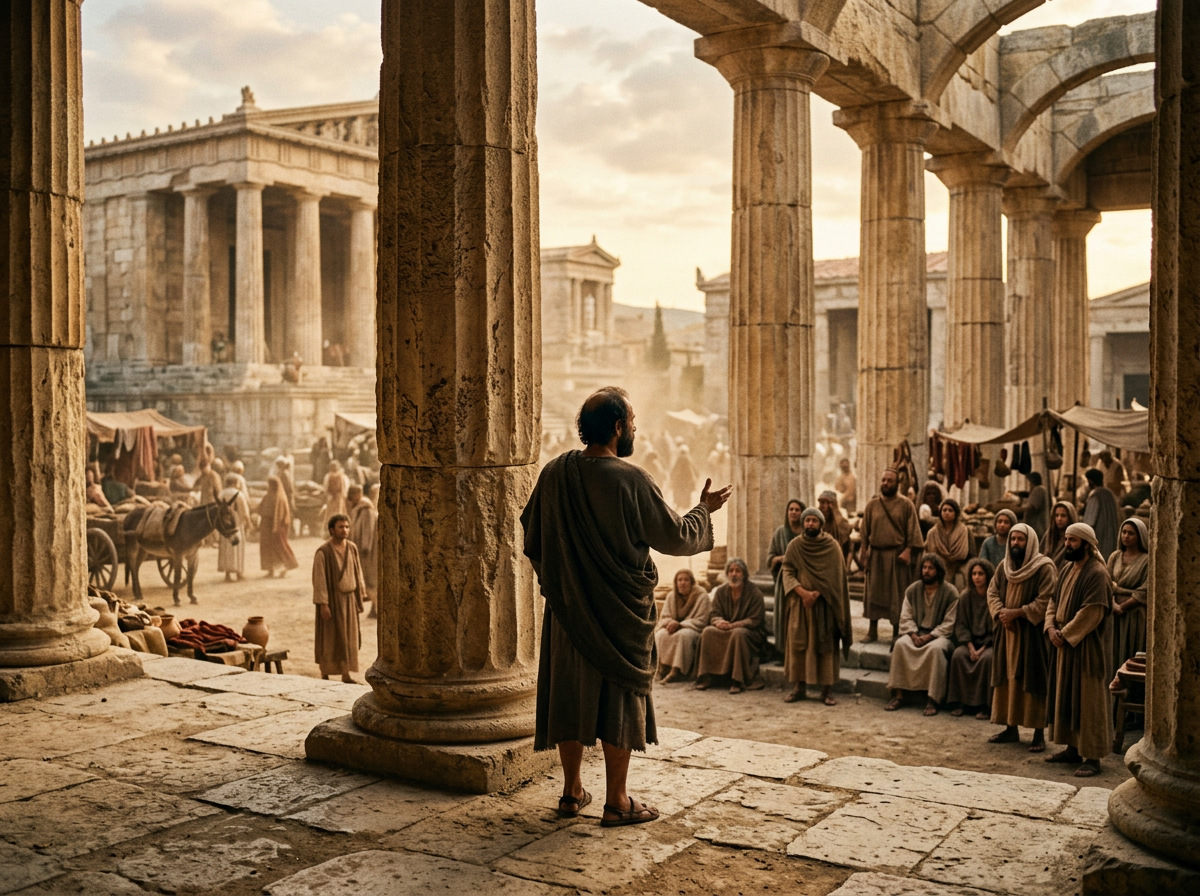
    The Corinth of St. Paul’s time was a bustling, wealthy trade center. It attracted men called “orators,” who were highly skilled at public speaking. The custom was that they wear extravagant clothes, be entertaining, flatter the city, and improvise brilliant speeches to make their case. To the Greek mind, the validity of an orator’s argument was tied to his prestige, social status, and theatrical skill.

    Imagine then what the Corinthians would have made of Paul, an itinerant tentmaker-turned-orator who did none of those things. Yet, that is exactly what happened, as we just heard: “When I came to you, brothers and sisters, proclaiming the mystery of God, I did not come with sublimity of words or of wisdom.”

    Paul knew the customs. He knew what the Corinthians expected.

    He didn’t give it to them. Why not?

    Because he didn’t need to. Paul knew the truth didn’t depend on him. It depended on Christ.

    That’s not to say he wasn’t needed. Someone had to go. As he said elsewhere, “how can they believe in him of whom they have not heard? And how can they hear without someone to preach? And how can people preach unless they are sent?” (Romans 10:13-14)

    But didn’t he need to meet the peoples’ expectations – be brilliant, entertaining, and polished? How else would they believe?

    Paul thought of that. How would they believe? Faith. As he said next, “faith comes from what is heard, and what is heard comes through the word of Christ” (Romans 10:17).

    So that’s what he did. Simply, accurately, he spoke the heart of the Gospel to them: “I resolved to know nothing while I was with you except Jesus Christ, and him crucified.”

    Christ and his Cross. You can’t get less than that, and you can’t get more.

    And history shows that it worked. Apart from his two letters to the Corinthians, archaeologists have unearthed remains of ancient Christian basilicas and inscriptions in Corinth.

    In spite of his success, doubts seem to linger. We’re tempted to think that the success of evangelization depends on us; we have to say exactly the right thing, have the right personality, or use sophisticated arguments.

    If so, remember St. Paul. He had none of that. What he had was all he needed: Faith that if he went out and did his part, Christ would take care of the rest. And he did.

    So let us do the same. Let’s give Christ to others as best we can, using whatever gifts God has given us. We don’t have to be someone we’re not. We just have to let Christ work through who we are.

    We do our part. He does the rest.

    And if we keep returning to the center — Jesus Christ and him crucified — we can trust that God will use even our small efforts to accomplish things we never thought possible.

    —

  • Finally Found It

    Finally Found It

    Sunday of the 22nd Week in Ordinary Time

    Jeremiah 20:7-9; Romans 12:1-2; Matthew 16:21-27

    One ice-cold Michigan morning, my elderly mother realized she left her cellphone in her car. Not waking my little brother to help, Mom ran out in her pajamas to get it. The car doors were frozen shut. She ran back inside, got a cup of hot water, went out, and poured it on the door lock. It opened. When she finally found the phone and tried to get out, the door had frozen shut again. Irritated and freezing, Mom threw herself against the door, which did nothing but hurt her shoulder. “I know,” she thought. Lying down on the front seat, Mom kicked her legs as hard as she could against the door. Hurt her ankle. Car door 2, Mom zero. Only then realizing, “Oh, I have a phone,” she tried calling my brother. Dead battery. By the grace of God, some college kids on their way to school saw Mom in her car, and helped her out.

    This adventure of my mother and her cellphone is true, but also a parable about the spiritual life. We can focus so much on what we want that everything else fades into the background.

    For Mom, it was a cellphone she absolutely had to have. But there are many other things people think they must have: more money, more power, more possessions, more recognition. And it works the other way, too; there are many things people think they absolutely must avoid. For Jeremiah in the first reading, it was the ridicule and reproach that came with being a prophet.

    In either case, the more we focus on what we want, the more we lose sight of what really matters, and we need to be reminded.

    In Jeremiah’s case, his heart reminded him. Notice how the reading ends; speaking of the drive to prophesy, he says, “… it becomes like fire burning in my heart… I grow weary holding it in, I cannot endure it.” God’s word has taken hold of him. It consumes him. His mind may say, “Walk away,” but this is a matter of the heart, and in the end, his love of God is far more important than any discomfort. 

    Peter has yet to learn that. He, who just called Jesus the Messiah moments before this, wants something, too – he wants Christ without the cross. If going to Jerusalem means suffering and dying, then DON’T GO. But then comes the reply, “You are thinking not as God does, but as human beings do.”

    This is a reminder for all of us who want to be disciples of Christ: True discipleship means focusing not on what I want, but on what God wants of me. And what is that? Jesus is pretty clear: “Whoever wishes to come after me must deny himself, take up his cross, and follow me.” So there will be a cost: self-denial, bearing hardships, and going where I may not want to go.

    In other words, sacrifice.

    I hear the word “sacrifice” and might think “give up something,” but remember, a sacrifice is fundamentally a self-giving. A matter of the heart. For example, when a parent sacrifices for their child, is the parents’ focus on what they’ve lost or what the child has gained? The gain, of course. Why? Because it’s all about love.

    That’s the point we can so easily miss when we hear Jesus speak about denying ourselves and taking up our cross. Our faith isn’t about suffering for the sake of suffering, or God asking us to give things up because He wants to make our lives miserable.

    It’s all about love.

    Jesus gave himself for us out of love. And when he asks us to take up our cross and follow him, he’s inviting us to love in the same way: not making ourselves the center of everything, not asking only, “What do I want?” or “What can I avoid?” but asking, “What does love require of me?”

    It will require something. There’s always a cost. But there is a promise hidden in our Lord’s words: “Whoever loses his life for my sake will find it.”

    The readings today urge us to keep a proper perspective in life. If our primary focus is where it should be – on Christ, who gave everything for us – then the only question that matters is, “What is God asking me to give, and am I willing to give it for love of Him?”

    Those who are, are those who discover that in so doing, they haven’t lost their life at all.

    They have finally found it.

    —

  • A Whitewashed Tomb

    A Whitewashed Tomb

    Wednesday of the 21st Week in Ordinary Time

    2 Thessalonians 3:6-10, 16-18; Matthew 23:27-32

    A while ago, I visited a parish where I spent many years as a child. Sitting in a pew, I began reminiscing about my days as an altar boy there.

    I remembered some of the boys I went to school and served with. Good kids, pious in the best possible sense: quiet, attentive, prayerful. They seemed genuinely holy; not only at Mass, but outside it, too.

    Me? Not so much. Although we did the same things, for me it was more like “going through the motions” of holiness. Maybe I looked the part, but few would have called me quiet, attentive, or prayerful. To the contrary, too often I behaved as if I’d never gone to Mass at all.

    And it was then that this gospel hit home. I saw my face in our Lord’s dictionary, right there under the term, “whitewashed tomb.” Looks fine on the outside, but inside? “Dead men’s bones.”

    At first, my heart sank. I imagined Jesus disappointed in me. But then I realized that Jesus took the scribes and Pharisees to task, not out of hatred, but love. Yes, his words were sharp, but that was to awaken them, make them understand that the way to God’s heart wasn’t by acting holy, but by allowing God to make them holy.

    Acting holy. That’s what I’d been doing. I don’t know why. Maybe I thought the holiness of the other boys would rub off on me or that going through the motions would somehow change me inside.

    It won’t. External actions on their own won’t produce holiness. Why? Because holiness isn’t just what we do, it’s who we are becoming by the grace of God. It’s God’s grace that changes the heart, and it’s the changed heart that expresses itself in virtuous behavior like piety, patience, prayer, and love.

    That’s why St. Paul reminded the Thessalonians that faith must be visible in the way we live. Our relationship with Christ cannot be an appearance only; it must shape our responsibilities, our work, our relationships, and our daily choices.

    So the question isn’t simply, “Do I look religious,” but “Is Christ making me truthful within?” How do we know? We must look at our behavior: Do I pray only when others can see me, or because I desire communion with God? Do I serve because I want recognition, or because I love? Do I speak about holiness while remaining impatient, resentful, or unforgiving? Do my actions at Mass radiate to the rest of my life?

    Like me sitting in the pew that day, we may not like some of the answers. We may sense that, to some degree, we too are the scribe or Pharisee who Jesus is calling out.

    But that’s good. Christ loves us and never wants us hiding from him in shame. Far from it; he wants us to bring our true self to him, for that is who he created. His words may be strong, but they’re meant to call us home.

    So today and every day, let us ask God for the grace we need: one act of patience, one honest prayer, one admission of fault, and one hidden choice of love at a time.

    For Christ doesn’t want us to look holy. He wants to make us holy.

    —

  • The Strength of Patient Mercy

    The Strength of Patient Mercy

    The 16th Sunday in Ordinary Time (Cycle A) 

    Wisdom 12:13, 16-19; Psalm 86:5; Romans 8:26-27; Matthew 13:24-30

    If the readings today seem a little unconnected, let me try and connect them up for you.

    In high school, I knew a kid who wasn’t an easy student. He was, in terms of the first reading, full of “temerity”… brash, arrogant, disrespectful. In other words, he treated teachers the way Israel treated the Lord. 

    And, like Israel, he was rebuked. Often harshly, as we might expect. However, one teacher, Sister Shaun Marie, was different. She treated him much more like God treated Israel: with strength cloaked in mercy.

    At break times, like during lunch, Sister would “find” him in a hallway and strike up a conversation. Sooner or later, she’d look him in the eye and tell him she knew he could do better. She reminded him of the good she saw in him – good he couldn’t see in himself. She never excused his behavior, but she also never let it define him.

    Today’s Psalm reminds us that God is good and forgiving, abounding in kindness to all who call. That’s the kind of mercy Sister showed that boy. And it awakened in him what no teacher had – his own sense of self-worth and longing to be healed. He began to see that he couldn’t fix himself by sheer willpower. But he didn’t need to; as St. Paul said, the Spirit “comes to the aid of our weakness.”

    And I can tell you, because I was that kid, that thanks to Sister Shaun, I came to see that the true strength of God lies not in the threat of punishment but in the patience of His abundant mercy.

    That’s what Jesus is teaching us in the parable of the wheat and the weeds. While we can certainly think of the world as the field, we can also think of ourselves that way.

    I think it’s safe to say that most of us have a negativity bias. That is, we look at ourselves and focus on the weeds. That can lead to impatience: “I’ve been trying to stop sinning for so long. What’s wrong with me? I want to be better right now!”

    Sounds like the servants in the parable: “Do you want us to go and pull them up?”

    Of course, God sees the weeds, too. But His patience protects the growth of the wheat within us. And in His mercy He will wait, meet us where we are as Sister met me, and urge us to see what He sees – not who we’ve been, but who we’re capable of becoming if we let His grace work within us. 

    Most of us have known someone like that. A parent. A teacher. A coach. A grandparent. Someone who saw more in us than we saw in ourselves – who refused to let our issues become our identity. If you’ve ever been loved like that, then you’ve experienced a glimpse of the patience of God.

    So now, the question is this: Who in your life needs someone to believe in them before they believe in themselves? Who is God asking you to be that person for? Because that’s what patient mercy looks like.

    —

  • Set Apart and Sent:

    Set Apart and Sent:

    Wednesday of the 4th Week of Easter

    Acts 12:24-13:5a; John 12:44-50

    The word St. Luke uses for “worshiping” or “ministering” is the word we know as liturgy. In the liturgy, we don’t just worship God; we are drawn into what God is doing. And what God is doing is always this: He speaks, He calls, and He sends.

    We saw that in the reading from Acts, when the Holy Spirit set Barnabas and Saul apart, and sent them.

    So, since the earliest times, our liturgies have given birth to mission.

    But mission for whom – certain people only? It might seem that way, especially when we think of Sacraments such as Baptism, Confirmation, and Holy Orders. But the fact is that every time we gather, as we do now for the Eucharist, the Holy Spirit says again, “Set apart for me those I have called.”

    Who’s that? All of us.

    And why does God send us? Because of what Jesus says in the Gospel: ‘Whoever sees me sees the one who sent me.’ Jesus Himself is sent, and everything Jesus does reveals the Father. So when we are sent, it is for the same reason: to make the Father visible in the world.

    St. Catherine of Siena lived exactly this way. Long before she was a woman of action, Catherine was a woman of the liturgy. She grew in her love for Christ from baptism through the Eucharist. So thoroughly did she consecrate herself with Christ to the Father in the Holy Eucharist that for the last several years of her life, her only food was the Eucharist. She drew her very life from the Blessed Sacrament, discovering in it a source of endless spiritual energy that united her to Christ in charity.

    In other words, Catherine’s extraordinary mission — reforming the Church, calling popes to return the papacy to Rome — did not come from her. It came from liturgy. It came from the altar.

    The fearlessness it took for her – a laywoman with no formal education – to write to popes and kings didn’t come from human confidence, but from the same Spirit who said to the Church at Antioch: “Set apart for me Barnabas and Saul.” Catherine heard the Spirit, and like Barnabas and Saul, poured out her life in obedience.

    I remember once asking my spiritual director about this. Hearing that people like St. Catherine lived only on the Eucharist made me wonder, “Is that to be a model for me? Should I hope, someday, to live on nothing but the Eucharist?” Father replied, “God gives us such saints, not that we imitate their level of piety or virtue, but that we push ourselves a little further in that direction. God is probably not asking you to live only on the Eucharist, but He may well be asking you to increase your desire to receive Him and be transformed by His grace.”

    I think that’s a good answer. It reminds us that the Holy Spirit is speaking to us personally – right here, right now. Each of us is set apart and sent. From this altar. Today. It is also a reminder to pray during the liturgy, especially Holy Mass, for the strength to answer the Spirit’s call. It’s easy and tempting to allow fear to take hold, which is why St. Catherine once said, “Don’t look at your weaknesses. Realize instead that in Christ crucified you can do everything.”

    St. Catherine of Siena, pray for us.

    —

  • Three Roads, One Pattern

    Three Roads, One Pattern

    Thursday of the 3rd Week of Easter

    Acts 8:26-40; Psalm 66:16; John 6:44-51

    Today’s reading from Acts may seem like a beautiful but isolated story – Philip and the Ethiopian riding through the desert – but it is, in fact, just one of three “road encounters” given to us by St. Luke, each a powerful snapshot of how God works through the sacraments. All three stories follow the same pattern:

    1. God initiates an encounter with someone;
    2. He brings the Church in to help; and
    3. The person being helped receives grace that changes them forever.

    The first time Luke gave us this pattern was in his story of the disciples on the road to Emmaus. Remember? Christ approaches two discouraged disciples who fail to recognize him. He opens the Scriptures for them, then breaks bread (gives them the Eucharist), and vanishes. Eyes opened and hearts on fire, the pair joyfully rush back to the Apostles as witnesses. Today, God sends Philip, who breaks open the Word for the Ethiopian, baptizes him, and vanishes. Afterward, the man goes on his way, rejoicing. Finally, on the road to Damascus, Saul has a mystical encounter with Christ, who cannot be seen. Later, Ananias anoints him and his eyes are opened. Saul takes his Roman name, Paul, and as we all know goes on to spend his life changing the landscape of Christianity forever.

    This is how Luke shows us the power of the Sacraments: God initiates, the Church mediates, and the person is changed forever. In all seven the pattern is the same: First, God calls us. We may think it’s our idea to be baptized, anointed, forgiven, or given the Eucharist, but it is God who calls us. He always initiates; for, as Jesus says in today’s gospel, No one can come to me unless the Father draws him. Next, we gather; Scriptures are read, and our eyes are opened to better understand its meaning and application to our lives. Then, the sacrament is received. The best example is right here, at the Eucharist, where we receive Christ himself; as he says, the bread that I will give you is my Flesh for the life of the world. Finally, we hear – Go forth. That is, we are sent out, as the two disciples at Emmaus, the Ethiopian, and St. Paul, to witness, rejoice, and change the world – each in our own way. For, as the psalmist sang, “He has given life to our souls… Hear now, all you who fear God, while I declare what he has done for me.”

    That is the voice of someone who has been changed, and cannot help but witness. And that is the effect of the Sacraments given us by Christ, who continues to meet us on the roads of our lives. He has drawn us here, feeds our minds and hearts with his Word, our souls with his Body, and sends us from here to change the world. Every time we receive a Sacrament, let us keep in mind: this is no mere routine – this is an encounter. Christ meets us here; Christ touches us here. And we will never be the same.

    —

  • Risking Everything

    Risking Everything

    Memorial of St. Elizabeth Ann Seton

    John 1:35-42

    Today’s gospel is the same one chosen to formally welcome those who wish to become full members of the Church, or seek a deeper understanding of it. We can see why; two disciples follow Christ, spend time with him, and are so affected by that encounter that they in turn become evangelizers and bring people to Christ. It’s also the perfect gospel to consider our saint of the day, Elizabeth Ann Seton; her life as an American, a woman, and a Catholic, shines a light on this story that helps us better understand the depth and complexity of the call of Christ, its cost, and its rewards.

    Born in New York City in 1774 into a wealthy Episcopalian family, Elizabeth was intelligent, devout, and beautiful; a prize for any young man of her time. In 1793, she wed a handsome young businessman, William Magee Seton, and in nine years was the mother of 5 children. Although she also had to care for William’s siblings, whose parents had both died, Elizabeth was a busy but happy homemaker.

    Unfortunately, disaster soon struck. William’s business began to fail, and, even worse, so did his health. Hoping warmer weather would help his tuberculosis, the Setons and their eldest daughter sailed to Northern Italy to stay with William’s business friends, the Filicchi family. This didn’t work. William died in December of 1803, leaving Elizabeth a widow with 5 young children and a failed business.

    This would hardly be the time we’d expect Christ to turn and say, “Come, and you will see,” but that’s exactly what happened. While caring for Elizabeth and her daughter, the Filicchis went about their lives, which included Catholicism. They never pressured Elizabeth, but did invite her to join them. Having been warned earlier about the dangers of the “smells and bells of Catholicism” by her spiritual director, Elizabeth observed guardedly at first. However, as time passed and she began to see the rhythm of devout Catholic life – including daily Mass, Eucharistic Adoration, and devotion to the Blessed Mother – she felt Christ calling her in a way she never had before. Coming across a copy of the Memorare, she was so moved by it that it became one of her favorite prayers. Finally, watching a procession on Corpus Christi, Elizabeth found herself on her knees with the Catholics as the Eucharist passed by. In her mind, she heard an Anglican pastor snickering: ‘Elizabeth, these silly peasants believe that piece of bread is really and truly Jesus Christ.’ Deep inside, she replied, ‘So do I.’

    When she returned to America, she was Anglican on the outside, but Catholic on the inside. Knowing it would cost her dearly to convert, she struggled with the decision, but finally, two years later, became a Catholic, taking Mary as her Confirmation name in honor of the Blessed Mother.

    Elizabeth was right; conversion made a hard life even harder. Her family and William’s shunned her, and the boarding house she had opened was lost when people found out she was Catholic. But, filled with the zeal those first disciples felt after staying with Christ, nothing could stop her. She moved her family to the one Catholic Diocese in the country, Baltimore, and opened a school for girls. Soon, Catholic women from around the country joined her. Over time, they formed a convent and Elizabeth founded the Sisters of Charity of St. Joseph, the first female religious order in America. Their mission was to teach girls, especially those who could not afford an education. Elizabeth was named first superior and given the title “Mother.” In 1813, she and 18 other sisters took vows of poverty, chastity, obedience, and service to the poor and in 1814, accepted their first mission, an orphanage in Philadelphia. By 1817, the sisters were working in New York.

    Sadly, even this success was tinged with sorrow. Two of Mother Seton’s daughters died from tuberculosis, and a short time later, Mother herself suffered from ill health. She died January 4, 1821, just 46 years old. Nevertheless, her legacy lives on. Elizabeth Ann Seton was beatified in 1959 and canonized in 1975, the first native-born American saint. Not only that, she is patron saint of Catholic schools, educators, teachers, people who have lost parents, people who have lost children, people who have been rejected for their faith, people with in-law problems, and all who travel at sea.

    The life of Mother Seton teaches us that it isn’t what happens to us but our response that matters. It’s easy to have faith when things are going well, but what about when they aren’t? Didn’t Elizabeth wonder where God was when her husband died, his business failed, her family shunned her, the boarding house closed, and her children died? Perhaps. Still, look how she responded. She may have gotten down, but she didn’t stay down; she got up, got busy, and found ways to serve. It is the same for us. When Christ calls us to come and see, he makes no guarantee that the road will be easy and there will be no suffering. Rather, he asks us to follow him whatever the road; not to run from suffering but to walk through it with him; to risk everything for love of Him. It is a tall order, but as St. Elizabeth Ann Seton showed so well, and as St. Teresa of Avila reminded us, those who risk everything for love of God will find that they have both lost everything and gained everything.

    St. Elizabeth Ann Seton, pray for us.

    —