Tag: Catholic Spirituality

  • Hidden Beams, Open Eyes

    Hidden Beams, Open Eyes

    Sunday of the 8th Week in Ordinary Time

    Sirach 27:4-7; 1 Corinthians 15:54-58; Luke 6:39-45

    Years ago, my son (then 8) went with me to bring Communion to people in the nursing home. One day, on our way out, an elderly man sitting in the hallway smiled at my son and reached out to touch him. Getting in the car, I asked him, “You know what that man saw when he looked at you?” My plan was to get him thinking about how an elderly man, seeing a lively, happy little boy, might recall his own youth or his children. But, like so many things with that kid, it didn’t turn out that way. “Yeah, I know what he saw when he looked at me.” “What?” I asked. Smiling and very confident, he replied, “A saint and a chick magnet.”

    Well, if nothing else, that got me thinking about how differently we can see ourselves compared to how others see us. Jesus speaks about this in today’s Gospel with His metaphor of “wooden beams” — the faults in ourselves we fail to see because we’re too busy looking for faults in others. To me, these beams represent two extremes in our spiritual life.

    The first is pride. Not the healthy pride that acknowledges our worth in God’s eyes, but the self-importance that blinds us to our need for Him. This pride says, What I want for me matters more than what God wants. This is the root of all sin; it tempts us to rely on ourselves rather than on God’s grace.

    The second is harder to name. I call it spiritual despair, the temptation to believe we’re unworthy, inadequate, and beyond God’s help. This is the despair that whispers, What I want doesn’t matter, because I don’t matter, and leads us to avoid responding to God’s call. It diminishes us to the point that we feel paralyzed, unable to act.

    Perfectly balanced between these two extremes lies what the ancient Greeks used to call the golden mean — the place where virtue is found. What is the balance point between pride and spiritual despair? Humility, the virtue that says, What I want matters, because I want for me what God wants for me.

    Humility resists both extremes. Against pride, it reminds us that we cannot draw closer to God on our own; we must rely on His grace, especially through the Sacraments. Against spiritual despair, humility reassures us that feelings of inadequacy are part of being human, and that our imperfect efforts still matter. God never looks for perfection in our actions; He looks only for a willing heart.

    If only it were easy to find that center point! How do we do it? Today’s readings give us a guide, through self-reflection and some tough questions.

    • Sirach reminds us that our words reveal our true character. In our interactions with others, do I boast, speak arrogantly, or put others down? Or do I remain silent out of fear that I have nothing worthwhile to say?
    • St. Paul urges us to be steadfast in the work of the Lord, allowing ourselves to be transformed. Do I ignore transformation because I think I don’t need it, or toward the other extreme, because I feel unworthy of it?
    • Jesus warns us about the blind leading the blind. Am I so self-assured that I overlook my own faults, or maybe so self-critical that I hesitate to act at all?

    These can be very uncomfortable questions, but we can’t avoid them, for that itself is an answer, pointing to one of the two extremes. On the other hand, humility urges us to embraces the challenge, trusting that God’s grace is more than sufficient to help us.

    Lent is soon upon us, offering a perfect opportunity to reflect on these questions and answer them openly and honestly. Also, Lent is the perfect time to make our own personal Way of the Cross, seeing pride and spiritual despair as the two wooden beams of our own cross. Every time we participate in the Sacrifice of the Mass, we unite our cross to the cross of Christ, offering to the Father what he offered: our whole self. In return, God will take that worldly sign of defeat and humiliation and transform it to the perfect sign of divine victory and salvation.

    As we remain steadfast in this work, the transformation St. Paul speaks of becomes real in our lives. This is the greatest gift humility can offer: the same wooden beams that once blinded us become the instrument through which we see more clearly the infinite love and call of Almighty God.

    —

  • The Love Behind It

    The Love Behind It

    Saturday of the 7th Week in Ordinary Time

    Sirach 17:1-15; Mark 10:13-16

    As parents, we try our best to give our children everything they need in life to prosper; a good, stable home, a solid education, including faith – the best upbringing we can provide. We don’t expect thanks, but it’s in the nature of children to give anyway. Even the very young make special, little gifts for their parents, who are very happy with them – their real happiness, of course, being that they see the kids are learning the value of giving. Parent or child, it’s not the gift that matters, but the love behind it.

    Our relationship with God is much the same. As Sirach reminds us, God has given us so much! First, He made us in His image and likeness; the only creatures of Earth to receive that wonderful gift. Second, He’s given us the Earth and dominion over it. On top of that, He gives us the gifts of the Holy Spirit. They appear throughout the passage: We are endowed with a strength of His own (fortitude), with counsel, the discipline of understanding, fills our hearts with wisdom, puts the fear of Himself in our hearts, sets before us knowledge, and does all that so we might glory in the wonder of his deeds and praise His holy name (piety). As if all this isn’t enough, He’s given us His only Son, our Lord, Jesus Christ, who in the Gospel shows once again how God is never outdone in generosity: When parents bring their children for a blessing, Jesus goes further – he takes them in his arms and embraces them. But again, as parents with children, God doesn’t do this because He has to. He’s teaching us that what matters isn’t the gift, but the love behind it.

    So, what are we as God’s children to give Him in return? Jesus made that clear when he said that if we love God, we will obey Him (John 14:23). He gives us two ways in today’s readings to do that. First, as He says in Sirach, “Avoid all evil.” This is the natural law, the law written in our hearts: Seek the good (God) and avoid anything that takes us away from Him. The second we heard in the gospel. When the disciples rebuked people bringing children to Jesus, he said, Let the children come to me; do not prevent them, for the kingdom of God belongs to such as these (Mark 10:14). In other words, we are to bring people to Christ and be Christ to others, treating them as we would treat him – even, and perhaps especially, those who (like children) cannot repay us. We do this expecting nothing in return, because once again, what matters isn’t the gift, but the love behind it.

    Today, we are reminded of the great blessing of living and loving with the innocence of children. For we love most like children of God when we give freely from our hearts without reservation. And we live most like children of God when we do good, forgive readily, and uphold the dignity of all people, remembering that they, like us, are made in His image and likeness. Above all, let us do everything with the tenderness of Christ, who invites us to give our hearts completely to him with the trust of little children, expecting nothing in return, but offering everything out of love. For that is what he, the only Son of God, did to his last breath – gave himself that we may live. Finally, like children, let us receive and rejoice in the Holy Eucharist, not only because it is the greatest gift of all, but because through it we are brought ever more deeply into the infinite Love behind it.

    —

  • Beyond Barney’s Badge

    Beyond Barney’s Badge

    Feast of the Chair of St. Peter, Apostle

    1 Peter 5:1-4; Psalm 23:1-3a, 4, 5, 6; Matthew 16:13-19

    For years, my favorite TV show was Andy Griffith, and my favorite character was Barney Fife, the small, clumsy deputy whose courage – despite his fear – came shining through in one episode when he was confronted by two burly lawbreakers. Trembling, Barney said to them, “See this badge? It means I’m sworn to uphold the law. That’s what I intend to do, and you fellas better respect that… You’re both a lot bigger than I am, but this badge represents a lot of people, and they’re a lot bigger than either of you. Now are you going to get movin’?” In that moment, Barney’s small stature was overcome by the power of what he carried: A badge symbolizing a far greater authority than his own.

    Of course, when we think of authority in the Church, we don’t think of a badge but a chair; specifically, the chair of St. Peter, which we remember today. Our Scripture passages help us do that in a couple of ways.

    First, the letter of Peter tells us that Church leadership is pastoral; leaders are shepherds who tend, not tyrants who bully. What’s more, both the flock and the authority to tend it belong to Christ, not to his appointed shepherd. Such pastoral leadership, like Barney’s badge, represents something much larger than itself. We see that in Matthew 16: When Jesus declared Peter the rock on which his Church would be built and entrusted to him the keys of the kingdom, Peter – though an ordinary man – took on a role greatly magnified by the divine power invested in him by Christ.

    Psalm 23 is, therefore, a great reassurance. Again, think of Barney’s badge: As that reassured those around him that he wasn’t acting alone but on behalf of a greater power, so the authority given to the Church shepherds assures us that ultimately the Lord is our Shepherd. How could we want for anything, knowing that we are always under the protection and care of the Good Shepherd, working in and through the leaders He has appointed?

    Finally, this Feast prompts us to think about leadership and courage in our own lives. Why? Because Christ has “deputized” us through our baptism to proclaim the gospel. Where do our strength and courage come from? Our abilities? Our size? No; they come from the authority and grace God bestows upon us. Like deputy Barney Fife who, despite his fears, held his ground and did his duty, each of us is called to hold fast to our faith; to lead, to serve, and to be beacons of God’s love, always under the care and authority of the Good Shepherd who guides and backs us every step of the way.

    So, let us embrace the badge Christ has given us, whether we are leaders in our community or quiet witnesses to His love, and trust that His authority, like Peter’s keys, opens the door to new beginnings and eternal hope. May we be emboldened to act with the courage of deputy Barney Fife, knowing that we are cared for, and backed by, a power infinitely greater than ourselves.

    —

  • Embracing God’s Promise: The Feast of Our Lady of Lourdes

    Embracing God’s Promise: The Feast of Our Lady of Lourdes

    Genesis 1:20—2:4a

    As you heard, the reading from Genesis ended with the seventh day. Did you notice that, unlike the first six days, the author didn’t say, “Evening came and morning followed – the seventh day”? That’s his way of telling us that this day is different; it symbolizes a relationship with God that was never meant to end, when Heaven is united to Earth in perfect unity and peace. As we all know, it didn’t take long for sin to disrupt that union. Still, as God shows throughout the rest of the Bible, He is always willing to offer us healing and restore that peace.

    One way God continues to do that is through the Blessed Mother. We remember particularly today her appearances in France in1858, near the small town of Lourdes. Many who have visited there have experienced God’s healing power through her intercession. Not only that, Mary’s message of trust, compassion, and renewal is a wonderful reminder that God’s mercy is always available, that He’s always calling us into a more and more sacred union with Him – like that of the seventh day.

    Who doesn’t long for that kind of peace? What joy, what happiness! It may seem like a dream, especially to many of us, who find life burdensome and full of struggles. While it’s easy to get discouraged, remember something Mary said to Bernadette at Lourdes: “I cannot promise you happiness in this life; only in the next.” I think from that we can take at least two things:

    First, while we cannot run away from the problems and struggles in this life, we do have this life. Every day, every breath, is a gift of God to us. Why not set aside a few extra moments to thank Him for life, for the privilege of waking up, being able to be here, and most of all for the gift of His Only Son, our Lord, Jesus Christ? And, as we receive Christ, thank him for keeping the promise he made to the Eleven: I am with you always, until the end of the age (Matthew 28:20). He is always with us, always at work in our lives. Those few quiet, thankful moments never go unrewarded, and mean the most when coming from the hearts of those who suffer; God always finds ways to restore in us a measure of peace, like the healing water of Lourdes.

    Second, Our Lady reminded Bernadette about happiness in the life to come. Healing and rest are not only possible, they’re God’s promise to us! So, even when peace eludes us and life feels out of control, try to do what Mary did: Trust in God’s perfect plan and remember that He is in control. Our strength and comfort come from not from anything we can do, but from knowing that our eternal rest is secure in His love and that, if we unite our will to His and Our Lady has done, then, like her, we will one day be with God and know the unity and peace that only He can give.

    May the intercession of Our Lady of Lourdes guide us toward daily moments of rest and healing, helping us rediscover that perfect union of the seventh day – a union where every day holds the bright promise of God’s eternal, loving rest.

    —

  • Vulnerability: The Path to True Love

    Vulnerability: The Path to True Love

    Saturday of the 4th Week in Ordinary Time

    Hebrews 13:15-17, 20-21; Psalm 23:1-6; Mark 6:30-34

    When I was a kid, my cousin and I debated many important things, like whose comic book superhero was better. I said Spiderman, he said Superman. When I asked him why Superman was better, he said, “Simple. He’s invulnerable. Spiderman isn’t.” I had to look up ‘invulnerable.’ Turns out it means Superman is immune or highly resistant to physical damage, injury or disease and illness. In other words, he’s almost impossible to hurt.

    Of course, in real life things are different. We all know, especially as we age, that the human body is quite vulnerable. So is the human heart; certainly parents, children, and spouses feel in their lives that connection between love and suffering. Indeed, some people are afraid to love others for just that reason; they don’t want to be hurt.

    But I don’t think it can be any other way. Why? Because, to be genuine, love requires vulnerability. We see that even with the first step: trust. Psalm 23 reminds us that God is our Shepherd and calls us to trust Him. With what? Our entire self! Placing ourselves wholly in His care requires total openness and surrender – in other words, being vulnerable. The psalmist beautifully expresses this trust when he says, Even though I walk in the dark valley I fear no evil; for you are at my side (Psalm 23:4). Such trust isn’t about relying on our own strength, but surrendering to the guidance of the Good Shepherd.

    Then in Mark 6:30-34, Jesus shows us the payoff for that. When he saw the people’s hunger – not just for food, but for guidance and meaning – their vulnerability moved Him with pity. This is love in its purest form, empathetic and totally self-giving. Christ can only love totally, so he doesn’t shy away from their neediness, but embraces and fills it. This is what happens when we let go of control and allow ourselves to show Him that we are in need.

    We see this in the life of St. Josephine Bakhita. Torn from her home as a child, subjected to cruelty, and stripped of control, she had no choice but to be vulnerable. However, when she encountered Christ, she found that vulnerability isn’t just a condition of suffering, but also the gateway to love. She learned to trust in God’s love, not to hide her wounds, physical or emotional, but to give them to him, and allow him lead her to peace and healing. Her decision to forgive those who hurt her was an act of profound love, requiring the courage to let go of resentment and trust in God’s justice.

    Just as in human relationships, where love requires the risk of being hurt, our relationship with God requires us to move beyond fear and trust in His guidance. When we let down our guard and allow Him to be our Shepherd, we experience a love that is not only protective but also transformative. In so doing, we mirror Christ Himself, who made Himself vulnerable for our sake; taking on human suffering, loving to the death, and ultimately revealing that true love is not about self-preservation, but about self-giving. That is the irony of love: Only by giving ourselves away do we ever really find ourselves.

    —

  • A Divine Prescription for Healing

    A Divine Prescription for Healing

    Saturday of the 1st Week in Ordinary Time

    Hebrews 4:12-16; Mark 2:13-17

    When we’re sick and have to see the doctor, we have a pretty good idea what’s going to happen: We’ll give an account of our symptoms, get a physical exam, then treatment, which means surgery if necessary. It’s been that way probably for as long as there’s been medicine, so it’s interesting how the Author of the Letter to the Hebrews goes in reverse order: First comes the surgery with the two-edged sword, then the exam, then we render an account (Hebrews 4:12).

    Why? I think he’s trying to say that having Jesus minister to our sinfulness is completely unlike any other “doctor-patient” relationship because, unlike other doctors, he already knows everything about us, and his diagnosis and treatment are perfect. So the question really is, are we going to be a good patient and listen to him, accept his diagnosis, and do what’s necessary to be healed?

    If we need any reminders about what’s necessary, Jesus has made at least three things clear in this week’s gospel stories from Mark.

    First, we must show him our faith. We won’t be healed without it. It can be our own faith, as with the leper, or we can rely in part on the faith of those around us, as Simon’s mother-in-law, the demoniac, or the paralytic did. We can show our faith immediately, as Levi and the other Apostles did, or we can be more tentative; either way, we’re going to be tested and must pray for the perseverance to keep going. That’s what happened to the Apostles; they frequently struggled to understand much of what Jesus said and did, but, except for Judas, none of them gave up. That’s what Jesus wants us to do, too.

    Second, remember the medicine of mercy. We know how good it feels, and how healing it can be to forgive those who have hurt us, or to ask forgiveness of those we have hurt. In addition, there is the mercy of reaching out to other people who are hurting or in need. Recall in the gospel today the mercy of our Lord, who simply shared a meal with tax-collectors and sinners – people the Pharisees dismissed. Those who reach out in this way in imitation of Christ, who sympathizes with our weaknesses (Hebrews 4:15), are what Fr. Henri Nouwen called “wounded healers” – people who, recalling their own feelings of inadequacy, anger, sadness, grief, or loneliness, reach out in empathy to care for and bring a measure of healing to others who struggle with those same feelings. In so doing, wounded healers help heal themselves.


    Third, we must be willing to endure the pain of healing. Many of us have gone through physical therapy, so we know that pain is often a part of healing. But we also know this pain is different from the pain of illness, for it comes from strengthening areas that need to be exercised so we can be whole again. It’s the same in the spiritual life. For Apostles such as Levi, it may have been the pain of poverty, of leaving everything behind to follow Christ; for the Pharisees, the pain of humility, of realizing that the people they thought beneath them are loved by God as much as they are; and for the tax-collectors and sinners, the pain of justice, of reforming their lives and becoming the righteous people they were called to be. For us, it depends on the symptoms, but whatever they are, the Divine Physician has the remedy. Let us pray to have and show the faith by which he heals us, the humility to ask for and accept his healing, and the courage to persevere until the end.

    —

  • Winning the Game of Life

    Winning the Game of Life

    The 32nd Sunday in Ordinary Time, Cycle A

    Wisdom 6:12-16; 1 Thessalonians 4:13-18; Matthew 25:1-13

    In a timed experiment, men and women competed to see who followed instructions better. Picture the scene: A man and his girlfriend enter a partitioned room, he on one side, she on the other. A bell starts the contest. Each runs to a small table and are handed an instruction sheet. The first task: “Put on lipstick.” The man does it, the woman reads. The next task, “Put on this dress.” He does it, she continues to read. Next, he does jumping jacks while shouting her name; still, she still reads. Finally, after sucking on a lemon, spinning in a circle on the floor, wearing a chicken mask and clucking, and a few more tasks, the bell ends the contest. He runs around the curtain, still wearing the dress and with lipstick on his face, only to see her, who did none of this yet won the contest, holding the instructions. Laughing, she shows him the last line on the page: “Now, ignore instructions one thru ten and sign this paper – you’ve completed the challenge!”

    You may be wondering a couple of things. First, how you would have done. Sorry, guys; most of us ended up with the dress on and lipstick on our face. Ladies, you carried the day; most of you ended up showing us where it said that we didn’t have to do any of that. Second, you may be curious what any of this has to do with today’s readings.

    The readings are all about knowing what success is, and doing what it takes to reach it. For example, we might look at success in life as if it’s a matter of following instructions: Get an education, earn a good living, find a spouse, raise a family, have a nice home, honor God. Now, these are all wonderful things; the person who values them is certainly wise and successful as the world sees it. But what about as God sees it? The first reading tells us that the wisdom given by God is the perfection of prudence (Wisdom 6:15). So, we are prudent in God’s eyes when we discern the right way to go to reach our goal, and wise when we know what the goal is before we set out.

    How are the prudent successful in life? The other readings help us answer that. First, our Lord’s parable. Like all parables, it contains a twist, something that would surprise its audience. It was a custom in the ancient world for the groom to meet the bride’s father, to make various arrangements. This could go quickly or take a long time; no one knew. Thus, the surprise wasn’t the long wait, or that the girls fell asleep, but that so few had enough oil with them. If the oil is our faith in Christ, who told us that we are the light of the world, and our actions must show that light (Matthew 5:14-16), then we need a good, steady supply of it, because, as we all know, sometimes our faith is sorely tested.

    The second reading is a good example. Some of the Christians in Thessalonika were getting anxious; they expected Jesus to return in their lifetime to judge the living and the dead. They had been waiting a long time; now, people in their community were dying, and they didn’t understand why he hadn’t returned. What was wrong? Perhaps their critics and detractors were right; maybe this Jesus was never coming back, and the whole thing was a deception! It’s not hard to understand this. Many in the modern world fall away or never believe because things don’t happen in a way we can all easily understand and relate to our faith. Good people die, the innocent suffer, things can be so unfair. The longer this goes on, the more we are tempted to ask what the Thessalonians asked – have we, too, been deceived? Where is God in all this?

    This is why St. Paul urges the Thessalonians to find their hope and consolation in Christ. He knew that Jesus hadn’t come to take away suffering and death. To the contrary; he, too, suffered and died. Rather, Jesus came to show us that death isn’t the final word – He is. What gives our faith its meaning is his resurrection, and the promise that we, too, will be raised to new and eternal life with him. When St. Paul said, we shall always be with the Lord (1 Thessalonians 4:17), he was reminding them that not only did Christ give them hope for new life, he was with them still, and would be forever. We don’t just have St. Paul’s word for that; Jesus himself closes St. Matthew’s gospel the way it began, by reminding us that he is Emmanuel, God-With-Us, when he said: behold, I am with you always, until the end of the age (Matthew 1:23; 28:20). What consolation! Christ is with us every moment of our lives; every joy, every sorrow, from the beginning until eternity.

    This brings us full circle to the experiment I began with. That game had a beginning, and it had an end. So, too, the game of life. The way to win is also the same: Follow the instructions, but first, know what the instructions are. Before he left, Jesus gave them to us: in Scripture, in Sacred Tradition such as the Creed we are about to recite, and in the teaching of the Church. But the final line is about how we show our faith, for without faith, our actions get us nowhere. So, picture this: Christ stands on the other side of the curtain, the instructions in his hand. He is reading the last line, in the words of Venerable Fulton Sheen: “Show me your hands. Do they have scars from giving? Show me your feet. Are they wounded in service? Show me your heart. Have you left a place for divine love?”

  • That Crucial Difference

    That Crucial Difference

    Memorial of St. Charles Borromeo, Bishop

    Romans 12:3-13; John 10:11-16

    Today, we heard St. Paul begin the second section of his letter to the Romans. In the first section, he explained the gospel; here, he explains how it should be lived. Hearing the word “should” brings to my mind that crucial difference between what we should do and what we actually do. We should live the gospel, but… do we?

    St. Paul first urges us to think “soberly” about ourselves; to take a good, hard look. What an exercise in humility! Just on the surface, we might think about how the doctor says we should look, and how we actually do look. That’s a crucial difference when it comes to our physical health. Thinking of our spiritual health, St. Paul then lists a series of gifts that we should be using, praying for, and doing enthusiastically out of love for Christ. But are we? These are crucial differences, too, for they speak to what St. Paul most wants to see: Authenticity, that we are living the way we should be: like Christ, with the love of shepherds who are willing to lay down their lives for their sheep.

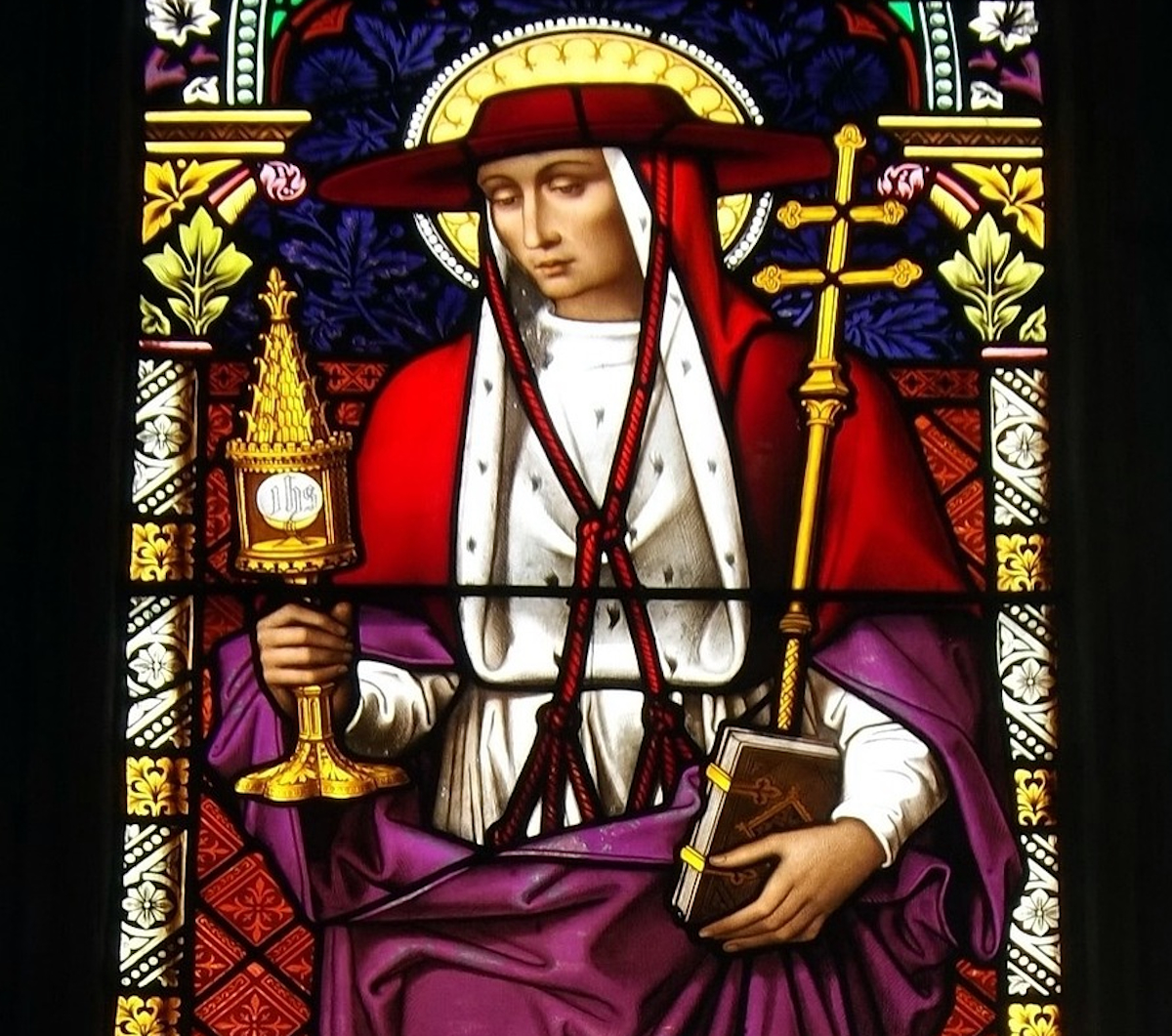
    If anyone embodies such humility, authenticity, and love, it’s St. Charles Borromeo. His gifts were so many, lived so authentically, and their effect so great, that there isn’t time to go into it all. He was born into the kind of wealth and influence few families enjoy, but also, through the mercy of God, a piety even more rare. His was a family from whom nuns, priests, and Popes sprang. Made a cardinal at age 21 by his uncle, Pope Pius IV, Charles enjoyed an easy life at first, but was quickly redirected by the Pope, who made him his right-hand man. Pius acted not out of favoritism, but because he saw in Charles the gifts the Church so badly needed: He was intelligent, tactful, an able administrator, politically astute, fiercely loyal to the Church, a great communicator, a faithful priest and bishop, and a zealous reformer.

    Reform was perhaps the most monumental task given to Charles when the Council of Trent finally ended. This was the Council convoked to respond to the Protestant revolt. Implementing its reforms put his gifts to the test, for he met a lot of resistance, some of it so hostile that one person tried to kill him – a priest, no less! Most, however, simply couldn’t understand what the Church was doing, or why. In reply, Charles proposed that a catechism be created from the Council’s notes. He oversaw its writing and publication, and, to this day, we still have and use the Roman Catechism of St. Charles Borromeo.

    What can we learn from the life of this great saint? I can think of at least three things:

    1. Authenticity. St. Charles used his many gifts, not to get attention or because he should, but because he loved Christ. To him, all people, whether poor, ignorant, or hostile, were the face of Christ. Serving them was serving him. What about us? Do we use the gifts God has given us to serve our own needs, or do we see the face of Christ in others and serve them purely out of love for him?
    2. Reliance on the Holy Spirit. St. Charles traveled extensively and worked all hours; basically, poured his life into reform of the Church. He must have gotten weary, perhaps in darker moments even tempted to quit. But he didn’t; instead, he relied on the Holy Spirit to supply the fortitude and perseverance he needed, as St. Paul advised (Romans 12:11). Again, what about us? Do we ever get weary and tempted to quit? We should be asking the Spirit to supply what we need. Are we?
    3. Daily inner renewal. While fortitude and perseverance are vital, St. Paul also urges us to pray for zeal, which is the intensity of love. Imagine loving with the intensity of Christ! No trial or tribulation is too great; nothing can discourage us. This is the eagerness St. Charles spoke of when he said: “If we wish to make any progress in the service of God, we must begin every day of our life with new eagerness. We must keep ourselves in the presence of God as much as possible, and have no other view or end in all our actions but the divine honor.” Note, he tells us what we must do, not what we should do. That is the crucial difference whereby sinners become saints.

    St. Charles Borromeo, pray for us.


  • Promises, Promises

    Promises, Promises

    Saturday of the 28th Week in Ordinary Time

    Romans 4:13, 16-18; Luke 12:8-12

    Luke’s gospel appears to have been written to a gentile, Greek-speaking audience. Such people would quickly notice the difference between the Greek and Roman gods and the one true God. The gods were irrational, unfair, and inconsistent; God is the epitome of reason, justice, and consistency. The gods were fickle; God keeps His promises.

    That doesn’t mean His promises follow our timeline; they don’t. As Scripture makes clear, the promises made to Abraham – namely, that he would be the father of a nation, his name would be great, and all the nations of the world would find blessing in him – are kept, but in God’s time, not ours. It was up to Abraham to use the gift of faith he was given, which he did, and up to God to keep His promises, which He did.

    St. Paul also mentions an important side benefit to the gift of faith: hope. He describes Abraham as hoping against hope that he would become the father of many nations (Romans 4:18). He later brings in the Spirit, saying, May the God of hope fill you with all joy and peace as you trust in him, so that you may overflow with hope by the power of the Holy Spirit (Romans 15:13). We know hope as the God-given virtue by which we “desire the kingdom of heaven and eternal life as our happiness, placing our trust in Christ’s promises and relying not on our own strength, but on the help of the grace of the Holy Spirit” (CCC §1817). Thus, we aren’t so different from Abraham; it’s up to us to use the gifts of faith and hope, and up to God to send the Holy Spirit to help us.

    That brings us to today’s gospel, where Christ makes three promises, all related to the Holy Spirit.

    First, he promises that those who live the faith by acknowledging him publicly will themselves be acknowledged in heaven. Of course, we can’t do that without the help of the Holy Spirit. Most importantly, it is only in the Spirit that we can say Jesus is Lord (1 Corinthians 12:3). Also, we need his gifts: the courage to step outside our comfort zone, the patience to practice the virtues we find hard to live, and the authenticity to live the faith because it’s who we are, not just what we teach.

    Second, he promises forgiveness in the context of accepting the role of the Holy Spirit. How consoling it must have been to St. Peter after the Passion to recall our Lord saying that those who speak a word against him will be forgiven! And we, so like St. Peter; how we love to hear those words in Confession, “God, the Father of mercies, through the death and resurrection of his Son, has reconciled the world to himself and sent the Holy Spirit among us for the forgiveness of sins.” It’s like a sixteen-ton weight has been lifted from our shoulders!

    Finally, he promises the Holy Spirit will be with us in times of trouble. Unlike some to whom Christ was speaking, we won’t be haled before synagogues, rulers, or authorities on account of Christ; nevertheless, we will be challenged for our faith. Dealing with this requires the Spirit’s gift of prudence. Too often, especially over the coming holidays, people who should be closer together are driven further apart by strong and differing points of view. In all such situations, we must ask the Spirit to help us find the words and actions that make our point without wounding those who disagree with us.

    Everything Jesus promised today – the reward of eternal life for all who live the faith, the forgiveness of sins for all who accept it, and the counsel of the Holy Spirit – are given out of his infinite, merciful love. So, let us resolve to hear his word and keep it, for those who do so are those who love him, and, as he said, whoever loves me will be loved by my Father, and I will love him and reveal myself to him (John 14:21).

    That is a promise. And God always keeps His promises.


  • Being Mrs. McMahon

    Being Mrs. McMahon

    The 28th Sunday in Ordinary Time

    Isaiah 25:6-10a; Philippians 4:12-14, 19-20; Matthew 22:1-14

    When my brother asked me to be his daughter’s Godfather, I was delighted. I flew to New York planning to spend the weekend at his home, enjoy the baptism, the baby, the party, and catching up with relatives I hadn’t seen in years. Unfortunately, we flew through a lot of turbulence; by the time we landed, I felt terrible. I got to his house, found a bed, and laid down for a while to recover.

    When I woke up, no one was home except a woman working on the front lawn – my sister-in-law’s mother, Mrs. McMahon. She looked up, smiled, and asked, “Feeling better?” I said I was. “Good,” she replied, “Pick up that sack of dirt and follow me.” Next thing I knew, we were both working on the front lawn. When we finished, I hoped that was it, but she said, “Now, on to the back yard.” Ugh. An hour later, she said, “Let’s go in now.” I was so relieved – until I got in. I should’ve known; there were folding tables to put up, tablecloths to lay, places to set, dishes to do, a dinner to start, and floors to vacuum. When my brother came home, he said, “You didn’t have to do all this!” I said, “Yes, I did! Have you ever met your mother-in-law? Is she always like this?”

    I admit that at the time I was feeling very put upon. I went there expecting to sit around, take it easy, and enjoy myself. Instead, I felt like I was the host and my brother and his family were the guests. However, the next day, when I saw them relaxed and enjoying themselves, I had a change of heart; I felt bad that it hadn’t occurred to me to do what Mrs. McMahon did: Look around, see how I might be able to help, and get busy.

    That reminded me about the first of the two surprises in today’s parable. As you know, parables are designed to make us think by adding plot twists we don’t expect. The first twist was the reaction of the guests who were re-invited to a banquet they had already refused. We expect them to be annoyed, but to kill the servants? What’s that all about?

    Well, it’s a parable, so the killing symbolizes something; in this case, how we sometimes kill the urge to be selfless. As Bishop Sheen once reminded us, God tempts us far more often than Satan does. Think of all the times in a day we are “tempted” to put other people first, think about them, do something nice for them. These are moments of actual grace; invitations from God to unite our will to His by seeking the good of others. Now, consider what putting our own will first does, like I did: it smothers those impulses.

    Most of us try to do both, to look out for others and for ourselves. That’s not a problem. The problem comes when we get comfortable and refuse to be challenged. Maybe we’ve been invited to help at the parish, go to a pro-life chain, work at a food pantry, or any of a number of things. Sometimes we really can’t do it; other times we can, but it’s very tempting to turn that invitation down in favor of what we want. We like doing our own will, and it may content us for a while, but in the end we’re not happy. Happiness only comes when we take advantage of the actual graces God makes available – like when He gave me the example of Mrs. McMahon to show me, against my will, that happiness involves a lot more than just “showing up.”

    And that reminds me of the second twist in the parable: The wedding garment. Why is the man without one punished so severely when he had no idea he was going to need it? Scholars tell us that, in those days, if a man showed up without a proper garment, the host would offer him one from his own stock. That’s not unheard of today. Some high-end restaurants require a tie and suit coat; they offer them to men who come in without them, and will escort them out if they refuse. So in the parable: A garment was available, the man refused to wear it, and as a result was “escorted out” in no uncertain terms.

    But again, the question is, what does the garment symbolize? As I see it, it is a sign that we have “put on Christ,” in the words of St. Paul (Romans 13:14), or, in modern terms, that we are “walking the talk.” I went to New York to be a Godparent – someone who had put on Christ, was living the faith. But was I? Not so much. I went to Mass every week, sang in the choir, even donated money, but in my heart, I knew that I was living every other hour of the week as if I’d never heard of Christ. On the other hand, there was Mrs. McMahon; she, too, had traveled a long way, and was twice my age. Yet she almost never sat down, either the day before or the day of the baptism; instead, she served, saw to other peoples’ needs. And she was happy doing it. Her daughter told me that her mom was just that way; wherever she went, she saw the need and tried to fill it. Of the two of us, she was the one who had put on Christ, who lived her faith for the world to see.

    So, what does this mean for us? That we’re all supposed to be another Mrs. McMahon? Yes and no. Yes, in the sense that we, too, are called to show Christ to the world. How? As St. Paul said, by knowing how to live in humble circumstances or abundance, well-fed or hungry, in plenty or in need, because the source of our happiness is none of those things, it is Christ alone. From him comes the strength we need not only to endure, but to prosper. And no, in the sense that God already has one Mrs. McMahon; he doesn’t need any more. What he needs is us, with the gifts he has given us. Every day, he invites us in countless ways to become the people he created us to be. Is it hard? Yes. Do we sometimes want to turn the invitation down, go in and relax? Sure. But again, take heart, and remember: We have the strength of Christ on our side. In him, we can do all things.

    I can almost hear him saying, “Feeling better? Good. Pick up that cross and follow me.”