
1 Corinthians 6:13c-15a, 17-20; John 12:24-26
The priest, psychologist, and spiritual writer Henri Nouwen once said that there are two types of spiritual loneliness, each a kind of blindness. The first comes from being out of touch with God; this is the blindness of too little light. The second is just the opposite; it is the blindness of too much light, or an intimacy with God that exceeds our thoughts and feelings. Both kinds of loneliness, and their cures, are hinted at in our readings and in the lives of St. Maria Goretti and her neighbor, Alessandro Serenelli.
Luigi Goretti and Giovanni Serenelli partnered as sharecroppers on an estate just south of Rome in the early 20th century. Their families occupied separate flats but shared a kitchen. They had little else in common. The Gorettis were pious and hard-working, their daughter Maria charming and of unwavering faith. The Serenellis were religiously indifferent and struggled with alcoholism, mental illness, and physical abuse. Their son Alessandro, 8 years Maria’s senior, was sullen, withdrawn, and mired in the pornography of the time.
Fr. Nouwen wrote that the loneliness of being out of touch with God leaves us anxiously searching for something or someone to give us a sense of belonging and home. In his loneliness, Alessandro could have reached out in friendship to Maria but he preferred the darkness, blind to the truth spoken by St. Paul that as members of Christ and temples of the Holy Spirit, the body is not for immorality (1 Corinthians 6:13). To him, Maria was not a person to relate to but a thing to use. On a hot July afternoon in 1902 the 20 year-old finally cornered the girl and tried to force himself upon her. Repeatedly Maria cried, “No! It is a sin! It is not God’s will! You will go to hell!” Angered and frustrated by her resistance, Alessandro stabbed her 14 times with a metal file, then fled. For 20 hours Maria suffered from those wounds until she died, just three months before her 12th birthday.
The second loneliness mentioned by Fr. Nouwen is the blindness of too much light; not a poverty of God’s presence but of our ability to relate to it. This requires love; as we fail to love we feel without God, though he is all around. In the gospel Jesus says, unless a grain of wheat falls to the ground and dies, it remains just a grain – or more literally – it remains alone (John 12:24). Christ doesn’t want us to remain alone; he wants us to remain in him (John 15:4) by loving one another as he has loved us (John 15:12), even to the death.
Maria Goretti knew this. While she did not care for Alessandro the way he wanted, there is no greater love than to lay down your life for a friend (John 15:13) and she was his friend to the end. She resisted his advances not only for her own sake but also for his, keeping him from sinning against his own body as well as hers. She reminded him of the primacy of God’s will and warned him of the eternal consequences of his actions. Ultimately she showed him the importance of the virtue of chastity by martyring herself for it and, most Christ-like of all, she died forgiving him to the point of praying that one day he would be with her in Paradise. We should all have such a friend.
This is the love that bears fruit and eventually did in the life of Alessandro Serenelli. Years into his incarceration, little Maria came to him in a dream and once again made clear that she forgave him and was his intercessor before our Heavenly Father. From that moment, the grace of conversion worked within him; he became a model prisoner, was released early, begged forgiveness of Maria’s mother (which was granted), and worked in a monastery for the rest of his life, devoted to the little-girl-now-Saint who he knew was waiting and praying for him.
You and I know both kinds of blindness from our own experience. Perhaps we have at times allowed ourselves to drift away from God, to remain comfortable in the darkness of a particular sin or sinful way of life; to seek gratification in places and things that can never satisfy us. It is a true friend who has the courage and love to tell us, “No. It is a sin. It is against God’s will.” And what a great blessing to be that person for someone else; to help strengthen the graces of faith and hope within them, as Maria Goretti did. And maybe we have also suffered the blindness of too much light; times when we knew God was calling us deeper but we had grown comfortable where we were; times when when we took him and his merciful love for granted; times when we spoke of our great love for Christ but then ignored him, needy on the street. Again, it is a true friend like Maria Goretti who is willing to model for us the virtuous love that leads us out of that blindness, the love to which Christ calls us all – the love that glorifies God in our body (1 Corinthians 6:20) and preserves our life for all eternity.
St. Maria Goretti, pray for us.



 Mary understood this and, as in all things, obeyed her Lord. That is why i
 Of course t
 But Jesus also taught us through his obedience unto death that glory waits on the other side of suffering; that being made perfect is not a matter of doing all things on our own, but the opposite: Letting go of control and uniting ourselves more and more to the will of the One who is our true strength.
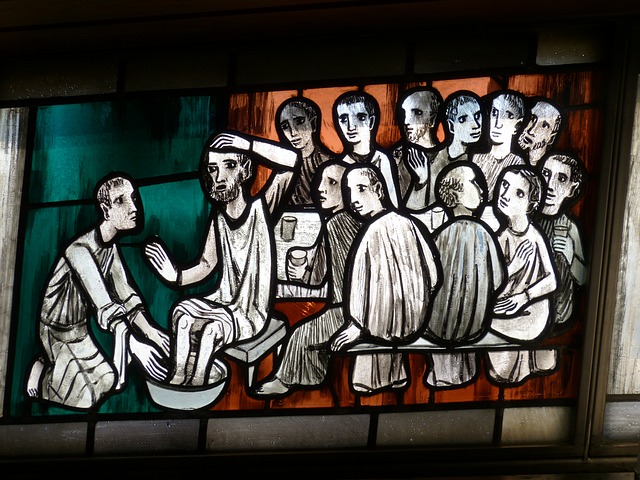 By showing Jesus washing the feet of his disciples, the evangelist re-emphasizes the primacy of service. Those who would be greatest must become the least. This is the humility and love behind the gift of his life poured out for our sake, by which he becomes one with us and we become one with each other.
 Like Judas, many people cannot make the leap from teacher to Lord. Perhaps they are afraid of what it would mean. The words of Jesus could no longer be taken as opinion, his actions no longer regarded as merely well-intended, his death no longer understood as the death that comes to us all. The change of that one word, from teacher to Lord, changes everything.
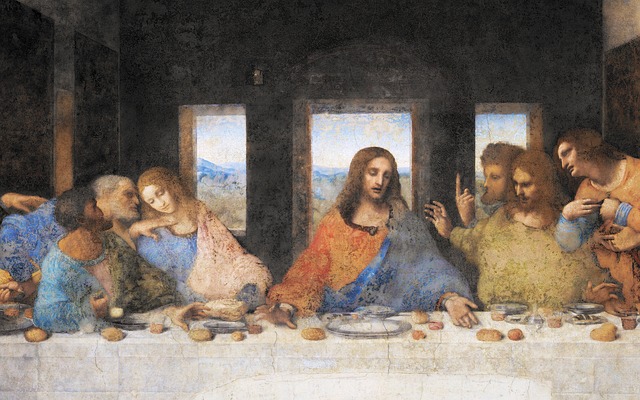 Let us keep this in mind as we prepare to receive the Sacred Morsel of our Lord in the most Holy Eucharist. For we are all like Judas; we have all betrayed our Lord’s innocent blood with every sin, no matter how small. And as He did with Judas, so does our Lord do to us; He continues to feed us, to respect our dignity, to love us unconditionally.
 There is an ancient rabbinic saying that “the fragrance of a good perfume spreads from the bedroom to the dining room; so does a good name spread from one end of the world to the other.”
 Mark 10:45