Category: Roman Catholic

  • The Most Surpassing Gift

    The Most Surpassing Gift

    Memorial of St. Anthony of Padua, Priest and Doctor of the Church

    1 Kings 18:41-46; Psalm 65:10, 11, 12-13; Matthew 5:20-26

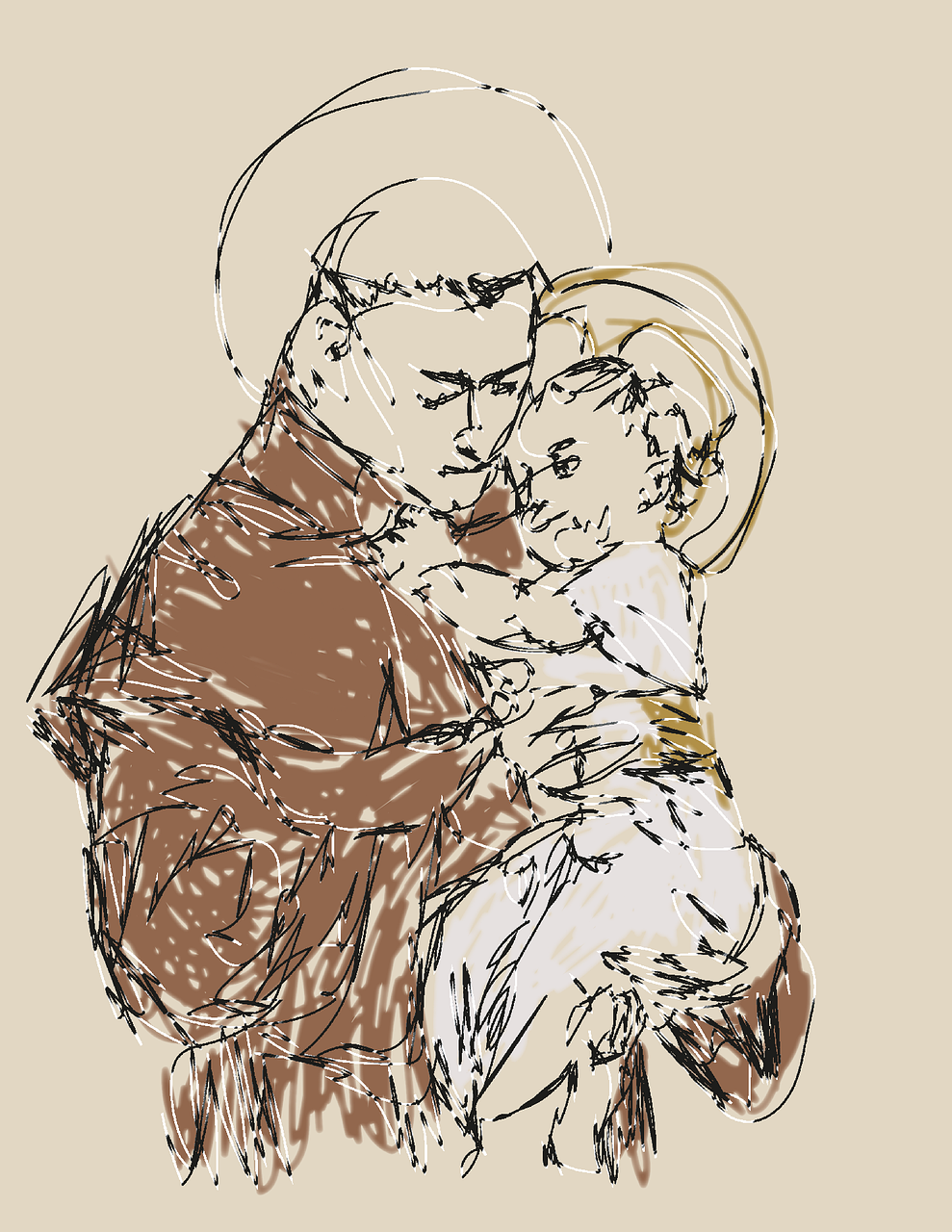
    Today is the Memorial of St. Anthony of Padua. Although time doesn’t permit us to look very deeply into his life, this man is such a great saint that even a summary can help us understand something important about God and ourselves.

    Born in Lisbon in 1195, Fernando Martins de Bulhões became an Augustinian priest near his home in Portugal, but spent most of his life as a Franciscan named Anthony. He wanted to be a missionary to the Muslims in Africa; he became a theologian. He wanted to be a martyr; he became a teacher. He wanted a quiet life of menial labor; he became a renowned preacher against heresy and the first theology instructor of the new Franciscan order. He wanted to die in Padua; he died on his way there.

    In the gospel, Jesus said that unless your righteousness surpasses that of the scribes and Pharisees, you will not enter into the Kingdom of heaven (Matthew 5:20). It isn’t that the scribes and Pharisees have no righteousness, it’s that ours must be surpassing. In life, there is good and there is better; we may be in good health, but we can be healthier. This also applies to the spiritual life; we may have a good understanding of the bible or the Church, but we can always learn more, and, in so doing, grow closer to God.

    Everything Anthony wanted was good. Being an Augustinian, a missionary, a martyr, living an ascetic life, serving in the lowest place, are all very good. Nevertheless, God had something better, something surpassing, in mind for him. All people, good and evil alike, are called to conversion. Everyone can grow in holiness.

    While growth in holiness sounds great, in practice it means that sometimes we will find ourselves in places we don’t expect, doing things we didn’t plan on doing. If we are ever tempted to see these as mistakes, deviations from the plan, the life of St. Anthony shows the opposite; they may be the plan. We may be exactly where God wants us.

    How do we know? By looking at the fruit of our labor. Again, consider St. Anthony. All his desires – to be an Augustinian, a martyr, a servant in a monastery – would have had wonderful effects, touching many lives for the better. For most of us, any of these would be a surpassing gift. But God had given Fernando a brilliant mind, capable not only of understanding deep theological concepts, but of being able to express them simply, clearly, and profoundly. These, along with his passion and humility, would sway the hearts of thousands otherwise lost to the heresy sweeping across western Europe. Thus, Anthony of Padua had gifts that could change the course of the Church herself forever.

    He couldn’t know that at the time, any more than we know how our choices will affect others. But therein lies his true greatness; like Elijah’s servant who kept looking for God in the storm, St. Anthony looked for God always and everywhere in the events of his life until he found Him, and then listened to and obeyed Him. We are called to do the same. Like that servant, all we may see at first is the “storm” – the illness, the suffering, the things we’d rather not do. But, if we’re vigilant, if we keep looking with the eyes of faith, God will give us the grace to see ourselves as the psalm does; that through these storms, our Lord prepares us to receive Him. There is pain in breaking into the soil to do that, but how else can the seed grow into a rich harvest? This is how God loves us, and love is His most surpassing gift; He gives it to us every day, at every Mass, in every Eucharist. As St. Anthony and all the saints show us, with the grace of this gift, there is nothing we cannot do.

    St. Anthony of Padua, pray for us.

  • The Battle of Wills

    The Battle of Wills

    The Solemnity of the Most Holy Body and Blood of Christ (B)

    Exodus 24:3-8; Psalm 116:12; Hebrews 9:11-15; Mark 14:12-16, 22-26

    As a young parent, I learned the hard way that, when you want to get a 2 year-old to do something, you don’t begin any sentence with the words, “Do you want to…” It doesn’t take long to find out that when the child replies, “No,” it becomes a battle of wills, and one of the strongest forces on Earth is the will of a 2 year-old.

    Of course, it isn’t just kids; people of every age can be very determined to see their will is done. We see it in Scripture. For example, the two verses of Mark’s gospel just before today’s reading tell us of Judas’s will to hand Jesus over to the chief priests. But we also see that Jesus has anticipated this, and has a very strong will of his own. That’s why he gives such detailed instructions to the two disciples about following a man to find the upper room. He doesn’t want Judas to know that location yet, because he has plans for that meal and will not tolerate being arrested there.

    We see why in the second part of the gospel, for Jesus speaks the words we hear at the consecration. This also shows his will at work, for as the first reading showed, Jesus didn’t choose those words because he liked the way they sounded; he used them because they were patterned after the words spoken by Moses centuries before, when he sacrificed the bulls and sprinkled both the altar and the people with their blood.

    And our Lord’s will runs as deep as his blood, as we begin to see in the second reading. While the Old Testament sacrifice of animals was effective, it was never intended by God to be perfect. Why? Because, the animal , although innocent, was also an unwilling victim. For the perfect atonement of the sins of all mankind, the victim had to be not only innocent, but also totally willing to give up his life.

    This is the heart of today’s Solemnity: the triumph of Christ’s human will. Without his willingness to give up his life, there could be no crucifixion, no resurrection, no eternal redemption, and no Holy Communion. And this is the heart of his love for us, for love is an act of the will, and as he said so beautifully in John’s gospel, there is no greater love than to lay down your life for your friends.

    But Christ’s sacrifice does us no good unless we’re willing to love him in return, so the question for us is, as the psalmist sang, How shall I make a return to the LORD for all the good he has done for me (Psalm 116:12)? I can think of three ways:

    • Preparation. Christ made sure the upper room was prepared. How do we prepare ourselves for Mass? We can begin as we are getting ready at home and while we’re on our way; we can arrive early, take time to talk to God, to tell Him what’s in our heart and on our mind. It isn’t that God doesn’t already know, it’s that He wants us to share, to make an effort. That’s an act of our will.
    • Worthy reception of the Holy Eucharist. The grace of every Sacrament is freely available, but we have to be ready to receive it. Are we in a state of grace? Have we been to confession and gotten ourselves as ready as possible to receive the grace Christ offers? Then, when Communion begins, focus as exclusively as possible on receiving Christ. This is the moment when he comes directly into us, the moment he wills that we become what we receive. Are we willing to become like Christ?
    • Drawing closer to God in daily life. When we truly love someone, we don’t limit ourselves to spending an hour per week with them. Why should it be that way with God? Rather, we should be mindful of His presence with us every moment of every day, and ready to show the world that our will and God’s will are the same thing.

    These sound great, and are easy to say, but we all know how hard it is to go from words to the deeds that back them up. It’s the battle of wills inside us; the will to do what we want on one side, and the will to do what we ought on the other. We can’t win it alone, but we don’t have to; the grace of God is always available. All we have to do is ask for it, and resolve to use it. The more we do that, the more we show our Heavenly Father that we’re serious about winning the battle, about making real in our lives the meaning of His Son’s words in his prayer and, above all, in Gethsemane: Thy will be done.

  • The Language of Love

    The Language of Love

    Pentecost Sunday

    Acts 2:1-11; Galatians 5:16-25; John 20:19-23

    From the time they were little, all of our kids loved to read; all, that is, except one. No matter what I did, I could not get this kid interested in books. When he was about 5, I got an idea: Poetry. I sat him on my lap, took out a poetry book the other kids loved at his age, found one of our favorites, and began to read. About halfway through it, he turned, looked up, and kept his eyes fixed on me until the poem was over. As he got down, I asked him, “So, what did you think?” He glanced at me and said, “You’ve got hair growing in your nose.”

    He isn’t the first person to focus on the medium rather than the message. It’s easy to do, especially when we find the medium so intriguing. The Holy Spirit is a good example. Despite (or maybe because of) a wealth of biblical imagery – a dove, fire, wind, breath, a mysterious Advocate or Counselor – He’s hard to picture. So, let’s focus on what these images are trying to tell us about the Holy Spirit.

    First, breath. Throughout Scripture, breath and spirit are the same word in the original language. For example, in Genesis we read that God blew into the first man the breath (or “spirit”) of life (2:7). The risen Christ did something very similar; after showing the Apostles his hands and side – the price of our salvation – he breathed the Holy Spirit on them and empowered them to retain or forgive sins. Through their ministry, the Holy Spirit breathes new life into every soul dead in sin, granting us pardon and peace.

    Peace brings us to the dove, its ancient symbol. When Jesus bid peace to the Apostles, the greeting he used, shalom, meant a lot more than the absence of conflict; it implied wholeness, tranquility, harmony with other people, and with God. In the same way, the peace given by the Holy Spirit is a lot more than the passing feeling we get after confession; rather, it is an enduring, stable state of tranquility, listed by St. Paul as one of the nine “fruits” of the Spirit (Galatians 5:22-23).

    They’re called fruits for two reasons. First, they’re tangible evidence that the Holy Spirit is at work within us. For example, if I have Spirit’s gift of peace, I and those around me should be able to see that I am more at peace, in all ways, than I was before. Second, like fruit growing in nature, gifts like peace don’t develop overnight; they take real effort, and a long time to cultivate and ripen. It’s good to ask the Holy Spirit in His role as Counselor to help us to take a good look at ourselves to see which fruits of the Spirit seem to be growing, and which require more work.

    Finally, as the first reading reminded us, the Holy Spirit is also associated with wind and tongues of fire. When He fell on the Apostles, they spoke (or were heard) in the languages of their hearers. This type of gift is known as a charism, or grace given to us by the Holy Spirit for the benefit of others. There are many charisms, some intended for instruction, others for administration, still others for miracles, service, or prayer. Regardless, charisms are another way the Spirit works through us to build up the Body of Christ, the Church.

    Through us, that’s the key. The Holy Spirit only works through us if we let Him, so now is a good time to think about what charisms He’s given you and challenge yourself to use them. Maybe you’re good with people; if so, you’d be a natural in many places in the Church; the Food Pantry, working with the elderly or with kids. Maybe you’re good at explaining things; help as a teacher or catechist. Maybe you’re very organized or a good planner; the Church is always looking for you. Maybe you’re none of those things, but you are a good listener, or love to pray, or a great caregiver, or any of a thousand other things. The point is, be still, pray, and let the Holy Spirit remind you of the things you’re good at; then, cooperate with those graces to bring yourself and those around you closer to God and to each other.

    Although the Church sets aside this one day to celebrate Pentecost, every day is its own Pentecost. The Holy Spirit speaks all the time, to everyone. We may not feel the breath of Christ, but through the power of the Spirit we have the forgiveness of sins; we may not see doves, but we’ve been given peace and the other fruits of the Spirit; we may not see tongues of fire, or hear noises like driving winds, but we have the gospel proclaimed in language we can understand. The question is, are we listening? As St. John of the Cross once said, “What we need most in order to make progress is to be silent before this great God…, for the language he best hears is silent love.” And that is what the Holy Spirit speaks: the language of love.

  • Let It Out

    Let It Out

    Saturday of the 7th Week of Easter

    Acts 28:16-20; 30-31; John 21:20-25

    In 1955, Bishop Kung, the Bishop of Shanghai, was arrested while publicly praying the rosary. Months later, he was taken to a stadium in Shanghai, where thousands were forcibly gathered to hear him confess his crimes. In prison garb, his hands tied behind his back, and pushed to the microphone, the bishop said, ‘Long live Christ the King. Long live the Pope.’ The crowd roared back, ‘Long live Christ the King! Long live Bishop Kung!’ Quickly taken away, the bishop was sentenced to life imprisonment in 1960, and spent 30 more years in mostly solitary confinement.1 At the age of 87, he was released, came to the United States, and lived here until he died at age 98. When Pope John Paul II, who secretly made Kung a cardinal years before, made it official, he said, “I felt that the whole Church could not but honor a man who has given witness by word and deed, through long suffering and trials, to what constitutes the essence of life in the Church: participation in the divine life through the apostolic faith and evangelical love.”

    As with St. Paul at the end of Acts, the story of Cardinal Kung shows that, no matter the time, place, or what is done to the Church or her ministers, the word of God cannot be chained. It is the truth, and, as St. Augustine once said, the truth is like a lion; let it out, and it will defend itself.

    But that can be precisely the problem – letting it out. Like St. Peter in the gospel, we get distracted. Sometimes, it comes in the form of doubts or anxieties; we fear failure, doubt our ability, or worry what others will think. Other times, we get caught up in the comforts of life and put more of our time and energy into those. Either way, the result is the same: we take our eyes off of Christ.

    Let us rather resolve to continue doing what St. Paul, St. Peter, and Cardinal Kung ultimately did with their lives: Witness Christ by word and deed. We may fail, make mistakes, or lose some friends. We might even lose out on some of the comforts the world has to offer. But, to re-iterate what Holy Father St. John Paul II said, this is the essence of life in the Church, and despite whatever we risk losing now, the reward in Heaven is infinitely greater.

    1http://www.cardinalkungfoundation.org/ck/CKlife.php

  • Our Mutual Friend

    Our Mutual Friend

    Monday of the 6th Week of Easter

    Acts 16:11-15; John 15:26-16:4a

    In Seneca Falls, New York, in 1851, a young woman named Elizabeth went out for a walk, possibly to blow off some steam. She had just been denied a seat at an anti-slavery convention because she was a woman. During her walk, she came upon a friend out walking with her friend Susan, who was in town to attend a temperance meeting. The two strangers, Elizabeth Cady Stanton and Susan B. Anthony, struck up a life-long friendship which led to great civil rights advances, such as the right of women to vote and to own property. And all because of a chance encounter on a street corner!

    In the first reading, we hear of another encounter, this one by a river near Philippi. Paul and his companions, looking for a place to pray, came upon Lydia and her friends who had gathered there. We don’t know much about her, but it’s not hard to see that Lydia was devout, spiritually hungry, and open to the gospel; soon, she and her household became Paul’s first converts in Europe. Not only that, she opened her home to the grateful missionaries. We can’t know, but it may be that when Paul wrote his letter to the Philippians years later, he fondly remembered that chance encounter with Lydia.

    I shouldn’t say “chance.” Scripture is clear that God was behind it all along. The whole reason Paul was there was because the Spirit twice prevented him from going anywhere else, then explicitly told him to go to Macedonia (Acts 16:1-10). Of course, the Holy Spirit was still there, leading the mission, and in that meeting by the river, Paul did exactly what Jesus said to do in the gospel: he testified to him (John 15:26).

    Every Mass we attend is a meeting by the river; not the one near Philippi, but the Living Water of Christ. Here, he testifies to us in Word and Body; here, the Holy Spirit leads us into all truth. The question is, do we remain as devout, hungry, and open to the gospel as Lydia was? It’s hard enough to keep our hearts open to its challenges, but what about our church home? So often we have strangers among us, especially on Sunday. These are no chance encounters. How are we keeping our hearts and parish home open to them?

    Equally important, God sends us out from this home and into the mission fields of our own homes, neighborhoods, and communities. That makes every meeting with every person outside these walls no chance encounter, either. How are we testifying to Christ? Can those who meet us or come by our homes tell that we are his followers – not by the number of religious things we own or talk about, but by the way they are treated?

    Let us remember today and every day that in reality there are no strangers, only friends we have yet to meet through our mutual friend, the Holy Spirit.

  • WWJD?

    WWJD?

    Thursday of the 5th Week of Easter

    Acts 15:7-21; John 15:9-11

    You may remember that, years ago, there was a lot of merchandise around with WWJD? imprinted on it. Christian commentators look back on that as a fad that went the way of the dinosaur, but, in my opinion, it’s always good to contemplate what Jesus would do about so many of the things we debate about in our time.

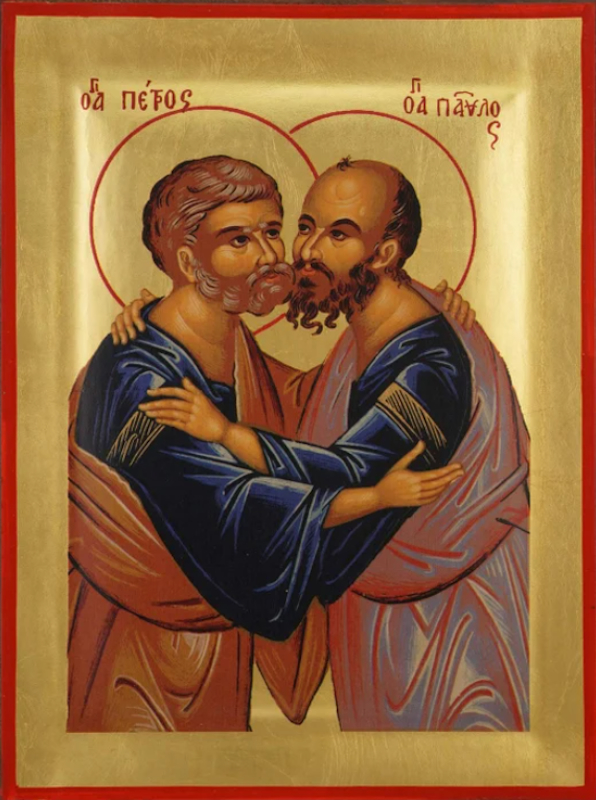
    I thought of that while reading today’s passage from the Acts of the Apostles. The influx of gentiles into Christianity had stirred up a good deal of debate. It’s not hard to see why; up to that point, the faith had been dominated by Jews. Now, as they were quickly becoming the minority, at least some Christian Jews began pushing for gentile converts to follow Mosaic Law. Luke keeps it simple; he doesn’t give us the debate, just the aftermath. What strikes me is that, although Peter, Paul, Barnabas, and James all say what they think should be done, none of them talks about what Jesus would say or do.

    Luke might have left out the details of the debate because the side that lost argued that they knew what Jesus would do: agree with them. It makes some sense; after all, Jesus himself followed the Law. In fact, it was he who said, Do not think that I have come to abolish the law or the prophets. I have come not to abolish but to fulfill (Matthew 5:18).

    Nevertheless, the side represented by Peter and James carried the day because they understood that the real issue was not about what Jesus would do, but about what he had already done. First, he set the example. He taught, healed, and made disciples among both Jews and gentiles. Then, he sent the Apostles from Jerusalem to the ends of the earth (Acts 1:8). Clearly, Jesus intended that they see to it that both Jews and gentiles were welcome in his Church.

    The Apostles could only do that if they used what our Lord gave them, and in today’s readings, we see two things. First is the commandment to remain in his love, which means to strive for that same “oneness” that Jesus and his Father enjoy. The Apostles did understand this. The book of Acts, the letters of Paul, and those of John spend a lot of time talking about unity and the importance of preserving it. That principle of oneness was uppermost in their minds during the debate, and we see it in their decision.

    The second thing Jesus gave them was the greatest gift of all: the Holy Spirit. The book of Acts really is the book of the Holy Spirit; no matter where the Apostles go or what they do, the Spirit is constantly guiding them, helping them, and giving them courage, insight, and inspiration. Without Him, they can do nothing; with Him, they can do anything.

    As always, what applied to the Apostles applies equally to us. If history shows us anything, it’s that there will always be problems and debates within the Church. We have them among ourselves in every parish! But, we also have the commandment to remain in his love – to preserve the unity Jesus prayed for (John 17:21-23). Doing that means, for example, having the humility to listen to those who disagree with us, not to show them where they’re wrong, but to show ourselves where they might be right. And, we also have the Holy Spirit, who teaches us that true love is not about what’s best for me, but what’s best for us. Even if our solutions aren’t pleasing to everyone (or anyone), if they are done in and with the Holy Spirit, they will please our heavenly Father.

    We all know, even without a bracelet, that is definitely what Jesus would do.

  • Letting Go

    Letting Go

    Good Friday
    Hebrews 5:7-9

    From the time we first became Christians, we have learned that the standard for our behavior is not those around us but Christ. Given that, it might be easy to give up and say that we can never reach that standard of perfection.

    That’s true. Left to ourselves, we can’t.

    But as the author of The Letter to the Hebrews reminds us, we aren’t left to ourselves. In his infinite mercy, Jesus sympathizes with our weakness. Even though he himself never fell to the many temptations that weighed on him like a cross and surrounded him like a crown of thorns, he knows what it’s like to carry them, to bear their weight and feel their pain, but also to endure and overcome them.

    Fully man, Christ knows what it means to feel the kind of pain that leaves us without words; able only to offer prayers and supplications with loud cries and tears to the one who was able to save him (Hebrews 5:7). Enduring that kind of torment, he must also have felt the natural reaction of the human body to fight against and relieve the pain – on this day, to come down from the cross – yet Son though he was, he learned obedience from what he suffered (Hebrews 5:8).

    But Jesus also taught us through his obedience unto death that glory waits on the other side of suffering; that being made perfect is not a matter of doing all things on our own, but the opposite: Letting go of control and uniting ourselves more and more to the will of the One who is our true strength.

    This is the ultimate lesson of Good Friday. Christ’s triumph over self-will and self-reliance did not enable him to merely sympathize with our suffering or feel our pain but to be perfectly in himself the source of eternal salvation for all who obey him (Hebrews 5:9).

    We adore you O Christ and we praise you, because by your holy cross you have redeemed the world.

  • The Rewards of Waiting

    The Rewards of Waiting

    Thursday of the 5th Week in Lent

    Genesis 17:3-9; John 8:51-59

    One morning at work, my computer gave me trouble. I called the help desk, described the problem, and the woman said, “OK, hold on. I’ll be right there.” I hung up and waited. That was 25 years ago. I’m retired now, but if I ever see that woman, I’m going to tell her that she and I have very different definitions of the words, “be right there.”

    I think Abram might sympathize. Scripture says he was 75 years old when God called him to be a great nation, 99 when God changed his name to Abraham, and well over 100 when Isaac was born. For thirty years, he waited. As we read the Scripture, we see that Abraham did two important things while waiting, and they’re a good lesson for us, especially those of us who have been waiting for God to answer a particular prayer.

    First, he wasn’t afraid to speak to God openly, much like a friend. In fact, the prophet Isaiah and the disciple James both call Abraham exactly that: God’s friend (Isaiah 41:8; James 2:23). He wasn’t disrespectful, but spoke honestly and from the heart, asking God when he would get a son or how he would come to possess the promised land. Far from scolding Abraham for that, God answered him. So, what about us? Do we love and approach God as our Maker and our friend, and ask Him, in all humility, for the gift of understanding that only He can give?

    Second, despite any lack of understanding he had, Abraham trusted God. We see that in his unwavering obedience. Where and when he was told to go, he went; what he was told to do, he did. No matter what, Abraham took God at His word, trusting that all would be as He promised. This is the faith that so impressed St. Paul (Romans 4:3; Galatians 3:6), who knew, like we do, how hard it can be to remain faithful when we feel like an answer is never coming, or God doesn’t care, or isn’t listening. It may well be that those most difficult times are when our trust and obedience mean the most to Him!

    And, as the gospel shows, God is never outdone in generosity. Abraham’s trust was rewarded by a lot more than the birth of Isaac or even a multitude of nations. No one knows the details, for Jesus doesn’t provide them, but when he told the Jews that their father Abraham rejoiced to see my day (John 8:56), he seems to have been referring to some mystical revelation of himself to Abraham. How glorious that must have been! Of course, the Jews couldn’t understand that, but it is perfectly in keeping with what our faith demands. After all, the same Jesus is hidden in our Tabernacle right now, ready to be revealed to us – an encounter he’s been waiting for, for 20 centuries.

  • The Grander Plan

    The Grander Plan

    The Thursday after Ash Wednesday

    Deuteronomy 30:15-20; Psalm 1:1-2, 3, 4, 6; Matthew 4:17; Luke 9:22-25

    A psychiatrist found that some of his patients, people who seemed to have everything, were deeply unhappy. While each of them had successful careers, they had not chosen them because they loved the work, but because they thought the money would make them happy. Only later in life did they find what truly made them happy; unfortunately, by then they had obligations that required them to keep the job, whether they liked it or not. As part of their treatment, the psychiatrist encouraged each of them to spend a little time, just 30 minutes a week at first, doing what made them happy, and, while they were doing it, to seriously consider the idea that there was a grander plan for their lives, that they came from something bigger than themselves.

    Not bad advice, and not very different from what we hear in the readings. As we come upon Moses, he is nearing the end of his life. Looking out upon the Promised Land he’s forbidden to enter, and knowing that Israel will soon go on without him, he speaks the last words he will ever say to them, the thing closest to his heart, the grander plan God has in mind: I have set before you life and death, the blessing and the curse. Choose life, then, that you and your descendants may live, by loving the LORD, your God, heeding his voice, and holding fast to him (Deuteronomy 30:15-20).

    This is the plan he knows is happiness: to heed the voice of God, to hold fast to Him. But the choice is theirs, and I’m sure Moses knew it was one they’d too often not make; and indeed, the history of Israel would be littered with choices they thought would make them happy, but left them miserable instead.

    The start of the Lenten season is the perfect time for us to ask ourselves how different we are from them. Do we heed the voice of God? Do we hold fast to him? If we wonder how to do that, the psalmist tells us: By delighting in the law of the Lord, by meditating on it. That makes sense; when we love someone, we delight in spending as much time as we can with them; we want to know them as well as possible, and we want them to know us. That leads us to prayer, in which we speak to God, but it also means taking time to listen when God answers us, which he does every time we hear or read Scripture.

    Sometimes, the answer is what we may not want to hear. Today is a good example, as our Lord speaks about self-denial and taking up our cross every day. Meditating on that, the question he wants us to ask ourselves begins to emerge: Do I sometimes take up only those parts of the cross that I want to take up? Do I choose my own plan – more of what I want – and less of what God has in mind for me?

    Facing the truth can be very uncomfortable, but it is also very consoling, and it is always salvation. For the truth is Christ, and Christ is constantly calling us as the gospel acclamation says: to repent, to change our minds. If we think in terms of having to make huge changes in our lives, that can be frightening, but remember what the psychiatrist advised his patients: Baby steps. So, this Lent, take just a little extra time with Christ to let him reveal, however he chooses, the grander plan for your life; to remind you that you come from something bigger than yourself. The psychiatrist didn’t name that grander plan; perhaps he didn’t know it, but we do – it is the Kingdom of heaven, and that something bigger, the grace we need to carry our cross every day, and follow Christ all the way to Calvary, the tomb, and the eternal glory that lies beyond.

  • Us Vs. Them

    Us Vs. Them

    Saturday of the 5th Week in Ordinary Time

    1 Kings 12:26-32; 13:33-34; Mark 8:1-10

    A team of social scientists enlisted some preteen boys to help them with an experiment. With their parents’ permission, the kids spent several days at a summer camp. Each boy was assigned to one of two groups. For awhile, the groups stayed separate so the boys could get to know each other. When the groups finally met, an “us vs. them” mentality quickly emerged and eventually led to hostility. Because the scientists’ real purpose was to see how such groups might be brought together, they tried some joint activities like movie nights. These failed; if anything, the groups grew even further apart. Finally, the scientists faked what looked to the boys like a real emergency: the camp’s water supply had “somehow” been cut off. As the team predicted, when the groups got together and worked to fix the problem, hostility greatly decreased; they became much friendlier to each other.

    Of course, the “us vs. them” mentality is nothing new. We see it in the first reading. One group, the 10 tribes under Jeroboam, want things one way; the other group, the tribes of Benjamin and Judah, another. Both want to worship God, but sadly, hostility breaks out over how and where to do that. In Jeroboam’s case, this spells disaster; his house was cut off and destroyed from the earth (1 Kings 13:34). The tribes under him fare little better; they are conquered and absorbed into the surrounding Gentile peoples.

    It is in Gentile territory that Mark now tells of a “great crowd” that has come to hear Jesus. Descendants of the struggle for power over the centuries, they are of two groups: some Jews, but mostly Gentiles. In the area of the Decapolis, where Jesus now is, these two groups live and work near each other, but remain pretty much separate, and, at times, hostile. Nevertheless, here they are, shoulder to shoulder, listening to Jesus.

    And listening for three days! We don’t know what he said, but whatever it was, it held them fast. He sees how hungry they are, and that they can’t go on without food, so, as he did in Jewish territory, he now does in Gentile territory. Since this is the second time Jesus has fed a multitude with a few loaves and fish, we might ask why the disciples didn’t know what he was going to do, but I think the focus is better put on who he was doing it for: Gentiles. Two hostile groups – Jew and Gentile – two miraculous feedings. Perhaps Jesus is showing both groups, through his word and bread, that they have a common problem, far greater than any group allegiance – hunger – and that he and only he is the solution. Jesus has come not only to feed people of every group, but to unite them to himself, and, in so doing, to each other. One bread, one body.

    What was true then is true now. Like people of every age, we have ample opportunity to see ourselves as “us vs. them.” We in the Church are “us,” the rest of the world, “them.” Or, we could divide by finer lines: Catholic vs. Protestant; this kind of Catholic vs. another; this ministry vs. another; this clergy vs. another; this person vs. another. Where does that get us? Where it has always gotten us… little more than Jeroboam.

    Rather, let us remember the miraculous feedings done by Jesus. He and he alone is the food that satisfies the deepest hunger of every human being who has ever lived. The Blessed Sacrament we are preparing to receive is called the Sacrament of Unity for that reason. In Christ, there is no “them.” There is only “us.”

    ——-