Isaiah 7:10-14; 8:10; Psalm 40:7-11; Hebrews 10:4-10; Luke 1:26-38
Everyone knows the bond between a mother and her baby is special and that there is nothing in the world quite like it. But recently I came across some research that taught me things about it I didn’t know and that gave me new perspectives on the Blessed Mother.
First, there is a physical basis to the phenomenon scientists call the “maternal instinct,” or others know as “Mommy brain.” Others like my older son who as a young child once inspected the back of his mother’s head, searching for the eyes hidden there. He wasn’t far wrong. During pregnancy a woman’s brain actually changes; areas related to the protection and nurturing of her baby develop as never before. This is nature’s way of attuning a mother to the needs and well-being of her children.
It was no different for the Blessed Mother. From the moment the Holy Spirit came upon her and the power of the Most High overshadowed her (Luke 1:35), Mary began to develop the maternal instinct toward God himself. She alone among all women was to know the singular joy and tremendous responsibility of nurturing the Son of God; of protecting him from and preparing him for the world he came to save; of feeding him who thirsted for souls; and of providing a home for him who sought nowhere to lay his head except upon her breast, first as a helpless babe and then as a lifeless son taken down from the cross.
It was from the cross that Christ raised Mary’s maternal instinct from the natural to the spiritual. With his words, Woman, behold your son (John 19:26) he gave her motherhood of his disciples, of all those like her who hear the word of God and do it (Luke 11:28). He made the bond complete when he told the Beloved Disciple, Behold, your mother (John 19:27), for in imitation of her Son we too have nowhere else to lay our heads. As her spiritual children we trust her, as he did, to see to our well-being and protection.
The second thing I learned about the bond between mothers and babies is that children learn to recognize their mother’s voice in the womb and even prefer the language she speaks to any other they hear. By the time he was born, Mary’s voice was already very familiar to Jesus. And of course he prefers her language, for she speaks the language of total and selfless love. This is why we ask the Blessed Mother to speak to Jesus on our behalf; hers is the voice he heard from the time he was old enough to hear anything at all, the voice he could not refuse at Cana. Once again in imitation of him, Mary’s is the voice we too must not refuse, that says to us what it said to the servers at the wedding feast at Cana: Do whatever he tells you (John 2:5).
Finally, I learned that perhaps the most important aspect of the bond between mother and baby is responsiveness. From the womb, mothers instinctively respond to the needs of their babies, giving from their own bodies whatever they have to give. This continues into childhood. Studies have shown that children thrive when their mothers respond to them in ways that foster growth and security; these especially include support and encouragement in difficult or stressful times. As Scripture makes clear, our Lord was no stranger to difficulty or stress, from his birth in a stable and flight into Egypt to his suffering and death on the cross. But Scripture also makes clear that Mary was with him at each of those times; in fact, she is the only one in all of Scripture to be present from his conception to his ascension. As such, Mary is the epitome of the supporting and encouraging mother.
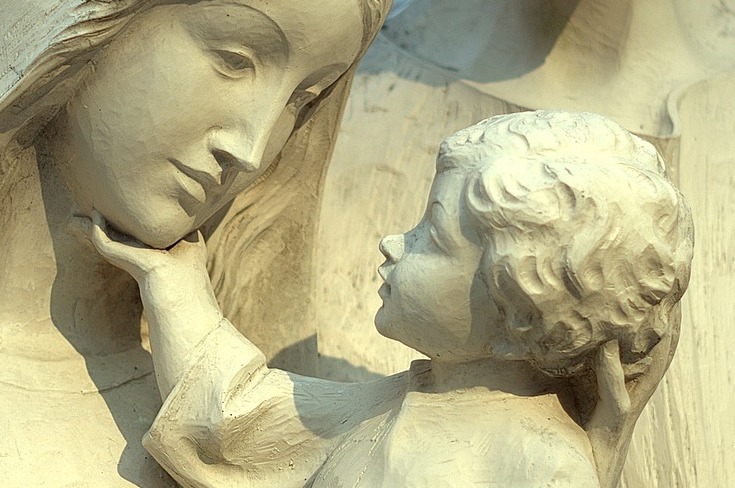
One phrase in the readings perfectly summarizes the bond between Mary and her Son: I come to do your will (Psalm 40:8-9; Hebrews 10:7). For Mary this meant motherhood born of a love for God so deep that she, as Augustine once said, would conceive Christ in her heart before her womb. For Jesus it meant the Incarnation; a love so deep that he would take his own creation’s flesh and offer it back to his Father for the redemption of all who would accept him. Their obedience sets the pattern for us for we too are called to the same kind of obedience; to conceive Christ in our hearts; to offer to the Father the gift of ourselves in total dedication to Him; to love as Jesus and Mary loved. Without grace this is not possible, but this is the great hope of the Solemnity of the Annunciation, when the angel reminds us as he told the Fullness of Grace: nothing will be impossible for God (Luke 1:37).
 When we think of the dragon we think of the Devil and it is right to do so, for Scripture does refer to him that way (Revelation 12, for example). There is no doubt that the dragon is the Enemy but there is also no doubt that too often the dragon looks back from our own mirror. Worse yet, the victim does too; we allow sinfulness such a hold over us that in effect we devour ourselves, relent to the darker angels of our nature.
 The psalmist must have had Joseph in mind as he sang,
 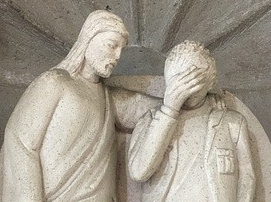 It’s tempting to dismiss all this as foolishness but remember what St. Paul says: If any one among you considers himself wise in this age, let him become a fool so as to become wise (1 Corinthians 3:18). It may be wisdom in the eyes of the world to hate those who have hurt us and foolishness to forgive them but in Christ’s world it’s just the opposite; his is the world where hatred keeps us bound and love frees us, where judgment takes a back seat to mercy, and where God alone sees the heart, knows the pain, calms the fear, heals the wounds, and breaks the chains.
 Still, Mark’s purpose is not to make us wonder at their behavior but to evaluate our own. Are we insiders or outsiders? Some of us witness Christ feeding a multitude every day, and every day share time with him in the Church, the barque of Peter. Are we focused on our own loaf of bread – be it the next place we have to go, the people we have to see, or things we have to do – or on the Living Bread that is Christ? We see the many wonderful people he gives us – our families, friends, each other; do perceive Christ living within them? We hear his word in the Scriptures; do we understand his voice speaking through all those crying for help? At the Mass he gives us himself Body, Blood, Soul, and Divinity in the Holy Eucharist; are our hearts hardened or are they being converted through the forgiveness of sins in Confession, that we may partake most fully in the infinite grace he offers?
 The pattern of disagreement, debate, and decision is how things get most productively settled in the Church provided it is done in the right spirit; that is, the Holy Spirit. Since the Council of Jerusalem was called to settle the dispute between the Gentile and Jewish Christians this has been the model, its justification found in the letter issued from that Council, specifically the sentence that begins, It seems good to the Holy Spirit and to us (Acts 15:28). The Holy Spirit promised by Christ continually works within us, finding ways to maintain unity despite our differences. In all our human affairs but especially between the members of the Church what matters is not that we disagree but that we dialog, not the heat of our words but the light of the Holy Spirit, not the distance we keep but the fellowship we extend, and not the hostility throughout the debate but the peace of Christ we give in the resolution. As with Cyril and Methodius, some will not accept us or the decisions reached but we cannot help that. All we can do is what Methodius did: Continue to act in union with Christ and his Church, remembering always that it is not about us but about the Holy Spirit and us.
 At every apparition Mary is highly honored and rightly so for she is as she said, the Immaculate Conception. But the honor we give her goes far beyond her identity to the two-fold reality behind it. First, Mary points us to Christ. Through the grace bestowed on her by the will of God and her total abandonment to it, Mary has perfectly heeded her own advice:
 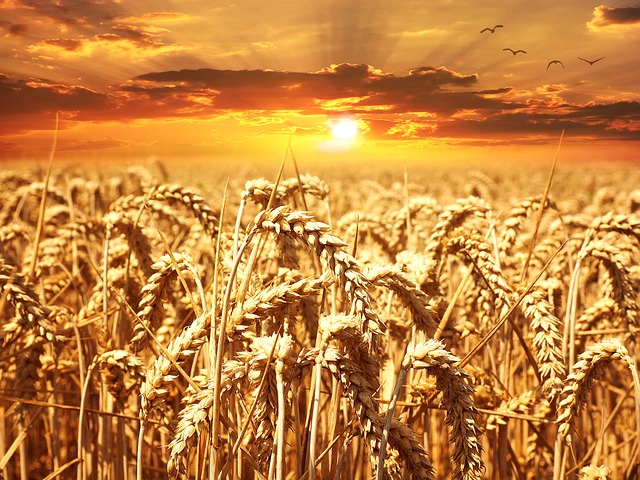 Angela Merici was a visionary; she saw what was invisible to everyone else. Where others saw the Italian countryside she saw the Kingdom of God; where they saw poor and middle class girls, Angela saw fertile ground waiting for seed. Christ asked her to sow and she obeyed. He asks no less of us. The Kingdom of God is here and now; the ground is fertile and plentiful. All our actions, for good and bad, fall like seeds into that ground. May we always remember what Saint Angela already knew, as given by the spiritual writer James Allen: “The law of the harvest is to reap more than you sow. Sow an act, and you reap a habit. Sow a habit and you reap a character. Sow a character and you reap a destiny.”
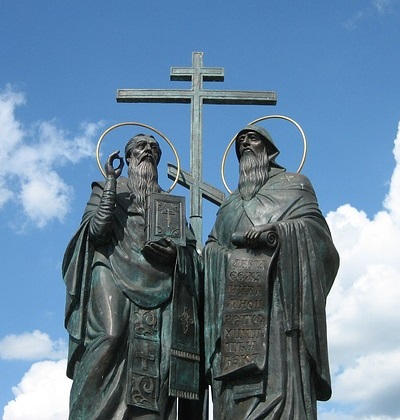 Saints Basil and Gregory can teach us many things, but today we focus on two. First, they teach us that faith in God requires true humility. Heresies are born from the pride that sees ourselves as the measure of all things; that interprets our failure to understand the truths of the faith to mean that the truths are wrong. True humility is as John admonished us, to remain in him; to see that God is the measure of all things and that our inability to understand means that we still have work to do. Second, in these days when the word “love” is so easily limited to physical expressions of self-gratification, the love of Basil and Gregory is a shining example of the most uplifting, life-giving love possible between people. This is the love that is modeled on God; that seeks only the good of the other; that finds its union with others in the heart and soul because that is where God dwells, and God is love. This is the love where heart speaks to heart and says, “I want for you what God wants for you.” My prayer is that all of us come to have that love for one another. What a world this would be.
 Finally, the basilica of the Holy Family teaches us that joy is not necessarily the destination but the journey. Every year, millions of people take the time to tour the basilica of the Holy Family in Barcelona. Whether they are watching as the builders add to its structure, marveling as artisans craft the artwork that adorns it, or attending the Masses offered there, the faithful are uplifted and sanctified even though the basilica is a work in progress. The same is true for our families, for they too are works in progress. Every day brings the happiness and sorrow, the cataclysms and quiet moments through which families progress either closer to God or further away from him. Let us pray that our families take every moment of life and find the joy in it; for each moment, whatever it holds, is an opportunity given to us by Almighty God to build up our own domestic Church in virtue, crafting ourselves more and more into what we are called to be – living stones built upon the cornerstone that is Christ.
 Mark 10:45