Sunday of the 8th Week in Ordinary Time
Sirach 27:4-7; 1 Corinthians 15:54-58; Luke 6:39-45
Years ago, my son (then 8) went with me to bring Communion to people in the nursing home. One day, on our way out, an elderly man sitting in the hallway smiled at my son and reached out to touch him. Getting in the car, I asked him, “You know what that man saw when he looked at you?” My plan was to get him thinking about how an elderly man, seeing a lively, happy little boy, might recall his own youth or his children. But, like so many things with that kid, it didn’t turn out that way. “Yeah, I know what he saw when he looked at me.” “What?” I asked. Smiling and very confident, he replied, “A saint and a chick magnet.”
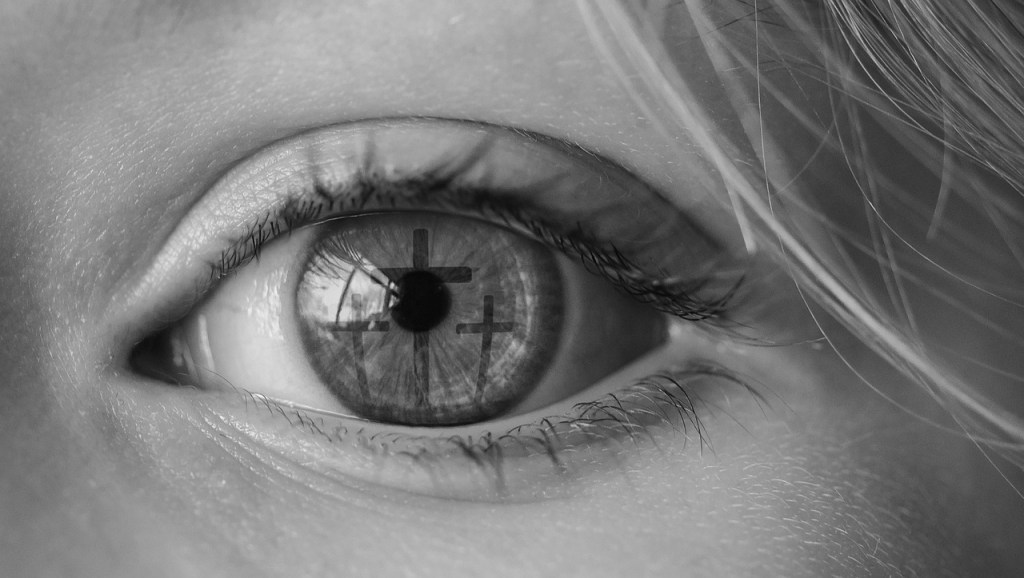
Well, if nothing else, that got me thinking about how differently we can see ourselves compared to how others see us. Jesus speaks about this in today’s Gospel with His metaphor of “wooden beams” — the faults in ourselves we fail to see because we’re too busy looking for faults in others. To me, these beams represent two extremes in our spiritual life.
The first is pride. Not the healthy pride that acknowledges our worth in God’s eyes, but the self-importance that blinds us to our need for Him. This pride says, What I want for me matters more than what God wants. This is the root of all sin; it tempts us to rely on ourselves rather than on God’s grace.
The second is harder to name. I call it spiritual despair, the temptation to believe we’re unworthy, inadequate, and beyond God’s help. This is the despair that whispers, What I want doesn’t matter, because I don’t matter, and leads us to avoid responding to God’s call. It diminishes us to the point that we feel paralyzed, unable to act.
Perfectly balanced between these two extremes lies what the ancient Greeks used to call the golden mean — the place where virtue is found. What is the balance point between pride and spiritual despair? Humility, the virtue that says, What I want matters, because I want for me what God wants for me.
Humility resists both extremes. Against pride, it reminds us that we cannot draw closer to God on our own; we must rely on His grace, especially through the Sacraments. Against spiritual despair, humility reassures us that feelings of inadequacy are part of being human, and that our imperfect efforts still matter. God never looks for perfection in our actions; He looks only for a willing heart.
If only it were easy to find that center point! How do we do it? Today’s readings give us a guide, through self-reflection and some tough questions.
- Sirach reminds us that our words reveal our true character. In our interactions with others, do I boast, speak arrogantly, or put others down? Or do I remain silent out of fear that I have nothing worthwhile to say?
- St. Paul urges us to be steadfast in the work of the Lord, allowing ourselves to be transformed. Do I ignore transformation because I think I don’t need it, or toward the other extreme, because I feel unworthy of it?
- Jesus warns us about the blind leading the blind. Am I so self-assured that I overlook my own faults, or maybe so self-critical that I hesitate to act at all?
These can be very uncomfortable questions, but we can’t avoid them, for that itself is an answer, pointing to one of the two extremes. On the other hand, humility urges us to embraces the challenge, trusting that God’s grace is more than sufficient to help us.
Lent is soon upon us, offering a perfect opportunity to reflect on these questions and answer them openly and honestly. Also, Lent is the perfect time to make our own personal Way of the Cross, seeing pride and spiritual despair as the two wooden beams of our own cross. Every time we participate in the Sacrifice of the Mass, we unite our cross to the cross of Christ, offering to the Father what he offered: our whole self. In return, God will take that worldly sign of defeat and humiliation and transform it to the perfect sign of divine victory and salvation.
As we remain steadfast in this work, the transformation St. Paul speaks of becomes real in our lives. This is the greatest gift humility can offer: the same wooden beams that once blinded us become the instrument through which we see more clearly the infinite love and call of Almighty God.
—
 Mark 10:45
Leave a comment