Acts 16:11-15; John 15:26-16:4a
There is a very popular painting called The Light of the World by the artist William Holman Hunt. You’ve probably seen it, you may even have a copy. It is an image of Christ holding a lantern and knocking on the door of a house.
In the gospel reading, Jesus told the Apostles that the synagogue doors would soon be closed to them. This did much more than just cut off their means of worship. For Jews, the synagogue was the center not only of religious life but social life as well. The Apostles, their families, friends, neighbors, and co-workers spent their entire lives within the confines of Judaism and the synagogue. Expulsion meant a total separation from the only way of life they had ever known.
Yet God never closes one door without opening another; if the doors of Jewish society were closing, the doors of Europe were about to open. In Chapter 16 of Acts, we read that (d)uring the night Paul had a vision. A Macedonian stood before him and implored him with these words, “Come over to Macedonia and help us” (Acts 16:9). So it was that Paul and his companions arrived at Philippi. They would find very few Jews; Philippi’s residents were mostly descended from Roman soldiers settled there in retirement by Augustus Caesar about 80 years earlier. That is why Paul went to a local river; lacking a synagogue, the Jews and God-fearers would gather for prayer there because they needed water for ritual washing.
As Paul spoke on the river bank in Philippi, a Gentile woman named Lydia listened, and the Lord opened her heart to pay attention to what Paul was saying (Acts 16:14). After she and her household welcomed Christ into their hearts through the waters of baptism, they welcomed Paul and the others into their house. We take church buildings for granted, but in those early days Christians had nowhere to meet for worship, instruction, and fellowship. Thanks to Lydia and her family’s generosity, the Christians at Philippi now had a house of worship.
Earlier, I referred to the painting of Christ knocking on the door of a house. Some people miss the fact that the door in the painting has no handle on the outside. The door to the human heart opens only from the inside. God could deliver Paul and his companions to Philippi, he could put the words in their mouths, even put them in her ears, but Lydia’s heart could only be opened by an act of her own free will in cooperation with grace.
 Love is also an act of the will, and to love like Christ requires cooperation with divine grace. This is the love that we are all called to; the love constantly reaches out even to those who push it away; that speaks of healing even to those content only to wound; that speaks of light even to those who love the darkness; that echoes to our neighbor the same words that inspired the artist to paint that famous image of the true Light of the World knocking on the door of our heart: Behold, I stand at the door and knock. If anyone hears my voice and opens the door, then I will enter his house and dine with him, and he with me (Rev 3:20).
 The men and women who we remember today may or may not have had faith in Christ, but in the end what matters is that somehow He spoke to them. In some way known only to Him, Jesus answered their life questions by asking them to be willing to configure themselves to Him; if need be to let go of everything, including their lives, that others may live. Of course, God is never outdone in generosity; we know by the same faith handed on from Peter that each of these fallen soldiers has gone to meet Him face to face and, if so willing, have come to understand the value of the great truth that has confounded mankind throughout the centuries: That only by dying to ourselves do we most truly live; only by letting go of what we want the most do we hold onto what is most truly important: Eternal union with God who is Love itself.
 I remember once talking to my mother as my kids were growing older and leaving home. I questioned whe
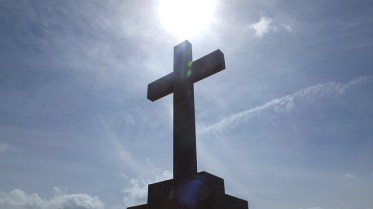 The peace of Augustus won him an altar, the peace of Christ, a cross. Yet look at the result. How many people kneel before an image of Caesar’s Altar of Peace and how many before an image of the cross? The Roman Empire handed Jesus its darkest,
  What’s more, Father’s homilies worked like a match to dry kindling – almost literally. Their consciences convicted, the people built bonfires and threw into the blaze any vain or worldly things they owned that kept them away from God. These fires become known as the “bonfires of the vanities” in every town that welcomed the humble yet fiery preacher, Father Bernardine of Siena.
 With this in mind, we can say that Matthias freely chose to follow Christ who first chose him, called him from his mother’s womb, and gave him the name, “Apostle.” That Matthias was chosen for that office by lot was nothing more or less than confirmation that the journey begun from shore had now moved out into the deeper water that he had already been called to and prepared for.
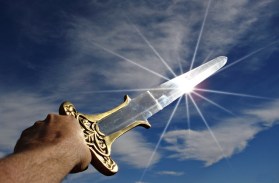 Recall Christ’s words: The hour is coming when everyone who kills you will think he is offering worship to God. It is a sad fact that we in the Church are often our own worst enemy. The Arian leadership resolved that what they could not win in Council, they would take by subterfuge. Athanasius, newly elected Patriarch of Alexandria and much loved by his people, was a primary target. The Arians boldly went after him, seeking nothing less than his disgrace and death. They fabricated scandals, perjured themselves and, aided by Arian-leaning or pagan emperors, forced Athanasius into five exiles spanning seventeen years.
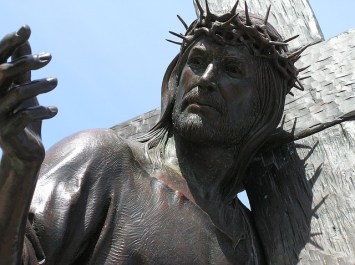 This is the ultimate lesson of Good Friday. Christ’s triumph over self-will and self-reliance did not enable him to merely sympathize with our suffering or feel our pain but to be perfectly in himself the source of eternal salvation for all who obey him (Hebrews 5:9).

 Mark 10:45