Tag: Word of God

  • The Shoot and the Fruit

    The Shoot and the Fruit

    The 2ndSunday of Advent, Cycle A

    Isaiah 11:1-10; Matthew 3:1-12

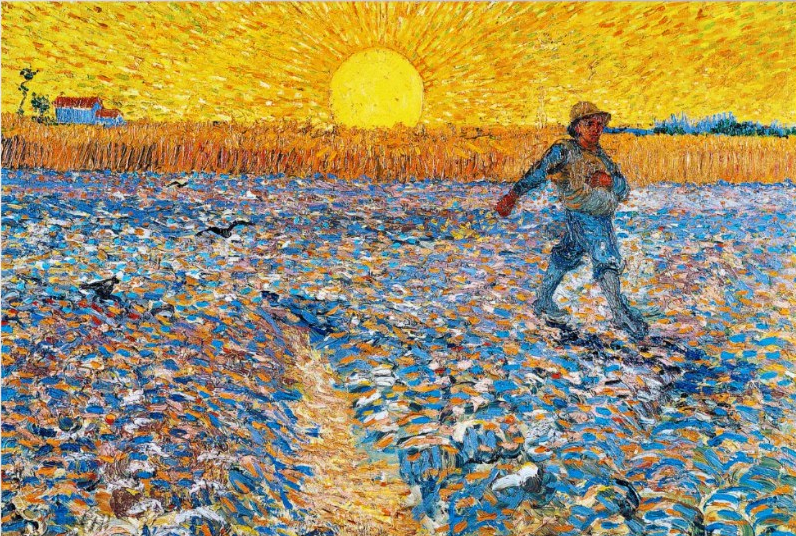
    It may not seem like it, but today Isaiah presents one of the most striking images in all of Scripture: A shoot shall sprout from the stump of Jesse. To us it sounds poetic, and is, but for the prophet’s audience, it was also practical, and its symbolism powerful. Why? Because the Hebrews knew that a shoot growing from the stump of an old olive tree, when properly cared for, grows into a new olive tree. Then and now, the olive tree was a symbol of resurrection: What looked dried up and dead is alive again; a whole new tree, fresh and full of fruit.

    To this, the prophet adds two things: First, he gives the stump a family name – Jesse, King David’s father – in effect prophesying a son from that family endowed with spiritual gifts. Second, this son would usher into the world a kingdom of peace beyond our imagination. On this side of the resurrection, it’s easy to see this son of David as our Lord, Jesus Christ, and creation at the end state God planned from all eternity: healed and restored, with its people living in justice and peace. What a perfect picture.

    But, as we all know from times we’ve pictured ourselves having reached some new personal milestone, there has to be a path to get us there. We don’t just become a new self; real effort is involved. Sometimes, I think I need a drill sergeant to push me where I want to go. Once I find out how hard the path to a better me is, the less I’m motivated to get there on my own.

    Enter John the Baptist, the first century’s spiritual drill sergeant.

    His words – Repent… prepare the way… make straight the paths… produce good fruit as evidence of your repentance – may sound harsh, but they’re true. They remind us that the kingdom Isaiah pictured takes a lot more than good intentions or warm feelings. It takes real effort; a deliberate, disciplined turning back to God.

    As John none-too-gently reminded his audience when he said, the ax lies at the root of the tree, some pain may be involved. We know the discomfort, the humility of Confession. But we also know that God meets us there, and gives us the grace to cut away the behaviors and attitudes that lead us away from Him.

    It may feel as though all that remains of our old life is a stump, but remember the olive tree – from the stump that remains, new shoots can grow. What are those? Imagine the possibilities: A moment of honesty; a bad habit given up; a virtue practiced on purpose; a relationship tended with patience; less screen time replaced by more and deeper prayer; reconciliation with someone we have avoided. And many more.

    The best news of all? Any of these small shoots will become, if tended, a new tree — a new self — rooted in Christ. And from that tree, the good fruit will begin to appear: gentleness rather than impatience, mercy rather than judgment, courage rather than fear.

    So, this Advent – right now – let’s choose just one concrete act of repentance, one “spiritual muscle” to train, or one place where we invite the Lord to straighten the path. God is eager to do it; He, who raised a shoot from Jesse’s stump will raise a new heart in us as well. And, through that heart, we will bear the fruit that shows we are really doing what God wants most – turning back to Him.

  • Here in 10 Minutes

    Here in 10 Minutes

    Genesis 18:1-10a; Colossians 1:24-28; Luke 10:38-42

    Years ago, my wife and I heard the plea of a missionary to sponsor seminarians in his country, so we decided to pay for a young man to do so. One Sunday afternoon long after, that missionary called me. “You know,” he said, “I’m not far away. I’d love to stop by and see you.” “Where are you, Father?” “About 10 minutes away. See you soon!”

    I didn’t panic… until I looked around the house. Even by my standards, it needed help. When my wife heard, the scramble really began. My job was to straighten up myself and the house, while she put together snacks, coffee, and tea. Just as we finished, there he was. It turned into a nice visit, but in no way was I really prepared for it.

    That experience and today’s readings got me thinking: What if my guest hadn’t been the missionary priest, but Jesus Christ himself? “Hi, I’ll be there in 10 minutes!”

    Well, one clue as to what I should do is in the first reading. What did Abraham do? He rushed to show hospitality to his guests. His focus was on them; he was ready to serve them. In turn, that readiness became the opening for God’s promise that he and Sarah would have a son. The lesson? Welcoming our Lord opens the door to a miracle.

    But then there’s an example closer to my experience that afternoon – the gospel. My typical way of looking at it is that Mary was right and Martha wrong. Martha’s focus on the “outside” – getting the house ready for Christ – turned into resentment, while Mary’s focus on the “inside” – sitting at the feet of Jesus – showed that she was ready to receive his word.

    Actually, I think the challenge Jesus gives us is to do both: to do things for him and be with him. We know, because Jesus told us, that as often as we feed the hungry, shelter the homeless, visit the sick, comfort the sorrowful, and forgive injuries, we do them to him. But we also know that many people who don’t believe in God do those things, too.

    No, Christ calls us to more. We see clues to that when St. Paul says, in my flesh I am filling up what is lacking in the afflictions of Christ (Colossians 1:24). What could possibly be lacking in Christ’s suffering? Our participation in it. He has prepared a place for us, as he said in John 14:2, but we must do our part. How? By preparing a place for him in our hearts and showing him to the world by what we do. That can be uncomfortable, even painful, but that’s why St. Paul began, I rejoice in my sufferings for your sake. What causes anyone to rejoice in suffering? Love! What parent wouldn’t gladly suffer in place of their child? Yes, it’s painful, but we would much rather it be us than them. That is the love he is talking about – the love that finds joy even in suffering because it is done for the sake of the beloved. That is the love that proclaims Christ to the world (Colossians 1:28).

    So, that is our challenge, but we have to be ready for it. Very soon – at Holy Communion – Christ will be here. We are both Martha and Mary. Are we ready? Have we made space at the feet of Jesus in our everyday lives? Is our heart ready? Have our prayers, works, joys, and sufferings filled up what is lacking in the suffering of Christ? Are we ready to welcome Him like Abraham, and receive the miracle only He can give?

  • Each End a Beginning

    Each End a Beginning

    Saturday of the 7th Week of Easter

    Acts 28:16-20, 30-31; John 21:20-25

    We often say about books that when a good story ends, it’s really the beginning of another. And that’s exactly what today’s readings show us.

    We read in the Acts of the Apostles that Paul’s journey seems to just… end. There he is, in Rome, under house arrest. We might be anticipating a trial, passion, and death like Stephen, but all we get is the quiet, almost anti-climactic line: … he proclaimed the Kingdom of God and taught about the Lord Jesus Christ (Acts 28:31). That’s it. The curtain falls. No drama, no swan song.

    But, of course, we know the story is far from over. The Gospel didn’t end there; indeed, this was just the beginning. The torch God lit on the road to Damascus and carried through storm and shipwreck was passed to the next generation – to Timothy, Titus, and a cast of unknown thousands. And from all of them to us.

    Which brings up some questions: To whom are we passing it? And how well are we carrying the torch – or, as John might say, testifying to the light?

    Speaking of John, we heard him end with this: There are also many other things that Jesus did, but if these were to be described individually, I do not think the whole world would contain the books that would be written (John 21:25).

    Again, in one sense an ending, but in another, a beginning. It’s as if he is saying, “Christ’s life can never be captured in a book.” And his whole gospel is a way of saying that if we want to know how the story continues, we should look at your own lives and the lives we touch.

    Today, as we prepare to celebrate the beginning of the Church’s mission to the world at Pentecost, Scripture reminds us that in God’s eyes, endings are never final. Rather, they are thresholds, invitations to new and equally exciting chapters – each replete with its own story, its own unfolding drama, and each focused on Christ.

    We couldn’t ask for a better leading man! In Christ no ending is empty, with him every beginning is new, and through him the story of salvation knows no bounds. His story alone, what Bishop Barron has called the Great Story of Jesus, has for generations had the power to touch people profoundly and draw them in completely.

    Again, that brings us back to the crucial question: How am I telling the story? If you’re anything like me, I think you’ll find that we tell the story of Jesus best when we live it with an open heart for all to see, as Paul and John did. So then, let us live it well, for a new chapter is beginning – one that leads to the greatest part of the story: eternal life in Christ, who is the Beginning and the End (Revelation 22:13).

  • Three Roads, One Pattern

    Three Roads, One Pattern

    Thursday of the 3rd Week of Easter

    Acts 8:26-40; Psalm 66:16; John 6:44-51

    Today’s reading from Acts may seem like a beautiful but isolated story – Philip and the Ethiopian riding through the desert – but it is, in fact, just one of three “road encounters” given to us by St. Luke, each a powerful snapshot of how God works through the sacraments. All three stories follow the same pattern:

    1. God initiates an encounter with someone;
    2. He brings the Church in to help; and
    3. The person being helped receives grace that changes them forever.

    The first time Luke gave us this pattern was in his story of the disciples on the road to Emmaus. Remember? Christ approaches two discouraged disciples who fail to recognize him. He opens the Scriptures for them, then breaks bread (gives them the Eucharist), and vanishes. Eyes opened and hearts on fire, the pair joyfully rush back to the Apostles as witnesses. Today, God sends Philip, who breaks open the Word for the Ethiopian, baptizes him, and vanishes. Afterward, the man goes on his way, rejoicing. Finally, on the road to Damascus, Saul has a mystical encounter with Christ, who cannot be seen. Later, Ananias anoints him and his eyes are opened. Saul takes his Roman name, Paul, and as we all know goes on to spend his life changing the landscape of Christianity forever.

    This is how Luke shows us the power of the Sacraments: God initiates, the Church mediates, and the person is changed forever. In all seven the pattern is the same: First, God calls us. We may think it’s our idea to be baptized, anointed, forgiven, or given the Eucharist, but it is God who calls us. He always initiates; for, as Jesus says in today’s gospel, No one can come to me unless the Father draws him. Next, we gather; Scriptures are read, and our eyes are opened to better understand its meaning and application to our lives. Then, the sacrament is received. The best example is right here, at the Eucharist, where we receive Christ himself; as he says, the bread that I will give you is my Flesh for the life of the world. Finally, we hear – Go forth. That is, we are sent out, as the two disciples at Emmaus, the Ethiopian, and St. Paul, to witness, rejoice, and change the world – each in our own way. For, as the psalmist sang, “He has given life to our souls… Hear now, all you who fear God, while I declare what he has done for me.”

    That is the voice of someone who has been changed, and cannot help but witness. And that is the effect of the Sacraments given us by Christ, who continues to meet us on the roads of our lives. He has drawn us here, feeds our minds and hearts with his Word, our souls with his Body, and sends us from here to change the world. Every time we receive a Sacrament, let us keep in mind: this is no mere routine – this is an encounter. Christ meets us here; Christ touches us here. And we will never be the same.

  • Seeking the Face of God

    Seeking the Face of God

    Feast of Sts. Philip and James

    1 Corinthians 15:1–8; John 14:6–14

    When Philip says, “Lord, show us the Father, and that will be enough for us,” it might sound as if Jesus was disappointed in him. “Have I been with you for so long a time and you still do not know me, Philip?”

    But over time, I’ve come to hear something different in that response — not rebuke, but compassion. Not frustration, but invitation.

    After all, when Jesus was a boy and Mary found him in the Temple, he asked her, “Did you not know that I must be in my Father’s house?” (Luke 2:49). Surely Jesus wasn’t disappointed in his mother. He knew that even she — Full of Grace — would need to ponder these things in her heart, to grow in her understanding of the divine mysteries. If the Blessed Mother had to wrestle with them, why wouldn’t Philip?

    So no, I don’t believe Jesus was scolding Philip. I believe he saw in his question not failure, but hunger: a longing to know God more deeply, to see Him more clearly.

    In that way, Philip stands for all of us. Don’t we all long to understand the faith better? Don’t we all wish God would just show Himself, and end the doubt, confusion, and struggle?

    But He doesn’t. Not all at once. Maybe that’s because the work of faith — the growth, the struggle, the contemplation — is part of the gift.

    So today, as we celebrate Saints Philip and James, Jesus teaches us two important lessons through Philip’s honest question.

    The first lesson is that God can be right in front of us — and we might not see Him. Again, consider Philip. He spent years walking with Jesus. He saw him heal the sick, feed multitudes, even raise the dead. Still, he didn’t understand that to see Jesus was to see the Father — to see the fullness of God’s love.

    That isn’t just Philip’s problem, it’s ours too. We may not walk with Christ on the roads as the Apostles did, but we have our own sacred encounters.

    • Do we recognize him in the Eucharist — truly present, Body and Blood, Soul and Divinity — or do we doubt?
    • Do we see his face in the people around us — especially those who are suffering, neglected, or difficult to love – or just inconvenience?
    • Do we trust that God truly hears and responds to our prayers, even when He seems silent? Or do we take silence as God’s refusal to answer?

    Jesus is always closer than we think. If we miss Him, it isn’t because He’s not there. It’s because we haven’t yet trained our hearts to see.

    The second lesson is that what we learn about Christ isn’t just for us — it’s meant to be shared. Notice that Jesus doesn’t end the conversation with Philip. He moves it forward by saying, “Whoever believes in me will do the works that I do — and will do greater ones than these.” Greater than healing the sick or feeding thousands? Yes! Because our Lord’s earthly ministry was never meant to end. It was meant to multiply — through the Church, through the apostles, through us.

    That’s exactly what Philip and James did. They didn’t understand everything perfectly, but they believed. They went out. They preached, taught, healed, and led the early Church. Ultimately, they gave their lives for Christ.

    What does this mean for us? At least three things:

    1. We don’t need to be perfect to be disciples. We need only be willing to keep trying.
    2. We don’t need to understand every mystery of the faith to be faithful. We need to keep learning — and keep growing in trust.
    3. We don’t need to have all the answers before we begin sharing the Gospel. We need to believe that God will give us the grace we need to be His witnesses — in word and deed — so that others may see Him in us.

    Today and every day, let us ask Christ for eyes of faith to see him in the Eucharist, in each other, in the Scriptures, and in the silence of prayer. Let us ask, too, for the courage of Philip and James; to take what we’ve seen and heard and carry it boldly into a world longing for the love of Christ. And like them — like all the saints — may we be faithful witnesses to every person God puts in our path. And may we never stop seeking the face of God — in Christ, in each other, and in everyone.

  • Bronze Pennies, Burned Hearts

    Bronze Pennies, Burned Hearts

    Wednesday in the Octave of Easter

    Acts 3:1-10; Luke 24:13-35

    One day in 1947, a teenage boy bought a school lunch and put the change in his pocket. Later, he noticed that one of the pennies, stamped in the Denver mint in 1943, was bronze. Like most people, he knew that pennies minted during those war years were steel, not bronze. When he inquired, government officials said he was mistaken, it was a fraud. Some intrigued collectors offered to buy it. Despite this, he kept it. When he died in 2019, the little one-cent piece he got as change for his lunch in 1947 sold at auction for nearly 2 million dollars.

    Appearance is one thing, value another.

    The reading from Acts makes the same point. The crippled man at the Beautiful Gate would’ve been very happy with a penny, and clearly that’s what he expected when he saw Peter and John. But again, appearances are deceiving, for those ordinary-looking men possessed something infinitely more valuable: the healing power of Christ.

    Then in the gospel, two disciples blinded by sorrow see, not Jesus, but what appears to be an ordinary man. Ordinary, that is, until something most extraordinary happens: he took bread, said the blessing, broke it, and gave it to them (Luke 24:30). And note particularly what happens after this; as Luke says, With that their eyes were opened and they recognized him, but he vanished from their sight (24:31).

    In this way, Luke goes to the heart of the Sacramental power that transforms human sight into vision. When we look around the church, what do we see? In our fonts, water; in the baptistery, oils; in cruets, wine; and on patens, the host. Yet, through the power of the Holy Spirit, the will of the Father, and the passion, death, and resurrection of Christ, these ordinary elements of Earth become the invaluable tools of Heaven; through them and their ministers, our Lord heals and sanctifies every soul who seeks Him with the eyes of faith.

    Just as those two disciples reached Jerusalem with hearts ablaze—no longer discouraged or blind – to proclaim “We have seen the Lord,” so, too, are we sent today. Christ empowers us through Baptism, strengthens us through anointing, and feeds us in the Eucharist. This is the grace that opens our eyes to His presence, that we might see in the familiar – the neighbor who listens, the friend who forgives, the stranger to whom we show kindness – the many opportunities to love others as God has loved us. With this in mind and heart, let us resolve to pray every day, “Lord, open my eyes,” and in each encounter strive to be His hands and feet – revealing that in every ordinary moment lies the infinite value of His love.

  • I Once Was Lost

    I Once Was Lost

    Sunday of the 5th Week in Lent, Cycle C

    Isaiah 43:16-21; Philippians 3:8-14; John 8:1-11

    The 20th century playwright George Bernard Shaw once said, “My way of joking is to tell the truth. It’s the funniest joke in the world.” In his hands, truth could be funny. But in God’s hands, truth becomes something far more powerful: it transforms us.

    Today, Jesus presents us with two truths: God wants us to let go of the past, and to let Him begin something new. It sounds simple. But it’s not easy, as one man’s incredible story shows.

    John Newton was a man who seemed beyond redemption. Growing up in England in the 1730’s, he was attracted to life on the sea. Naturally rebellious and not what anyone would call moral, he enjoyed the life of a sailor to the fullest. He indulged in whatever vices he could, mocked God, eventually found himself a slave trader, and even became the captain of slave-running ships.

    In the first reading, God said, Remember not the events of the past… see, I am doing something new … do you not perceive it (Isaiah 43:18-19)? Like the Israelites, who God had just called deaf and blind, Newton’s sins blinded and deafened him to God. No, he didn’t perceive it. But what about us? Do we see God as creating us and then leaving us alone, or do we perceive that He is actively working in our lives and has a plan for us?

    That plan can take very surprising turns, as Newton found out. While commanding a slave ship, he encountered a violent storm. Terrified and realizing he could die, he begged God for mercy. He survived, and never forgot that God answered a sinner like him.

    This marked the beginning of a slow, painful process. Like all of us, Newton found that the old, bad habits die hard, especially the ones you enjoy, and most especially ones that earn you a living. What’s more, he had been raised in a world where slavery was simply the way the world worked. He struggled to break those habits and to understand what the acceptance of slavery said about the equality and dignity of all people.

    Again, that puts the spotlight on us. In the second reading, St. Paul said, “I have accepted the loss of all things and I consider them so much rubbish, that I may gain Christ and be found in him.” Do I hold on to things that keep me from fully surrendering to Christ? Do I define myself by my past? Do I look at issues like abortion, euthanasia, and human-trafficking as just the way the world works? If we are to make any real progress this Lent, we must be willing to leave our old lives and the sinfulness of our old selves completely behind and see ourselves and all people as infinitely precious – exactly as God sees them.

    It took awhile, but John Newton was able to do this. Once he did, he realized how easily he, like the woman in today’s Gospel, could have been condemned. Yet, he wasn’t. Why? Grace. By the movement of grace, misery again met mercy: “Neither do I condemn you. Go, and from now on, do not sin anymore.” Newton obeyed that command for the rest of his days. He left the slave trade, became a minister, and spent years fighting to abolish slavery – which did happen. To this day, we know him as the author of the words to the classic hymn “Amazing Grace,” which contains those beautiful words, “Amazing grace! How sweet the sound that saved a wretch like me! I once was lost, but now am found; was blind, but now I see.”

    That is the woman’s story in the gospel, it is John Newton’s story, and it’s our story, too. We all have sins we think define us. We all have pasts we regret. But the Scripture readings teach us that Jesus does not define us by our past, He calls us to a new future.

    As we approach Holy Week, let us remember that the cross isn’t just about removing sin; it is about renewing us. As John Newton wrote near the end of his life: “Though my memory’s fading, I remember two things very clearly: I am a great sinner, and Christ is a great Savior.” May we, too, remember these two things. Yes, we are sinners. But we are saved sinners.

    Christ is calling. Do you perceive it? “Neither do I condemn you. Go, and sin no more.”

  • The Pharisee, the Tax Collector, and Me

    The Pharisee, the Tax Collector, and Me

    Saturday of the 3rd Week in Lent

    Hosea 6:1-6; Luke 18:9-14

    As a young man, I went through a period in my spiritual life I can only describe as “restless.” Dissatisfied with Mass at my local parish, I began trying others. One parish had a Mass with really good music, another with homilies I liked, a third with a priest I found very prayerful. While that was all fine at first, over time I saw that these parishes had problems, too. Frustrated, I thought I’d better rethink the whole thing, so I asked myself why I went to Mass at all. “To receive Christ,” I said. “Well,” I replied, “if that’s true, then why are you focusing on the music, the homily, the priest, or the problems, when you should be focused on Christ?”

    I was reminded of my “parish shopping” experience as I read today’s Scriptures. My attitude was far too much like the Pharisee in our Lord’s parable. For him, the issues were about how much he fasted, rather than why he fasted to begin with; about what he gave from his purse rather than what came from his heart. For me, the issues were also the externals: music, homilies, the attitude of the presider. Beneath it all, we both missed what is most essential – the humility with which we approach Almighty God, and the gratitude we show for the infinite mercy He offers us.

    This attitude of humility can only come from the heart, which is what God tells us through the prophet Hosea He wants most. The outward religious practices have tremendous meaning and we are right to pay attention to them, but when they become an end in themselves, we rob them of their piety. Like the Israelites of Hosea’s time, we end up going through the motions of worship, while our behavior betrays hearts that are far from God. True worship isn’t about the external things as ends in themselves, but about allowing them to come from the heart; to reflect the joy of encountering and surrendering to our Lord, Jesus Christ.

    So, as we prepare to approach Jesus in the Blessed Sacrament, let us take a moment and allow the readings to challenge us. How are we, like the Pharisee, letting distractions come between us and a genuine encounter with Christ? Do we share in any way the Pharisee’s sense of pride and self-sufficiency? And let us pray for the grace to be more and more like the tax collector, who by recognizing his own need for mercy, allowed humility to take him where true worship is designed to bring all of us – ever closer to Almighty God.

  • Hidden Beams, Open Eyes

    Hidden Beams, Open Eyes

    Sunday of the 8th Week in Ordinary Time

    Sirach 27:4-7; 1 Corinthians 15:54-58; Luke 6:39-45

    Years ago, my son (then 8) went with me to bring Communion to people in the nursing home. One day, on our way out, an elderly man sitting in the hallway smiled at my son and reached out to touch him. Getting in the car, I asked him, “You know what that man saw when he looked at you?” My plan was to get him thinking about how an elderly man, seeing a lively, happy little boy, might recall his own youth or his children. But, like so many things with that kid, it didn’t turn out that way. “Yeah, I know what he saw when he looked at me.” “What?” I asked. Smiling and very confident, he replied, “A saint and a chick magnet.”

    Well, if nothing else, that got me thinking about how differently we can see ourselves compared to how others see us. Jesus speaks about this in today’s Gospel with His metaphor of “wooden beams” — the faults in ourselves we fail to see because we’re too busy looking for faults in others. To me, these beams represent two extremes in our spiritual life.

    The first is pride. Not the healthy pride that acknowledges our worth in God’s eyes, but the self-importance that blinds us to our need for Him. This pride says, What I want for me matters more than what God wants. This is the root of all sin; it tempts us to rely on ourselves rather than on God’s grace.

    The second is harder to name. I call it spiritual despair, the temptation to believe we’re unworthy, inadequate, and beyond God’s help. This is the despair that whispers, What I want doesn’t matter, because I don’t matter, and leads us to avoid responding to God’s call. It diminishes us to the point that we feel paralyzed, unable to act.

    Perfectly balanced between these two extremes lies what the ancient Greeks used to call the golden mean — the place where virtue is found. What is the balance point between pride and spiritual despair? Humility, the virtue that says, What I want matters, because I want for me what God wants for me.

    Humility resists both extremes. Against pride, it reminds us that we cannot draw closer to God on our own; we must rely on His grace, especially through the Sacraments. Against spiritual despair, humility reassures us that feelings of inadequacy are part of being human, and that our imperfect efforts still matter. God never looks for perfection in our actions; He looks only for a willing heart.

    If only it were easy to find that center point! How do we do it? Today’s readings give us a guide, through self-reflection and some tough questions.

    • Sirach reminds us that our words reveal our true character. In our interactions with others, do I boast, speak arrogantly, or put others down? Or do I remain silent out of fear that I have nothing worthwhile to say?
    • St. Paul urges us to be steadfast in the work of the Lord, allowing ourselves to be transformed. Do I ignore transformation because I think I don’t need it, or toward the other extreme, because I feel unworthy of it?
    • Jesus warns us about the blind leading the blind. Am I so self-assured that I overlook my own faults, or maybe so self-critical that I hesitate to act at all?

    These can be very uncomfortable questions, but we can’t avoid them, for that itself is an answer, pointing to one of the two extremes. On the other hand, humility urges us to embraces the challenge, trusting that God’s grace is more than sufficient to help us.

    Lent is soon upon us, offering a perfect opportunity to reflect on these questions and answer them openly and honestly. Also, Lent is the perfect time to make our own personal Way of the Cross, seeing pride and spiritual despair as the two wooden beams of our own cross. Every time we participate in the Sacrifice of the Mass, we unite our cross to the cross of Christ, offering to the Father what he offered: our whole self. In return, God will take that worldly sign of defeat and humiliation and transform it to the perfect sign of divine victory and salvation.

    As we remain steadfast in this work, the transformation St. Paul speaks of becomes real in our lives. This is the greatest gift humility can offer: the same wooden beams that once blinded us become the instrument through which we see more clearly the infinite love and call of Almighty God.

  • Savoring Scripture: Engaging with the Word of God

    Savoring Scripture: Engaging with the Word of God

    St. Jerome once said that if we believe that Christ is contained in both the Eucharist and the Bible, we should give them equal reverence. When a consecrated host falls on the floor, we carefully pick it up and thoroughly clean the area so nothing is lost. But if we don’t listen to the Word of God, it’s like allowing Christ to remain on the floor; that encounter is lost forever. With that in mind, on the Feast of St. Jerome in 2019, Pope Francis declared the 3rd Sunday in Ordinary Time as Word of God Sunday. His goal was to enable the Church to “experience anew how the risen Lord opens up for us the treasury of his word and… proclaim its unfathomable riches before the world.”1

    Two basic problems challenge our experience reading the Bible. First, over-familiarity; we know a passage so well that we “tune it out,” assuming we know everything we need to. Second, ignorance; a passage is difficult (think, “St. Paul”) so we let it go, intending to, but never getting back to it. Instead, our goal should be to experience the Word of God the way some people experience fine wine – or, if you’re like me, fine Belgian chocolate – by savoring it. For example, rather than taking on all of today’s first reading, let’s “savor” just two verses: Ezra read plainly from the book of the law of God, interpreting it so that all could understand… ‘Today is holy to the LORD your God. Do not be sad, and do not weep’— for all the people were weeping as they heard the words of the law (Nehemiah 8:8-9).

    Step 1: Understanding. Nehemiah may be unfamiliar, but look it up and you’ll see that this book and its twin, Ezra, were written to tell us what happened when the Jews exiled in Babylon were allowed to return to Jerusalem, rebuild the Temple, and recover their way of life. To set the scene, we’re at the point when everyone is at the Temple celebrating the Feast of Booths (also known as Tabernacles). This may be the first time doing so for some of them in over 70 years.

    Step 2: Put yourself in the story. Imagine you were very young, maybe 6 or 7 at the time of the exile, and for decades, all you had were memories of home. Now, here you are, standing where you and your family stood years ago, doing what they did. Or, imagine you’re one of the Jews not sent into exile; you were left behind with a ruined Temple and no priests. Now, the Temple and city walls have been rebuilt, the priests and people have returned, and the Law is heard again. Maybe God is finally making His people whole! Each person will have their own story, but for so many of them, young and old, this is a profound and emotional moment. And this is just one way to look at these verses; there are many more.

    Step 3: Relevance. So, what does all this have to do with us? A lot! For one thing, it’s a moment to stop and reflect on all those who passed on the faith to us: Parents, teachers, friends – without them, we wouldn’t be here. They are God’s gift to us. For another thing, it prompts us to ask, to whom are we God’s gift? How do we pass on the faith? Can we do more? Also, this is a reminder that every verse of Scripture has a depth, beauty, and power that are just waiting to be revealed.

    Step 4: Prayer. We end our time with the Word of God in prayer, like: “Lord God, thank you for the gift of faith; for all the people you put in my life who passed it on at whatever cost to themselves. Give me the grace to pass on the faith and to proclaim it by the example of my life, that Your Name may be more greatly known, honored, and loved, in my own life and in the lives of all those I meet.”

    There are over 31,000 verses in the Bible. It’s overwhelming to imagine savoring each of them this way. But we don’t have to. What matters isn’t that we do everything, but that we do something. So, try this: Regularly, or every day if you can, choose a verse or two that jump out at you in the day’s Bible readings (at https://bible.usccb.org/), or from your Bible, and go through the steps above. The Word of God, Jesus Christ, is waiting for you there. Savor every encounter.

    1https://www.vatican.va/content/francesco/en/motu_proprio/documents/papa-francesco-motu-proprio-20190930_aperuit-illis.html