Tag: parable

  • Sowers and Seeds

    Sowers and Seeds

    2 Samuel 7:4–17; Mark 4:1–20

    When I’ve reflected on the Parable of the Sower, I’ve stuck with the explanation Jesus Himself gives: He is the sower, the seed is his word, and we are the soil. I’ve seen the truth of it in my own life, and I suspect you have, too. There have been times when my heart was like the hard-packed path, other times rocky or choked with thorns—and, by God’s grace, moments when it was good soil that bore fruit.

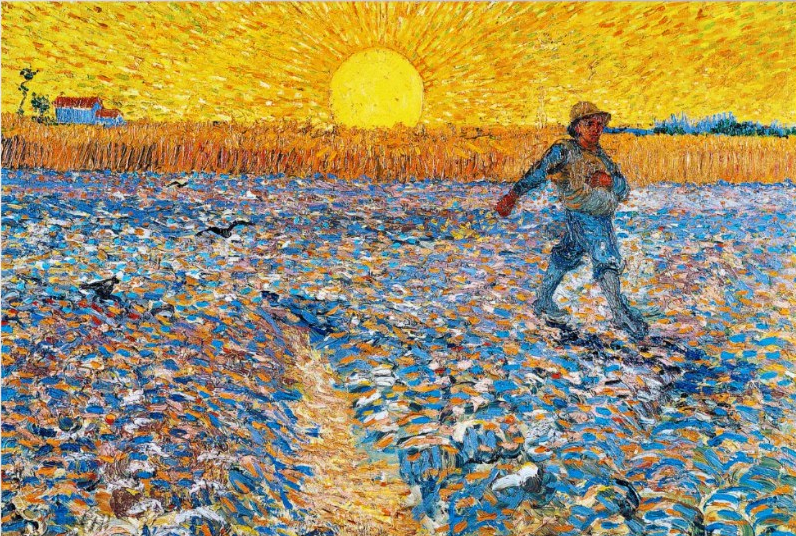
    Recently, I learned that Vincent van Gogh also spent a lot of time thinking about this parable. He painted and sketched it repeatedly. But van Gogh saw it a little differently. For him, his art was the seed, and he was the sower.

    We see something of both perspectives in the reading from 2Samuel. David has clearly been good soil: chosen, formed, and blessed by God. From that abundance, he now sees himself as a kind of sower, offering to do what he believes a faithful king should do: build a house for the Lord.

    But God gently reminds him through the prophet Nathan exactly who has built whom. It was God who first chose David, God who established his kingdom, and God who built David’s “house” — not of stone, but a lineage that would lead to the Messiah.

    The lesson is unmistakable. No one, no matter how great, gifted, or faithful, is the architect of God’s plan. We are its recipients. God first plants the seed. Only then does He invite us to share in the sowing. David becomes a sower of the Kingdom not by his own initiative, but because of what God has already done in him.

    The same is true for us. Discipleship is never our initiative; it is always God’s. We are chosen first, claimed in baptism, and only then entrusted with a share in His work.

    That’s how van Gogh understood his own vocation. Painting was his seed, his “holy task.” He cast it broadly, often into rocky, unreceptive soil, painting not with certainty of success, but with hope. In much the same way, our words, choices, and acts of love or mercy are the seeds we sow. We do not control where they land, what takes root, or how long they take to grow.

    No, God has assigned us a task that is simpler — and harder — than that: to sow generously, love without counting the cost, give without guarantees, and trust that God always controls the growth.

    In the end, the Kingdom of God grows not because we manage it well, but because God, who first planted His word in us, is faithful and always brings it to harvest.



  • Whom Fortune Favors

    Whom Fortune Favors

    Saturday of the 21st Week in Ordinary Time

    1 Thessalonians 4:9-11; Matthew 25:14-30

    The parable of the talents is one we’re all very familiar with. Ironically, such familiarity actually works against us, for parables are at their best when they surprise us, present us with a riddle or twist that teases us into deeper contemplation about its meaning and its relevance to our lives.

    One aspect of the parable that might still be surprising concerns the talents themselves, specifically their value. In our Lord’s time, a talent was worth about 6000 silver pieces, or 20 years of wages. By using such vast sums of money (the parable goes up to 100 years’ worth), it certainly seems like Jesus wanted us to wonder what all that wealth could possibly represent.

    The fact is, we really don’t know. Some scholars see them as our abilities, the God-given gifts we are born with; we still use the word “talents” for those to this day. Maybe, but Jesus tells us in the parable that each servant got a different amount of talents according to his ability (25:15); so, there are talents and there are abilities. I tend to agree with those who see the talents as riches of a different kind; specifically, the thousands of opportunities we are given by God over the course of our lives to show people what it means to be a disciple of Christ; to be his hands at work in the world.

    What opportunities am I talking about? I think some of the best examples are right in front of us, in our own homes, with the people who are most familiar to us. Research on the family shows that while family members are actually spending more time together than before, they are also alone more often. It’s called “being alone together,” and you may have seen it: A family at dinner, perhaps at a restaurant, sits together and eats together, but spends most of that time interacting by themselves with their hand-held device. Imagine being the one in the family who asks them to put those things away and spend that time with each other. We also know that, as people age, they spend more and more time alone. Imagine being the neighbor who invites them over, or regularly visits them. And, as we all sadly know, many of our young people rarely if ever go to church, and know nothing at all about God. Imagine being the relative who invites them to the church youth group to meet new kids, eat, have fun, and see where those interactions lead. Is such a person always popular for having spoken up or done what they did? No. But is it the charity spoken of by St. Paul in the first reading, or the new commandment Jesus spoke of in John’s gospel? You already know the answer.

    Of course, these are just three examples, but they and thousands more show that what Christ is looking for isn’t skill or experience, but boldness and humility. Consider the first two servants; they knew they weren’t skilled bankers or investors, yet they doubled their master’s money. How? By doing what good servants do: they watched their master, learned from him, then imitated him as Jesus said: Immediately. They didn’t know when he would return; all they knew was that he gave them this opportunity and empowered them to act in his name. Unlike the third servant, they didn’t waste time worrying, overthinking, or second-guessing themselves or their master. Rather, they did what St. Paul advised: minded their own affairs and worked with their own hands. That’s what the master would do, so it’s what they did.

    There’s an old saying that fortune favors the bold. Here and throughout the gospels, Jesus makes it clear that he favors the bold in faith with a fortune only he can give: a share in the Master’s joy. Who doesn’t want that kind of talent?


  • Who is the Prodigal?

    Who is the Prodigal?

    Saturday of the 2nd Week of Lent

    Micah 7:14-15, 18-20; Luke 15:1-3, 11-32

    I think one of the reasons why today’s parable is such a masterpiece is that we see reflections of ourselves in its characters. Perhaps in our youth, we too have been reckless or impulsive, like the prodigal son; certainly all of us try to be faithful and hard-working like the older son. And perhaps many of us, like the father, know what it’s like to wait for someone we love to return to the path they have wandered away from.

    While the crowd listening that day was surely no different, the gospel tells us that our Lord aimed the parable at one group in particular – the scribes and Pharisees, who had just complained that Jesus welcomed sinners and ate with them. If these men were to see themselves as anyone in the parable, surely it was the older brother, for these were men zealous for the Law, dedicating themselves to it, urging everyone to imitate the piety and traditions of the priests and Levites.

    To some degree, their zeal was understandable. The Pharisee party rose up in reaction to the brutal occupations Israel had suffered, most recently the Romans. They believed that these were God’s punishment for their infidelity; the idea was that, if they could show God that they were zealously and piously following his Law, He would deliver them from this oppression.

    Unfortunately, when we let our passions rule, ideas can become obsessions and lead us into sin. We see this in the younger son in the parable: the deadly sins of greed, lust, and gluttony. But what about the older son? As we consider him, we also find three deadly sins: Anger, envy, and pride. There is anger in every word he says, envy of the rings, the robes, the fatted calf, and behind it all, the first sin, pride: he had earned these things, proven himself. It wasn’t about divine justice or his father’s feelings, it was about him and him alone.

    In the end, the righteousness of the older brother was no more than self-righteousness. And what did it get him? Nothing but the chance to lose everything. As the theologian Hugh of St. Victor once said1, “Pride takes God away from a person; envy takes his neighbor from him; anger takes himself from him.” Blinded by pride, he lost his way to God; consumed by envy, he broke with his brother; overcome by anger, he lost sight of what should have been most important at that moment – mercy. Perhaps it should be called the parable of the unloving brothers, for as the prodigal son had come to measure love by having, he had come to measure it by earning.

    This goes right to the heart of the lesson our Lord is teaching. True love isn’t about earning or having, it’s about being. Remember what the father said to his older son: Everything I have is yours (Luke 15:31). All those years of faithfulness, obedience, and good work were never going to earn his father’s love because it was never about that; it was about being his son. The same for the younger brother; it was never about having whatever and whoever he wanted, it was about being his father’s son.

    Today, and every day, is a day to rejoice, for we too are children of our Heavenly Father, who, as the prophet Micah said, removes guilt and pardons sin (Micah 7:18). And he doesn’t discriminate; his love is beyond all our sinfulness, whether it’s the greed, gluttony, and lust of the one, or the anger, envy, and pride of the other. Perhaps, then, it should be called the parable of the Prodigal Father! Truly, God is prodigal, to love us with such overflowing, reckless abandon.

    1On the Five Sevens. Available at https://scholarlyediting.org/2016/editions/de-quinque-septenis-trans.dunning.html.type=diplomatic.html

  • Dirt and the Story of Us

    Dirt and the Story of Us

    Saturday of the 24th Week in Ordinary Time

    Luke 8:4-15

    Today, we hear our Lord preach what most people call the parable of the sower, or the sower and the seed. But as you heard, it really isn’t about the sower or the seed; it’s about the dirt. And not just the dirt – it’s about how people are like the dirt. Although it doesn’t sound very appealing, his explanation reveals it as a novel and practical way to help us see not only who we are, but who we are meant to be.

    He begins with the soil on the path. Compacted and difficult to break through, this soil represents the hardened heart of those who refuse to hear the word. This might put us in mind of the scribes and Pharisees, but Jesus is speaking to us, too. Our hearts harden every time we refuse his call in any way, whether it is to forgive, to accept those who disagree with us, or to speak out in the face of evil.

    Then there is the rocky soil – those who believe until faith gets difficult. Again, we may think of the crowds who welcomed Jesus as he entered Jerusalem, or the Apostles during his passion, but what about us? It’s one thing to have faith when times are easy and God feels close, but what happens when times are hard and God feels far away? How easy it is to turn inward and lose heart!

    From there, Jesus speaks of the thorny soil, which represents those who follow for a while, but eventually allow worldly concerns to dominate. This is like the rich man who wanted to follow Jesus, but couldn’t find it in himself to give his money away. But is it also like us? Jesus is asking us to search our hearts, to see if there is something we’re holding onto at all costs, be it a “pet sin,” a worldly concern, or some pleasure that preoccupies us to the point of becoming an idol.

    As we contemplate these categories and evaluate ourselves in light of them, we can see that, although none of them fits us perfectly over the course of our life, some combination probably fits us a little too well over time. In his infinite love and mercy, our Lord never leaves us without hope or encouragement. He uses only one sentence – actually, one part of a sentence – to go beyond the failures and show us success.

    Where the soil on the path is the hardened heart who heard and refused, the rich soil is the heart that has heard the word and embraced it. This is the heart open to forgive, ready to welcome, and daring to speak when silence means sin. Where the rocky soil is the heart turned in on itself, the rich soil is the heart turned outward in goodness and generosity. Where the thorny soil is the heart that abandons Christ, the rich soil is the heart that bears fruit through perseverance (Luke 8:15).

    His final word, perseverance, reminds us that those in the rich soil are like everyone else; they aren’t spared any of the ups and downs of life. What differs is their attitude. Like those on the path, on the rocks, or among thorns, they too know suffering; unlike them, they see it not just as a mystery but as a part of God’s plan that will ultimately bring good. They too know trials and challenges, but not as things simply to be endured; for them, they are opportunities to grow in virtue. Where would prudence be without the ambiguities of life, fortitude without its fears, patience without its irritations, or justice without its unfairness? Perseverance, a gift of the Holy Spirit, is the bridge that brings us from who we are to who we are meant to be.

    Who could look at dirt and see and see the story of us? Only the One who could look at the dust of the earth, breathe His own life and image into it, and then write the story of us. Praised be Jesus Christ, true God and true man.

  • Servant and Seed

    Servant and Seed

    Saturday of the 16th Week in Ordinary Time

    Jeremiah 7:1-11; Matthew 13:24-30

    The parable of the wheat and the weeds may leave us wondering. It certainly baffled the disciples. Next Tuesday we will hear them ask Jesus to explain it and, although he does, he leaves off two things: First, if wheat is always wheat and weeds are always weeds, is repentance even possible? Second, who do the slaves represent? Jesus identifies every other character, but never mentions the slaves. The parable has the answers but we must look more deeply into it to find them, which of course is why Christ told it to begin with.

    As for the wheat and weeds remaining the same, on the surface the parable does say that. But if that was our Lord’s point, it would contradict the first thing he said when he began his ministry: Repent (Matthew 4:17) and if Jesus is anything, he’s consistent. No; repentance isn’t only possible, it is central to the parable. The question is, who repents, and how?

    Enter the servants. Noticing the weeds, they offer to pull them, which seems like a good idea. But the master knows what the servants do not. For one thing, the weed, called darnel, looks a lot like wheat; even today it’s called wheat’s ‘evil twin.’ For another, the weed’s roots intertwine with wheat’s. Thus, by pulling the weeds in their ignorance and haste, the servants would actually cause what they most want to prevent. This is why the master advises the servants to let them grow together (Matthew 13:30).

    We see two things in this. First, it shows God’s love for his children, who he wants to live at all costs. Second, and equally important, it shows his love for his servants, who need to repent, or change their minds, from ignorance to knowledge and impetuousness to patience.

    Being patient doesn’t mean doing nothing; to the contrary, it sharpens their focus. The servants have one job – produce a fruitful harvest – not to judge what is wheat or weed. That will be done by others when God wills and at his direction alone.

    This is where we must take the parable to heart, for Christ is speaking to us. We are the servants. We look at the field – the Church, the world, and ourselves – and see the same thing they saw: wheat and weeds. Perhaps our reaction is like theirs; purge the evil quickly, that the good may thrive. But also like them, we may be ignorant and impetuous. Ask yourself: Have I ever been mistaken in my first impressions of people? Have I ever changed my opinion once I got to know them? Have I ever wanted others to be patient with me, despite the wrong things I have done or said?

    Even if we have made these kinds of mistakes, does that mean that we are never to judge our own actions or those of others and try to correct them? Certainly not; to be silent or impassive in the face of evil is exactly the kind of complacency our Lord condemns in the first reading. Earlier in this same gospel, Jesus urged us to be perfect as your heavenly Father is perfect (Matthew 5:48). But that is a perfection in love; therefore, our judgment and proclamation of the truth must be tempered by the same kind of mercy, compassion, and patience that God exalted in the first reading through the prophet Jeremiah, and that Christ himself has so perfectly shown us.

    This is why repentance is central to the parable. The effort we make to do these things, to be perfected in love, is the repentance, the change of mind, that our Master is calling for. It isn’t that we are either servants asked to produce a fruitful harvest or the wheat or weeds growing in the field. The parable teaches us that we are both servant and seed. For both, the watchwords are faithfulness, patience and perseverance; faith that God is working through us even when we cannot see it, patience with our own growth and that of others, and perseverance, that we may overcome every obstacle to become the good seed that makes the finest wheat, in the image of Christ, the Bread of Life.

  • The Heart of the Matter

    The Heart of the Matter

    Saturday of the 3rd Week of Lent

    Hosea 6:1-6; Luke 18:9-14

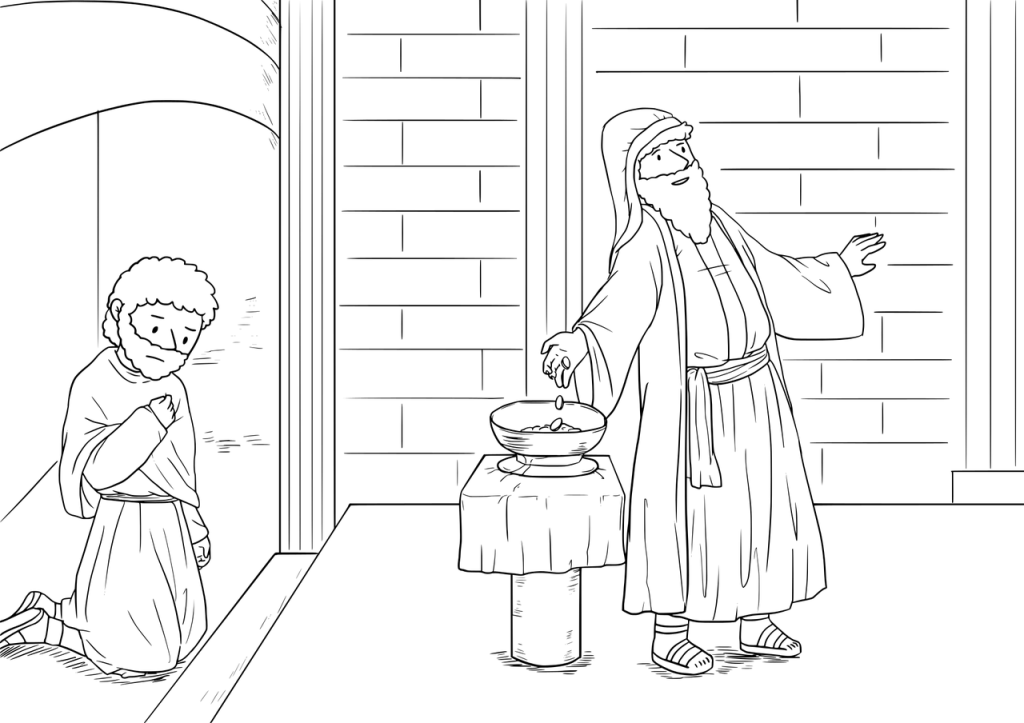
    When we hear the parable of the Pharisee and the tax collector, we are rightly drawn to the differences between them. However, I think time is well spent thinking not only about the differences but also the similarities, and what both have to teach us about ourselves and our prayer life, which is the reason Jesus taught this parable to begin with.

    The fact is, the two men have some important things in common. First, they’re both truthful. The Pharisee is telling the truth when he says he isn’t greedy, dishonest, or adulterous; so is the tax collector when he calls himself a sinner. Second, their actions are pious. The Pharisee tithes and fasts, while the tax collector stands at a distance, keeps his eyes lowered, and beats his breast as he prays. Third, both are men of deep conviction; they speak to God straight from the heart.

    Speaking to God from the heart is key, for Scripture teaches us that prayer is a work of the heart. The heart is where we live, our inner Temple, the place to which we withdraw (CCC 2563). At the same time, it is the place God knows best; he looks at the heart and knows its secrets (1 Samuel 16:7; Psalm 44:21). If we are righteous in God’s eyes, our prayers are fruitful (James 5:16); if not, our prayers are in vain (CCC 2562).

    This brings us back to the Pharisee. Although he seems to be speaking to God, his words betray a heart turned inward. Our Lord may be hinting as much when he says the man spoke this prayer to himself (18:11), but even if not, one thing is clear: God is the audience of his prayer, not the object. It’s tempting to think that we never do this, but my guess is that in the quiet of our own inner Temple, we can all recall times when we’ve focused a little too much on ourselves, have resisted what God is asking, acted as if the good things we’ve done we did on our own, or that in some way God likes us just a little bit more than he does some other people – especially people we don’t like.

    That’s the real problem. The Pharisee is right to say that he is not like the rest of humanity, but wrong because he’s comparing his behavior with what other people do, not with what God expects. The same is true for us; our standard is not other people, it is Christ. Given that, we can understand why God would say through Hosea, Your piety is like a morning cloud, like the dew that early passes away (6:5). Fasting, tithing, coming to the Temple: All are false piety if they don’t come from a truly humble heart.

    Humility, the foundation of all prayer, helps us to recognize our dependence on God and to appreciate our place in His plan. It is the virtuous balance between the extremes of pride on the one side and self-abjection on the other, which happens when we fail to recognize and use the gifts God has given us.

    As our Lord pointed out, humility was the great virtue of the tax collector. We know it from his posture and his words: Be merciful to me a sinner. What we do not know is what happened next. Did he live that humility out in his daily life by doing what the Baptist advised, Stop collecting more than what is prescribed (John 3:13)? While we must not push the parable beyond its limits, we must remember that humility not only orients us to God, but to each other as well. As with the Pharisee, it’s tempting think that we already live humbly in the world, but we must ask ourselves: Do we ever dwell on other peoples’ faults, gossip about them, seek their admiration, or return insult for insult?

    Like the Pharisee, this is the problem. True humility urges us to remember that God’s loving plan extends to all of humanity. We cannot live equitably with other people unless we treat them like equals, and we certainly cannot pray, no matter how humbly, “O God, be merciful to me a sinner,” if we refuse to be merciful to those who sin against us.

    Through the parable of the Pharisee and the tax collector, our Lord teaches us two lessons about prayer: First, the foundation of prayer is not our honesty, piety, or sincerity, but a contrite and humbled heart (Psalm 51:19). Second, the fruit of righteous prayer is a life of virtue most perfectly found in the life of Jesus, who took the form of a slave, humbled himself, becoming obedient to death, even death on a cross (Philippians 2:7-9). Indeed, no man so humbled was ever so greatly exalted.

  • One of the “Do Nots”: Friday of the 16th Week in Ordinary Time

    Exodus 20:1-17; Matthew 13:18-23

    Even though I’ve gone through it countless times over the last 35 years, each time still amazes me. I look at one of my kids, say, “Do NOT do that,” then find myself standing there incredulous, less than 5 minutes later, saying, “Didn’t I just tell you not to do that? Will you ever grow out of this?” But it was just recently, as I was going through it yet again, that I heard a voice in my head say, “You do the same thing.”

    Now, that could have been an echo of my mother or father, for I definitely did the same thing to them. It could also have been any of a number of nuns or priests, for I did it to them, too. Come to think of it, it could have been any of the adults who had to deal with me as a kid. It could have been, but I had the distinct feeling that it wasn’t. No, this was my conscience speaking, and not about past behavior, either. The voice didn’t say, “You did the same thing,” it said, “You do the same thing.”

    It’s true. Day after day, year after year, God has taught me through his word. It couldn’t be clearer than on a day like this when we literally read the 10 Commandments. Yet time after time, year after year, sometimes not 5 minutes later, I do exactly what God just said not to do. Why? If I understood the gospel today, our Lord has wrapped the reason in a parable which teaches me that I have a hearing problem.

    My ears work fine, that’s not the issue. The problem seems to be an inner, spiritual sort of deafness. When Jesus begins his explanation of the parable by saying, Hear the parable of the sower, he clearly wants his disciples to do more than use their ears; he wants their hearing accompanied by an attitude that says, ‘Lord, I am ready to be taught.’ Ask yourself how many times you’ve heard a gospel begin, thought, ‘Oh, I know this one,’ and then tuned out or paid little attention? This is the seed that falls on rocky ground; we hear but lack the docility, the teachable spirit, needed to help the word take root and endure. The gift of docility inclines us to remember that no matter how familiar a passage may seem, there is always something new to be learned.

    Our Lord also relates our hearing problem to a lack of understanding. We hear the word, but like the seed that falls on the path, let it go because we don’t understand it. In and of itself, lack of understanding is nothing to be ashamed of. Scripture can be hard to understand; it refers to cultures, peoples, and times far removed from our own. The problem comes in when we make no effort to learn more; to ask for help; to set time aside for study and contemplation of God’s word. Those who do this will find their time and effort well rewarded.

    Other times we can’t hear God because, as Jesus implies, his voice is drowned out by our own anxieties. We all know what it’s like to come to Mass or prayer with problems weighing us down. They distract us and before we know it the time has slipped by. It helps to begin preparing for our time with the Lord before leaving home, or if we’re praying at home to sit and recollect ourselves in silence before we begin. I find it helpful to repeat one of the old aspirations of the Church: “Let go and let God.” Not to forget or minimize what is on our mind but to make it part of our prayer, our offering to God, laying it on the altar and offering it as our sacrifice to the only One who can bring good out of it. I can’t think of a better way to quiet the inner voices so we can hear what God is saying.

    In years past, I thought of this parable as referring to different kinds of people: Those who hear the word of God and those who do not. That’s fine as far as it goes, but when God reminded me that I am one of the “do nots,” I looked a little deeper and saw the parable referring not to different kinds of people but different states of the spiritual life. That is great news for all of us, for it reminds us that conversion is possible; we can do something about our hearing problem. It is true that in the deafness of our sloth and arrogance, we are in the path; in our ignorance and shame, the rocky ground; in our anxieties and temptations, the thorny ground. But we don’t have to stay there; these grounds aren’t meant to be passively endured but to be grown out of. Christ ends the parable in the place we all want to be, so let us all today resolve that we will show him the humility, docility, and perseverance it takes to be transplanted into the soil that, truly hearing his word, bears fruit thirty, sixty, and a hundredfold.

  • Ready or Not: Sunday of the 32nd Week in Ordinary Time

    Ready or Not: Sunday of the 32nd Week in Ordinary Time

    Wisdom 6:12-16; Thessalonians 4:13-18; Matthew 25:1-13

    My father died when he was 55 years old. He went out golfing with one of my brothers and had a massive coronary on the golf course. According to the coroner, Dad died from a total blockage of the left anterior descending artery of his heart – known as the “widowmaker.” He died in less than a minute.

    Awhile after his funeral, my Mom told me something I hadn’t known. Over the last year or so Dad had been going to Confession every two weeks like clockwork. That wasn’t typical of my Dad; he was a practicing Catholic and no stranger to Confession, but when I was a kid he didn’t go every two weeks. Now he was. It got me to wondering whether he had a sense that he going to die soon.

    It also got me wondering about my own life. For example, if I knew that today was my last day on Earth, what would I change? What would I do? I think, like the foolish virgins, I would be calling out, “Lord, Lord!”

    But even more to the point, I wondered what Christ would say in reply. Today and the next two Sundays are the time the Church gives us to contemplate that question and we must ask it now because Jesus makes it clear that there comes a time when it’s too late.

    As we saw in the parable, that is the fate of the foolish. Desperate, they seek help from those around them: Give us some of your oil (Matthew 25:8). It seems like a reasonable request. Why can’t the others share? Isn’t their refusal cruel or selfish? No; not when we understand what the oil represents. The oil in the parable is everything we have done to build up the Kingdom of Heaven. So even if they wanted to, the wise couldn’t give away their good works to someone else; each person has to go out and earn their own.

    That’s why it’s so important to seek wisdom like the first reading recommends, for when we seek wisdom it will be given to us. In fact, the reading says, she will make herself known in anticipation of our desire; will wait for us, will seek us, will graciously appear to us. It sounds simple. So then, why isn’t everyone wise? Because wisdom tends to come slowly, through trial and error; those who are wise most often got that way by learning from their mistakes, suffering some loss, making some real sacrifices.

    It’s human nature to avoid that but ask yourself, when I’ve wanted something in life, really wanted it, haven’t I been willing to sacrifice time, money, comfort, or whatever I needed to, to get it? As Venerable Fulton Sheen once said, love is the soul of sacrifice. In the parable our Lord isn’t really talking about young women and a wedding; he’s talking about loving him and being his disciple. Well, what are we willing to sacrifice to get that oil of service in our lamps? Are we willing to give up even the sins that are dearest to us?

    As we know, this takes work. It’s far easier to put it off, to let ourselves drift into that deadly sin of sloth, the spiritual laziness that rationalizes sin away. The problem is that sins don’t just go away; they build silently within us like a blockage to our heart that, if we let it go long enough, becomes our own spiritual widowmaker. By then, it’s too late.

    But again there is the lesson of my father. He didn’t make any drastic, sudden changes in his life; he simply started spending a little more time every month examining his conscience and cleansing himself of sin. One small step, but regularly made. Like the first reading said, taking thought of wisdom is the perfection of prudence, and whoever for her sake keeps vigil shall quickly be free from care (Wisdom 6:15).

    It’s not that we have to be that vigilant in this pursuit. Notice that both the foolish and the wise virgins fell asleep waiting for the bridegroom. In the second reading, St. Paul was dealing with people in Thessalonika whose loved ones had died while waiting for Christ’s return. But our Lord did not emphasize vigilance as much as he emphasized being prepared. When our flask is full of the oil of doing justly, loving mercy, and walking humbly with our God, it won’t matter if we have fallen asleep while waiting for Him to return. All that will matter is that we are ready.

    So then, take the time given to you and ask yourself before it’s too late: “Am I ready?”

  • Fed to the Dogs: Wednesday of the 18th Week in Ordinary Time

    Fed to the Dogs: Wednesday of the 18th Week in Ordinary Time

    Matthew 15:21-28

    There are times in the gospel when Jesus says something that makes us ask, “Did he really just say that?” For example, his mother came to see him and what does he do but turn to his disciples and say, Who is my mother? (Matthew 12:48). Then there is the time he said, If your right eye causes you to sin, tear it out and throw it away (Matthew 5:29). Today is yet another, as he says to a woman pleading for help, It is not right to take the food of the children and throw it to the dogs (Matthew 15:26).

    Did he really just say that?

    Well, yes. The question is, what did he mean? To answer that, we have to know more about the context.

    To begin with, Jesus withdrew to the region of Tyre and Sidon (Matthew 15:21), pagan lands. We might wonder why he went there but I think it was for two reasons: First, as the Catechism tells us, Christ comes to meet every human being (CCC 2560); he wants none lost but all brought to knowledge of him. Second, he has just sparred with the Pharisees about what truly defiles a person, teaching them that it is not what goes into the mouth that matters but what comes out of it (Matthew 15:1-20); that is, vice or virtue. Where better to demonstrate that than pagan territory for, by implication, the Gentiles are not defiled (as the Hebrews assumed) because of who they are; to the contrary, there may be great virtue among them. He has come to see.

    The Canaanite woman does not disappoint. She too has come to see – to see Him – and on finding him shows the faith to call him Lord and the love to pray on behalf of her child: Have pity on me, Lord, Son of David! My daughter is tormented by a demon (Matthew 15:22). She doesn’t know it but the Holy Spirit is moving within her, making her as St. Augustine once said, “a beggar before God” (CCC 2559).

    And a persistent beggar! Three times she is rebuffed. First when Jesus does not answer her (Matthew 15:23), again when he says, I was sent only to the lost sheep of the house of Israel (Matthew 15:24). Anyone less persevering might have gone away but the Holy Spirit prompts her to move closer, now to the piety of doing him homage and pleading, Lord, help me.(Matthew 15:25). If it is help that comes it is of a mysterious sort, coming in the third rebuff, the now brief but infamous parable, It is not right to take the food of the children and throw it to the dogs (Matthew 15:26).

    Before we get to the term “dogs,” consider the word “food.” Its literal translation is “bread.” In reality, Jesus is the Living Bread; in the parable, he is referring to himself. As for “dogs,” it is true that Hebrews compared people to dogs or called them dogs to imply they were either of very low status (e.g., 2 Kings 8:13; Exodus 22:31; Deuteronomy 23:18; 2 Samuel 3:8; Proverbs 26:11; Ecclesiastes 9:4; 2 Samuel 9:8; 1 Samuel 24:14) or evil (Philemon 3:2; Revelation 22:15). And although Christ softened the term by changing it to puppy or house dog, it was still in no way complimentary. However, taken as a whole, Christ is challenging her by way of parable to ask herself, “Jesus is the bread, Israel are the children; where do I belong? How am I fed?”

    Her answer is inspired: Please, Lord, for even the dogs eat the scraps that fall from the table of their masters (Matthew 15:27). Not only does she say nothing about the term ‘puppies,’ she humbly puts herself in the dog’s place yet proposes an ending to his parable that allows everyone to partake in Christ, Jew or Gentile, each in their own place. The Holy Spirit has enlightened her mind with the gift of understanding; she has begun to see that the answer to her prayer, to all prayer, means uniting her will with the will of Christ, which as we said above is that none be lost but all come to knowledge of God, who is love.

    Thus, through this faithful woman’s inspired reply to his challenge, Christ has vindicated his argument to the Pharisees that the things that come out of the mouth come from the heart (Matthew 15:18), in her case humility, perseverance, love, and understanding. These are as he said the key to “great faith” (Matthew 15:28) and they only happen when we allow the Holy Spirit to work within us, slowly but surely uniting our will to the perfect will of God.