Tag: New Testament

  • Is the King Glad? Saturday of the 1st Week in Ordinary Time

    Is the King Glad? Saturday of the 1st Week in Ordinary Time

    1 Samuel 9:1-4; 17-19; 10:1; Psalm 21:2; Mark 2:13-17


    Guided and inspired by the Holy Spirit, the Church takes great care to choose readings for each day that highlight certain themes, most often represented by the psalm that comes between them. Today we hear a wonderful case in point, Psalm 21. On a purely human level, this is a joyful song of praise that God has endowed authority on an earthly king. On a divine level and as a messianic psalm it speaks of Christ, who indeed is glad and rejoices in the full authority given him by the Father. With good reason we repeat the second verse: Lord, in your strength the king is glad. But that doesn’t answer how the readings highlight that theme. As we will see, they do so in very different ways.


    As the story of Saul begins, it’s hard to know what he would have been glad about. It must have come as such a surprise! One minute he’s out looking for his father’s animals; the next, he is anointed as the first king of Israel. But although we can’t tell his mindset in the beginning, as the story unfolds it becomes clear: This king isn’t glad in the Lord at all. To the contrary, he has little regard for God’s authority; he has his own ideas and doesn’t want anyone, even God, to correct him. Worse, despite Samuel’s warnings, Saul never sees the problem; he remains blind to his own arrogance and self-exaltation until everything ends for him in complete disaster.


    By contrast, the story of Matthew doesn’t end with disaster but it does begin that way. Like Saul, Matthew is a man going about his business; unlike Saul, his business was what most Jews would have called a complete disaster: the customs post. Such men were among the worst of sinners; quislings who took money from their own people, gave it to their conquerors, and even kept some for themselves. Yet this is the kind of darkness where the light of Christ most brightly shines; passing by, the Divine Physician diagnoses Matthew, and in two words prescribes the remedy: Follow me.


    As with Saul, we have no idea what went through Matthew’s mind at that moment, but as always Mark invites us to put ourselves in the scene and contemplate. What would we do? Would we have doubts, fears, or misgivings? Did Matthew? Perhaps. All we know is what Matthew actually did, and here Mark couldn’t be clearer: He got up and followed Jesus. Again, this is only the beginning; the story unfolds in the fullness of time. Mark tells us that Jesus went to his house, ate with him and his friends, and told others that he came to call sinners. Though Mark then goes silent about it, that doesn’t mean we know nothing. We know that Matthew was glad in the strength of the Lord who called him out of his sinful life and offered him another, so glad that he followed Christ to the end and to the point that a gospel account would bear his name for all time.


    Two men, two calls, two responses, two completely different endings, yet the same theme: Lord, in your strength the king is glad. How does this apply to us? In two ways:


    First, we must understand that we, the baptized, are kings. At our baptism we were anointed kings and called as Christ was called – not to be served but to serve (Mark 10:45). And if we are kings, then we are glad in the strength of the Lord from the moment we decide to be a king less like Saul and more like Matthew; when we see every day as a call to live not on our own strength but on God’s, for it is he and he alone who points the way, who leads the way, who makes a way, and who is the way.


    Second, we must remember that good intentions aren’t enough; actions are required. How we act will depend on the gifts God has given us and the circumstances we find ourselves in. Whatever they are, the time is now and we will not be – we cannot be – glad in the Lord’s strength until we take what the Father has given us and, through the power and gifts of the Holy Spirit, put it at the service of the kingdom he gave us through his Son.

  • Minute Meditation: Thank God

    1 Thessalonians 1:1-5, 8b-10

    In the first reading today, St. Paul says,

    We give thanks to God always for all of you,
    remembering you in our prayers,
    unceasingly calling to mind your work of faith and labor of love
    and endurance in hope of our Lord Jesus Christ,
    before our God and Father,
    knowing, brothers and sisters loved by God, how you were chosen.
    For our Gospel did not come to you in word alone,
    but also in power and in the Holy Spirit and with much conviction.

    I don’t. Thank God, I mean. At least, not enough.

    I know the ACTS of prayer – Adoration, Contrition, Thanksgiving, and Supplication – but tend to get stuck on the letter “S,” asking God for things. Of course I need to ask, but if that’s all I do then I risk treating God as little more than a divine vending machine. I also want to show God that I adore him, am sincerely sorry for my sins, and am grateful for all he has given.

    Which is where you come in. For as St. Paul reminded me this morning, God has given me you: People practicing the faith in your daily life, working to love all you meet, and enduring in great hope of the promises of Jesus Christ. I do thank God for you.

    But I can’t properly do that unless I also thank God for how you were chosen. Being self-centered and self-conscious, I get in the habit of behaving as if it all depends on me, that I must be eloquent enough, loving enough, patient enough. Those things are important but your faith doesn’t depend on them. No; as St. Paul reminded us, the Gospel comes to us not in word alone, but also in power and in the Holy Spirit and with much conviction. There is a power to the process far beyond any of us, working in ways we cannot understand, reaching us in depths no human being can go, touching and moving us in ways that nothing and no one else can.

    If that’s not worthy of thanksgiving, then what is?

  • The Slave of the Slaves: Memorial of St. Peter Claver

    Although I am free in regard to all, I have made myself a slave to all so as to win over as many as possible.

    1 Corinthians 9:19

    Imagine being dragged aboard a ship, naked and chained in the darkness below deck, lying helpless for several weeks, through rough seas and stifling heat. There are over 500 of you; males here, females there. You are fed just enough to keep you alive. Starvation, disease, and death are rampant. No one knows where you’re going or what awaits you when the hatch finally opens. Over the centuries of the slave trade, millions of people saw that hatch open only to a lifetime of slavery in a strange New World.

    Yet, like a drop of mercy from heaven, hundreds of thousands of these same people saw that hatch open to reveal the caring, concerned face of a gentle Spanish Jesuit. He would come below and find the newborns who were still alive, pour water over them, make the sign of the Cross and pray. He then ministered to the dying, and the dead he had respectfully removed. To the sick he brought medicine and bandaged their wounds. Those too sick to leave the ship on their own he helped carry above. When he got to you, he would clean you, give you food, clothing, and fresh water. He would speak warmly and gently through an interpreter, although no translation was needed for his touch. This was a man fluent in the language of love and by the time he had finished, he had restored a measure of the dignity so shamefully taken away. Every moment, this man acted as if he was your slave and happy to be nothing more.

    That’s because he was.

    The man was Peter Claver, a 17th century priest and Jesuit who devoted his life to ministering however he could to every slave shackled in the darkness aboard the hundreds of ships landing in the port city of Cartagena. Fr. Claver took to heart the words of St. Paul, who said, Although I am free in regard to all, I have made myself a slave to all so as to win over as many as possible (1 Corinthians 9:19).

    Father’s devotion to the service of slaves sprang from his desire to imitate the service of his model, the Blessed Mother, to whom he was devoted. As a young novice he was so moved by a pilgrimage to one her shrines that he wrote, “I must dedicate myself to the service of God until death, on the understanding that I am like a slave, wholly occupied in the service of his master.” He traveled to the New World after hearing that millions of enslaved people died there knowing nothing of Christ. After his first few years serving them, Father signed the document of his final profession to the Society of Jesus with the words, “Peter Claver, slave of the slaves, forever.”

    Before the slaves were sent on, Father took whatever time was given him to teach them about Christ. He used pictures, rosaries, crucifixes, anything he could find. He concluded every session by teaching them to say, “Lord Jesus Christ, Son of God, You are my Father. I am sorry for having offended You. I love You very much. I love You very much.” It is said that he personally baptized over 300,000 slaves.

    Fr. Claver continued his ministry for 40 years. Finally, sick, frail and exhausted, he knelt and kissed the feet of his young Jesuit successor and on the day he predicted – the Feast of the Nativity of the Blessed Virgin Mary, September 8th, 1654 – he died at the age of 73.

    portsoy-1244572_640Although the slave trade of that era is thankfully no more, slavery still abounds. Who are the people in our own lives, chained in the darkness of sin, feeling helpless, uncertain and fearful of their destiny? Who are those with wounded or even dying spirits, on the brink of losing hope? Who are those starving for affection, for shelter, for safety, for dignity? Will you be the one to open the hatch to descend into their suffering and restore what dignity you can?

    Let us pray that we, like St. Peter Claver, may be the slave of the slaves, forever.

    St. Peter Claver, pray for us.

  • The Wounds of Love: St. Birgitta of Sweden

    The Wounds of Love: St. Birgitta of Sweden

    Galatians 2:19-20; John 15:1-8

    I once instructed a woman in the RCIA program who excelled in her studies of the faith. After receiving the sacraments she moved away and I lost track of her. Years later, I learned that she had stopped practicing the faith. She was now “spiritual but not religious.” I think that means she believes that while there is a spiritual dimension to the world, it isn’t what we understand as the faith most fully revealed to us in Christ.

    The sticking point for her, as for many, may well have been the passion and death of our Lord. Indeed, the crucifixion was called by St. Paul a stumbling block to Jews and foolishness to Gentiles (1 Corinthians 1:23). But to one of the saints, St. Birgitta of Sweden, the crucifixion held a special place; it was the nexus of the physical and spiritual worlds.

    Birgitta lived a life full of the joys and sorrows of family. Born in Sweden around the year 1303, the daughter of a governor, by age 42 she had already been a wife for 28 years and a widow for one. She had a wide and deep experience of motherhood; as mother of 4 boys and 4 girls, she saw one daughter run off to marry a troublemaker, one son die as a boy, one as a man, and another daughter grow up to become St. Catherine of Sweden.

    She also knew the life of the working world. While raising her own children she served as lady-in-waiting to the queen of Sweden. Her kind, motherly way drew her into the confidence of the king and queen, both of whom tended to enjoy worldly life too much for their own good. Birgitta worked as hard as she could to keep their religious concerns before them; this became a frustrating and unfortunately futile struggle.

    Finally, Birgitta knew the religious life as well. After becoming a widow and devoting herself to care of the poor, who greatly loved her, she dedicated buildings and land on family property to a new contemplative order. She wrote the rule for her order which became known as the Order of the Most Holy Savior.

    At the same time, Birgitta lived a full life in the spiritual world. She was a mystic. At age seven, she had a vision of being crowned by the Blessed Mother. Three years later came her most profound mystical experience: The crucified Christ appeared to her and bid her gaze upon him. When she asked who had so cruelly treated him, he replied, “Those who despise me and spurn my love for them.” This was her own Damascus road moment; although she had many visions, dreams, and locutions afterwards, she devoted the rest of her life to the contemplation of Christ’s suffering.

    After wisely consulting her spiritual advisor and obtaining his approval, Birgitta began to share her visions with the world. She met with Magnus, the king of Sweden, and advised him that Christ would visit a plague on the land if he and the queen did not change their ways. As usual, he laughed off her vision. The Black Death came two years later, wiping out half the population. Needless to say, the king stopped laughing.

    Birgitta next focused her attention on the popes, who had long since deserted Rome in fear for their lives. Leaving Sweden with her daughter Catherine, she moved to Rome. In the midst of its crumbling churches and society, Birgitta ministered to the sick, fed the poor, housed pilgrims, and called on the pope to return. Her call took on a special intensity due to her dislike of pope Clement VI, who she called “a murderer of souls, more unjust than Pilate and more cruel than Judas.” During a thunderstorm on the night of December 3rd 1350, lightning struck the bells of St. Peter’s, melting them. Birgitta prophesied this as a sign that Clement’s life was coming to an end. He died a few days later. When the next pope fled to get away from her Birgitta literally chased him down, begged him to approve her order, which he did, and to return to Rome, which he did not do. After her death in 1373, her call for the popes to return was taken up by St. Catherine of Siena. Not long after, the papacy returned to Rome to stay. Birgitta was vindicated.

    In the first reading, St. Paul wrote:

    I have been crucified with Christ; yet I live, no longer I, but Christ lives in me; insofar as I now live in the flesh, I live by faith in the Son of God who has loved me and given himself up for me (Galatians 2:19-20).

    jesus-753063_640

    Birgitta’s life is a testament to the triumph of St. Paul’s words. From the moment of that first overwhelming spiritual encounter with the suffering, crucified Christ when she was 10 years old, she began to internalize them; to sense as we all must, not only the pain of Christ’s passion but the passion behind his pain. The ultimate reality of the cross is love, a love so great it unites heaven and earth, the physical and spiritual. What else could it be but love that would cause God himself to take on our humanity, our sinfulness, and in the face of humanity’s rejection, nail it to the cross? Birgitta spent her life contemplating not the pain of futility but the pain which Oscar Wilde called the wounds of love. In her own way, St. Birgitta spent her life showing her family, her king, her people, and her pope that this is not only a love worth dying for; it is a love worth living for – eternally.

    St. Birgitta, pray for us.

  • Out of Blindness: Feast of St. Maria Goretti

    Out of Blindness: Feast of St. Maria Goretti

    1 Corinthians 6:13c-15a, 17-20; John 12:24-26

    The priest, psychologist, and spiritual writer Henri Nouwen once said that there are two types of spiritual loneliness, each a kind of blindness. The first comes from being out of touch with God; this is the blindness of too little light. The second is just the opposite; it is the blindness of too much light, or an intimacy with God that exceeds our thoughts and feelings. Both kinds of loneliness, and their cures, are hinted at in our readings and in the lives of St. Maria Goretti and her neighbor, Alessandro Serenelli.

    Luigi Goretti and Giovanni Serenelli partnered as sharecroppers on an estate just south of Rome in the early 20th century. Their families occupied separate flats but shared a kitchen. They had little else in common. The Gorettis were pious and hard-working, their daughter Maria charming and of unwavering faith. The Serenellis were religiously indifferent and struggled with alcoholism, mental illness, and physical abuse. Their son Alessandro, 8 years Maria’s senior, was sullen, withdrawn, and mired in the pornography of the time.

    Fr. Nouwen wrote that the loneliness of being out of touch with God leaves us anxiously searching for something or someone to give us a sense of belonging and home. In his loneliness, Alessandro could have reached out in friendship to Maria but he preferred the darkness, blind to the truth spoken by St. Paul that as members of Christ and temples of the Holy Spirit, the body is not for immorality (1 Corinthians 6:13). To him, Maria was not a person to relate to but a thing to use. On a hot July afternoon in 1902 the 20 year-old finally cornered the girl and tried to force himself upon her. Repeatedly Maria cried, “No! It is a sin! It is not God’s will! You will go to hell!” Angered and frustrated by her resistance, Alessandro stabbed her 14 times with a metal file, then fled. For 20 hours Maria suffered from those wounds until she died, just three months before her 12th birthday.

    The second loneliness mentioned by Fr. Nouwen is the blindness of too much light; not a poverty of God’s presence but of our ability to relate to it. This requires love; as we fail to love we feel without God, though he is all around. In the gospel Jesus says, unless a grain of wheat falls to the ground and dies, it remains just a grain – or more literally – it remains alone (John 12:24). Christ doesn’t want us to remain alone; he wants us to remain in him (John 15:4) by loving one another as he has loved us (John 15:12), even to the death.

    Maria Goretti knew this. While she did not care for Alessandro the way he wanted, there is no greater love than to lay down your life for a friend (John 15:13) and she was his friend to the end. She resisted his advances not only for her own sake but also for his, keeping him from sinning against his own body as well as hers. She reminded him of the primacy of God’s will and warned him of the eternal consequences of his actions. Ultimately she showed him the importance of the virtue of chastity by martyring herself for it and, most Christ-like of all, she died forgiving him to the point of praying that one day he would be with her in Paradise. We should all have such a friend.

    This is the love that bears fruit and eventually did in the life of Alessandro Serenelli. Years into his incarceration, little Maria came to him in a dream and once again made clear that she forgave him and was his intercessor before our Heavenly Father. From that moment, the grace of conversion worked within him; he became a model prisoner, was released early, begged forgiveness of Maria’s mother (which was granted), and worked in a monastery for the rest of his life, devoted to the little-girl-now-Saint who he knew was waiting and praying for him.

    You and I know both kinds of blindness from our own experience. Perhaps we have at times allowed ourselves to drift away from God, to remain comfortable in the darkness of a particular sin or sinful way of life; to seek gratification in places and things that can never satisfy us. It is a true friend who has the courage and love to tell us, “No. It is a sin. It is against God’s will.” And what a great blessing to be that person for someone else; to help strengthen the graces of faith and hope within them, as Maria Goretti did. And maybe we have also suffered the blindness of too much light; times when we knew God was calling us deeper but we had grown comfortable where we were; times when when we took him and his merciful love for granted; times when we spoke of our great love for Christ but then ignored him, needy on the street. Again, it is a true friend like Maria Goretti who is willing to model for us the virtuous love that leads us out of that blindness, the love to which Christ calls us all – the love that glorifies God in our body (1 Corinthians 6:20) and preserves our life for all eternity.

    St. Maria Goretti, pray for us.

  • Holy Thursday: The Primacy of Service

    John 13:1-15

    Today we read from John’s account of the last evening that Jesus spent with his disciples before his Passion and death. The other evangelists take this opportunity to provide us with the Institution Narrative, or the words spoken by Christ that to this day are repeated by the priest during the Consecration at holy Mass.

    John does not do this; rather, he uses the occasion of the Last Supper to depict Jesus washing the feet of his disciples and commanding them to do likewise. We don’t know why, but it’s possible that by the time the evangelist composed this gospel account the Breaking of the Bread had become an occasion for people to segregate into groups and eat and drink their fill, rather than to unite and commemorate the Passion, Death, and Resurrection of our Lord as one body.

    passion-3807312_640By showing Jesus washing the feet of his disciples, the evangelist re-emphasizes the primacy of service. Those who would be greatest must become the least. This is the humility and love behind the gift of his life poured out for our sake, by which he becomes one with us and we become one with each other.
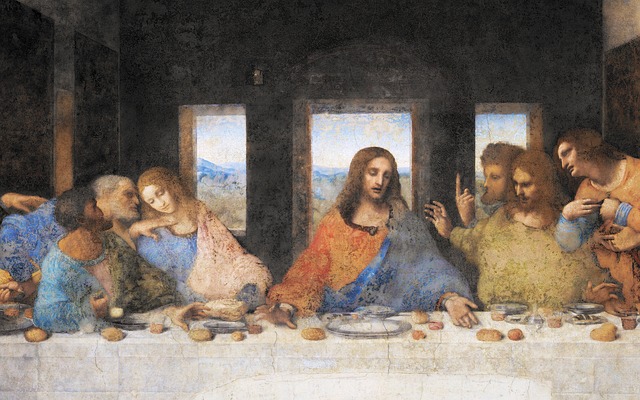
    As we approach the Eucharist this evening let us take his words and his actions to heart, for together they show that love leads naturally to service. Christ has shown us the greatest love through the gift of his Body and Blood broken and poured out for our sake and at the same time that this is the love that allows us to see others not as things to be used but as people to be served.

  • The Standard of Love: Tuesday of Holy Week

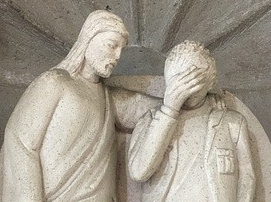
    So he dipped the morsel and took it and handed it to Judas (John 13:26).

    Judas was chosen by Christ; he accompanied Him throughout his ministry. Like every disciple, he was fed spiritually and physically. Empowered by our Lord, Judas healed, expelled demons, preached the coming of the kingdom, and shook the dust of unbelieving towns off of his feet. On top of that, he witnessed countless signs and miracles.

    Yet still Judas betrayed Jesus.

    Nevertheless, even to the end Jesus fed him; He never shook the dust of his betrayer off of his own feet. To the contrary, Jesus extended hospitality toward him; He put him first.

    last-supper-1921277_640Let us keep this in mind as we prepare to receive the Sacred Morsel of our Lord in the most Holy Eucharist. For we are all like Judas; we have all betrayed our Lord’s innocent blood with every sin, no matter how small. And as He did with Judas, so does our Lord do to us; He continues to feed us, to respect our dignity, to love us unconditionally.
    This is the standard of a love that is bigger than any sin; this is the love that we are called every day to imitate. This is the love of Christ.

  • The Choice to Forgive: The 7th Sunday in Ordinary Time

    Leviticus 19:1-2, 17-18; 1 Corinthians 3:16-23; Matthew 5:38-48

    As a young married woman, Edith Eger emigrated to the United States just after World War II and settled in Texas with her husband and first child. If she didn’t carry much material baggage, she carried a lot inside. A Jew, she and her family had been taken by rail along with hundreds of others to Auschwitz. Her parents were immediately put to death. A gymnast and dancer, she got the attention of a camp physician and was forced to dance for him; this was the notorious war criminal Jozef Mengele. Months later she was forced to march to another death camp and was one of the very few who survived. Her way of dealing with the trauma was to dedicate her life to helping others so in the 1970’s, her children grown, she went to college and became a psychologist. Now Dr. Eger, she began treating soldiers suffering from post-traumatic stress syndrome.

    One day Dr. Eger met with two patients, both Viet Nam veterans. They suffered identical injuries; the war left them paraplegics. The first man was angry, bitter, and resentful; all he saw was the world’s evil and his own limitations. His attitude was, “Why me?” The second man was just the opposite. Grateful to have survived, he was determined to focus on the good things in life and on its possibilities. His attitude was, “What next?”

    Both patients deeply affected her. Through the first man she realized two things. First, her wartime experiences had left her like him: Angry, bitter, and resentful inside. More importantly she realized those feelings not only remained unresolved but had taken over, made things worse. Like that patient, she too was defined more by hatred than by love. But the second man showed her that she had a choice. She could choose life over death, to be a victor and not a victim, to celebrate the good and stop mourning the evil; to ask “What next?” and not “Why me?” That is the path she chose and, to coin a phrase, it has made all the difference.

    In her book “The Choice,” Dr. Eger writes, “Maybe to heal isn’t to erase the scar… to heal is to cherish the wound.” May be; we know from the book of Leviticus that we are to cherish no grudge (Leviticus 19:18), for that is the opposite of healing. No wonder the same verse advises us to take no revenge. Although it may seem satisfying for a time, especially when someone has really hurt us, Dr. Eger also said that revenge keeps us revolving, not evolving. Our goal is to get past the pain, not pay it forward, to make a positive change in our lives.

    But when someone has hurt you badly, how do you get past that kind of anger? By acknowledging it and giving it to God. Hiding it or pretending it doesn’t exist aren’t realistic solutions. You must be honest and admit that the anger you feel is the normal response to being badly hurt, but you must also resolve that anger will not win, will not define you, is not who you are. St. Paul told you who you are; you are the temple of God (1 Corinthians 3:16); don’t let anger defile that temple. Then give it to God in prayer. Be completely honest; tell God that the hurt and anger are too big for you, that you cannot do it alone. Ask him to help you forgive those who hurt you.

    Finally, have a realistic understanding of love in the context of forgiveness. When our Lord says love your enemies he isn’t asking us to forget what happened and be friends; rather he is challenging us to see other people, including our enemies, as God sees them. Therefore, forgiveness doesn’t mean complete reconciliation of all differences with all people; it means freeing ourselves to love as God loves. Edith Eger didn’t reconcile with the Nazis but she did forgive them because she came to see them as they were: People who, although created good by God, learned as children to fear and hate what they could not understand. We come to forgiveness the same way; not by total reconciliation of our differences but by accepting first and foremost that all people, even those who have hurt us, are created and loved by God just as we are and in need of the same salvation we need.

    prodigal-son-3388599_640It’s tempting to dismiss all this as foolishness but remember what St. Paul says: If any one among you considers himself wise in this age, let him become a fool so as to become wise (1 Corinthians 3:18). It may be wisdom in the eyes of the world to hate those who have hurt us and foolishness to forgive them but in Christ’s world it’s just the opposite; his is the world where hatred keeps us bound and love frees us, where judgment takes a back seat to mercy, and where God alone sees the heart, knows the pain, calms the fear, heals the wounds, and breaks the chains.

    As Lent approaches I invite you to find that one person in your life most in need of your forgiveness. Make forgiving that person your Lenten project. It may not take you all of Lent or you may not have succeeded come Christmas; regardless, keep working at it. Pray for them; your prayers are the greatest gift you can give and are truly sacrificial. Forgiving others from the heart may be the one thing we do that God loves the most, for it shows how much we want to be like him. After all, God has forgiven us.

  • The Outsiders: Tuesday of the Sixth Week in Ordinary Time

    James 1:12-18; Mark 8:14-21

    We may as well answer the question Jesus asked the disciples at the end of the gospel passage: Do you still not understand (Mark 8:21)? No, they do not understand at all. The question is, why? So far in Mark’s gospel they have heard him teach, seen him heal, witness him expelling demons, raising a girl from the dead, and feeding thousands with a few loaves. Who or what kept them from seeing him as the Christ? And more to the point, who or what does the same thing to us?

    It certainly isn’t God. As the first reading reminds us, God tempts no one (James 1:15). Here, James echoes the ancient truth revealed through the prophet Habakkuk that God cannot even look upon evil (Habakkuk 1:13). Rather, the reading goes on to say, evil comes from within each person who is lured and enticed by his desire (James 1:14). Let us briefly consider three different kinds of enticement.

    First, we entice ourselves to sin by failing to guard against temptation. Just as a person struggling with alcoholism would be foolish to hang around liquor stores so anyone who struggles with a certain sin is foolish to put themselves in situations where they are tempted to it. This is called the near occasion of evil and is what we promise to avoid every time we say the Act of Contrition.

    Second, we entice others to sin by becoming an occasion of evil ourselves. Some do this by dressing immodestly, others by gossiping. We rationalize such behavior in true Adam-and-Eve fashion by blaming the victims – “They shouldn’t look at me that way,” or “I only told the truth” – but deep down we know that we are far from innocent.

    Finally, we are enticed to sin by the dark angels whose master goes by many names: the father of lies (John 8:44), the tempter (Matthew 4:3), the devil (Matthew 4:1). By whatever name he sows confusion, preys on our weakness, encourages selfishness. The wise listen to Christ who urges us to fear the demons for they can destroy us body and soul (Matthew 10:28); the prudent avoid them, and the persevering cling to God with the assurance of St. Paul that no one and nothing can ever separate us from the love of God that is in Christ Jesus (Romans 8:38-39).

    Earlier in Mark, Jesus defined two kinds of people. The “insiders,” or those to whom the mysteries of the Kingdom had been revealed; and the “outsiders,” who did not. Of the outsiders he said, they may look and see but not perceive, and hear and listen but not understand, in order that they may not be converted and be forgiven (Mark 4:12). The irony is that the disciples, who should be the definitive insiders, act more like outsiders than the real outsiders! For example in today’s gospel the disciples, who just witnessed Jesus feeding four thousand people now have the chance to share a quiet boat ride with him. What a shame that this perfect opportunity to unpack all they have seen is wasted on worrying about how little bread they brought along!

    fishing boat and feetStill, Mark’s purpose is not to make us wonder at their behavior but to evaluate our own. Are we insiders or outsiders? Some of us witness Christ feeding a multitude every day, and every day share time with him in the Church, the barque of Peter. Are we focused on our own loaf of bread – be it the next place we have to go, the people we have to see, or things we have to do – or on the Living Bread that is Christ? We see the many wonderful people he gives us – our families, friends, each other; do perceive Christ living within them? We hear his word in the Scriptures; do we understand his voice speaking through all those crying for help? At the Mass he gives us himself Body, Blood, Soul, and Divinity in the Holy Eucharist; are our hearts hardened or are they being converted through the forgiveness of sins in Confession, that we may partake most fully in the infinite grace he offers?

    We conclude where we began, in the letter of James. Consider how the passage begins: Blessed is he who perseveres in temptation, for when he has been proven he will receive the crown of life that he promised to those who love him (James 1:12). Let us pray for perseverance, that gift of the Holy Spirit that empowers us to remain in the state of grace until the end of our lives; may we like the Saints see and perceive, hear and understand, that our hearts be converted, our many sins forgiven, and our focus on the things above.

  • The Holy Spirit and Us: Memorial of Sts. Cyril and Methodius, bishops

    Acts 13:46-49; Luke 10:1-9

    As a young musician and singer I had many opportunities to play and sing for wedding and funeral Masses. At first this was no problem, but eventually it became one. Parishes had begun to hire their own musicians who weren’t thrilled to see outsiders like me coming in. I remember at one wedding the local musician came up and told me that he was on the parish staff, this was his parish, and he would be playing. I don’t recall my reply but I know it infuriated him. He stormed off saying “I’m going to the pastor right now. One of us is leaving and it won’t be me!” Well, it was him. I stayed and did the wedding Mass, smugly condemning him for his attitude, never considering my own.

    There’s an old saying that when the Church isn’t being persecuted from the outside she persecutes herself. Many of us have seen it; the place we expect to find the most unity too often seems the model of disunity. We want the Church to grow, we want to bring Christ to people, but when they challenge us with new ideas, expectations, or ways of doing things we find ourselves at odds with them.

    This phenomenon is as old as the Church. In the first reading Paul and Barnabas turn their attention to the Gentiles, frustrated with their stalling mission to the Jews. And we hear how the Gentiles were delighted and the Church grew. What we have not heard (yet) is that with this growth came conflict. On one side the Gentiles resisted adopting Judaic ritual and dietary practices. What do circumcision and kosher law have to do with salvation? On the other side the Jewish Christians resisted the idea of abandoning them. After all, Jesus and his Apostles were Jews! Two groups, each with its own interests: More disputes, more hard feelings, more disunity.

    Sts. Cyril and Methodius might well sympathize. In their time (the 9th century) the Church was struggling to grow in Eastern Europe. The two brothers were the perfect choice for missionaries; they were well-educated, devout, and had grown up speaking Slavic as a second language. Best of all they possessed keen pastoral sensibility; they knew that Christ is the Word who transcends language, whether Greek, Latin, or Slavic. Therefore, when they arrived in the missions they not only preached in Slavic but also translated and conducted liturgical services in it as well. The people responded and the Church grew.

    As in the gospel they went out like lambs among wolves, only this time the wolves wore clericals. The missionaries of the region resented Cyril and Methodius. For one thing, they made the old guard look bad. Under them the Church withered; with the brothers here she blossomed. Second, they took issue with the way the Church grew. As they saw it, no one had the right to translate the liturgy into the native language and teach it to the people. Surely these upstart missionaries must be reprimanded.

    Not surprisingly the embittered clerics appealed to Rome about the liturgical changes, demanding action. When summoned, Cyril and Methodius went to Rome and gave a spirited, eloquent defense. After listening carefully in person, Pope Adrian II blessed their mission and gave them permission to continue celebrating the liturgy in Slavic.

    Cyril stayed in Rome and died not long afterward; Methodius returned to the missions. Sadly but not surprisingly, the pope’s decision settled nothing in many minds. For the rest of his life Methodius was hounded and frustrated by clerics who disagreed with him. Although he stayed the course and remained successful, the stress took its toll; he died April 6, 885.

    cropped-dove-3951312_1920.jpgThe pattern of disagreement, debate, and decision is how things get most productively settled in the Church provided it is done in the right spirit; that is, the Holy Spirit. Since the Council of Jerusalem was called to settle the dispute between the Gentile and Jewish Christians this has been the model, its justification found in the letter issued from that Council, specifically the sentence that begins, It seems good to the Holy Spirit and to us (Acts 15:28). The Holy Spirit promised by Christ continually works within us, finding ways to maintain unity despite our differences. In all our human affairs but especially between the members of the Church what matters is not that we disagree but that we dialog, not the heat of our words but the light of the Holy Spirit, not the distance we keep but the fellowship we extend, and not the hostility throughout the debate but the peace of Christ we give in the resolution. As with Cyril and Methodius, some will not accept us or the decisions reached but we cannot help that. All we can do is what Methodius did: Continue to act in union with Christ and his Church, remembering always that it is not about us but about the Holy Spirit and us.

    Sts. Cyril and Methodius, pray for us.