Tag: New Testament

  • The Great Reversal

    The Great Reversal

    Saturday of the 30th Week in Ordinary Time

    Philippians 1:18b-26; Luke 14:1, 7-11

    The famous evangelist Billy Graham dreamed that he died and went to Heaven. As he was escorted in, saints and angels cheered, congratulated him, and said to each other, “At last! Here he is! Here he is!” When our Lord greeted him, He said, “Yes, here he is, the man we have all been waiting for: Ruth Graham’s husband!”

    Beyond the humor, Graham was touching on a theme that runs throughout the gospel of Luke. Theologians call it, “the Great Reversal.” We hear it in verses like, He has filled the hungry with good things, and sent the rich away empty-handed (Luke 1:53); Blessed are you who are poorwoe to you who are rich (Luke 6:20,24); (Lazarus) is comforted here, whereas you are tormented (Luke 16:25); and today’s: everyone who exalts himself will be humbled, but the one who humbles himself will be exalted (Luke 14:11).

    If this sounds less like reversal and more like divine justice, it’s for good reason. There is an element of justice to it. In his merciful love, God gives abundantly to those who have been denied, and will deny those who, of their own free will, have refused to show that same kind of love and mercy to others.

    But there is more to it. The Great Reversal isn’t a reversal of fortunes, it’s a reversal of expectations. In his dream, Billy Graham ended up in heaven, just not for the reason he expected. Like him, we are tempted to look at “everything we’ve done for God” and, perhaps even unconsciously, expect something in return. Of course, the fact is that God owes us nothing, whereas we owe Him a debt we can never repay. The lesson is that, if we have any real expectation or hope at all, it should be the one St. Paul spoke of: thatChrist will be magnified in my body, whether by life or by death. For to me life is Christ, and death is gain (Philippians 1:20).

    We can’t get to that point without being like Christ, we can’t be like Christ without humility, and we don’t have humility until we take an honest look at the gifts we’ve been given, remember who gave them to us, and ask ourselves what we’re doing with them. What gifts? Well, think about riches. If we’re not rich in money, then what about time, talent, or knowledge? Whatever it is, Jesus wants us to ask ourselves, “Do I thank God for it?” and “What would the world look like if I gave some of it away?” Again, think of St. Paul. Rich in love for Christ, he wanted only to be with him; as we heard, he was ready to die to do it. Nevertheless, he saw the need to serve the Church, to preach the gospel and encourage her members in the faith. In his humility, he let his guiding concern be not how he could satisfy himself, but how he could be of benefit to others.

    Humility is a demanding gift, but a great one for that reason. It’s asking a lot to be given the riches of life but not become attached to them, to take pride in ourselves and our abilities without becoming proud, and to give all we can purely out of love for God, expecting nothing in return. But as we try more and more, we see more and more the reversal taking place in ourselves; that true poverty is having gifts but not sharing them, true torment is refusing the consolation of Truth, and that true pride is expecting God to honor us for whatever we’ve done.

    The irony is that God does honor us; indeed, He is never outdone in generosity. We are invited guests to the greatest wedding banquet ever prepared – the feast of Christ’s Body and Blood. All we need bring with us is the hope and eager expectation of hearing him say to us when we come to his table, ‘My friend, move up to a higher position’ (Luke 14:10).


  • God Moments

    God Moments

    Memorial of St. Thérèse of the Child Jesus, Virgin and Doctor of the Church

    Job 42:1-3, 5-6, 12-17; Luke 10:17-24

    The leader of a small group I once belonged to began each meeting by asking us, “Did you have any ‘God moments’ this week? What did you learn? How did they help you?” I never responded, although his questions did get me to reflect on times when I saw or felt God working in my life.

    If Job or the Apostles attended that small group this week, they would’ve had a lot to say. Job had just encountered God in a very profound way, and the Apostles actually witnessed God healing people through them. But today, on the Feast of St. Thérèse, let us share one of her ‘God moments.’ It was this moment that she said changed her life.

    She was 12, going on 13, when she overheard an innocent but dismissive remark made about her by her tired and irritated father. Although it hurt at first, it caused Thérèse to look at herself and see that for years she had behaved like a spoiled, self-centered child. At the same time, she realized that her father, in imitation of the infinite love of God, had always looked beyond that; to him, she was a beautiful person capable of deep and authentic love.

    This God moment, which Thérèse called “grace emerging from childhood,” was not far from the experience of Job and the Apostles in the readings. In fact, I think all ‘God moments’ share these three aspects: A call by God, a response of repentance and amendment, and the blessings of growth in holiness.

    First, the call. To Job, it might have sounded more like a “wake-up” call. Just moments earlier, God had sternly reminded him who is God and who is not. In the gospel, it was the gentle rebuke of Jesus, reminding the Apostles not to rejoice that evil was conquered, but that their names were written in heaven. For Thérèse, it was her father’s remark, hinting at her self-centeredness. For us, it could be many things: a Scripture verse; a thought from a book we’re reading or talk we heard; something said to us by a friend or relative; a whisper of the Holy Spirit.

    Whatever it is, the call awakens us to the fact that we need to make a change and stick to it. This takes plenty of humility and perseverance. Job had it; he disowned what he said and repented in dust and ashes (Job 42:6). The Apostles had it, too; after receiving the Holy Spirit, they rejoiced that they had been found worthy to suffer dishonor for the sake of the name (Acts 5:41). So did Thérèse; she faced the fact that her father was right, and changed her behavior. That leaves us with the challenge: What is God calling us to own up to and commit to change, and will we do it?

    We all know how hard that is, but the readings show us that good things await those who try. After his repentance, Job was blessed far more than before (Job 42:12); long after the Apostles fled from the Passion, God poured out the Spirit upon them and set them over the whole Church (Matthew 19:28; Acts 4:34-35; 16:4). Thérèse also bears witness; she left her life as a spoiled brat to became one of the greatest saints in recent memory.

    Now we can see how God moments help us. Through them, we come face to face with the deepest parts of ourselves; not just our limitations but also our potential. They are opportunities for conversion, a chance to return, to begin again, to grow more deeply in virtue. They are reminders not just that God is present and acting in the world, but that He acts in us and through us; we are a part of His plan. What an awesome thought, that there are things only we can do, and that God has given us the grace we need to do them! Above all, they are signs of God’s infinite and merciful love for us. As St. Thérèse showed so well, God measures us not by the greatness of our deeds, but by the love with which we do them.

    St. Thérèse, pray for us.

  • God’s Idea of Re-Gifting

    God’s Idea of Re-Gifting

    Memorial of St. Barnabas, Apostle

    Acts of the Apostles 11:21b-26; 13:1-3; Matthew 10:7-13

    At a Christmas party gift exchange, the woman next to me opened her gift and muttered, “Oh, no.” “What?” I asked. She whispered, “Two years ago, I got this from my niece. I didn’t want it, so I re-gifted it to my colleague over there. She must’ve forgotten I was the one who gave it to her, and re-gifted it to me.” That’s the first time I heard that term, “re-gifting,” but I hear it’s common: Someone gives us a gift, we open it, smile, thank them, bring it home, re-wrap it, and give it to someone else.

    Then, thinking about the first reading, it occurred to me: God gives us some gifts that he wants us to re-gift. These are called “charisms” – gifts of the Holy Spirit given to us but not meant for us; they’re meant to be given away so the Church can prosper.

    We see this “re-gifting” in the person of Barnabas, whose feast is today. We know little about him other than what Luke tells us. He first appears in Acts chapter 4, where he gives the proceeds of the sale of his property to the Church. Today we hear of him being sent to Antioch, going to Tarsus to find Paul, bringing him to Antioch, and working with Paul there and on his first missionary journey (Acts 13-14).

    In all this, Barnabas shows at least three charisms. First, generosity. He could have done many things with his property; even if he had to sell it, he didn’t have to give the money to the Church. But he did. Second, encouragement. In Antioch, Barnabas encouraged them all to remain faithful. As a result, Luke tells us, a large number of people was added to the Lord (Acts 11:23f). Third, teaching. Along with St. Paul, Barnabas spent a year there teaching people the faith. To great effect; they brought in so many Gentiles that the disciples in Antioch were the first to be called Christians (Acts 11:26).

    Of course, Barnabas isn’t alone; as St. Paul said, to each individual the manifestation of the Spirit is given for some benefit (1 Corinthians 12:7). So, that prompts us to ask what charisms we have. One place to start is with the gifts God gave us from birth. Perhaps we’re known as a welcoming person, one whose door is always open; or we love to teach, or to encourage others. Maybe we’ve always had a talent for bringing people together to get something done, or for being compassionate towards those who are alone or sick or suffering. Barnabas probably had several of these qualities. Still, having gifts isn’t enough; not all generous, encouraging, or bright people use their gifts to build up the Church. Going from gift to charism takes more; it takes the grace of the Holy Spirit.

    You know you have a charism if someone says to you, “When you welcome (or console) me, you make me feel like I’m the only person in the world,” or, “When you teach (or sing or create artwork), you help me see God in a whole new way,” or, “You have a way of encouraging me that makes me feel like I can move mountains,” or “Under your leadership, I feel like I really belong and can make a difference.” This is evidence that the grace of God has given our natural ability a supernatural boost. Charisms make us the instruments God uses to touch people beyond mere human capacity.

    Perhaps you’ve tried to use various gifts or talents but never heard this. Take heart; that doesn’t mean you have no charisms. Charisms don’t work for our glory or notoriety. Most likely, many people never said a word to Barnabas yet were edified or inspired to do what they saw him doing, whether that meant giving money, time, or talent to build up the Church. It’s also possible that you haven’t yet found the place or situation to put your gifts to work. Stay vigilant. When you find it, you will know; then it will be time to act. Again, look at Barnabas. He looked at the situation in Antioch and saw they badly needed encouragement, so he gave it. Not only that, he watched and listened enough to know that Paul was a man who, whatever people said about him, could have an impact on the Church. He seized the moment, found Paul, and brought him back. Look at the result! What would the Church be like if Barnabas had never done that?

    Perhaps you are being urged by the Holy Spirit right now; perhaps there is something you’ve wanted to do, or think you may be called to do. Don’t wait. Find a way. As Jesus said to the Twelve in today’s gospel, Without cost you have received; without cost, you are to give (Matthew 10:8). Or, re-give.

    St. Barnabas, pray for us.

  • The Challenge

    The Challenge

    Saturday of the 5th Week of Easter

    Acts 16:1-10; John 15:18-21

    Over the span of about 15 years, I was asked three times if I ever thought about being a deacon. The first time was my pastor. I asked what a deacon was and, after he told me, I said, “No, thanks.” A decade later, a second priest asked me. I looked into it, but it didn’t seem like a good fit. When a third priest asked a few years later, it began to dawn on me: I’ve looked for ways to serve the Church for years; none have worked out. But I’ve had three priests, years apart, totally unknown to each other, ask me this question. Is this what God wants me to do? I still hesitated. I wasn’t sure.

    Then I heard a priest talking about vocations. He said, “If you think Christ might be calling you to ministry, you owe it to yourself to try, because if he is not calling you, he will make it clear to you.” That was it. It was as if God was saying to me, “You’ve tried other things; they haven’t worked. I’ve asked you three times. You owe it to yourself to try.” So I tried, and it changed my life.

    This is not so different from St. Paul’s experience. He didn’t know where God wanted him to go, but he knew he had to try. He chose a direction, went out, and sure enough, if that wasn’t right, God made it clear. Doing this changed his life and the lives of millions. As we heard, today’s reading ended with Paul being led into Europe. Imagine what might have happened (or not happened) had St. Paul never preached the gospel there!

    Of course, this isn’t limited to St. Paul. Jesus is calling us, too; as he said in the gospel, I have chosen you out of the world. Notice, he doesn’t say what we’re chosen to do. That depends on us; we have to make choices, to try different things. While some people may know exactly what God has called them to, my guess is that most do not. If you’re one of them, then you’re in good company; neither did St. Paul. But he didn’t sit around waiting to find out. He went out and tried. That’s what we must do.

    But how do we know if we’re doing what God wants us to do? One way St. Paul knew was by looking at the fruit of his labor. As St. Luke tells us, day after day the churches grew stronger in faith and increased in number (Acts 16:8). It is a great blessing to see a change for the better in peoples’ lives as a result of our efforts. But that’s not the only way. We should look for a positive change in our own spiritual life; is what we’re doing drawing us closer to Christ? Another way is the sense of accomplishment we get from trying to make a difference. Nothing feels better than knowing that, whatever the outcome, we have gotten up and done something; we’ve made a real effort.

    Of course, things don’t always work out in our favor. If none of these things are happening, then it is certainly possible that God wants us to try something else. It’s easy to get a little down and see our effort as a mistake, but that would be wrong. The mistake isn’t trying and failing, it is never trying. God is always pleased with the effort of a sincere and humble heart. As St. Teresa of Calcutta so wisely said, “I would rather make mistakes in kindness and compassion than work miracles in unkindness and hardness.”

    What’s more, what is not right for us at one time may be exactly right at another. When I was first asked about the diaconate, I wasn’t the man I was to become. The experiences of life needed to shape me. As God showed me in the fullness of time, I was called to the diaconate; I just wasn’t called then, the time wasn’t right. So it is for each of us. God gives us time that we may come to learn about ourselves, our strengths and weaknesses, our potential and our limitations. If we are wise and continue to try and improve ourselves in God’s eyes, we will find ourselves ready for roles of service to the gospel that we never would have thought possible before.

    In the gospel, Jesus contrasts us to the world he has called us out of. He doesn’t do this to separate us from the world; to the contrary, he loves the world and wants us to engage it more effectively. As St. Paul and his companions have shown us, we cannot do that unless we are willing to do it in God’s way, in God’s time, and with God’s guidance. As Jesus said in the gospel, they do not know the one who sent me (John 15:21). The challenge for each of us is, “How can I try to show the world the One who sent me?”

  • Master and Collaborator

    Master and Collaborator

    Friday of the 5th Week of Easter

    Acts 15:22-31; John 15:12-17

    When you train a person for a job, you know – you just know – that it won’t be long until they’re in over their head. New jobs mean many new things to learn, and that’s hard enough, but when you add having to deal with all the unexpected things that get thrown at you, it can be overwhelming.

    That’s pretty much what happened to the early Church not too long after Jesus ascended. As we’ve seen recently in Acts, although the Apostles did have some success at building up the Church, an issue got thrown at them unexpectedly that threatened to bring the whole thing down. Essentially, the question was, “To be a follower of Jesus, do you have to be a Jew?” For many early Jewish Christians, the answer was, “Of course. After all, Jesus was a Jew!” However, others, like Paul and his companions who ministered among the Gentiles, it was, “Of course not! Christ did away with all that!”

    Fortunately, Jesus built his Church on a foundation that, to this day, rests on three pillars. Two of them are his Word, one written (Sacred Scripture), the other unwritten (Sacred Tradition), and the third the Magisterium, or the authority to teach the world about God. In yesterday and today’s readings, we have gotten to see one way the Church uses these pillars.

    When they are confronted with such an explosive and potentially divisive issue as the one facing the Apostles, the Church leaders come together in what is called a Council. To date, there have been 21 “ecumenical”, or world-wide, Councils. This was the first – the Council of Jerusalem. Every Council takes the same form: They gather, debate, listen, pray, and decide. The process goes back and forth; debate can be sharp and deeply felt, and the issues may take days, months, years, even decades to work through. Finally, when decisions are reached, they are written down and published for the world to see.

    The letter from this first Council begins with one of the most monumental phrases in the New Testament, if not the entire Bible: It is the decision of the Holy Spirit and of us… (Acts 15:28). Every Council that has ever been called finds its basis in those words, for only they, gathered and working in unity, have been given by Christ the authority to speak for God, with the Holy Spirit not as their master but their collaborator.

    And, as we hear, it worked; Luke tells us that the people were delighted with the exhortation (Acts 15:31). Some Councils end this way; at Ephesus for example, some of the bishops were hoisted up by the people in a joyful, celebratory parade. Others, such as the First Vatican Council, ended much less ceremoniously. Regardless, each of the Council has done what it set out to do: Wrestle with the problems facing the Church, come to a decision in union with each other and in collaboration with the Holy Spirit, and teach it to the Church and the world.

    The secret to making this work was given by Christ in the gospel. It is love – the love of a Master who humbles himself to be a friend; who holds nothing back; who reveals everything to his friends; who not only chooses but empowers his friends to do as he has done – to hold love as the highest value, even to the point of giving our lives.

    The model given by Christ to the Church leaders is our model, too, for each of us as disciples must wrestle with the challenges, controversies, and questions of our time. But we don’t have to do it alone; as Catholics, we must see the Church as the place we come together to look for answers. It should be normal for us to do this; to talk about the faith, ask questions, perhaps debate, pray the Scriptures, listen, and above all to see God as both Master and collaborator. We may not come up with many solutions, but we will come to a deeper understanding and love of God, ourselves, and each other. The key is unity; to paraphrase Fr. Henri Nouwen, our best solutions are words and actions that do not divide but unite, that do not create conflict but unity, and that do not hurt but heal.

  • Chosen

    Chosen

    Feast of St. Matthias, Apostle

    Acts 1:15-17, 20-26; John 15:9-17

    In the spring of my senior year, the high school play was a drama with a lead role that I really wanted. When tryouts came, I nailed it. I went home confident that I had that part in the bag.

    Only, I didn’t. Even worse, I got cast as what seemed to me like the play’s dullest character. At the first rehearsal my disappointment must have shown; the director took me aside and said, “I could have given you the lead, but it came too easy to you. The guy who got it needs the challenge. As for you, the part I gave you is going to make you work. Now, I want to see what you do with it. Show me you’re the actor you want to be.”

    It turned out that he was right about both of us. There was a depth to my part that I hadn’t seen, and it did make me work. Same for the guy in the lead role; he struggled but kept working. In the end, the director was happy with both of us, but honestly I think we were happier with ourselves. We got exactly what we needed, and the play was better because of it.

    I remembered that while meditating on the first reading. Two men were proposed to fill the role of the twelfth apostle; as we know, the lot fell upon Matthias (Acts 1:26). I asked myself how I would have reacted if I were Barsabbas. As with the play, I might have been disappointed. “I, too, was with the apostles from the beginning… why was I not chosen?”

    Of course, if I were Barsabbas, I would have known that Christ had already answered that when he said, It was not you who chose me, but I who chose you and appointed you to go and bear fruit that will remain (John 15:16).

    In that one sentence, our Lord said it all. It wasn’t that one man was chosen and the other was not; both were chosen, but each given different parts. Clearly, the office of twelfth apostle had been reserved for Matthias; to him and him alone went that honor, challenge, and responsibility, as well as every grace he would need. But that didn’t mean that God had nothing for Barsabbas to do. To the contrary, he too had been chosen, and given his own unique and important part to play. We have no idea what it was; like Matthias and so many others throughout history, his work remains a mystery. But also like them, the fruit of his labor remains to this day – we, the Church, now spread to every corner and people of the world.

    God’s plan for discipleship is no different today. We may think of evangelization, or preaching the gospel, as the proper work of professionals – people who are qualified by their training or education in the faith. But our Lord’s words in the gospel are a reminder that God doesn’t choose the qualified, He qualifies the chosen. And we are all chosen; whoever we are, whatever we do, whatever circumstances we find ourselves in, God has chosen us, called us by name, and qualified us with every gift and grace we need to bring the world to him and him to the world.

    Of course, we will all face challenges along the road. People may reject us, we may struggle with doubts or periods of discouragement, and we may even be jealous of those who have gifts and abilities that we do not. But I firmly believe that each challenge is God’s way of saying to us, “I could have made your way easier, but I want to see what you can do with what I gave you. Show me that you are the disciple I have called you from all eternity to be.” It means that we will work harder than ever before, but think how much better off we will be in the end, for then we will hear our Lord say, Well done, good and faithful servant… Come, share your Master’s joy (Matthew 25:21).

    Who wouldn’t want that part?

  • The Perfect Plan

    The Perfect Plan

    Saturday of the 5th Week of Lent

    Ezekiel 37:21-28; Jeremiah 31:10, 11-12abcd, 13; John 11:45-56

    When I was 7, I ran away from home. I figured I had to; Mom was forcing me to do all this horrible stuff: school, chores, Confession every other Saturday. So one day, after she said I was being particularly annoying, I decided now was the time: I’d go to St. Louis and live with my uncle. What a great idea; he lived close to where the Cardinals played baseball, was a lot of fun, and he’d love me hanging out with him every day. Best of all, no chores! So, I went upstairs and got some stuff. I packed light. We lived in Denver, Colorado, and on the map it looked like an easy trip; just walk across Kansas and you’re in St. Louis. So I left, pretty pleased with myself. My plan was perfect.

    Or so I thought. When I got to the highway a police car pulled up. They asked me who I was and where I was going, so I told them. I couldn’t believe it; rather than compliment me on a great plan, they made me get in the squad car. Next thing I knew, we pulled up at home. Mom and Dad were standing there and, judging by their faces, it didn’t look like they were going to be calling my plan perfect, either.

    All this is why I think I understand how Caiaphas felt when he prophesied, It is better for you that one man should die instead of the people, so that the whole nation may not perish (John 11:50). He was probably pretty pleased with himself, too. By the death of this one man, Jesus, he could broker peace among the people, placate Rome, keep a firm grasp on his power, and maybe go down in Jewish history as the high priest who saved Israel from destruction. His plan was perfect.

    Or so he thought. Jesus did die as Caiaphas planned, but everything else went exactly opposite of the way he expected: Jesus rose from the dead, the social unrest grew, the people rebelled against Rome, and in response the Roman army burned Jerusalem and the Temple to the ground. It was not a perfect plan at all.

    The truth is that there is only one perfect plan. We call it providence, or God’s loving plan to guide his creation toward perfection (Catechism of the Catholic Church, §302). We heard some of its key elements in the first reading and the psalm: Israel, gathered together in unity under one shepherd; her people cleansed from their sins, given a new heart and a new spirit; God dwelling with them in his sanctuary forever.

    Although the office of high priest did have the gift of prophesy, Caiaphas could not see beyond his own ambition. From the depths of his own desires, he prophesied the death of Christ as an end in itself, not for what it was: the prelude to the resurrection, through which Christ would fulfill the words of Ezekiel – a new Israel, the Church; a divine Shepherd who washed her clean by the blood of his cross and gave her authority to absolve sins in his Name; who with the Father gave her a new heart by sending the Holy Spirit; and who dwells among his people forever in Word and Sacrament. This was, is, and always will be the perfection of God’s plan.

    Given this, it is especially moving to hear those near the Temple asking, What do you think? That he will not come to the feast (John 11:56)? Of course he will. That is the plan; Jesus is the feast!

    So, as we stand on the threshold of Holy Week, let us take a moment now to thank God for his wonderful providence, most truly shown in the gift of his only Son, our Lord, Jesus Christ. He is our hope, our joy, and our confidence. May his steadfast love for us and his Father, so perfectly on display throughout his passion, remind us that God’s plan is the only plan that matters, and that we are the reason for it. And let us pray that the plans we make for our own lives, however imperfect, are always in union with, and built upon, God’s perfect plan. As God himself has told us so beautifully, For I know well the plans I have in mind for you… plans for your welfare and not for woe, so as to give you a future of hope. When you call me, and come and pray to me, I will listen to you (Jeremiah 29:11-12).

  • The Three Choices

    The Three Choices

    Saturday of the Fourth Week of Lent

    Jeremiah 11:18-20; Psalm 7:9; Luke 8:15; John 7:40-53

    Years ago, the leader of a religious cult said that God told him the world was going to end soon; he even gave the day. When that day came and went, a few members lost their faith and drifted away. However, many did not; their faith grew stronger. When asked why, they replied that God decided to spare the world because of the cult’s prayers.

    Although they went about it in opposite ways, both of these groups were looking for the same thing: Consistency. We like our words and actions to be consistent. When they aren’t, when we say one thing but do another, we have three choices: Change our beliefs, change our behavior, or rationalize our behavior away. It can be hard to change our behavior, especially when it’s a habit; it can be even harder to swallow our pride and admit that our beliefs were wrong. That makes rationalizing a very popular choice.

    We see shades of this in today’s gospel. The chief priests and Pharisees had firm beliefs about who God is, how He works in the world, and who He works through. In their eyes, that did not include Jesus. But the people had begun to see that the actions of Jesus were inconsistent with that; his miraculous signs along with the depth, truth, and beauty of his words were convincing evidence that God was indeed working in and through him. So, the chief priests and Pharisees had to choose: Either change their own beliefs, change the peoples’ behavior, or somehow find a way to rationalize it and save their own pride.

    As the gospel story shows, they weren’t going to change their own beliefs, and they weren’t going to talk the people out of their attraction to our Lord. That left one choice: Rationalize. So that’s exactly what they did; to them, anyone who believed in Jesus was either deceived, ignorant, or ‘from Galilee,’ which was apparently intended as an insult. Ironically, by the end they lost all rationality, ending with an outright untruth: Look and see that no prophet arises from Galilee (John 7:52). If they themselves had looked, they would’ve seen that in fact the prophets Jonah, Hosea, and Nahum were all from Galilee!

    But we can’t focus on these men without looking in the mirror, for we all share the great inconsistency of sin. Our faith tells us that something is sinful; we do it anyway; we feel guilty. To rid ourselves of the guilt, we too must choose one of the three options mentioned before. Let’s take the worst one first: Changing our beliefs to suit our sinful behavior. Sadly, many of us know people who have done just that – left the faith rather than give up a sinful life. Let us pray that their hearts may soften, and that we never give in to the temptation to abandon the faith. Second, we can rationalize, as the priests and Pharisees did. This is a great temptation because, to paraphrase St. Jean Vianney, it’s so much easier to excuse ourselves than to accuse ourselves. That is exactly what we do every time we say things like, “I shouldn’t have gotten angry, but you made me so mad,” or “It’s just a little white lie,” or “I know I shouldn’t have texted while driving but it was an emergency.” These may seem like no big deal, but they lead to bigger problems; we dull our sense of sin and open ourselves to another: The sin of presumption, which says, “Go on, do it! God will forgive you later.”

    How far these selfish choices are from the generous heart spoken of in the Gospel Acclamation, that keeps the word and yields a harvest through perseverance (Luke 8:15), the innocent heart that prays for justice (Psalm 7:9), the heart that is completely open to God, who Jeremiah called the searcher of mind and heart (11:20). Only such a heart can make that most difficult choice: To change our behavior, so that it is in keeping with our faith. This takes perseverance, for our sins can be habits that are hard to break; it takes love of justice, for we have wounded our neighbor and our innocent Lord and must make amends; and it takes total openness to God, who knows our mind and heart infinitely better than we do.

    Let us pray that our merciful Lord will grant us such a heart, that we may have the humility to see ourselves as we are, to admit when we have sinned, and to seek the absolution that He alone can give. Only by His grace can we be most truly consistent.

  • The Heart of the Matter

    The Heart of the Matter

    Saturday of the 3rd Week of Lent

    Hosea 6:1-6; Luke 18:9-14

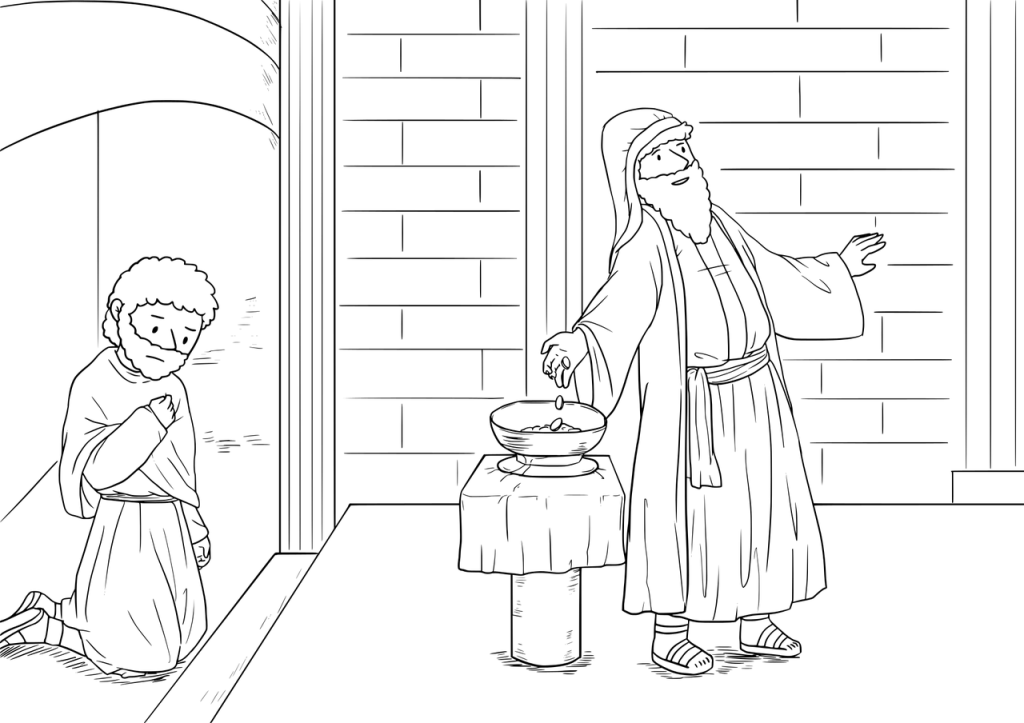
    When we hear the parable of the Pharisee and the tax collector, we are rightly drawn to the differences between them. However, I think time is well spent thinking not only about the differences but also the similarities, and what both have to teach us about ourselves and our prayer life, which is the reason Jesus taught this parable to begin with.

    The fact is, the two men have some important things in common. First, they’re both truthful. The Pharisee is telling the truth when he says he isn’t greedy, dishonest, or adulterous; so is the tax collector when he calls himself a sinner. Second, their actions are pious. The Pharisee tithes and fasts, while the tax collector stands at a distance, keeps his eyes lowered, and beats his breast as he prays. Third, both are men of deep conviction; they speak to God straight from the heart.

    Speaking to God from the heart is key, for Scripture teaches us that prayer is a work of the heart. The heart is where we live, our inner Temple, the place to which we withdraw (CCC 2563). At the same time, it is the place God knows best; he looks at the heart and knows its secrets (1 Samuel 16:7; Psalm 44:21). If we are righteous in God’s eyes, our prayers are fruitful (James 5:16); if not, our prayers are in vain (CCC 2562).

    This brings us back to the Pharisee. Although he seems to be speaking to God, his words betray a heart turned inward. Our Lord may be hinting as much when he says the man spoke this prayer to himself (18:11), but even if not, one thing is clear: God is the audience of his prayer, not the object. It’s tempting to think that we never do this, but my guess is that in the quiet of our own inner Temple, we can all recall times when we’ve focused a little too much on ourselves, have resisted what God is asking, acted as if the good things we’ve done we did on our own, or that in some way God likes us just a little bit more than he does some other people – especially people we don’t like.

    That’s the real problem. The Pharisee is right to say that he is not like the rest of humanity, but wrong because he’s comparing his behavior with what other people do, not with what God expects. The same is true for us; our standard is not other people, it is Christ. Given that, we can understand why God would say through Hosea, Your piety is like a morning cloud, like the dew that early passes away (6:5). Fasting, tithing, coming to the Temple: All are false piety if they don’t come from a truly humble heart.

    Humility, the foundation of all prayer, helps us to recognize our dependence on God and to appreciate our place in His plan. It is the virtuous balance between the extremes of pride on the one side and self-abjection on the other, which happens when we fail to recognize and use the gifts God has given us.

    As our Lord pointed out, humility was the great virtue of the tax collector. We know it from his posture and his words: Be merciful to me a sinner. What we do not know is what happened next. Did he live that humility out in his daily life by doing what the Baptist advised, Stop collecting more than what is prescribed (John 3:13)? While we must not push the parable beyond its limits, we must remember that humility not only orients us to God, but to each other as well. As with the Pharisee, it’s tempting think that we already live humbly in the world, but we must ask ourselves: Do we ever dwell on other peoples’ faults, gossip about them, seek their admiration, or return insult for insult?

    Like the Pharisee, this is the problem. True humility urges us to remember that God’s loving plan extends to all of humanity. We cannot live equitably with other people unless we treat them like equals, and we certainly cannot pray, no matter how humbly, “O God, be merciful to me a sinner,” if we refuse to be merciful to those who sin against us.

    Through the parable of the Pharisee and the tax collector, our Lord teaches us two lessons about prayer: First, the foundation of prayer is not our honesty, piety, or sincerity, but a contrite and humbled heart (Psalm 51:19). Second, the fruit of righteous prayer is a life of virtue most perfectly found in the life of Jesus, who took the form of a slave, humbled himself, becoming obedient to death, even death on a cross (Philippians 2:7-9). Indeed, no man so humbled was ever so greatly exalted.

  • Being Who We Were Made to Be

    Being Who We Were Made to Be

    Solemnity of St. Joseph, husband of the Blessed Virgin Mary

    Matthew 1:16, 18-21, 24a

    A theologian once said that “great occasions do not make heroes or cowards; they simply unveil them to our eyes. Silently and imperceptibly, as we wake or sleep, we grow strong or weak; and at last some crisis shows what we have become.”1 When I read that, I wondered if he was thinking of St. Joseph. It fits him so beautifully.

    Joseph was certainly not a man accustomed to great occasions. The ordinary ones were enough: Learn a trade, get married, bring up a family. By the time we meet him in Matthew’s gospel, Joseph had already checked two of those boxes. It was the third that brought about the crisis.

    We know the basic story well: Learning that Mary is pregnant and unwilling to expose her to shame, Joseph intends to divorce her quietly. What we may not know are a couple of details. First, in that time and culture, “expose her to shame” meant the legal right to “make a show” or public mockery of her. That Joseph would not do this speaks of his love for Mary and sensitivity toward her. This brings us to the second point: his intention to divorce her quietly. Where we read “intention,” Matthew’s original word implies a decision made in angst, in the heat of a deep and inner passion. It might even go so far as to mean that Joseph was tempted to feelings of anger, shame, or indignation.

    Who can blame him? How would we feel? Joseph had plans for his life and had worked, maybe even suffered, to achieve them. Now, on the verge of actually realizing them, he found his plans shattered to pieces. Even more, Joseph loved Mary; he knew that divorce meant disgrace for her and the child, not to mention very dim prospects for their future. This was the heart of the crisis. He had to make a decision, to do something, but what could he do? Mary was pregnant, he was not the father, and the law was clear. His decision for a quiet divorce was the best he could think of. Even if it meant pain or distress for the woman he loved so much, the law came from God, who Joseph loved above all.

    This I think is the key. Remember the theologian’s words: “Silently and imperceptibly, as we wake or sleep, we grow strong or weak.” Joseph came to this crisis with a strong moral center; born into the faith of his fathers, he was raised in it, steeped in it, and guided by it. He wasn’t going to abandon it now or ever. No matter the cost to his own or to anyone’s honor, Joseph would honor his heavenly Father first.

    In its section on the 4th commandment, the Catechism lists two qualities of a respectful child: docility and obedience. As they apply to our role as children of God, docility is our readiness to follow God’s will rather than our own, and obedience is our willingness to do whatever God asks of us.

    Joseph had both of these gifts in abundance, and in time God would ask him to use them to their fullest measure. For now, though, what He asked was more than enough: First, that Joseph set aside his plan of being husband of Mary of Nazareth and instead be the husband of Mary, the Mother of God; second, that he set aside any plan he might have of raising his own children and instead raise the Son of God as his own.

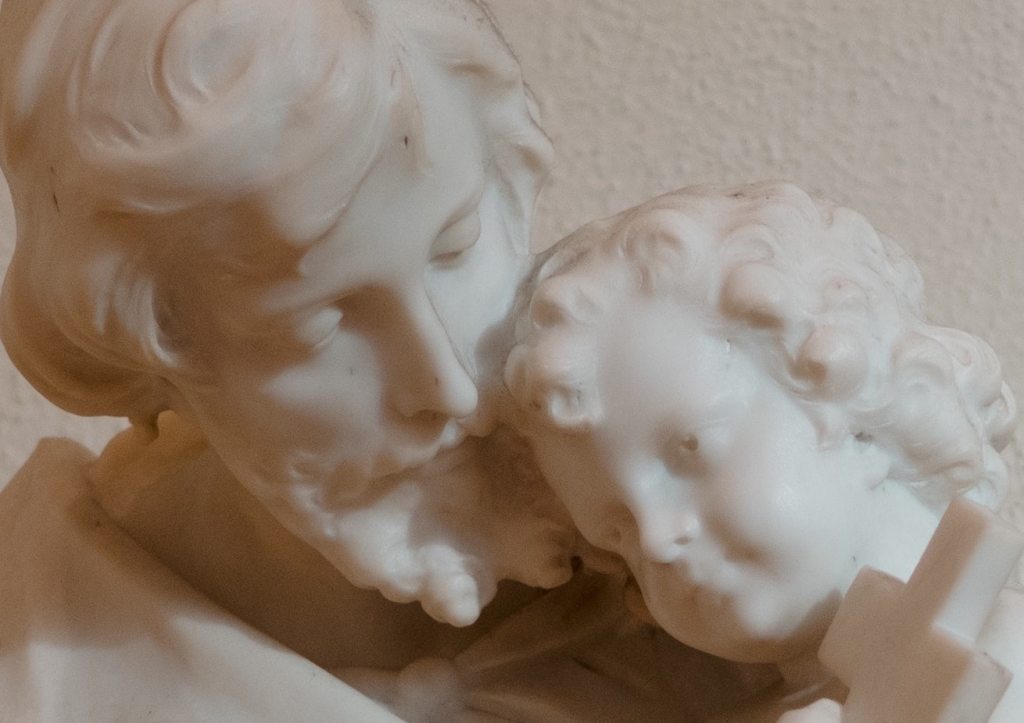
    This is a lot to ask, but as we know, God is never outdone in generosity. In return for all Joseph was willing to do, God bestowed many honors on him: Joseph, called ‘son of David’ by God himself, would see the Son of God; Joseph, whose family line had held the God’s promise in their hearts for so long was now chosen to hold His fulfillment in his arms; and he, Joseph, was now the only one ever asked to give that Promise a name: Jesus, or “God Saves.” Ultimately, Joseph would be honored as the greatest saint of all time next to Mary, for as Blessed William Chaminade has reminded us, “To give life to someone is the greatest of all gifts. To save a life is the next. Who gave life to Jesus? It was Mary. Who saved his life? It was Joseph.”

    Let us pray that we become like St. Joseph; that every day, in the silence he modeled so well, we too grow stronger in our love for God, our faith in him, and our willingness to do whatever He asks. Then, like St. Joseph, when our own crises come, as they always do, we too can show God exactly what Joseph showed Him: The person He has called us from all eternity to be.

    St. Joseph, pray for us.

    1 The 19th-century Anglican bishop and theologian, Brooke Foss Westcott.