
Friday of the 9th Week in Ordinary Time
Memorial of St. Ephrem the Syrian, Deacon and Doctor of the Church
Tobit 11:5-17; Mark 12:35-37
In 1970, a teacher noticed that, if he asked one student to stop an annoying or distracting behavior, other students also stopped it; conversely, if he failed to reprimand a student for that behavior, other students began doing it. He called this the ‘ripple effect,’ a term we still use to describe how the behavior of one person affect others, who then affect others, and so on, like the ever-widening waves produced by a stone dropped in a pond.
We see examples of this in the readings. Tobiah’s return is one example. His mother, tense for most of the story because his return is so overdue, had turned that tension on her husband; three times so far, she has been very short with him. But upon Tobiah’s return, she rejoices; as a result, she takes a softer tone with Tobit. Then there is how Tobiah’s return affected Tobit. Tobiah has brought healing; once healed, Tobit first joyfully blesses God, then bonds even more closely with his son. Finally, Tobiah’s new wife, Sarah, appears; this causes Tobit and Anna to rejoice, then their joy spreads to all the Jews of Nineveh. In the gospel, our Lord’s preaching is another example. He quotes Psalm 110:1, which first delights his hearers, then went on to delight the early Church. In fact, it delighted her so much that the authors of the New Testament cited that verse more than any other in the Old Testament in support of Jesus as the only begotten Son of God. That’s a ripple effect so large it’s almost beyond measure!
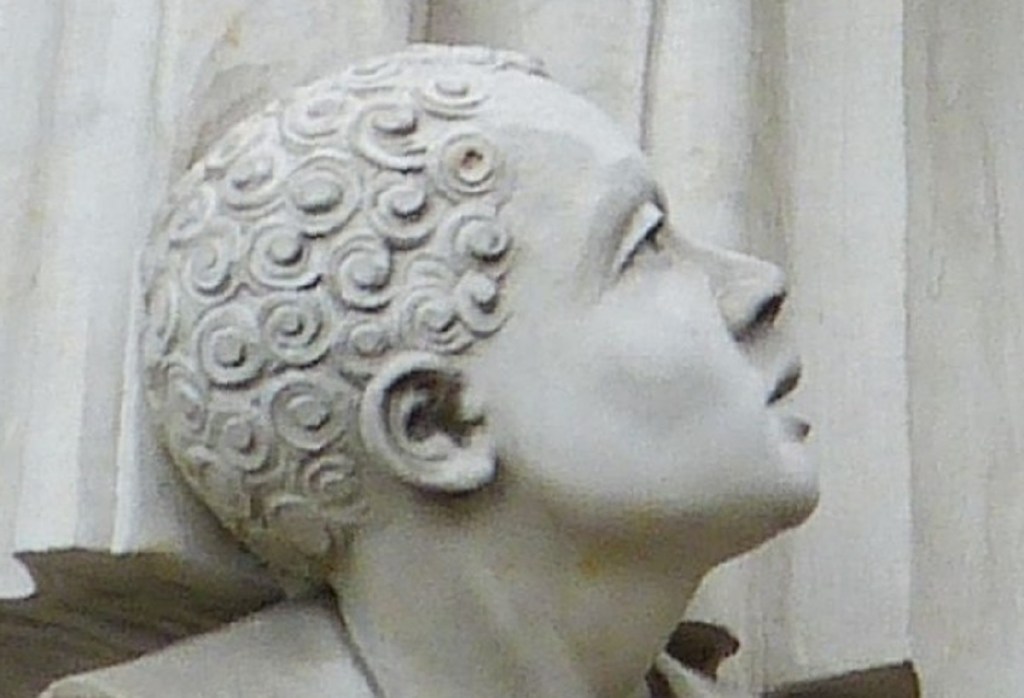
We also see ripple effects in the life of St. Ephrem, who we remember today. One troublesome stone in the pond was his temper; ultimately, it so adversely affected those around him that he ended up in prison. Once there, though, Ephrem cast a much more productive stone in the pond: contemplation. Taking the time prison gave him to reflect on how his behavior affected himself and others, Ephrem promised God that, if he was released, he would make each day count. The ripples from that stone were impressive; once out of prison, he composed hundreds of hymns, was ordained a deacon, became one of the first to incorporate music into the sacred liturgy, to use women singers in the choir, and was foundational to the doctrine of the Immaculate Conception of Mary.
Of course, this should prompt us to take a moment to consider the ripple effects in our own lives, both the good and the bad. First, think about how the good we have done has allowed others to do good, which has in turn allowed still others. Imagine the positive impact we have made on all those people! What better reason is there to praise God, as the psalmist sings today? Yet, at the same time, what better reason to ask God’s mercy, for if the good we have done has rippled through the world in a positive way, what have our sins done? While this is a sobering thought, it is key to any good examination of conscience. In the end, only God knows, and may well reveal at our judgment, how the good we have done and the sins we have committed have affected the destinies of other people.
The book of Tobit makes clear that there is a supernatural element to all of this. Therein lies a warning; we know the torment the demon inflicted on Sarah in the story, and we know the accuser is still among us, whispering in our ear. But on the other hand, therein also lies the best news of all: That, in his infinite love and mercy, God will come to us as Tobiah and Raphael came to Tobit and his family, heal our brokenness, and bring us joy that radiates outward and touches all we come in contact with. All we have to do is ask, for the prayer of a contrite heart yields the greatest ripple effect of all time: the merits of the cross and resurrection of our Lord, Jesus Christ. As St. Ephrem once said,
“Glory be to Thee, Who laid Thy cross as a bridge over death, that souls might pass over upon it from the dwelling of the dead to the dwelling of life!”
St. Ephrem, pray for us.







 Mark 10:45