Matthew 16:24-28
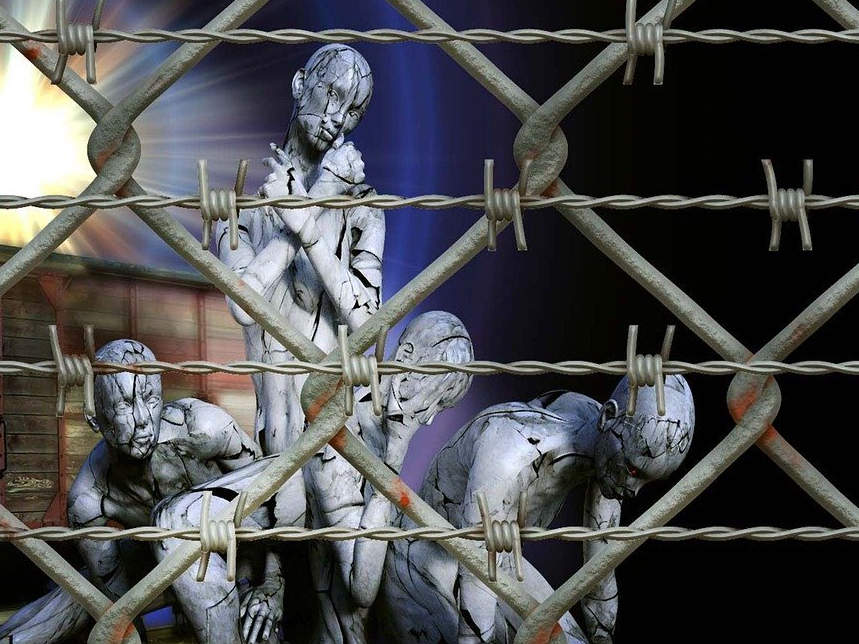
I recently came across a profoundly moving book entitled Man’s Search for Meaning by the Austrian psychiatrist and Holocaust survivor Dr. Viktor Frankl. In it he recounts many of the horrors of his internment in the Nazi death camps. What sets this book apart from other such accounts is that his perspective as a physician and psychiatrist imbues that experience with some remarkable insights that everyone can profit from.
His greatest insight, hinted at in the title of the book stems from his observation that the prison camps held two distinct types of prisoner. The first and by far the majority were those who competed and struggled against each other to gain even the smallest amount of power, control, or possessions. They did so regardless of the cost to others or to their own dignity because they saw it as the way alleviate as much of their own suffering as they could. The second group was different; these prisoners befriended and looked out for others, comforted or consoled them, gave them hope. These people, Frankl realized, did so because they were searching for meaning in their suffering; they recognized in themselves and in others a freedom and dignity that no Nazi could beat, starve, or gas out of them. He went on to write: “The way in which a man accepts his fate and all the suffering it entails, the way in which he takes up his cross, gives him ample opportunity – even under the most difficult circumstances – to add a deeper meaning to his life.”
This is exactly why Christ so challenged his disciples with the difficult words in today’s gospel; why he said, Whoever wishes to come after me must deny himself, take up his cross, and follow me (Matthew 16:24). Denying ourselves, bearing the weight of suffering, and following Christ can hurt physically, emotionally, and spiritually. But it hurts more not to, for then we become like the first group of prisoners: Grasping and fighting to reserve power, control, and comfort to ourselves. So often Frankl found that their strategy backfired; prisoners worked hard to preserve their lives but lost them anyway.
When Christ said whoever wishes to save his life will lose it, but whoever loses his life for my sake will find it (Matthew 16:25) we rightly wonder how we can lose our life by saving it or save our life by losing it. However, the translation of “save our life” in this context is “protect” or “keep safe.” Thus, Jesus is counseling us not to keep safe but to risk being hurt, for only when we do that can we enjoy eternal life with God in heaven.
Although that might help us understand his words, it doesn’t make living it out any easier. It seems as if Jesus is teaching that the way to avoid suffering in the afterlife is to endure suffering in this life. That seems cruel! Does Jesus really want us to suffer? What does suffering gain us?
If we take the attitude of the first group of prisoners, the answer is “nothing.” Suffering exists only to be eliminated; it is not something to endure – for its own sake or anyone else’s.
That is the attitude of love turned inward and as Frankl saw, the result was little gain and much futility. Love turned outward is in the image of God who is Love itself, and no one modeled that image better than Jesus, who is the image of the invisible God (Colossians 1:15). By his Incarnation Jesus taught that true love seeks neither isolation nor safety but entanglement and risk. God could have chosen to save fallen humanity from the safety of pure divinity. He didn’t; he chose to dwell among us, to take on the nature he created and raise it from within; to bind himself to the human condition beyond any untying and restore it to its original capacity for the deepest love possible: Eternal union with him. Jesus spent his life and ministry showing us what it means to love as God loves: He made himself vulnerable in the sight of others, exposed his deepest longings, deepest fears, deepest joys, his deepest self. Of course, he risked rejection and it cost him his life, but that is what love does; it was in the nature of his perfect divinity that from the depths of his infinite love and mercy, he glorified what mankind so quickly crucified.
This tells us that Jesus doesn’t want us to suffer, he wants us to love; by its very nature, love risks suffering and when perfected will endure any amount of suffering for the sake of the beloved. Like the prisoners in the death camp we are perfectly free to refuse, but refusing to love means that we give nothing, share nothing, resist the promptings of the Holy Spirit, and remain isolated even from God himself. Some may call that safety but Christ calls it loss, for he knows that the only thing we bring to heaven is the love that we have given away.


 It’s tempting to dismiss all this as foolishness but remember what St. Paul says: If any one among you considers himself wise in this age, let him become a fool so as to become wise (1 Corinthians 3:18). It may be wisdom in the eyes of the world to hate those who have hurt us and foolishness to forgive them but in Christ’s world it’s just the opposite; his is the world where hatred keeps us bound and love frees us, where judgment takes a back seat to mercy, and where God alone sees the heart, knows the pain, calms the fear, heals the wounds, and breaks the chains.
 Finally, the basilica of the Holy Family teaches us that joy is not necessarily the destination but the journey. Every year, millions of people take the time to tour the basilica of the Holy Family in Barcelona. Whether they are watching as the builders add to its structure, marveling as artisans craft the artwork that adorns it, or attending the Masses offered there, the faithful are uplifted and sanctified even though the basilica is a work in progress. The same is true for our families, for they too are works in progress. Every day brings the happiness and sorrow, the cataclysms and quiet moments through which families progress either closer to God or further away from him. Let us pray that our families take every moment of life and find the joy in it; for each moment, whatever it holds, is an opportunity given to us by Almighty God to build up our own domestic Church in virtue, crafting ourselves more and more into what we are called to be – living stones built upon the cornerstone that is Christ.
 These and many more are like the soft, marshy soil below the tower of Pisa. Like that tower, a faith built on human weakness will lean and no amount of stopping and starting, tinkering and refining will fix it. It must be torn to the ground and rebuilt on the foundation of Christ and his Church, for we must take the faith as it is, not as we would like it to be.
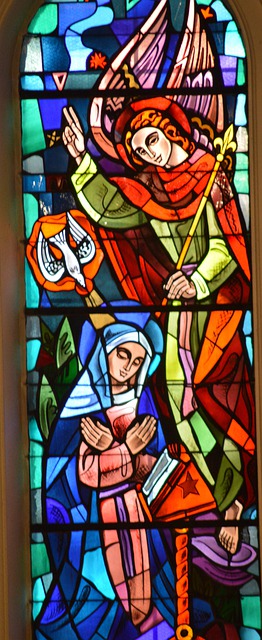 The two themes of fidelity and love are interwoven in the feast of the Presentation of the Blessed Virgin Mary. The presentation of oneself to God is an act of great faith and deep love. Whether Mary demonstrated her faith and love in a formal consecration to God in the Temple as described in the ancient non-biblical documents is irrelevant. Every day of Mary’s life was a presentation, a self-offering, an abandonment to the divine will made possible by the movement of grace within her. Long before he dwelled within her womb, indeed from the moment of her immaculate conception, our Lord dwelled within her soul and bestowed upon it the fullness of grace, his very life. By her response to that grace, Mary most truly defines what it means to be a Temple of the Holy Spirit.
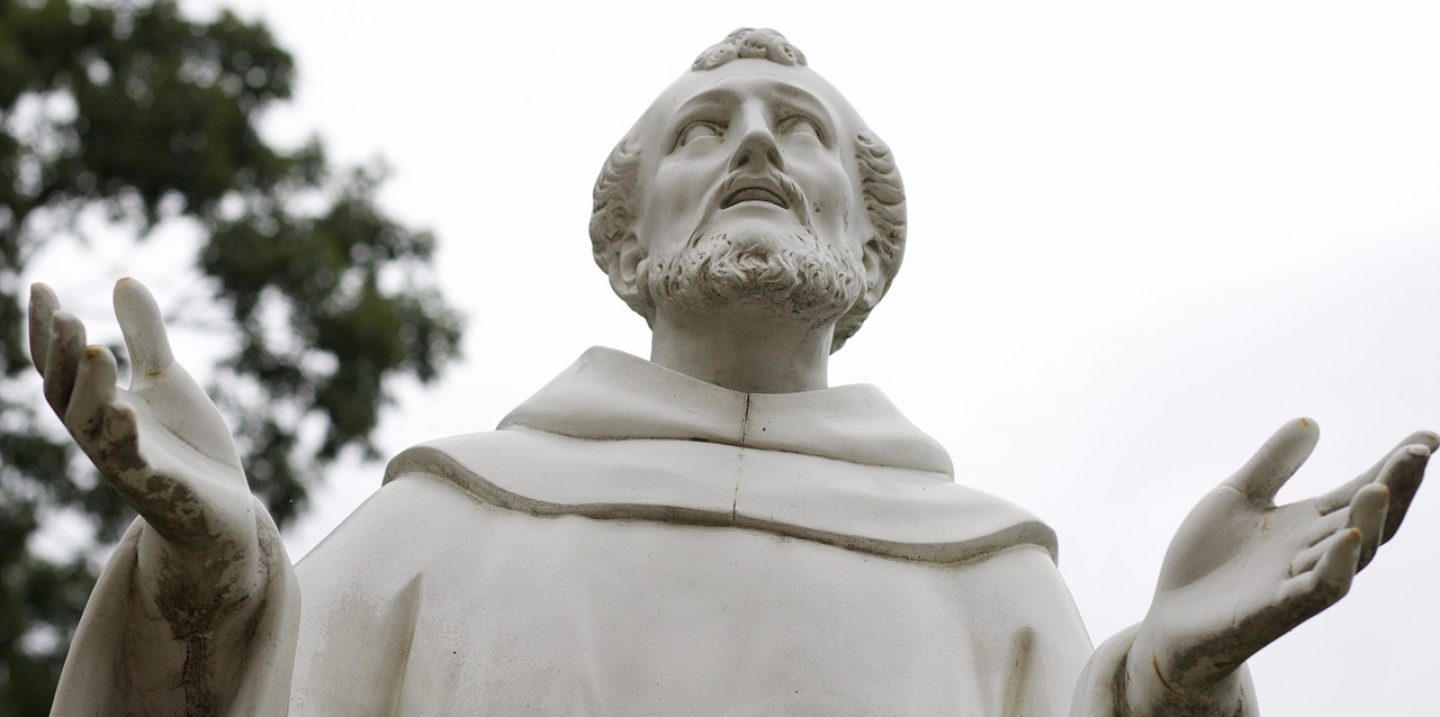 Of all the things he might have chosen to begin with, Francis wanted to teach that the best and most mystical encounter we can have with Christ comes not from a voice on a sickbed or even a leper on the road but from the encounter with our own sinfulness. Only when we allow the Lord to lead us from the pain of penance through the conquest of our fears can we too rise and leave the world; not to abandon it, but that we may be Christ to it.
 St. Paul reminds us of this when he says that grace is given to each according to the measure of Christ’s gift (Ephesians 4:11). His measure to Matthew was enough to transform him from a mere money-counter into an artist; indeed the artist who gave us the first portrait of Jesus in our New Testament. His medium wasn’t oil on canvas but words on paper, his subject not simply the man named Jesus but the Son of God and Son of Mary, the prophesied Emmanuel, “God is with us.” His palette held the many colors of Christ: teacher, healer, wonder-worker, Shepherd, Savior. He boldly painted all these images against a dark background for Jesus had come not into a roomful of Roman gamblers but into a land whose people were overshadowed by the darkness of sin and death. Where Caravaggio showed the light coming from behind Christ, Matthew knew that for all times and places Christ is the light – not the light who shines but the light who has arisen (Matthew 4:16). The long night of waiting, hoping, and wondering was over; the bright promise of salvation had dawned in Jesus, the Morning Star who never sets. This is why the great artist put the final brushstroke to his masterpiece in the words of our risen, ascending Master: And behold, I am with you always, until the end of the age (Matthew 28:20).
 Mark 10:45