Tag: Luke

  • It is Good to Be Here

    It is Good to Be Here

    The Feast of the Transfiguration

    Daniel 7:9-10, 13-14; Luke 9:28b-36

    Of the three evangelists who write of it, Luke’s account of the Transfiguration stands out in at least two ways: Prayer and the true meaning of glory.

    First, Luke sets the scene with prayer. This isn’t surprising; prayer pervades his gospel. Only Luke shows Jesus praying at crucial moments – His baptism (3:21), choosing the Twelve (6:12), Peter’s confession of faith (9:18), the Transfiguration (9:28), before teaching the Apostles to pray (11:1), and his Crucifixion (23:34, 46). But it isn’t just the frequency of his prayer, it’s the power; as we heard today, it was transfiguring! This is a lesson for us. While we don’t expect prayer to transfigure us, we should expect it to transform us; indeed, the whole point of prayer is that our will, slowly but surely, be conformed to the will of God. To paraphrase St. Josemaria Escriva, the best prayer begins with, “If it pleases you, Lord…” and ends with, “… Thy Will be done.”

    Luke is also the only evangelist to tell us not only of the appearance of Moses and Elijah but of their conversation with Christ and, not coincidentally, that the Apostles missed the whole conversation; they had been overcome by sleep (9:32). I wish I could say that I’d never do that, but I can’t. Far too many times, I too have been “overcome by sleep” while praying. Herein lies another lesson for us. If we find ourselves often falling asleep during prayer, we should consider changing our routine; perhaps by praying earlier in the day or making sure we are getting enough rest. As Luke is going out of his way to show us, prayer was important to Jesus; as his disciples, it is for us, too. Far better to structure our day around prayer than to allow our day to dictate our prayer time.

    But Luke’s point goes even deeper. By missing the conversation, the Apostles missed a fuller understanding of what the glory of Christ meant. While a bright, fiery image of heavenly glory pervades the first reading, there is a darker side to the glory of Christ. It was foreshadowed way back at the Presentation, when Simeon spoke of Jesus, the “glory of Israel,” as a sign that will be contradicted (2:32,34). Now on the mountain, Moses and Elijah spoke of his exodus that he was going to accomplish in Jerusalem (9:31). And we know that Luke had an eye on the passion, death, and resurrection, for only he tells of Jesus on the road to Emmaus, saying: Was it not necessary that the Messiah should suffer these things and enter into his glory (24:26)? John would confirm this throughout his own gospel account, where at the start of his passion Jesus said, Now is the Son of Man glorified, and God is glorified in him (John 13:31).

    With that in mind, let us reconsider Peter saying, Master, it is good that we are here; let us make three tents… (Luke 9:33). The Transfiguration was a glorious “mountaintop moment” – something to capture and keep forever. God had spoken directly to them! Who wouldn’t want to hold onto that? We can relate; we all have mountaintop moments, times when God feels so close and it seems like He is speaking right to us. We want that wonderful feeling to never go away. However, we know that sooner or later, we will come down from the mountain, perhaps even into the valley. This fills us with dread, for it feels like a darkness where God is silent, far away, and all that glory a dim and distant memory.

    Luke’s story of the Transfiguration teaches us that the glory of God cannot be reduced to such images. Our Lord Jesus Christ was every bit as eloquent and glorious on the Cross as he was at the Transfiguration, and his glory is as bound to us in our most intimate suffering as it is in our most contented joy. In that light, mountaintop moments and times of spiritual dryness are not feast and famine, but opportunities to grow closer to God; to revel in his wonder or to persevere in hope. In each one, God is challenging us to grow stronger, to love more deeply, and most of all to be spiritually alive and awake in the present moment, for that is where we live, where God meets us, walks with us, and feeds us with His grace.

    Truly, it is good to be here.
  • The Heart to Have

    The Heart to Have

    Memorial of the Immaculate Heart of the Blessed Virgin Mary

    Isaiah 61:9-11; 1 Samuel 2:1; Luke 2:41-51

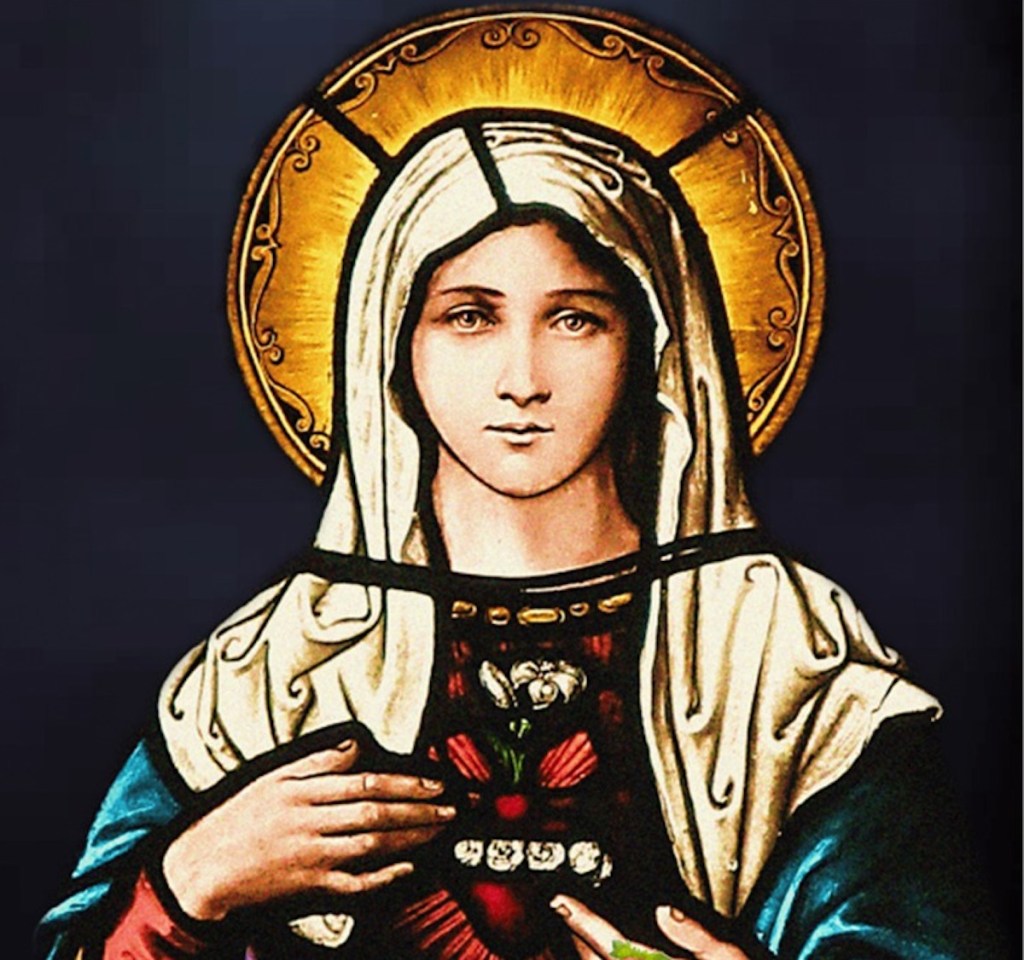
    When we speak of someone in terms of their heart, we mean more than just describing what they’re like. We want to understand what it is that makes them who they are; their essence, if you will. That’s hard to do with anyone, let alone a person who walked among us so long ago, let alone a woman so devoted to remaining in the background and exalting her son and Lord, Jesus Christ. Yet that is exactly what we want to do on this, the Memorial of the Immaculate Heart of the Blessed Virgin Mary.

    The gospels give us only a glimpse into Mary’s heart. The best comes from Luke, who actually mentions her heart two times. The first came the evening of our Lord’s birth; he notes that Mary kept all these things, reflecting on them in her heart (2:19). Today we hear the second; Luke tells us that, while returning to Nazareth after finding Jesus in the Temple, his mother kept all these things in her heart (2:51).

    If the words “kept” and “reflect” meant to Luke what they mean to us, he probably wouldn’t have bothered to say this. Most parents have memories of their children and events in their lives. Rather, in the original language, his words imply that in her heart, Mary is doing much more; she is actively pondering the events, searching out their meaning, struggling to interpret them. Of course, the mysteries she struggled with are supernatural; no one but God can understand them. But that isn’t the point; the point is that in her heart Mary possessed the humility, docility, and wisdom to surrender herself to them, and allow their meaning to work itself out over time in her own discipleship.

    That is what happened. As time passed, the fruit of Mary’s contemplation showed itself in her words and her actions. For example, at the wedding feast of Cana she offered that resolutely faithful advice: Do whatever he tells you (John 2:5). In the same gospel, she displayed the strength that many disciples lacked: Standing by the cross of Jesus (John 19:25). Finally, while awaiting the coming of the Holy Spirit, she was one in prayer with those to whom Christ made her mother (John 19:26; Acts 1:14). Open to discipleship from the very beginning, Mary made clear to everyone what her son said in his ministry: that hearing the word is only the first step; what is required is to embrace it with a generous and good heart, and bear fruit through perseverance (Luke 8:15).

    On a spiritual level, we may not think about the Blessed Mother as someone in need of growth. What could she who has already been perfected in grace need to learn? Didn’t she have all the faith she would ever need? Certainly, but as the Catechism reminds us, the relationship between faith and understanding is not a straight line but a circle; the stronger our faith, the greater our desire to know God and understand what He has revealed. In turn, the better we understand, the deeper our faith, which “‘opens the eyes of our hearts’ to a lively understanding of Revelation” (CCC §158). Again, Mary is a perfect model of this; whose faith was greater than hers, yet who demonstrated more than she a desire to know God and better understand what He has revealed? Or, rather, who He has revealed – for there is no greater revelation of God than His only Son, Jesus, and who understands a son better than his mother?

    This is the heart of Mary Immaculate, the heart she encourages us to have; not one who hears the word of God and understands it, but who hears the word of God and does it – surrendering to it, and allowing it to work through us for the good of ourselves and the world. Our Blessed Mother wasn’t spared from difficulties and suffering; we should expect no less. But, if we persevere, we should also expect no less than the same glorious triumph she now enjoys. Mary is the ultimate example of what all faithful hearts can expect. So, here and now, let us recommit ourselves to taking her advice by doing whatever He says, enduring whatever crosses we are given, and praying and working for unity with each other. This is the heart that, like Mary Immaculate, always and everywhere exults in the Lord, our Savior.

  • Mercy and Forgiveness: Monday of the 2nd Week of Lent

    Mercy and Forgiveness: Monday of the 2nd Week of Lent

    Daniel 9:4b-10; Luke 6:36-38

    The readings today evoke two images of Pope St. John Paul II in my mind.

    The first is of a trip the pope made on April 13th, 1986. Although very short – less than two miles from the Vatican – its impact was as great as any pastoral visit he would ever make. For on that day the Holy Father bridged a gap that was centuries wide, doing what no pope since St. Peter had ever done: entering a Jewish synagogue. In fact, he entered Rome’s Great Synagogue and, while 1000 Jews watched and wept, warmly embraced the Rabbi, then publicly and sincerely apologized to all Jews on behalf of the Church for whatever part she played in the centuries of discrimination and persecution the Jewish people had suffered.

    We naturally tend to focus guilt on ourselves as individuals but the pope reminded us that, as the reading from Daniel implies, sin is sometimes a matter of “we,” and not just “I.” In his Apostolic Exhortation “Reconciliation and Penance” John Paul II referred to this as social sin – sins committed by groups as small as a few people or as large as many nations. His point was that each member bears some share of responsibility for what the group does or fails to do. As he wrote, social sins are the “very personal sins of those who cause or support evil or who exploit it… who are in a position to avoid, eliminate or at least limit certain social evils but who fail to do so out of laziness, fear or the conspiracy of silence, through secret complicity or indifference… who take refuge in the supposed impossibility of changing the world and… sidestep the effort and sacrifice required….”1

    Therefore, it is our moral duty as Catholics to examine ourselves in light of the behavior of the groups in which we participate in our parish, Church, community, nation, and world, and to speak and act against these behaviors when necessary.

    The second image of St. John Paul is in the prison cell of his would-be assassin, the man who shot him several times on May 13th, 1981. Although the pope publicly forgave him four days later, in 1983 he visited the prison and personally did so again. Later, John Paul appealed to the Italian government to release him, which they did. Eventually the man converted to Catholicism, citing the pope’s influence.

    In the gospel, Luke does not put on our Lord’s lips the words Matthew used: Be perfect, just as your heavenly Father is perfect (Matthew 5:48). Instead, the Jesus of Luke says, Be merciful, just as your Father is merciful (Luke 6:36). Here, “merciful” could also be translated “compassionate,” and there are few examples of mercy or compassion better than the Holy Father’s actions. And look at the effect! The transformation of a man from one who would kill the Vicar of Christ into one who would rather die for love of Christ.

    The power to look within and see the personal and social sin as well as the capacity to show mercy comes as the free gift of our Lord to all who are willing to ask forgiveness of those we have wounded and offer it to those who have wounded us. This is the transformative power of the heart of Christ, as St. John Paul reminded us when he said, “I invite you all to join me in turning to Christ’s heart, the eloquent sign of the divine mercy, the “propitiation for our sins,” “our peace and reconciliation,” that we may draw from it an interior encouragement to hate sin and to be converted to God, and find in it the divine kindness which lovingly responds to human repentance.”

    Sacred Heart of Christ, have mercy on us.

    St. John Paul II, pray for us.

    1http://www.vatican.va/content/john-paul-ii/en/apost_exhortations/documents/hf_jp-ii_exh_02121984_reconciliatio-et-paenitentia.html

  • The Feast of the Presentation of the Lord

    The Feast of the Presentation of the Lord

    Malachi 3:1-4; Hebrews 2:14-18; Luke 2:22-40

    February 2nd is a day of celebrations. Many know it as Groundhog Day, the day when it seems the whole world watches the behavior of a groundhog in Punxsutawney, Pennsylvania. What many may not know is that this lighthearted little distraction began over a century ago as a Protestant attempt to take attention away from the Catholic celebration of Candlemas. By ancient tradition, February 2nd, the last day of Christmas, is the day on which candles to be used throughout the year are blessed at holy Mass.

    February 2nd is also reserved for a much different kind of celebration. At memorial services around the country, people will gather and candles will be lighted to honor four chaplains who in World War II served on board the USS Dorchester. On this night in 1943 the Dorchester was torpedoed by a German U-boat in the icy waters of the North Atlantic. Out of time, options, and life preservers, these four men – two Protestant ministers, a Jewish rabbi, and a Catholic priest – gave up their life jackets to four soldiers without one, locked their arms together in prayer, and went down with the ship.

    This is exactly the kind of heroic witness that goes to the heart of the greatest celebration on February 2nd – the Feast of the Presentation of the Lord. For, from the moment of their own consecrations, each of these men had, like Christ, committed himself to bringing the love and light of God to those around them. While none knew the fate that awaited him, each spent every day preparing for it; offering themselves to the Father that others may live. When the final moment came, each man came to it exactly as Simeon came to the Temple; in the Spirit, using the gifts only God can give, for the same reason that Christ came in the first place – that others may live.

    But their lives and deaths are more than just a good story; they point the way for us. We too are consecrated to the Lord. At our baptism, each of us received a lighted candle while our parents and Godparents were told, “This light is entrusted to you to be kept burning brightly. This child of yours has been enlightened by Christ. He (she) is to walk always as a child of the light.” The Feast of the Presentation is the perfect time to remember that moment and re-dedicate ourselves to it. As children we depended on others to teach us the faith and to help light its fire in our hearts; as adults we are charged to pass that faith on to others. In both ways, we are called to present ourselves to the Lord and to live out our consecration to Him.

    Begin conformed to Christ in this way will mean that we like him are to be signs of contradiction; teaching life to a culture of death, showing what happiness is to a world so frustrated in its pursuit of pleasure, and living the spiritual life as a model for those who see only the material. That will no doubt bring joy but also rejection and suffering. Jesus experienced this; as we heard in the letter to the Hebrews, he himself was tested through what he suffered. But the author doesn’t leave it there; he concludes by saying that he is able to help those who are being tested (Hebrews 2:18).

    This is the most hopeful note of all, for it means that whether those moments of testing sting like the ice water of the North Atlantic or burn like the refiner’s fire, Christ has not abandoned us; to the contrary, he walks with us, the light for our path and the Light of the world, constantly forming and conforming us in ways more and more like himself – as the prophet Malachi said, a sacrifice pleasing to the Lord.

    Processing…
    Success! You're on the list.
  • Memories that Matter: Solemnity of Mary, Mother of God

    Memories that Matter: Solemnity of Mary, Mother of God

    Luke 2:16-21

    As a teenager, one of my sons began to have difficulty sleeping. One night I found him tossing and turning in bed and he told me about some of the stress he was feeling. I asked him to set that aside for a moment and focus instead on the best day he could remember. He settled down and after a minute began to smile. When I asked him where he was, he said we were on vacation; it was a warm summer day and he was walking on the shore of his favorite lake with his Godfather and me. I encouraged him to relax and savor every minute. It worked like a charm; he drifted peacefully off to sleep.

    Psychologists have long known that recalling happy memories can do a lot more than reduce stress. There is a relationship between memories and happiness. Specifically, people tend to get a deeper sense of happiness from memories of positive experiences they’ve had than of things they’ve bought. That resonates with me; my happiest memories aren’t about things I’ve bought but about experiences and relationships I’ve had, particularly with my family.

    The Blessed Mother is no different. The evangelist tells us that as the shepherds spoke of all they had heard and seen, Mary kept all these things, reflecting on them in her heart (Luke 2:19). That prompts us to think of all the memories she herself would have: the visit from the angel; the conception of Christ in her womb; her journeys to Elizabeth and to Bethlehem; her divine Son’s birth in a stable; just to name a few. We call her blessed for a reason! These, her deepest memories of family, demonstrate to her and to the world how close God can be, if we let him.

    Although to Mary and Mary alone was given the great privilege of calling these experiences her own, we too are given many opportunities to seek out and experience God in ways not too unlike hers. Here are just three:

    First, although we may not be visited by the archangel Gabriel, we do have our own guardian angel who always looks upon the face of God (Matthew 18:10). Throughout Scripture we see that angels move our will toward what is good (Luke 2:10-12), offer our prayers and works to God (Tobit 12:12), and protect us in times of trouble (Daniel 6:22; Psalm 90:10). Make it a habit to ask the intercession of your guardian angel.

    Second, keep in mind what St. Augustine said: The Virgin conceived in her heart before her womb. Of course we can never experience the joy Mary did as the mother of Christ; however, by the gift of faith we do conceive him in our own hearts. What’s more, we can bring Christ to birth in the hearts of others, perhaps by teaching but mostly by living as he wants us to; as he did. As Jesus himself said, whoever does the will of my heavenly Father is my brother, and sister, and mother (Matthew 12:50).

    Finally, while Mary was honored above all women to be the ark that held our Lord for 9 months, we can be honored to receive him Body, Blood, Soul, and Divinity in holy Communion almost every day of the year. Of course, Mary was uniquely prepared for that by God from the moment of her conception; nevertheless, we have access to the necessary state of grace through the Sacrament of Penance given to us by her Son. For as St. Paul said, Christ’s will for us is to present to himself the church in splendor, without spot or wrinkle or any such thing, that she might be holy and without blemish (Ephesians 5:27). Holy and immaculate, like his Mother. Her destiny is ours.

    So, when the stresses and strains of life threaten to overwhelm you, take a moment, relax, and recall how like the Blessed Mother you have been created to be: To praise God through and with his angels; to conceive him in faith and bring him to birth in the world; to receive him in holy Communion; and to return to him holy and immaculate at the end of time. These will be the memories that matter into Eternity; your own near experiences of God. Then rejoice, not only that you have such memories to bring you closer to God but that, at all times and just like our Mother Mary, God is ever close to you.

    Holy Mary, Mother of God, pray for us.

  • Alive Inside: Monday of the 34th Week in Ordinary Time

    Alive Inside: Monday of the 34th Week in Ordinary Time

    Revelation 14:1-3, 4b-5; Psalm 24:1bc-2, 3-4ab, 5-6; Matthew 24:42a, 44; Luke 24:1-5

    Recently I saw a documentary called “Alive Inside.” It briefly follows the career of a social worker who dedicated himself to bringing music to people who suffer from brain disorders such as dementia and Alzheimer’s disease. The effects of the music are startling; people who spent months or years living an almost catatonic existence, isolated from the rest of the world and from their own memories, transform when they hear the music. Some weep, some laugh, some sing, some dance; all to one degree or another and at least for awhile have awakened within a sense of their own identity, reconnecting with long-forgotten memories and the emotions that go with them. As one doctor in the film says, when they listen to certain music, people who appear virtually dead to the world show that they are very much alive inside.

    Of course, no one is more alive than those who dwell in perfect union with God, and as Revelation reminds us, they hear the music of Heaven. They aren’t alone; John says he heard it, too. The reality is that the divine music is and has been all around us. The question is, do we hear it?

    We do if we detect a note of urgency in the Scriptures today, as we should in all the Scriptures given to us by the Church as the year closes. We certainly hear it in the Gospel Acclamation, for Christ says to us, Stay awake! For you do not know when the Son of Man will come (Matthew 24:42,44). He knows that it’s easy for us to “fall asleep” in the spiritual life. Our natural tendency is to allow ourselves to get comfortable; to be willing to go only so far but not farther; to pray this much but not more; to be satisfied with where we are and avoid whatever seems uncomfortably challenging.

    And we hear counterpoint to that comfort when our Lord speaks of the gift offered by the poor widow. Notice that what mattered to him was not the amount she gave but that she held nothing back; for love of God, she allowed the cost to herself to be the highest possible – to give from her own need. This is the kind of person of whom the psalmist sings, the one who truly longs to see the face of God, who wants for themselves and others what God wants for them, and who are willing to show that to Christ and the world by living like those in Revelation: Following the Lamb wherever he goes (Revelation 14:4b).

    If we listen to the Scriptures there is no doubt that we too will hear their music. The question is not if we hear it but whether we will allow it to transform us; to move us out of our self-imposed spiritual isolation; to remind of us our identity as Christians; to re-awaken the perhaps long-forgotten memory of who we were created to be and the love we were given to share; and to show our Lord that we, like all his saints, are not dead to the world but very much alive inside.

  • The Leader as Servant: Feast of Pope St. Gregory the Great

    The Leader as Servant: Feast of Pope St. Gregory the Great

    2 Corinthians 4:1-2, 5-7; Luke 22:24-30

    In the gospel we hear Jesus say to the Apostles, let the greatest among you be as the youngest, and the leader as the servant. Few people epitomize those words better than the successor of the Apostles we remember today, Pope St. Gregory I.

    Born around the year 540 into a wealthy, aristocratic Roman family, Gregory received the best education of the day, designed to form him as an effective political and social leader. He was also deeply grounded in the faith; indeed, his family tree boasted two popes, several consecrated religious, and at least one saint: his mother, Sylvia. If not born great, Gregory was certainly bred for greatness.

    Greatness was certainly needed, for Rome was in dire straits. No longer the capital of the empire, it was barely guarded; vandals regularly overran it. Plague, war, and famine decimated the population from a high of one million to about fifty thousand. Although Gregory wanted nothing more than to pursue his dream of life as a Benedictine monk, his sense of public service prevailed; at the age of 30 he became mayor and served for two years. When his father died Gregory resigned, turned the family palace into a monastery, and became a monk. He called these the happiest years of his life.

    They didn’t last long. Knowing of Gregory’s talent, Pope Pelagius summoned him, ordained him a deacon, briefly put him in charge of social assistance to Rome and then sent him to Constantinople, where for 6 years he served as ambassador, learning the workings of the imperial court. When he returned to Rome he was delighted to learn that he had been made abbot; however, that too didn’t last long; when Pope Pelagius died, Gregory was unanimously elected pope. He appealed to the emperor to reject the election but he refused. Against his will, Gregory served as pope for 14 years.

    It is difficult to summarize briefly everything Gregory did to merit the title “Great,” but let me focus on two particular areas.

    First was his great love of the missions. Gregory was the first pope to send missionaries to a distant land, dispatching 40 monks to England led by the man who would become St. Augustine of Canterbury. No less important was his acumen and sense of balance; Gregory advised Augustine to bring Christ in His fullness to the Anglo-Saxons but at the same time to adapt the faith where he could to the customs and ways of the people. This bore great fruit; the subsequent centuries saw England and Ireland send out missionaries of their own whose evangelization forever changed the face of Europe. But Gregory’s care and concern for the missions didn’t stop there. Hundreds of his letters still remain, and reveal the pope’s involvement in and knowledge of the missions in places as far away as Africa, Spain and Greece.

    Second, Gregory was a great shepherd to his local flock. For bishops he wrote a book called Pastoral Care, really a treatise on preaching that became popular for centuries, as well as a book on St. Benedict. His own homilies are read to this day; in fact, it is for them that he was made Doctor of the Church. He also transformed Rome into a real diocese, organized under a bishop and seven regional deacons assisted by seven sub-deacons. Using this structure, Gregory systematized outreach to the poor, orphans, and widows. Charity burned so greatly within this man that for years he fed Rome’s poor with money out of his own pocket.

    That’s not to say that the pope never used Church money. To the contrary, he used it whenever he could but did so to protect Rome from invaders. He was a good diplomat and a brilliant negotiator, doing whatever he could to keep the people safe, whether that meant paying imperial troops or bribing vandals to keep away. He was so effective that eventually the city put him in complete charge of the military.

    We could say much more but let us close with St. Paul’s words: God who said, ‘Let light shine out of darkness,’ has shone in our hearts to bring to light the knowledge of the glory of God on the face of Jesus Christ (2 Corinthians 4:6). Pope St. Gregory was the lamp God set on Vatican Hill to shine in a very dark time and that light still shines today. In summary and in essence, Gregory’s greatness is the man himself. From him we learn these life lessons: First, we must be aware not only of our power and ability but also our weakness and fragility; this teaches us humility. Second, no matter how much we know or plan, not all decisions or circumstances will work out in our favor; this teaches us patience, perseverance, and fortitude. Finally, although we may want a certain life for ourselves, the love of Christ impels us to put that aside for the greater good of service to God and the world in which we find ourselves. From this we learn the greatest gift of all: Charity. In the end Gregory teaches us that those who are most truly leader most truly serve.

    Pope St. Gregory the Great, pray for us.

  • The Ear of the Heart: Tuesday of the 22nd Week in Ordinary Time

    The Ear of the Heart: Tuesday of the 22nd Week in Ordinary Time

    1 Corinthians 2:10b-16; Luke 4:31-37

    In the early 1950’s a young girl dreaming of a glorious acting career packed her bags, left Chicago, and set out for Hollywood. She changed her name to Dolores Hart. A fine actress who reminded many people of Grace Kelly, she achieved almost instant success. By age 18 she landed the part of Elvis Presley’s love interest in the movie “Loving You,” and over the next few years appeared in 9 more films with such stars as Montgomery Clift, George Hamilton and Robert Wagner. After falling in love with a young architect, Dolores got engaged and set their wedding date for the following February, 1963.

    Then something happened. At the age of 24, after visiting a Benedictine abbey of Regina Laudis for a rest, Dolores left Hollywood to become a nun. Shocked, her fans and friends wrote angry letters, accusing her of throwing her life away. Her response was simple: “If you heard what I hear, you would come, too.”

    We might wonder how she heard anything but the fact is that she had been listening for a long time. Since the age of 10 when she converted from Protestantism, Dolores was a devout, practicing Catholic. Even at the height of her career she attended holy Mass every day. Such devotion our Lord surely repays; undoubtedly over the years the Holy Spirit moved within her, stirring her to a deeper relationship with Christ. What a splendid example of St. Paul’s words in the first reading: We have not received the spirit of the world but the Spirit who is from God, so that we may understand the things freely given us by God.

    Like her fans and friends, we may wonder what was so wrong with the path she was already on, but if so consider how St. Paul continued: And we speak about them not with words taught by human wisdom, but with words taught by the Spirit, describing spiritual realities in spiritual terms. Dolores may herself not have been able to put these realities into words; indeed, she was probably unaware of what was happening. By her own account she wasn’t unhappy with either her success or her plans for marriage and family life; the call for change within her came as much as a surprise to her as it did to everyone else. Ultimately however, what mattered was not her plans or awareness but her docility; she remained in conversation with our Lord and in close relationship with him. So it is with all of us; like Dolores, all of us are called to docility in our spiritual life; ideally, to dialog with God and discern his plans for us and our openness to them.

    I say “ideally” because in the gospel we are reminded that the spiritual realities spoken of by St. Paul include another voice, one that is not interested in honest dialog but in interjecting, demanding to know what there is between us and our Lord. This is the voice of the enemy and although we tend to think in terms of extraordinary manifestations such as demonic possession, its ordinary activity is much more pervasive and comes in four ways: deception, accusation, doubt, and enticement. First, deception: The voice that whispers, “Everyone does it! Everyone looks at their phone while driving; everyone watches violent or degrading movies,” etc. Second, accusation: “You’re hopeless; don’t even bother trying to be good; God will never forgive you; you aren’t good enough for religious life.” Third, doubt: “Is that really a sin? Aren’t you just being scrupulous?” Finally, he entices us: “Look, that food you gave up for Lent! Come on, just this one time, just a little bit. Indulge! You deserve it!”

    Yet, just as Jesus expelled the demon in the gospel, so His grace counters the enemy within us. Against deception he gives the truth that his power is made perfect in our weakness (2 Corinthians 12:9); against the accusation of our worthlessness he assures us of our dignity as sons and daughters of God (2 Corinthians 6:18); against doubt he gives the certainty of God’s infinite mercy and love (John 3:16); and against enticements to weaken and commit evil he gives the strength of the promise that those who endure to the end will be saved (Matthew 24:13).

    In his promise is our hope and we will only hear it if we like Mother Dolores take the advice of St. Benedict and listen with the ear of the heart.

  • The Sanctity of Suffering: Feast of St. Germaine

    The Sanctity of Suffering: Feast of St. Germaine

    2 Corinthians 5:14-21; Luke 10:29-37

    Of all of life’s difficult questions, perhaps the most challenging concerns suffering. It can be put very simply: Why do good people suffer? Of all the saints, the one whose life most clearly poses that question is the young girl known as St. Germaine.

    She was born Germaine Cousin in 1579 in Pibrac, a small village in south central France. When Germaine was just a baby her mother died. Laurent, her father, soon married a woman named Hortense who for some reason intensely disliked Germaine. It may have been because Germaine was born with a deformed arm, prone to illness, and suffered from a disease that caused unsightly, discharging lesions on her neck.

    Under the pretense that she might infect others, Hortense insisted that the little girl live outside, either in the unheated barn or under the stairs. So, Germaine slept on mat, was given only table scraps to eat, and never owned a pair of shoes. By the age of five, Hortense forced her to work every day shepherding sheep or spinning a quota of wool, a difficult task given the deformity of her arm. Regardless, failure meant starvation. As if all this weren’t enough, neighbors saw her stepmother regularly beating the child.

    Her one consolation was also the greatest; Germaine loved our Lord and His Mother. Denied a formal education, she taught herself enough about the faith to receive First Communion. She loved adoring and receiving Our Lord in the Holy Eucharist and never missed daily Mass even though this meant leaving the flock, which she innocently and simply entrusted to the Good Shepherd. No harm ever came to it. She loved to pray the rosary and would fall to her knees to recite the Angelus at the sound of the bells, no matter where she was. The other children noticed Germaine’s piety and would gather around her to listen as she taught them about Jesus and Mary.

    Adults also noticed but dismissed her as either a lunatic or religious fanatic. Still, no one could deny her charity. Even though all she had to eat was bread, she gave it to the poor whenever she came upon them. When some townspeople witnessed the waters of a local stream part for Germaine on her way to holy Mass, everyone began to realize that God was specially present to this starved, frail, abused young girl.

    Once this news reached her family, they began to repent. Her father finally put a stop to his wife’s abusive behavior and offered his daughter a place at home with the other children. In her humility, Germaine begged to be allowed to remain outside and it was there, early in the summer of her 22nd year, that her father found her. She had passed away during the night, lying on her bed made of twigs.

    The life of St. Germaine is so compelling, so heartrending that we cannot help but ask again: Why would God allow such suffering to happen? I think that before we focus on God, we should use the story of St. Germaine to take a deeper look inside ourselves.

    First, we cannot blame God for the suffering we willfully inflict on each other. Of her own free will, Hortense banished Germaine from the house, starved her, overworked her, and beat her. While few of us have ever gone this far, we have all found ways to hurt others. In anger, pain, or frustration, we’ve banished people from our lives, starved them of affection, demanded too much from them, and even been verbally abusive toward them. Like Hortense, they may be some of the people closest to us.

    Then there is the suffering we don’t cause but also don’t do anything about. Laurent stood idly by for years and allowed his wife to abuse his daughter. On top of this, neighbors watched in silence as Hortense physically abused Germaine. They may have thought it was none of their business, but the parable of the Good Samaritan reminds us that the true neighbor is the one who shows mercy (Luke 10:35-37). Again we must ask ourselves how we are Good Samaritans to the hungry, sick, addicted, imprisoned – all the needy of our time.

    Finally and most mysteriously, there is suffering that just seems to happen. No one caused Germaine’s birth defect, frailty, or skin disease. We look to God and wonder why He would allow anyone to suffer like this.

    Although we cannot know the answer in this lifetime, the example of this little saint gives us some insight into it. St. Germaine did not endure suffering, she triumphed over it. Suffering was not a test given to her but a means through which she might glorify God and sanctify herself. No one likes to have misfortunes or hardships come their way, but how would virtues such as fortitude, patience, humility, or long-suffering develop without them? Without virtue, the terrible conditions in which Germaine found herself would have been a living hell; with them, they became a sanctifying fire. Thus, it was not anger or revenge but love of Christ that impelled her (2 Corinthians 5:14); for the sake of that love she drew closer to Him and in imitation of it she brought others to Him. Such is the marvelous, inscrutable way of God that Germaine would become the instrument by which Hortense herself, the source of so much of her suffering, would repent and be converted.

    Let the example of St. Germaine always remind us that we are not defined by what we’ve been given but by what we give; not by who we are but by who we become; and not by our suffering but by our God-given dignity.

    St. Germaine, pray for us.

  • Truth Beyond the World: The Feast of St. George

    Revelation 21:5-7; Luke 9:23-26

    When I was a boy my favorite comic book was The Amazing Spiderman. Every month I haunted the drugstore waiting for the next issue. When it finally arrived I’d read it over and over again. It was great fun imagining myself as the quirky yet powerful superhero.

    Although comic books date back only to the 1930’s and 40’s, the kids of bygone eras had something every bit as exciting: The Golden Legend, a classic of the faith from the 13th century, which contained in great and often colorful detail the dashing exploits of the heroes of ancient Christianity.

    Among the most dashing was St. George. Like most saints of the early Church, little is known. He appears to have been a young soldier martyred in Palestine around the year 304. What we do know is that there must have been something especially appealing about him, for he quickly became legendary. The Golden Legend includes a few stories about him, the most familiar being the dragon. Passing through a foreign kingdom and coming upon a princess about to be devoured by a dragon, George slayed the dragon and converted the kingdom to Christ. There is also the amazing story of his martyrdom. Arrested during a persecution of Christians, George was handed over to the torturers. Despite their best attempts, which included beating him literally to pieces, crushing him beneath heavy spiked wheels, and submerging him in molten lead, George miraculously reassembled unharmed. Amazed and inspired by this, the governor’s own wife converted to the faith. Infuriated, he had her executed and George finally martyred by beheading.

    But that’s not the end of the story. If he was powerful in life, St. George was even more so in death. The Legend tells of victories won by soldiers carrying his relics into battle, of healings at his tomb by those placing their hand in it, and of healings of those who touched the chains he wore in prison. His tomb became a place of pilgrimage and churches bearing his name were built as far away as Italy. Little wonder that England, whose Crusaders brought home his story, chose him as its national patron, that a kingdom in the Caucasus mountains was named Georgia in his honor, or that to this day Palestinian Muslims, Jews, and Christians would all honor him and ask his intercession for those suffering from various illnesses. Clearly, St. George became a man of mythic proportions.

    Unfortunately many stumble on the word “myth.” As early as the 5th century, the stories of St. George were dismissed as fantasy. Like some ancient, amazing Spiderman, he was too large for life; his adventures unreal and unrealistic; the product of uneducated, unsophisticated people. A fairy tale.

    They completely miss the point, as Chesterton knew when he said, “Fairy tales do not tell children the dragons exist. Children already know that dragons exist. Fairy tales tell children the dragons can be killed.” Or, to paraphrase the French philosopher Jean-Paul Ricœur, the purpose of myths is not to tell the truth about the world but the truth beyond it. The deeper truth about St. George is written between the lines of the stories, not within them. What matters is not that St. George slayed a dragon but that, in committing to follow Christ, he received the grace to slay the dragons in his own life. Similarly, it doesn’t matter whether he was actually beaten to pieces, crushed by wheels, submerged in molten lead, and miraculously reassembled; the truth is that St. George loved Christ and did what he asked in the gospel; he took up his cross daily and followed him (Luke 9:23), saving his life by quite literally losing it.

    statue-1394654_1920Of course these truths are not reserved to St. George, they are for all of us. In Revelation Christ says, Behold, I make all things new (Revelation 21:5); for that to mean anything, we must ask for the grace to find and slay our own dragons. We all have them; they are the sins we allow to linger, the attachments we find hardest to put aside, and the fear, self-doubt, and self-condemnation that keep us from drawing nearer to God. The fear is real because the pain is real; it is the pain of having our pride beaten to pieces, allowing our bodies to be crushed by illness or infirmity, and submerging ourselves in the depths of humility. Nevertheless, the truth is that if we allow the power of God to work within us, we will experience what even the legend of St. George could never imagine: The joy of being reassembled into the person that Christ has called us from all eternity to be.

    St. George, pray for us.