Tag: Lent

  • Journeying Home

    Journeying Home

    Wednesday in the Fourth Week of Lent

    Isaiah 49:8-15; John 5:17-30

    Every year around Thanksgiving, I used to travel down to the Dallas area to visit family. On the way, certain landmarks reminded me where I was: first, the Arch in St. Louis; next, the cotton fields of Arkansas; finally, the great plains of Texas.

    Lent has landmarks, too. First, Ash Wednesday; then, the 4th Sunday of Lent (“Laetare,” meaning “Rejoice,” Sunday); finally, Palm Sunday. While each features a special liturgical color, they also feature themes that will persist in the readings.

    In the first three weeks of Lent, the Old Testament readings reminded us of our human frailty and need to repent. But note the difference this week! First, Isaiah bid us rejoice at what God is making new; then, Ezekiel spoke of the life-giving water flowing from the right side of the Temple. Today, again through Isaiah, God speaks gently of a time of favor, refreshment, and restoration. The focus isn’t so much on what has gone wrong, but on how God is reaching out to renew and redeem His people. There is still suffering and darkness, but there is also light and hope.

    We see a change in the gospel readings, too. From Ash Wednesday until this week, Christ has challenged us to look at our lives, confront the reality of sin, and re-commit to following God’s will more closely. But this week, the call is more forward-looking and hopeful. On Monday, we listened as he raised a child to life; yesterday, he healed a crippled man at the pool of Bethesda. Today, he speaks of healing and life, telling us that he has the authority to heal, and while he holds the keys to judgment, he also holds the keys to eternal life.

    So, what are we to do with this new direction the Church has given us for the next several days? A couple of things. First, we should do what Laetare Sunday urged us to do – rejoice! We have good reason! No matter what struggles or feelings of abandonment we go through, God has assured us that we aren’t alone; He is always working for our good, even when we do not see it. Second, since Jesus has the authority to give life and to stand in judgment of us, we should continue asking ourselves if and how we are deepening our commitment to Him. Lent is a journey, after all. Have we moved from complacency to more active discipleship? Finally, just as Jesus said He could do nothing apart from the Father, so should we be examining our daily lives for unity with God’s will. Are the choices we make every day in line with our faith? Do we seek to serve rather than be served? Do we bear witness to Christ’s life-giving power in a world that so desperately needs His light?

    Just like the landmarks of our travels, each of the landmarks of Lent is there to remind us not only of where we’ve been, but also where we’re going. As an artist’s work gains richness and depth with each successive layer, so our experience of Lent deepens as we move from reflection to hopeful anticipation. The readings this week and next are an open invitation to re-examine our hearts, to seek God’s healing in times of darkness, to celebrate His infinite mercy, and to commit ourselves anew to living in unity with His will. Above all, let us rejoice in the joyful assurance that, no matter what challenges we face, God is with us, with the bright promise of hope and redemption. And, as we move closer to the events of Holy Week, let us open our hearts to His transformative love, confident that the road ahead is one of renewal and the promise of eternal life with Christ, our journey’s destination.

  • Better to be Better

    Saturday of the 1st Week in Lent

    Deuteronomy 26:16-19; Matthew 5:43-48

    A man once told me about something that happened to him at church. I know it may sound strange to some of you, but in his parish the people tend to sit in the same pew week after week. In his case, an older couple always sat in the pew right behind him and his family. He didn’t know their names, but they greeted each other at the sign of peace, and said goodbye when Mass was over. This went on for years; decades, even.

    One Sunday after Mass, the elderly woman lingered in her pew, weeping. When he asked if there was anything he could do, she said, “No. It’s just very near the anniversary of my husband’s death.” That struck the man deeply; he hadn’t even realized she’d been coming to Mass alone. After consoling her for awhile, he left, and resolved to never let that happen again. He kept his word; from then on, he and his family made it a point to talk with her, and became friends with her and other people near them at Mass.

    This is a great example of a principle our Lord alludes to in today’s gospel: the choice in life isn’t always between doing good and doing evil; sometimes, it’s between doing good and doing better. Loving those who love us is good; so is greeting our friends and family. But it’s better to love without regard to whether we’re loved in return, and to greet those who do not greet us.

    We talk a lot in the Church, especially during Lent, about living virtuously, and we do it in many ways: coming to church, volunteering in outreach to the poor, teaching children, beautifying the parish, etc. While these are all good and we must do them, Christ challenges us to think about what else we can do to better ourselves.

    In the spirit of the story I began with, one area might be recognizing the needs of those all around us. That isn’t always easy. We get stuck in such ruts – even with good things like going to Mass – that it can take a crisis, such as seeing someone in pain – to get us to see what’s better: looking beyond ourselves, even to the next pew.

    Of course, recognizing the need is good, but responding to it is better. It was good that the man consoled the widow behind him, and resolved to change his behavior. But the better thing was actually doing it, which he and his family did. For us, too, response can be the harder part; people may well need our help in ways we do not expect and that might cost us something. But that’s exactly the point; today and every day, Jesus challenges us to go beyond the good and seek the better. In so doing, we accomplish what he wants the most: The transformation not only of our parish and our community, but ourselves – one Christlike act of compassion at a time.

  • Mercy and Forgiveness: Monday of the 2nd Week of Lent

    Mercy and Forgiveness: Monday of the 2nd Week of Lent

    Daniel 9:4b-10; Luke 6:36-38

    The readings today evoke two images of Pope St. John Paul II in my mind.

    The first is of a trip the pope made on April 13th, 1986. Although very short – less than two miles from the Vatican – its impact was as great as any pastoral visit he would ever make. For on that day the Holy Father bridged a gap that was centuries wide, doing what no pope since St. Peter had ever done: entering a Jewish synagogue. In fact, he entered Rome’s Great Synagogue and, while 1000 Jews watched and wept, warmly embraced the Rabbi, then publicly and sincerely apologized to all Jews on behalf of the Church for whatever part she played in the centuries of discrimination and persecution the Jewish people had suffered.

    We naturally tend to focus guilt on ourselves as individuals but the pope reminded us that, as the reading from Daniel implies, sin is sometimes a matter of “we,” and not just “I.” In his Apostolic Exhortation “Reconciliation and Penance” John Paul II referred to this as social sin – sins committed by groups as small as a few people or as large as many nations. His point was that each member bears some share of responsibility for what the group does or fails to do. As he wrote, social sins are the “very personal sins of those who cause or support evil or who exploit it… who are in a position to avoid, eliminate or at least limit certain social evils but who fail to do so out of laziness, fear or the conspiracy of silence, through secret complicity or indifference… who take refuge in the supposed impossibility of changing the world and… sidestep the effort and sacrifice required….”1

    Therefore, it is our moral duty as Catholics to examine ourselves in light of the behavior of the groups in which we participate in our parish, Church, community, nation, and world, and to speak and act against these behaviors when necessary.

    The second image of St. John Paul is in the prison cell of his would-be assassin, the man who shot him several times on May 13th, 1981. Although the pope publicly forgave him four days later, in 1983 he visited the prison and personally did so again. Later, John Paul appealed to the Italian government to release him, which they did. Eventually the man converted to Catholicism, citing the pope’s influence.

    In the gospel, Luke does not put on our Lord’s lips the words Matthew used: Be perfect, just as your heavenly Father is perfect (Matthew 5:48). Instead, the Jesus of Luke says, Be merciful, just as your Father is merciful (Luke 6:36). Here, “merciful” could also be translated “compassionate,” and there are few examples of mercy or compassion better than the Holy Father’s actions. And look at the effect! The transformation of a man from one who would kill the Vicar of Christ into one who would rather die for love of Christ.

    The power to look within and see the personal and social sin as well as the capacity to show mercy comes as the free gift of our Lord to all who are willing to ask forgiveness of those we have wounded and offer it to those who have wounded us. This is the transformative power of the heart of Christ, as St. John Paul reminded us when he said, “I invite you all to join me in turning to Christ’s heart, the eloquent sign of the divine mercy, the “propitiation for our sins,” “our peace and reconciliation,” that we may draw from it an interior encouragement to hate sin and to be converted to God, and find in it the divine kindness which lovingly responds to human repentance.”

    Sacred Heart of Christ, have mercy on us.

    St. John Paul II, pray for us.

    1http://www.vatican.va/content/john-paul-ii/en/apost_exhortations/documents/hf_jp-ii_exh_02121984_reconciliatio-et-paenitentia.html

  • To Life: Saturday after Ash Wednesday

    To Life: Saturday after Ash Wednesday

    Ezekiel 33:11

    In the gospel acclamation from the book of Ezekiel, the Lord says, I take no pleasure in the death of the wicked man… but rather in his conversion, that he may live (Ezekiel 33:11).

    A popular radio talk show host recently died and the air waves are full of condolences but also, sadly, celebrations. Those who disliked him are publicly rejoicing that he died. Before I get too self-righteous I can honestly say for my part that there have been times I was happy to hear that someone had died. For example, I wasn’t a bit sad to learn that Osama bin Laden had been killed or Saddam Hussein executed. These men were the architects of some truly terrible human disasters; wicked men who met a wicked end, which was exactly what I thought they deserved.

    Yet today we hear that God takes no pleasure in their death. Rather, he wanted their conversion; he wanted them home, eternally in union with him.

    This might upset our idea of justice. How could such tyrants ever merit the eternal bliss of heaven? How could God love them? Then again we must ask: Are we thinking of justice or vengeance? And have we given enough credit to that most wonderful attribute of God – his infinite, merciful love?

    Although our love can never be infinite, Jesus has made it clear that we are still called to love as God loves. Therefore, let us resolve to pray, work, and rejoice in life, not death; to remember that love does not abandon the wicked to their sins but calls them to conversion, that they may find their way out of the darkness and into the healing, forgiving light of Christ.

    Just as we ourselves hope to do.

  • Today: Thursday After Ash Wednesday

    Today: Thursday After Ash Wednesday

    Deuteronomy 30:15-20; Matthew 4:17; Luke 9:22-25

    Today. We just heard Moses say it twice. Today I have set before you life and prosperity, death and doom. If you obey the commandments of the LORD, your God, which I enjoin on you today… (Deuteronomy 30:15). We can almost feel the immediacy in his words. Don’t put it off! Choose now! The time is now!

    There is a similar sense throughout the gospels. We hear it in the gospel acclamation, the Kingdom of heaven is at hand (Matthew 4:17). It is here, now. We also heard it in Luke’s gospel as our Lord said: if anyone wishes to come after me, he must deny himself and take up his cross daily (Luke 9:23). In fact, this call of Christ differs from the call in Mark’s gospel (Mark 8:34-35) only in that one word – daily.

    Today, the second day of Lent, is that day. God sets before us the choice: On the one hand, death and doom, the inevitable end of all sinfulness; on the other hand, life and prosperity, the inevitable end of bearing our cross and following after our Lord all the way to Calvary, the tomb, and resurrected glory.

    Don’t put it off; tomorrow is not guaranteed. The time is now.

  • The Standard of Love: Tuesday of Holy Week

    So he dipped the morsel and took it and handed it to Judas (John 13:26).

    Judas was chosen by Christ; he accompanied Him throughout his ministry. Like every disciple, he was fed spiritually and physically. Empowered by our Lord, Judas healed, expelled demons, preached the coming of the kingdom, and shook the dust of unbelieving towns off of his feet. On top of that, he witnessed countless signs and miracles.

    Yet still Judas betrayed Jesus.

    Nevertheless, even to the end Jesus fed him; He never shook the dust of his betrayer off of his own feet. To the contrary, Jesus extended hospitality toward him; He put him first.

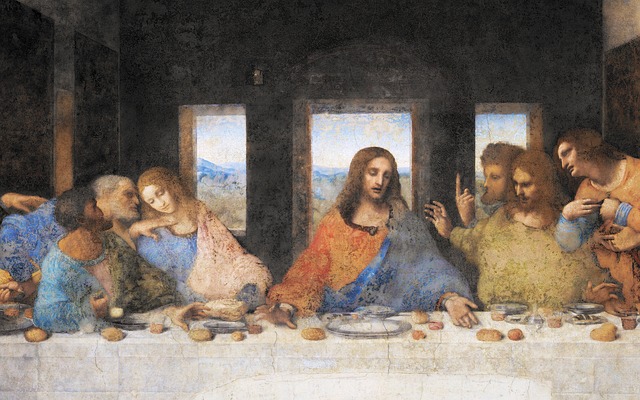
    last-supper-1921277_640Let us keep this in mind as we prepare to receive the Sacred Morsel of our Lord in the most Holy Eucharist. For we are all like Judas; we have all betrayed our Lord’s innocent blood with every sin, no matter how small. And as He did with Judas, so does our Lord do to us; He continues to feed us, to respect our dignity, to love us unconditionally.

    This is the standard of a love that is bigger than any sin; this is the love that we are called every day to imitate. This is the love of Christ.

  • The Choice to Forgive: The 7th Sunday in Ordinary Time

    Leviticus 19:1-2, 17-18; 1 Corinthians 3:16-23; Matthew 5:38-48

    As a young married woman, Edith Eger emigrated to the United States just after World War II and settled in Texas with her husband and first child. If she didn’t carry much material baggage, she carried a lot inside. A Jew, she and her family had been taken by rail along with hundreds of others to Auschwitz. Her parents were immediately put to death. A gymnast and dancer, she got the attention of a camp physician and was forced to dance for him; this was the notorious war criminal Jozef Mengele. Months later she was forced to march to another death camp and was one of the very few who survived. Her way of dealing with the trauma was to dedicate her life to helping others so in the 1970’s, her children grown, she went to college and became a psychologist. Now Dr. Eger, she began treating soldiers suffering from post-traumatic stress syndrome.

    One day Dr. Eger met with two patients, both Viet Nam veterans. They suffered identical injuries; the war left them paraplegics. The first man was angry, bitter, and resentful; all he saw was the world’s evil and his own limitations. His attitude was, “Why me?” The second man was just the opposite. Grateful to have survived, he was determined to focus on the good things in life and on its possibilities. His attitude was, “What next?”

    Both patients deeply affected her. Through the first man she realized two things. First, her wartime experiences had left her like him: Angry, bitter, and resentful inside. More importantly she realized those feelings not only remained unresolved but had taken over, made things worse. Like that patient, she too was defined more by hatred than by love. But the second man showed her that she had a choice. She could choose life over death, to be a victor and not a victim, to celebrate the good and stop mourning the evil; to ask “What next?” and not “Why me?” That is the path she chose and, to coin a phrase, it has made all the difference.

    In her book “The Choice,” Dr. Eger writes, “Maybe to heal isn’t to erase the scar… to heal is to cherish the wound.” May be; we know from the book of Leviticus that we are to cherish no grudge (Leviticus 19:18), for that is the opposite of healing. No wonder the same verse advises us to take no revenge. Although it may seem satisfying for a time, especially when someone has really hurt us, Dr. Eger also said that revenge keeps us revolving, not evolving. Our goal is to get past the pain, not pay it forward, to make a positive change in our lives.

    But when someone has hurt you badly, how do you get past that kind of anger? By acknowledging it and giving it to God. Hiding it or pretending it doesn’t exist aren’t realistic solutions. You must be honest and admit that the anger you feel is the normal response to being badly hurt, but you must also resolve that anger will not win, will not define you, is not who you are. St. Paul told you who you are; you are the temple of God (1 Corinthians 3:16); don’t let anger defile that temple. Then give it to God in prayer. Be completely honest; tell God that the hurt and anger are too big for you, that you cannot do it alone. Ask him to help you forgive those who hurt you.

    Finally, have a realistic understanding of love in the context of forgiveness. When our Lord says love your enemies he isn’t asking us to forget what happened and be friends; rather he is challenging us to see other people, including our enemies, as God sees them. Therefore, forgiveness doesn’t mean complete reconciliation of all differences with all people; it means freeing ourselves to love as God loves. Edith Eger didn’t reconcile with the Nazis but she did forgive them because she came to see them as they were: People who, although created good by God, learned as children to fear and hate what they could not understand. We come to forgiveness the same way; not by total reconciliation of our differences but by accepting first and foremost that all people, even those who have hurt us, are created and loved by God just as we are and in need of the same salvation we need.
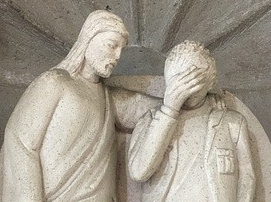
    prodigal-son-3388599_640It’s tempting to dismiss all this as foolishness but remember what St. Paul says: If any one among you considers himself wise in this age, let him become a fool so as to become wise (1 Corinthians 3:18). It may be wisdom in the eyes of the world to hate those who have hurt us and foolishness to forgive them but in Christ’s world it’s just the opposite; his is the world where hatred keeps us bound and love frees us, where judgment takes a back seat to mercy, and where God alone sees the heart, knows the pain, calms the fear, heals the wounds, and breaks the chains.

    As Lent approaches I invite you to find that one person in your life most in need of your forgiveness. Make forgiving that person your Lenten project. It may not take you all of Lent or you may not have succeeded come Christmas; regardless, keep working at it. Pray for them; your prayers are the greatest gift you can give and are truly sacrificial. Forgiving others from the heart may be the one thing we do that God loves the most, for it shows how much we want to be like him. After all, God has forgiven us.


  • The Leap of Faith: Wednesday of Holy Week

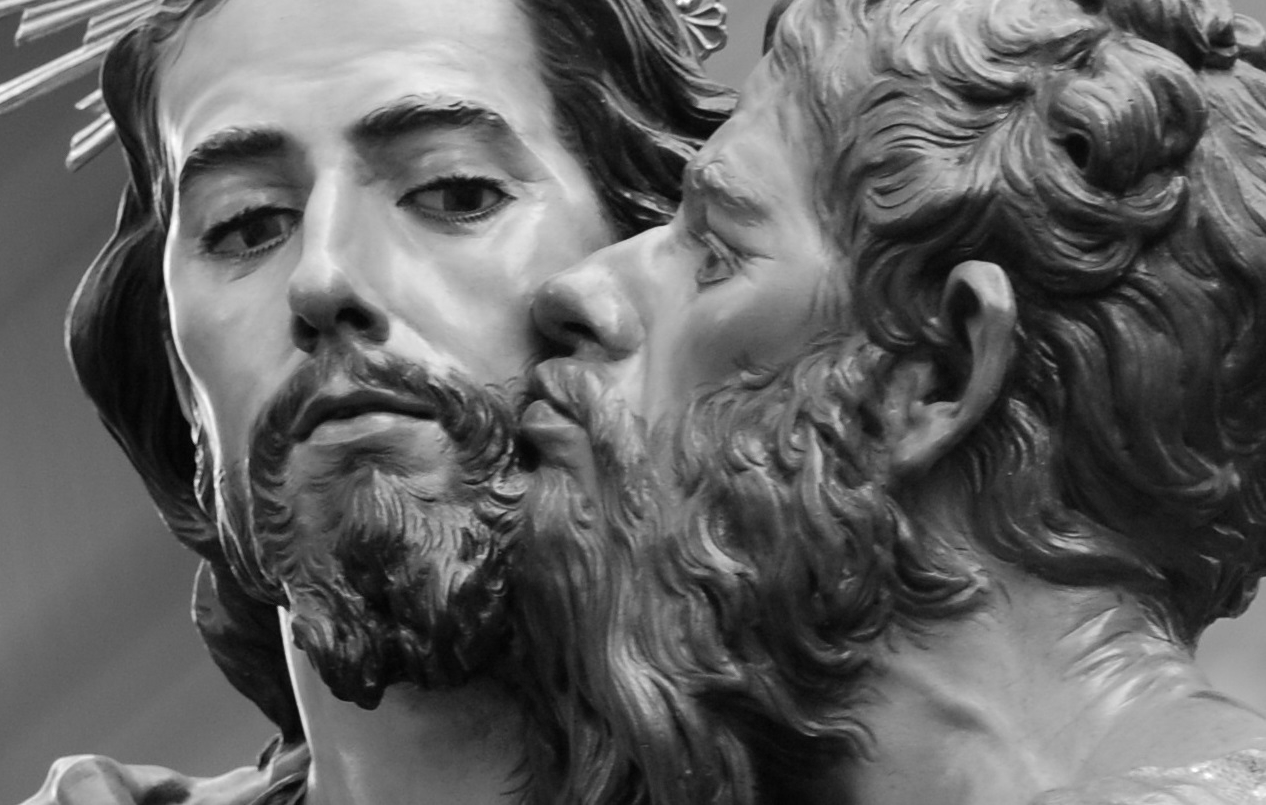
    judasNotice in Matthew’s gospel how 11 disciples say, Surely it is not I, Lord? while only Judas says, Surely it is not I, Rabbi? The evangelist does not do this by accident; to Judas, Jesus may be many things – teacher, sage, a gifted healer, a moving speaker – but whatever he is, he is not Lord.

    Like Judas, many people cannot make the leap from teacher to Lord. Perhaps they are afraid of what it would mean. The words of Jesus could no longer be taken as opinion, his actions no longer regarded as merely well-intended, his death no longer understood as the death that comes to us all. The change of that one word, from teacher to Lord, changes everything.

    This is the leap of faith.

    Take a moment to thank God for that gift, to pray that others may cast aside their fear and make the faith their own, and that our own faith may be strengthened not only to see him as Lord but to do all he asked; to love as he loved, to the death.

    Only therein lies the resurrection to eternal glory that faith promises.

  • The Power of the Passion: Palm Sunday, Cycle C

    Reading: Luke 22:14-23:56

    Today we hear Luke’s version of the passion and death of our Lord Jesus Christ. Like all great dramas it is most effective when we place ourselves in it; see it through the eyes of those on the inside. As we do so we find such a rich array of characters that we cannot help but ask ourselves which ones we most resemble.

    There are those who fall: the Apostles, who argue at the Last Supper about which of them is the greatest; Judas, the follower turned betrayer; Peter, the follower who denies even knowing Jesus; Herod, anxious only to see Him perform a sign; Pilate, whose resolve over Our Lord’s innocence weakens under pressure; the crowd, who stand by and watch silently as others abuse Him; the thief who reviles and bullies Him.

    But there is also virtue: Simon the Cyrenian, who carries the cross on behalf of the struggling Christ; the women of Jerusalem who weep in mourning; the thief who recognizes that Jesus has done nothing wrong and begs to be with Him in eternity; the crowd who regret their actions; the centurion who proclaims His innocence; and Joseph of Arimathea, who provides for Him to the end and beyond.

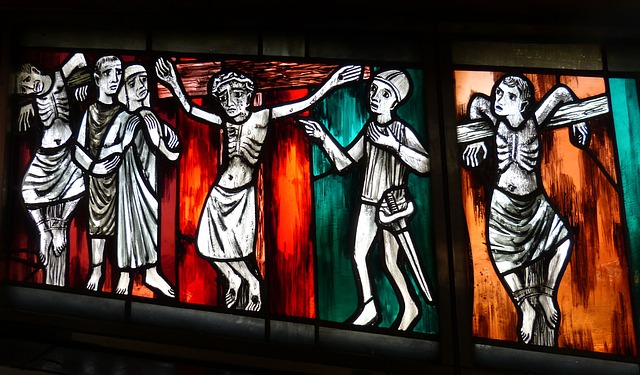
    passion-3807331_640

    What makes the Passion of Our Lord so powerful is not only that it is the story of our Redeemer, although it certainly is that; it is also the story of us, the redeemed. We don’t have to imagine ourselves as characters in the drama; we already are those people. As flesh and spirit, virtue and vice, it is we who in one breath swear to follow Christ, to bear the cross, to proclaim His innocence, and to beg Him for salvation, only in the next breath to deny even knowing Him, shout to crucify Him, and bully Him into doing things our way.

    We might think that the struggle between virtue and vice is what makes us human; yet throughout the Passion, Jesus shows us what being fully human really means. As Pope St. John Paul said in his encyclical Redemptor Hominis, Jesus Christ the Redeemer “fully reveals man to himself.” Consider His words to the arguing Apostles, let the greatest among you be as the youngest, and the leader as the servant (Luke 22:26); to Peter, once you have turned back, you must strengthen your brothers (Luke 22:32); to the jeering crowd, Father, forgive them, they know not what they do (Luke 23:34); and to the repentant thief, today you will be with me in Paradise (Luke 23:43). In Christ do we find our proper point of reflection. Being most fully human is not measured by how much we are like the people around Jesus, but how much we are like Jesus to the people around us.

    Today we leave the story unfinished, with Jesus buried in the tomb. This is fitting; it reminds us that if we are truly like Christ, we were indeed buried with him through baptism into death, so that, just as Christ was raised from the dead by the glory of the Father, we too might live in newness of life (Romans 6:4).

  • The Deepest Truth: Friday of the Fifth Week of Lent

    Jeremiah 20:10-13; John 6:63c, 68c; 10:31-42

    In these last few weekdays of Lent, the Church presents us with a series of readings from the gospel of St. John. In each one, Jesus is accused in various ways of making himself equal to God. In today’s reading, Jesus tries a different way of responding to his opponents’ charges.

    First, he quoted Sacred Scripture. On the surface, this seems only fair; after all, his critics used Scripture in their arguments against him frequently. However, Jesus wasn’t trying to get even. He quoted Scripture because he knew that it was his critics’ highest authority. Indeed, its value could not be overestimated then or now. As the Fathers of the Second Vatican Council wrote, Sacred Scripture is the word of God inasmuch as it is consigned to writing under the inspiration of the divine Spirit. That Jesus quotes and interprets Sacred Scripture confirms our belief in its power to reveal God to us; to tell us of his ways, make known his deeds, proclaim his steadfast love, and teach much of what the human mind can understand about God.

    Yet Jesus went deeper; he likened his own works to the actions of God written of in Sacred Scripture. Doing this, he made the point that the revelation of God to the world is really the unity of word and action; in other words, God’s actions in salvation history demonstrate what the words teach, while the words proclaim the deeds and enlighten the mysteries they contain.

    Ultimately, Christ’s deepest point was not merely that he was an interpreter of God’s word; he is God’s word. If God’s actions were displayed in the signs that he performed and the words of Scripture were confirmed in those same actions, then Christ himself is the living embodiment of the unity between Almighty God and Sacred Scripture. The Fathers of the Second Vatican Council understood this when they wrote that the deepest truth about God and the salvation of man shines out for our sake in Christ, who is both the mediator and the fullness of all revelation.

    Thus, the face of Christ is revealed in the many passages of Scripture. We think of Gethsemane, as his betrayer and the guards approach, and can almost hear the foreboding words of today’s reading from Jeremiah: All those who were my friends are on the watch for any misstep of mine; and perhaps his consolation as we read: But the LORD is with me, like a mighty champion: my persecutors will stumble, they will not triumph or the words of Psalm 18: In my distress I called upon the Lord, and he heard my voice.

    jesus-1250023_640Jesus Christ, not Sacred Scripture, is the highest and greatest revelation of God to the world. Next is the Church, because Jesus instituted her and gave her the authority to teach in his name. This teaching authority is called the Magisterium; it safeguards the teaching which we call Sacred Tradition and in communion with the Holy Spirit has given us the Bible, which is the third source of revelation. Thus sacred tradition, Sacred Scripture and the teaching authority of the Church … are so linked and joined together that one cannot stand without the others… They all together and each in its own way under the action of the one Holy Spirit contribute effectively to the salvation of souls (Dei Verbum, §10).

    The salvation of souls: the promise of everlasting life won for us by Christ in his passion, death, and resurrection. No wonder that the Gospel Acclamation today proclaimed, Your words, Lord, are spirit and life. You have the words of everlasting life. We can just as well acclaim, “You, the Eternal Word, are spirit and life. You are the word of everlasting life.”