Tag: inspiration

  • Crowd or Disciple?

    Crowd or Disciple?

    The 4th Sunday in Ordinary Time

    Zephaniah 2:3; 3:12-13; 1 Corinthians 1:26-31; Matthew 5:1-12a

    The day finally arrived. After 21 years in school, I made it; the first day of the last class I’d ever have to take. I was excited, but also nervous. I heard this teacher was tough; my friends advised me to wait another year, hoping he’d retire, but I wanted it over with. What was one more tough teacher?

    It took just one class period to rethink that. The first thing this guy did on the first day was hand out the final exam, a series of questions due back in three months. Looking at them made me even more nervous. They didn’t look hard… they looked impossible.

    As always happens, some people dropped. We who decided to stick it out divided up the questions and worked on them. Although I made progress, it became clear that if I was going to give decent answers, I had to go to class and really engage with this teacher.

    That’s where my world lit up. From our first conversation, I could see that psychology wasn’t just a subject to this man; it was his life, his passion, and he wanted us to share it, to love it like he did. In the end, the real importance of giving us those questions was to draw us into conversations with him, to give the benefit of his experience and insight to us, the next generation of psychologists and teachers, so we could better understand and in turn pass on the most important issues in that field to our own future students.

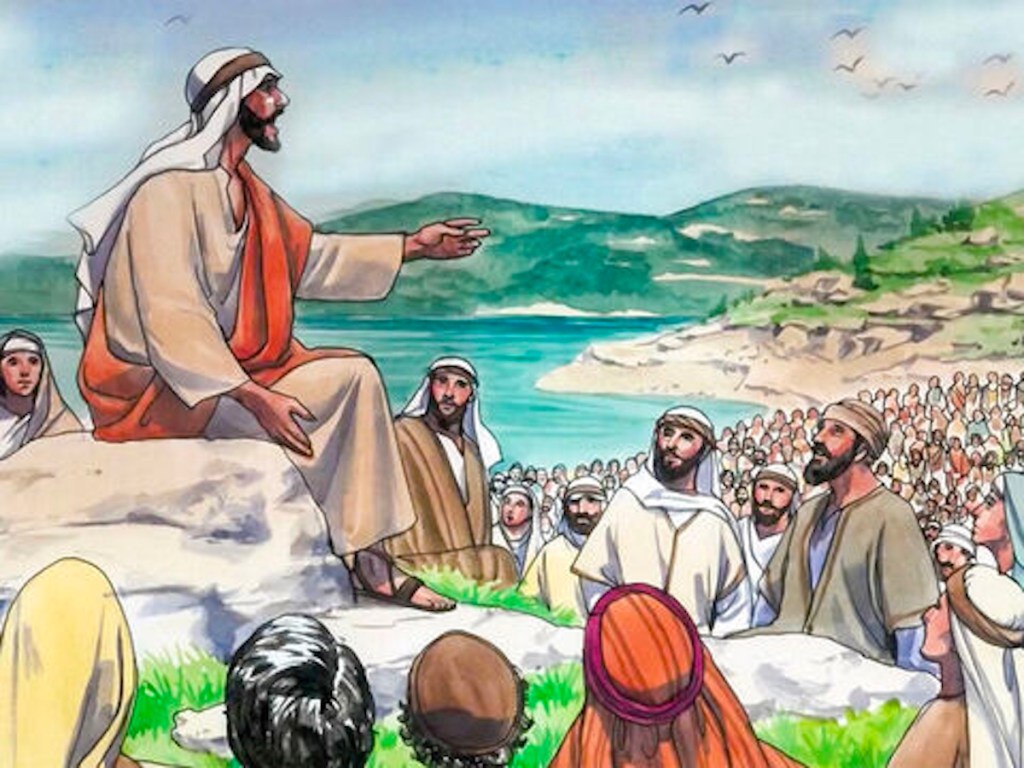
    That is an example of the same purpose our Lord Jesus Christ had when he began his class, the Sermon on the Mount, with his own idea of a final: The beatitudes. Who could blame anyone for finding those hard to understand? We’re blessed to have nothing, to say nothing, and to mourn loved ones? Rejoice when we’re being persecuted? Those don’t seem hard, they seem impossible.

    Of course, they aren’t, but they do require effort. The worst thing we can do is look at them and rule them out as impossible. That’s what St. Paul meant when he mentioned being wise by human standards. No; real wisdom begins with the attitude spoken of by the prophet Zephaniah, the honesty and humility to say, “I don’t understand these,” and the perseverance to say, “But with help, I will.”

    It is virtues like these that set people apart, make them holy. In the first reading we heard about a remnant, a smaller group that emerges from a larger one; people distinguished by their humility and thirst for justice, and rewarded with peace. And we see a shade of it in the gospel, where Matthew begins: When Jesus saw the crowds, he went up the mountain, and… his disciples came to him. So, a large group sees Jesus, a smaller group follows him. The difference? The remnant makes an effort to do it. Each of us has to ask, which am I: Crowd or disciple? Am I satisfied simply hearing about him, or am I committed to following him? We only know that by looking inside ourselves. When and where do I already come to him? Are there circumstances where I will not come to him?

    And what does that mean, to come to him? If I ask God questions, will he answer them? Yes! It is said that when we pray, we talk to God; when we read Scripture, God talks to us. The answers may not be clear, we might have to make an effort to understand, but we have centuries’ worth of resources: Notes on every page of the bible, books by such brilliant thinkers as Benedict XVI. In our own parish, we have priests and deacons who have been trained to help you understand where and how God is moving and speaking in your life.

    This is where your world can light up, too. Studying the beatitudes this way leads us to contemplation, where we learn these aren’t just some nice, pious thoughts to live by; they are a portrait of Christ. Poverty of spirit; who is more humble than he who emptied himself and took the form of a slave? Who has mourned more than he, who wept over Jerusalem? Who is meeker or gentler than the Lamb of God, led to slaughter without a word? Who seeks righteousness more than he who looked upon mankind from the cross and said, “I thirst”? Who was ever more merciful than he who said, “Father, forgive them, they know not what they do,” or more pure of heart than he whose heart was pierced for love of us? These are the kind of meditations that bring us closer to the heart of Jesus, and lead us to see that even on that mount of the beatitudes, our Lord had another mountain in mind; the one he had come to climb for the salvation of the world.

    This is just one example. All of Scripture is open to you; God is there, waiting for you to come to him as the disciples did on that mountain, to be drawn into conversation, gain the insight he has in store, so that you can better understand and in turn pass on all that you have learned, so that others may come to know and love him as you do.

  • Lessons from Sickness

    Lessons from Sickness

    Saturday of the 1st Week in Ordinary Time

    Hebrews 4:12-16; Mark 2:13-17

    Like you, I’ve learned over the years that sickness can be a great teacher.

    The first thing sickness has taught me is that you don’t have to feel sick to be sick. I think Matthew would agree. My guess is that he felt just fine sitting at the customs post. It’s hard to say why; as a tax collector, Matthew was among the most notorious sinners. Maybe he had grown used to it. Sin can be that way; we might feel uncomfortable at first, but if we persist in sin we grow used to it, to the point that we are willing to rationalize it rather than see ourselves the way we really are.

    But no ordinary man was passing by that day; it was, as Hebrews said, the One from whom nothing is concealed, and to whom all must render an account. Of course, Matthew knowingly rendered nothing, and the encounter may not have seemed like much: A passing glance and the words, Follow me. But Jesus didn’t need many words, for from him they are sharper than any two-edged sword, able to discern reflections and thoughts of the heart. And they had an effect; as Scripture says, Matthew got up and followed Jesus. We shouldn’t pass too quickly over that, for the word Mark uses to describe Matthew rising from his post is a variation of the word he will use to describe Jesus rising from the dead. Matthew, spiritually as good as dead, experienced a very real kind of resurrection. He had a new lease on life that only God can give.

    That brings me to another thing sickness has taught me: There’s nothing like the joy of knowing that you are healed. Again, I think Matthew would agree. Look at his reaction; if he was worried that people would hold his past against him, or that he was leaving a really well-paying job for an uncertain future, he didn’t show it. All that seemed to matter to him was that he call his friends together and celebrate; share his joy. I think many of us can identify with him. Think of that moment in Confession when you’ve heard those words, “I absolve you…” It can feel like a sixteen-ton weight has been lifted from your shoulders! No wonder he wanted to celebrate. And consider the impact this healing had on him, the gospel that bears his name; the millions of people he has helped bring to Christ, the countless souls whose faith he has helped strengthen.

    Therein lies the lesson. Christ calls us to follow him not only that we may have life ourselves, but that we may give life to others. How do we do that? By using the gifts we’ve been given. Perhaps you are an exceptionally generous or welcoming person, a good teacher or organizer; maybe you’re good at helping people, consoling them, or encouraging them to stay strong in the faith. There are many gifts; I can provide you with lists if you’re interested. Whatever the gift, the important thing is not having it, but sharing it. When you do that, three things happen. First, you give glory to God who gave those gifts to you; second, you strengthen your own faith; third, you experience the joy of watching the faith of others come to life through you.

    That brings me to another thing sickness has taught me: We have to do what we can to stay well. The first thing, one I resisted for years, is making regular trips to the doctor. I know in Matthew’s case the doctor came to him, but remember that Christ comes to us, too; most perfectly here at holy Mass, but no less in any of the Sacraments, even those devoted to healing. So, meet him there. He’s waiting to heal us, we just have to let him. It can be frightening, but don’t let it; as the author of the Letter to the Hebrews reminds us, remember the sympathy and the mercy of Christ. He understands our weakness perfectly; he too has been tested.

    And that’s the final thing sickness has taught me: No one gets better alone. Matthew was called alone, but he didn’t follow alone; there were many disciples. In fact, of all the evangelists, only in Matthew’s gospel does Jesus use the word, church. Thus, as Christ himself established it, our encounter with God must go through other people. This tells us at least two things. First, we need each other. Most particularly, the Church, this parish, these people, need you; they need the gifts that God has given you. And you need them, for they have gifts that make you stronger, too. Second, it tells us what the scribes in the gospel could never understand; that the mercy of God is so powerful that people can be called holy even though they are sinners, and can remain one body even though they are so often bitterly divided. As the old saying goes, the church isn’t a shrine for saints; it’s a hospital for sinners.

    Thank God.

  • Expect the Unexpected

    Expect the Unexpected

    Friday of the 4th Week of Advent

    Malachi 3:1-4, 23-24; Luke 1:57-66

    Today’s story from St. Luke is like a parable: On the surface, it tells the story of the birth and naming of John the Baptist. But there is a deeper level, which teaches us about the action of God in the lives of his people, including us.

    Like most parables, it works best if we put ourselves into the story. Since Luke gives such a prominent role to the relatives and neighbors of Zechariah and Elizabeth, let’s look at it from their point of view. When we do that, we see some pretty big surprises.

    The first is that Elizabeth was even pregnant. No one seemed to know! Note how Luke is careful of the order: First she gives birth, then the relatives and neighbors hear about the baby. Of course, they rejoice, and we sympathize; we all know how it feels to hear good news of a prayer being answered in the way we hoped – especially such a big way!

    Then comes the surprise that starts an argument. Without asking, the relatives and neighbors assume the baby will have his father’s name. When Elizabeth objects, they get argumentative, almost dismissive, and appeal to Zechariah. When he confirms the name “John,” they give in but are clearly perplexed about this unexpected break with tradition.

    Finally, the biggest surprise: Zechariah is healed. While Luke describes their reaction as “fear,” the implication in the original language is that it has begun to dawn on the friends and relatives that God is behind all this.

    It is this realization that brings us to the deeper meanings of the story. I see at least three.

    First, God works in unexpected ways. A woman beyond childbearing age, bearing a child; the obvious name for the baby not chosen; his father, after confirming the name, suddenly able to hear and speak again. All unexpected, but at the same time, not surprising. As we see throughout Scripture, God works in ways we don’t expect and through those who appear least likely. The lesson is clear: God has a plan in need of no revision, chooses who he wills to accomplish it, and provides the grace necessary. All he asks is that we do our part. So, the question is: Do I submit my will totally to God and his plan for me, no matter how difficult or humbling, and do I ask for the grace to do it?

    Second, if divine revelation seems sudden, that’s because we haven’t been paying close attention. Scripture tells us time and again that God is always close, always active, and intimately involved in every aspect of our existence. The problem is, as the relatives and neighbors demonstrate, we tend to drift into uninvolvement. They didn’t even know that Elizabeth was pregnant, let alone that she had the baby. Why? Perhaps for the same reason that we lose touch with people: Neglect, either intentional or unintentional. Again, we need to ask ourselves: Have we allowed relationships to drift, carried grudges and allowed them to persist, or wait for others to make the first move?

    Then there is the story’s most important lesson: That everything in life, expected or not, points to Christ. This is summarized most perfectly in John’s own name, chosen for him by the Holy Spirit, for “John” means, “God is gracious.” To John, Christ Jesus, the source of all grace, was everything. He knew, as St. Therese of Lisieux once said, that “everything is a grace, everything is the direct effect of our Father’s love – difficulties, contradictions, humiliations, all the soul’s miseries, her burdens, her needs – everything, because through them, she learns humility, realizes her weakness. Everything is a grace because everything is God’s gift. Whatever be the character of life or its unexpected events – to the heart that loves, all is well.”

  • Read the Label

    Read the Label

    Saturday of the 2nd Week of Advent

    Sirach48:1-4, 9-11; Luke 3:6; Matthew 17:9a, 10-13

    I came across a product I needed at the store and grabbed it. I paid no attention to the label, but when I got home, wondered how I missed it. It was large, bright red, and warned in bold letters: “Failure! This product is only effective if you read the instructions thoroughly. Failure to do so will result in you moaning and groaning that the product doesn’t work and generally being a pain in the bottom. Make a positive change in your life will you, and read the instructions.” The thing is, I didn’t read them. I started using the product, complained to myself that it wasn’t working right, then realized: Oh yeah… the LABEL. Reading the instructions fixed the problem.

    If our Lord was the product, John the Baptist was certainly the big, red label. How could you miss him? Wearing camel hair, baptizing, preaching, eating locusts… not the kind of man you’re going to miss. As we know, they didn’t; to the contrary, people went out in droves. Yet, our Lord refers to John as Elijah who had come but was not recognized (Matthew 17:12). How could a prophet who was so clearly seen and heard go unrecognized, and what does that tell us about ourselves? A couple of things, I think.

    For one thing, it says that appearances matter; maybe too much for our own good. Like I did with the label, people may have focused on John’s appearance rather than his message; were amused, offended, or entertained, where they were supposed to be challenged and enlightened. Or, perhaps John didn’t conform to their expectations of what a prophet should look like. The last anyone had seen him, Elijah was riding a fiery chariot to heaven (Sirach 48:9). John, standing in the river, baptizing, preaching, and snacking on locusts – this was how the awesome prophet Elijah returned?

    It’s not all that different in our own time. We sometimes judge our liturgies – their words or music – by how much they divert or entertain us, rather than how much they challenge us or help us to contemplate the divine mysteries. We also tend to ignore or discount anyone or anything that doesn’t fit our preconceived notions about what divine revelation is “supposed” to look like. We do well to remember that God often reveals himself in ways we least expect. Consider: Was it the earthquake, fire, or strong, driving wind that spoke to Elijah, or the still, small voice? Was it the son of Herod or the Son of Mary who opened the gates of Heaven?

    A second problem happens when we get the message but find it hard to accept. Herod is a good example. Scripture says that John both intrigued and troubled him (Mark 6:20); the truth drew him in, but it also made him look at himself in a way he didn’t want to. In the end, his pride won out; it was easier to silence the voice than to heed it. Again, are we all that different? The truths of Scripture and the teachings of the Church speak to us, but they can also cut right to the heart and make us very uncomfortable. It’s tempting to want to take those truths and, like Herod with John, do to them whatever we please.

    Therein lies the real problem, as Jesus points out in the gospel: What we do to the prophets, we do to him. It is true, as the acclamation said, that all flesh shall see the salvation of God (Luke 3:6), but it is also true that seeing and recognizing are two very different things. Every time we see revelation only where and how we want to see it, we limit the ability of the Holy Spirit to work within us, for it is He who helps us recognize the truth about God and ourselves. That is the ultimate failure. Eternal life is the product, God has written the way to it through his Church, and prophets like John the Baptist are the label, telling us as loudly and as clearly as they can: Make a positive change in your life, will you, and read the instructions.

  • The Great Reversal

    The Great Reversal

    Saturday of the 30th Week in Ordinary Time

    Philippians 1:18b-26; Luke 14:1, 7-11

    The famous evangelist Billy Graham dreamed that he died and went to Heaven. As he was escorted in, saints and angels cheered, congratulated him, and said to each other, “At last! Here he is! Here he is!” When our Lord greeted him, He said, “Yes, here he is, the man we have all been waiting for: Ruth Graham’s husband!”

    Beyond the humor, Graham was touching on a theme that runs throughout the gospel of Luke. Theologians call it, “the Great Reversal.” We hear it in verses like, He has filled the hungry with good things, and sent the rich away empty-handed (Luke 1:53); Blessed are you who are poorwoe to you who are rich (Luke 6:20,24); (Lazarus) is comforted here, whereas you are tormented (Luke 16:25); and today’s: everyone who exalts himself will be humbled, but the one who humbles himself will be exalted (Luke 14:11).

    If this sounds less like reversal and more like divine justice, it’s for good reason. There is an element of justice to it. In his merciful love, God gives abundantly to those who have been denied, and will deny those who, of their own free will, have refused to show that same kind of love and mercy to others.

    But there is more to it. The Great Reversal isn’t a reversal of fortunes, it’s a reversal of expectations. In his dream, Billy Graham ended up in heaven, just not for the reason he expected. Like him, we are tempted to look at “everything we’ve done for God” and, perhaps even unconsciously, expect something in return. Of course, the fact is that God owes us nothing, whereas we owe Him a debt we can never repay. The lesson is that, if we have any real expectation or hope at all, it should be the one St. Paul spoke of: thatChrist will be magnified in my body, whether by life or by death. For to me life is Christ, and death is gain (Philippians 1:20).

    We can’t get to that point without being like Christ, we can’t be like Christ without humility, and we don’t have humility until we take an honest look at the gifts we’ve been given, remember who gave them to us, and ask ourselves what we’re doing with them. What gifts? Well, think about riches. If we’re not rich in money, then what about time, talent, or knowledge? Whatever it is, Jesus wants us to ask ourselves, “Do I thank God for it?” and “What would the world look like if I gave some of it away?” Again, think of St. Paul. Rich in love for Christ, he wanted only to be with him; as we heard, he was ready to die to do it. Nevertheless, he saw the need to serve the Church, to preach the gospel and encourage her members in the faith. In his humility, he let his guiding concern be not how he could satisfy himself, but how he could be of benefit to others.

    Humility is a demanding gift, but a great one for that reason. It’s asking a lot to be given the riches of life but not become attached to them, to take pride in ourselves and our abilities without becoming proud, and to give all we can purely out of love for God, expecting nothing in return. But as we try more and more, we see more and more the reversal taking place in ourselves; that true poverty is having gifts but not sharing them, true torment is refusing the consolation of Truth, and that true pride is expecting God to honor us for whatever we’ve done.

    The irony is that God does honor us; indeed, He is never outdone in generosity. We are invited guests to the greatest wedding banquet ever prepared – the feast of Christ’s Body and Blood. All we need bring with us is the hope and eager expectation of hearing him say to us when we come to his table, ‘My friend, move up to a higher position’ (Luke 14:10).

  • God Moments

    God Moments

    Memorial of St. Thérèse of the Child Jesus, Virgin and Doctor of the Church

    Job 42:1-3, 5-6, 12-17; Luke 10:17-24

    The leader of a small group I once belonged to began each meeting by asking us, “Did you have any ‘God moments’ this week? What did you learn? How did they help you?” I never responded, although his questions did get me to reflect on times when I saw or felt God working in my life.

    If Job or the Apostles attended that small group this week, they would’ve had a lot to say. Job had just encountered God in a very profound way, and the Apostles actually witnessed God healing people through them. But today, on the Feast of St. Thérèse, let us share one of her ‘God moments.’ It was this moment that she said changed her life.

    She was 12, going on 13, when she overheard an innocent but dismissive remark made about her by her tired and irritated father. Although it hurt at first, it caused Thérèse to look at herself and see that for years she had behaved like a spoiled, self-centered child. At the same time, she realized that her father, in imitation of the infinite love of God, had always looked beyond that; to him, she was a beautiful person capable of deep and authentic love.

    This God moment, which Thérèse called “grace emerging from childhood,” was not far from the experience of Job and the Apostles in the readings. In fact, I think all ‘God moments’ share these three aspects: A call by God, a response of repentance and amendment, and the blessings of growth in holiness.

    First, the call. To Job, it might have sounded more like a “wake-up” call. Just moments earlier, God had sternly reminded him who is God and who is not. In the gospel, it was the gentle rebuke of Jesus, reminding the Apostles not to rejoice that evil was conquered, but that their names were written in heaven. For Thérèse, it was her father’s remark, hinting at her self-centeredness. For us, it could be many things: a Scripture verse; a thought from a book we’re reading or talk we heard; something said to us by a friend or relative; a whisper of the Holy Spirit.

    Whatever it is, the call awakens us to the fact that we need to make a change and stick to it. This takes plenty of humility and perseverance. Job had it; he disowned what he said and repented in dust and ashes (Job 42:6). The Apostles had it, too; after receiving the Holy Spirit, they rejoiced that they had been found worthy to suffer dishonor for the sake of the name (Acts 5:41). So did Thérèse; she faced the fact that her father was right, and changed her behavior. That leaves us with the challenge: What is God calling us to own up to and commit to change, and will we do it?

    We all know how hard that is, but the readings show us that good things await those who try. After his repentance, Job was blessed far more than before (Job 42:12); long after the Apostles fled from the Passion, God poured out the Spirit upon them and set them over the whole Church (Matthew 19:28; Acts 4:34-35; 16:4). Thérèse also bears witness; she left her life as a spoiled brat to became one of the greatest saints in recent memory.

    Now we can see how God moments help us. Through them, we come face to face with the deepest parts of ourselves; not just our limitations but also our potential. They are opportunities for conversion, a chance to return, to begin again, to grow more deeply in virtue. They are reminders not just that God is present and acting in the world, but that He acts in us and through us; we are a part of His plan. What an awesome thought, that there are things only we can do, and that God has given us the grace we need to do them! Above all, they are signs of God’s infinite and merciful love for us. As St. Thérèse showed so well, God measures us not by the greatness of our deeds, but by the love with which we do them.

    St. Thérèse, pray for us.

  • Illness and Recovery

    Illness and Recovery

    Memorial of St. Bernard, Abbot and Doctor of the Church

    Ezekiel 43:1-7AB; Matthew 23:1-12

    As we just heard, Jesus got pretty tough on the scribes and Pharisees. In fact, he’s only getting started; next week we’ll hear him get even tougher. It’s easy to chalk it up to Matthew’s dislike of these men and the history behind that, but I think the Holy Spirit has a better reason for preserving these words in Sacred Scripture, one that has as much to do with us as it did with them. Jesus has put his finger on a problem that has plagued the human spirit from the beginning – hypocrisy – but has also given us a way out of it.

    He begins by recognizing the important place of the scribes and Pharisees as teachers, and has no intention of taking this away from them or dishonoring the role of teacher. Nevertheless, he rightly reminds the people that teaching is as much about actions as it is words – perhaps more. Here, the scribes and Pharisees have a lot to answer for. Recall a few of their worst moments from Matthew’s gospel: Denouncing Jesus for wanting to heal a crippled man on the Sabbath, in a synagogue of all places (12:9); exalting their own traditions over those of God (15:1-14); and accusing Jesus of healing by the power of the Enemy (12:22-37). Our Lord sums up his reaction by quoting the prophet Isaiah: This people honors me with their lips, but their hearts are far from me (15:8).

    Sadly, these words echo across the centuries. Hypocrisy is still the “go-to” accusation leveled against the Church from all sides. Always, always, the world watches Christians; it evaluates us in light of what our faith teaches, and, almost always, condemns us as hypocrites. Yes, non-believers are hypocrites, too, and yes, they can be harsh and unfair, but we must ask ourselves: Is what they’re saying true? What kind of world would it be if we were to more truly practice what we preach? Perhaps the late Brennan Manning was right when he said, “The greatest single cause of atheism in the world today is Christians, who acknowledge Jesus with their lips, then walk out the door, and deny Him by their lifestyle. That is what an unbelieving world simply finds unbelievable.”1

    So, while the Divine Physician has diagnosed the disease, he also prescribed the antidote – humility – when he said, whoever humbles himself will be exalted (Matthew 23:12). By happy coincidence, we remember today the mellifluent doctor of the Church, St. Bernard of Clairvaux who, when asked to name the three most important aspects of the spiritual life, replied, “Humility, humility, and humility.” He might well have said it 9 more times, for he gives 12 steps to deeper humility in his book, Steps of Humility and Pride.

    The twelfth step is called, “an attitude of pious prostration.” It is directly opposed to hypocrisy, or what St. Bernard calls “an attitude of vain curiosity.” Tempted by the pride of vanity and fear of showing others who we really are, we seek to conform ourselves to the world; to please ourselves and others, rather than God. But hypocrisy leads us only to unhappiness, for it’s pretentious and inauthentic, a lie to ourselves about ourselves. Happiness, on the other hand, is found only through humility. It is “pious” to the degree that we reverence God as our Creator, and “prostration” in the sense that we, like Ezekiel in the first reading, bow in body and spirit before His infinite glory. This level of humility is submission in two ways: First, to the truth that we, though sinners, are infinitely loved by God, not for what we can achieve, but for who we are; and second, to the grace of God that has the power to conform us more and more to His own image, if we will allow it.

    St. Bernard knew all this from experience. When he entered religious life, Bernard was determined to withdraw in silence from the world and from education. However, by allowing God to form him in the humility he would come to so beautifully teach, Bernard became the most widespread, eloquent, and influential preacher and teacher of his time. What a world it would be if we, like St. Bernard, professed Jesus with our lips, then walked out the door and proclaimed him by our lifestyle.

    St. Bernard, pray for us.

    1https://relevantmagazine.com/faith/ragamuffin-legacy/

  • It is Good to Be Here

    It is Good to Be Here

    The Feast of the Transfiguration

    Daniel 7:9-10, 13-14; Luke 9:28b-36

    Of the three evangelists who write of it, Luke’s account of the Transfiguration stands out in at least two ways: Prayer and the true meaning of glory.

    First, Luke sets the scene with prayer. This isn’t surprising; prayer pervades his gospel. Only Luke shows Jesus praying at crucial moments – His baptism (3:21), choosing the Twelve (6:12), Peter’s confession of faith (9:18), the Transfiguration (9:28), before teaching the Apostles to pray (11:1), and his Crucifixion (23:34, 46). But it isn’t just the frequency of his prayer, it’s the power; as we heard today, it was transfiguring! This is a lesson for us. While we don’t expect prayer to transfigure us, we should expect it to transform us; indeed, the whole point of prayer is that our will, slowly but surely, be conformed to the will of God. To paraphrase St. Josemaria Escriva, the best prayer begins with, “If it pleases you, Lord…” and ends with, “… Thy Will be done.”

    Luke is also the only evangelist to tell us not only of the appearance of Moses and Elijah but of their conversation with Christ and, not coincidentally, that the Apostles missed the whole conversation; they had been overcome by sleep (9:32). I wish I could say that I’d never do that, but I can’t. Far too many times, I too have been “overcome by sleep” while praying. Herein lies another lesson for us. If we find ourselves often falling asleep during prayer, we should consider changing our routine; perhaps by praying earlier in the day or making sure we are getting enough rest. As Luke is going out of his way to show us, prayer was important to Jesus; as his disciples, it is for us, too. Far better to structure our day around prayer than to allow our day to dictate our prayer time.

    But Luke’s point goes even deeper. By missing the conversation, the Apostles missed a fuller understanding of what the glory of Christ meant. While a bright, fiery image of heavenly glory pervades the first reading, there is a darker side to the glory of Christ. It was foreshadowed way back at the Presentation, when Simeon spoke of Jesus, the “glory of Israel,” as a sign that will be contradicted (2:32,34). Now on the mountain, Moses and Elijah spoke of his exodus that he was going to accomplish in Jerusalem (9:31). And we know that Luke had an eye on the passion, death, and resurrection, for only he tells of Jesus on the road to Emmaus, saying: Was it not necessary that the Messiah should suffer these things and enter into his glory (24:26)? John would confirm this throughout his own gospel account, where at the start of his passion Jesus said, Now is the Son of Man glorified, and God is glorified in him (John 13:31).

    With that in mind, let us reconsider Peter saying, Master, it is good that we are here; let us make three tents… (Luke 9:33). The Transfiguration was a glorious “mountaintop moment” – something to capture and keep forever. God had spoken directly to them! Who wouldn’t want to hold onto that? We can relate; we all have mountaintop moments, times when God feels so close and it seems like He is speaking right to us. We want that wonderful feeling to never go away. However, we know that sooner or later, we will come down from the mountain, perhaps even into the valley. This fills us with dread, for it feels like a darkness where God is silent, far away, and all that glory a dim and distant memory.

    Luke’s story of the Transfiguration teaches us that the glory of God cannot be reduced to such images. Our Lord Jesus Christ was every bit as eloquent and glorious on the Cross as he was at the Transfiguration, and his glory is as bound to us in our most intimate suffering as it is in our most contented joy. In that light, mountaintop moments and times of spiritual dryness are not feast and famine, but opportunities to grow closer to God; to revel in his wonder or to persevere in hope. In each one, God is challenging us to grow stronger, to love more deeply, and most of all to be spiritually alive and awake in the present moment, for that is where we live, where God meets us, walks with us, and feeds us with His grace.

    Truly, it is good to be here.

  • Servant and Seed

    Servant and Seed

    Saturday of the 16th Week in Ordinary Time

    Jeremiah 7:1-11; Matthew 13:24-30

    The parable of the wheat and the weeds may leave us wondering. It certainly baffled the disciples. Next Tuesday we will hear them ask Jesus to explain it and, although he does, he leaves off two things: First, if wheat is always wheat and weeds are always weeds, is repentance even possible? Second, who do the slaves represent? Jesus identifies every other character, but never mentions the slaves. The parable has the answers but we must look more deeply into it to find them, which of course is why Christ told it to begin with.

    As for the wheat and weeds remaining the same, on the surface the parable does say that. But if that was our Lord’s point, it would contradict the first thing he said when he began his ministry: Repent (Matthew 4:17) and if Jesus is anything, he’s consistent. No; repentance isn’t only possible, it is central to the parable. The question is, who repents, and how?

    Enter the servants. Noticing the weeds, they offer to pull them, which seems like a good idea. But the master knows what the servants do not. For one thing, the weed, called darnel, looks a lot like wheat; even today it’s called wheat’s ‘evil twin.’ For another, the weed’s roots intertwine with wheat’s. Thus, by pulling the weeds in their ignorance and haste, the servants would actually cause what they most want to prevent. This is why the master advises the servants to let them grow together (Matthew 13:30).

    We see two things in this. First, it shows God’s love for his children, who he wants to live at all costs. Second, and equally important, it shows his love for his servants, who need to repent, or change their minds, from ignorance to knowledge and impetuousness to patience.

    Being patient doesn’t mean doing nothing; to the contrary, it sharpens their focus. The servants have one job – produce a fruitful harvest – not to judge what is wheat or weed. That will be done by others when God wills and at his direction alone.

    This is where we must take the parable to heart, for Christ is speaking to us. We are the servants. We look at the field – the Church, the world, and ourselves – and see the same thing they saw: wheat and weeds. Perhaps our reaction is like theirs; purge the evil quickly, that the good may thrive. But also like them, we may be ignorant and impetuous. Ask yourself: Have I ever been mistaken in my first impressions of people? Have I ever changed my opinion once I got to know them? Have I ever wanted others to be patient with me, despite the wrong things I have done or said?

    Even if we have made these kinds of mistakes, does that mean that we are never to judge our own actions or those of others and try to correct them? Certainly not; to be silent or impassive in the face of evil is exactly the kind of complacency our Lord condemns in the first reading. Earlier in this same gospel, Jesus urged us to be perfect as your heavenly Father is perfect (Matthew 5:48). But that is a perfection in love; therefore, our judgment and proclamation of the truth must be tempered by the same kind of mercy, compassion, and patience that God exalted in the first reading through the prophet Jeremiah, and that Christ himself has so perfectly shown us.

    This is why repentance is central to the parable. The effort we make to do these things, to be perfected in love, is the repentance, the change of mind, that our Master is calling for. It isn’t that we are either servants asked to produce a fruitful harvest or the wheat or weeds growing in the field. The parable teaches us that we are both servant and seed. For both, the watchwords are faithfulness, patience and perseverance; faith that God is working through us even when we cannot see it, patience with our own growth and that of others, and perseverance, that we may overcome every obstacle to become the good seed that makes the finest wheat, in the image of Christ, the Bread of Life.

  • The Heart to Have

    The Heart to Have

    Memorial of the Immaculate Heart of the Blessed Virgin Mary

    Isaiah 61:9-11; 1 Samuel 2:1; Luke 2:41-51

    When we speak of someone in terms of their heart, we mean more than just describing what they’re like. We want to understand what it is that makes them who they are; their essence, if you will. That’s hard to do with anyone, let alone a person who walked among us so long ago, let alone a woman so devoted to remaining in the background and exalting her son and Lord, Jesus Christ. Yet that is exactly what we want to do on this, the Memorial of the Immaculate Heart of the Blessed Virgin Mary.

    The gospels give us only a glimpse into Mary’s heart. The best comes from Luke, who actually mentions her heart two times. The first came the evening of our Lord’s birth; he notes that Mary kept all these things, reflecting on them in her heart (2:19). Today we hear the second; Luke tells us that, while returning to Nazareth after finding Jesus in the Temple, his mother kept all these things in her heart (2:51).

    If the words “kept” and “reflect” meant to Luke what they mean to us, he probably wouldn’t have bothered to say this. Most parents have memories of their children and events in their lives. Rather, in the original language, his words imply that in her heart, Mary is doing much more; she is actively pondering the events, searching out their meaning, struggling to interpret them. Of course, the mysteries she struggled with are supernatural; no one but God can understand them. But that isn’t the point; the point is that in her heart Mary possessed the humility, docility, and wisdom to surrender herself to them, and allow their meaning to work itself out over time in her own discipleship.

    That is what happened. As time passed, the fruit of Mary’s contemplation showed itself in her words and her actions. For example, at the wedding feast of Cana she offered that resolutely faithful advice: Do whatever he tells you (John 2:5). In the same gospel, she displayed the strength that many disciples lacked: Standing by the cross of Jesus (John 19:25). Finally, while awaiting the coming of the Holy Spirit, she was one in prayer with those to whom Christ made her mother (John 19:26; Acts 1:14). Open to discipleship from the very beginning, Mary made clear to everyone what her son said in his ministry: that hearing the word is only the first step; what is required is to embrace it with a generous and good heart, and bear fruit through perseverance (Luke 8:15).

    On a spiritual level, we may not think about the Blessed Mother as someone in need of growth. What could she who has already been perfected in grace need to learn? Didn’t she have all the faith she would ever need? Certainly, but as the Catechism reminds us, the relationship between faith and understanding is not a straight line but a circle; the stronger our faith, the greater our desire to know God and understand what He has revealed. In turn, the better we understand, the deeper our faith, which “‘opens the eyes of our hearts’ to a lively understanding of Revelation” (CCC §158). Again, Mary is a perfect model of this; whose faith was greater than hers, yet who demonstrated more than she a desire to know God and better understand what He has revealed? Or, rather, who He has revealed – for there is no greater revelation of God than His only Son, Jesus, and who understands a son better than his mother?

    This is the heart of Mary Immaculate, the heart she encourages us to have; not one who hears the word of God and understands it, but who hears the word of God and does it – surrendering to it, and allowing it to work through us for the good of ourselves and the world. Our Blessed Mother wasn’t spared from difficulties and suffering; we should expect no less. But, if we persevere, we should also expect no less than the same glorious triumph she now enjoys. Mary is the ultimate example of what all faithful hearts can expect. So, here and now, let us recommit ourselves to taking her advice by doing whatever He says, enduring whatever crosses we are given, and praying and working for unity with each other. This is the heart that, like Mary Immaculate, always and everywhere exults in the Lord, our Savior.