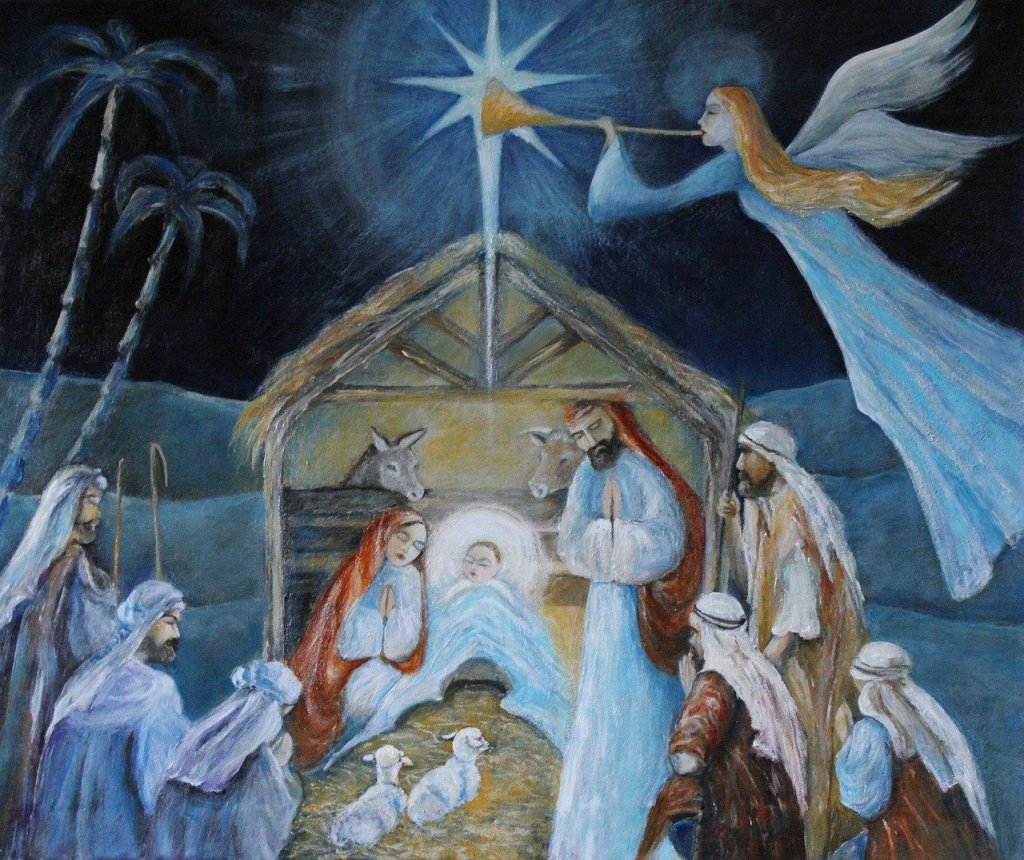
Luke 2:16-21
As a teenager, one of my sons began to have difficulty sleeping. One night I found him tossing and turning in bed and he told me about some of the stress he was feeling. I asked him to set that aside for a moment and focus instead on the best day he could remember. He settled down and after a minute began to smile. When I asked him where he was, he said we were on vacation; it was a warm summer day and he was walking on the shore of his favorite lake with his Godfather and me. I encouraged him to relax and savor every minute. It worked like a charm; he drifted peacefully off to sleep.
Psychologists have long known that recalling happy memories can do a lot more than reduce stress. There is a relationship between memories and happiness. Specifically, people tend to get a deeper sense of happiness from memories of positive experiences they’ve had than of things they’ve bought. That resonates with me; my happiest memories aren’t about things I’ve bought but about experiences and relationships I’ve had, particularly with my family.
The Blessed Mother is no different. The evangelist tells us that as the shepherds spoke of all they had heard and seen, Mary kept all these things, reflecting on them in her heart (Luke 2:19). That prompts us to think of all the memories she herself would have: the visit from the angel; the conception of Christ in her womb; her journeys to Elizabeth and to Bethlehem; her divine Son’s birth in a stable; just to name a few. We call her blessed for a reason! These, her deepest memories of family, demonstrate to her and to the world how close God can be, if we let him.
Although to Mary and Mary alone was given the great privilege of calling these experiences her own, we too are given many opportunities to seek out and experience God in ways not too unlike hers. Here are just three:
First, although we may not be visited by the archangel Gabriel, we do have our own guardian angel who always looks upon the face of God (Matthew 18:10). Throughout Scripture we see that angels move our will toward what is good (Luke 2:10-12), offer our prayers and works to God (Tobit 12:12), and protect us in times of trouble (Daniel 6:22; Psalm 90:10). Make it a habit to ask the intercession of your guardian angel.
Second, keep in mind what St. Augustine said: The Virgin conceived in her heart before her womb. Of course we can never experience the joy Mary did as the mother of Christ; however, by the gift of faith we do conceive him in our own hearts. What’s more, we can bring Christ to birth in the hearts of others, perhaps by teaching but mostly by living as he wants us to; as he did. As Jesus himself said, whoever does the will of my heavenly Father is my brother, and sister, and mother (Matthew 12:50).
Finally, while Mary was honored above all women to be the ark that held our Lord for 9 months, we can be honored to receive him Body, Blood, Soul, and Divinity in holy Communion almost every day of the year. Of course, Mary was uniquely prepared for that by God from the moment of her conception; nevertheless, we have access to the necessary state of grace through the Sacrament of Penance given to us by her Son. For as St. Paul said, Christ’s will for us is to present to himself the church in splendor, without spot or wrinkle or any such thing, that she might be holy and without blemish (Ephesians 5:27). Holy and immaculate, like his Mother. Her destiny is ours.
So, when the stresses and strains of life threaten to overwhelm you, take a moment, relax, and recall how like the Blessed Mother you have been created to be: To praise God through and with his angels; to conceive him in faith and bring him to birth in the world; to receive him in holy Communion; and to return to him holy and immaculate at the end of time. These will be the memories that matter into Eternity; your own near experiences of God. Then rejoice, not only that you have such memories to bring you closer to God but that, at all times and just like our Mother Mary, God is ever close to you.
Holy Mary, Mother of God, pray for us.
 At every apparition Mary is highly honored and rightly so for she is as she said, the Immaculate Conception. But the honor we give her goes far beyond her identity to the two-fold reality behind it. First, Mary points us to Christ. Through the grace bestowed on her by the will of God and her total abandonment to it, Mary has perfectly heeded her own advice:
  Mark 10:45