Tag: Happiness

  • The Shoot and the Fruit

    The Shoot and the Fruit

    The 2ndSunday of Advent, Cycle A

    Isaiah 11:1-10; Matthew 3:1-12

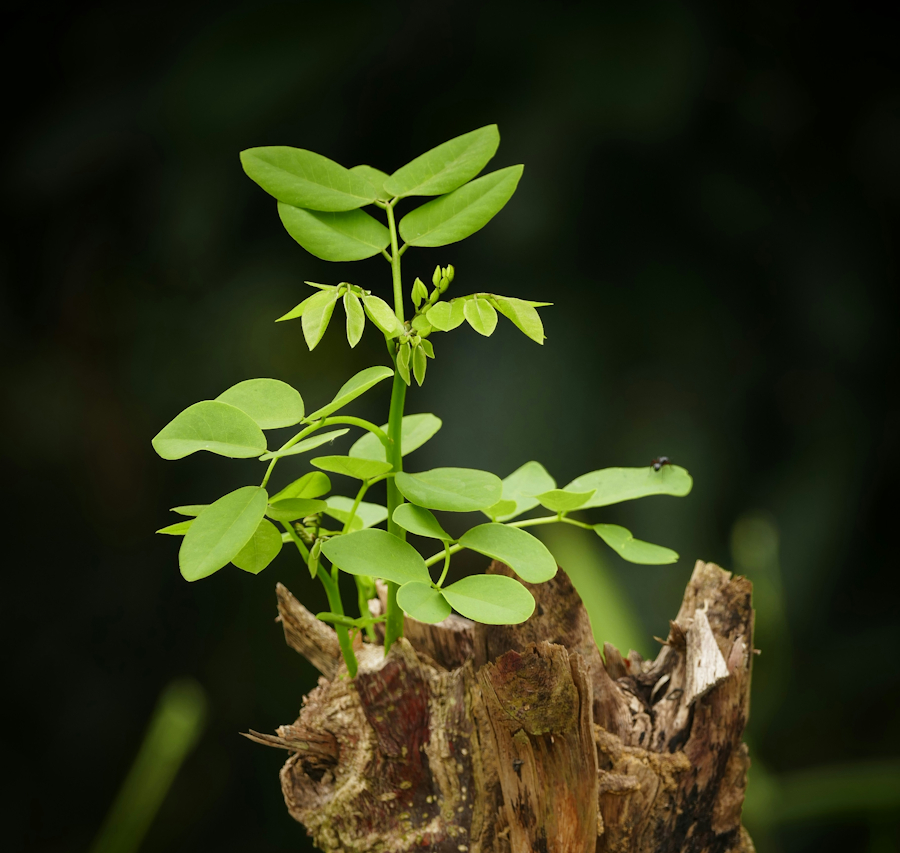
    It may not seem like it, but today Isaiah presents one of the most striking images in all of Scripture: A shoot shall sprout from the stump of Jesse. To us it sounds poetic, and is, but for the prophet’s audience, it was also practical, and its symbolism powerful. Why? Because the Hebrews knew that a shoot growing from the stump of an old olive tree, when properly cared for, grows into a new olive tree. Then and now, the olive tree was a symbol of resurrection: What looked dried up and dead is alive again; a whole new tree, fresh and full of fruit.

    To this, the prophet adds two things: First, he gives the stump a family name – Jesse, King David’s father – in effect prophesying a son from that family endowed with spiritual gifts. Second, this son would usher into the world a kingdom of peace beyond our imagination. On this side of the resurrection, it’s easy to see this son of David as our Lord, Jesus Christ, and creation at the end state God planned from all eternity: healed and restored, with its people living in justice and peace. What a perfect picture.

    But, as we all know from times we’ve pictured ourselves having reached some new personal milestone, there has to be a path to get us there. We don’t just become a new self; real effort is involved. Sometimes, I think I need a drill sergeant to push me where I want to go. Once I find out how hard the path to a better me is, the less I’m motivated to get there on my own.

    Enter John the Baptist, the first century’s spiritual drill sergeant.

    His words – Repent… prepare the way… make straight the paths… produce good fruit as evidence of your repentance – may sound harsh, but they’re true. They remind us that the kingdom Isaiah pictured takes a lot more than good intentions or warm feelings. It takes real effort; a deliberate, disciplined turning back to God.

    As John none-too-gently reminded his audience when he said, the ax lies at the root of the tree, some pain may be involved. We know the discomfort, the humility of Confession. But we also know that God meets us there, and gives us the grace to cut away the behaviors and attitudes that lead us away from Him.

    It may feel as though all that remains of our old life is a stump, but remember the olive tree – from the stump that remains, new shoots can grow. What are those? Imagine the possibilities: A moment of honesty; a bad habit given up; a virtue practiced on purpose; a relationship tended with patience; less screen time replaced by more and deeper prayer; reconciliation with someone we have avoided. And many more.

    The best news of all? Any of these small shoots will become, if tended, a new tree — a new self — rooted in Christ. And from that tree, the good fruit will begin to appear: gentleness rather than impatience, mercy rather than judgment, courage rather than fear.

    So, this Advent – right now – let’s choose just one concrete act of repentance, one “spiritual muscle” to train, or one place where we invite the Lord to straighten the path. God is eager to do it; He, who raised a shoot from Jesse’s stump will raise a new heart in us as well. And, through that heart, we will bear the fruit that shows we are really doing what God wants most – turning back to Him.

  • Faith That Keeps Going

    Faith That Keeps Going

    The 29th Sunday in Ordinary Time (C)

    Exodus 17:8-13; 2 Timothy 3:14-4:2; Luke 18:1-8

    If you’ve been following the Gospels these past few weeks, you might have noticed that Jesus has talked a lot about what it means to live by faith.

    First, he told us that faith means trusting in God, not in our possessions or our comfort. Then, in the story of the rich man and Lazarus, he showed us that faith is lived with a merciful heart, not a selfish one. Next came the mustard seed: even a tiny bit of faith can do great things if we live it with humility. Finally, last week, in the story of the leper who came back to say thank you, Jesus showed us that faith, to be real, must be founded on deep, lasting gratitude.

    Today, Jesus adds one more piece: endurance. Through the parable of the persistent widow, he teaches that faith isn’t just a feeling or a moment of inspiration; rather, it’s “staying power.” It keeps going, even when life is hard, when prayers seem unanswered, or when it feels like God isn’t listening.

    Honestly, endurance might be the most difficult one of all, yet it’s vital. Why? Well, it’s not so hard to trust, forgive, or be grateful once in a while. But to keep doing it year after year, through disappointment, silence, or loss? Without endurance, where would our faith be?

    Today’s other readings make that point. Consider Moses: at first he could hold his arms up in prayer all by himself. But, eventually, he wore out and needed help. That’s us, too. None of us can “hold up” our faith alone forever. We need others beside us; people who pray with us, encourage us, and perhaps above all, pray for us.

    And St. Paul adds something more: endurance in faith comes from feeding on God’s Word. We can survive for a while without opening our Bibles, but not for long. As St. Jerome once said, “When we pray, we speak to God; when we read, God speaks to us.” To endure in faith, we must listen. In every passage of Scripture, Christ is there, speaking to our confusion, fear, and fatigue.

    So this week, let’s take this lesson to heart. Endurance builds our faith in at least two ways, through humility and resilience. First, like sticks in a bundle, faith is stronger when we don’t go it alone but keep at it together, allowing others to help us, and helping others in turn. Second, faith is more resilient as we put aside our temptations to be frustrated and allow the grace of God to fill us with the confidence that He is always faithful, hears us, and will answer – in His time, not ours.

    This is the faith Christ hopes to find when he returns: a faith that binds and holds us together; that keeps praying, keeps hoping, keeps believing that God is still who He has always said He is: The Love that never leaves.

  • The Foundation of Faith

    The Foundation of Faith

    The 28th Sunday in Ordinary Time (C)

    2 Kings 5:14-17; 2 Timothy 2:8-13; Luke 17:11-19

    I don’t think the first thing most of us do when we receive bad news or suffer is stop and thank God for it. More likely, especially when the news or suffering is very bad, our reaction is one of fear, confusion, disbelief, even shock. Personally, I don’t recall ever saying, “I have a serious illness? Oh, thank God!” No, I’ve been much closer to the lepers in today’s gospel… begging for mercy.

    But recently, I learned that Pope Benedict XVI (retired and finally with time to spare) fell and broke his wrist, rendering him unable to finish a project he was working on. Speaking about it, Benedict said that when God lets us stumble, there’s a lesson in it, often involving humility and patience. Where I might’ve been angry, frustrated, or disappointed, the Holy Father sounded… grateful.

    Clearly, it was time for me to rethink my idea of gratitude.

    Today’s Scriptures reinforce that. For example, I can see why Naaman was grateful for being healed, but why cart two loads of dirt home from Israel? Then in the gospel, I can see why the leper returned to thank Jesus, even to falling at his feet, but why did Jesus respond as he did?

    Both examples teach us something vital: The gratitude God is looking for isn’t the passing pleasantry of a favor done for us, or even the deeper thankfulness we feel when He answers a prayer the way we want. Rather, gratitude is a way of life, of seeing God at all times as the source of everything we need, and of being thankful for his kindness and faithfulness no matter what life has in store for us. This is the gratitude that transforms us and is the foundation of our salvation.

    Again, look at the readings. Because the ancients believed that a peoples’ god was tied to their land, Naaman brought the dirt home to show the world that the Hebrew God was his God, too. Healing transformed his faith. As if to underscore that, note what Jesus says to the leper: your faith has saved you (Luke 17:19). Where once there was a leper – a Samaritan at that – through gratitude there was now a man not only healed, but saved.

    Gratitude and faith are intertwined. One opens onto the other. Gratitude is the recognition of grace, and faith is the trust that grace is always there. That is why in our second reading, St. Paul could rejoice in chains, and why the Catechism says that “Every joy and suffering, every event and need can become the matter for thanksgiving” (CCC #2638).

    Every joy. Every suffering. Everything. That should have particular impact on us at Mass, for nowhere do we give greater thanksgiving than in the Eucharist itself, whose very name means “thanksgiving.”

    So, when you come to receive Christ today, whether in the Eucharist or spiritual communion, bring every joy, every suffering, and, like the one leper who returned, give thanks. For gratitude is not merely the doorway to salvation; it is the foundation upon which salvation is built.

  • Here in 10 Minutes

    Here in 10 Minutes

    Genesis 18:1-10a; Colossians 1:24-28; Luke 10:38-42

    Years ago, my wife and I heard the plea of a missionary to sponsor seminarians in his country, so we decided to pay for a young man to do so. One Sunday afternoon long after, that missionary called me. “You know,” he said, “I’m not far away. I’d love to stop by and see you.” “Where are you, Father?” “About 10 minutes away. See you soon!”

    I didn’t panic… until I looked around the house. Even by my standards, it needed help. When my wife heard, the scramble really began. My job was to straighten up myself and the house, while she put together snacks, coffee, and tea. Just as we finished, there he was. It turned into a nice visit, but in no way was I really prepared for it.

    That experience and today’s readings got me thinking: What if my guest hadn’t been the missionary priest, but Jesus Christ himself? “Hi, I’ll be there in 10 minutes!”

    Well, one clue as to what I should do is in the first reading. What did Abraham do? He rushed to show hospitality to his guests. His focus was on them; he was ready to serve them. In turn, that readiness became the opening for God’s promise that he and Sarah would have a son. The lesson? Welcoming our Lord opens the door to a miracle.

    But then there’s an example closer to my experience that afternoon – the gospel. My typical way of looking at it is that Mary was right and Martha wrong. Martha’s focus on the “outside” – getting the house ready for Christ – turned into resentment, while Mary’s focus on the “inside” – sitting at the feet of Jesus – showed that she was ready to receive his word.

    Actually, I think the challenge Jesus gives us is to do both: to do things for him and be with him. We know, because Jesus told us, that as often as we feed the hungry, shelter the homeless, visit the sick, comfort the sorrowful, and forgive injuries, we do them to him. But we also know that many people who don’t believe in God do those things, too.

    No, Christ calls us to more. We see clues to that when St. Paul says, in my flesh I am filling up what is lacking in the afflictions of Christ (Colossians 1:24). What could possibly be lacking in Christ’s suffering? Our participation in it. He has prepared a place for us, as he said in John 14:2, but we must do our part. How? By preparing a place for him in our hearts and showing him to the world by what we do. That can be uncomfortable, even painful, but that’s why St. Paul began, I rejoice in my sufferings for your sake. What causes anyone to rejoice in suffering? Love! What parent wouldn’t gladly suffer in place of their child? Yes, it’s painful, but we would much rather it be us than them. That is the love he is talking about – the love that finds joy even in suffering because it is done for the sake of the beloved. That is the love that proclaims Christ to the world (Colossians 1:28).

    So, that is our challenge, but we have to be ready for it. Very soon – at Holy Communion – Christ will be here. We are both Martha and Mary. Are we ready? Have we made space at the feet of Jesus in our everyday lives? Is our heart ready? Have our prayers, works, joys, and sufferings filled up what is lacking in the suffering of Christ? Are we ready to welcome Him like Abraham, and receive the miracle only He can give?

  • Who’s Writing the Script?

    Who’s Writing the Script?

    Monday of the 4th Week of Easter

    Acts 11:1–18, Psalm 42/43; John 10:1–10.

    If you’ve ever seen the late Robin Williams in an interview or movie, you know how good he was at taking a simple “Yes” or “No” and exploding it into a five-minute burst of voices, stories, and laughter. For him, it was as if there was no script; he followed the spark, and suddenly there was life and possibilities that no one had seen before.

    This is especially true in his role as the Genie in Aladdin. The writers didn’t bother to give Williams a script. Instead, they gave him the framework and allowed him to improvise. The result? Where about an hour of dialog might’ve been expected, he gave them sixteen! Overjoyed and inspired, the writers and animators built the movie around it. What might have seemed like chaos was pure creativity, full of life.

    That’s exactly what today’s readings reveal about God.

    In Acts, Peter has seemingly failed to “stick with the script” by going to Gentiles. But, in his role as shepherd, Peter allows God to write the script, and God is making it clear that the Holy Spirit will come down on Gentiles just like He did the Apostles. Wisely, Peter then speaks the line we all need to hear: “Who was I to hinder God?”

    Behind Peter’s challenge is the voice of Christ in the Gospel, who refers to himself as “the gate.” That is all the framework we need; He is not a wall, checkpoint, or entrance for a select few. He is the way in for all, and all who enter through him receive not just life, but abundant life.

    Thus, the readings remind us that God isn’t bound by our scripts. Rather, he is completely free; He pours mercy where we don’t expect it and calls people we might never choose. Like the wind that blows where it wills (John 3:8), the Holy Spirit moves in ways we don’t always understand, but always with purpose. And, just like with Robin Williams in Aladdin, when God starts moving, our best response is to listen and try our hardest to do His will. No matter how difficult, no matter how unexpected.

    Of course, that’s challenging. Think of the three martyrs we remember today. The first two, Achilleus and Nereus, understood their role as soldiers very well. However, when they encountered Christ, it became clear to them that although Caesar had cast them in one role, God had chosen another. They listened, laid down their swords, and eventually, their lives. The third was just a boy, 14 years old. Called before the Roman authorities, young Pancras was pressured to deny Christ. At an age when most people expect the script to be a happy, full life, Pancras allowed God to give him his lines, even if that meant death, which it did. He was martyred alongside Nereus and Achilleus.

    Together, these and all the saints remind us of two things. First, God calls whom He wills. Age doesn’t matter. Status doesn’t matter. What matters is willingness. Second, they allowed God to re-write the story of their lives, even if it cost everything.

    So, what about us? Today, let’s ask ourselves: Do I try to keep God inside my comfort zone? Do I write the part I want Him to play? Or am I ready to be surprised by mercy, and willing to do whatever He asks?

    Peter’s question is our question. Who are we to hinder God? Let’s let Him speak, even if we think it’s off-script. Because His script is written to bring us exactly what Christ said in the gospel: Life – life to the full.

  • The Stone and Love

    The Stone and Love

    As I’ve said before, one way to try and make sense of the gospels is to put yourself into them, to be at the scene. John’s gospel account today lends itself well to that: Not finding Jesus, Mary wonders what happened; Peter, hearing from her that Jesus isn’t there, runs to the tomb and rushes in to see for himself; John, breathless, peers into the empty tomb and believes.

    Yet, everything that happened after Mary arrived at the tomb depended on the one thing I couldn’t understand: Why was the stone rolled away?

    Being God, Jesus certainly didn’t need it moved. His glorified body will soon be passing through locked doors as if they aren’t there, suddenly appearing or disappearing, and ascending into the heavens. The stone was no obstacle to him.

    Then it occurred to me… it was an obstacle to us. If the stone hadn’t been rolled back, Mary wouldn’t have searched for an answer, Peter wouldn’t have rushed in, and John wouldn’t have believed. The stone wasn’t rolled away for the Lord’s sake; it was rolled away for ours.

    Still, the people in the story didn’t have to respond as they did. Mary needn’t have gone to the tomb at all, let alone wondered where the body of Jesus had been taken. Peter and John could’ve stayed where they were and kept doing whatever they were doing.

    But they didn’t. Why? Love.

    Mary Magdalene loved Jesus because he had healed her and turned her life around. Love doesn’t settle; it keeps searching, even when hope seems lost. For his part, Peter might never live down denying Jesus three times, but he had also confessed him as Messiah, the only one to Whom they could go. His is a love that may be imperfect and impetuous, but it moves; it doesn’t hesitate in the face of mystery. And John, so often called the Disciple Whom Jesus Loved, shows us by seeing and believing, that the eyes of love recognize truth, even when they don’t fully understand it.

    Thus, while Mary, Peter, and John each responded differently, love is the common denominator. The empty tomb evokes not just curiosity; it evokes love’s response.

    As for us, this is the time to measure our own love for Christ, and our own willingness to respond. The Resurrection isn’t a mere historical event; it’s a personal invitation. The stone is still rolled back today – not because Jesus needs help getting out, but because we need help getting in: into faith, into hope, into the new life he offers.

    Love searches. Love rushes in. Love believes.

  • The Pharisee, the Tax Collector, and Me

    The Pharisee, the Tax Collector, and Me

    Saturday of the 3rd Week in Lent

    Hosea 6:1-6; Luke 18:9-14

    As a young man, I went through a period in my spiritual life I can only describe as “restless.” Dissatisfied with Mass at my local parish, I began trying others. One parish had a Mass with really good music, another with homilies I liked, a third with a priest I found very prayerful. While that was all fine at first, over time I saw that these parishes had problems, too. Frustrated, I thought I’d better rethink the whole thing, so I asked myself why I went to Mass at all. “To receive Christ,” I said. “Well,” I replied, “if that’s true, then why are you focusing on the music, the homily, the priest, or the problems, when you should be focused on Christ?”

    I was reminded of my “parish shopping” experience as I read today’s Scriptures. My attitude was far too much like the Pharisee in our Lord’s parable. For him, the issues were about how much he fasted, rather than why he fasted to begin with; about what he gave from his purse rather than what came from his heart. For me, the issues were also the externals: music, homilies, the attitude of the presider. Beneath it all, we both missed what is most essential – the humility with which we approach Almighty God, and the gratitude we show for the infinite mercy He offers us.

    This attitude of humility can only come from the heart, which is what God tells us through the prophet Hosea He wants most. The outward religious practices have tremendous meaning and we are right to pay attention to them, but when they become an end in themselves, we rob them of their piety. Like the Israelites of Hosea’s time, we end up going through the motions of worship, while our behavior betrays hearts that are far from God. True worship isn’t about the external things as ends in themselves, but about allowing them to come from the heart; to reflect the joy of encountering and surrendering to our Lord, Jesus Christ.

    So, as we prepare to approach Jesus in the Blessed Sacrament, let us take a moment and allow the readings to challenge us. How are we, like the Pharisee, letting distractions come between us and a genuine encounter with Christ? Do we share in any way the Pharisee’s sense of pride and self-sufficiency? And let us pray for the grace to be more and more like the tax collector, who by recognizing his own need for mercy, allowed humility to take him where true worship is designed to bring all of us – ever closer to Almighty God.

  • Better to be Better

    Saturday of the 1st Week in Lent

    Deuteronomy 26:16-19; Matthew 5:43-48

    A man once told me about something that happened to him at church. I know it may sound strange to some of you, but in his parish the people tend to sit in the same pew week after week. In his case, an older couple always sat in the pew right behind him and his family. He didn’t know their names, but they greeted each other at the sign of peace, and said goodbye when Mass was over. This went on for years; decades, even.

    One Sunday after Mass, the elderly woman lingered in her pew, weeping. When he asked if there was anything he could do, she said, “No. It’s just very near the anniversary of my husband’s death.” That struck the man deeply; he hadn’t even realized she’d been coming to Mass alone. After consoling her for awhile, he left, and resolved to never let that happen again. He kept his word; from then on, he and his family made it a point to talk with her, and became friends with her and other people near them at Mass.

    This is a great example of a principle our Lord alludes to in today’s gospel: the choice in life isn’t always between doing good and doing evil; sometimes, it’s between doing good and doing better. Loving those who love us is good; so is greeting our friends and family. But it’s better to love without regard to whether we’re loved in return, and to greet those who do not greet us.

    We talk a lot in the Church, especially during Lent, about living virtuously, and we do it in many ways: coming to church, volunteering in outreach to the poor, teaching children, beautifying the parish, etc. While these are all good and we must do them, Christ challenges us to think about what else we can do to better ourselves.

    In the spirit of the story I began with, one area might be recognizing the needs of those all around us. That isn’t always easy. We get stuck in such ruts – even with good things like going to Mass – that it can take a crisis, such as seeing someone in pain – to get us to see what’s better: looking beyond ourselves, even to the next pew.

    Of course, recognizing the need is good, but responding to it is better. It was good that the man consoled the widow behind him, and resolved to change his behavior. But the better thing was actually doing it, which he and his family did. For us, too, response can be the harder part; people may well need our help in ways we do not expect and that might cost us something. But that’s exactly the point; today and every day, Jesus challenges us to go beyond the good and seek the better. In so doing, we accomplish what he wants the most: The transformation not only of our parish and our community, but ourselves – one Christlike act of compassion at a time.

  • The Love Behind It

    The Love Behind It

    Saturday of the 7th Week in Ordinary Time

    Sirach 17:1-15; Mark 10:13-16

    As parents, we try our best to give our children everything they need in life to prosper; a good, stable home, a solid education, including faith – the best upbringing we can provide. We don’t expect thanks, but it’s in the nature of children to give anyway. Even the very young make special, little gifts for their parents, who are very happy with them – their real happiness, of course, being that they see the kids are learning the value of giving. Parent or child, it’s not the gift that matters, but the love behind it.

    Our relationship with God is much the same. As Sirach reminds us, God has given us so much! First, He made us in His image and likeness; the only creatures of Earth to receive that wonderful gift. Second, He’s given us the Earth and dominion over it. On top of that, He gives us the gifts of the Holy Spirit. They appear throughout the passage: We are endowed with a strength of His own (fortitude), with counsel, the discipline of understanding, fills our hearts with wisdom, puts the fear of Himself in our hearts, sets before us knowledge, and does all that so we might glory in the wonder of his deeds and praise His holy name (piety). As if all this isn’t enough, He’s given us His only Son, our Lord, Jesus Christ, who in the Gospel shows once again how God is never outdone in generosity: When parents bring their children for a blessing, Jesus goes further – he takes them in his arms and embraces them. But again, as parents with children, God doesn’t do this because He has to. He’s teaching us that what matters isn’t the gift, but the love behind it.

    So, what are we as God’s children to give Him in return? Jesus made that clear when he said that if we love God, we will obey Him (John 14:23). He gives us two ways in today’s readings to do that. First, as He says in Sirach, “Avoid all evil.” This is the natural law, the law written in our hearts: Seek the good (God) and avoid anything that takes us away from Him. The second we heard in the gospel. When the disciples rebuked people bringing children to Jesus, he said, Let the children come to me; do not prevent them, for the kingdom of God belongs to such as these (Mark 10:14). In other words, we are to bring people to Christ and be Christ to others, treating them as we would treat him – even, and perhaps especially, those who (like children) cannot repay us. We do this expecting nothing in return, because once again, what matters isn’t the gift, but the love behind it.

    Today, we are reminded of the great blessing of living and loving with the innocence of children. For we love most like children of God when we give freely from our hearts without reservation. And we live most like children of God when we do good, forgive readily, and uphold the dignity of all people, remembering that they, like us, are made in His image and likeness. Above all, let us do everything with the tenderness of Christ, who invites us to give our hearts completely to him with the trust of little children, expecting nothing in return, but offering everything out of love. For that is what he, the only Son of God, did to his last breath – gave himself that we may live. Finally, like children, let us receive and rejoice in the Holy Eucharist, not only because it is the greatest gift of all, but because through it we are brought ever more deeply into the infinite Love behind it.

  • Embracing God’s Promise: The Feast of Our Lady of Lourdes

    Embracing God’s Promise: The Feast of Our Lady of Lourdes

    Genesis 1:20—2:4a

    As you heard, the reading from Genesis ended with the seventh day. Did you notice that, unlike the first six days, the author didn’t say, “Evening came and morning followed – the seventh day”? That’s his way of telling us that this day is different; it symbolizes a relationship with God that was never meant to end, when Heaven is united to Earth in perfect unity and peace. As we all know, it didn’t take long for sin to disrupt that union. Still, as God shows throughout the rest of the Bible, He is always willing to offer us healing and restore that peace.

    One way God continues to do that is through the Blessed Mother. We remember particularly today her appearances in France in1858, near the small town of Lourdes. Many who have visited there have experienced God’s healing power through her intercession. Not only that, Mary’s message of trust, compassion, and renewal is a wonderful reminder that God’s mercy is always available, that He’s always calling us into a more and more sacred union with Him – like that of the seventh day.

    Who doesn’t long for that kind of peace? What joy, what happiness! It may seem like a dream, especially to many of us, who find life burdensome and full of struggles. While it’s easy to get discouraged, remember something Mary said to Bernadette at Lourdes: “I cannot promise you happiness in this life; only in the next.” I think from that we can take at least two things:

    First, while we cannot run away from the problems and struggles in this life, we do have this life. Every day, every breath, is a gift of God to us. Why not set aside a few extra moments to thank Him for life, for the privilege of waking up, being able to be here, and most of all for the gift of His Only Son, our Lord, Jesus Christ? And, as we receive Christ, thank him for keeping the promise he made to the Eleven: I am with you always, until the end of the age (Matthew 28:20). He is always with us, always at work in our lives. Those few quiet, thankful moments never go unrewarded, and mean the most when coming from the hearts of those who suffer; God always finds ways to restore in us a measure of peace, like the healing water of Lourdes.

    Second, Our Lady reminded Bernadette about happiness in the life to come. Healing and rest are not only possible, they’re God’s promise to us! So, even when peace eludes us and life feels out of control, try to do what Mary did: Trust in God’s perfect plan and remember that He is in control. Our strength and comfort come from not from anything we can do, but from knowing that our eternal rest is secure in His love and that, if we unite our will to His and Our Lady has done, then, like her, we will one day be with God and know the unity and peace that only He can give.

    May the intercession of Our Lady of Lourdes guide us toward daily moments of rest and healing, helping us rediscover that perfect union of the seventh day – a union where every day holds the bright promise of God’s eternal, loving rest.