3rd Sunday of Lent
John 4:5-42
During Lent, the Church quietly leads us through the great needs of the human heart. In the first three Sundays, we encounter three of them: Faith, hope, and love.
On the first Sunday of Lent, we saw how faith is tested in hunger and isolation. Physically, Jesus was alone and weakened by a long fast; spiritually, though, he was as strong as ever and never alone. Why not? Because his union with the Father remained intact. The same is true for us; faith strengthens and sustains us. Without it, we are weak and alone.
Then on the second Sunday of Lent, we saw how hope is strengthened despite the trials we face. At the Transfiguration, the disciples were given a glimpse of who Jesus really is. This was the sign that says, “Suffering is not the end. Glory is real.” Hope in Christ prevents discouragement; without it, suffering becomes meaningless.
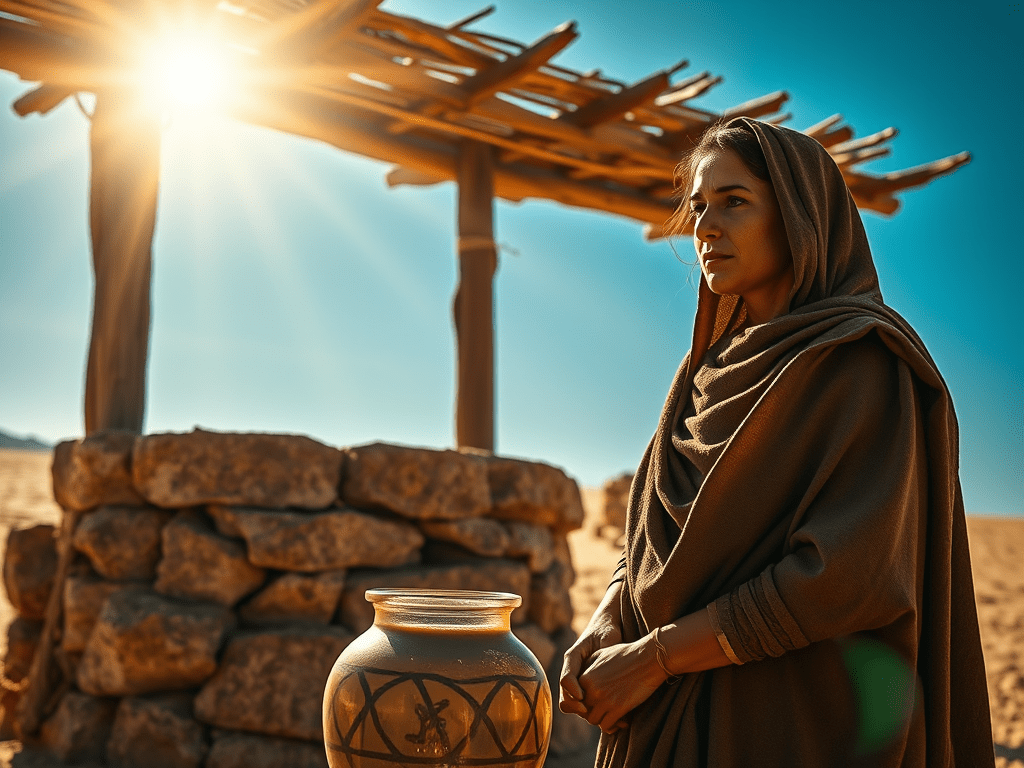
Now, on this third Sunday of Lent, we come to the well, as does the Samaritan woman. No hunger, no glory, just thirst. But not for water. No, something much deeper. In her case, I think it’s for dignity and belonging. She comes to the well alone during the heat of the day, when it’s deserted. Why? It’s hard to believe it’s by her choice. Perhaps she has been shunned by the townspeople on account of her several marriages. If so, that would be worst of all. As someone once observed, the worst loneliness isn’t being alone; it’s being with people who make you feel alone.
Although it’s hard to be fully in touch with her circumstances, I think we can all understand isolation and loneliness. A recent survey has found that, despite all the connections we make on our cellphones and computers, loneliness in our society is widespread, especially among young people.
How can this be? There may be many reasons, but one thing is clear: when God is removed from the center of life, something essential is lost. As the Church reminds us these first three weeks of Lent, without faith in God, we mistrust; without hope in Him, we despair; and without the love of God, we remain alone, no matter how many people are around us. As a culture, we thirst like the Samaritan woman does: for communion, for belonging, and above all for grace – the only thing that can make us whole – for grace is participation in the life of God.
Our Lord’s response is instructive for us. Aware of her circumstances, what does he do? Well, first look at what he doesn’t do: He doesn’t give her rules or command her to repent. No; he gives her himself. And that encounter restores what is lacking in her life – dignity, truth, and belonging.
That is charity. That is the love of God.
And look at the effect! In these brief few minutes under that hot Mediterranean sun, a woman who arrived at the well alone leaves her water jar behind and runs back to the town. A moment ago, it was as if she was hidden; now, she is not only making herself seen, but also heard – by bringing people to Christ.
That kind of transformation is waiting for each of us, and shows us the importance of Baptism. The virtues of faith, hope, and love infused in us by God at our baptism aren’t simply things that are “nice to have.” Without them, we live surrounded by people, yet untouched at the center. With them, communion with God and each other is not only possible, but is ours for the asking.
But that means we have to ask. How? Well, as with the Samaritan woman, Jesus waits at the well. Where’s that? Right here, in the tabernacle. As St. Josemaria Escriva once said, “When you approach the tabernacle, remember that Jesus has been waiting for you for centuries.”
Knowing that, I invite you this week – today if you like – to come and make one deliberate visit to the Lord. Sit right here in the church. Stay five extra minutes after Mass today or during the week. Or, visit him in the Adoration Chapel. Whichever you do, tell him honestly where you thirst. If you don’t know, tell him that, too. Ask him to show you those places in your life, and help you with them.
Then listen. He will speak.







 Mark 10:45