Tag: God

  • God in a Box

    God in a Box

    Wednesday of the 9th Week in Ordinary Time

    2 Timothy 1:1-3, 6-12; Mark 12:18-27

    Some years ago, a burglar tried to break into a school by climbing through a window. To avoid leaving fingerprints, he used a special adhesive on his gloves. What he didn’t realize until too late was that the glue was also effective on window frames. Police found him literally stuck to the scene of the crime.

    As we just heard, the Sadducees were also stuck in a trap of their own making. Surely, their hypothetical example was foolproof, right? A woman married to seven brothers – they could see no way for Jesus to explain his way out of that one.

    It must have looked to them like a great trap, and would have been if the assumption behind it was true. What assumption? That the afterlife is exactly like this life; people are married now, so they are married in eternity.

    But, as our Lord implies when he opens their eyes to the meaning behind “the God of the living,” their vision of God is too small. Assuming they understand God’s revelation prevents them from seeing what God actually reveals and how things really are.

    In other words, they put God in a box.

    The real question is, do we ever do the same? In other words, do I ever catch myself saying things like: “I’ve always been impatient. I’ll never change,” or “That person will never come back to the Church,” or “I’ve committed this sin for years. Nothing will ever be different.”

    Putting God in a box is convincing ourselves that tomorrow must look exactly like yesterday. That people never change. That we never change. That grace can only do so much. The problem is, it becomes self-fulfilling prophecy; nothing changes because I’ve accepted my own premise and adjusted my expectations and my behavior accordingly.

    This drastically shortchanges God and leads us to think too little of what He can do in us.

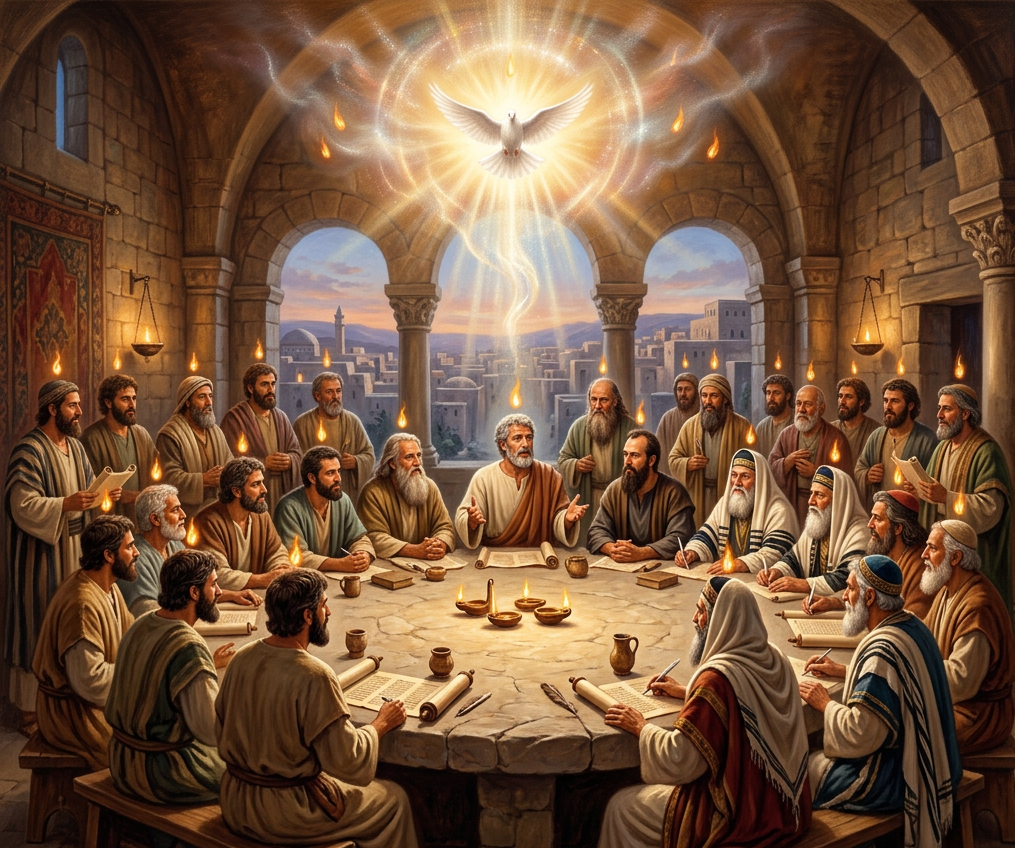
    Fortunately, St. Paul points Timothy – and us – in another direction. “Stir into flame the gift of God.” In other words, let’s be open to the power and action of grace of such gifts as those given to us by the Holy Spirit. The gospel suggests several gifts we desperately need, but I’d like to focus our attention on one in particular – the gift of understanding.

    What a tremendous gift. Through it, the Holy Spirit helps us see more deeply into the truths of our faith. We begin to connect the dots. Things we may have heard for years suddenly begin to make sense in ways we never thought of before.

    Opening ourselves up to the power and use of these gifts leads us to a life transformed by the power of God. The Sadducees couldn’t imagine resurrection because they underestimated God. We do the same whenever we look at our weaknesses, our sins, our disappointments, and conclude that nothing can change. The readings tell us otherwise. The God who raises the dead can certainly transform a human heart.

    Let’s let Him out of the box.

  • Remaining Connected

    Remaining Connected

    Acts 15:1-6; Psalm 122:1-2, 3-4ab, 4cd-5; John 15:1-8

    As Acts of the Apostles 15 begins, the Church finds herself in serious disagreement. This is no small matter; it’s about salvation itself. Should Gentiles adopt Jewish customs and practices, or not?

    So what do they do?

    First, notice what they don’t do: They don’t split into new churches. They don’t ignore the problem and hope it will go away.

    Instead, they do what the Psalm describes: they “go to the house of the Lord.” That is, they come together. They go to Jerusalem. They talk. They argue. They discern.

    And that’s exactly what Jesus told them to do, though perhaps not in the way we expect.

    Before he ascended to the Father, Jesus knew his Church would encounter things he had not addressed explicitly. So, how did he deal with that – by leaving them a rule book, or saying, “When problems arise, just remember what I said and you’ll be fine”?

    No. As John reminds us, Jesus said, “Remain in me, as I remain in you… If you remain in me and my words remain in you, ask for whatever you want and it will be done for you.”

    “Remain in me…” doesn’t mean just remembering the past. It’s staying connected to the living God — the Vine, without whom we can do nothing.

    And he adds, ‘if my words remain in you.’ Not just remembering them, but letting them take root in us… shape us… change what we desire. So that, when we ask, we are no longer asking only for what we want… but for what God knows we need.


    Ultimately, we find, as in Acts today, we may not always have the answer right away… but by staying united, staying attentive, and open to the Spirit, the right answers will come.

    Before the Church could say, “It has seemed good to the Holy Spirit and to us”… they first had to remain.

    Remain together. Remain in Christ. Remain open.

    The Church bears fruit not because she always has quick answers… but because she remains in Christ long enough to receive the right ones.

    This is true in our own lives too, of course. When we or someone we know is suffering, in conflict, or going through a difficult time, it’s tempting to want quick answers. This is only natural. Still, as Christ reminded us in the gospel, without him, we can do nothing. In him, we can do all things – even endure what we may have thought was unendurable. And, we may well find that the endurance of that suffering leads to great fruit indeed – a deeper, more lasting union with Christ than we ever thought possible.

  • The Point of the Law

    The Point of the Law

    Wednesday of the 3rd Week of Lent

    Deuteronomy 4:1, 5-9; John 6:63c, 68c; Matthew 5:17-19

    On a break during Canon Law class, the professor told me about a case he studied years before.

    On one side was a priest whose behavior showed a blatant disregard of Canon Law. He acted as if it simply didn’t apply to him. On the other side, the prosecuting priest was just as extreme in the opposite direction. He clung so tightly to the letter of the law that he almost made it an end in itself.

    The professor said that every clergyman must remember above all the last canon in the Church’s law. Its final line says this: ‘The salvation of souls must always be the supreme law of the Church.’ “So remember,” Father said, “when you deal with people, the law isn’t there to control them or to be ignored. The law exists to save souls.”

    That’s exactly what Christ teaches in today’s Gospel. When he says he has not come to abolish the law but to fulfill it, our minds might jump to the Pharisees or others, who treated the law as an end in itself. But I believe he was also thinking of people who lived as if God’s commandments were optional.

    Maybe, before my mind jumps to anyone else, I should take a look at myself. Are there times in my life – like when I do something wrong – that I look the other way, make excuses, or go easy on myself? And are there other times when I’m hard or unforgiving – say perhaps when someone offends me or someone I love? The truth is, I don’t have to look very far to find that I myself live on both sides of the continuum; I am both priests Father talked with me about.

    All the more reason for me to remember Father’s lesson – the law exists to save souls, to give life. The Gospel Acclamation said it so well – His words are Spirit and life (John 6:63, 68); medicine for the soul and meant to bring us all to everlasting life.

    So when Jesus says he has not come to abolish the law but fulfill it, he’s reminding us of something simple but very profound: God did not give us his commandments to control us or offer suggestions. He gave them to save us.

    With that in mind, here’s a way we can live out the gospel this week: Choose one commandment and bring it to life in a small, concrete way. For example, if it’s the Fifth Commandment, speak gently in a situation in which you might otherwise speak in anger. If it’s the Seventh Commandment, be honest yet gentle, even if that’s inconvenient. In all things, let the law guide you to life, not weigh you down.

    When we do such things, our actions show the world that the most important thing is that the law points the way to Jesus, who himself is the Way.

    And the Truth.

    And the Life.


  • Being a “Keeper”

    Being a “Keeper”

    Monday of the 3rd Week of Lent

    2 Kings 5:1-15ab

    When I was a boy, our family car stopped running while Dad and I were visiting one of his friends. A big, powerful engine… completely frozen. Dad and his friend tore the engine apart and discovered the problem: a tiny metal piece called a “keeper” that held a piston in place. Just a little part, no bigger than your fingertip. But without it, the whole engine was useless.

    Again and again in Scripture, God works through small voices:

    • A shepherd boy defeats a giant.
    • A widow’s two coins outweigh a fortune.
    • A child’s lunch feeds a crowd.
    • And today, a little slave girl starts the miracle that heals Naaman.

    I think the lesson is clear. We should never dismiss someone because they seem insignificant. God chooses whomever He wills, not whoever makes sense to us.

    The slave girl is a perfect case in point. On the one hand, she had no power, no position, no influence. On the other, she did have the courage to speak the truth she knew: “If only my master would go to the prophet in Israel…”

    Because she spoke, a man was healed. And that healing began with something very small: one person willing to speak, and another willing to listen, even to someone he could have easily ignored.

    This raises two questions for us:

    First: Who are the little voices in my life? Who might God be speaking through that I tend to overlook? A child… a spouse… a friend… a stranger… even someone who irritates me.

    Second: To whom might I be the little voice? Maybe God wants to use one small word from me – a word of encouragement, an invitation, a reminder about prayer, a quiet act of kindness — to start something good in someone else’s life.

    Sometimes the engine of grace in someone’s life is waiting for one tiny “keeper”— one small voice willing to speak. Let us ask Almighty God for the grace to hear that voice ourselves, and to be that voice for others.


  • What Heaven Notices

    What Heaven Notices

    Wednesday of the 2nd Week of Lent

    Matthew 20:17–28

    Someone once told the famous evangelist Billy Graham that God would surely reward him for his greatness as a preacher. Graham replied that he once dreamed about that.

    In his dream, he died and went to heaven. As he entered, Peter ushered him toward the heavenly throne. Once there, the Lord said, “Everyone, the great preacher, Billy Graham, is now here with us.”

    After a long, mystified silence, an angel asked, “Who, Lord?” Smiling, God said, “Oh, I’m sorry. You know him as Ruth Graham’s husband.”

    And when they heard that, all of Heaven cheered.

    While it’s a charming story, it makes a serious point. When we think of greatness, what do we think of? Being above others? Higher up? Recognized? Applauded?

    That seems to be what James and John had in mind in today’s Gospel. They wanted the seats of honor, one at our Lord’s right, one at His left, when He comes into His kingdom. But notice the timing; they ask this just after Jesus told them for a third time He’s going to Jerusalem to suffer and die. His emphasis is the cross; theirs is thrones.

    But notice, too, that Jesus doesn’t scold their desire for greatness. Instead, he redefines it: “… the rulers of the Gentiles lord it over them… it shall not be so among you.” In other words, greatness in the Kingdom of Heaven isn’t found in being above others, but in reaching toward them. Not in climbing higher, but in bending lower. Not in being served, but in serving.

    Then we hear the decisive words: “The Son of Man did not come to be served but to serve, and to give His life as a ransom for many.” Jesus hasn’t just redefined greatness, he has embodied it.

    This is what Jesus asked of James and John, all of his Apostles, and everyone who calls themselves Christian.

    Billy Graham understood that. He didn’t want to be remembered for eloquence or influence. He wanted to be remembered for love. Because in the end, titles fade. Recognition fades. Even the memory of accomplishments fades. Only love remains.

    Of course, the desire for greatness isn’t wrong. God placed it in us. As Holy Father Benedict XVI said, we weren’t made for comfort, we were made for greatness. But Lent teaches us that greatness is found in the narrow road of self-gift and service. We are asked to fast, pray, and give alms, not to be impressive but to be free – free to serve as Christ served.

    Actually, as he still serves. For Christ serves us today, as he has every day for centuries, in the holy Eucharist. The One who is truly seated at the right hand of God the Father comes to us again; not to be admired from a distance, but to serve us with His very Body and Blood.

    Then he sends us out to do the same.

    So today the question isn’t: “How can I be recognized,” but “whom can I serve in a way that no one will notice?”

    That is greatness in the Kingdom. And that’s what Heaven notices.


  • Take the Underdog

    Take the Underdog

    Memorial of St. Agnes, Virgin and Martyr

    1 Samuel 17:32-33, 37, 40-51

    I’m not a gambler, and in my case, I shouldn’t be. Why? Because I love to root for the underdog. I can’t help it. That little one out there with virtually no chance—I’ll take them every time.

    That puts me in good stead not only for David against Goliath but also St. Agnes against the power of Rome. I mean, what chance does either one really have? Here is David – young, untrained, no armor, no sword – up against a mighty, giant Philistine warrior. And there is Agnes – young, no power, no status, no protection – up against a brutal Roman world. By any human measure, neither one stands a chance.

    But we’re not dealing with human measures, and we’re not dealing with chance; we’re dealing with God, who empowers those who place their trust in Him. Yes, David is brave, and that goes a long way, but true strength is a lot more than that; it’s knowing whose battle this really is. As David says, “The battle is the LORD’s.” And yes, Agnes is also brave, but her true strength is knowing that she belongs to Christ, that He is her only refuge.

    Both could have chosen a kind of protection the world offered, but neither one did. David refused Saul’s armor because it wasn’t his strength. Agnes refused the false armor of social status, safety, or compromise, because those would cost her fidelity to Christ. For David, Agnes, and all who trust in Him, God is their champion, their hope, and their protection.

    Trust in God remains a challenge to this day. We may not face the warriors or empires these two did, but our battles are no less deadly. We try to pass on the faith to our children and grandchildren in a culture that finds Christianity irrelevant; we face illnesses, or the loneliness or fatigue of age; we are tempted to believe that anything we do for God is too small to matter.

    Let the examples of David and Agnes remind us today of three things:

    1. God never waits for us to be strong or confident enough. He reveals His strength precisely where we are weak.

    2. The holiness He has called us to is not about having power. It’s about refusing to give our heart to anything or anyone other than God.

    3. God doesn’t ask us to be fearless in our struggles. What He asks is that we push beyond our fear to faith, for that alone is the assurance that, no matter what the world thinks of our chances, with Him and in Him, we are never defeated.
  • I Cannot See What I’m Looking At

    I Cannot See What I’m Looking At

    The 2nd Sunday in Ordinary Time, B

    Isaiah 49:3, 5-6; Psalm 40:2, 4, 7-8, 8-9, 10; 1 Corinthians 1:1-3; John 1:29-34

    As we look across the Bible, certain themes tend to keep showing up. One example shows itself today; it’s something I call, “I cannot see what I am looking at.” What is that? Well, in story after story, book after book, we find that a person’s significance or calling is completely unrecognized until someone discerns and names it. Think of King David. No one – not his family, his friends, not even the great Samuel himself – realized that this unassuming little shepherd had been chosen by God to lead Israel.

    There are many others – Gideon, Samuel himself, Queen Esther, Moses – showing this same pattern. God’s work is right there, people are looking right at it, but nobody sees it until someone points it out. And that someone is usually God Himself.

    What got me thinking about that was the mysterious line in the gospel spoken by John the Baptist: “I did not know him.” He says it twice! But weren’t they cousins? Did the two kids never hang out? Didn’t John leap in his mother’s womb when Jesus’s pregnant mother walked in? What’s going on?

    It’s that theme. John couldn’t see what he was looking at. Yes, he saw Jesus, perhaps many times, but not until the Spirit revealed it to him did he come to recognize who Jesus was. That’s why, after the Spirit descends, John says, “Now I have seen and testified…” In other words, “Now God has shown me.”

    It isn’t that we’re spiritually blind or refusing to see. Rather, as St. Paul said, we see, but through a glass, darkly. Samuel saw David, God saw a king. Gideon looked at himself and saw a weak man, God saw a warrior. Esther saw a crown, God saw a champion. In every case, human eyes were open, but understanding was closed. Recognition of God’s work requires revelation, not mere human insight.

    The lesson for us is simple, and very fitting for these weeks we call “Ordinary Time.” We hear the word ‘ordinary’ and think ‘plain, unremarkable.’ But ‘ordinary’ in Church time means ‘counted’ – the first week of Ordinary Time, the second, etc. In fact, Ordinary Time is far from plain or unremarkable; it’s the challenge of learning to see, with God’s help, what is already right in front of us.

    What’s the challenge? Familiarity. We actually see too well. We hear the start of a familiar reading or Eucharistic prayer and are tempted to think, “Oh, I know this one,” and tune out. Or we get so used to looking at one another that we don’t see the treasure each of us really is. Perhaps worst or all, we’re so used to seeing ourselves that we look in the mirror and think, “What’s the big deal? There’s nothing extraordinary about me.”

    That certainly isn’t what God thinks. Each time Scripture is read is a new time; we are different than last time, the situation is different, God is speaking to us right now, where we are. Each Eucharistic prayer brings us spiritually to the eternal moment of the crucifixion of Christ; he is dying that we might have life. Each person, ourselves and those around us are, in his eyes, infinitely precious; well worth dying for. And he loves each of us so much that he wouldn’t make the world without us.

    So, we fall victim to the same trap that many do in the Bible: we cannot see what we’re looking at. And we won’t see it unless the Spirit reveals it and we are attuned to it.

    Attuning to it means starting with some hard questions. What am I looking at every day but not recognizing? Where is God present around me but unnamed? Whose dignity or vocation am I overlooking — including my own?

    Just as John needed the Spirit to recognize Jesus, we need the Spirit to recognize grace in even the most “ordinary” places. But we also need humility. As John said, “I did not know him,” so we might say, “Lord, I don’t always know you. Please, help me see.” That says the plain truth: Faith isn’t about figuring God out or discovering something new, but realizing how God is already here. What’s missing isn’t information, but recognition.

    Perhaps the Baptist helps us out here, too. In a little while, we’ll hear words so familiar that they almost pass right through us: “Behold the Lamb of God.” John said that because he recognized (at last!) who was standing in front of him. Every time we hear them at Mass, the Church helps us do what John did — name what we would otherwise miss. What Father is holding is no longer bread, and this is no mere ritual. This is the Lamb who takes away the sins of the world. He is here, right in our midst.

    Finally, we are meant to take that revelation with us as we go, and make it make a difference in the world. Where is Christ? He’s in the people next to us, the people at the store, on the street, at school, at work, or wherever we are. We look at them, but do we see them? And as for ourselves, when you look in the mirror, see Christ, who desires to work in you and through you.

    John said, “I did not know him.” Let us say, “Lord, I don’t always recognize you, especially when you come quietly, in those deceptive, ordinary ways. Please send me the Holy Spirit again. Help me see what I’m looking at.”

  • Open the Door

    Open the Door

    Isaiah 7:10-14; Psalm 24:7c, 10b; Matthew 1:18-24

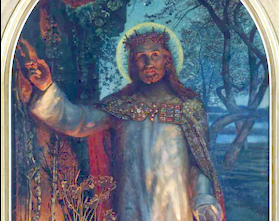
    You’ve probably seen the famous painting of Jesus standing on a porch, holding a lantern, and knocking on the door. The painting is called “The Light of the World,” and its artist, William Holman Hunt, embedded a few symbols into it, two of which are very appropriate for Advent.

    First is the door itself; it has no handle on the outside. Second is the bottom of the door; weeds are growing everywhere. What did Hunt intend with these symbols?

    The answer lies in the Psalm response chosen by the Church today: Let the Lord enter; he is the king of glory. The door opening only from the inside means that we have to let Jesus enter. He will not force his way in. The weeds symbolize a life where prayer has been crowded out. Again, if we don’t take the time to speak to Jesus, to ask him in, he will not enter.

    So, is there anything keeping me from opening the door and letting God more fully into my life? There are probably many things, but I can think of two.

    First, fear. Despite his outward appearance of piety (“I will not tempt God!”), King Ahaz was afraid. What did this arrogant young man have to fear? Loss of control. He couldn’t allow anyone, even God, to take control from him. But notice in the gospel how Joseph is just the opposite: He allowed God full control, to the point of listening to Him in dreams.

    Second, distraction. That was another problem with Ahaz. He was too occupied with himself and his kingdom to make time for God. Again, Joseph was the opposite; even in his dreams, he discerned and listened to God’s voice. In return, God made him the guardian of Jesus and his Most Blessed Mother.

    That brings us to ourselves. We might ask who we’re more like – Ahaz or Joseph – but perhaps we’re a little of both. Our “inner Ahaz” may fear giving God control. He might ask a lot of us, or lead us where we don’t want to go. Or we too may be distracted, our hearts so cluttered with other things that we aren’t really listening for God or speaking much with Him.

    Let us use these last days of Advent, when things can get so busy, to remind ourselves that God doesn’t need to take control. As Emmanuel, “God With Us,” He is already in control. Fear is useless; what is needed is faith. We need only be still, ask Him for the faith we need, then “open the door”: Pray, listen, and trust that He who is already near may truly be “with us” – in our homes and hearts, now and for all the days to come.

  • Front and Center

    Front and Center

    Feast of the Dedication of the Lateran Basilica in Rome

    Ezekiel 47:1-2, 8-9, 12; 1 Corinthians 3:9c-11, 16-17; John 2:13-22

    Today, we celebrate the Feast of the Dedication of the Lateran Basilica. My guess is that several of you have been to Rome and seen it firsthand. If so, you know how strikingly beautiful it is, how ancient, how rich in history. The first Catholic basilica and the cathedral of the Holy Father, we call it St. John Lateran, but its dedication 1700 years ago was neither to St. John the Baptist nor St. John the Evangelist; those came centuries later. The first dedication was to Christ the Savior, whose image stands front and center at the top of the basilica.

    That statue is much more than a mere adornment; it is a symbol that Christ is to be front and center of our worship. We see in the gospel that some in the Temple allowed themselves to focus on earthly concerns rather than the spiritual. Jesus knew that with that mindset, both the beauty of the Temple and, most importantly, what it pointed to – the presence of God – was lost to them.

    It’s no different for us. We have lives, and with them earthly concerns, but if we allow ourselves to be distracted by them, then we too have lost our focus.

    Keeping Christ front and center means giving him our total self. At Mass, we do that by placing everything – our prayers, works, joys, and sufferings – on the altar at the Offertory, and making them our sacrifice to the Father, united with the perfect sacrifice of His Son.

    Outside of Mass, keeping Christ central means remembering, as St. Paul said, that we are the Church to the outside world. What matters to them isn’t our buildings, statues, or rituals (important as they are), but whether our actions as Christ’s Body make the world a better place. And that’s why St. Paul next speaks of our call to be holy. We must continually strive to grow in holiness, every day and in every part of our life.

    Of course, that can only be done with God’s grace, symbolized in Ezekiel’s image of water flowing from the temple. While water has never flowed directly from the Temple Mount, the Gihon Spring (Jerusalem’s ancient source of fresh water) did flow near there and emptied into the Dead Sea. Using this imagery, God assures us that, if His grace was a little stream of water, it’s powerful enough to transform even the saltiest lake on Earth into fresh water! How consoling, especially when we feel powerless over our troubles. With God’s grace at work, we can face anything!

    The dedication of the Lateran basilica is a wonderful feast, but must start with the dedication of our own interior temple. Let zeal for the Father’s House move us to purify and re-dedicate ourselves as temples pleasing to the Lord, with Christ Jesus – our one and only foundation – front and center wherever we are and whatever we’re doing.

  • Holding On to What Matters

    Holding On to What Matters

    23rd Sunday in Ordinary Time

    Wisdom 9:13-18b; Philemon 9-10, 12-17; Luke 14:25-33

    Recently, archaeologists uncovered the remains of a woman in Pompeii, the ancient city buried by the eruption of Mt. Vesuvius in 79 AD. The scientists found two things: First, the woman was early middle age and well-to-do; second, having come back home, she was clutching several gold coins and some jewelry. Imagine the moment: With ash and pumice raining down, she had a choice to make about what was most important. She made it, and it cost her literally everything.

    As Jesus says in the gospel today, being his disciple also demands a choice and comes at a cost. On one side are all the things the world has to offer – wealth, comfort, convenience, relationships – and it hurts to let those go. On the other side stands the cross, and it hurts to take that up.

    Still, my guess is that we like to see ourselves as always choosing the cross. I know I do. But this is the time to take a good, hard look at our actual behavior. So let’s ask – What happened the last time I was invited to put aside my own comfort or convenience and do something for someone else that required my time, money, and/or effort?

    The plain, unvarnished truth is that too often I’ve resembled the woman in Pompeii, choosing what I want rather than what I should do. It’s true of all of us, and, as the book of Wisdom hints, we’ve had the problem for a long time. Since Adam, we’ve been tempted to decide what is good on our own. That hasn’t worked out well because we have no understanding of the eternal things of God. We need the Holy Spirit; without His gift of Wisdom, history shows that we’ll keep holding on to what cannot save us.

    What does that Wisdom look like? In his letter to Philemon, Paul tells us: True Christian wisdom looks like the love that transforms relationships. When Paul asks Philemon to receive Onesimus not as a slave but as a brother, he shows that the cost of discipleship is seeing one another not through the lens of status or usefulness, but with the eyes of Christ.

    There’s no evidence that Christ was known in Pompeii when Vesuvius erupted; in her ignorance, the wealthy woman held onto what she thought was important. But we have no such excuse. We know, as the Psalm says, that only the Lord is our refuge. His urging us to put him first isn’t a call to despise our families or abandon our lives, but to remember that only in him do we find the treasure worth holding on to. So today, let us ask ourselves: What am I holding on to like the woman in Pompeii, and what cross is Christ asking me to take up, so that I can follow him to where my true treasure lies – the life that never ends?