Tag: faith

  • Love Worthy of Suffering: Friday of the 18th Week of Ordinary Time

    Love Worthy of Suffering: Friday of the 18th Week of Ordinary Time

    Matthew 16:24-28

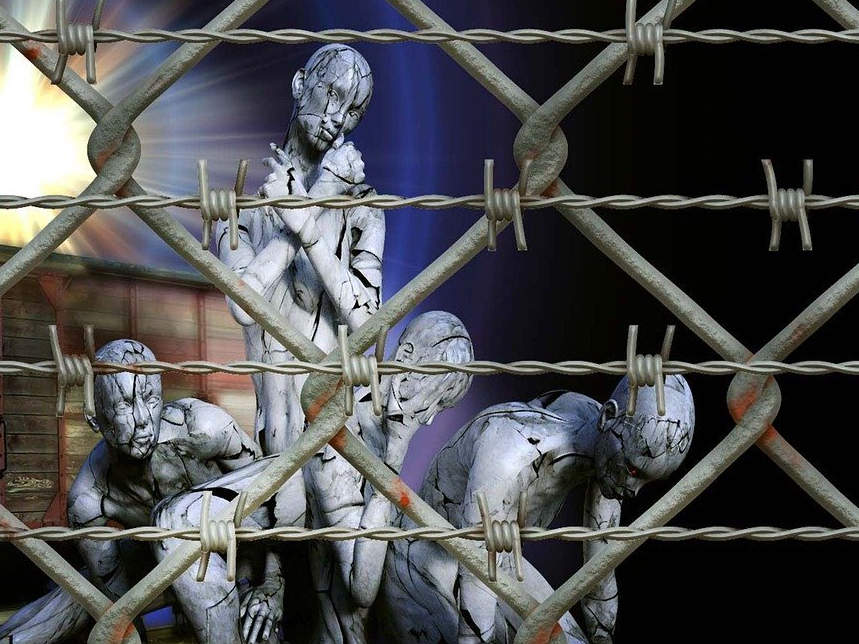
    I recently came across a profoundly moving book entitled Man’s Search for Meaning by the Austrian psychiatrist and Holocaust survivor Dr. Viktor Frankl. In it he recounts many of the horrors of his internment in the Nazi death camps. What sets this book apart from other such accounts is that his perspective as a physician and psychiatrist imbues that experience with some remarkable insights that everyone can profit from.

    His greatest insight, hinted at in the title of the book stems from his observation that the prison camps held two distinct types of prisoner. The first and by far the majority were those who competed and struggled against each other to gain even the smallest amount of power, control, or possessions. They did so regardless of the cost to others or to their own dignity because they saw it as the way alleviate as much of their own suffering as they could. The second group was different; these prisoners befriended and looked out for others, comforted or consoled them, gave them hope. These people, Frankl realized, did so because they were searching for meaning in their suffering; they recognized in themselves and in others a freedom and dignity that no Nazi could beat, starve, or gas out of them. He went on to write: “The way in which a man accepts his fate and all the suffering it entails, the way in which he takes up his cross, gives him ample opportunity – even under the most difficult circumstances – to add a deeper meaning to his life.”

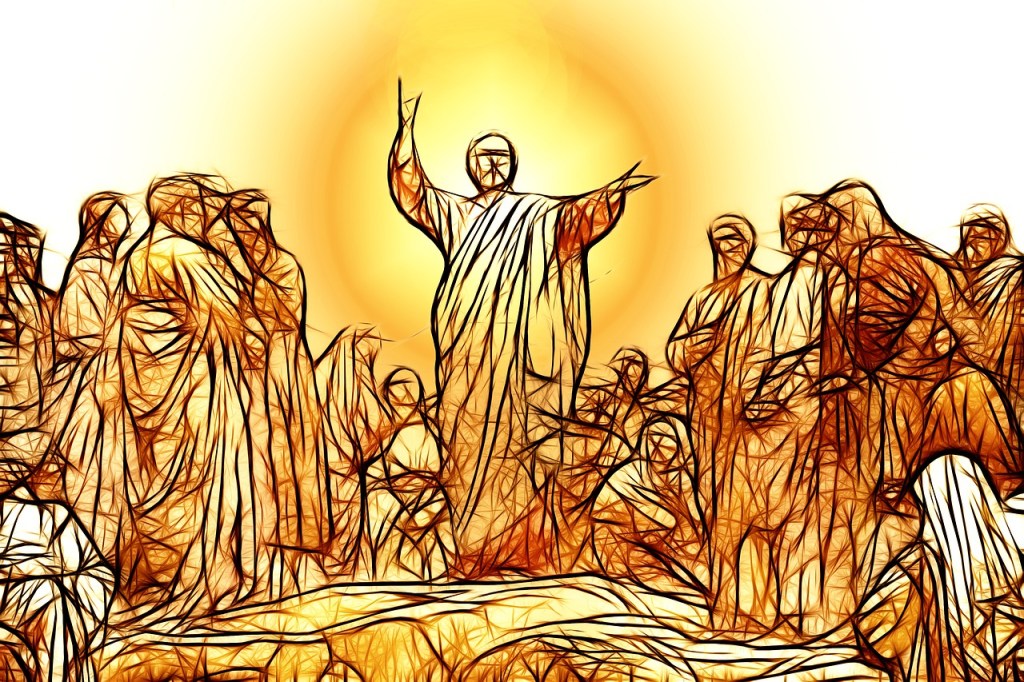
    This is exactly why Christ so challenged his disciples with the difficult words in today’s gospel; why he said, Whoever wishes to come after me must deny himself, take up his cross, and follow me (Matthew 16:24). Denying ourselves, bearing the weight of suffering, and following Christ can hurt physically, emotionally, and spiritually. But it hurts more not to, for then we become like the first group of prisoners: Grasping and fighting to reserve power, control, and comfort to ourselves. So often Frankl found that their strategy backfired; prisoners worked hard to preserve their lives but lost them anyway.

    When Christ said whoever wishes to save his life will lose it, but whoever loses his life for my sake will find it (Matthew 16:25) we rightly wonder how we can lose our life by saving it or save our life by losing it. However, the translation of “save our life” in this context is “protect” or “keep safe.” Thus, Jesus is counseling us not to keep safe but to risk being hurt, for only when we do that can we enjoy eternal life with God in heaven.

    Although that might help us understand his words, it doesn’t make living it out any easier. It seems as if Jesus is teaching that the way to avoid suffering in the afterlife is to endure suffering in this life. That seems cruel! Does Jesus really want us to suffer? What does suffering gain us?

    If we take the attitude of the first group of prisoners, the answer is “nothing.” Suffering exists only to be eliminated; it is not something to endure – for its own sake or anyone else’s.

    That is the attitude of love turned inward and as Frankl saw, the result was little gain and much futility. Love turned outward is in the image of God who is Love itself, and no one modeled that image better than Jesus, who is the image of the invisible God (Colossians 1:15). By his Incarnation Jesus taught that true love seeks neither isolation nor safety but entanglement and risk. God could have chosen to save fallen humanity from the safety of pure divinity. He didn’t; he chose to dwell among us, to take on the nature he created and raise it from within; to bind himself to the human condition beyond any untying and restore it to its original capacity for the deepest love possible: Eternal union with him. Jesus spent his life and ministry showing us what it means to love as God loves: He made himself vulnerable in the sight of others, exposed his deepest longings, deepest fears, deepest joys, his deepest self. Of course, he risked rejection and it cost him his life, but that is what love does; it was in the nature of his perfect divinity that from the depths of his infinite love and mercy, he glorified what mankind so quickly crucified.

    This tells us that Jesus doesn’t want us to suffer, he wants us to love; by its very nature, love risks suffering and when perfected will endure any amount of suffering for the sake of the beloved. Like the prisoners in the death camp we are perfectly free to refuse, but refusing to love means that we give nothing, share nothing, resist the promptings of the Holy Spirit, and remain isolated even from God himself. Some may call that safety but Christ calls it loss, for he knows that the only thing we bring to heaven is the love that we have given away.

  • No Reluctant Prophet: Monday of the 16th Week in Ordinary Time

    No Reluctant Prophet: Monday of the 16th Week in Ordinary Time

    Micah 6:1-4, 6-8; Psalm 50:23; Matthew 12:38-42

    So far in this chapter of Matthew we have seen Jesus being treated by the Pharisees like a man on trial. They have twice accused him of violating the sabbath, once of being in league with demons, and now, joined by the scribes, they confront him with the demand for a sign from God (Matthew 12:38).

    Given their lack of faith in Jesus this may seem reasonable but it betrays at least two problems they have in their relationship with God. First, no scribe or Pharisee, no human being is ever in a position to put God on trial or make Him prove anything. If anyone is on trial it’s us, as the prophet Micah said in the first reading: the LORD has a plea against his people, and he enters into trial with Israel (6:2). What’s more, we don’t get to tell God who He works through or how He does things. As He also said through Micah, I brought you up from the land of Egypt… I released you… I sent before you Moses, Aaron, and Miriam (6:4). God calls the people, God determines the path. Second, notice how Christ responds to the demand of the scribes and Pharisees by speaking of an “unfaithful” – or “adulterous” – generation (Matthew 12:39). This nuptial language goes to the heart of the real problem, which is the failure of these men to understand that our relationship with God is not a contract, or something we negotiate. It is a covenant, a mutual giving of our entire selves one to the other; a commitment that is total and unto death.

    Jesus drives this point home with true irony by bringing up Jonah for as everyone knew, Jonah was a prophet who was “total” only in his defiance of God’s will and “unto death” only in his effort to avoid doing it. The so-called “reluctant” prophet, Jonah sailed the other way when God called him to preach to pagan Nineveh, tried to drown himself in the sea when he got caught, spoke as little prophecy as possible, angrily complained when Nineveh repented, and worried more about losing the shade from a plant than about the possibility of over a hundred thousand Ninevites dying. Jonah was the perfect example of how not to commit yourself to God.

    Yet Christ took that prophet and made a sign out of him: Just as Jonah was in the belly of the whale… so will the Son of Man be in the heart of the earth (Matthew 12:40). Out of that one point of deep darkness – the disobedient man’s descent into the belly of the beast – Christ brings one point of brilliant light – the obedient Son of Man’s descent into the heart of the earth, or, as we say in the Apostles’ Creed, his descent to the dead. There of course he would preach as Jonah could only wish to, and release those repentant souls who had been awaiting the redemption only He could bring.

    Had the scribes and Pharisees recognized the prophetic truth that Christ had just spoken, they would have known that all they had left was the question from Micah: With what shall I come before the LORD, and bow before God most high (6:6)? Since they did not, we turn to ourselves, for we too are on trial. In our own ways, we are all guilty of being a reluctant prophet: Avoiding various calls to serve, stubbornly resisting God’s will, doing the minimum possible, complaining to God about people whose repentance only He can know, and worrying more about our own comfort than about the suffering of many around us.

    So, with what shall we come? Scripture makes it clear: Prayer and sacrifice. As Micah urges us to do right, love goodness, and walk humbly with God (6:8), we pray for the virtues: Prudence, to know what is right; fortitude, to do it; wisdom, to see and love God’s goodness in all people; humility, to walk with God where He leads; and faith, to trust and praise Him at all times. This is a sacrifice, for like Jonah we are inclined to do what we want, love what we want, and walk where we please. But through the psalmist God reassures us: He that offers praise as a sacrifice glorifies me; and to him that goes the right way I will show the salvation of God (Psalm 50:23). The Salvation of God is Christ, who does only right, is love and goodness itself, and who walked in perfect humility all the way from the heart of his Father to the womb of his Mother, from the height of the cross to the heart of the earth, and from the Sacraments he has given the Church into the hearts of all believers.