Tag: Easter

  • All For the Sake of Love

    All For the Sake of Love

    Wednesday of the 2nd Week of Easter

    John 3:16

    The Taj Mahal. The Hope diamond. Romeo and Juliet. Each in its own way a priceless masterpiece – built, gifted, or written all for the sake of love.

    Imagine being given any one of these. How special we would feel! Unique in all the world. To be the subject of that force of emotion.

    Fortunately, we don’t have to imagine such a gift. We have one infinitely more precious. As Jesus says to Nicodemus:

    God so loved the world that he gave his only-begotten Son, so that everyone who believes in him might not perish but might have eternal life (John 3:16).

    This is the verse that stopped Church Fathers in their tracks. We too know its power, not least by its enormous popularity. That’s good, but it’s also a problem; we hear it so often, see it so many places – from bumper stickers to end-zone signs – that we risk looking right past it.

    Don’t let that happen.

    Today, take a good, long, hard look at a crucifix. For there is the love that built not a building, but the Church; that isn’t the gift of a stone, but the Cornerstone; that isn’t written with ink but with the Precious Blood of Christ.

    And remember: We know the price of that love story – the death of Jesus Christ. But we also know the ending – the tomb is empty.

    So, rejoice and be glad! You really are loved that much.

  • No Mistaking the Road

    No Mistaking the Road

    Wednesday in the Octave of Easter

    Luke 24:13-35

    Perhaps you noticed something kind of puzzling in the gospel story we just heard. As Jesus meets the two disciples walking toward Emmaus, we hear that “their eyes were prevented from recognizing” him. Then later, as they head back to Jerusalem, they say, “Were not our hearts burning within us while he spoke to us on the way?”

    So, if their hearts were burning while Jesus spoke, what kept them from recognizing him?

    While there could be many reasons, let me give you mine. It came to me when filling in for Father Chris a couple of weeks ago in his lecture series on prayer.

    While researching that topic, I learned that St. Thérèse of Lisieux once said to novices, “I see clearly that you are mistaking the road, and that you will never arrive at the end of your journey. You want to climb the mountain, whereas God wishes you to descend it. He is awaiting you in the fruitful valley of humility.”

    So, what prevented them from seeing him? They did—because they had already decided what Jesus was supposed to be, and where he was supposed to be found.

    How do I know? They themselves tell us. Listen to their language. Jesus ‘was’ a prophet. We ‘were hoping’ he was the one. Their hope is already in the past. And even though “some women” reported that Jesus was alive again, and the Apostles saw the empty tomb, these two end with, “but him they did not see.” You can almost hear the confusion, disillusionment – and maybe even grief – in their voices.

    These are the eyes that cannot recognize Jesus; eyes that envision him waiting for them in some mountaintop, mystical experience where there are no problems, no questions, no fears, no doubts.

    But, borrowing from St. Thérèse, they were trying to climb a mountain where God had not asked them to go. And as St. Thérèse reminds us, he was waiting for them—not at the top—but in the valley… on the road… exactly where they were. That’s where Jesus is. And that’s where he meets all of us. Right here, where we are. We might be fooled into thinking he’s nearest to us in our mountaintop experiences. We feel so close to him then! Of course, he is “up there,” but as today’s gospel makes clear, he’s also “down here” when we’re at our weakest – when we question, fear, doubt, or hurt.

    And he’s not just near. He is speaking. We don’t hear him saying things like, “Look, here I am,” but he is there. First, he listens as we talk about what we’re thinking and feeling. Then he speaks. How do we know his voice? As the saints have said over the centuries, God’s voice sounds like a quiet invitation:

    • Not “figure everything out,” but “stay with me.”
    • Not “You are failing,” but “You are mine.”
    • Not “Fix this now,” but “Let’s take the next step. I am here with you.”

    From this perspective, it’s not at all surprising that Jesus asked them questions and let them speak first, or that he used Scripture to help them see that he was there. Christ would not always be walking on the road to Emmaus with them, but he would always be there in the word, giving light to their darkness. And, as he showed later that evening, he would always be with them in the Blessed Sacrament, feeding them with the greatest gift he could give – himself.

    Among all its other virtues, this beautiful story reminds us that Christ never waits until our problems are sorted out, after we repent, or after we get the theology right. No. He meets us now, right where we are – on the road, with all its confusion, problems, or disillusionment.

    So the next time you find yourself confused, discouraged, or wondering where God is, don’t look somewhere else. Look at the road you’re on. Because that’s exactly where he will meet you.

  • Called, Faithful, and Sent

    Called, Faithful, and Sent

    The Easter Vigil

    Matthew 28:1-10

    I can think of moments in my life when everything changed, when what came before and what came after were forever different. Marriage. The births of our children. A diagnosis. A call I didn’t expect. In the heat of those moments, I didn’t realize just how much things changed. That hit me later.

    For those of you who are about to receive the sacraments, tonight is one of those moments. This isn’t just another step in a process. This is a crossing over. From tonight onward, your life in Christ becomes something entirely new.

    To understand what that looks like – what it means to step into that new life – we can do no better than to look at the first person mentioned in tonight’s gospel: Mary Magdalene.

    Magdalene is a truly remarkable figure. She is one of the very few individuals named in all four Gospels. Unlike almost everyone else, she was a witness to the Crucifixion of Christ, to his burial, and to his Resurrection.

    In every Gospel, Mary stands near the center of the Easter story. And, for our purposes here tonight, she stands as a model of a newly initiated Catholic.

    How? Simple. Mary was called. Mary was faithful. Mary was sent.

    First, her call to follow Christ is mysterious. All we know is that he healed her, called her out of her darkness. Mary’s story begins not with strength, but deliverance.

    That’s our story, too. None of us comes to God from a position of strength, but from a need for deliverance.

    And, although I said, “we come to God,” the reality is that God comes to us. You who are coming into the fullness of the faith this evening, think back to what brought you here to begin this journey. Like the rest of us, like all the saints, each of you has a different story, but a common beginning. We may think coming to God is our idea, but the truth is that God brought us here. He always acts first. Yes, we celebrate you tonight and your accomplishment, making it through all those Wednesday evening meetings. But tonight isn’t about what you’ve done to find God. It’s about what God has done to find you.

    The second remarkable thing about Mary Magdalene is that she stayed with Jesus when the going got tough. The gospels are clear; very few people are expressly named as being there in Christ’s darkest, most desolate moments. Mary is there – at the cross, at his burial, and at the tomb in the early morning darkness. She didn’t understand the significance of what was happening, and had good reason to fear or have her faith shaken. Yet she remained. What a beautiful example of steadfast faithfulness, of love that refuses to walk away no matter what.

    You who are coming into the fullness of the faith have lived some of this already. Week after week you found yourselves presented with things not always easy to understand. Yet you remained. You continued on even when things weren’t clear. You aren’t here because you figured it all out; you’re here because, like Mary Magdalene, you stayed despite the difficulty.

    Finally, Mary was given a role unlike any other in the New Testament. The Evangelist John is clearest. The risen Jesus calls her by name – Mary – then commands her, Go to my brothers and tell them… (John 20:17). Of all the disciples, only she, a woman called from her own mysterious darkness into the healing light of Christ, becomes what she never dreamed: the apostle to the apostles. The resurrection of Christ wasn’t the end of her story – in a way, it was just the beginning.

    It’s the same for you who are coming into the faith. Tonight isn’t the end. It’s more like a commencement, or, more accurately, a commissioning. Each of you is claimed by God by Baptism, strengthened by Confirmation, fed with the Eucharist, and at the end of Mass, sent. Where? Out those doors and into the world. To do what? To proclaim the glory and power of the risen Christ by the witness of your lives. Everything you do from here on will speak the words Mary Magdalene spoke as apostle to the apostles: I have seen the Lord (John 20:18).

    It all begins in just a few moments, when you receive the sacraments. Listen carefully. As the words are spoken, the risen Jesus will be speaking your name in the depths of your soul. Just as he spoke Mary’s.

    The time, place, and people are different than when Magdalene walked the Earth. But the message and Message-Giver are exactly the same. Christ has called you, Christ has asked you to stay near him, and Christ has sent you to proclaim him to the world.

    Savor the moment! From this night on, your life will never be the same. You may not realize that now, but don’t worry. It will hit you later.

    And it will be glorious.

  • Bronze Pennies, Burned Hearts

    Bronze Pennies, Burned Hearts

    Wednesday in the Octave of Easter

    Acts 3:1-10; Luke 24:13-35

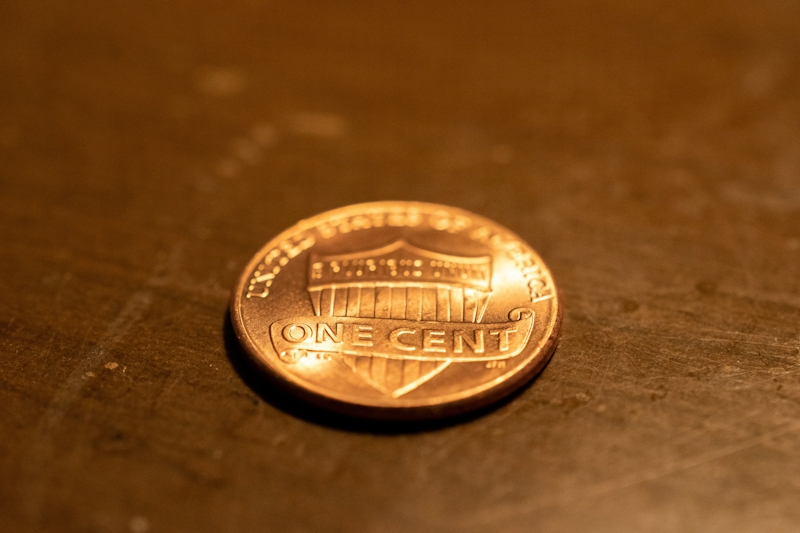
    One day in 1947, a teenage boy bought a school lunch and put the change in his pocket. Later, he noticed that one of the pennies, stamped in the Denver mint in 1943, was bronze. Like most people, he knew that pennies minted during those war years were steel, not bronze. When he inquired, government officials said he was mistaken, it was a fraud. Some intrigued collectors offered to buy it. Despite this, he kept it. When he died in 2019, the little one-cent piece he got as change for his lunch in 1947 sold at auction for nearly 2 million dollars.

    Appearance is one thing, value another.

    The reading from Acts makes the same point. The crippled man at the Beautiful Gate would’ve been very happy with a penny, and clearly that’s what he expected when he saw Peter and John. But again, appearances are deceiving, for those ordinary-looking men possessed something infinitely more valuable: the healing power of Christ.

    Then in the gospel, two disciples blinded by sorrow see, not Jesus, but what appears to be an ordinary man. Ordinary, that is, until something most extraordinary happens: he took bread, said the blessing, broke it, and gave it to them (Luke 24:30). And note particularly what happens after this; as Luke says, With that their eyes were opened and they recognized him, but he vanished from their sight (24:31).

    In this way, Luke goes to the heart of the Sacramental power that transforms human sight into vision. When we look around the church, what do we see? In our fonts, water; in the baptistery, oils; in cruets, wine; and on patens, the host. Yet, through the power of the Holy Spirit, the will of the Father, and the passion, death, and resurrection of Christ, these ordinary elements of Earth become the invaluable tools of Heaven; through them and their ministers, our Lord heals and sanctifies every soul who seeks Him with the eyes of faith.

    Just as those two disciples reached Jerusalem with hearts ablaze—no longer discouraged or blind – to proclaim “We have seen the Lord,” so, too, are we sent today. Christ empowers us through Baptism, strengthens us through anointing, and feeds us in the Eucharist. This is the grace that opens our eyes to His presence, that we might see in the familiar – the neighbor who listens, the friend who forgives, the stranger to whom we show kindness – the many opportunities to love others as God has loved us. With this in mind and heart, let us resolve to pray every day, “Lord, open my eyes,” and in each encounter strive to be His hands and feet – revealing that in every ordinary moment lies the infinite value of His love.

  • The Stone and Love

    The Stone and Love

    As I’ve said before, one way to try and make sense of the gospels is to put yourself into them, to be at the scene. John’s gospel account today lends itself well to that: Not finding Jesus, Mary wonders what happened; Peter, hearing from her that Jesus isn’t there, runs to the tomb and rushes in to see for himself; John, breathless, peers into the empty tomb and believes.

    Yet, everything that happened after Mary arrived at the tomb depended on the one thing I couldn’t understand: Why was the stone rolled away?

    Being God, Jesus certainly didn’t need it moved. His glorified body will soon be passing through locked doors as if they aren’t there, suddenly appearing or disappearing, and ascending into the heavens. The stone was no obstacle to him.

    Then it occurred to me… it was an obstacle to us. If the stone hadn’t been rolled back, Mary wouldn’t have searched for an answer, Peter wouldn’t have rushed in, and John wouldn’t have believed. The stone wasn’t rolled away for the Lord’s sake; it was rolled away for ours.

    Still, the people in the story didn’t have to respond as they did. Mary needn’t have gone to the tomb at all, let alone wondered where the body of Jesus had been taken. Peter and John could’ve stayed where they were and kept doing whatever they were doing.

    But they didn’t. Why? Love.

    Mary Magdalene loved Jesus because he had healed her and turned her life around. Love doesn’t settle; it keeps searching, even when hope seems lost. For his part, Peter might never live down denying Jesus three times, but he had also confessed him as Messiah, the only one to Whom they could go. His is a love that may be imperfect and impetuous, but it moves; it doesn’t hesitate in the face of mystery. And John, so often called the Disciple Whom Jesus Loved, shows us by seeing and believing, that the eyes of love recognize truth, even when they don’t fully understand it.

    Thus, while Mary, Peter, and John each responded differently, love is the common denominator. The empty tomb evokes not just curiosity; it evokes love’s response.

    As for us, this is the time to measure our own love for Christ, and our own willingness to respond. The Resurrection isn’t a mere historical event; it’s a personal invitation. The stone is still rolled back today – not because Jesus needs help getting out, but because we need help getting in: into faith, into hope, into the new life he offers.

    Love searches. Love rushes in. Love believes.