Tag: Doctors of the Church

  • Not Larger than God’s Love

    Not Larger than God’s Love

    Wednesday of the 26th Week in Ordinary Time (Memorial of St. Jerome)

    Luke 9:57–62

    There are people we meet – or we may be a person – who others might describe as “larger than life,” or a “force to be reckoned with.” They have a presence, a way about them, that seems to always compel a response, good or bad.

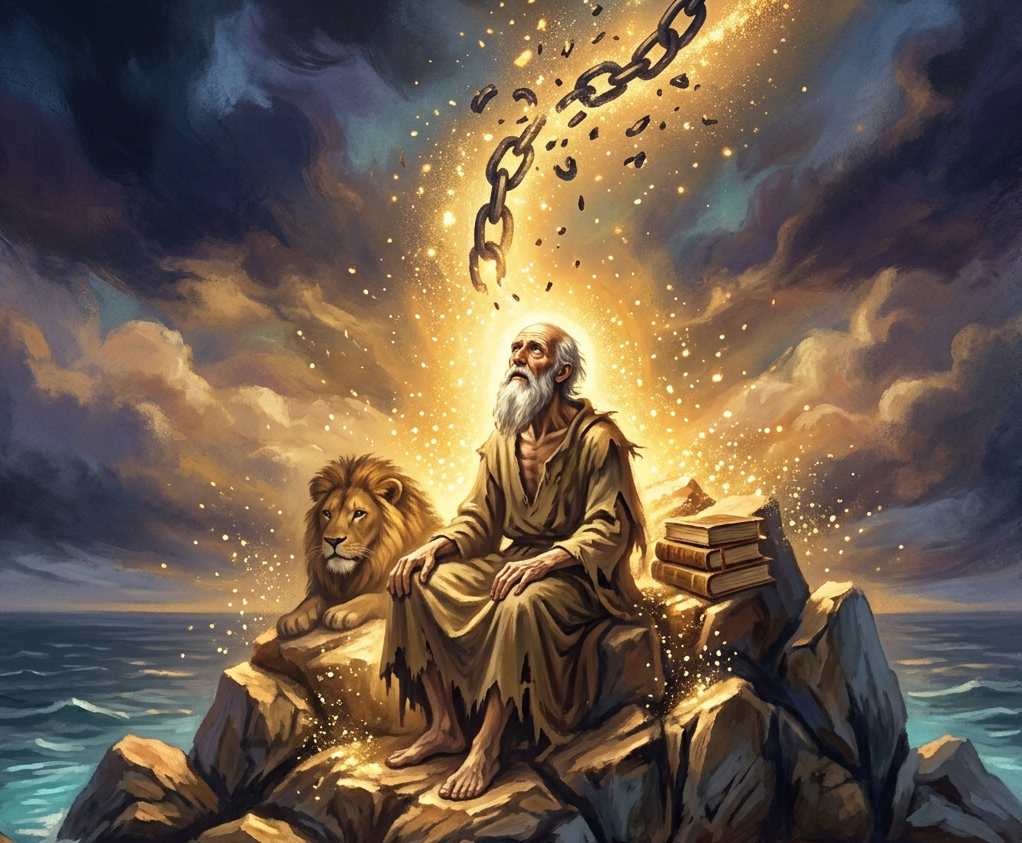
    The saint we remember today, Jerome, strikes me as such a person. Like everyone, he had strengths and weaknesses. But like those who live larger than life, his good could seem very good, and his bad,very bad.

    On the good side, Jerome was brilliant; one of the greatest minds the Church has ever known. What’s more, he loved Scripture with all his heart, and spent his life studying and writing about it. Above all, Jerome loved God, and wanted more than anything to live a life pleasing to Him.

    But then there were weaknesses. First, pride. Like many intellectuals, Jerome didn’t like to be wrong and didn’t want anyone having the last word but him. Worse, he had such a fiery temper and was so hard to get along with that his most loyal supporter and patroness, Paula, and her daughter, became saints just dealing with him. On top of all that, Jerome was strongly attracted to women and was constantly tempted to impure thoughts.

    This last temptation was so bad that Jerome left Rome to live as a hermit in the Holy Land. Although that helped, the temptations persisted. In desperation, he vowed to study Hebrew – a language he found hard to learn – every time lewd thoughts came back. Thanks to that vow, Jerome became an expert in Hebrew.

    That was a stroke of the Holy Spirit. When Jerome’s friend, Pope St. Damasus I, assigned him the task of producing a new version of the Bible based on the ancient languages, he poured himself into it. Despite some disagreements with the Church in the process, Jerome sacrificed his pride, submitted himself to her authority, and gave the world the Bible we still know as Jerome’s Vulgate.

    St. Jerome’s victory in the struggle against himself gives us great insight on the gospel today. People want to follow Jesus, but they want to do so on their own terms. Can we set conditions on discipleship? The life of St. Jerome underscores our Lord’s point: Following Christ means submitting ourselves entirely – mind, body, passions, strengths, and weaknesses — to his authority and his alone.

    That doesn’t mean that we are to somehow become people without strong desires, without opinions, personalities, or weaknesses. No, God made us; He knows who we are. We may, in our own ways, be larger than life, but St. Jerome reminds us that we’re never larger than God’s love. And, like him, we may be a force to be reckoned with, but let us pray that we, too, can – by God’s grace – be a force for good, submitting ourselves to God’s authority, and praying, as all the saints have prayed, “Lord God, all of me is yours. Tell me what to do with it and help me do it. Your will be done.”

    St. Jerome, pray for us.

    —
  • The Truly Wise

    The Truly Wise

    Memorial of St. Gregory the Great, Pope and Doctor of the Church

    1 Corinthians 3:18-23; Luke 5:1-11

    In the first reading, St. Paul said, “Let no one deceive himself. If anyone among you considers himself wise in this age, let him become a fool, so as to become wise.”

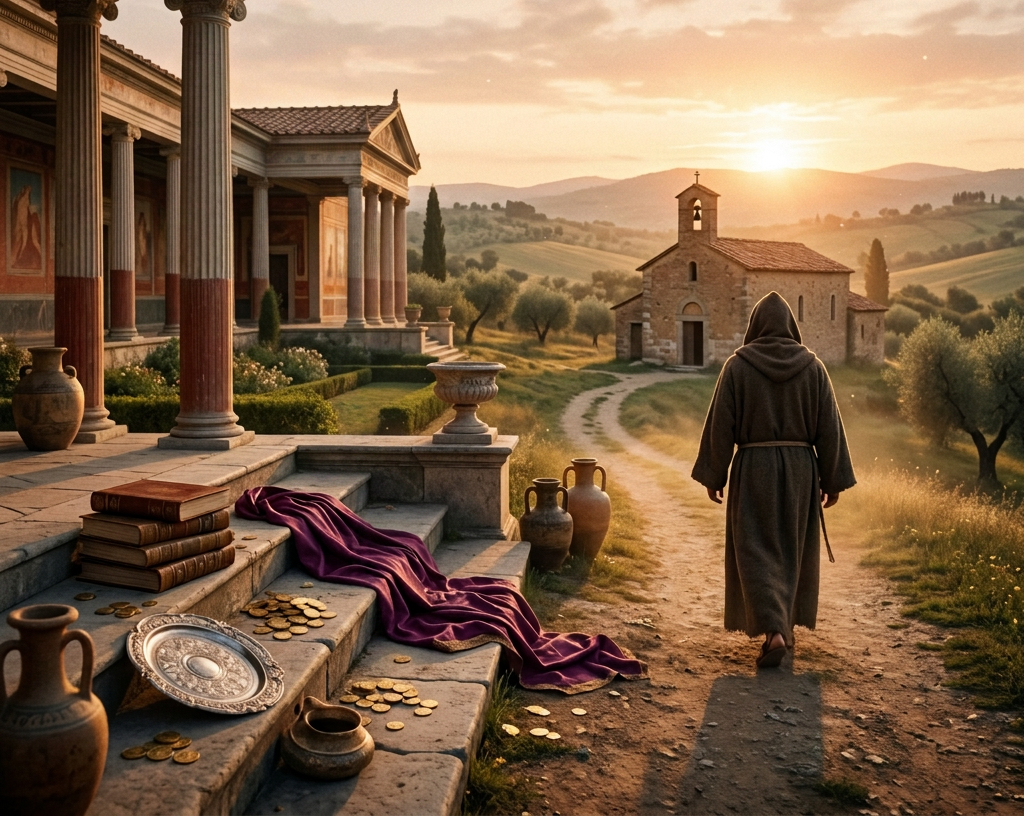
    Imagine a wealthy, well-educated young Roman from a prominent family, living quietly in an expensive mansion in an exclusive part of town.

    Now imagine this young man sees the world around him falling apart. What should he do?

    He could sell his property and leave town with a huge fortune.

    That makes good financial sense.

    Or… he could give away his property, use his fortune to feed the hungry and protect Rome, serve as mayor, become pope, and dedicate the rest of his life to bringing as many people as possible to Christ.

    That makes a saint. 

    In fact, it makes Pope St. Gregory I, otherwise known as Gregory the Great.

    Gregory could have played it safe; in the gospel’s terms, stayed in shallow water. That’s what the world would call, “wise.” He was a good, holy man and could have done many good things. But Gregory knew that true wisdom was putting out into the deep water; letting go of what he wanted and allowing Christ to lead. In choosing that, he became a great man who did many great things.

    That’s the difference between the wisdom of the world and the wisdom of God.

    The wisdom of the world says, “Be careful. Protect what you have. Don’t take unnecessary risks. Look out for yourself.”

    The wisdom of God says, “Put out into the deep.”

    Gregory put out into the deep as Peter did long before him. Sooner or later, Christ asks each of us to do the same.

    And it’s not always a big conversion moment or a drastic change in our lives. Those happen, but more often come those smaller, still difficult, challenges: Forgive someone I’d rather forget, give up something I’d rather keep, or serve when I’d rather be served. Whatever it is, the challenge remains the same: “Christ is calling me to put out into the deep. Will I do it?”

    Of course it’s easier not to, but life in Christ is never about what’s easy. It’s about trusting him even when things look uncertain and difficult. His grace is always more than enough to see us through.

    The readings and life of Pope St. Gregory the Great remind us that when we do as he did – place our lives in Christ’s hands – we find that what the world calls foolishness is actually true wisdom.

    Pope St. Gregory the Great, pray for us.

    —

  • The Leader as Servant: Feast of Pope St. Gregory the Great

    The Leader as Servant: Feast of Pope St. Gregory the Great

    2 Corinthians 4:1-2, 5-7; Luke 22:24-30

    In the gospel we hear Jesus say to the Apostles, let the greatest among you be as the youngest, and the leader as the servant. Few people epitomize those words better than the successor of the Apostles we remember today, Pope St. Gregory I.

    Born around the year 540 into a wealthy, aristocratic Roman family, Gregory received the best education of the day, designed to form him as an effective political and social leader. He was also deeply grounded in the faith; indeed, his family tree boasted two popes, several consecrated religious, and at least one saint: his mother, Sylvia. If not born great, Gregory was certainly bred for greatness.

    Greatness was certainly needed, for Rome was in dire straits. No longer the capital of the empire, it was barely guarded; vandals regularly overran it. Plague, war, and famine decimated the population from a high of one million to about fifty thousand. Although Gregory wanted nothing more than to pursue his dream of life as a Benedictine monk, his sense of public service prevailed; at the age of 30 he became mayor and served for two years. When his father died Gregory resigned, turned the family palace into a monastery, and became a monk. He called these the happiest years of his life.

    They didn’t last long. Knowing of Gregory’s talent, Pope Pelagius summoned him, ordained him a deacon, briefly put him in charge of social assistance to Rome and then sent him to Constantinople, where for 6 years he served as ambassador, learning the workings of the imperial court. When he returned to Rome he was delighted to learn that he had been made abbot; however, that too didn’t last long; when Pope Pelagius died, Gregory was unanimously elected pope. He appealed to the emperor to reject the election but he refused. Against his will, Gregory served as pope for 14 years.

    It is difficult to summarize briefly everything Gregory did to merit the title “Great,” but let me focus on two particular areas.

    First was his great love of the missions. Gregory was the first pope to send missionaries to a distant land, dispatching 40 monks to England led by the man who would become St. Augustine of Canterbury. No less important was his acumen and sense of balance; Gregory advised Augustine to bring Christ in His fullness to the Anglo-Saxons but at the same time to adapt the faith where he could to the customs and ways of the people. This bore great fruit; the subsequent centuries saw England and Ireland send out missionaries of their own whose evangelization forever changed the face of Europe. But Gregory’s care and concern for the missions didn’t stop there. Hundreds of his letters still remain, and reveal the pope’s involvement in and knowledge of the missions in places as far away as Africa, Spain and Greece.

    Second, Gregory was a great shepherd to his local flock. For bishops he wrote a book called Pastoral Care, really a treatise on preaching that became popular for centuries, as well as a book on St. Benedict. His own homilies are read to this day; in fact, it is for them that he was made Doctor of the Church. He also transformed Rome into a real diocese, organized under a bishop and seven regional deacons assisted by seven sub-deacons. Using this structure, Gregory systematized outreach to the poor, orphans, and widows. Charity burned so greatly within this man that for years he fed Rome’s poor with money out of his own pocket.

    That’s not to say that the pope never used Church money. To the contrary, he used it whenever he could but did so to protect Rome from invaders. He was a good diplomat and a brilliant negotiator, doing whatever he could to keep the people safe, whether that meant paying imperial troops or bribing vandals to keep away. He was so effective that eventually the city put him in complete charge of the military.

    We could say much more but let us close with St. Paul’s words: God who said, ‘Let light shine out of darkness,’ has shone in our hearts to bring to light the knowledge of the glory of God on the face of Jesus Christ (2 Corinthians 4:6). Pope St. Gregory was the lamp God set on Vatican Hill to shine in a very dark time and that light still shines today. In summary and in essence, Gregory’s greatness is the man himself. From him we learn these life lessons: First, we must be aware not only of our power and ability but also our weakness and fragility; this teaches us humility. Second, no matter how much we know or plan, not all decisions or circumstances will work out in our favor; this teaches us patience, perseverance, and fortitude. Finally, although we may want a certain life for ourselves, the love of Christ impels us to put that aside for the greater good of service to God and the world in which we find ourselves. From this we learn the greatest gift of all: Charity. In the end Gregory teaches us that those who are most truly leader most truly serve.

    Pope St. Gregory the Great, pray for us.

  • Feast of the Transfiguration: St. Ephraim the Syrian

    An excerpt from the Sermon on the Transfiguration of our Lord and God and Saviour, Jesus Christ by St. Ephraim, Deacon of Edessa:

    The facts themselves bear witness and his divine acts of power teach those who doubt that he is true God, and his sufferings show that he is true man. And if those who are feeble in understanding are not fully assured, they will pay the penalty on his dread day.

    If he was not flesh, why was Mary introduced at all? And if he was not God, whom was Gabriel calling Lord?

    If he was not flesh, who was lying in the manger? And if he was not God, whom did the Angels come down and glorify?

    If he was not flesh, who was wrapped in swaddling clothes? And if he was not God, whom did the shepherds worship?

    If he was not flesh, whom did Joseph circumcise? And if he was not God, in whose honour did the star speed through the heavens?

    If he was not flesh, whom did Mary suckle? And if he was not God, to whom did the Magi offer gifts?

    If he was not flesh, whom did Symeon carry in his arms? And if he was not God, to whom did he say, “Let me depart in peace”?

    If he was not flesh, whom did Joseph take and flee into Egypt? And if he was not God, in whom were words “Out of Egypt I have called my Son” fulfilled?

    If he was not flesh, whom did John baptise? And if he was not God, to whom did the Father from heaven say, “This is my beloved Son, in whom I am well-pleased”?

    If he was not flesh, who fasted and hungered in the desert? And if he was not God, whom did the Angels come down and serve?

    If he was not flesh, who was invited to the wedding in Cana of Galilee? And if he was not God, who turned the water into wine?

    If he was not flesh, in whose hands were the loaves? And if he was not God, who satisfied crowds and thousands in the desert, not counting women and children, from five loaves and two fishes?

    If he was not flesh, who fell asleep in the boat? And if he was not God, who rebuked the winds and the sea?

    If he was not flesh, with whom did Simon the Pharisee eat? And if he was not God, who pardoned the offences of the sinful woman?

    If he was not flesh, who sat by the well, worn out by the journey? And if he was not God, who gave living water to the woman of Samaria and reprehended her because she had had five husbands?

    If he was not flesh, who wore human garments? And if he was not God, who did acts of power and wonders?

    If he was not flesh, who spat on the ground and made clay? And if he was not God, who through the clay compelled the eyes to see?

    If he was not flesh, who wept at Lazarus’ grave? And if he was not God, who by his command brought out one four days dead?

    If he was not flesh, who sat on the foal? And if he was not God, whom did the crowds go out to meet with glory?

    If he was not flesh, whom did the Jews arrest? And if he was not God, who gave an order to the earth and threw them onto their faces.

    If he was not flesh, who was struck with a blow? And if he was not God, who cured the ear that had been cut off by Peter and restored it to its place?

    If he was not flesh, who received spittings on his face? And if he was not God, who breathed the Holy Spirit into the faces of his Apostles?

    If he was not flesh, who stood before Pilate at the judgement seat? And if he was not God, who made Pilate’s wife afraid by a dream?

    If he was not flesh, whose garments did the soldiers strip off and divide? And if he was not God, how was the sun darkened at the cross?

    If he was not flesh, who was hung on the cross? And if he was not God, who shook the earth from its foundations?

    If he was not flesh, whose hands and feet were transfixed by nails? And if he was not God, how was the veil of the temple rent, the rocks broken and the graves opened?

    If he was not flesh, who cried out, “My God, my God, why have you abandoned me”? And if he was not God, who said “Father, forgive them”?

    If he was not flesh, who was hung on a cross with the thieves? And if he was not God, how did he say to the thief, “Today you will be with me in Paradise”?

    If he was not flesh, to whom did they offer vinegar and gall? And if he was not God, on hearing whose voice did Hades tremble?

    If he was not flesh, whose side did the lance pierce, and blood and water came out?And if he was not God, who smashed to gates of Hades and tear apart it bonds? And at whose command did the imprisoned dead come out?

    If he was not flesh, whom did the Apostles see in the upper room? And if he was not God, how did he enter when the doors were shut?

    If he was not flesh, the marks of the nails and the lance in whose hands and side did Thomas handle? And if he was not God, to whom did he cry out, “My Lord and my God”?

    If he was not flesh, who ate by the sea of Tiberias? And if he was not God, at whose command was the net filled?

    If he was not flesh, whom did the Apostles and Angels see being taken up into heaven? And if he was not God, to whom was heaven opened, whom did the Powers worship in fear and whom did the Father invite to “Sit at my right hand”. As David said, “The Lord said to my Lord, sit at my right hand…”

    If he was not God and man, our salvation is a lie, and the words of the Prophets are lies.  But the Prophets spoke the truth, and their testimonies were not lies. The Holy Spirit spoke through them what they had been commanded.

    from https://nftu.net/st-ephraim-the-syrian-on-the-holy-transfiguration/

  • The Wounds of Love: St. Birgitta of Sweden

    The Wounds of Love: St. Birgitta of Sweden

    Galatians 2:19-20; John 15:1-8

    I once instructed a woman in the RCIA program who excelled in her studies of the faith. After receiving the sacraments she moved away and I lost track of her. Years later, I learned that she had stopped practicing the faith. She was now “spiritual but not religious.” I think that means she believes that while there is a spiritual dimension to the world, it isn’t what we understand as the faith most fully revealed to us in Christ.

    The sticking point for her, as for many, may well have been the passion and death of our Lord. Indeed, the crucifixion was called by St. Paul a stumbling block to Jews and foolishness to Gentiles (1 Corinthians 1:23). But to one of the saints, St. Birgitta of Sweden, the crucifixion held a special place; it was the nexus of the physical and spiritual worlds.

    Birgitta lived a life full of the joys and sorrows of family. Born in Sweden around the year 1303, the daughter of a governor, by age 42 she had already been a wife for 28 years and a widow for one. She had a wide and deep experience of motherhood; as mother of 4 boys and 4 girls, she saw one daughter run off to marry a troublemaker, one son die as a boy, one as a man, and another daughter grow up to become St. Catherine of Sweden.

    She also knew the life of the working world. While raising her own children she served as lady-in-waiting to the queen of Sweden. Her kind, motherly way drew her into the confidence of the king and queen, both of whom tended to enjoy worldly life too much for their own good. Birgitta worked as hard as she could to keep their religious concerns before them; this became a frustrating and unfortunately futile struggle.

    Finally, Birgitta knew the religious life as well. After becoming a widow and devoting herself to care of the poor, who greatly loved her, she dedicated buildings and land on family property to a new contemplative order. She wrote the rule for her order which became known as the Order of the Most Holy Savior.

    At the same time, Birgitta lived a full life in the spiritual world. She was a mystic. At age seven, she had a vision of being crowned by the Blessed Mother. Three years later came her most profound mystical experience: The crucified Christ appeared to her and bid her gaze upon him. When she asked who had so cruelly treated him, he replied, “Those who despise me and spurn my love for them.” This was her own Damascus road moment; although she had many visions, dreams, and locutions afterwards, she devoted the rest of her life to the contemplation of Christ’s suffering.

    After wisely consulting her spiritual advisor and obtaining his approval, Birgitta began to share her visions with the world. She met with Magnus, the king of Sweden, and advised him that Christ would visit a plague on the land if he and the queen did not change their ways. As usual, he laughed off her vision. The Black Death came two years later, wiping out half the population. Needless to say, the king stopped laughing.

    Birgitta next focused her attention on the popes, who had long since deserted Rome in fear for their lives. Leaving Sweden with her daughter Catherine, she moved to Rome. In the midst of its crumbling churches and society, Birgitta ministered to the sick, fed the poor, housed pilgrims, and called on the pope to return. Her call took on a special intensity due to her dislike of pope Clement VI, who she called “a murderer of souls, more unjust than Pilate and more cruel than Judas.” During a thunderstorm on the night of December 3rd 1350, lightning struck the bells of St. Peter’s, melting them. Birgitta prophesied this as a sign that Clement’s life was coming to an end. He died a few days later. When the next pope fled to get away from her Birgitta literally chased him down, begged him to approve her order, which he did, and to return to Rome, which he did not do. After her death in 1373, her call for the popes to return was taken up by St. Catherine of Siena. Not long after, the papacy returned to Rome to stay. Birgitta was vindicated.

    In the first reading, St. Paul wrote:

    I have been crucified with Christ; yet I live, no longer I, but Christ lives in me; insofar as I now live in the flesh, I live by faith in the Son of God who has loved me and given himself up for me (Galatians 2:19-20).

    jesus-753063_640

    Birgitta’s life is a testament to the triumph of St. Paul’s words. From the moment of that first overwhelming spiritual encounter with the suffering, crucified Christ when she was 10 years old, she began to internalize them; to sense as we all must, not only the pain of Christ’s passion but the passion behind his pain. The ultimate reality of the cross is love, a love so great it unites heaven and earth, the physical and spiritual. What else could it be but love that would cause God himself to take on our humanity, our sinfulness, and in the face of humanity’s rejection, nail it to the cross? Birgitta spent her life contemplating not the pain of futility but the pain which Oscar Wilde called the wounds of love. In her own way, St. Birgitta spent her life showing her family, her king, her people, and her pope that this is not only a love worth dying for; it is a love worth living for – eternally.

    St. Birgitta, pray for us.

  • The Greatest Gift: Memorial of St. John Chrysostom

    Ephesians 4:1-7, 11-13

    St. Paul urged us to live in a manner worthy of the call we have received (Ephesians 4:1). Sounds like good advice, but very general. How do we do that? What are we to do? Perhaps we can get insight by seeing how a saint did it. Since today we remember St. John Chrysostom, let us take a look at his life and see if we can formulate an answer.

    John was born in Antioch around the year 347, the son of a military commander who died as a young man. His mother, a pious and devout woman, raised him in the faith and saw to it that he had the best education possible. A naturally gifted speaker, he studied under Libanius, a pagan but the greatest orator of his time.

    Following the custom of the age, John was baptized at the age of twenty. Drawn to the life of the desert monks, he spent four years in a monastery and two more in a cave as a hermit. The physical demands of that life proved too much, so he returned to Antioch.

    Soon ordained to the diaconate, John spent the next five years refining his skill as a homilist, becoming so good that upon ordination to the priesthood he was appointed preacher to the bishop. Over the years the grace of ordination infused his natural ability as an orator to produce not only a passionate, articulate man, deeply in love with Christ, but also one unafraid to speak his mind in words that either warmed like a gentle flame or raged like a firestorm. In his great love for the poor he once gently reminded the people, “Do not judge the poor man, do not seek an account of his life, but free him from his misfortune.” Another time, moved to righteous anger he scolded, “You are large and fat, you hold drinking parties until late at night, and sleep in a warm, soft bed. And do you not think of how you must give an account of your misuse of the gifts of God?”1

    Some call that brutal honesty, others tactlessness; John called it truth and knew as our Lord did that even when bluntly spoken, truth has a way of drawing people to itself. So it did; over the years John’s preaching won hearts in great number. But there was more than that. His authenticity was so appealing. All could see that he practiced what he preached. Like our Lord, John led a pious, austere life; gentle with penitents, generous to the poor, and loving to all, even when love meant bringing a whip to the Temple.

    Also like Jesus, John made his share of enemies, chief among them the emperor’s wife and some very powerful clergy. Their dislike turned to outright hatred when three things happened: First, he was appointed bishop of Constantinople, the emperor’s city, over the empress’s choice; second, he instituted a reform of the clergy who he believed were lax in their pastoral duty; and third, he turned his stinging eloquence loose on the debauchery and immodesty of society, up to and including the empress and her friends.

    Not surprisingly, his enemies fought back. Unlike John they didn’t fight fair, seeing to it that he was charged with false crimes, convicted, and banished as far away as possible. Although vindicated in time, John was getting on in years and the physical cruelty of his guards more than sufficient to bring about his eventual death. Bishop John died on the road to exile on the Feast of the Exaltation of the Holy Cross, September 14th, 407.

    Chrysostom means “golden mouth.” It was a name given him long after his death in homage to his giftedness as a preacher. But this was a man blessed with many gifts: great intellect, resilience, compassion, a deep love of God, and keen insight into human nature, to name just a few. Yet, as great as they all were, the greatest of all was the gift of grace given as St. Paul said, according to the measure of Christ’s gift (Ephesians 4:7). Grace builds on nature, enabling us to use our natural gifts for our own good and that of the world. Consider its effect in the life of John Chrysostom: Raised by a holy, faithful mother, baptized as a young man, driven by the Spirit into the desert, preaching the gospel to the all who would listen, struggling against arrogant, worldly power and suffering the passion and death of his own Calvary road in exile. Grace empowered him to live a life not only devoted to Christ but configured to him.

    jesus-3499151_1280Surely his was a life lived in a manner worthy of the call. But the question remains, what about us? Are we to be another St. John Chrysostom? On one level, no; the gifts given to him were his and his alone. God doesn’t want another St. John Chrysostom. But on another level, yes, the gifts given to us are ours and ours alone and God is calling us to sanctity. We are sanctified to the degree that we take advantage of the same grace that was available to John, not to do what he did, but to do as he did. If we do not preach the gospel from a pulpit in a church we still preach it from the pulpit of our lives. Every day, we are the only homily someone will hear. If we do not shepherd a church or diocese we still have a flock; family, friends, everyone we meet. We are to teach, feed, love, and serve them as Christ did. If we do not bear the cross John bore we still take up our own and unite it to the suffering of Christ for the sake of his body, the Church.

    St. John Chrysostom teaches us that living in a manner worthy of the call we have received is using the gifts God has given us, infused by the grace he alone can give, to bring out of our diversity the unity that raises the Church to mature manhood, the full stature of Christ (Ephesians 4:13).

    St. John Chrysostom, pray for us.

    1St. John Chrysostom, 21st homily on 1 Corinthians

  • Power Made Perfect: St. Cyril of Alexandria, Bishop and Doctor of the Church

    Matthew 8:18-22

    The gospel reading begins with an image of people crowding around Jesus. Then and now, people are drawn to Christ. Some he inspires, others he mystifies.

    Among those he inspired was the scribe who said, Teacher, I will follow you wherever you go (Matthew 8:19). We may not realize what a bold, shocking statement this was. In those days, scribes didn’t follow; they led. They spent years studying Scripture and were seen as authorities on it. But when this man saw and heard Jesus, he must have sensed a different kind of authority; as Matthew said earlier, Jesus taught as one having authority, and not as their scribes (Matthew 7:29). The scribe had once dedicated his life to studying the written Word of God; now, he could actually see the living Word of God standing right in front of him.

    Not everyone is gifted with such vision. Some people are mystified by Jesus. Ironically, these are sometimes the people closest to him, those to whom he has given authority. Somehow, they have gotten lost in the depths of his infinitude. Such a one was Nestorius, a bishop of Constantinople in the 5th century. He looked at Jesus and saw two persons; one human, one divine. When asked if Mary could be called the Mother of God, Nestorius replied no; Mary was the mother only of the human Christ, distinct from the Second Person of the Trinity. She should not be called the Mother of God.

    It didn’t take long for this opinion to reverberate around the Middle East and it certainly caught the attention of Cyril, bishop of Alexandria. Although little is known directly about Cyril’s personality, his letters and actions portray him as a deeply a passionate man, determined to protect the faith from heresy. When his sometimes fiery correspondence with Nestorius failed to resolve the issue, Cyril escalated it to Rome. The pope agreed with Cyril, but Nestorius appealed to the Emperor, who supported him. A Church council was called, set for St. Mary’s church in Ephesus, scheduled to begin on Pentecost, June 7, 431.

    Cyril and a large contingent of bishops, including Nestorius, arrived to find that many others, mostly supporters of Nestorius, were delayed. After waiting for two weeks, Cyril grew impatient. Over the written protest of many bishops, he decided to begin the Council with those in attendance. When the Emperor’s delegate, who supported Nestorius, fired back that he couldn’t do that, Cyril ordered him to read aloud the Emperor’s opening statement and then had the man thrown out. Cyril assumed presidency of the assembly and began the Council.

    Nestorius knew that he had no chance without more support and refused to attend, despite three invitations from Cyril. Once more, Cyril had enough; he ordered his own position and that of Nestorius read aloud to the bishops and into the record. Cyril’s position was accepted, that of Nestorius was condemned. What’s more, the bishops removed him as bishop of Constantinople. All other business was quickly concluded and the Council was closed. The people in the streets met the bishops rejoicing. Thanks to Cyril, Mary could indeed be called the Mother of God.

    Shortly thereafter, the supporters of Nestorius arrived. Furious and insulted at being left out, they convoked their own Council, deposed Cyril and condemned his associates. Tempers flared, the Emperor got involved, and both Cyril and Nestorius wound up in prison. Ultimately, they were released and the Council held by Cyril received papal approval. Cyril remained bishop of Alexandria and went on to write eloquently of the Blessed Mother; defeated, Nestorius returned to a monastery in Antioch.

    monument-1249995_640Although he was as willing to follow Jesus as the scribe in the gospel, Cyril did not lose his personality in the process. By all accounts, he was imposing, impetuous, impatient, perhaps even infuriating. He wasn’t always the perfect picture of sanctity or the epitome of virtue. Very few saints are. Sinners and saints fight the same battles, share the same temptations, and struggle with the same demons. They differ only in their response to them. The sinner looks to himself or to the world for strength; the saint looks to Christ alone. This is what Cyril knew and what St. Paul meant when he told the Corinthians: Christ said to me, “My grace is sufficient for you, for power is made perfect in weakness.” I will rather boast most gladly of my weaknesses, in order that the power of Christ may dwell with me. (2 Corinthians 12:9).

    St. Cyril of Alexandria, pray for us.

  • The Teachable Spirit: St. Anthony of Padua, Priest and Doctor of the Church

    1 Kings 21:1-16; Matthew 5:38-42

    The readings today remind me of Winston Churchill’s observation that “we make a living by what we get, but we make a life by what we give.” In the reading from 1 Kings, we see how hardness of heart leads Ahab and Jezebel to become possessed by possessions. The more they desire them, the more they are owned by them. In the gospel, Jesus teaches the opposite; the docile or teachable heart has learned that faith is the only valuable possession. The more that faith is given away in a spirit of Christ-like charity, the more we enrich others and the more it abounds.

    Few people better exemplify the wealth of docility, charity, and faith than the man known to us as St. Anthony of Padua. He was born Fernando Martins de Bulhões on August 15, 1195 into a wealthy family living near Lisbon. When he was 15, he entered the nearby Augustinian monastery of St. Vincent. Although he loved the monastic life, friends and family proved too much of a distraction. He moved to the Abbey of the Holy Cross in Coimbra, where he immersed himself in theology and Latin, fell in love with Scripture, and was ordained a priest.

    Several years later, Father Fernando met 5 missionaries from a new order called the Franciscans. They were traveling to Morocco to preach the gospel. Father was moved by their simplicity, poverty, and zeal. Just a few months after meeting them, he watched as their martyred remains were carried past the abbey toward Assisi. Perhaps he contemplated Christ’s words, When someone strikes you on your right cheek, turn the other one to him as well, for he resolved then and there to become a missionary to Africa and literally become the other cheek. He received permission to enter the Franciscans, took the name Anthony after the great hermit Anthony of the Desert, and set out as a missionary to Morocco.

    But it was not to be. Upon his arrival in Africa, Father became so ill that he was forced to return home. Yet Portugal was not to be, either; while en route, a violent storm blew their ship so far off course that they reached shore in Sicily. Upon his recovery, Father was sent to a small town north of Assisi where he worked and lived quietly in the background at the local Franciscan friary.

    Yet again the hand of God intervened. During a celebration at which a group of Dominicans had joined the Franciscans, each order assumed that the other would provide a speaker. When no one stepped forward, Anthony was ordered to say a few words. His eloquence, charisma, and depth of Scriptural knowledge stunned everyone in the room. Not surprisingly, he was ordered to preach throughout the area. Father Anthony was so personable, eloquent, and effective that St. Francis himself asked him to be the first theology instructor to the Franciscans.

    Father soon became Provincial Superior of the Franciscans in northern Italy, but also made time to preach and to organize his sermons into volumes that are of great value to this day. Upon finishing his term as Provincial, Anthony went to live near Padua. About a year later, he died at the city gates on June 13, 1231. He was 36 years old. The reigning pope, Gregory IX, had heard Father preach and nicknamed him the “Ark of the Testament.” Miracles attributed to Anthony’s intercession led to his canonization the next year, one of the fastest in history.

    In the gospel, Jesus told his disciples: Should anyone press you into service for one mile, go with him for two miles. St. Anthony’s life echoes with the lesson that such great charity does not require understanding, it requires a teachable spirit. God knows the plan he has in mind for us; we simply have to listen and learn. This can be hard, especially when we think that we’re already doing exactly what God wants. Again, consider St. Anthony: Serving in the monastery was good, but he was sent away to study. Serving as an Augustinian was good, but he was called to the Franciscans. Serving as a missionary willing to die for love of the gospel was good, but he was kept alive and sent to Italy instead. Serving quietly and in the background at the friary was good, but he was sent to preach to the people and to teach and lead his brothers. In every case, what Anthony was already doing was good; yet in every case, he faithfully responded to the call and gave it all he had.

    statue-2695581_640No one can give what they do not possess. Father Anthony possessed great faith and great charity, but what transformed him from service in an Augustinian monastery to service as one of the greatest preachers and teachers of the faith was his love of Christ, shown in his constant willingness to discern and pursue the call of Christ in his life as well as his desire to keep Christ at the center of his life. As he once so eloquently said, “If you preach Jesus, he will melt hardened hearts; if you invoke him he will soften harsh temptations; if you think of him he will enlighten your mind; if you read of him he will satisfy your intellect.”

    St. Anthony of Padua, pray for us.

  • Against the World: St. Athanasius, Bishop and Doctor of the Church

    John 15:26-16:4a

    In the gospel reading, Jesus said to his disciples, They will expel you from the synagogues; in fact, the hour is coming when everyone who kills you will think he is offering worship to God. They will do this because they have not known either the Father or me (John 16:1-3). While everything that Jesus said is appropriate for all times and seasons, these words have particular resonance for St. Athanasius, whose feast we now remember and celebrate.

    By all accounts, Athanasius was a man of many gifts. Brilliant in both academics and his understanding of people, at ease as pastor of a large patriarchate yet equally comfortable amid the solitary contemplatives in the desert, a gentle man not prone to anger but at the same time a tenacious defender of the faith.

    Athanasius was born around the year 298 into a Christian world on the throes of tearing itself to pieces over a heresy known as Arianism. Named after its progenitor, a priest named Arius, it sent a shock wave through the world by preaching about Christ that “there was a time when he was not.” The Arians believed that only the Father was truly God; as great as he was, Jesus was a creature, not God. The idea spread like wildfire, and by the time Constantine legalized Christianity, the faith was a house divided threatening to collapse upon itself.

    A good general but no theologian, Constantine convened a worldwide Council in 325 to bring the sides together and solve the problem. Athanasius, then deacon and secretary to the Patriarch of Alexandria, quickly saw that biblical arguments were futile; each side interpreted Scripture to suit its own beliefs. He and a small group of defenders outmaneuvered the Arians by moving from exegesis to philosophy. They argued that Jesus must fully share the eternal, divine nature of the Father; to relegate him to the status of a creature, no matter how godly, would be to say that he was subject to error and to change, including from good to evil. Hearing this horrified even many Arians. Their position was overwhelmingly rejected. To this day, we still recite every week the words first written at that Council, perhaps by Athanasius himself: God from God, Light from Light, true God from true God; begotten not made; consubstantial with the Father…

    sword-790815_640Recall Christ’s words: The hour is coming when everyone who kills you will think he is offering worship to God. It is a sad fact that we in the Church are often our own worst enemy. The Arian leadership resolved that what they could not win in Council, they would take by subterfuge. Athanasius, newly elected Patriarch of Alexandria and much loved by his people, was a primary target. The Arians boldly went after him, seeking nothing less than his disgrace and death. They fabricated scandals, perjured themselves and, aided by Arian-leaning or pagan emperors, forced Athanasius into five exiles spanning seventeen years.

    Yet, recall that Jesus also said, And you also testify, because you have been with me from the beginning (John 15:27). If Athanasius did anything, he certainly testified. Instead of spending his years of exile in angst or despair, he took refuge where he could, not least among the desert fathers, and wrote extensively. He taught and encouraged his flock, gave outstanding defenses of the faith, and shaped the Western world’s understanding of monasticism by writing on the life of his friend St. Anthony of the Desert. These works together with treatises on Arianism and theological topics such as the Incarnation earned Athanasius the title Doctor of the Church.

    Some of the histories refer to him as Athanasius contra mundum (Athanasius against the world). He spent his ministry in a world that was increasingly Arian, hostile to the orthodox, and many wanted him silenced. Yet, the bishop kept in mind the words of Jesus: they have not known either the Father or me (John 16:3), and loved the world too much to let it go its own way. Athanasius knew that heresy could only triumph where people were ignorant, where they didn’t know the Father or the Son. God had provided him the office, the education, and the opportunities; it was then up to him to use these gifts to bring the truth to whoever would accept it and leave the consequences to God.

    In a way, little has changed over the centuries. We find ourselves in a world increasingly hostile to Christianity; many would like us silenced as well. This we cannot do. Like Athanasius, we must look with love upon the world, consider the gifts that we have been given, and seize the opportunities that Christ has laid before us.

    St. Athanasius, pray for us.