Tag: Blessed Virgin Mary

  • Lessons our Mother Teaches

    Lessons our Mother Teaches

    Solemnity of the Blessed Virgin Mary, the Mother of God

    Numbers 6:22-27; Galatians 4:4-7; Luke 2:16-21

    January 1st is our annual rite of passages, time to look back on the old year, ahead to the new one, and make resolutions. This tradition probably started when Julius Caesar made January the first month; January is named after Janus, the god of passages who had two faces – one looking back at the past, the other forward to the future.

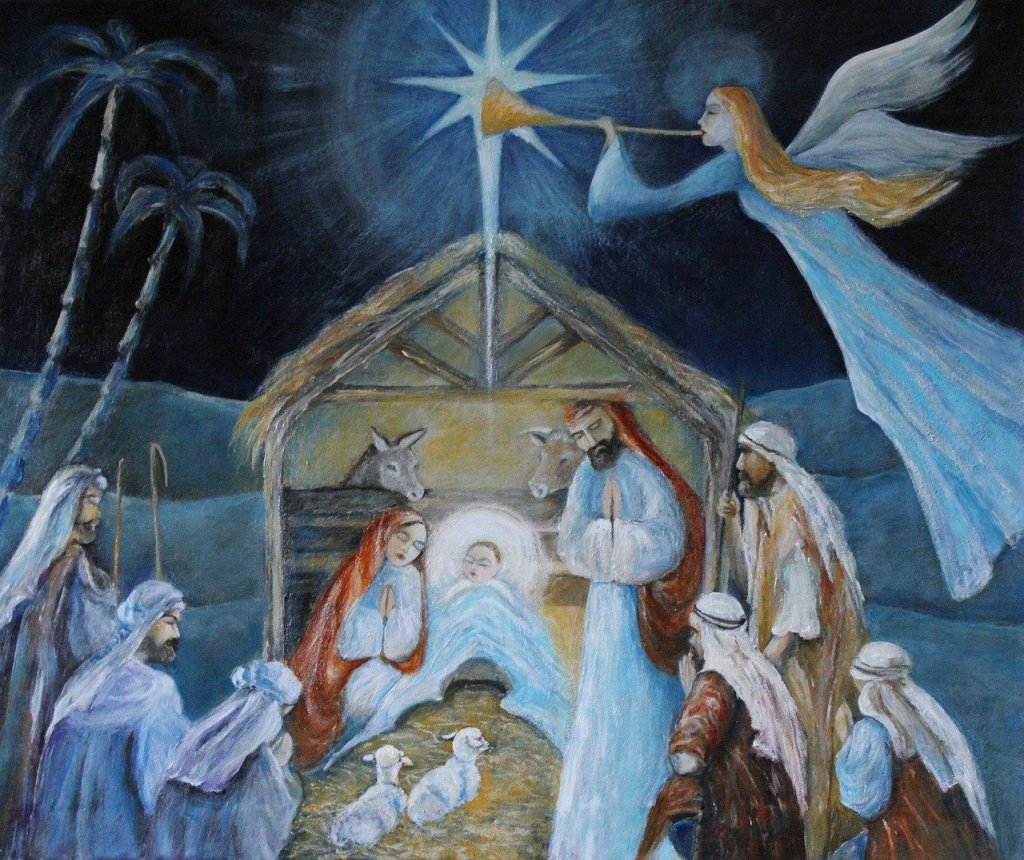
    As we see in the gospel today, Mary isn’t concerned with the past or future; she’s fully caught up in the present moment. We might look at her in this scene and see the face of a concerned, young mother who has little to offer her son – no place to call home, and nowhere to lay him but a manger. But we know better; hers is the face of a confident mother with total trust, perfect serenity, and ultimate fidelity to God; she knows that He blesses His people, lets His face shine on them, and is gracious to them (Numbers 6:24-26). He has brought her to this moment, and would never abandon her in it.

    Like any mother, Mary would know all the joys and sorrows of motherhood: The joy of teaching him to talk, to walk, to get along in the world, watching him grow into a young man, and the sorrow of picking him up when he fell, comforting him, and watching as he left home for the last time. But then there were the joys unique to being the Mother of God: the joy of watching his eyes light up as she told him the stories in the Scriptures he gave the world, and the terrible sorrow of watching his suffering, his death on the cross, and laying him in a tomb. Yet, having endured this and not lost faith would bring the greatest joy possible: Seeing her son raised from the dead, resplendent in his glorified body and ascending to his Father.

    The grace of God allowed Mary to experience all these things, not to understand them. She, too, must have her own journey of faith. As Luke is careful to point out, this included contemplation: she kept all these things, reflecting on them in her heart.

    Thus, Mary, the Mother of God, teaches us two important lessons. First, we must live in the present moment. Sometimes, we get stuck in the past, dwelling on our mistakes or trying to re-capture the glory of past accomplishments. Other times, we live in the future by worrying about what might or might not happen. Either way, we miss the present. Mary was full of grace, and grace is given to be used in the present moment. Second, the Blessed Mother teaches us that we don’t need to have all the answers, we just have to do our part. When she consented to be the mother of God, Mary wasn’t given details of the plan, she was given a baby. Her part was to be his mother; in her humility, she accepted that and put her heart and soul into it. Mary is the only one who was with Jesus at each crucial moment in his life, from his conception to his crucifixion to his ascension.

    In the divine plan, that kind of devotion never goes unrewarded. When her earthly life was complete, God exalted Mary by raising her to be with Him body and soul forever. This is the final lesson of Mary the Mother, but it is taught by Christ Jesus, her Son: Mary’s destiny is our destiny too. Everyone who follows her example of discipleship is destined to rise body and soul to that same heavenly glory. Mary was the first to enjoy it, but that was our Lord’s special gift to his Mother. The good news is that he loves us, too, so the same gift is waiting for us.

    If we have any resolution to make for this new year, let it be to do what Mother Mary has already so perfectly done: Hear the word of God and do it.

  • Body and Soul

    Body and Soul

    Solemnity of the Assumption of the Blessed Virgin Mary

    1 Corinthians 15:20-27; Luke 1:39-56

    Speaking of God the Father, St. John of the Cross once said that, “In giving us his Son, his only Word (for he possesses no other), he spoke everything to us at once in this sole Word – and he has no more to say…”1

    In a very real way, the same can be said of the Blessed Virgin Mary. Her entire life proclaimed the greatness of the Lord. Everything she is – the humble, lowly, servant – speaks of Jesus, and everything she did – from hearing the word, to conceiving Jesus, to mothering him, to watching him die, to praying for the coming of the Spirit, her Spouse – speaks of doing his will, and the will of the One who sent him.

    So intimately united to the Blessed Trinity, body and soul, from the beginning, how could Mary be any less united to Him, body or soul, when her own earthly life came to an end? And when St. Paul, inspired by the Holy Spirit, wrote those beautiful, hopeful words: just as in Adam all die, so too in Christ shall all be brought to life, but each one in proper order: Christ the firstfruits; then, at his coming, those who belong to Christ (1 Corinthians 15:22-23), who can we imagine belonging more to Christ than Mary, his devoted daughter and mother? That is how we picture Mary best: As forever belonging to Christ, and as a model for how we should picture ourselves. For, after Jesus, that is God’s greatest gift to us through the Blessed Mother: Her destiny is our destiny; where Mary has gone, we, too, can go. Her Son suffered, died, and rose again to see to it, for her sake, and for ours.

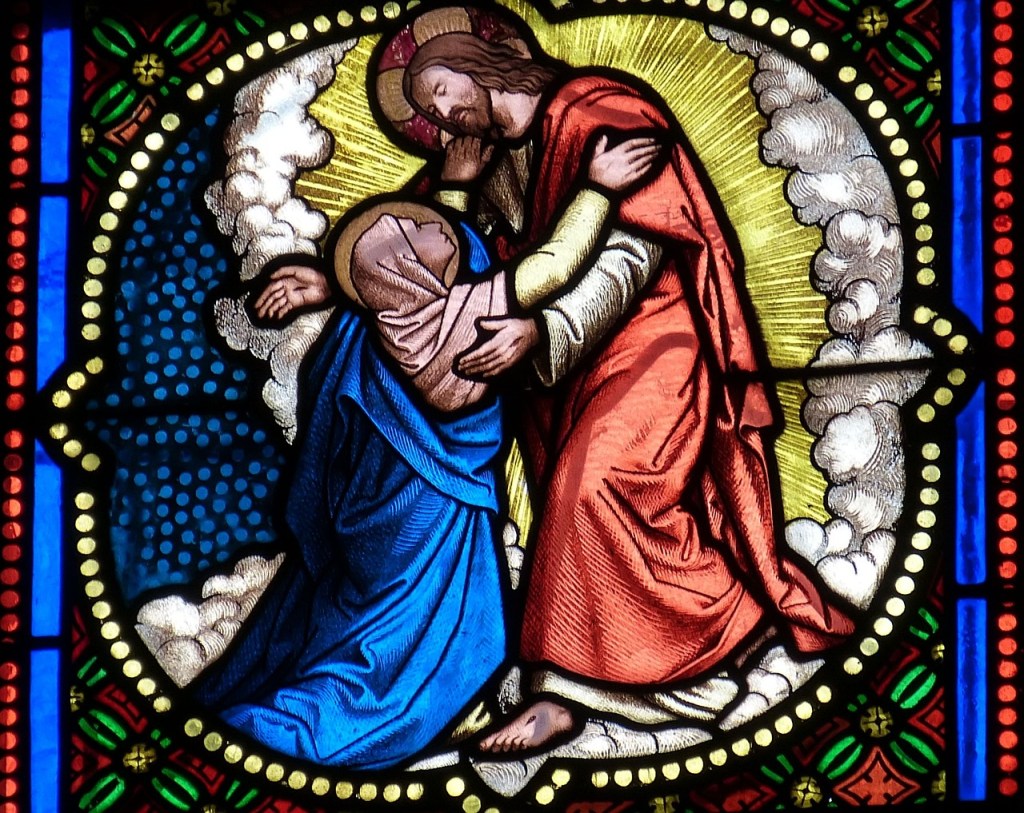
    With that in mind, and in our prayers, let us celebrate the Feast of the Assumption of the Blessed Virgin Mary for what it is: The great reunion when mother and son embrace body and soul once again in the eternal splendor of heaven. And let us today, as every day, continue to thank God for the gift of his mother, who he has made our mother, and who, to this day, hears the word of God and does it, that we may one day embrace our Lord, body and soul, in that same glory.

    Mary, assumed into heaven, pray for us.

    1St. John of the Cross, The Ascent of Mount Carmel 2, 22, 3-5 in The Collected Works of St. John of the Cross, translated by K. Kavanaugh OCD and O. Rodriguez OCD (Washington DC: Institute of Carmelite Studies, 1979), 179-180.


  • The Award We All Want

    The Award We All Want

    Memorial of the Dedication of the Basilica of St. Mary Major

    Revelation 21:1-5a; Luke 11:27-28

    Years ago, one of the kids came home from school with an award from a competition. I was happy, but I was the only one. My daughter’s expression told me that, whatever this was, it wasn’t what she expected or wanted. Then I saw it: A “participation award.” I admit, if I was her, I wouldn’t have liked it either. Everybody gets one, no matter how they do? Big deal!

    I thought of that when I read today’s gospel passage. A woman, clearly impressed by Christ’s teaching, complimented him on his mother. However, like some of his other responses when family was involved, this one struck me as, if not insulting, a little underwhelming. First, he corrected the woman by overruling her blessing (Rather…), then substituted one that included anyone who heard the word of God and did it. In other words, it seemed like Jesus was giving his mom the first-century equivalent of a participation award.

    Part of the problem is what gets lost in translation. Where in English the word ‘rather’ often implies ‘this and not that,’ the same word in Greek can just as easily imply, ‘this and that.’ So, Luke’s intention seems to have been that Jesus not only agreed with the woman’s blessing but added one of his own. His mother was doubly blessed!

    Still, facts are facts; correction or not, Jesus did add a blessing that included many others along with Mary, in a very real sense equating them with her. Why? Because, as he said in Revelation (1:5), he was making all things new. It is true that, in his humanity, Jesus could have only one biological family, but it is also true that his divinity has no such limit. That is why he said that when he was lifted up from the earth, he would draw all people to himself (John 12:32). Therefore, what bonds us one to the other is not defined
    in terms of blood relationships; what bonds us to each other, and to God, is the precious
    blood of Christ. This we can all share, for this we have in common with all people.

    Here we come to the heart of the honor we accord Mary. The infinitely powerful God made himself dependent on a lowly little girl from Nazareth for the blood that would give life to His Son, who would in turn pour out that blood for the life of the world. This in turn goes to the heart of our Feast today, for the Dedication of the Basilica of St. Mary Major celebrates the declaration by the Council of Ephesus made centuries ago, that Mary is the mother of the only Son of God; her blood flowed through his veins. Truly, this is a woman who heard the word of God and put her body and soul into doing it!

    Given that, let us meditate for a moment on what our Lord’s blessing today means for us. Like Jesus, there is a limit to the number of people who can be in our biological family. But think of all the people who can be in our spiritual family, to whom we can be a spiritual mother, father, sister, or brother. From our Lord’s point of view – which is the only one that matters – that is everyone we meet. Let us ask ourselves: What would the world be like if I tried just a little bit harder to treat them like the family Christ told us they already are? OK, but how? By doing what he praised his mother for: Hearing the word of God and doing it. Again, how? Well, we all know there isn’t one way; ours will depend on the gifts God gave us, the challenges that make it hard to use them, and the determination we show working to overcome those challenges.

    Sounds a lot like a competition, doesn’t it? It is. We know our opponents: The world, the flesh, and the devil, and we know the stakes: Eternity. What we must remember is that we go to our eternal home not with a participation award, but with whatever awared Christ sees fit to give us. And that is a very big deal.

    Mary, most blessed mother of God, pray for us.


    And now a word from our sponsor…


  • Doing What the King Would Not

    Doing What the King Would Not

    Solemnity of the Annunciation of the Lord

    Isaiah 7:10-14,8:10; Psalm 40:8-9; Hebrews 10:4-10; Luke 1:26-38

    In her wisdom and guided by the Holy Spirit, the Church has chosen each day’s readings to make a certain point. Often, the central theme of the readings is found in the psalm. Today is a good example; the psalm is quoted by the author of the Letter to the Hebrews, who puts on the lips of Christ the words, I come to do your will, O God (Psalm 40:9). The Church puts them on our lips too, for they are much more than a mere literary theme; it is the goal of every Christian to imitate Christ.

    The first reading and the gospel are also intended to go together. Some days, like today, that might seem a little less clear, but we do find some points of contact when we look at their two prominent figures, Ahaz and the Blessed Virgin Mary.

    Ahaz was king of Judah; just 20 years old when he gained power. As we see him here, he is worried about Jerusalem being invaded by hostile kings from the north. Although God has already assured him this will not happen, Ahaz doesn’t trust God; he prefers to trust in himself and his own plans. Thus, when he refuses God’s invitation to ask for a sign, it isn’t a display of piety, but of his own arrogance and lack of faith.

    Mary stands in stark contrast to this, apart from also being young and receiving an invitation from God. The king is concerned purely with earthly power; the virgin, with powerlessness. He trusts in his own plans; she in God’s. Ahaz, in false piety, will not ask God for a sign; Mary, truly pious, asks, how can this be? The pretentious king will not respond to God’s invitation, even when the sign of a virgin with child is given; the humble maiden not only responds, but consents to be the virgin mother of that child.

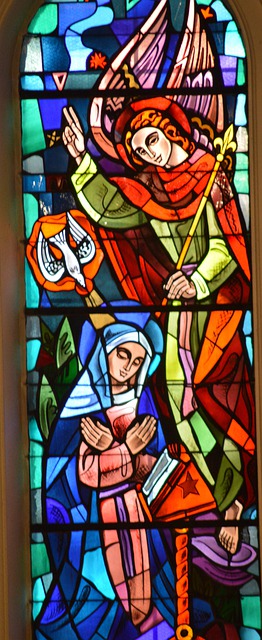
    This brings us to the heart of the readings: The child. Ultimately, today isn’t about the refusal of Ahaz or the fiat of Mary; it’s about the Annunciation of the Lord. The Church has chosen these readings to remind us that all of us, no matter who, are invited to bring God to the world in some way. Sometimes, this comes as an invitation to joy, healing, and unity; others, an invitation to suffering, rejection, and loss. Either way, submission to God’s will requires us to be as Mary was: Living each day as part of the plan without knowing the plan, trusting God and not our own understanding, and placing no restrictions on what faith in Him makes possible, for as the angel said, nothing will be impossible for God (Luke 1:37).

    We may catch ourselves thinking that when the angel said that, he wasn’t thinking of us. As our Lord and his Blessed Mother lived it, discipleship is a total commitment, body and soul. Mary couldn’t be a little pregnant; Jesus couldn’t be partly divine, or almost die on the cross. When Jesus and Mary said, I come to do your will, they meant it to the death and beyond. Not that we don’t mean it, but we know how easy those words are to say and how very difficult to live. Given enough of even the little disappointments or failures of life, our resolve can be sorely tested. Which of us is never tempted to put the cross down, to think of ourselves, and to ask, “But what about me and what I want?”

    This isn’t meant as an indictment but an acknowledgment of reality. But so is this: There was only one perfect disciple: the Blessed Virgin Mary, perfected in grace from all eternity by her Son and Redeemer. The rest of us are works in progress; destined to be like her, perfected in grace, but not there yet. For us, growing as a disciple means examining ourselves, seeing where our weaknesses lie, and looking for the times, places, or events in our lives that trigger them. Even more importantly, we must remember that we don’t do this alone. Christ wants us to come to him; he has all the grace we will ever need. But we also must remember that when those who needed to be healed came to him, he still made them ask.

    So then, let us pray for the humility to do what the servant would do, but the king would not: Ask. And not only ask, but accept every invitation to announce the Lord by the witness of our lives. Only in this way, as today’s opening prayer said, can we, “who confess our Redeemer to be God and man… merit to become partakers even in his divine nature” (cf 2 Peter 1:4).

  • Memories that Matter: Solemnity of Mary, Mother of God

    Memories that Matter: Solemnity of Mary, Mother of God

    Luke 2:16-21

    As a teenager, one of my sons began to have difficulty sleeping. One night I found him tossing and turning in bed and he told me about some of the stress he was feeling. I asked him to set that aside for a moment and focus instead on the best day he could remember. He settled down and after a minute began to smile. When I asked him where he was, he said we were on vacation; it was a warm summer day and he was walking on the shore of his favorite lake with his Godfather and me. I encouraged him to relax and savor every minute. It worked like a charm; he drifted peacefully off to sleep.

    Psychologists have long known that recalling happy memories can do a lot more than reduce stress. There is a relationship between memories and happiness. Specifically, people tend to get a deeper sense of happiness from memories of positive experiences they’ve had than of things they’ve bought. That resonates with me; my happiest memories aren’t about things I’ve bought but about experiences and relationships I’ve had, particularly with my family.

    The Blessed Mother is no different. The evangelist tells us that as the shepherds spoke of all they had heard and seen, Mary kept all these things, reflecting on them in her heart (Luke 2:19). That prompts us to think of all the memories she herself would have: the visit from the angel; the conception of Christ in her womb; her journeys to Elizabeth and to Bethlehem; her divine Son’s birth in a stable; just to name a few. We call her blessed for a reason! These, her deepest memories of family, demonstrate to her and to the world how close God can be, if we let him.

    Although to Mary and Mary alone was given the great privilege of calling these experiences her own, we too are given many opportunities to seek out and experience God in ways not too unlike hers. Here are just three:

    First, although we may not be visited by the archangel Gabriel, we do have our own guardian angel who always looks upon the face of God (Matthew 18:10). Throughout Scripture we see that angels move our will toward what is good (Luke 2:10-12), offer our prayers and works to God (Tobit 12:12), and protect us in times of trouble (Daniel 6:22; Psalm 90:10). Make it a habit to ask the intercession of your guardian angel.

    Second, keep in mind what St. Augustine said: The Virgin conceived in her heart before her womb. Of course we can never experience the joy Mary did as the mother of Christ; however, by the gift of faith we do conceive him in our own hearts. What’s more, we can bring Christ to birth in the hearts of others, perhaps by teaching but mostly by living as he wants us to; as he did. As Jesus himself said, whoever does the will of my heavenly Father is my brother, and sister, and mother (Matthew 12:50).

    Finally, while Mary was honored above all women to be the ark that held our Lord for 9 months, we can be honored to receive him Body, Blood, Soul, and Divinity in holy Communion almost every day of the year. Of course, Mary was uniquely prepared for that by God from the moment of her conception; nevertheless, we have access to the necessary state of grace through the Sacrament of Penance given to us by her Son. For as St. Paul said, Christ’s will for us is to present to himself the church in splendor, without spot or wrinkle or any such thing, that she might be holy and without blemish (Ephesians 5:27). Holy and immaculate, like his Mother. Her destiny is ours.

    So, when the stresses and strains of life threaten to overwhelm you, take a moment, relax, and recall how like the Blessed Mother you have been created to be: To praise God through and with his angels; to conceive him in faith and bring him to birth in the world; to receive him in holy Communion; and to return to him holy and immaculate at the end of time. These will be the memories that matter into Eternity; your own near experiences of God. Then rejoice, not only that you have such memories to bring you closer to God but that, at all times and just like our Mother Mary, God is ever close to you.

    Holy Mary, Mother of God, pray for us.

  • Feast of the Nativity of the Blessed Virgin Mary

    Feast of the Nativity of the Blessed Virgin Mary

    Micah 5:1-4a; Matthew 1:1-16, 18-23

    It’s tempting on this Feast Day to turn to the 2nd century Protoevangelium of James and consider its many details on the birth and childhood of the Blessed Virgin Mary. After all, Scripture is silent about these things and it’s a good day to set aside some time to contemplate them. There is nothing wrong with that; it’s good, pious reading. However, it is not the mind of the Church to read the Protoevangelium at her sacred liturgies; it is not part of the canon of Sacred Scripture. So the question is, what does Sacred Scripture tell us today with regard to Mary?

    Firstly, Scripture tells us something simply in the silence itself. In its own way, silence speaks volumes. Saints have gone into ecstasy contemplating the hidden years of our Lord; I think the hidden years of the Blessed Mother’s life are also fertile ground for contemplation. Consider one possible fruit: Humility. Christ himself labored for decades in the silence and obscurity of Nazareth; Mary was content to live her entire life that way. How much more can we benefit from laboring for God in quiet imitation of them! Growth in humility is death to our own pride and vainglory; as St. Paul said, Think of what is above, not of what is on earth. For you have died, and your life is hidden with Christ in God (Colossians 3:3). Truly, Mary’s life was the epitome of what it means to be hidden with Christ in God.

    Secondly, sometimes when Scripture speaks in reference to Mary it does so indirectly. A good example is the gospel today, which is one of my very favorites. There are a few remarkable things about it but in reference to the Blessed Mother two things in particular stand out.

    First, God makes clear that women have a crucial role to play; sometimes predictable, sometimes not. We are familiar to some degree with the women prophets of Scripture such as Miriam, Deborah, Huldah, and the mysterious prophetess of Isaiah 8:3, but they don’t appear in the genealogy. Four women (apart from Mary) do: The first, Tamar, is twice-widowed of the sons of Judah and harshly treated by him, but cleverly tricks him into fathering her sons Perez and Zerah to get family support. Next comes Rahab, the Canaanite harlot who lied to help the Israelites conquer Jericho and thus preserved her family’s lives and freedom. Third is Ruth, the Moabite and widow who secured a bright future for herself and her mother-in-law by boldly lying next to the half-drunk Boaz in the fields and suggesting marriage. Finally, there is Bathsheba, wife of Uriah, whom the jealous, lustful King David had put to death that he might marry her. Bathsheba becomes mother of one of the great kings – Solomon.

    But it’s not only the women. The entire genealogy is a wonderful example of how God can, as St. Paul said, make all things work for good for those who love God, who are called according to his purpose (Romans 8:28). Our Lord’s family tree runs the gamut from the famous (Abraham, Isaac, Jacob, David, and Solomon), to the infamous (Manasseh), to the obscure (Achim, Eliud and Matthan). Each one, man or woman, Jew or Gentile, saint or sinner, cooperated with God, defied Him or both; regardless, his purpose was never frustrated but written with straight lines through all the crooked generations directly onto the immaculate heart of a young girl born of Anna, betrothed to Joseph, hailed by the angel as Full of Grace, and asked to be the Mother of the Only Son of God. If God can do all this with them, think what He can do with us.

    We who remember Mary on her birthday do well to remember the lessons from these Scriptures, for they teach not only how God works with us but how He comes to us: Not in the bluster of the mighty or those zealous for the limelight, but in the silence and obscurity of the hidden life; not in the mighty wind, the earthquake, or the fire, but in the still, small voice of a tiny baby born in a village too small to be among the clans of Judah yet big enough to hold the heart of infinite mercy and love. And we do better to ask the intercession of Mary’s Immaculate heart for the grace to say in our own lives what she said to the angel: Behold, I am the handmaid of the Lord. Be it done unto me according to thy word (Luke 1:38).

    Holy Mary, Mother of God, pray for us.

  • Mother and Disciple: The Feast of the Presentation of the Blessed Virgin Mary

    Zechariah 2:14-17; Matthew 12:46-50

    We may hear today’s gospel and wonder how any son could treat his mother like that, let alone the Son of God. Hearing that his mother is outside he doesn’t stop speaking and invite her in; rather, he uses her appearance to make the point that everyone who does the will of God is his mother. Shouldn’t Mary be insulted?

    No. She is doubly honored.

    First, remember that this is not just any son; this is Jesus, the only-begotten Son of God. Engaged in the mission for which he was sent, the salvation of souls, he was speaking about radical fidelity to the will of God. Faith binds us to Christ and to each other with a love born not in the blood of kinship but in his own precious blood. If his teaching shocked people, so be it. His point was not about Mary’s faithfulness, it was about ours.

    Indeed, faithfulness is her first honor. As St. Augustine said, Mary conceived her Son in faith before she conceived him in her womb. We think of her as his mother and rightly so for it was by her fiat that he came into the world, but we must also remember that she was his first and best disciple. Mary is the only person to appear in the gospels from before his conception until the coming of the Holy Spirit at Pentecost.

    It may seem ironic that from the faithful dwelling of her motherhood Mary invited him in yet he, her Son, refused to return the favor. But again Mary loved him as both mother and disciple. As mother she might feel the sting of his words as he broadened “family” from the ties of blood to those of faith, but as disciple she knew and lived their truth. Despite whatever personal pain the truth may cause it is always the source of joy, for joy is happiness in pursuit of the good and Mary lived her life in hope of attaining the greatest good: Eternal union in heaven with God who is love.

    Love is the second honor of Mary. Only through love do we live life to the full and this necessarily includes all the joys and sorrows that go with it. We might think that in his mercy Christ would spare his own mother the pain of suffering but actually the opposite is true: He loved her too much to deprive her of it. What kind of love knows no sorrow, feels no pain, and never suffers? Rightly is Mary the Mother of Sorrows for in her great love she suffered many times over, from the mystical sword that pierced her heart to her Son’s burial in the tomb. Yet as Scripture reminds us, love bears all things, believes all things, hopes all things, endures all things (1 Corinthians 13:7) and is as deep as death (Song of Songs 8:6); Mary’s love for Jesus could not be broken by any boundary of space or time, but did reach perfection in his love for her: her own glorious Assumption.

    stained-glass-4506616_640The two themes of fidelity and love are interwoven in the feast of the Presentation of the Blessed Virgin Mary. The presentation of oneself to God is an act of great faith and deep love. Whether Mary demonstrated her faith and love in a formal consecration to God in the Temple as described in the ancient non-biblical documents is irrelevant. Every day of Mary’s life was a presentation, a self-offering, an abandonment to the divine will made possible by the movement of grace within her. Long before he dwelled within her womb, indeed from the moment of her immaculate conception, our Lord dwelled within her soul and bestowed upon it the fullness of grace, his very life. By her response to that grace, Mary most truly defines what it means to be a Temple of the Holy Spirit.
    What does all this mean for us? It means that as Mary has done so we are invited to do. St. Paul said, “Do you not know that you are the temple of God, and that the Spirit of God dwells in you? … Therefore, glorify God in your body” (1 Corinthians 3:16, 6:20). May we never forget that every time we receive Holy Communion we present ourselves to God in an act of faith and love like Mary his handmaid, that we too may glorify God in our bodies.

    Blessed Mother intercede for us, that like you we may be among those to whom Christ says, “whoever does the will of my heavenly Father is my brother, and sister, and mother” (Matthew 12:50).

  • The Best Action: Wednesday of the 22nd Week in Ordinary Time

    At daybreak, Jesus left and went to a deserted place.

    Luke 4:42

    Everything that our Lord did was instructive to us, so we owe it to ourselves to pay close attention to his every action. This brief passage toward the end of Chapter 4 of Luke could easily slip by, but let us pause and reflect on it for a moment.

    Jesus had just begun his ministry. He had been baptized, tempted in the desert, rejected in his hometown, traveled to Capernaum and gotten very busy curing those possessed by demons and healing the sick. If he wanted the people’s attention, he had certainly gotten it. Luke says that news of him spread everywhere in the surrounding region (Luke 4:37).

    He knew better than anyone how much there was to do. Every waking moment could have been spent among these people who so desperately needed his help.

    Yet, it wasn’t. When he could have gotten up and gotten busy, Jesus went off to a quiet place and ministered to himself.

    Why?

    By taking these moments, Jesus teaches that sometimes the best action is inaction; the best preaching, silence; the best attack, retreat. This is the virtue of temperance; to know that there must be a balance in life between the extremes of busyness and idleness. All of us called to be servants, even Christ the servant of all, must take time to renew and replenish ourselves if we are to find and use the inner strength it takes to prudently fulfill our calling in life.

    Scripture doesn’t tell us how long Jesus had to himself at this moment. Perhaps it was an hour, perhaps only a few minutes. Whatever it was, he took advantage of it.

    rain-1570854_640He counsels us to do the same. We may be very busy attending to all the needs of children, family, or work. Whatever dominates your time, resolve to find even a few moments during the day to retreat to your own “deserted place” and listen for that still, small voice which is God.

  • The True Tower to Heaven – The Seven Holy Founders of the Servite Order

    Genesis 11:1-9; Mark 8:34-9:1

    In the 12th century, Pope Innocent III looked upon a world that seemed to fit Christ’s description in the gospel: A faithless and sinful generation. Germany mired in civil war; the king of England plotting rebellion against Rome; Spain in the grip of the Moors; Jerusalem still under Muslim control. Closer to home things were no better; Italy’s city-states warring with each other and families within cities fighting each other for power and political control.

    As counterpoint to this, the Church tried to be a sanctuary of unity and peace. In Florence, a confraternity was formed known as the Society of Our Blessed Lady, composed of aristocrats, wealthy noblemen and merchants. By 1233, 50 years after its founding, the Society boasted 200 members.

    That same year on the Feast of the Assumption, seven members of the Society, aged 27 to 34, lingered in church after Mass. Separately yet simultaneously each received a vision of the Blessed Mother, who asked them to “Leave the world, retire together into solitude, that you may fight against yourselves, and live wholly for God. You will thus experience heavenly consolations. My protection and assistance will never fail you.”

    It couldn’t have been easy to just “leave the world.” These were businessmen with substantial fortunes and bright futures. Some had families; while three were celibate and two were widowed, two were still married. The call to leave everything might have seemed as difficult to them as it was to the disciples to hear Christ say that the only way to be raised to the glory of Heaven was to take up the cross on Earth.

    The human will naturally resists this. We want the glory but we want it our way. In the first reading, the people tried it their way; they disobeyed God’s command to populate the world, choosing instead to gather in one place to build a tower that would reach the heavens. But as our Lord implied in the gospel, heaven cannot be reached by human will; it can only be reached by the cross. The seven men kneeling in church on that August day knew this. Mary had shown them their cross, so they did as she asked. Renouncing their wealth, they left family and friends and lived outside the city walls in devotion to Christ.

    Finding solitude was no easier than leaving the world. As you might guess, such a radical change of life drew a lot of attention. The faithful, the doubters, and the merely curious all came to visit. Aware that this interfered with the Blessed Mother’s request, the men relocated to an isolated mountain north of Florence. There they took up the life of total devotion to God that Mary had requested. Thus energized to serve others, they began to teach against a popular heresy of the time and achieved great success. For this they were beloved by several popes and ultimately confirmed as the Order of the Servants of Mary, or the Servites.

    suffering-2668413_640In a sense, we are all Servites. Our mission is to witness the gospel, to be at the service of God and all people, inspired by Mary his Mother and most ideal Servant. We can only do this if we do as she did: Conform our wills to that of the Father and do whatever Christ tells us. Only He knows the cross that he has in mind for us. It may be to give up what we hold most dear, to separate from family or friends, and to devote ourselves totally to God. Whatever it is, let us pray for the grace to accept it, to bear it willingly, and to remember in the words of St. Rose of Lima that “apart from the cross there is no other ladder by which we may get to heaven.”

    Seven Founders of the Servite Order, pray for us.

  • The Greatest Gift – The Purification

    Luke 2:22-35

    Although St. Luke writes in his gospel account that the time was fulfilled for “their” purification, he really was referring only to the Blessed Virgin Mary. We have always known and honored her as Immaculate Mary, sinless from the moment of her conception by the gracious act of her Son and Lord. Given that, how could she possibly be in need of purification?

    This isn’t the time or the place for a lecture on ritual impurity laws, but suffice it to say that it had nothing necessarily to do with sinfulness. For example, it wasn’t sinful to bury the dead; that was and still is an act of mercy. However, even standing in the shadow of a coffin was terribly defiling for an ancient Jew. Similarly, it wasn’t sinful to give birth; one was fulfilling the command of God to be fruitful and multiply. However, because it put a woman in danger of death – and many women did die in those days due to the complications of giving birth – it put her in a state of ritual impurity.

    The book of Leviticus chapter 12 says that 40 days after a woman has given birth to a son, she is to be purified. So, the first thing that Mary needed to do was to come to the Temple.

    Jewish historical tradition holds that the Temple was built on Mount Moriah, the mountain where, by the command of God, Abraham was to sacrifice his son, Isaac. Carrying up the mountain the wood for the burnt offering, Isaac asked his father where they would find the sheep for the sacrifice. Abraham’s answer was mysterious, yet prophetic: God would provide the sheep.

    With this in mind, consider that the second thing a woman seeking purification needed to do was to bring a lamb to the Temple for a burnt offering. Only after the lamb had been sacrificed was she made clean. If she could not afford a lamb, then two turtledoves or pigeons could be substituted, and St. Luke does note that these were what the Holy Family did bring.

    Yet for her purification the Blessed Virgin Mary has in reality brought the greatest gift that both the Temple and the world have ever known. God himself is the deliverance; He has fulfilled Abraham’s prophecy and answered Isaac’s question by sending his only Son as the lamb for the sacrifice.

    On the one hand, this is a moment of great rejoicing, and we hear how Simeon does rejoice. These people had waited centuries for deliverance and, by a singular grace of the Holy Spirit, Simeon had been allowed to see and hold in person the long-awaited deliverance and glory of his people, Israel.

    maria-100112_1280

    On the other hand and by the same grace, he sees the bitterness that lies ahead. As certainly the shadow of the cross stretches from the dawn of human history to the twilight of the Second Coming, so Simeon sees its shadow across the face of infant and mother. Just as this little baby would one day grow up to speak words that cut as sharply as a two-edged sword, even so would the God-man’s side feel the wound of a different blade on a different mount in Jerusalem. As for the mother, while Abraham was spared the grief of losing his son, the Blessed Mother would be asked to endure his loss twice: first from the family and then from earthly life itself.

    Thus in the purification of Mary we learn that God keeps his promises, not on our terms or in our time, but on his terms and in his time; not for our understanding, but for our benefit; not in the warm light of earthly glory, but in the cold shadow of a cross; and not to spare us the pains of separation in and from this life, but to lavish upon us the joy of eternal union with Him in the life to come.