Tag: Bible

  • Sheep in Wolves’ Clothing: Memorial of St. Henry

    Readings: Hosea 14:2-10; Matthew 10:16-23

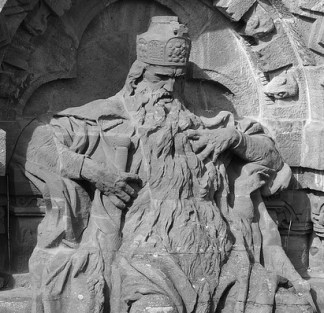
    Today’s saint brings to mind the gospel image of sheep and wolves, for the historical accounts of St. Henry almost paint two distinct pictures. First, there is Henry the lamb; a holy, pious 10th century king and emperor blessed with mystical visions, so favored by God that angels fought in his army. But then there is Henry the wolf; a tenacious power-hungry predator who connived to secure any throne he could and who wantonly made war on his Catholic neighbors. So which was he, sheep or wolf?

    Of course the real man is much more complex; he has aspects of both. Henry was born in the year 972, the son of Duke Henry of Bavaria and his wife, Princess Gisela of Burgundy. As for the lamb, Henry demonstrated as a boy the kind of piety that put him in stark contrast to his father, Henry the Quarrelsome. Well-educated in both secular and religious studies, Henry’s nature seemed more suited to the spiritual life; he thought to become a cleric. However, when his father died at an early age, it became clear that a wolf was needed. Although Henry lacked his father’s temperament he did have his ability to lead; this eventually landed him the crown as King of Germany at the age of 30 and Holy Roman Emperor a few years later.

    Despite his worldly responsibilities, Henry always made time for the spiritual life. Wherever he traveled his first stop was the local church where he spent hours in prayer before the Lord. The king also donated huge amounts for the welfare of the poor and to build churches and monasteries.

    Yet there is also no doubt that Henry was not afraid to go to war even with Catholic nations. His motives are not entirely clear but his concern seems to have been the security of German borders against potential invaders, especially Poland, whose king had expansionist ideas of his own.

    Recall the words of Jesus in today’s gospel: Behold, I am sending you like sheep in the midst of wolves; so be shrewd as serpents and simple as doves (Matthew 10:16). King Henry was a deeply religious man; he adored the Good Shepherd and in his soul gladly bore the brand of His sheep. Nevertheless, he also wore the mantle of emperor; he was a sheep with an empire to rule, people to govern, borders to secure and defend. Christ urged us to be shrewd; what is more shrewd than a sheep in wolves’ clothing?

    For all that, there is evidence that the stress of his earthly duties wore on the king; he longed to retire, to cloister himself behind the walls of a quiet, peaceful Benedictine abbey. He said as much while visiting a monastery and the abbot took him at his word, accepting the king as a postulant and putting him under strict obedience. When Henry asked what his orders were, the abbot replied that he must return to the secular world and discharge his duties as ruler; the empire was in dire need of such a man. Henry obeyed; he left the abbey and ruled until his own premature death at age 52.

    The abbot’s lesson to King Henry is just as appropriate today, for like him we may find ourselves weary and wondering if perhaps we have missed our calling. Over time the drudgery of daily life can take its toll, wear us down, lead us to question who we are and where we’re going, even tempt us to run away in pursuit of a life free of all the responsibilities we carry on our shoulders.

    monastery-569368_640The abbot reminded the king and he reminds us that the church is not a place we run to that we may lose ourselves; it is the place we come to that we may find ourselves. Over the course of his life and reign Henry spent hours on his knees in front of the Tabernacle. He may have meant to empty himself of his problems but Christ had a different plan; He desired to fill him with the grace that would enable him to face and overcome his problems.

    That same grace is available to us but we must be ready, willing, and able to receive it. The prophet Hosea tells us how: Return, O Israel, to the LORD, your God (Hosea 14:2). Return means to repent, to turn from sin, for it is only in so doing that God restores us and instills in us the Holy Spirit that empowers us not just to go out among the wolves but to bring them back with us rejoicing into the flock of Christ.

    St. Henry, pray for us.

  • Why Should I Not Also Forgive? St. Maria Goretti

    Deuteronomy 26:16-19; 2 Corinthians 6:2; Matthew 5:43-48

    grass-lily-4277499_640One night, eight years into a 30-year sentence for the murder of a young girl who had refused his advances, Alessandro Serenelli fell asleep. Suddenly, where his prison cell had been he now saw a beautiful, sunny garden and a girl approaching. As she drew near, he recognized her as Marietta, the girl he had slain. Fearful and wanting to flee but unable to, he watched as she bent down, picked several lilies, and offered them to him. As he took them, they changed into flaming lights. He counted fourteen of them; one for each knife wound he had once inflicted on her. She then smiled at him and said, “Alessandro, as I have promised, your soul shall someday reach me in heaven.”

    Those words alone would have convinced him that this was a dream. Now 28 years old, Serenelli was a bitterly unhappy man, completely unrepentant and without the least remorse for his horrendous crime. However, that dream changed everything; when he woke up, the hatred and bitterness that he had felt choking him all those years was completely gone. It was as if he was hearing the words of St. Paul for the first time: Behold, now is a very acceptable time; behold, now is the day of salvation. From then on, he dedicated himself to making reparation for what he had done.

    Many years later and finally released from prison, Serenelli got up the courage to visit his victim’s mother. When he asked her forgiveness, the woman put her hands on his head and said, “Alessandro, Marietta forgave you, Christ has forgiven you, and why should I not also forgive. I forgive you of course, my son!” The next day, she and Alessandro walked hand in hand to Mass; together, they knelt at the altar rail and received the glorified Body of he who said, love your enemies, and pray for those who persecute you. Over time, he became known to their family as “Uncle Alessandro” and on June 24th 1950, he sat with them in the piazza of St. Peter’s Basilica at the canonization Mass of the girl he had murdered, Maria Goretti.

    In the reading from Deuteronomy, Moses urged the people to observe the law of God with their entire heart and soul. This is what that little saint Maria Goretti strove so perfectly to do, even as she lay dying; something that people many years older have never been able to do. She and her family knew that hatred builds walls in which we imprison ourselves, not our enemies; they don’t feel our rage, bitterness, or pain; only we are choked by them. When we fail to forgive, we become our own worst enemy, suffering by our own hand and of our own free will.

    Those who observe the law of God are those who strive to love as God loves. For them, there are no enemies; no sin too great; no wound too deep to forgive. Alessandro Serenelli would probably have died bitter, unrepentant, and alone were it not for the transforming power of forgiveness first extended by God through the love of one young girl who took Jesus seriously when he said be perfect, just as your heavenly Father is perfect.

    St. Maria Goretti, pray for us.

  • The Depths of Discipleship: 13th Sunday in Ordinary Time, Cycle C

    1 Kings 19:16b, 19-21; Galatians 5:1, 13-18; Luke 9:51-62

    St. Thomas More once said, perhaps in paraphrase of St. Augustine, that Scripture is shallow enough for a mouse to wade and deep enough for an elephant to drown. Today’s first reading is a perfect case in point, for it tells us of the call of the prophet Elisha in a story that anyone can understand yet at the same time touches depths of discipleship.

    First, there is an element of the unexpected to the call. In the ordinariness of a working day Elisha suddenly finds himself in the midst of the extraordinary. One moment he is plowing a field, the next he is being cloaked in the mantle of Elijah. To this day God touches people in the ordinary moments of life. He may speak through Scripture, a homily, a prayer, a song; the Spirit may inspire someone to approach you and directly ask you to consider a certain ministry or calling. All of these are examples of God reaching out to us in ways or at times that may surprise us.

    We shouldn’t be surprised. Elisha wasn’t; raised in the faith, he knew that God calls who He wills when He wills and for His own purposes. Elisha didn’t know how he was a part of the divine plan but he was open to being whatever was necessary. That is a lesson for us and is underscored by St. Paul when he urges us to be guided by the Spirit (Galatians 5:18). We don’t know God’s ultimate plan but we do know His infinite love and mercy. In that love He asks not for our understanding, only that we be open to doing His will. This takes the faithfulness and trust of a saint. We aren’t born saints but we become them by using the grace of God to conform our will to His as an act of faith, purely out of love for Him and our neighbor.

    This isn’t easy; life-changing transformations rarely are. Things tend to get in the way and Elisha had two: Wealth and power. Few people of his time had enough money to own land and twelve oxen, yet Elisha did. Because he was landed and had money he would also have been a man of some power and influence. Following Elijah meant giving all that up. Yet that is exactly what he did; he slaughtered his oxen, burned his farm equipment to roast them for the people, and left to become Elijah’s attendant. Money and influence can be hard to let go of but if they keep us from doing God’s will then they’re no more than chains. Breaking their hold is what St. Paul meant when he said that we are called for freedom (Galatians 5:13).

    toro-2047495_640This is the freedom that changes not only our own life but the lives of others as well. Consider how Elisha’s freedom to follow Elijah affected the lives of others. What would have become of all the people Elisha touched in his ministry had he refused the call and simply kept on plowing? In our own time, think about how the choices we make affect the lives of others. Where would the moral development of our children be if we chose to ignore what God has taught us? What would our relationships look like if we ignored St. Paul’s exhortation to serve one another through love (Galatians 5:13)? God’s call changes all of us no matter how we choose. If we accept it we grow closer to Him and bring others closer to Him as well; if we refuse or ignore it we distance ourselves and may well keep others from Him. The choice is ours.
    Finally, the commitment to follow our Lord is all-encompassing; a total gift of heart, mind, and soul. Elisha didn’t agree to a term of service or to give God part of his time; he gave himself totally and unreservedly. In the gospel Jesus added an urgency to that; when a man told Jesus that he would follow after burying his father – a very pious deed – we heard Jesus reply, Let the dead bury their dead. But you, go and proclaim the kingdom of God (Luke 9:60). Although we believe that he is referring to those who are spiritually dead – that is, dead in sin (Ephesians 2:1,5) – Jesus nevertheless reminds us that the call is from God and God’s will takes precedence over everything.

    Such total commitment demands not only great faith but also great love. We might look at our faith life and think “I love God but do I really have to do all that? OK, so I’m not always faithful; what’s the big deal?” If so, I invite you to try something. Imagine you’re at a wedding. When the groom is asked, Do you promise to be faithful to her in good times and in bad, in sickness and in health, to love her and to honor her all the days of your life? he replies, “I love her but do I really have to do all that? So I’m not always faithful; what’s the big deal?” I think most of us would agree that his answer is a non-starter. Marriage, Holy Orders: These sacraments aren’t service contracts, they’re covenants; total gifts of self and nothing less.

    This is not to say that total faithfulness will guarantee success. We are human, we fall. Even our best efforts may still get rejected. But like the town in Samaria that rejected Jesus, the proper response isn’t to call down fire from heaven but to keep moving, keep serving, keep in mind that Christ loved and forgave his persecutors even from the cross.

    This is the depth of discipleship: to have nowhere but Christ to lay our head, to call down on cold hearts only the fire of the Holy Spirit, to bury in ourselves any spiritual indifference, and to never look behind at what might have been, for Christ has called us to keep going, keep trying to bring ourselves and anyone who is willing, closer and closer to Him.

  • Power Made Perfect: St. Cyril of Alexandria, Bishop and Doctor of the Church

    Matthew 8:18-22

    The gospel reading begins with an image of people crowding around Jesus. Then and now, people are drawn to Christ. Some he inspires, others he mystifies.

    Among those he inspired was the scribe who said, Teacher, I will follow you wherever you go (Matthew 8:19). We may not realize what a bold, shocking statement this was. In those days, scribes didn’t follow; they led. They spent years studying Scripture and were seen as authorities on it. But when this man saw and heard Jesus, he must have sensed a different kind of authority; as Matthew said earlier, Jesus taught as one having authority, and not as their scribes (Matthew 7:29). The scribe had once dedicated his life to studying the written Word of God; now, he could actually see the living Word of God standing right in front of him.

    Not everyone is gifted with such vision. Some people are mystified by Jesus. Ironically, these are sometimes the people closest to him, those to whom he has given authority. Somehow, they have gotten lost in the depths of his infinitude. Such a one was Nestorius, a bishop of Constantinople in the 5th century. He looked at Jesus and saw two persons; one human, one divine. When asked if Mary could be called the Mother of God, Nestorius replied no; Mary was the mother only of the human Christ, distinct from the Second Person of the Trinity. She should not be called the Mother of God.

    It didn’t take long for this opinion to reverberate around the Middle East and it certainly caught the attention of Cyril, bishop of Alexandria. Although little is known directly about Cyril’s personality, his letters and actions portray him as a deeply a passionate man, determined to protect the faith from heresy. When his sometimes fiery correspondence with Nestorius failed to resolve the issue, Cyril escalated it to Rome. The pope agreed with Cyril, but Nestorius appealed to the Emperor, who supported him. A Church council was called, set for St. Mary’s church in Ephesus, scheduled to begin on Pentecost, June 7, 431.

    Cyril and a large contingent of bishops, including Nestorius, arrived to find that many others, mostly supporters of Nestorius, were delayed. After waiting for two weeks, Cyril grew impatient. Over the written protest of many bishops, he decided to begin the Council with those in attendance. When the Emperor’s delegate, who supported Nestorius, fired back that he couldn’t do that, Cyril ordered him to read aloud the Emperor’s opening statement and then had the man thrown out. Cyril assumed presidency of the assembly and began the Council.

    Nestorius knew that he had no chance without more support and refused to attend, despite three invitations from Cyril. Once more, Cyril had enough; he ordered his own position and that of Nestorius read aloud to the bishops and into the record. Cyril’s position was accepted, that of Nestorius was condemned. What’s more, the bishops removed him as bishop of Constantinople. All other business was quickly concluded and the Council was closed. The people in the streets met the bishops rejoicing. Thanks to Cyril, Mary could indeed be called the Mother of God.

    Shortly thereafter, the supporters of Nestorius arrived. Furious and insulted at being left out, they convoked their own Council, deposed Cyril and condemned his associates. Tempers flared, the Emperor got involved, and both Cyril and Nestorius wound up in prison. Ultimately, they were released and the Council held by Cyril received papal approval. Cyril remained bishop of Alexandria and went on to write eloquently of the Blessed Mother; defeated, Nestorius returned to a monastery in Antioch.

    monument-1249995_640Although he was as willing to follow Jesus as the scribe in the gospel, Cyril did not lose his personality in the process. By all accounts, he was imposing, impetuous, impatient, perhaps even infuriating. He wasn’t always the perfect picture of sanctity or the epitome of virtue. Very few saints are. Sinners and saints fight the same battles, share the same temptations, and struggle with the same demons. They differ only in their response to them. The sinner looks to himself or to the world for strength; the saint looks to Christ alone. This is what Cyril knew and what St. Paul meant when he told the Corinthians: Christ said to me, “My grace is sufficient for you, for power is made perfect in weakness.” I will rather boast most gladly of my weaknesses, in order that the power of Christ may dwell with me. (2 Corinthians 12:9).

    St. Cyril of Alexandria, pray for us.

  • To Hold the Heart of Heaven: St. Paulinus, Bishop

    To Hold the Heart of Heaven: St. Paulinus, Bishop

    2 Kings 22:8-13; 23:1-3; Matthew 7:15-20

    Paulinus was born around the year 354 in France, the son of a Roman governor. Well-educated, eloquent, and from a long line of politicians, it was hardly surprising that he too pursued a political career. He quickly worked his way through the ranks, all the way up to governor of Campagna in Italy, and made a fortune along the way. He married a young lady named Therasia, the daughter of a Spanish nobleman, and soon they were among the wealthiest people in Europe. They seemed to be set for life.

    Although politics was bred into Paulinus, the blood of a poet also coursed through his veins. Unlike the high priest and the scribe in 2 Kings who held the holy book yet couldn’t see its value, he seemed to possess the sacramental vision to see behind the things and events of life to their deeper meaning. The patron saint of that area in Italy was named San Felice, and the governor felt himself being drawn toward the saint and the cult of devotion that surrounded him.

    When Paulinus became a catechumen, this sacramental sense would soon be severely tested. He watched with great joy as his infant son Celsus was born, only to stand helplessly by as the boy died just ten days later.

    We are not given to know the inner workings of grace upon the heart that stir it to conversion. Perhaps Paulinus needed the seeds of his faith to be watered by the tears he shed while burying and mourning the loss of their son. Perhaps he came to understand the futility of eloquence, wealth, and influence when weighed against the value of a single human life. All we know is that, where some would turn in anger away from God in the heat of such a moment, Paulinus drew closer and received the grace of baptism.

    That grace was to have a huge effect. The young couple moved to Spain and systematically divested themselves of their enormous wealth to benefit the poor. According to St. Jerome, it was as if both East and West benefited from their huge donations. In Barcelona, Paulinus was so highly regarded that the people insisted he be ordained to the priesthood. Once ordained, he returned to Campagna in Italy, settling in the town of Nola. There he and Therasia embraced a life of strict asceticism. They even chose to live as celibates in a spirit of true poverty, spending more of their wealth to build and maintain a beautiful basilica dedicated to San Felice, along with a hospice and separate quarters for male and female pilgrims.

    Over time, Paulinus acquired an almost legendary reputation for self-giving. He was even rumored to have sold himself into slavery to pay off the debts of a local woman. No one knows if this is true, but it speaks to the large heart for which he was renowned and not long after made bishop of Nola, a position he held for many years.

    On top of his asceticism and charity, Paulinus developed a deep love for Christ which he expressed in different ways through his poetry. First, although he loved and ministered to all who came to him, in his heart he loved and sought the unity of all people with the church, the Mystical Body, and Christ her head, for he wrote:

    It is not surprising if, despite being far apart, we are present to each other and, without being acquainted, know each other, because we are members of one body, we have one head, we are steeped in one grace, we live on one loaf, we walk on one road and we dwell in the same house.

    Second, he loved meeting Christ in Sacred Scripture, and his poetry draws us into contemplation to this day. For example, let us take a few moments to contemplate the Crucified One in light of his own words that every good tree bears good fruit, as Bishop Paulinus writes:

    Look on thy God, Christ hidden in our flesh.
    A bitter word, the cross, and bitter sight:
    Hard rind without, to hold the heart of heaven.
    Yet sweet it is; for God upon that tree did offer up His life…

    St. Paulinus, pray for us.

  • Twisted Iron: St. Aloysius Gonzaga

    2 Corinthians 9:6-11; Matthew 6:1-6, 16-18

    While every death is in some way a loss to the world, there is something especially tragic about the death of a young person. Our thoughts naturally gravitate around that bright future now lost; we think of the wonderful things they might have accomplished, all the lives they might have touched.

    This is no less true for the young man we know by the Latin name Aloysius. Born March 9th 1568, Luigi de Gonzaga had a very bright future. His family enjoyed the kind of power and wealth enjoyed by few. What’s more, as the eldest son, Luigi stood to inherit the wealth of his powerful family.

    His father, a landowner and military commander, molded his son to follow in his footsteps. Almost from the time Luigi was able to walk, he was dressed in armor and went along with father to troop inspections. His father also saw to it that the boy traveled and became very familiar with the aristocracy of the time, perhaps believing that this was the kind of cultural enrichment that would help him learn the ways and wiles of the elite social circle into which he was born.

    If that was his strategy, it backfired. By the age of 16, Luigi had seen enough to know that this lifestyle was not for him. He didn’t want the armor, wealth and power of his family or political enrichment for his own gain; he preferred the armor of God and the wealth and power of his grace that he might be enriched for all generosity (2 Cor 9:11). Luigi saw at an early age what many do not see until years later, if ever: In God, he already had everything he needed. So he sought his father, not to ask his blessing as future head of the Gonzaga family, but to be released to pursue his desire to serve God as a Jesuit missionary.

    It would be understatement to say that Luigi’s father was unhappy to hear this; he was furious. It took him nearly two years but eventually he relented. He may not have become a cheerful giver when it came to his firstborn but he loved his son and respected his resolve. In a letter to the Superior General of the Jesuits he wrote: “I am giving into your Reverence’s hands the most precious thing I possess in all the world.” Once Luigi had signed over the rights of inheritance to his brother, he left home to begin a novitiate with the Jesuits.

    Adapting himself to life as a novice was both easy and hard. As a boy, Luigi had adopted such severe penances that those of the novitiate seemed almost trivial by comparison. True to the words of Christ in today’s gospel, he did not try to draw attention to himself, but his asceticism was noticeable. St. Robert Bellarmine, his spiritual advisor, counseled him to eat more, pray less, and become more a part of community life. This was hard for Luigi, for although he was pious he was also stubborn. Nevertheless, he took the advice, saying “I am a piece of twisted iron. I entered religious life to get twisted straight.”

    Part of his duties included hospital service and at that time an outbreak of the plague struck Rome. Aloysius confessed to his advisor that serving these patients was extremely difficult for him, yet he let no one else know and gave himself over entirely to the work. Despite precautions, he contracted the disease and after a courageous battle, died at the age of 23.

    St. Aloysius would not want us to mourn his early passing; indeed, he would tell us that he hadn’t lost a future, he had gained an eternity! Through him we learn that what matters isn’t the length of time we are given on this earth but how we use it. He would urge us to do as the readings counsel: Sow bountifully, give cheerfully, pray and fast without fanfare or notoriety, and in all things give thanks to God.

    blacksmith-2371002_640This may sound easy but we know it isn’t, for we too are twisted iron. Perhaps we can’t enter religious life to get twisted straight but we can enter into the silence of our thoughts and the privacy of the confessional to learn how to deal with the sins that are holding us back. Whatever they are, the example of St. Aloysius shows us that while change may be difficult or painful, it is possible.

    The keys for us are the same as for him: Humility and docility. Humility is that poverty of spirit by which we come to see that only God has all we need, and docility is the teachable spirit through which we open ourselves to the instruction that fosters change within us. These are the virtues which, through constant practice, the grace of God gradually works to soften and straighten the iron of our self-will.

    St. Aloysius, pray for us.

  • Conquer by Yielding: Monday of the 11th Week in Ordinary Time

    2 Corinthians 6:1-10; Matthew 5:38-42

    Centuries ago, the Vikings sailed their warships down from the north, onto the coasts and into the rivers of Europe. Although they didn’t discriminate much, one of their favorite targets was the Church. They quickly learned that her monasteries and buildings not only held great riches but were the homes of religious men and women who offered virtually no resistance at all.

    Eventually the Vikings tired of their pilgrimages south to plunder and decided to settle in Europe. The French bought them off by giving them a large tract of land known still as Normandy, named after the Norsemen. The first Normans were pagans and scoffed at the religious ways of the Europeans but over time their children and their children’s children, raised in those ways, became not only fierce warriors but also devout Catholics. In fact, at least one historian has referred to the Norman armies as the “Pope’s marines.”1 Not only that, but Normandy became a place of great monastic reform within the Church.

    It’s paradoxical but also one of the great strategies for ultimate victory in battle. It is ancient, known even to Ovid, the Roman poet of Christ’s time who wrote, “Yield to him who opposes you; by yielding you conquer.

    That is what Christ commands in today’s gospel. Conquer by yielding. Measure his words: offer no resistance to one who is evil. He does not advocate losing, giving in, or even passive resistance. He advocates no resistance at all. Offer the other cheek; give your cloak and your tunic; go two miles when asked for one; give when asked. An adversary is powerless in the face of this. What difference does it make how hard a river wave strikes a reed if the reed bends at a mere ripple? One slender reed that bends renders the entire power of the river useless.

    There is pain in the bending. Jesus doesn’t say that yielding is easy or pain-free. In the first reading, St. Paul recounts the many ways it hurt him: afflictions, hardships, constraints, beatings, imprisonments, riots, labors, vigils, fasts (2 Corinthians 6:4-5). Not a path for the faint of heart. Yet consider the alternative; when fighting a vastly superior force, is resistance easier and a guarantee of victory? Indeed, just as we all know how trees that cannot bend in the wind will break, we’ve all felt the pain and futility of trying to conquer the worst enemy of all: our own will. Think how often our own resistance has been so easily overcome.

    Now consider what it means to yield to the superior forces of temptation and evil around us. It doesn’t mean to give in, for that would be losing. No, to yield is to have the humility to acknowledge that these forces are more powerful than I, so I must rely on the greatest power, the Holy Spirit. St. Paul also lists the benefits of that: purity, knowledge, patience, kindness, unfeigned love, truthful speech (2 Corinthians 6:6-7). These are the gentle, God-given strengths available to us; although they take time to cultivate and develop, even the largest boulder is smoothed and worn down over time by a gentle stream.

    viking-1114632_640It took a long time – generations – but the Church in Europe triumphed even over the seemingly invincible Vikings. I say “seemingly” for we who hear the words of Christ in the gospel know that in reality the Vikings never had a chance. All they had were swords, brute strength, and a fierce warrior spirit; what is that against the gentle, persistent, indomitable power of God? Through the ministers of the Church, the Spirit of God flowed over that mighty Norman rock and carved it into a force that would defend and promote the faith they once mocked for yielding so easily.

    The key to victory then and now is patient endurance. We may know it as the virtue of ‘long-suffering,’ and for this virtue we must constantly pray. Long-suffering requires tremendous strength but it is the strength born of hope, hope in that one great victory promised by Christ who, envisioning his own redemptive passion, death, and resurrection said through the evangelist John, In the world you will have trouble, but take courage, I have conquered the world (John 16:33).

    1 Crocker III, H.W. (2000). Triumph: The Power and the Glory of the Catholic Church. New York: Three Rivers Press, p. 160.

  • The Sanctity of Suffering: St. Germaine

    2 Corinthians 5:14-21; Luke 10:29-37

    Of all of life’s difficult questions, perhaps the most challenging concerns suffering. It can be put very simply: Why do good people suffer? Of all the saints whose life most clearly poses that question it is the young girl known as St. Germaine.

    She was born Germaine Cousin in 1579 in Pibrac, a small village in south central France. When Germaine was just a baby her mother died. Laurent, her father, soon married a woman named Hortense who for some reason intensely disliked Germaine. It may have been because Germaine was born with a deformed arm, prone to illness, and suffered from a disease that caused unsightly, discharging lesions on her neck.

    Under the pretense that she might infect others, Hortense insisted that the little girl live outside, either in the unheated barn or under the stairs. So, Germaine slept on mat, was given only table scraps to eat, and never owned a pair of shoes. By the age of five, Hortense forced her to work every day shepherding sheep or spinning a quota of wool, a difficult task given the deformity of her arm. Regardless, failure meant starvation. As if all this weren’t enough, neighbors saw her stepmother regularly beating the child.

    Her one consolation was also the greatest; Germaine loved our Lord and His Mother. Denied a formal education, she taught herself enough about the faith to receive First Communion. She loved adoring and receiving Our Lord in the Holy Eucharist and never missed daily Mass even though this meant leaving the flock, which she innocently and simply entrusted to the Good Shepherd. No harm ever came to it. She loved to pray the rosary and would fall to her knees to recite the Angelus at the sound of the bells, no matter where she was. The other children noticed Germaine’s piety and would gather around her to listen as she taught them about Jesus and Mary.

    Adults also noticed but dismissed her as either a lunatic or religious fanatic. Still, no one could deny her charity. Even though all she had to eat was bread, she gave it to the poor whenever she came upon them. When some townspeople witnessed the waters of a local stream part for Germaine on her way to holy Mass, everyone began to realize that God was specially present to this starved, frail, abused young girl.

    Once this news reached her family, they began to repent. Her father finally put a stop to his wife’s abusive behavior and offered his daughter a place at home with the other children. In her humility, Germaine begged to be allowed to remain outside and it was there, early in the summer of her 22nd year, that her father found her. She had passed away during the night, lying on her bed made of twigs.

    The life of St. Germaine is so compelling, so heartrending that we cannot help but ask again: Why would God allow such suffering to happen? I think that before we focus on God, we should use the story of St. Germaine to take a deeper look inside ourselves.

    First, we cannot blame God for the suffering we willfully inflict on each other. Of her own free will, Hortense banished Germaine from the house, starved her, overworked her, and beat her. While few of us have ever gone this far, we have all found ways to hurt others. In anger, pain, or frustration, we’ve banished people from our lives, starved them of affection, demanded too much from them, and even been verbally abusive toward them. Like Hortense, they may be some of the people closest to us.

    Then there is the suffering we don’t cause but also don’t do anything about. Laurent stood idly by for years and allowed his wife to abuse his daughter. On top of this, neighbors watched in silence as Hortense physically abused Germaine. They may have thought it was none of their business, but the parable of the Good Samaritan reminds us that the true neighbor is the one who shows mercy (Luke 10:35-37). Again we must ask ourselves how we are Good Samaritans to the hungry, sick, addicted, imprisoned – all the needy of our time.

    Finally and most mysteriously, there is suffering that just seems to happen. No one caused Germaine’s birth defect, frailty, or skin disease. We look to God and wonder why He would allow anyone to suffer like this.

    fire-8837_640Although we cannot know the answer in this lifetime, the example of this little saint gives us some insight into it. St. Germaine did not endure suffering, she triumphed over it. Suffering was not a test given to her but a means through which she might glorify God and sanctify herself. No one likes to have misfortunes or hardships come their way, but how would virtues such as fortitude, patience, humility, or long-suffering develop without them? Without virtue, the terrible conditions in which Germaine found herself would have been a living hell; with them, they became a sanctifying fire. Thus, it was not anger or revenge but love of Christ that impelled her (2 Corinthians 5:14); for the sake of that love she drew closer to Him and in imitation of it she brought others to Him. Such is the marvelous, inscrutable way of God that Germaine would become the instrument by which Hortense herself, the source of so much of her suffering, would repent and be converted.

    Let the example of St. Germaine always remind us that we are not defined by what we’ve been given but by what we give; not by who we are but by who we become; and not by our suffering but by our God-given dignity.

    St. Germaine, pray for us.

  • The Teachable Spirit: St. Anthony of Padua, Priest and Doctor of the Church

    1 Kings 21:1-16; Matthew 5:38-42

    The readings today remind me of Winston Churchill’s observation that “we make a living by what we get, but we make a life by what we give.” In the reading from 1 Kings, we see how hardness of heart leads Ahab and Jezebel to become possessed by possessions. The more they desire them, the more they are owned by them. In the gospel, Jesus teaches the opposite; the docile or teachable heart has learned that faith is the only valuable possession. The more that faith is given away in a spirit of Christ-like charity, the more we enrich others and the more it abounds.

    Few people better exemplify the wealth of docility, charity, and faith than the man known to us as St. Anthony of Padua. He was born Fernando Martins de Bulhões on August 15, 1195 into a wealthy family living near Lisbon. When he was 15, he entered the nearby Augustinian monastery of St. Vincent. Although he loved the monastic life, friends and family proved too much of a distraction. He moved to the Abbey of the Holy Cross in Coimbra, where he immersed himself in theology and Latin, fell in love with Scripture, and was ordained a priest.

    Several years later, Father Fernando met 5 missionaries from a new order called the Franciscans. They were traveling to Morocco to preach the gospel. Father was moved by their simplicity, poverty, and zeal. Just a few months after meeting them, he watched as their martyred remains were carried past the abbey toward Assisi. Perhaps he contemplated Christ’s words, When someone strikes you on your right cheek, turn the other one to him as well, for he resolved then and there to become a missionary to Africa and literally become the other cheek. He received permission to enter the Franciscans, took the name Anthony after the great hermit Anthony of the Desert, and set out as a missionary to Morocco.

    But it was not to be. Upon his arrival in Africa, Father became so ill that he was forced to return home. Yet Portugal was not to be, either; while en route, a violent storm blew their ship so far off course that they reached shore in Sicily. Upon his recovery, Father was sent to a small town north of Assisi where he worked and lived quietly in the background at the local Franciscan friary.

    Yet again the hand of God intervened. During a celebration at which a group of Dominicans had joined the Franciscans, each order assumed that the other would provide a speaker. When no one stepped forward, Anthony was ordered to say a few words. His eloquence, charisma, and depth of Scriptural knowledge stunned everyone in the room. Not surprisingly, he was ordered to preach throughout the area. Father Anthony was so personable, eloquent, and effective that St. Francis himself asked him to be the first theology instructor to the Franciscans.

    Father soon became Provincial Superior of the Franciscans in northern Italy, but also made time to preach and to organize his sermons into volumes that are of great value to this day. Upon finishing his term as Provincial, Anthony went to live near Padua. About a year later, he died at the city gates on June 13, 1231. He was 36 years old. The reigning pope, Gregory IX, had heard Father preach and nicknamed him the “Ark of the Testament.” Miracles attributed to Anthony’s intercession led to his canonization the next year, one of the fastest in history.

    In the gospel, Jesus told his disciples: Should anyone press you into service for one mile, go with him for two miles. St. Anthony’s life echoes with the lesson that such great charity does not require understanding, it requires a teachable spirit. God knows the plan he has in mind for us; we simply have to listen and learn. This can be hard, especially when we think that we’re already doing exactly what God wants. Again, consider St. Anthony: Serving in the monastery was good, but he was sent away to study. Serving as an Augustinian was good, but he was called to the Franciscans. Serving as a missionary willing to die for love of the gospel was good, but he was kept alive and sent to Italy instead. Serving quietly and in the background at the friary was good, but he was sent to preach to the people and to teach and lead his brothers. In every case, what Anthony was already doing was good; yet in every case, he faithfully responded to the call and gave it all he had.

    statue-2695581_640No one can give what they do not possess. Father Anthony possessed great faith and great charity, but what transformed him from service in an Augustinian monastery to service as one of the greatest preachers and teachers of the faith was his love of Christ, shown in his constant willingness to discern and pursue the call of Christ in his life as well as his desire to keep Christ at the center of his life. As he once so eloquently said, “If you preach Jesus, he will melt hardened hearts; if you invoke him he will soften harsh temptations; if you think of him he will enlighten your mind; if you read of him he will satisfy your intellect.”

    St. Anthony of Padua, pray for us.

  • Perfect Love: Memorial of Blessed Diana d’Andalo (June 9)

    1 John 4: 11-21; Matthew 19:16-26

    The readings today speak in different ways of love and fear. First, John reminds us that because God is love (1 John 4:16), we who desire to know Him and share in His life must love God and each other as God loves: perfectly. We remain in His love through faith in Christ and the working of the Spirit and, as love comes to perfection, fear subsides; for perfect love casts out all fear (1 John 4:18). This sounds wonderful, and it is, but it isn’t easy. We see that in the gospel. The rich young man loved God but he didn’t know Him; lacking the eyes of faith he looked at Jesus and saw not the Lord but a teacher who asked of him what he most feared to give: his wealth. No wonder he went away sad; he allowed fear keep him from the perfect love Christ offered.

    Today’s saint, Blessed Diana d’Andalo, probably understood that man as well as anyone. Born around the year 1201 in northern Italy, Diana was the 5th child of Octavia and Andalo de Lovella. Andalo means “Little Andrew,” but even if her father was small in stature, he was larger than life. Mayor of a mountainous district of Bologna, Andrew was a powerful, wealthy, and influential man, both warrior and statesman.

    Diana emerges in the annals of history at the age of seventeen. She is described as good, intelligent, brave, sympathetic, and resourceful but also spoiled, vain, worldly, obstinate, and not overly pious. Like her father, Diana preferred to give orders, not take them. Finally, like most wealthy young socialites, she loved the finer things in life – dresses and jewelry – and enjoyed the pursuit of pleasure.

    While she pursued pleasure the Holy Spirit pursued her. He made His first inroads into her heart through the missionaries visiting Bologna from the newly-formed Order of Preachers, the Dominicans. She loved listening to them for they intrigued her, but what interested her most was their results. They were converting people in great number.

    At the right moment the Spirit made His move in the person of Blessed Reginald of Orleans, a French Dominican sent to Bologna to preach. He had a way about him, a charism for preaching that attracted people. He captivated Diana. As he spoke about the pride, vanity, and worldliness infecting society she felt his words, like Christ’s to the rich young man, bringing her face to face with her own sinfulness.

    The fire of enlightenment is one thing, the fire of purgation another. Like the man in the gospel Diana had a choice to make: Draw near to the Light of the World and endure His cleansing fire or retreat into the darkness of her old, familiar ways. The rich young man had made his choice; Diana, hers. She resolved to give her life to Christ as His bride.

    Although this was certainly the right choice, she soon learned that it was no guarantee of easy times ahead. As was the custom, Diana asked her father’s permission to leave home and take the habit of the Dominicans. Having a husband in mind for her, he said no. Greatly disappointed but undeterred, she left home to do it anyway. Her brothers rode to the convent and, when she resisted, dragged her away with such force that they broke one of her ribs. Back at home and in physical and spiritual pain, she spent a year begging her father’s permission, then once more eloped to the convent. This time her father relented and Diana was received into the order by St. Dominic himself.

    She could overcome her father’s will; could she overcome her own? Recall that Diana liked being in charge and giving orders. She was comfortable when appointed prioress of the convent but when it became clear to her advisor that leadership was not among her gifts, obedience was a bitter pill to swallow. What she thought or felt about this we cannot know; she left no record and died at the age of 36. But from contemporaries we learn that Diana used this time to pray tirelessly, accept direction enthusiastically, and become a model of humility. An ancient biographer wrote:

    Profoundly humble, she thought herself the least of all and saw to it that she wore the poorest habit. She loved to keep in the background [and was] possessed by the spirit of poverty, completely detached from the goods of this world…1

    How far she had come from that spoiled teenager in love with the finer things of life!

    jesus-284515_640The life of Blessed Diana d’Andalo shows us that to those docile to His promptings the Holy Spirit will show both the greatness and the folly inside ourselves. Diana’s folly lay in the selfishness and will to dominate that has plagued mankind since it first heard the voice that whispers You can be like God (Genesis 3:5). Her greatness lay in her steadfast determination to conquer any enemy, especially herself; to cast aside all fear, remain in God’s love, keep faith in Christ, and abandon herself to the power and working of the Holy Spirit, that her love for God and her neighbor may be made as perfect as possible.

    Blessed Diana d’Andalo, pray for us.

    1From Georges, N., OP, STL. Blessed Diana and Blessed Jordan of the Order of Preachers. Available online at http://opcentral.org/resources/wp-content/uploads/2012/09/dijolives.pdf, p 87.