Tag: Acts

  • Not a One-Person Project

    Not a One-Person Project

    Thursday of the 6th Week of Easter

    Acts 18:1–8

    Not long ago, I was vacationing in Amish country – a place I’ve come to love for its quiet beauty and deep sense of tradition. One morning, I heard about a barn-raising that had happened nearby. Storms and the wear of years had left a farmer’s barn in ruins. While he might’ve been able to rebuild it himself, something else happened.

    His neighbors came. Dozens of them – men, women, and children. Working together, down came the old, and up went the new. In a few days, that man had a brand new, beautiful barn.

    What struck me most about it wasn’t the end result, as nice as I’m sure it was, or the amount of lumber, tools, or labor it took. Rather, it was the love and solidarity that clearly went into it. This wasn’t a one-off kind of thing; the Amish do this for their neighbors all the time. That’s the kind of stuff that builds a lot more than a sturdy barn – it builds a sturdy and life-giving community.

    As if that isn’t enough, it’s also a powerful reminder that some things are just too big to do alone.

    We see something similar in our reading from the Acts of the Apostles. Paul, newly arrived in Corinth, was just one man, like that Amish farmer. But as we also saw, it didn’t take long for God to surround him with help.

    First, there were Aquila and Priscilla, fellow tent-makers, who helped in two ways: They took Paul in and joined him in spreading the Word. Next came Silas and Timothy. The presence and help of those four allowed Paul to focus entirely on what he did best – preaching the Gospel. What happened? The Church in Corinth began to grow. In time, it became an important center for Christianity. And while his beautiful and influential letters to the Corinthians turn our minds to him, St. Paul would be the first to say that building the Church wasn’t a one-person project; it took the effort of many people.

    The Gospel was never meant to be a one-person job, and neither is the Christian life. We are saved as a people, not as isolated individuals. When our Lord ascended into heaven, he didn’t say, “Good luck, Peter, you’re on your own!” No, he promised to send the Holy Spirit to guide them (note, them) into all truth.

    What does this have to do with us? Well, maybe today the Lord is asking us a couple of questions:

    • Have we been trying to carry our burdens alone?
    • Are we trying to “raise a barn” – be it our faith, our families, our vocation – by ourselves?
    • Are we asking for the Holy Spirit to give us the grace to work together to build a parish, a community, and the Church?

    Remember the barn-raising. Remember Corinth. Above all, remember this: The Holy Spirit doesn’t just build us as individuals. He builds us together and helps us raise the most magnificent barn of all – the Church, the Mystical Body of Christ.

  • Reconsidering Success

    Reconsidering Success

    Thursday of the 6th Week of Easter

    Acts 18:1-8; Psalm 98:2; John 16:16-20

    Perhaps more than any other New Testament author, Luke loves success stories. The first part of the Acts of the Apostles is full of them; chapter after chapter, the Apostles heal, defy the Sanhedrin, preach, baptize thousands, and ordain deacons.

    At the same time, he doesn’t shy away from problems; in fact, in the middle of the book, he runs through a list of them: First, Mark deserts Paul (or so he thinks); then, after an argument, he and Barnabas go their separate ways. Next, Paul is imprisoned in Phillipi, gets chased out of two other towns, and is pretty much ignored in Athens. Meanwhile, in Rome, the Christians have fared so badly that the emperor threw them out, as Aquila and Priscilla know firsthand. In today’s reading, the three of them are in Corinth, but nothing has improved; in fact, Paul is so disgusted by yet more rejection in a synagogue that he says he is abandoning his mission to the Jews entirely.

    Loving success as Luke does, why talk about failure? I think it’s because he’s trying to tell us something. Consider: Because Paul went to Corinth, he founded the Church there; because he did that, and poured himself into it for a year and a half, we have two of his greatest letters, which we read, study, and pray to this day. Because Aquila and Priscilla were kicked out of Rome and went to Corinth, they met Paul and became not only co-workers but friends; they housed him, helped him, even risked their lives for him (Romans 16:3). Finally, because Paul preached Christ to the Jews despite his frustration, the synagogue official became a Christian, which seems to have triggered a series of conversions to Christ. God only knows how many lives were changed for the good in spite of those seemingly bad events. Given that, what is success and what’s failure?

    That is Luke’s first point. We know, because Christ has told us, that our job is to bring him to the world. What we do not know is the plan – how that will be done. When we act as if we do know, we fall into the trap of defining success and failure on our own terms. Paul knew this, which is why he later wrote to this same church in Corinth, I planted, Apollos watered, but God caused the growth (1 Corinthians 3:5-7). In other words, we each have an important part to play, but God has the plan.

    This brings up the second point, which is that even the work that is ours to do cannot be done without others. Paul couldn’t do everything alone. We already know about Aquila and Priscilla, but remember Silas and Timothy; Luke told us that it was their coming to Corinth that allowed Paul to occupy himself totally with preaching the word (Acts 18:5). And, even in the broken or problematic relationships, the Apostles and others were still on the same side. If the man Luke calls “Mark” is the evangelist, then we know what he did! Also, although Paul and Barnabas separated, both continued in ministry (1 Corinthians 9:6). Paul would be the first to admit that if he succeeded, he didn’t do it alone.

    What held true in Luke’s time still holds true for us. While we too we know the joy of seeing people come to faith and the heartbreak of seeing others walk away, we must keep a few things in mind. First, success and failure are not ours to assign; that job belongs to Christ. Our job is to keep bringing him to others by what we say and do, no matter how hard that is. Second, we have no idea what seeds of success lie in each apparent failure; that, too, is for God alone to know. Third, we can’t do it without each other. God has given each of us gifts and intends us to use them together. Like Mark, Paul, and Barnabas, we may not always see eye to eye, but we are on the same side, bound by the love of Christ and pledged to serve him in and with each other. Finally, and above everything else, let us praise God for whatever success we achieve; for, although we speak the words, only God moves the heart; although we teach the truth, only God reveals himself; and although we reach out to others, only God draws them near.


  • The Power of the Group

    The Power of the Group

    Wednesday of the 5th Week of Easter

    Acts 15:1-6; John 15:1-8

    Anyone who has ever been a parent or started a job knows that you can read all the books, take all the classes, and get all the training you want. No matter; once you start doing it on your own, things are going to come up that never occurred to you, and that you’re going to have to deal with.

    This was true for the Apostles, too. Jesus trained them well: day after day they followed him, talked with him, asked him questions, watched him work; he even sent them out two-by-two for on-the-job training. But now, here they are, facing a problem they never dreamed would happen, but one they have to deal with.

    We might not think that the Church growing is a problem, but that’s because we aren’t the Christian Pharisees. In their opinion, Gentiles could not be admitted to the Church until they accepted Mosaic law and practices, including circumcision. We don’t hear their rationale, but it’s probably the logical one: Jesus was a Jew. Of course, others disagree; St. Paul, for example, who would write that in Christ Jesus, neither circumcision nor uncircumcision counts for anything, but only faith working through love (Galatians 5:6). Clearly, there is stalemate; they need a way forward, and they’re going to have to do it on their own, because Jesus never said anything about this.

    Or did he? Perhaps there were signs in his words or actions.

    As for his actions, the Apostles probably remember that Jesus worked with them as a group; he called them in groups, taught them as a group, even sent them out in groups. For another, he made it a habit to include rather than exclude people; for the Apostles in particular, he even gave them authority to govern, baptize and teach in his name. Finally, Jesus prayed for unity, that they may all be one as he and the Father are one (John 17:21-23). How could it be surprising that, in response to the crisis facing the Church, the Apostles would come together as a group, include the presbyters to whom they had also given authority, and then work to make sure that the unity Jesus prayed for was preserved at all costs?

    As if that weren’t enough, consider what the Apostles heard him say in just the last few days: I will not leave you orphans; I will come to you (John 14:18); I am going away and I will come back to you (John 14:28); the Advocate, the Holy Spirit… will teach you everything and remind you of all that I told you (John 14:26); I am the vine, you are the branches. Whoever remains in me and I in him will bear much fruit, because without me you can do nothing (John 15:5).

    All this serves as a context to better understand why the Apostles would respond as they did. Our Lord had given ample evidence that he would be with them, as would the Holy Spirit. He knew very well that problems would crop up again and again, threatening to divide the Church, and that we wouldn’t know what to do. That’s why he went to such lengths to reassure us that when difficulties arise, we don’t have to know what to do; that’s his job, and there is no one better at it.

    So then, what’s our job? Do what the Apostles did: Remain in him; assemble in his name, and in his name ask for whatever we want. When we do that, we will find exactly what the Apostles and presbyters found: No matter what problem we might have, Jesus is the answer; he is the power of the group.


  • A Mother’s Love: Memorial of the Blessed Virgin Mary, Mother of the Church

    Acts 1:12-14; John 19:25-34

    If my mother said one thing to me consistently from the time I can remember, it was that she loved me. She said it all the time. When she felt the need to go beyond that, she’d say, “You will never know how much I love you until you have children of your own.”

    To me, that’s a way of saying that the deepest love cannot be described, it can only be experienced. That may be true, but perhaps science has begun to come close. I came across a recent study that tried to capture the bond between a mother and her children neurologically. In one part, a group of mothers were shown images of people under stress and asked to imagine themselves in that situation. Various brain responses were recorded. Next, they were asked to imagine their children in those same situations and were again measured. The responses of many of these women were nearly identical in both cases; in other words, mothers tended to feel what their child was going through as if they themselves were going through it. As far as they were concerned, they and their child were one.

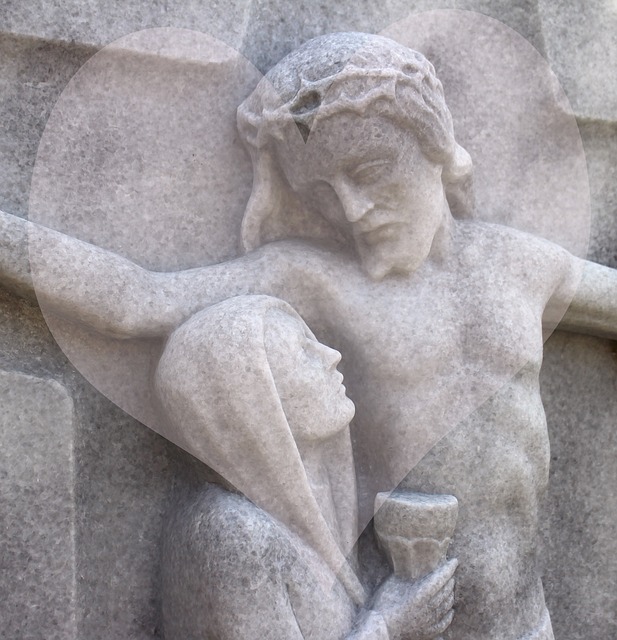
    In light of this, let us pause and reflect on the scene in our gospel reading today. Notice that John, unlike the other evangelists, places Mary right at the cross, not at a distance from it. Our instinctive reaction is to imagine what she felt watching her child suffer so. What mother would not suffer at such a moment, let alone the Blessed Mother? Despite the pain, despite the abandonment of nearly everyone else, Mary remained at his side. Over and above this consider her lifelong, steadfast faithfulness. The gospels make it clear: Mary is the only person to be with Jesus at every pivotal moment of his life from conception to death. She is his mother, but she is his disciple first. Her life is a testament to the advice she herself gave to the wedding stewards at Cana: Do whatever he tells you (John 2:5).

    Knowing that, her Son gives his mother more to do. When Jesus saw his mother and the disciple there whom he loved, he said to his mother, “Woman, behold, your son” Then he said to the disciple, “Behold, your mother.” (John 19:26). Note the high regard Jesus has for Mary. He speaks when he sees her; he speaks first to her; most importantly, he expands her role as mother to now include the ideal or Beloved Disciple. In the words of theologian Fr. Raymond Brown, this is Christ’s last-willed … act of empowerment that both reveals and makes come about a new relationship.”1

    That new relationship is Mary as mother of the Church, for Christ has raised her from being mother of the head to mother also of his Mystical Body. Under the inspiration of the Holy Spirit, the Church proclaims from ancient times that she was born from the wounded side of Christ as he slept the sleep of death upon the cross.2

    jesus-284515_640Mary understood this and, as in all things, obeyed her Lord. That is why in the first reading we find her with the Church – the disciples in the upper room – in prayer. Mary has the most marvelous intercessory role; obedient daughter of the Father, mother of his only Son, and spouse of the Holy Spirit. She is in the perfect position to intercede for the Church.

    Someone once said that the word ‘mother’ isn’t a noun as much as it’s a verb. So today, on the Memorial of the Blessed Virgin Mary, Mother of the Church, consider how Mary’s role from the beginning has been tomother’ people to God by being a model of prayer, discipleship, and unconditional love. And operating on the principle that we will never know how much our Mother loves us until we have children of our own, we must remember that Mary’s model of motherhood is meant to be imitated; we too are called to ‘mother’ people into the Church.

    If we don’t know where to start learning from her, begin with the rosary. From the joyful mysteries alone we learn humility, love of neighbor, poverty of spirit, obedience, and piety. Every major event in her life a mystery, every mystery with its own fruit, every fruit centered on Christ. That is the key; Mary teaches us through the rosary what she teaches through her life; that bringing people to the Church is nothing more or less than bringing them to her Son and allowing him to stir within them the flame of divine love which truly cannot be described but only experienced, and in which we are truly one.

    Mary, Mother of the Church, pray for us.

    Mass, June 1 2020

    1Brown, Fr. R.E., SS (1994). The Death of the Messiah: From Gethsemane to the Grave. New York: Bantam Doubleday Dell Publishing Group, Inc.. p 1021.

  • The Holy Spirit and Us: Memorial of Sts. Cyril and Methodius, bishops

    Acts 13:46-49; Luke 10:1-9

    As a young musician and singer I had many opportunities to play and sing for wedding and funeral Masses. At first this was no problem, but eventually it became one. Parishes had begun to hire their own musicians who weren’t thrilled to see outsiders like me coming in. I remember at one wedding the local musician came up and told me that he was on the parish staff, this was his parish, and he would be playing. I don’t recall my reply but I know it infuriated him. He stormed off saying “I’m going to the pastor right now. One of us is leaving and it won’t be me!” Well, it was him. I stayed and did the wedding Mass, smugly condemning him for his attitude, never considering my own.

    There’s an old saying that when the Church isn’t being persecuted from the outside she persecutes herself. Many of us have seen it; the place we expect to find the most unity too often seems the model of disunity. We want the Church to grow, we want to bring Christ to people, but when they challenge us with new ideas, expectations, or ways of doing things we find ourselves at odds with them.

    This phenomenon is as old as the Church. In the first reading Paul and Barnabas turn their attention to the Gentiles, frustrated with their stalling mission to the Jews. And we hear how the Gentiles were delighted and the Church grew. What we have not heard (yet) is that with this growth came conflict. On one side the Gentiles resisted adopting Judaic ritual and dietary practices. What do circumcision and kosher law have to do with salvation? On the other side the Jewish Christians resisted the idea of abandoning them. After all, Jesus and his Apostles were Jews! Two groups, each with its own interests: More disputes, more hard feelings, more disunity.

    Sts. Cyril and Methodius might well sympathize. In their time (the 9th century) the Church was struggling to grow in Eastern Europe. The two brothers were the perfect choice for missionaries; they were well-educated, devout, and had grown up speaking Slavic as a second language. Best of all they possessed keen pastoral sensibility; they knew that Christ is the Word who transcends language, whether Greek, Latin, or Slavic. Therefore, when they arrived in the missions they not only preached in Slavic but also translated and conducted liturgical services in it as well. The people responded and the Church grew.

    As in the gospel they went out like lambs among wolves, only this time the wolves wore clericals. The missionaries of the region resented Cyril and Methodius. For one thing, they made the old guard look bad. Under them the Church withered; with the brothers here she blossomed. Second, they took issue with the way the Church grew. As they saw it, no one had the right to translate the liturgy into the native language and teach it to the people. Surely these upstart missionaries must be reprimanded.

    Not surprisingly the embittered clerics appealed to Rome about the liturgical changes, demanding action. When summoned, Cyril and Methodius went to Rome and gave a spirited, eloquent defense. After listening carefully in person, Pope Adrian II blessed their mission and gave them permission to continue celebrating the liturgy in Slavic.

    Cyril stayed in Rome and died not long afterward; Methodius returned to the missions. Sadly but not surprisingly, the pope’s decision settled nothing in many minds. For the rest of his life Methodius was hounded and frustrated by clerics who disagreed with him. Although he stayed the course and remained successful, the stress took its toll; he died April 6, 885.

    cropped-dove-3951312_1920.jpgThe pattern of disagreement, debate, and decision is how things get most productively settled in the Church provided it is done in the right spirit; that is, the Holy Spirit. Since the Council of Jerusalem was called to settle the dispute between the Gentile and Jewish Christians this has been the model, its justification found in the letter issued from that Council, specifically the sentence that begins, It seems good to the Holy Spirit and to us (Acts 15:28). The Holy Spirit promised by Christ continually works within us, finding ways to maintain unity despite our differences. In all our human affairs but especially between the members of the Church what matters is not that we disagree but that we dialog, not the heat of our words but the light of the Holy Spirit, not the distance we keep but the fellowship we extend, and not the hostility throughout the debate but the peace of Christ we give in the resolution. As with Cyril and Methodius, some will not accept us or the decisions reached but we cannot help that. All we can do is what Methodius did: Continue to act in union with Christ and his Church, remembering always that it is not about us but about the Holy Spirit and us.

    Sts. Cyril and Methodius, pray for us.