Category: Saints

  • Minute Meditation: Feast of Mary Magdalene

    Minute Meditation: Feast of Mary Magdalene

    Today we celebrate the Feast of St. Mary Magdalene. We know little about her and over the years the little we know has been tainted with confusion and misunderstanding.

    Let’s put all that aside and consider just two lines from Morning Prayer of the universal Church. They tell us everything we need to know:

    • When Jesus had risen from the dead on the morning after the sabbath, he appeared first to Mary Magdalene, from whom he had cast out seven devils.

    and

    • Father, your Son first entrusted to Mary Magdalene the joyful news of his resurrection.

    Those two lines give us more than enough to think about the entire day. Consider: Whoever she was, wherever she was from, whatever her tormented past, she was transformed into the person Christ first appeared to and entrusted with the news of his resurrection.

    Thanks be to God, that same kind of transformation is available to you and to me. Whoever we are, wherever we are, whatever our past, while we live we are never beyond the healing transformation of Christ’s redeeming love. It is as far away as our next breath if that’s what we want.

    In the words of St. Augustine, every saint has a past; every sinner has a future.

    St. Mary Magdalene, pray for us.

  • No Reluctant Prophet: Monday of the 16th Week in Ordinary Time

    No Reluctant Prophet: Monday of the 16th Week in Ordinary Time

    Micah 6:1-4, 6-8; Psalm 50:23; Matthew 12:38-42

    So far in this chapter of Matthew we have seen Jesus being treated by the Pharisees like a man on trial. They have twice accused him of violating the sabbath, once of being in league with demons, and now, joined by the scribes, they confront him with the demand for a sign from God (Matthew 12:38).

    Given their lack of faith in Jesus this may seem reasonable but it betrays at least two problems they have in their relationship with God. First, no scribe or Pharisee, no human being is ever in a position to put God on trial or make Him prove anything. If anyone is on trial it’s us, as the prophet Micah said in the first reading: the LORD has a plea against his people, and he enters into trial with Israel (6:2). What’s more, we don’t get to tell God who He works through or how He does things. As He also said through Micah, I brought you up from the land of Egypt… I released you… I sent before you Moses, Aaron, and Miriam (6:4). God calls the people, God determines the path. Second, notice how Christ responds to the demand of the scribes and Pharisees by speaking of an “unfaithful” – or “adulterous” – generation (Matthew 12:39). This nuptial language goes to the heart of the real problem, which is the failure of these men to understand that our relationship with God is not a contract, or something we negotiate. It is a covenant, a mutual giving of our entire selves one to the other; a commitment that is total and unto death.

    Jesus drives this point home with true irony by bringing up Jonah for as everyone knew, Jonah was a prophet who was “total” only in his defiance of God’s will and “unto death” only in his effort to avoid doing it. The so-called “reluctant” prophet, Jonah sailed the other way when God called him to preach to pagan Nineveh, tried to drown himself in the sea when he got caught, spoke as little prophecy as possible, angrily complained when Nineveh repented, and worried more about losing the shade from a plant than about the possibility of over a hundred thousand Ninevites dying. Jonah was the perfect example of how not to commit yourself to God.

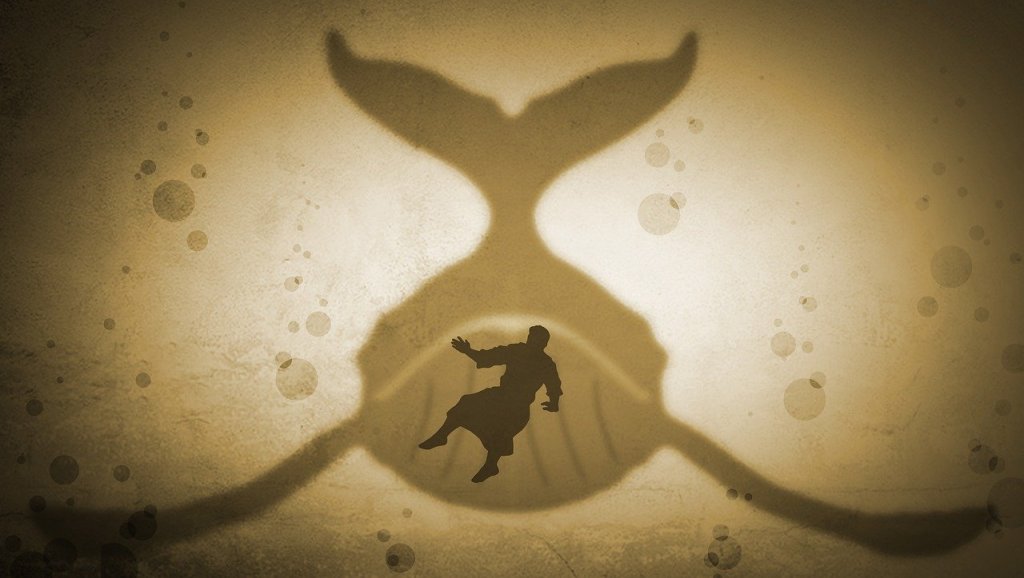
    Yet Christ took that prophet and made a sign out of him: Just as Jonah was in the belly of the whale… so will the Son of Man be in the heart of the earth (Matthew 12:40). Out of that one point of deep darkness – the disobedient man’s descent into the belly of the beast – Christ brings one point of brilliant light – the obedient Son of Man’s descent into the heart of the earth, or, as we say in the Apostles’ Creed, his descent to the dead. There of course he would preach as Jonah could only wish to, and release those repentant souls who had been awaiting the redemption only He could bring.

    Had the scribes and Pharisees recognized the prophetic truth that Christ had just spoken, they would have known that all they had left was the question from Micah: With what shall I come before the LORD, and bow before God most high (6:6)? Since they did not, we turn to ourselves, for we too are on trial. In our own ways, we are all guilty of being a reluctant prophet: Avoiding various calls to serve, stubbornly resisting God’s will, doing the minimum possible, complaining to God about people whose repentance only He can know, and worrying more about our own comfort than about the suffering of many around us.

    So, with what shall we come? Scripture makes it clear: Prayer and sacrifice. As Micah urges us to do right, love goodness, and walk humbly with God (6:8), we pray for the virtues: Prudence, to know what is right; fortitude, to do it; wisdom, to see and love God’s goodness in all people; humility, to walk with God where He leads; and faith, to trust and praise Him at all times. This is a sacrifice, for like Jonah we are inclined to do what we want, love what we want, and walk where we please. But through the psalmist God reassures us: He that offers praise as a sacrifice glorifies me; and to him that goes the right way I will show the salvation of God (Psalm 50:23). The Salvation of God is Christ, who does only right, is love and goodness itself, and who walked in perfect humility all the way from the heart of his Father to the womb of his Mother, from the height of the cross to the heart of the earth, and from the Sacraments he has given the Church into the hearts of all believers.

  • Out of Blindness: Feast of St. Maria Goretti

    Out of Blindness: Feast of St. Maria Goretti

    1 Corinthians 6:13c-15a, 17-20; John 12:24-26

    The priest, psychologist, and spiritual writer Henri Nouwen once said that there are two types of spiritual loneliness, each a kind of blindness. The first comes from being out of touch with God; this is the blindness of too little light. The second is just the opposite; it is the blindness of too much light, or an intimacy with God that exceeds our thoughts and feelings. Both kinds of loneliness, and their cures, are hinted at in our readings and in the lives of St. Maria Goretti and her neighbor, Alessandro Serenelli.

    Luigi Goretti and Giovanni Serenelli partnered as sharecroppers on an estate just south of Rome in the early 20th century. Their families occupied separate flats but shared a kitchen. They had little else in common. The Gorettis were pious and hard-working, their daughter Maria charming and of unwavering faith. The Serenellis were religiously indifferent and struggled with alcoholism, mental illness, and physical abuse. Their son Alessandro, 8 years Maria’s senior, was sullen, withdrawn, and mired in the pornography of the time.

    Fr. Nouwen wrote that the loneliness of being out of touch with God leaves us anxiously searching for something or someone to give us a sense of belonging and home. In his loneliness, Alessandro could have reached out in friendship to Maria but he preferred the darkness, blind to the truth spoken by St. Paul that as members of Christ and temples of the Holy Spirit, the body is not for immorality (1 Corinthians 6:13). To him, Maria was not a person to relate to but a thing to use. On a hot July afternoon in 1902 the 20 year-old finally cornered the girl and tried to force himself upon her. Repeatedly Maria cried, “No! It is a sin! It is not God’s will! You will go to hell!” Angered and frustrated by her resistance, Alessandro stabbed her 14 times with a metal file, then fled. For 20 hours Maria suffered from those wounds until she died, just three months before her 12th birthday.

    The second loneliness mentioned by Fr. Nouwen is the blindness of too much light; not a poverty of God’s presence but of our ability to relate to it. This requires love; as we fail to love we feel without God, though he is all around. In the gospel Jesus says, unless a grain of wheat falls to the ground and dies, it remains just a grain – or more literally – it remains alone (John 12:24). Christ doesn’t want us to remain alone; he wants us to remain in him (John 15:4) by loving one another as he has loved us (John 15:12), even to the death.

    Maria Goretti knew this. While she did not care for Alessandro the way he wanted, there is no greater love than to lay down your life for a friend (John 15:13) and she was his friend to the end. She resisted his advances not only for her own sake but also for his, keeping him from sinning against his own body as well as hers. She reminded him of the primacy of God’s will and warned him of the eternal consequences of his actions. Ultimately she showed him the importance of the virtue of chastity by martyring herself for it and, most Christ-like of all, she died forgiving him to the point of praying that one day he would be with her in Paradise. We should all have such a friend.

    This is the love that bears fruit and eventually did in the life of Alessandro Serenelli. Years into his incarceration, little Maria came to him in a dream and once again made clear that she forgave him and was his intercessor before our Heavenly Father. From that moment, the grace of conversion worked within him; he became a model prisoner, was released early, begged forgiveness of Maria’s mother (which was granted), and worked in a monastery for the rest of his life, devoted to the little-girl-now-Saint who he knew was waiting and praying for him.

    You and I know both kinds of blindness from our own experience. Perhaps we have at times allowed ourselves to drift away from God, to remain comfortable in the darkness of a particular sin or sinful way of life; to seek gratification in places and things that can never satisfy us. It is a true friend who has the courage and love to tell us, “No. It is a sin. It is against God’s will.” And what a great blessing to be that person for someone else; to help strengthen the graces of faith and hope within them, as Maria Goretti did. And maybe we have also suffered the blindness of too much light; times when we knew God was calling us deeper but we had grown comfortable where we were; times when when we took him and his merciful love for granted; times when we spoke of our great love for Christ but then ignored him, needy on the street. Again, it is a true friend like Maria Goretti who is willing to model for us the virtuous love that leads us out of that blindness, the love to which Christ calls us all – the love that glorifies God in our body (1 Corinthians 6:20) and preserves our life for all eternity.

    St. Maria Goretti, pray for us.

  • The Vision of True Faith: Sts. John Fisher and Thomas More

    The Vision of True Faith: Sts. John Fisher and Thomas More

    Genesis 12:1-9; Matthew 7:1-5

    In the story The Emperor’s New Clothes, author Hans Christian Anderson cleverly lays bare not only the emperor but also the human tendency to go along with the crowd. This becomes most obvious near the end of the story, when a child proclaims the truth that all can see but none are willing to admit: “He hasn’t got anything on!”

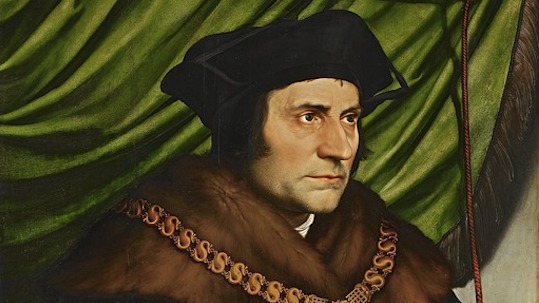
    In the England of the 16th century, King Henry VIII was emperor and his new clothes were the pretension that he alone held supreme authority over the Church in England. For reasons related to his marriage annulment from Catherine of Aragon it was convenient for him to believe this, and history is clear that those who surrounded the king were like the crowd in Anderson’s story; they knew it was fantasy but called it reality anyway.

    Jesus had a word for them, and he used it in the reading from Matthew: hypocrites. The meaning of the word hypocrite has changed over the centuries. Nowadays we think of a hypocrite as someone who says one thing and does another, but in those days a hypocrite was someone who pretended, like an actor; a person who got along by going along.

    In the reading from Genesis, Abraham went along with God, but there was no pretense. Although to the naked eye he held a promise as invisible as the emperor’s new clothes or King Henry’s pretensions, Abraham was in reality clothed by God in a seven-fold blessing that made him the father of one nation and a blessing for every other nation on earth. Abraham would never live in the Promised Land but he would build an altar there to worship the one, true, and living God.

    This is the vision of true faith; it is the eyes to see the truth and the courage to live out the destiny that beckons, come what may.

    Born of the same faith, this was the same vision given to St. John Fisher and St. Thomas More. When King Henry VIII demanded not a denial of the faith but a redefinition of it, they looked past their earthly king to their heavenly one. Christ was their help and their shield, and it was love for him and his Church that emboldened them to expose the naked ambition of a king who would arrogate to himself the keys of the Kingdom of God. Of course, that kind of courage comes at a cost, but the same courage that compelled them to remain with Christ did not abandon them when their own journey led them up the platform at Tower Hill in London to be executed.

    While we must remember the courage and faith with which these men died, we must never forget that this was same courage and the same faith by which they lived; it is the same faith and courage by which we too must live. In our own time we have heard politicians warn, “Religious beliefs must change.” Henry VIII might have said that. How little things have really changed.

    Like Bishop John Fisher, Sir Thomas More and all holy martyrs, our conscience must choose. Will we be the hypocrite who marvels at the emperor’s new clothes or the child who sees the truth and calls it what it is? The witness of the saints testifies now and for all time that there is only one Emperor; he who shed his vestments at the foot of the cross yet was clothed in the glory to which we all aspire and who comes to us cloaked in a host. Ask him and he will remove the wooden beam from your eye that you may better behold the wooden beam that saved the world.

    St. John Fisher and St. Thomas More, pray for us.

  • The Sanctity of Suffering: Feast of St. Germaine

    The Sanctity of Suffering: Feast of St. Germaine

    2 Corinthians 5:14-21; Luke 10:29-37

    Of all of life’s difficult questions, perhaps the most challenging concerns suffering. It can be put very simply: Why do good people suffer? Of all the saints, the one whose life most clearly poses that question is the young girl known as St. Germaine.

    She was born Germaine Cousin in 1579 in Pibrac, a small village in south central France. When Germaine was just a baby her mother died. Laurent, her father, soon married a woman named Hortense who for some reason intensely disliked Germaine. It may have been because Germaine was born with a deformed arm, prone to illness, and suffered from a disease that caused unsightly, discharging lesions on her neck.

    Under the pretense that she might infect others, Hortense insisted that the little girl live outside, either in the unheated barn or under the stairs. So, Germaine slept on mat, was given only table scraps to eat, and never owned a pair of shoes. By the age of five, Hortense forced her to work every day shepherding sheep or spinning a quota of wool, a difficult task given the deformity of her arm. Regardless, failure meant starvation. As if all this weren’t enough, neighbors saw her stepmother regularly beating the child.

    Her one consolation was also the greatest; Germaine loved our Lord and His Mother. Denied a formal education, she taught herself enough about the faith to receive First Communion. She loved adoring and receiving Our Lord in the Holy Eucharist and never missed daily Mass even though this meant leaving the flock, which she innocently and simply entrusted to the Good Shepherd. No harm ever came to it. She loved to pray the rosary and would fall to her knees to recite the Angelus at the sound of the bells, no matter where she was. The other children noticed Germaine’s piety and would gather around her to listen as she taught them about Jesus and Mary.

    Adults also noticed but dismissed her as either a lunatic or religious fanatic. Still, no one could deny her charity. Even though all she had to eat was bread, she gave it to the poor whenever she came upon them. When some townspeople witnessed the waters of a local stream part for Germaine on her way to holy Mass, everyone began to realize that God was specially present to this starved, frail, abused young girl.

    Once this news reached her family, they began to repent. Her father finally put a stop to his wife’s abusive behavior and offered his daughter a place at home with the other children. In her humility, Germaine begged to be allowed to remain outside and it was there, early in the summer of her 22nd year, that her father found her. She had passed away during the night, lying on her bed made of twigs.

    The life of St. Germaine is so compelling, so heartrending that we cannot help but ask again: Why would God allow such suffering to happen? I think that before we focus on God, we should use the story of St. Germaine to take a deeper look inside ourselves.

    First, we cannot blame God for the suffering we willfully inflict on each other. Of her own free will, Hortense banished Germaine from the house, starved her, overworked her, and beat her. While few of us have ever gone this far, we have all found ways to hurt others. In anger, pain, or frustration, we’ve banished people from our lives, starved them of affection, demanded too much from them, and even been verbally abusive toward them. Like Hortense, they may be some of the people closest to us.

    Then there is the suffering we don’t cause but also don’t do anything about. Laurent stood idly by for years and allowed his wife to abuse his daughter. On top of this, neighbors watched in silence as Hortense physically abused Germaine. They may have thought it was none of their business, but the parable of the Good Samaritan reminds us that the true neighbor is the one who shows mercy (Luke 10:35-37). Again we must ask ourselves how we are Good Samaritans to the hungry, sick, addicted, imprisoned – all the needy of our time.

    Finally and most mysteriously, there is suffering that just seems to happen. No one caused Germaine’s birth defect, frailty, or skin disease. We look to God and wonder why He would allow anyone to suffer like this.

    Although we cannot know the answer in this lifetime, the example of this little saint gives us some insight into it. St. Germaine did not endure suffering, she triumphed over it. Suffering was not a test given to her but a means through which she might glorify God and sanctify herself. No one likes to have misfortunes or hardships come their way, but how would virtues such as fortitude, patience, humility, or long-suffering develop without them? Without virtue, the terrible conditions in which Germaine found herself would have been a living hell; with them, they became a sanctifying fire. Thus, it was not anger or revenge but love of Christ that impelled her (2 Corinthians 5:14); for the sake of that love she drew closer to Him and in imitation of it she brought others to Him. Such is the marvelous, inscrutable way of God that Germaine would become the instrument by which Hortense herself, the source of so much of her suffering, would repent and be converted.

    Let the example of St. Germaine always remind us that we are not defined by what we’ve been given but by what we give; not by who we are but by who we become; and not by our suffering but by our God-given dignity.

    St. Germaine, pray for us.
  • A Mother’s Love: Memorial of the Blessed Virgin Mary, Mother of the Church

    Acts 1:12-14; John 19:25-34

    If my mother said one thing to me consistently from the time I can remember, it was that she loved me. She said it all the time. When she felt the need to go beyond that, she’d say, “You will never know how much I love you until you have children of your own.”

    To me, that’s a way of saying that the deepest love cannot be described, it can only be experienced. That may be true, but perhaps science has begun to come close. I came across a recent study that tried to capture the bond between a mother and her children neurologically. In one part, a group of mothers were shown images of people under stress and asked to imagine themselves in that situation. Various brain responses were recorded. Next, they were asked to imagine their children in those same situations and were again measured. The responses of many of these women were nearly identical in both cases; in other words, mothers tended to feel what their child was going through as if they themselves were going through it. As far as they were concerned, they and their child were one.

    In light of this, let us pause and reflect on the scene in our gospel reading today. Notice that John, unlike the other evangelists, places Mary right at the cross, not at a distance from it. Our instinctive reaction is to imagine what she felt watching her child suffer so. What mother would not suffer at such a moment, let alone the Blessed Mother? Despite the pain, despite the abandonment of nearly everyone else, Mary remained at his side. Over and above this consider her lifelong, steadfast faithfulness. The gospels make it clear: Mary is the only person to be with Jesus at every pivotal moment of his life from conception to death. She is his mother, but she is his disciple first. Her life is a testament to the advice she herself gave to the wedding stewards at Cana: Do whatever he tells you (John 2:5).

    Knowing that, her Son gives his mother more to do. When Jesus saw his mother and the disciple there whom he loved, he said to his mother, “Woman, behold, your son” Then he said to the disciple, “Behold, your mother.” (John 19:26). Note the high regard Jesus has for Mary. He speaks when he sees her; he speaks first to her; most importantly, he expands her role as mother to now include the ideal or Beloved Disciple. In the words of theologian Fr. Raymond Brown, this is Christ’s last-willed … act of empowerment that both reveals and makes come about a new relationship.”1

    That new relationship is Mary as mother of the Church, for Christ has raised her from being mother of the head to mother also of his Mystical Body. Under the inspiration of the Holy Spirit, the Church proclaims from ancient times that she was born from the wounded side of Christ as he slept the sleep of death upon the cross.2

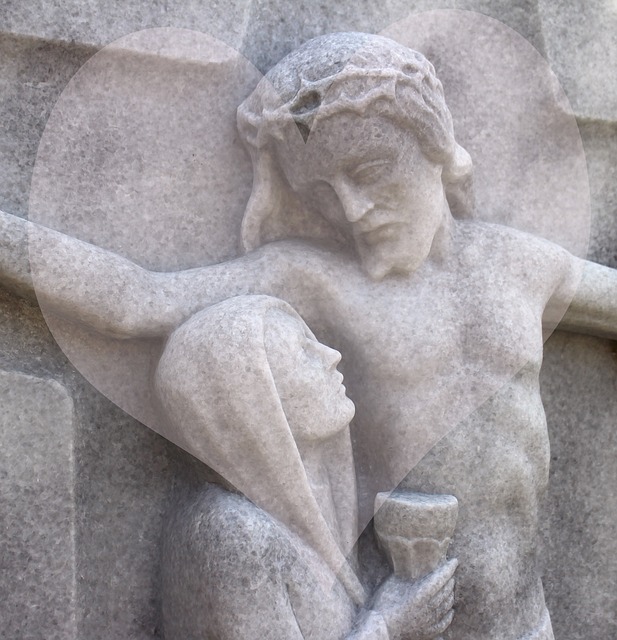
    jesus-284515_640Mary understood this and, as in all things, obeyed her Lord. That is why in the first reading we find her with the Church – the disciples in the upper room – in prayer. Mary has the most marvelous intercessory role; obedient daughter of the Father, mother of his only Son, and spouse of the Holy Spirit. She is in the perfect position to intercede for the Church.

    Someone once said that the word ‘mother’ isn’t a noun as much as it’s a verb. So today, on the Memorial of the Blessed Virgin Mary, Mother of the Church, consider how Mary’s role from the beginning has been tomother’ people to God by being a model of prayer, discipleship, and unconditional love. And operating on the principle that we will never know how much our Mother loves us until we have children of our own, we must remember that Mary’s model of motherhood is meant to be imitated; we too are called to ‘mother’ people into the Church.

    If we don’t know where to start learning from her, begin with the rosary. From the joyful mysteries alone we learn humility, love of neighbor, poverty of spirit, obedience, and piety. Every major event in her life a mystery, every mystery with its own fruit, every fruit centered on Christ. That is the key; Mary teaches us through the rosary what she teaches through her life; that bringing people to the Church is nothing more or less than bringing them to her Son and allowing him to stir within them the flame of divine love which truly cannot be described but only experienced, and in which we are truly one.

    Mary, Mother of the Church, pray for us.

    Mass, June 1 2020

    1Brown, Fr. R.E., SS (1994). The Death of the Messiah: From Gethsemane to the Grave. New York: Bantam Doubleday Dell Publishing Group, Inc.. p 1021.

  • Truth Beyond the World: The Feast of St. George

    Revelation 21:5-7; Luke 9:23-26

    When I was a boy my favorite comic book was The Amazing Spiderman. Every month I haunted the drugstore waiting for the next issue. When it finally arrived I’d read it over and over again. It was great fun imagining myself as the quirky yet powerful superhero.

    Although comic books date back only to the 1930’s and 40’s, the kids of bygone eras had something every bit as exciting: The Golden Legend, a classic of the faith from the 13th century, which contained in great and often colorful detail the dashing exploits of the heroes of ancient Christianity.

    Among the most dashing was St. George. Like most saints of the early Church, little is known. He appears to have been a young soldier martyred in Palestine around the year 304. What we do know is that there must have been something especially appealing about him, for he quickly became legendary. The Golden Legend includes a few stories about him, the most familiar being the dragon. Passing through a foreign kingdom and coming upon a princess about to be devoured by a dragon, George slayed the dragon and converted the kingdom to Christ. There is also the amazing story of his martyrdom. Arrested during a persecution of Christians, George was handed over to the torturers. Despite their best attempts, which included beating him literally to pieces, crushing him beneath heavy spiked wheels, and submerging him in molten lead, George miraculously reassembled unharmed. Amazed and inspired by this, the governor’s own wife converted to the faith. Infuriated, he had her executed and George finally martyred by beheading.

    But that’s not the end of the story. If he was powerful in life, St. George was even more so in death. The Legend tells of victories won by soldiers carrying his relics into battle, of healings at his tomb by those placing their hand in it, and of healings of those who touched the chains he wore in prison. His tomb became a place of pilgrimage and churches bearing his name were built as far away as Italy. Little wonder that England, whose Crusaders brought home his story, chose him as its national patron, that a kingdom in the Caucasus mountains was named Georgia in his honor, or that to this day Palestinian Muslims, Jews, and Christians would all honor him and ask his intercession for those suffering from various illnesses. Clearly, St. George became a man of mythic proportions.

    Unfortunately many stumble on the word “myth.” As early as the 5th century, the stories of St. George were dismissed as fantasy. Like some ancient, amazing Spiderman, he was too large for life; his adventures unreal and unrealistic; the product of uneducated, unsophisticated people. A fairy tale.

    They completely miss the point, as Chesterton knew when he said, “Fairy tales do not tell children the dragons exist. Children already know that dragons exist. Fairy tales tell children the dragons can be killed.” Or, to paraphrase the French philosopher Jean-Paul Ricœur, the purpose of myths is not to tell the truth about the world but the truth beyond it. The deeper truth about St. George is written between the lines of the stories, not within them. What matters is not that St. George slayed a dragon but that, in committing to follow Christ, he received the grace to slay the dragons in his own life. Similarly, it doesn’t matter whether he was actually beaten to pieces, crushed by wheels, submerged in molten lead, and miraculously reassembled; the truth is that St. George loved Christ and did what he asked in the gospel; he took up his cross daily and followed him (Luke 9:23), saving his life by quite literally losing it.

    statue-1394654_1920Of course these truths are not reserved to St. George, they are for all of us. In Revelation Christ says, Behold, I make all things new (Revelation 21:5); for that to mean anything, we must ask for the grace to find and slay our own dragons. We all have them; they are the sins we allow to linger, the attachments we find hardest to put aside, and the fear, self-doubt, and self-condemnation that keep us from drawing nearer to God. The fear is real because the pain is real; it is the pain of having our pride beaten to pieces, allowing our bodies to be crushed by illness or infirmity, and submerging ourselves in the depths of humility. Nevertheless, the truth is that if we allow the power of God to work within us, we will experience what even the legend of St. George could never imagine: The joy of being reassembled into the person that Christ has called us from all eternity to be.

    St. George, pray for us.

  • Mother and Baby: The Solemnity of the Annunciation of the Lord

    Isaiah 7:10-14; 8:10; Psalm 40:7-11; Hebrews 10:4-10; Luke 1:26-38

    Everyone knows the bond between a mother and her baby is special and that there is nothing in the world quite like it. But recently I came across some research that taught me things about it I didn’t know and that gave me new perspectives on the Blessed Mother.

    First, there is a physical basis to the phenomenon scientists call the “maternal instinct,” or others know as “Mommy brain.” Others like my older son who as a young child once inspected the back of his mother’s head, searching for the eyes hidden there. He wasn’t far wrong. During pregnancy a woman’s brain actually changes; areas related to the protection and nurturing of her baby develop as never before. This is nature’s way of attuning a mother to the needs and well-being of her children.

    It was no different for the Blessed Mother. From the moment the Holy Spirit came upon her and the power of the Most High overshadowed her (Luke 1:35), Mary began to develop the maternal instinct toward God himself. She alone among all women was to know the singular joy and tremendous responsibility of nurturing the Son of God; of protecting him from and preparing him for the world he came to save; of feeding him who thirsted for souls; and of providing a home for him who sought nowhere to lay his head except upon her breast, first as a helpless babe and then as a lifeless son taken down from the cross.

    It was from the cross that Christ raised Mary’s maternal instinct from the natural to the spiritual. With his words, Woman, behold your son (John 19:26) he gave her motherhood of his disciples, of all those like her who hear the word of God and do it (Luke 11:28). He made the bond complete when he told the Beloved Disciple, Behold, your mother (John 19:27), for in imitation of her Son we too have nowhere else to lay our heads. As her spiritual children we trust her, as he did, to see to our well-being and protection.

    The second thing I learned about the bond between mothers and babies is that children learn to recognize their mother’s voice in the womb and even prefer the language she speaks to any other they hear. By the time he was born, Mary’s voice was already very familiar to Jesus. And of course he prefers her language, for she speaks the language of total and selfless love. This is why we ask the Blessed Mother to speak to Jesus on our behalf; hers is the voice he heard from the time he was old enough to hear anything at all, the voice he could not refuse at Cana. Once again in imitation of him, Mary’s is the voice we too must not refuse, that says to us what it said to the servers at the wedding feast at Cana: Do whatever he tells you (John 2:5).

    Finally, I learned that perhaps the most important aspect of the bond between mother and baby is responsiveness. From the womb, mothers instinctively respond to the needs of their babies, giving from their own bodies whatever they have to give. This continues into childhood. Studies have shown that children thrive when their mothers respond to them in ways that foster growth and security; these especially include support and encouragement in difficult or stressful times. As Scripture makes clear, our Lord was no stranger to difficulty or stress, from his birth in a stable and flight into Egypt to his suffering and death on the cross. But Scripture also makes clear that Mary was with him at each of those times; in fact, she is the only one in all of Scripture to be present from his conception to his ascension. As such, Mary is the epitome of the supporting and encouraging mother.

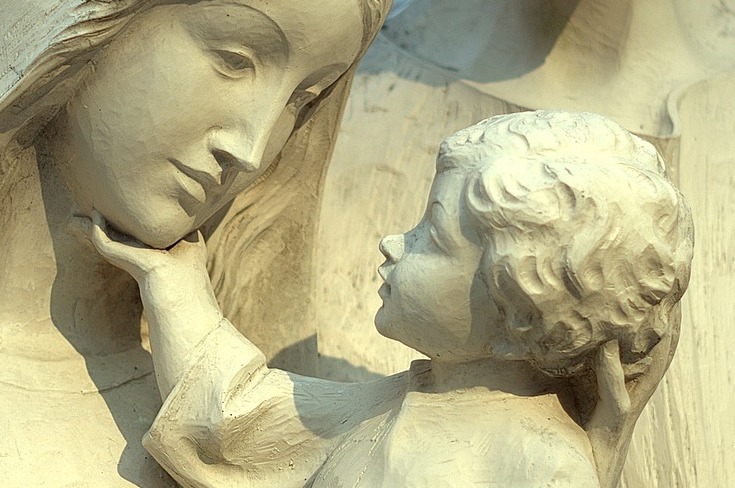
    mother and baby

    One phrase in the readings perfectly summarizes the bond between Mary and her Son: I come to do your will (Psalm 40:8-9; Hebrews 10:7). For Mary this meant motherhood born of a love for God so deep that she, as Augustine once said, would conceive Christ in her heart before her womb. For Jesus it meant the Incarnation; a love so deep that he would take his own creation’s flesh and offer it back to his Father for the redemption of all who would accept him. Their obedience sets the pattern for us for we too are called to the same kind of obedience; to conceive Christ in our hearts; to offer to the Father the gift of ourselves in total dedication to Him; to love as Jesus and Mary loved. Without grace this is not possible, but this is the great hope of the Solemnity of the Annunciation, when the angel reminds us as he told the Fullness of Grace: nothing will be impossible for God (Luke 1:37).

  • Passing By the Dragon

    Every week I scour the internet and various hard- and soft-bound sources for quotes that I think might make a difference to somebody, somewhere. I know I’m not always successful but I also know for sure that at least once in a while a quote touches someone for the better.

    Well, today’s quote touched me. Some might find it off-putting or unmoving but for whatever reason it’s been running through my head like a mantra. It comes from today’s saint, Cyril of Jerusalem, who knew a little something about the topic and who I think would approve of my selection for the times we now find ourselves in.

    You know what I mean. These are times where people, feeling driven to desperation out of what I can only describe as panic, are depriving each other and themselves of their God-given dignity, fighting over or hoarding such things as bottled water, rolls of toilet paper, canned food, and hand sanitizers.

    St. Cyril once said:

    The dragon sits by the side of the road, watching those who pass. Beware lest he devour you. We go to the Father of Souls, but it is necessary to pass by the dragon.

    The road is life and at every turn the dragon lurks – always hungry, always on the prowl, always ready to devour the unwitting, the arrogant, the unbelieving, the slothful. In one way or another, at one time or another, we are all of these; sometimes of our own free will, sometimes under the compulsion of habit, sometimes the result of forces we cannot name and do not understand, but cannot seem to resist.

    the dragonWhen we think of the dragon we think of the Devil and it is right to do so, for Scripture does refer to him that way (Revelation 12, for example). There is no doubt that the dragon is the Enemy but there is also no doubt that too often the dragon looks back from our own mirror. Worse yet, the victim does too; we allow sinfulness such a hold over us that in effect we devour ourselves, relent to the darker angels of our nature.

    Most recently we have begun to treat the virus as though it were the dragon. That’s easy to understand; insidious, potentially lethal, virtually invisible, it waits not only by the side of the road but perhaps in the air we breathe or the people we touch. That inspires fear, and it should.

    However, it also reminds me of St Teresa of Avila’s words, “I do not fear Satan half so much as I fear those who fear him.” While we are right to fear the virus, we should more rightly fear our own fear of it; fear is the true dragon lurking behind the unloving, self-centered actions we have heard and read about recently.

    How to combat that kind of servile fear? With holy fear. Remember the next part of St. Cyril’s quote. We go to the Father of Souls. It is God whom we most love, God whom we most fear offending. What pleases God is not fear but faith; that we take advantage of the opportunities He has given us to draw closer to Him and each other.

    Where do such opportunities lie in the trial we face today? Right in front of us. First, let us resolve to do the best we can with what we have been given. If the virus prevents us from going out, then we stay in and bring ourselves back to the kind of simpler time that many of us knew as children: Simple, modest home-cooked meals; conversation around the dinner table; recreation time; work time; quiet time. Nothing works to calm those around us like quiet assurance. Second, let us take advantage of the opportunities this sequestered time gives us to get back to the basics of our faith. If the churches are closed to holy Mass they are wide open for Confession. What better time to go than when we feel the dragon near? And what better time to fall on our knees and pray for those who have fallen ill or died and to thank Him that we and so many others have been spared? Finally, we can make this a time to worry less about our own needs and more on those most vulnerable – the elderly, those with small children, those with few resources.

    Fear is not the time to turn away from God but toward Him, for God alone has the power to save. I quoted Cyril of Jerusalem and Teresa of Avila; let me close by quoting our Lord.

    Do not fear: I am with you; do not be anxious: I am your God. I will strengthen you, I will help you, I will uphold you with my victorious right hand. (Isaiah 41:10)

    The LORD is my light and my salvation; whom should I fear? The LORD is my life’s refuge; of whom should I be afraid? (Psalm 27:1)

    It is necessary to pass by the dragon, but no dragon is fearsome in the face of such strength.

  • The True Cornerstone: Memorial of St. Patrick, Bishop

    August 15th, the Feast of the Assumption, fell on a Sunday in the year 1858; that afternoon, a 22 year-old Irish immigrant named Cormack McCall1 may well have watched as a stone that he had cut with his own hands was blessed as the cornerstone of the new St. Patrick’s Cathedral by New York City’s Archbishop John Hughes. Around Hughes stood seven bishops, 130 priests, and 100 choirboys. The crowd was estimated at 100,000 people or more; New York’s entire fleet of streetcars had been diverted to the area just to accommodate them.

    It is an oddity in keeping with St. Patrick that to this day no one knows exactly where the cathedral’s cornerstone is or when it went missing.2 It has sunk into obscurity like the details of the life of the great saint himself. Nevertheless, St. Patrick’s impact on the faith is every bit as real and foundational as the cathedral’s mysterious cornerstone.

    Patrick was similar in a few ways to Israel’s son Joseph, whose life story closes the book of Genesis. Both became slaves in their youth, both were bright and resourceful men of dreams, and both used their gifts not just to endure their captivity but to be victorious over it.

    Of course, there were differences. Unlike Joseph, Patrick was not raised by parents with a strong and vibrant faith; nevertheless, during his captivity he found that his faith was strengthened. Moreover, although both were men of dreams, Patrick focused on one particular vision from his youth and was determined to see it come to fruition. While a slave he had a vision of Irish children reaching out for him and resolved that should he escape he would return and convert the pagan Irish to Christianity. In fact, he did escape and reunite with his family in Britain for awhile; however, Patrick never lost sight of that vision from his youth. Around the year 431, after being ordained in France, Patrick was sent to Ireland as its bishop by Pope Celestine I.

    At first, Bishop Patrick began by supporting the small band of Christians already on the island but was soon evangelizing far and wide, preaching, writing and baptizing countless people. It is ironic that Patrick was so self-conscious of his lack of formal education for as an evangelizer he was brilliant. He understood that the truth of Christ transcends culture, that certain symbols or practices of the pagan people could be imbued with Christian meaning. For example, an ancient pagan image of two crossed lines and a circle was reinterpreted by Patrick as the Cross of Christ with the circle symbolizing the eternity of God. We know it as the Celtic Cross to this day.

    Over the course his years a missionary bishop to Ireland, Patrick truly was a cornerstone of the Irish Church. He installed and supported church officials, created councils, founded monasteries and organized Ireland into dioceses. He died around the year 461 and was buried in the land that he first came to as a slave and to which he returned, faithful to his promise to the end.

    ireland-2184916_640The psalmist must have had Joseph in mind as he sang, they had weighed him down with fetters, and he was bound with chains till his prediction came to pass and the word of the LORD proved him true (Psalm 105:18-19) but it applies to St. Patrick as well. In a larger sense it applies to all of us, for to one degree or another we are all weighed down with the fetters of sin. Many are bound with the additional chains of addiction or illness, either our own or someone we love. Perhaps we have not been given visions or dreams like Joseph or Patrick, but we have been given the vision of Christ, the Eternal Word who proved himself true to the greatest promise ever given mankind: That every fetter would be lifted, every chain broken, every tear wiped away for all those who cling to him as their salvation. As much as they did, as faithful as they were, both Joseph and Patrick humbly bend their knee and fade into the background like an old cathedral cornerstone before the Stone rejected by the builders, the one true Cornerstone who is Christ.

    St. Patrick, pray for us.